Indonesia Nylon Market: Import Trend Analysis
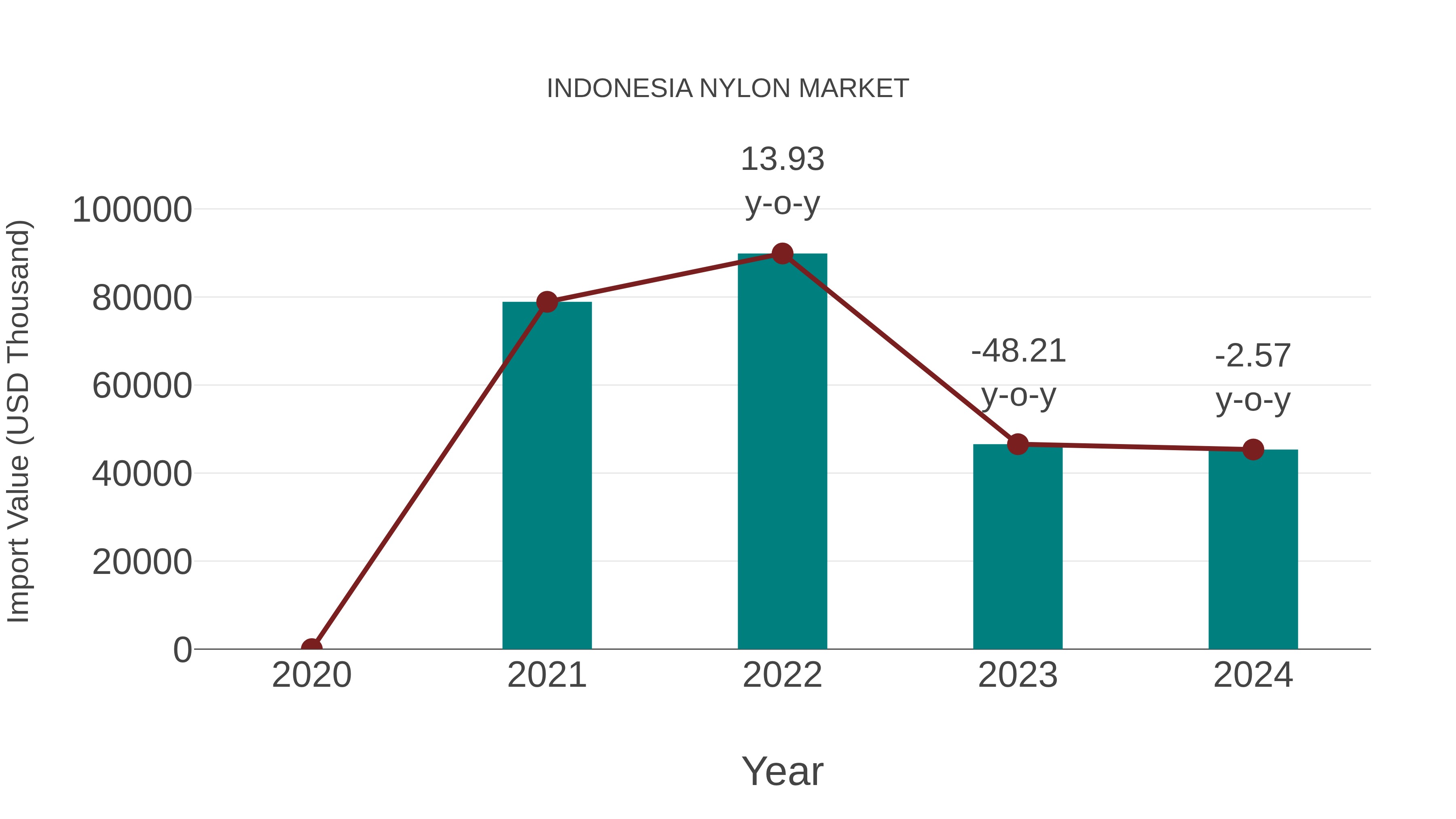
In the Indonesia nylon market, the import trend experienced a decline from 2023 to 2024, with a growth rate of -2.57%. The compound annual growth rate (CAGR) for imports from 2020 to 2024 stood at -16.85%. This negative import momentum may be attributed to shifting demand patterns or trade policy adjustments impacting market stability.
Nylon Market: Indonesia vs Top 5 Major Economies in 2027 (Asia)
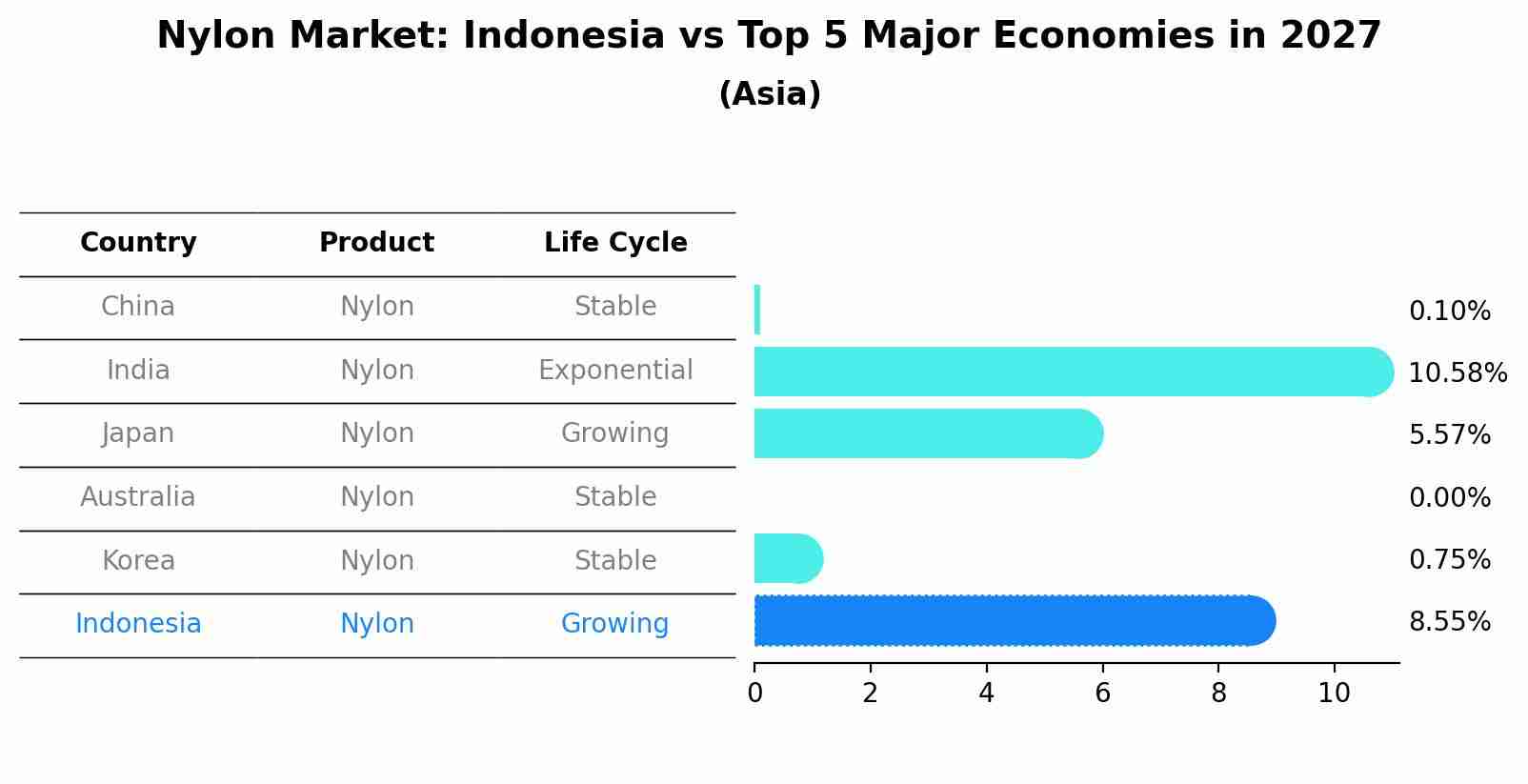
Indonesia's Nylon market is anticipated to experience a growing growth rate of 8.55% by 2027, reflecting trends observed in the largest economy China, followed by India, Japan, Australia and South Korea.
Indonesia Nylon Market Synopsis
Furthermore, the Indonesia nylon market is witnessing positive developments due to the growing demand for nylon materials in diverse sectors, including automotive, electronics, and consumer goods. The material`s exceptional properties, such as high tensile strength and heat resistance, make it a preferred choice for various applications.
Drivers of the Market
Similarly, the overall nylon market in Indonesia is set to expand due to the growth in end-use industries like textiles, automotive, and electronics. Nylon`s properties, such as high strength-to-weight ratio, resistance to abrasion, and chemical stability, drive its adoption in various applications.
Challenges of the Market
In the nylon fibers market, Indonesia could encounter challenges due to fluctuations in the global demand for nylon products. The industry might face uncertainties arising from geopolitical tensions or economic downturns in major markets that import nylon fibers. Moreover, technological advancements and the emergence of alternative materials might pose a threat to the traditional nylon fibers market in Indonesia.
COVID-19 Impact on the Market
The nylon market in Indonesia is closely related to the nylon fibers market. As nylon is a versatile material with applications in various sectors, including textiles, packaging, and industrial applications, the market is expected to witness significant growth. The increasing focus on lightweight and durable materials in industries such as automotive and aerospace is likely to drive the demand for nylon in Indonesia.
Key Highlights of the Report:
- Indonesia Nylon Market Outlook
- Market Size of Indonesia Nylon Market, 2025
- Forecast of Indonesia Nylon Market, 2032
- Historical Data and Forecast of Indonesia Nylon Revenues & Volume for the Period 2022-2032F
- Indonesia Nylon Market Trend Evolution
- Indonesia Nylon Market Drivers and Challenges
- Indonesia Nylon Price Trends
- Indonesia Nylon Porter's Five Forces
- Indonesia Nylon Industry Life Cycle
- Historical Data and Forecast of Indonesia Nylon Market Revenues & Volume By Product for the Period 2022-2032F
- Historical Data and Forecast of Indonesia Nylon Market Revenues & Volume By Nylon 6 for the Period 2022-2032F
- Historical Data and Forecast of Indonesia Nylon Market Revenues & Volume By Nylon 66 for the Period 2022-2032F
- Historical Data and Forecast of Indonesia Nylon Market Revenues & Volume By Application for the Period 2022-2032F
- Historical Data and Forecast of Indonesia Nylon Market Revenues & Volume By Automobile for the Period 2022-2032F
- Historical Data and Forecast of Indonesia Nylon Market Revenues & Volume By Electrical & Electronics for the Period 2022-2032F
- Historical Data and Forecast of Indonesia Nylon Market Revenues & Volume By Engineering Plastics for the Period 2022-2032F
- Historical Data and Forecast of Indonesia Nylon Market Revenues & Volume By Textiles for the Period 2022-2032F
- Historical Data and Forecast of Indonesia Nylon Market Revenues & Volume By Others for the Period 2022-2032F
- Indonesia Nylon Import Export Trade Statistics
- Market Opportunity Assessment By Product
- Market Opportunity Assessment By Application
- Indonesia Nylon Top Companies Market Share
- Indonesia Nylon Competitive Benchmarking By Technical and Operational Parameters
- Indonesia Nylon Company Profiles
- Indonesia Nylon Key Strategic Recommendations






































