Iraq Critical Infrastructure Protection Market Size & Growth Rate (2026-2032)
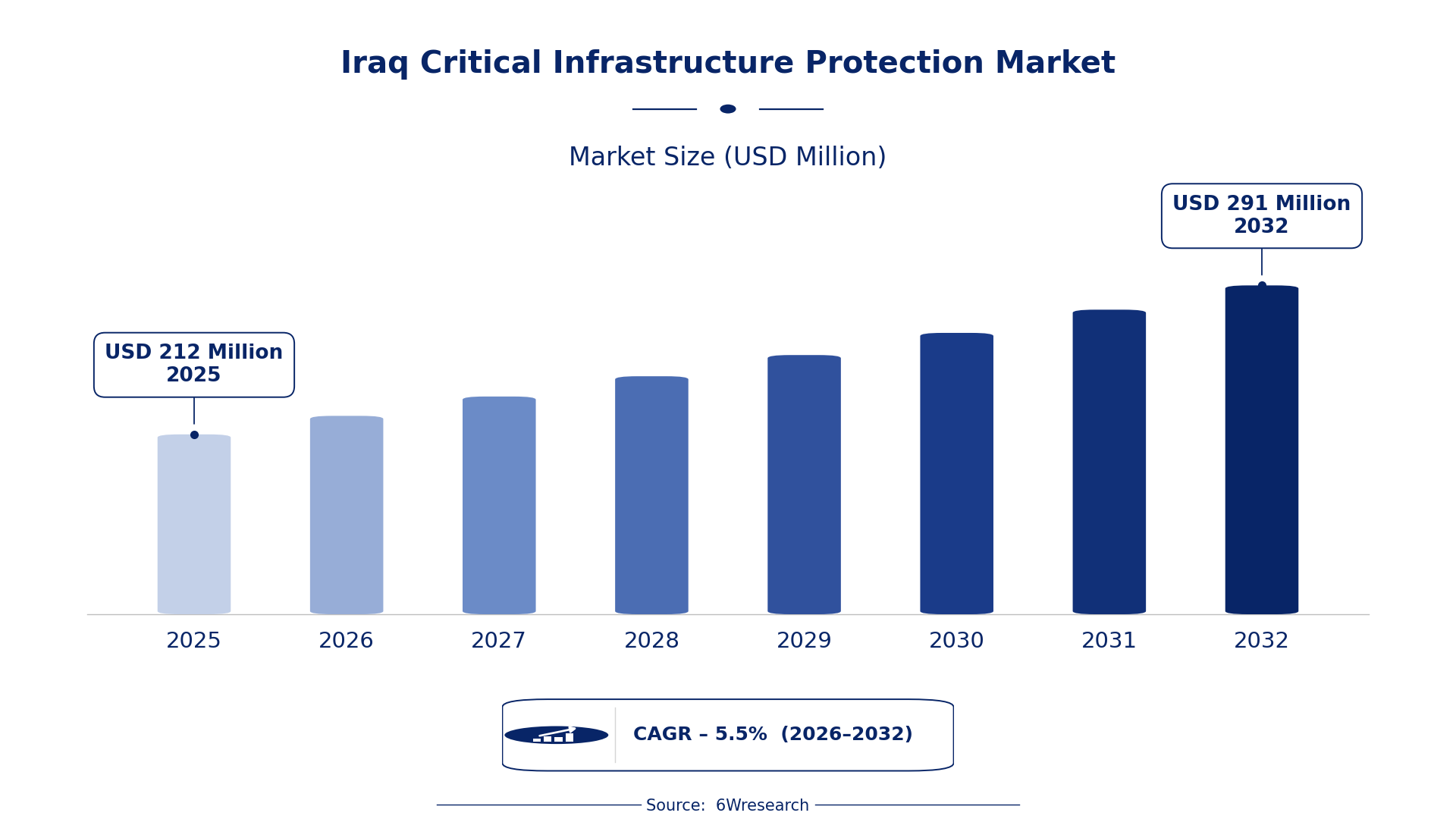
The Iraq Critical Infrastructure Protection Market was estimated at USD 212 Million in 2025 and is projected to reach USD 291 Million by 2032, growing at a CAGR of 5.5% from 2026 to 2032.
Iraq Critical Infrastructure Protection Market Synopsis
The Iraq Critical Infrastructure Protection market is navigating a critical juncture as it responds to heightened threats against key assets. Amid ongoing political instability and infrastructural rebuilding, organizations are compelled to invest in advanced security solutions to protect vital sectors such as oil and gas, energy, and transportation.
The future holds significant promise, with a growing emphasis on integrating cybersecurity measures alongside traditional physical security. As the digital landscape expands, the need for resilience against cyber threats becomes paramount, prompting investments in comprehensive protective measures that can withstand both physical and digital challenges.
Iraq Critical Infrastructure Protection Market Year-wise Growth Rate and Key Drivers
This graph illustrates the annual growth rates of the Iraq Critical Infrastructure Protection Market from 2021 to 2032, highlighting a steady upward trajectory and projected expansion over the forecast period.
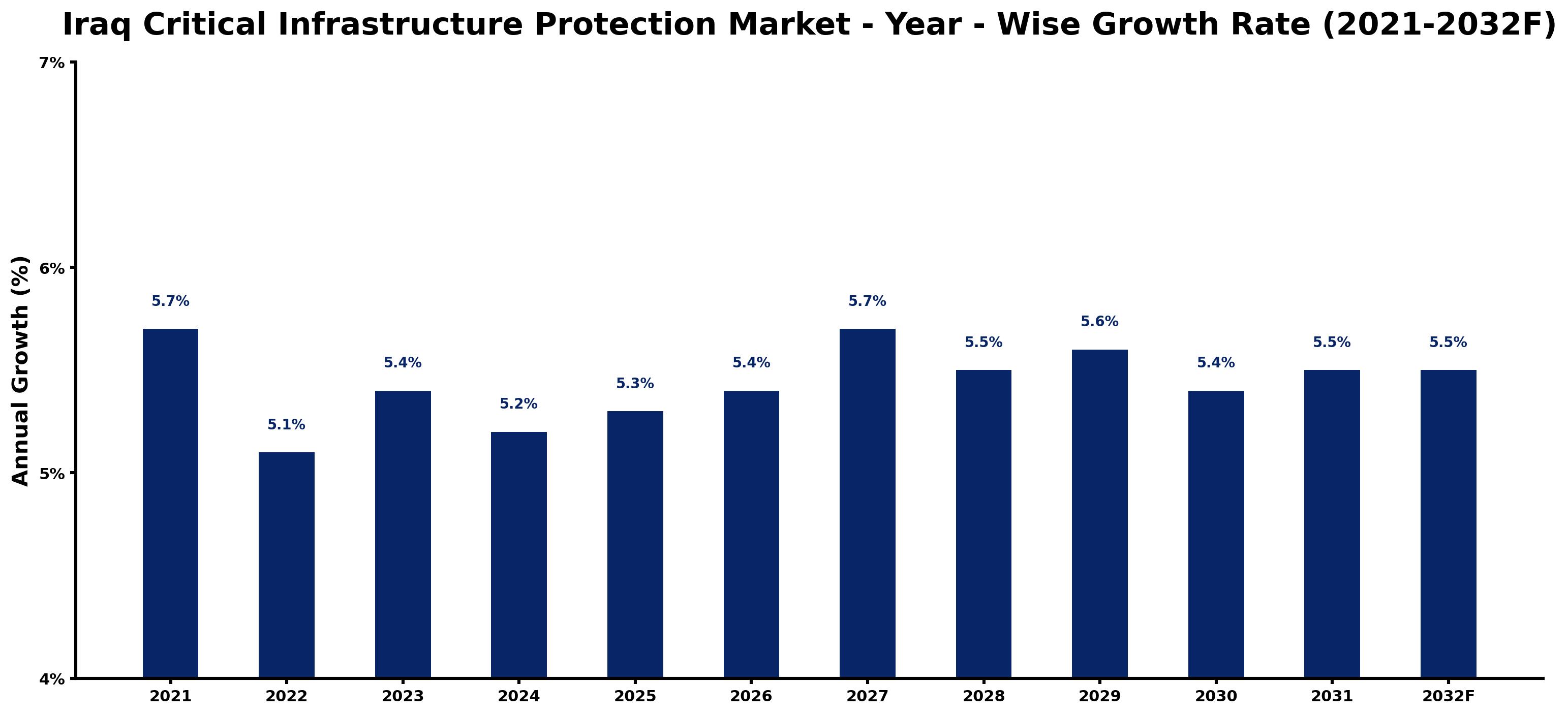
The table below presents the year‑wise growth rates along with the key drivers influencing the market
| Year | Growth Rate | Major Drivers |
| 2021 | 5.7% | Increased investment in oil infrastructure security measures. |
| 2022 | 5.1% | Government stabilization efforts enhance infrastructure protection focus. |
| 2023 | 5.4% | Ongoing conflicts drive demand for critical infrastructure safeguarding. |
| 2024 | 5.2% | ISF's enhanced capabilities boost infrastructure security initiatives. |
| 2025 | 5.3% | Local armed groups prompt urgent protective technology adoption. |
| 2026 | 5.4% | International partnerships strengthen national security frameworks. |
| 2027 | 5.7% | Major reconstruction projects require advanced protection solutions. |
| 2028 | 5.5% | Rising public-private partnerships in critical assets defense. |
| 2029 | 5.6% | Heightened threat perception accelerates security technology investments. |
| 2030 | 5.4% | New regulatory frameworks drive compliance in infrastructure security. |
| 2031 | 5.5% | Increased foreign direct investment increases security needs. |
| 2032 | 5.5% | Integration of smart technologies into infrastructure safeguards. |
Note: Market size estimations and growth projections presented in this report are based on 6Wresearch's proprietary forecasting methodology, utilizing the latest available industry data, government publications, and primary research inputs.
Iraq Critical Infrastructure Protection Market Key Takeaways
Below are some of the specific key takeaways from the market, including:
- Significant growth is anticipated in cybersecurity solutions as organizations focus on mitigating digital threats.
- Government initiatives are driving regulations that enforce stringent security measures across critical sectors.
- Investment opportunities exist in physical security technologies and advanced threat detection systems.
- The increasing digitalization of infrastructure presents both challenges and avenues for innovation in security measures.
- Integrated approaches combining both physical and cybersecurity solutions are emerging as best practices in the market.
Evaluation of Restraints in Iraq Critical Infrastructure Protection Market
Despite the growth potential, the Iraq Critical Infrastructure Protection market is hindered by several key restraints. Ongoing political instability creates an unpredictable threat environment, rendering critical assets vulnerable to insurgent activities. Additionally, limited financial resources and technical expertise stymie effective implementation of security measures. The absence of a comprehensive regulatory framework complicates coordination among stakeholders, further undermining efforts to secure infrastructure. Companies must address these barriers proactively to foster a more secure operational climate in Iraq.
Iraq Critical Infrastructure Protection Market Trends
Currently, there is a marked shift toward enhancing cybersecurity measures as essential infrastructure systems become increasingly interconnected. The urgency to address potential disruptions is driving investments in AI-driven technologies, IoT applications, and blockchain solutions, which promise to bolster the resilience of these networks. Concurrently, physical security solutions like surveillance systems and access controls are gaining traction, underscoring the necessity for a multifaceted approach to infrastructure protection.
Iraq Critical Infrastructure Protection Market Opportunities
Investment opportunities are abundant in Iraq’s Critical Infrastructure Protection market, particularly as the nation focuses on modernizing its critical sectors. Organizations can capitalize on the demand for innovative security solutions that address both physical and cyber threats. Collaborative efforts with local authorities and international organizations engaged in infrastructure projects offer avenues for growth. The ongoing emphasis on safeguarding key infrastructure assets will drive investments in advanced security technologies, presenting lucrative prospects for those prepared to respond to this dynamic landscape.
Government Initiatives in the Iraq Critical Infrastructure Protection Market
Government policies play a crucial role in shaping the Iraq Critical Infrastructure Protection market, particularly as they aim to mitigate security risks across various sectors. The Iraqi government has prioritized the development of a regulatory framework to fortify essential services against threats. This focus on enhancing security protocols reflects the urgent need for resilience in national infrastructure.
- A recent initiative established specialized security forces dedicated to protecting energy facilities and transportation networks, enhancing threat response capabilities.
- Current collaborations with international partners are underway to integrate advanced technologies into national security measures.
- A planned comprehensive cybersecurity framework is expected to be rolled out to address emerging digital threats in critical infrastructure by 2026.
- The government is also enhancing procurement guidelines to ensure security systems meet international standards.
- Efforts to conduct vulnerability assessments of key infrastructure assets are currently being implemented across various sectors.
Future Insights of the Iraq Critical Infrastructure Protection Market
Looking ahead to the years 2026-2032, the Iraq Critical Infrastructure Protection market is expected to continue its growth trajectory, fueled by infrastructural modernization efforts and increasing security demands. A burgeoning awareness of the importance of protecting critical assets will drive investments in both cyber and physical security solutions. Technological advancements will enable organizations to develop tailored security strategies that enhance resilience and continuity of operations in a complex threat environment. Stakeholders that embrace innovation will find ample opportunities to lead in this essential sector.
Iraq Critical Infrastructure Protection Market Latest Developments
In recent months, the Iraq Critical Infrastructure Protection market has seen an uptick in activity, signaling a proactive approach to security amidst ongoing challenges. Companies and government entities are increasingly collaborating to bolster defenses around essential services and infrastructure. This trend reflects a collective recognition of the urgent need for robust security measures that can address both physical and cyber threats.
- A major technology vendor launched a new cybersecurity platform aimed at enhancing the protection of critical infrastructure facilities, with the rollout starting in early 2025.
- An ongoing initiative focused on upgrading physical security measures at oil and gas facilities aims to complete by mid-2026, significantly improving threat detection capabilities.
- A public-private partnership to enhance transportation network security was announced, expected to begin implementation in Q3 2025.
- Recent workshops conducted by the government emphasize best practices for integrating cybersecurity with physical security measures, fostering collaboration among key stakeholders.
- Plans for a comprehensive audit of existing security systems are scheduled for early 2026 to assess vulnerabilities and recommend upgrades.
Iraq Critical Infrastructure Protection Market - Key Attractiveness of the Report
- 10 Years of Market Numbers
- Historical Data Starting from 2022 to 2025
- Base Year: 2025
- Forecast Data until 2032
- Key Performance Indicators Impacting the Market
- Major Upcoming Developments and Projects
Key Highlights of the Report:
- Iraq Critical Infrastructure Protection Market Outlook
- Market Size of Iraq Critical Infrastructure Protection Market, 2025
- Forecast of Iraq Critical Infrastructure Protection Market, 2032
- Historical Data and Forecast of Iraq Critical Infrastructure Protection Revenues & Volume for the Period 2022-2032F
- Iraq Critical Infrastructure Protection Market Trend Evolution
- Iraq Critical Infrastructure Protection Market Drivers and Challenges
- Iraq Critical Infrastructure Protection Price Trends
- Iraq Critical Infrastructure Protection Porter's Five Forces
- Iraq Critical Infrastructure Protection Industry Life Cycle
- Historical Data and Forecast of Iraq Critical Infrastructure Protection Market Revenues & Volume By Solution for the Period 2022-2032F
- Historical Data and Forecast of Iraq Critical Infrastructure Protection Market Revenues & Volume By Physical Safety for the Period 2022-2032F
- Historical Data and Forecast of Iraq Critical Infrastructure Protection Market Revenues & Volume By Security Video Surveillance Systems for the Period 2022-2032F
- Historical Data and Forecast of Iraq Critical Infrastructure Protection Market Revenues & Volume By Screening for the Period 2022-2032F
- Historical Data and Forecast of Iraq Critical Infrastructure Protection Market Revenues & Volume By Scanning for the Period 2022-2032F
- Historical Data and Forecast of Iraq Critical Infrastructure Protection Market Revenues & Volume By Cybersecurity for the Period 2022-2032F
- Historical Data and Forecast of Iraq Critical Infrastructure Protection Market Revenues & Volume By Encryption for the Period 2022-2032F
- Historical Data and Forecast of Iraq Critical Infrastructure Protection Market Revenues & Volume By Threat Intelligence for the Period 2022-2032F
- Historical Data and Forecast of Iraq Critical Infrastructure Protection Market Revenues & Volume By Component for the Period 2022-2032F
- Historical Data and Forecast of Iraq Critical Infrastructure Protection Market Revenues & Volume By Solution for the Period 2022-2032F
- Historical Data and Forecast of Iraq Critical Infrastructure Protection Market Revenues & Volume By Services for the Period 2022-2032F
- Historical Data and Forecast of Iraq Critical Infrastructure Protection Market Revenues & Volume By Vertical for the Period 2022-2032F
- Historical Data and Forecast of Iraq Critical Infrastructure Protection Market Revenues & Volume By Financial Institutions for the Period 2022-2032F
- Historical Data and Forecast of Iraq Critical Infrastructure Protection Market Revenues & Volume By Government for the Period 2022-2032F
- Historical Data and Forecast of Iraq Critical Infrastructure Protection Market Revenues & Volume By Defense for the Period 2022-2032F
- Historical Data and Forecast of Iraq Critical Infrastructure Protection Market Revenues & Volume By Transport and Logistics for the Period 2022-2032F
- Historical Data and Forecast of Iraq Critical Infrastructure Protection Market Revenues & Volume By Energy and Power for the Period 2022-2032F
- Historical Data and Forecast of Iraq Critical Infrastructure Protection Market Revenues & Volume By Commercial Sector for the Period 2022-2032F
- Historical Data and Forecast of Iraq Critical Infrastructure Protection Market Revenues & Volume By Telecom for the Period 2022-2032F
- Historical Data and Forecast of Iraq Critical Infrastructure Protection Market Revenues & Volume By Chemicals and Manufacturing for the Period 2022-2032F
- Iraq Critical Infrastructure Protection Import Export Trade Statistics
- Market Opportunity Assessment By Solution
- Market Opportunity Assessment By Cybersecurity
- Market Opportunity Assessment By Component
- Market Opportunity Assessment By Vertical
- Iraq Critical Infrastructure Protection Top Companies Market Share
- Iraq Critical Infrastructure Protection Competitive Benchmarking By Technical and Operational Parameters
- Iraq Critical Infrastructure Protection Company Profiles
- Iraq Critical Infrastructure Protection Key Strategic Recommendations






































