Iraq Decentralized Identity Market Size & Growth Rate (2026-2032)
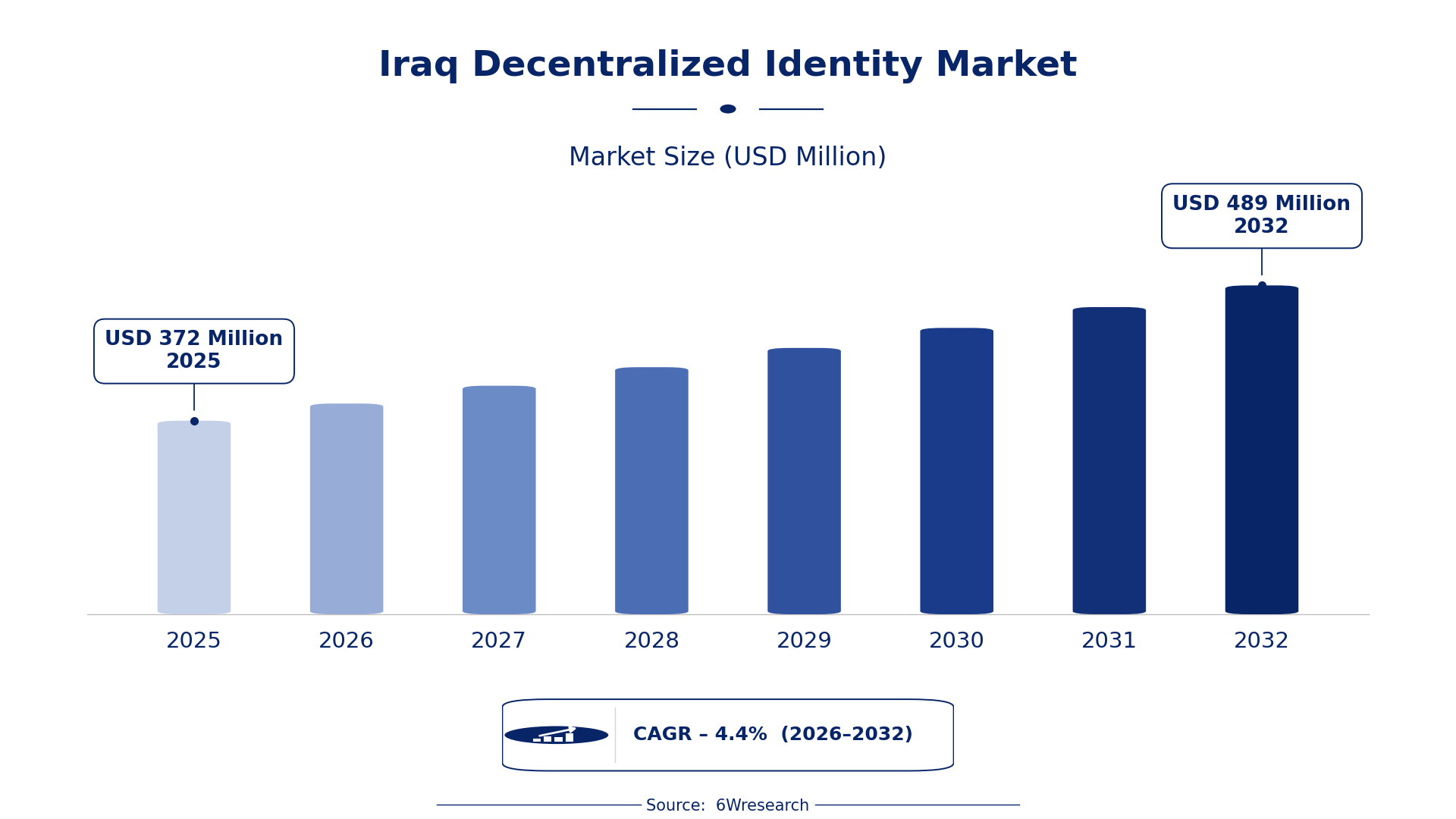
The Iraq Decentralized Identity Market was estimated at USD 372 Million in 2025 and is projected to reach USD 489 Million by 2032, growing at a CAGR of 4.4% from 2026 to 2032.
Iraq Decentralized Identity Market Synopsis
The Iraq Decentralized Identity Market is witnessing a transformative phase. With increasing concerns over data privacy and security, organizations and individuals alike are seeking decentralized identity solutions that allow for greater control and ownership of personal information. This shift is complemented by government policies fostering technological innovation, setting a solid foundation for market growth.
As the market evolves, it faces pressing challenges related to interoperability and scalability of systems. The need for standardized protocols will be crucial, as stakeholders grapple with ensuring user trust while integrating these emerging technologies into existing infrastructures. The coming years will be critical in addressing these concerns as the adoption of decentralized identity gains momentum.
Iraq Decentralized Identity Market Year-wise Growth Rate and Key Drivers
This graph illustrates the annual growth rates of the Iraq Decentralized Identity Market from 2021 to 2032, highlighting a steady upward trajectory and projected expansion over the forecast period.
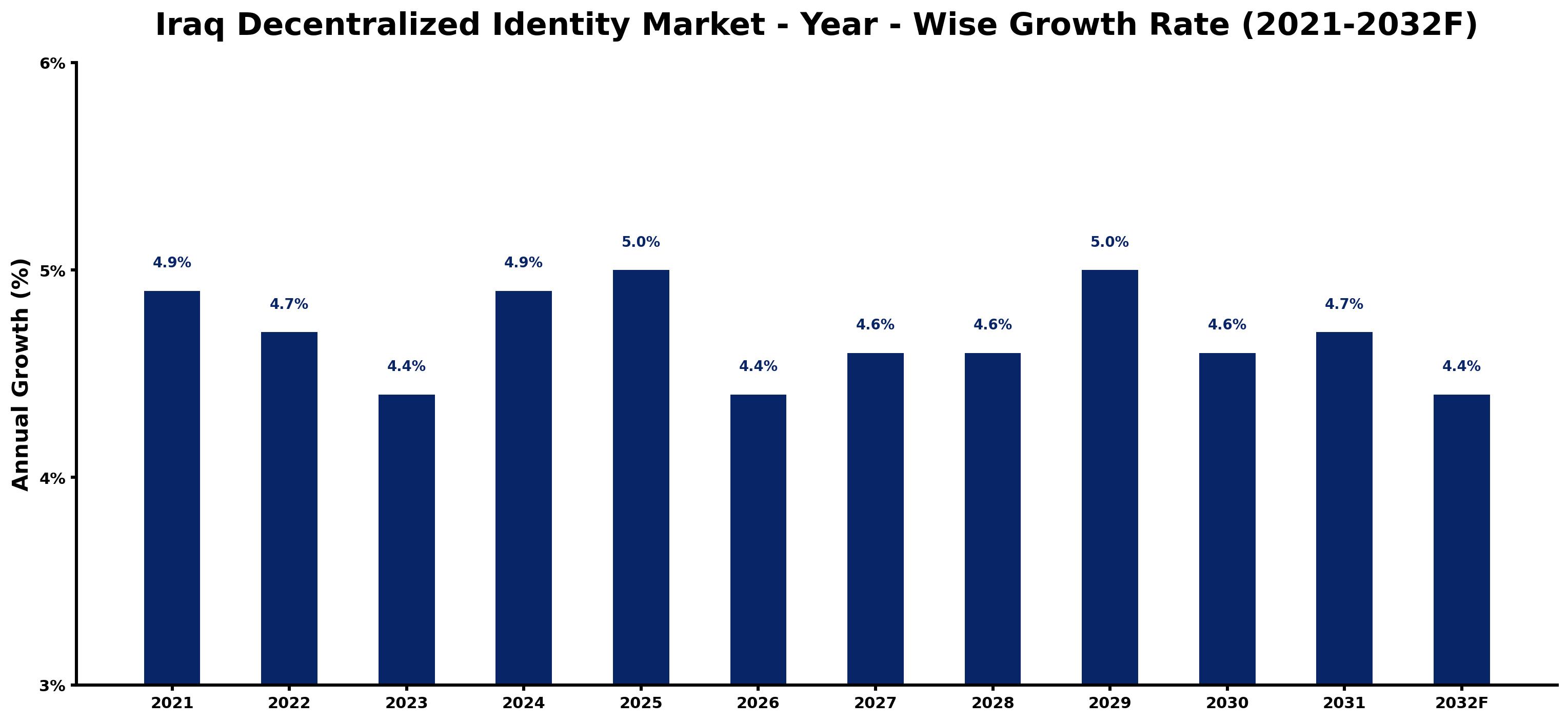
The table below presents the year‑wise growth rates along with the key drivers influencing the market
| Year | Growth Rate | Major Drivers |
| 2021 | 4.9% | Iraq's National ID initiative boosting digital identity solutions. |
| 2022 | 4.7% | Increased foreign investment in cybersecurity startups observed. |
| 2023 | 4.4% | Government partnerships fostering blockchain technology in ID processing. |
| 2024 | 4.9% | Rise in mobile phone usage enhancing digital identity access. |
| 2025 | 5.0% | Public awareness campaigns promoting decentralized identity solutions. |
| 2026 | 4.4% | Regulatory support for digital identity frameworks from CMC. |
| 2027 | 4.6% | Youth demographic driving demand for secure online identities. |
| 2028 | 4.6% | International aid programs supporting digital identity initiatives. |
| 2029 | 5.0% | Increased mobile internet penetration boosting identity service usage. |
| 2030 | 4.6% | Government focus on reducing identity fraud through technology. |
| 2031 | 4.7% | Local companies developing biometrics for enhanced identity verification. |
| 2032 | 4.4% | National cybersecurity strategy emphasizing decentralized identity adoption. |
Note: Market size estimations and growth projections presented in this report are based on 6Wresearch's proprietary forecasting methodology, utilizing the latest available industry data, government publications, and primary research inputs.
Iraq Decentralized Identity Market Key Takeaways
Below are some of the specific key takeaways from the market, including:
- Growing demand for user control over personal data is driving the decentralized identity market.
- Government initiatives are supportive of blockchain technology and decentralized identity adoption.
- Interoperability and scalability remain major hurdles for effective implementation.
- Privacy concerns are central to discussions around decentralized identity solutions.
- Public-private partnerships are being emphasized to spur innovation in this space.
Evaluation of Restraints in Iraq Decentralized Identity Market
Several constraints hinder the growth of the Iraq Decentralized Identity Market. A lack of interoperability among various decentralized identity systems means that users may struggle to have their identities recognized across different platforms. Furthermore, concerns regarding data privacy and security remain prevalent; organizations may be hesitant to implement systems that don’t guarantee robust protections for user information. Lastly, the still-developing technological infrastructure in Iraq poses challenges in integrating these advanced solutions into everyday applications.
Iraq Decentralized Identity Market Trends
Current trends indicate a shift towards blockchain-based solutions for identity management, reflecting a growing preference for transparency and security. Collaborative efforts between tech firms and governmental bodies are emerging to craft standards that facilitate interoperability. Additionally, the increasing emphasis on user-centric design is shaping the development of decentralized identity platforms, making them more accessible and user-friendly.
Iraq Decentralized Identity Market Opportunities
Significant opportunities lie in the intersection of technological advancement and regulatory support. Public-private partnerships can fast-track innovative projects, leveraging existing infrastructure to implement decentralized solutions. Additionally, sectors like finance and healthcare present ripe possibilities for deployment due to heightened needs for secure identity verification. As adoption accelerates, companies that invest early in developing compatible solutions will likely gain a competitive edge.
Government Initiatives in the Iraq Decentralized Identity Market
The Iraqi government is increasingly focusing on fostering a regulatory environment that supports the development of decentralized identity technologies. These initiatives aim to promote digital identity security while addressing public concerns about privacy. With policies designed to encourage public-private partnerships, the government is positioning Iraq as a potentially attractive market for innovation in this sector.
- A national digital infrastructure upgrade programme was launched to enhance the foundational technology required for decentralized identity systems.
- The government is currently working on a regulatory framework that mandates transparency in identity verification processes, promoting accountability.
- Several public-private partnerships are underway to stimulate research and development in decentralized identity technologies.
- A forthcoming initiative plans to create digital identity certifications for businesses, expected to launch by 2026, enhancing trust in digital transactions.
Future Insights of the Iraq Decentralized Identity Market
Looking ahead, the Iraq Decentralized Identity Market is expected to see increased adoption driven by advancements in blockchain technology and governmental support. As security and privacy become top concerns for individuals and organizations, the demand for decentralized identity solutions will likely surge. By 2032, we anticipate more cohesive strategies that align technological capabilities with user expectations, positioning Iraq as a significant player in the regional digital identity space.
Iraq Decentralized Identity Market Latest Developments
Recent months have seen a notable uptick in activity within the Iraq Decentralized Identity Market. Stakeholders are actively exploring partnerships and technologies to address existing challenges while innovating new solutions. The commitment to enhancing digital identity frameworks has led to several initiatives aimed at ensuring a secure and efficient ecosystem.
- A major technology vendor launched a pilot decentralized identity platform aimed at facilitating secure transactions, which began in early 2025 and is still in the testing phase.
- In Q1 2026, a public-private collaboration was initiated to develop educational resources aimed at raising awareness about decentralized identity benefits among businesses.
- An ongoing government project seeks to integrate blockchain technology in public services, enhancing transparency in identity management and transaction records.
- A rollout of a new decentralized identity verification service is anticipated in late 2026, which aims to streamline online access for citizens.
Iraq Decentralized Identity Market - Key Attractiveness of the Report
- 10 Years of Market Numbers
- Historical Data Starting from 2022 to 2025
- Base Year: 2025
- Forecast Data until 2032
- Key Performance Indicators Impacting the Market
- Major Upcoming Developments and Projects
Key Highlights of the Report:
- Iraq Decentralized Identity Market Outlook
- Market Size of Iraq Decentralized Identity Market, 2025
- Forecast of Iraq Decentralized Identity Market, 2032
- Historical Data and Forecast of Iraq Decentralized Identity Revenues & Volume for the Period 2022-2032F
- Iraq Decentralized Identity Market Trend Evolution
- Iraq Decentralized Identity Market Drivers and Challenges
- Iraq Decentralized Identity Price Trends
- Iraq Decentralized Identity Porter's Five Forces
- Iraq Decentralized Identity Industry Life Cycle
- Historical Data and Forecast of Iraq Decentralized Identity Market Revenues & Volume By Vertical for the Period 2022-2032F
- Historical Data and Forecast of Iraq Decentralized Identity Market Revenues & Volume By BFSI for the Period 2022-2032F
- Historical Data and Forecast of Iraq Decentralized Identity Market Revenues & Volume By Government for the Period 2022-2032F
- Historical Data and Forecast of Iraq Decentralized Identity Market Revenues & Volume By Healthcare and Life Sciences for the Period 2022-2032F
- Historical Data and Forecast of Iraq Decentralized Identity Market Revenues & Volume By Retail and eCommerce for the Period 2022-2032F
- Historical Data and Forecast of Iraq Decentralized Identity Market Revenues & Volume By Telecom and IT for the Period 2022-2032F
- Historical Data and Forecast of Iraq Decentralized Identity Market Revenues & Volume By Transport and Logistics for the Period 2022-2032F
- Historical Data and Forecast of Iraq Decentralized Identity Market Revenues & Volume By Real Estate for the Period 2022-2032F
- Historical Data and Forecast of Iraq BFSI Decentralized Identity Market Revenues & Volume By Others for the Period 2022-2032F
- Historical Data and Forecast of Iraq Decentralized Identity Market Revenues & Volume By Identity Type for the Period 2022-2032F
- Historical Data and Forecast of Iraq Decentralized Identity Market Revenues & Volume By Non- biometrics for the Period 2022-2032F
- Historical Data and Forecast of Iraq Decentralized Identity Market Revenues & Volume By Biometrics for the Period 2022-2032F
- Historical Data and Forecast of Iraq Decentralized Identity Market Revenues & Volume By End User for the Period 2022-2032F
- Historical Data and Forecast of Iraq Decentralized Identity Market Revenues & Volume By Enterprises for the Period 2022-2032F
- Historical Data and Forecast of Iraq Decentralized Identity Market Revenues & Volume By Individual for the Period 2022-2032F
- Historical Data and Forecast of Iraq Decentralized Identity Market Revenues & Volume By Organization Size for the Period 2022-2032F
- Historical Data and Forecast of Iraq Decentralized Identity Market Revenues & Volume By Large Enterprises for the Period 2022-2032F
- Historical Data and Forecast of Iraq Decentralized Identity Market Revenues & Volume By SMEs for the Period 2022-2032F
- Iraq Decentralized Identity Import Export Trade Statistics
- Market Opportunity Assessment By Vertical
- Market Opportunity Assessment By Identity Type
- Market Opportunity Assessment By End User
- Market Opportunity Assessment By Organization Size
- Iraq Decentralized Identity Top Companies Market Share
- Iraq Decentralized Identity Competitive Benchmarking By Technical and Operational Parameters
- Iraq Decentralized Identity Company Profiles
- Iraq Decentralized Identity Key Strategic Recommendations






































