Iraq DevOps Market Size & Growth Rate (2026-2032)
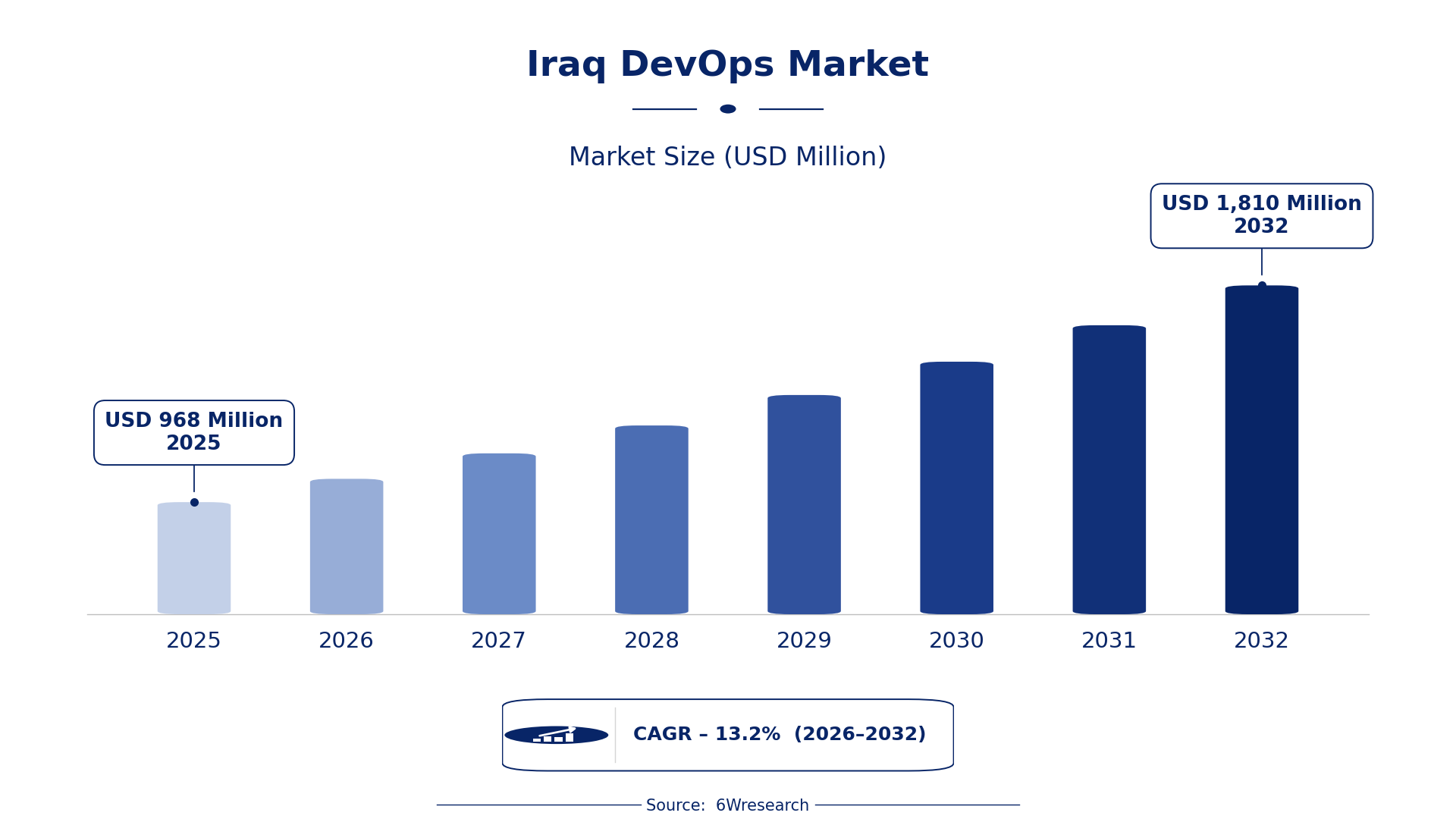
The Iraq DevOps Market was estimated at USD 968 Million in 2025 and is projected to reach USD 1810 Million by 2032, growing at a CAGR of 13.2% from 2026 to 2032.
Iraq DevOps Market Synopsis
The Iraq DevOps market is on an upward trajectory as organizations increasingly embrace DevOps methodologies to enhance software development efficiency. The emphasis on faster deployment cycles and improved collaboration between development and operations teams is driving this growth.
With a burgeoning interest in digital transformation, Iraqi enterprises are actively seeking solutions that streamline workflows and foster innovation. This trend is bolstered by government initiatives aimed at modernizing the IT infrastructure and encouraging technological adoption across various sectors.
Iraq DevOps Market Year-wise Growth Rate and Key Drivers
This graph illustrates the annual growth rates of the Iraq DevOps Market from 2021 to 2032, highlighting a steady upward trajectory and projected expansion over the forecast period.
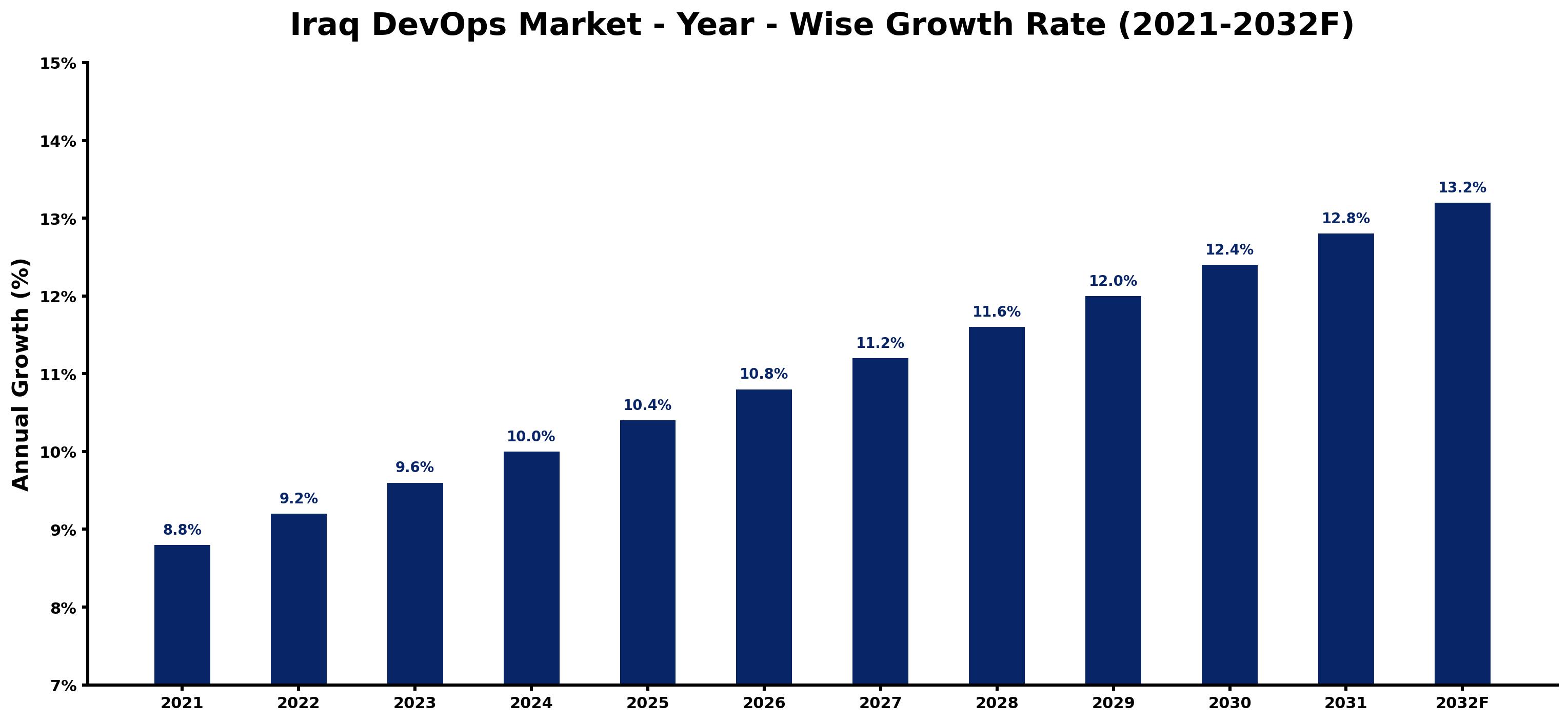
The table below presents the year‑wise growth rates along with the key drivers influencing the market
| Year | Growth Rate | Major Drivers |
| 2021 | 8.8% | Increased digital transformation initiatives by the Iraqi government. |
| 2022 | 9.2% | Growth in local startups adopting agile development practices. |
| 2023 | 9.6% | Government incentives for tech firms promoting software integration. |
| 2024 | 10.0% | Surge in remote work necessitating effective DevOps solutions. |
| 2025 | 10.4% | Emergence of local tech hubs fostering DevOps collaborations. |
| 2026 | 10.8% | Rising adoption of AI-driven tools in software development. |
| 2027 | 11.2% | Local demand for efficient cybersecurity solutions expanding market. |
| 2028 | 11.6% | Strategic partnerships formed with international tech companies. |
| 2029 | 12.0% | Increased investment in local IT infrastructure enhancements. |
| 2030 | 12.4% | Growing importance of data analytics in business operations. |
| 2031 | 12.8% | Regulatory improvements supporting tech sector growth initiatives. |
| 2032 | 13.2% | Enhanced digital literacy driving demand for automated workflows. |
Note: Market size estimations and growth projections presented in this report are based on 6Wresearch's proprietary forecasting methodology, utilizing the latest available industry data, government publications, and primary research inputs.
Iraq DevOps Market Key Takeaways
Below are some of the specific key takeaways from the market, including:
- Growing demand for faster software development and deployment processes.
- Increased adoption of cloud technologies and automation tools.
- Focus on enhancing collaboration between development and operations teams.
- Opportunities for tailored DevOps solutions in finance and telecommunications sectors.
- Government support for digital transformation initiatives boosts market potential.
Evaluation of Restraints in Iraq DevOps Market
Despite the growth potential, the Iraq DevOps market faces notable constraints. Limited awareness of DevOps practices in traditional enterprises hampers widespread adoption. There's also a critical shortage of skilled professionals proficient in DevOps tools and methodologies, creating bottlenecks in implementation. Security concerns and regulatory challenges, exacerbated by ongoing political instability, further complicate the landscape, making it essential for organizations to invest in training and infrastructure improvements.
Iraq DevOps Market Trends
The push towards automation is a defining trend in the Iraq DevOps market. Organizations are increasingly integrating cloud services into their DevOps practices to enhance scalability and flexibility. on top of that, there's a marked emphasis on continuous integration and delivery (CI/CD) processes, which are essential for maintaining high software quality and rapid deployment. As security becomes a paramount concern, integrating security protocols into DevOps workflows is gaining traction.
Iraq DevOps Market Opportunities
The Iraq DevOps market presents several promising opportunities. Industries like finance and telecommunications are recognizing the benefits of agile methodologies and are seeking customized DevOps solutions to streamline their operations. Collaborating with local IT service providers to offer comprehensive training programs can also help bridge the skills gap and drive market growth. The government's focus on digital transformation creates a fertile ground for investment in DevOps tools and services.
Government Initiatives in the Iraq DevOps Market
Government policies in Iraq are increasingly favorable towards the growth of the DevOps market. Initiatives aimed at enhancing digital infrastructure and promoting technology adoption are essential for fostering innovation. As the government works to streamline regulatory processes, organizations can expect a more conducive environment for implementing DevOps practices.
- A national digital infrastructure upgrade programme was completed in early 2025, enhancing connectivity across urban and rural areas.
- Currently underway is a public-private partnership initiative focusing on cybersecurity measures to safeguard IT operations.
- Plans for a regulatory framework to support technology startups are expected to be introduced in 2026.
- Ongoing training programs aimed at upskilling the workforce in digital technologies are being expanded through collaboration with educational institutions.
- A planned initiative to incentivize technology adoption in public sector organizations is set to launch in late 2026.
Future Insights of the Iraq DevOps Market
Looking ahead to 2026-2032, the Iraq DevOps market is positioned for significant growth. As businesses prioritize digital transformation, the demand for streamlined software development processes will only intensify. More organizations are expected to adopt DevOps principles to enhance operational efficiency and foster collaboration. The modernization of IT infrastructure will further drive the need for DevOps solutions, ensuring that Iraqi companies remain competitive in a rapidly changing digital economy.
Iraq DevOps Market Latest Developments
Recent activity in the Iraq DevOps market highlights a growing commitment to innovation and efficiency. Organizations are increasingly focused on implementing advanced DevOps tools and methodologies, reflecting a shift in the industry towards greater collaboration and automation.
- A major technology vendor launched a new DevOps platform in Q2 2025, designed to enhance collaboration between development and operations teams.
- In early 2025, a leading regional operator initiated a project to integrate automation tools into their existing workflows, significantly improving deployment speed.
- A partnership between local IT firms and international technology providers is currently ongoing, aimed at developing customized DevOps solutions for the healthcare sector.
- A rollout of a cloud-based DevOps service is expected to begin in late 2026, targeting small to medium enterprises seeking to modernize their operations.
- In Q3 2025, an initiative focusing on cybersecurity within DevOps practices was launched, aimed at enhancing software security across sectors.
Iraq DevOps Market - Key Attractiveness of the Report
- 10 Years of Market Numbers
- Historical Data Starting from 2022 to 2025
- Base Year: 2025
- Forecast Data until 2032
- Key Performance Indicators Impacting the Market
- Major Upcoming Developments and Projects
Key Highlights of the Report:
- Iraq DevOps Market Outlook
- Market Size of Iraq DevOps Market, 2025
- Forecast of Iraq DevOps Market, 2032
- Historical Data and Forecast of Iraq DevOps Revenues & Volume for the Period 2022-2032F
- Iraq DevOps Market Trend Evolution
- Iraq DevOps Market Drivers and Challenges
- Iraq DevOps Price Trends
- Iraq DevOps Porter's Five Forces
- Iraq DevOps Industry Life Cycle
- Historical Data and Forecast of Iraq DevOps Market Revenues & Volume By Type for the Period 2022-2032F
- Historical Data and Forecast of Iraq DevOps Market Revenues & Volume By Solutions for the Period 2022-2032F
- Historical Data and Forecast of Iraq DevOps Market Revenues & Volume By Services for the Period 2022-2032F
- Historical Data and Forecast of Iraq DevOps Market Revenues & Volume By Vertical for the Period 2022-2032F
- Historical Data and Forecast of Iraq DevOps Market Revenues & Volume By Telecommunications for the Period 2022-2032F
- Historical Data and Forecast of Iraq DevOps Market Revenues & Volume By IT and ITeS for the Period 2022-2032F
- Historical Data and Forecast of Iraq DevOps Market Revenues & Volume By Retail and Consumer Goods for the Period 2022-2032F
- Historical Data and Forecast of Iraq DevOps Market Revenues & Volume By Media and Entertainment for the Period 2022-2032F
- Historical Data and Forecast of Iraq DevOps Market Revenues & Volume By Government and Public Sector for the Period 2022-2032F
- Historical Data and Forecast of Iraq DevOps Market Revenues & Volume By Manufacturing for the Period 2022-2032F
- Historical Data and Forecast of Iraq DevOps Market Revenues & Volume By Healthcare and Life Sciences for the Period 2022-2032F
- Historical Data and Forecast of Iraq DevOps Market Revenues & Volume By Education for the Period 2022-2032F
- Historical Data and Forecast of Iraq DevOps Market Revenues & Volume By Deployment Model for the Period 2022-2032F
- Historical Data and Forecast of Iraq DevOps Market Revenues & Volume By Public for the Period 2022-2032F
- Historical Data and Forecast of Iraq DevOps Market Revenues & Volume By Private for the Period 2022-2032F
- Historical Data and Forecast of Iraq DevOps Market Revenues & Volume By Organization Size for the Period 2022-2032F
- Historical Data and Forecast of Iraq DevOps Market Revenues & Volume By SMEs for the Period 2022-2032F
- Historical Data and Forecast of Iraq DevOps Market Revenues & Volume By Large enterprises for the Period 2022-2032F
- Iraq DevOps Import Export Trade Statistics
- Market Opportunity Assessment By Type
- Market Opportunity Assessment By Vertical
- Market Opportunity Assessment By Deployment Model
- Market Opportunity Assessment By Organization Size
- Iraq DevOps Top Companies Market Share
- Iraq DevOps Competitive Benchmarking By Technical and Operational Parameters
- Iraq DevOps Company Profiles
- Iraq DevOps Key Strategic Recommendations






































