Iraq Functional Apparel Market Size, Share & Growth Rate
The Iraq Functional Apparel Market was estimated at USD 259 Million in 2025 and is projected to reach USD 342 Million by 2032, growing at a CAGR of 4.1% from 2026 to 2032. This growth trajectory is largely driven by an increasing consumer preference for clothing that offers specific performance enhancements, particularly for outdoor activities and sports. As Iraq's recreational and outdoor pursuits become more popular, the demand for functional apparel with features such as moisture-wicking, UV protection, and temperature regulation is set to rise.
Iraq Functional Apparel Market Year-wise Growth Rate and Key Drivers
This graph highlights how the Iraq Functional Apparel Market has steadily grown over the years, supported by major growth factors.
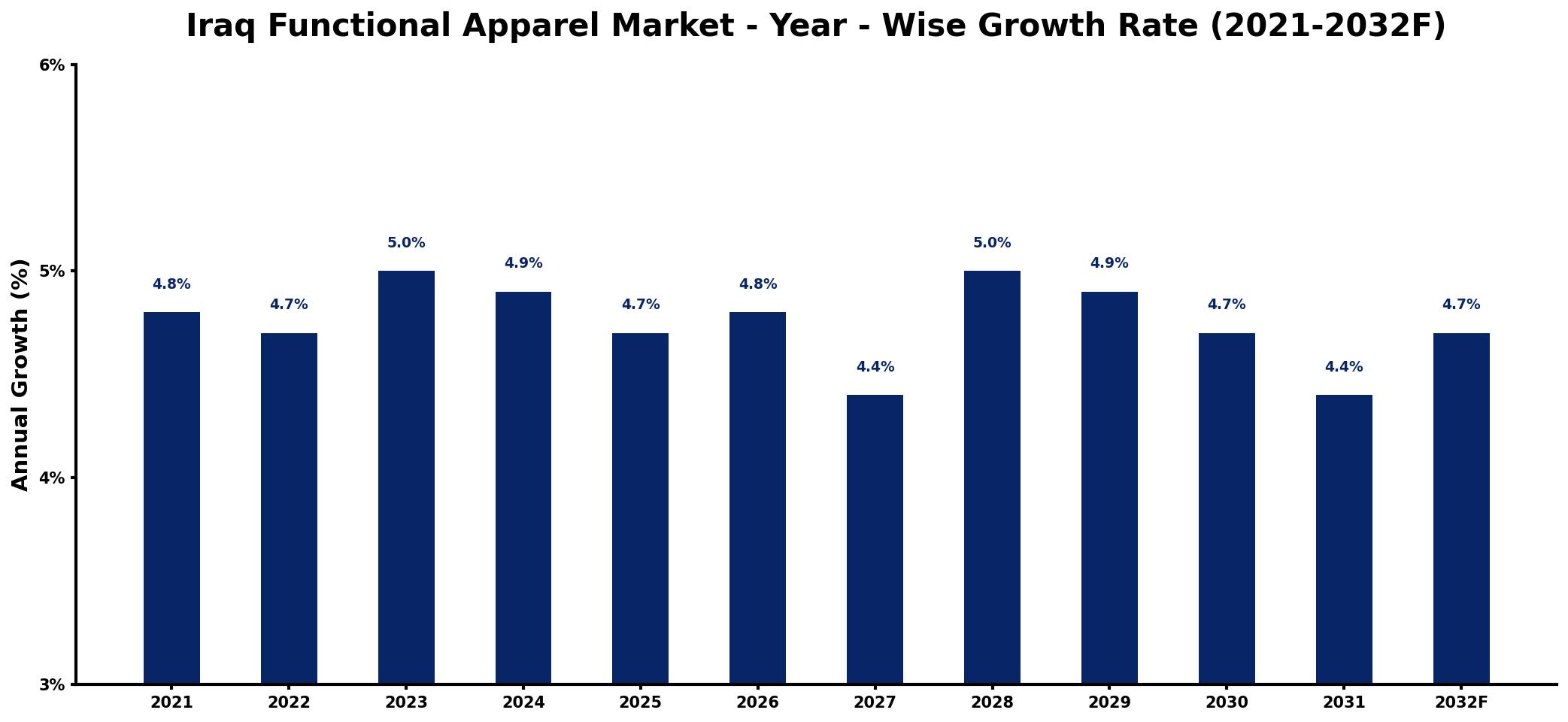
The table below presents the year‑wise growth rates along with the key drivers influencing the market
| Year | Growth Rate | Major Drivers |
| 2021 | 4.8% | increased demand for outdoor activities |
| 2022 | 4.7% | growing interest in sustainable materials |
| 2023 | 5.0% | expansion of e-commerce platforms |
| 2024 | 4.9% | rising end-use demand growth |
| 2025 | 4.7% | investment in local manufacturing facilities |
| 2026 | 4.8% | enhanced marketing strategies adopted |
| 2027 | 4.4% | growing popularity of athleisure styles |
| 2028 | 5.0% | increased participation in sports events |
| 2029 | 4.9% | development of smart textile technology |
| 2030 | 4.7% | rising export shipment volumes |
| 2031 | 4.4% | increased collaborations with influencers |
| 2032 | 4.7% | growing awareness of health benefits |
Note: Market size estimations and growth projections presented in this report are based on 6Wresearch's proprietary forecasting methodology, utilizing the latest available industry data, government publications, and primary research inputs.
Iraq Functional Apparel Market Synopsis
Recently, the Iraq Functional Apparel Market has gained notable momentum due to a shift in consumer attitudes towards health and fitness. However, the market is poised for significant expansion as consumers increasingly seek versatile clothing options that combine style with performance. This evolution reflects a broader trend towards active lifestyles, which is reshaping the apparel landscape in the region.
While there is positive growth in demand for functional apparel, there remain significant challenges related to sourcing advanced technical fabrics and achieving the right balance of performance and aesthetics. These factors will play a crucial role in determining the market's future direction as businesses adapt to meet diverse consumer needs.
Iraq Functional Apparel Market Key Takeaways
- The market is witnessing a rise in demand for performance-enhancing apparel driven by outdoor and recreational activities.
- Growth is supported by government initiatives focused on enhancing textile technology and design capacity.
- Consumer trends indicate a preference for clothing that merges style with functionality.
- Challenges in sourcing advanced materials remain a key concern for market players.
- Investment in R&D is critical for companies looking to innovate and stay competitive.
Evaluation of Restraints in Iraq Functional Apparel Market
Despite the promising outlook, several restraints hinder the growth of the Iraq Functional Apparel Market. A primary concern involves the performance requirements of garments, which must meet the high expectations of consumers engaged in rigorous activities. Additionally, varying comfort and style preferences can complicate design efforts. Companies also face challenges in sourcing the latest technical fabrics and implementing innovative functional finishes, which are essential for developing competitive products that appeal to a diverse customer base. These limitations could slow market penetration and limit overall growth potential.
Iraq Functional Apparel Market Trends
Current trends indicate a marked increase in consumer awareness surrounding health and fitness, driving demand for functional apparel. Innovations in fabric technology are emerging, with brands emphasizing moisture management, breathability, and sustainable materials. Additionally, a growing inclination towards athleisure wear is influencing styles within the functional apparel segment, as consumers seek garments that offer both practicality and fashion appeal. This intersection of functionality and style is expected to shape future offerings in the Iraq market.
Iraq Functional Apparel Market Opportunities
Significant opportunities exist in the Iraq Functional Apparel Market, particularly for companies that invest in the development of innovative products tailored to local preferences. The expansion of e-commerce platforms presents another avenue for growth, allowing brands to reach a broader audience. Furthermore, collaborations with local designers can lead to unique offerings that resonate with consumers, enhancing brand loyalty and market penetration. Companies that prioritize sustainability in their product lines are also likely to attract the environmentally-conscious segment of the market.
Government Initiatives in the Iraq Functional Apparel Market
The Iraqi government has recognized the potential of the functional apparel market and is taking steps to foster its growth. Policies focused on investment in textile R&D aim to promote innovative fabric technologies and advanced garment designs. Regulatory standards and safety guidelines are being established to ensure that functional apparel meets performance and durability expectations. Additionally, capacity-building initiatives designed to train local designers and manufacturers are paving the way for a more robust domestic market, ultimately supporting both local needs and export potential.
Future Insights of the Iraq Functional Apparel Market
Looking ahead, the Iraq Functional Apparel Market is expected to continue its upward trajectory from 2026 to 2032. The convergence of active lifestyle trends with enhanced consumer expectations will drive innovation and growth within the sector. Moreover, ongoing government support and investment in textile technology will likely bolster the industry's competitive landscape. As brands navigate these dynamics, those who adapt quickly to changing consumer demands and leverage advancements in material technology will be better positioned to thrive.
Iraq Functional Apparel Market Latest Developments (2025 - 2026)
In recent months, the Iraq Functional Apparel Market has seen a surge in activity, with various brands exploring new fabric technologies to enhance performance and comfort. The trend towards sustainable practices is gaining traction, as more companies are committing to eco-friendly materials in their production processes. Collaboration between local textile manufacturers and international brands is becoming more common, fostering innovation and expanding product offerings. As the market continues to evolve, consumer feedback is increasingly influencing design strategies, aligning products more closely with buyer preferences.
Iraq Functional Apparel Market - Key Attractiveness of the Report
- 10 Years of Market Numbers
- Historical Data Starting from 2022 to 2025
- Base Year: 2025
- Forecast Data until 2032
- Key Performance Indicators Impacting the Market
- Major Upcoming Developments and Projects
Key Highlights of the Report:
- Iraq Functional Apparel Market Outlook
- Market Size of Iraq Functional Apparel Market, 2025
- Forecast of Iraq Functional Apparel Market, 2032
- Historical Data and Forecast of Iraq Functional Apparel Revenues & Volume for the Period 2022-2032F
- Iraq Functional Apparel Market Trend Evolution
- Iraq Functional Apparel Market Drivers and Challenges
- Iraq Functional Apparel Price Trends
- Iraq Functional Apparel Porter's Five Forces
- Iraq Functional Apparel Industry Life Cycle
- Historical Data and Forecast of Iraq Functional Apparel Market Revenues & Volume By Product Type for the Period 2022-2032F
- Historical Data and Forecast of Iraq Functional Apparel Market Revenues & Volume By Sportswear for the Period 2022-2032F
- Historical Data and Forecast of Iraq Functional Apparel Market Revenues & Volume By Activewear for the Period 2022-2032F
- Historical Data and Forecast of Iraq Functional Apparel Market Revenues & Volume By Protective Clothing for the Period 2022-2032F
- Historical Data and Forecast of Iraq Functional Apparel Market Revenues & Volume By Others for the Period 2022-2032F
- Historical Data and Forecast of Iraq Functional Apparel Market Revenues & Volume By Application for the Period 2022-2032F
- Historical Data and Forecast of Iraq Functional Apparel Market Revenues & Volume By Sports Industry for the Period 2022-2032F
- Historical Data and Forecast of Iraq Functional Apparel Market Revenues & Volume By Outdoor Clothing for the Period 2022-2032F
- Historical Data and Forecast of Iraq Functional Apparel Market Revenues & Volume By Healthcare sector for the Period 2022-2032F
- Historical Data and Forecast of Iraq Functional Apparel Market Revenues & Volume By Distribution Channel for the Period 2022-2032F
- Historical Data and Forecast of Iraq Functional Apparel Market Revenues & Volume By Offline Store for the Period 2022-2032F
- Historical Data and Forecast of Iraq Functional Apparel Market Revenues & Volume By Online Store for the Period 2022-2032F
- Iraq Functional Apparel Import Export Trade Statistics
- Market Opportunity Assessment By Product Type
- Market Opportunity Assessment By Application
- Market Opportunity Assessment By Distribution Channel
- Iraq Functional Apparel Top Companies Market Share
- Iraq Functional Apparel Competitive Benchmarking By Technical and Operational Parameters
- Iraq Functional Apparel Company Profiles
- Iraq Functional Apparel Key Strategic Recommendations






































