Iraq Interior Design Market Size, Share & Growth Rate
The Iraq Interior Design Market was estimated at USD 261 Million in 2025 and is projected to reach USD 343 Million by 2032, growing at a CAGR of 4.0% from 2026 to 2032. This upward trajectory is primarily driven by the increasing urbanization within major cities and a burgeoning middle class eager to embrace modern living standards. Additionally, ongoing reconstruction efforts and a growing preference for sophisticated design solutions are significant catalysts for this market expansion.
Iraq Interior Design Market Year-wise Growth Rate and Key Drivers
This graph highlights how the Iraq Interior Design Market has steadily grown over the years, supported by major growth factors.
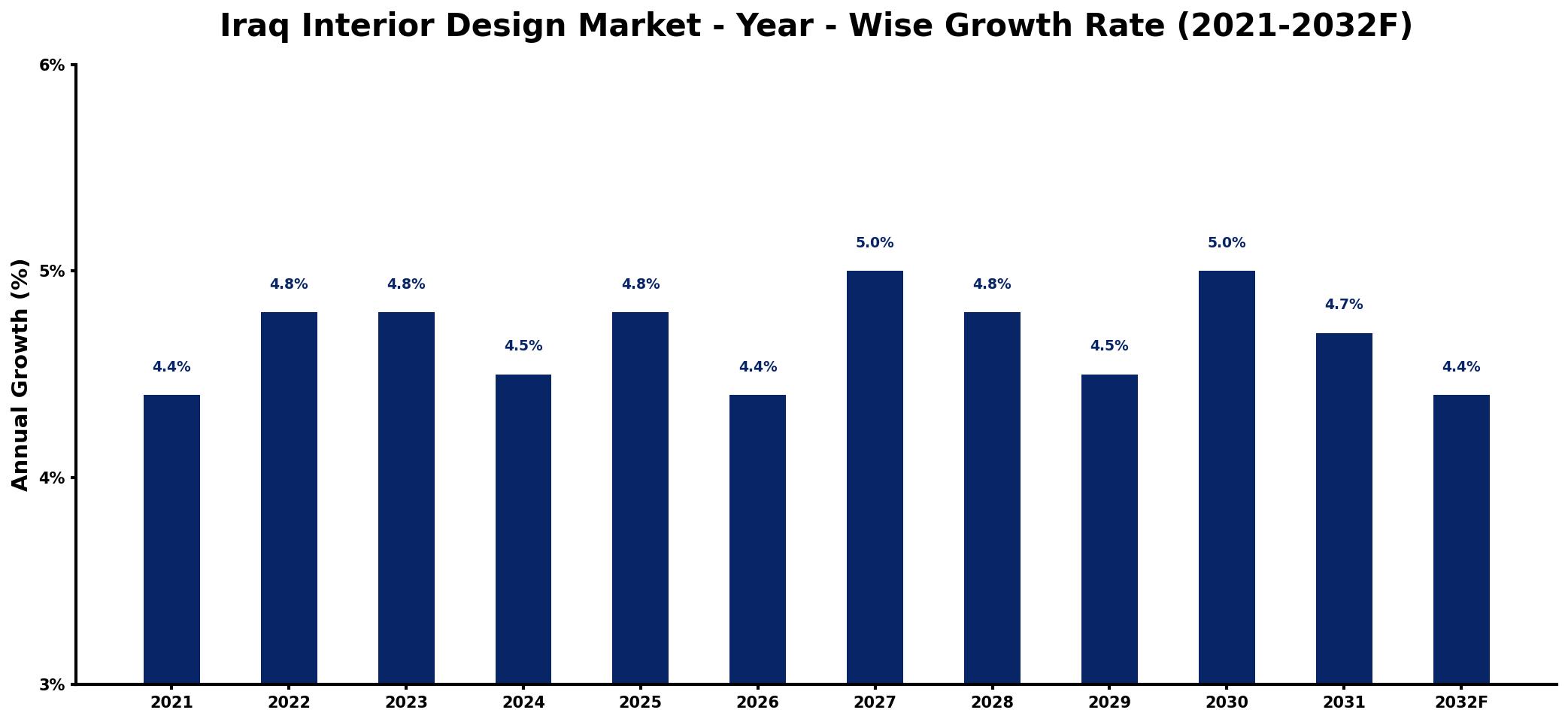
The table below presents the year‑wise growth rates along with the key drivers influencing the market
| Year | Growth Rate | Major Drivers |
| 2021 | 4.4% | Rising demand for residential spaces |
| 2022 | 4.8% | Increased investment in construction projects |
| 2023 | 4.8% | Growing popularity of modern aesthetics |
| 2024 | 4.5% | Expansion of local artisan markets |
| 2025 | 4.8% | Surge in hospitality sector growth |
| 2026 | 4.4% | Boost in urban redevelopment initiatives |
| 2027 | 5.0% | Increase in expatriate population influx |
| 2028 | 4.8% | Growth in sustainable building practices |
| 2029 | 4.5% | Rising interest in luxury amenities |
| 2030 | 5.0% | increased pharmaceutical industry usage |
| 2031 | 4.7% | growing downstream application demand |
| 2032 | 4.4% | enhanced product quality standards |
Note: Market size estimations and growth projections presented in this report are based on 6Wresearch's proprietary forecasting methodology, utilizing the latest available industry data, government publications, and primary research inputs.
Iraq Interior Design Market Synopsis
The Iraq interior design market is currently in a phase of vigorous growth, marked by a shift towards contemporary and minimalist aesthetics. As urban centers like Baghdad, Erbil, and Basra thrive with new construction projects, the demand for professional interior design services is surging, promising a bright future.
Looking ahead, the market is expected to continue evolving, embracing innovative trends such as sustainability and smart home technologies. As consumers increasingly seek personalized and unique interior spaces, the blend of traditional Iraqi design elements with modern sensibilities will remain a hallmark of this dynamic sector.
Iraq Interior Design Market Key Takeaways
- Increasing urbanization and a growing middle class are driving demand for modern interior design services.
- There is a notable trend towards sustainability and eco-friendly design practices among consumers.
- The incorporation of smart home technologies is becoming increasingly popular in residential and commercial projects.
- Interior design firms are innovating to meet the growing demand for bespoke and unique spaces tailored to individual client needs.
- Investment opportunities are on the rise, particularly in technology-driven design solutions and high-quality furnishings.
Evaluation of Restraints in Iraq Interior Design Market
The growth of the Iraq interior design market is tempered by various challenges. Limited access to high-quality materials, exacerbated by trade restrictions, presents significant hurdles for designers. Political instability and economic uncertainties further complicate the purchasing landscape, influencing clients' willingness to invest in interior design. Additionally, a shortage of skilled labor and specialized training programs constrains the availability of qualified professionals, thus affecting overall market growth. These factors contribute to a complex operating environment that necessitates strategic navigation by businesses in the sector.
Iraq Interior Design Market Trends
Current trends in the Iraq interior design market reflect a decisive shift towards modern aesthetics, with an emphasis on clean lines and minimalist design. Sustainability is becoming a central focus, prompting designers to utilize locally sourced materials and eco-friendly products. Additionally, the integration of technology into design, including smart home features and automated systems, is reshaping how consumers engage with their living spaces. As the market matures, there is an increasing preference for bespoke designs that cater specifically to the tastes and preferences of the individual client, highlighting the demand for personalization in this evolving sector.
Iraq Interior Design Market Opportunities
Investment opportunities within the Iraq interior design market are ripe, fueled by the country's rapid urbanization and increased disposable income. There is a burgeoning demand for innovative interior design solutions across various sectors, including residential, commercial, and hospitality. Investors can capitalize on this growth by providing customized interior design services and sourcing high-quality furnishings that meet consumer preferences. Moreover, embracing technology-driven solutions, such as virtual reality for design visualization, presents a unique avenue for differentiation and growth. Collaboration with local architects and designers can also fortify market presence and enhance service offerings, positioning businesses for long-term success.
Government Initiatives in the Iraq Interior Design Market
The Iraqi government has recognized the significance of the interior design market and is implementing policies to foster its growth. Initiatives aimed at promoting local talent and sustainable practices are gaining traction, ensuring that designers comply with building codes and regulations. Support programs, including funding opportunities and training initiatives, are designed to enhance skill development within the industry. By prioritizing environmentally friendly designs and materials, the government is creating a conducive environment for the growth of interior design businesses, which can ultimately benefit the economy.
Future Insights of the Iraq Interior Design Market
The future of the Iraq interior design market appears robust, driven by ongoing urbanization and an emerging demand for modern living environments. As reconstruction efforts continue and the economy stabilizes, there will be a pronounced focus on enhancing residential and commercial spaces. Trends towards sustainability and technological integration are likely to accelerate, addressing the needs of an increasingly eco-conscious consumer base. Additionally, the anticipated influx of foreign investment and partnerships with international design firms will introduce new ideas and innovations, further expanding the markets potential and paving the way for a dynamic evolution in design solutions.
Iraq Interior Design Market Latest Developments (2025 - 2026)
In recent months, the Iraq interior design market has seen a surge in projects aimed at revitalizing urban spaces, showcasing a blend of traditional and contemporary styles. Designers are increasingly incorporating technology into their offerings, reflecting a demand for smart living solutions. Additionally, local exhibitions and events have highlighted the work of emerging designers, fostering a sense of community and innovation within the industry. As consumer awareness of design quality grows, firms are adapting to meet these elevated expectations with refined service offerings and product selections.
Iraq Interior Design Market - Key Attractiveness of the Report
- 10 Years of Market Numbers
- Historical Data Starting from 2022 to 2025
- Base Year: 2025
- Forecast Data until 2032
- Key Performance Indicators Impacting the Market
- Major Upcoming Developments and Projects
Key Highlights of the Report:
- Iraq Interior Design Market Outlook
- Market Size of Iraq Interior Design Market, 2025
- Forecast of Iraq Interior Design Market, 2032
- Historical Data and Forecast of Iraq Interior Design Revenues & Volume for the Period 2022-2032F
- Iraq Interior Design Market Trend Evolution
- Iraq Interior Design Market Drivers and Challenges
- Iraq Interior Design Price Trends
- Iraq Interior Design Porter's Five Forces
- Iraq Interior Design Industry Life Cycle
- Historical Data and Forecast of Iraq Interior Design Market Revenues & Volume By End Use for the Period 2022-2032F
- Historical Data and Forecast of Iraq Interior Design Market Revenues & Volume By Commercial for the Period 2022-2032F
- Historical Data and Forecast of Iraq Interior Design Market Revenues & Volume By Residential for the Period 2022-2032F
- Historical Data and Forecast of Iraq Interior Design Market Revenues & Volume By Decoration Type for the Period 2022-2032F
- Historical Data and Forecast of Iraq Interior Design Market Revenues & Volume By New for the Period 2022-2032F
- Historical Data and Forecast of Iraq Interior Design Market Revenues & Volume By Renovations for the Period 2022-2032F
- Iraq Interior Design Import Export Trade Statistics
- Market Opportunity Assessment By End Use
- Market Opportunity Assessment By Decoration Type
- Iraq Interior Design Top Companies Market Share
- Iraq Interior Design Competitive Benchmarking By Technical and Operational Parameters
- Iraq Interior Design Company Profiles
- Iraq Interior Design Key Strategic Recommendations






































