Iraq Perchloroethylene Market Size, Share & Growth Rate
The Iraq Perchloroethylene Market was estimated at USD 276 Million in 2025 and is projected to reach USD 375 Million by 2032, growing at a CAGR of 4.5% from 2026 to 2032. This growth trajectory is primarily fueled by the burgeoning textile and dry cleaning industries, both of which are crucial for the economic revitalization of Iraq. Additionally, advancements in the automotive and metal fabrication sectors are significantly bolstering demand for perchloroethylene, presenting a robust market outlook.
Iraq Perchloroethylene Market Year-wise Growth Rate and Key Drivers
This graph highlights how the Iraq Perchloroethylene Market has steadily grown over the years, supported by major growth factors.
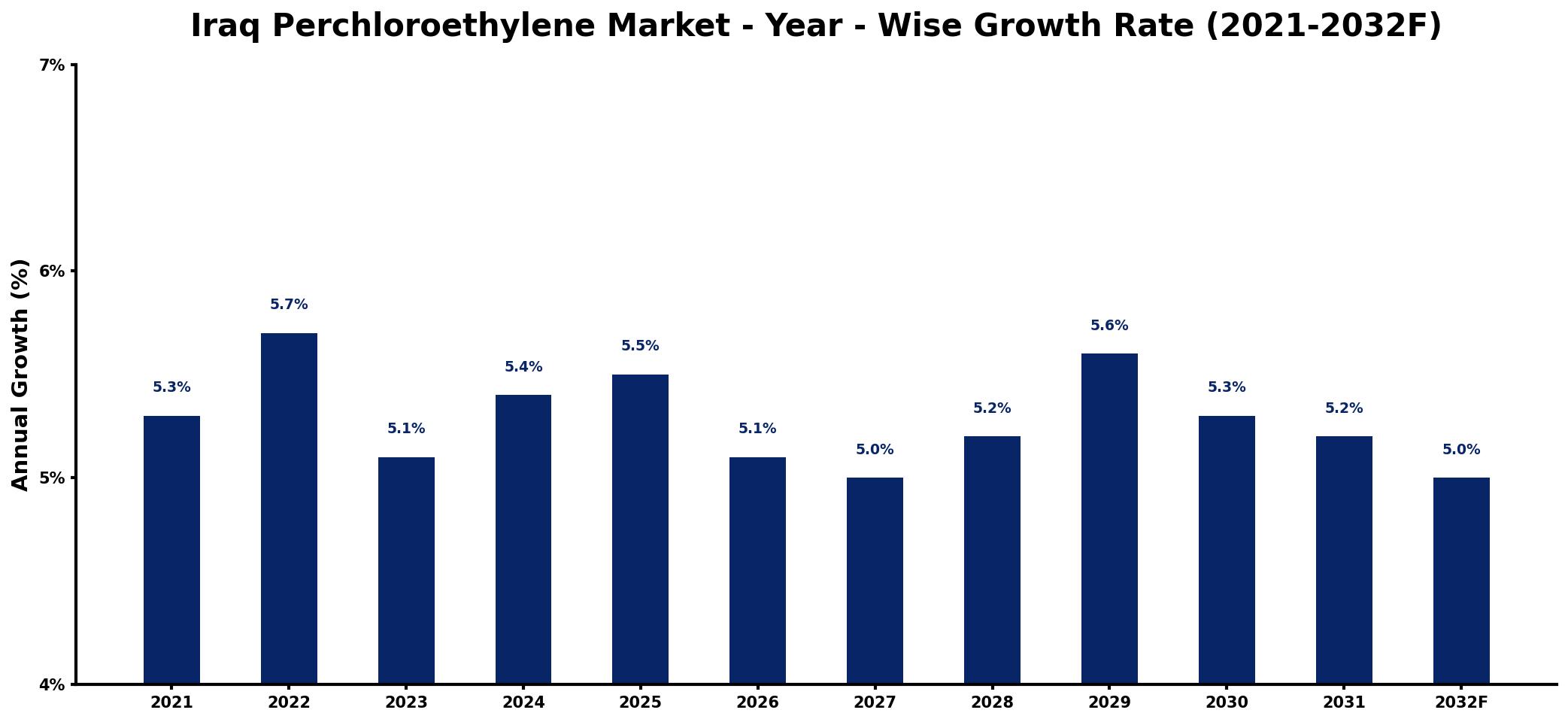
The table below presents the year‑wise growth rates along with the key drivers influencing the market
| Year | Growth Rate | Major Drivers |
| 2021 | 5.3% | Increased demand from automotive sector |
| 2022 | 5.7% | Expansion in textile manufacturing facilities |
| 2023 | 5.1% | Growing environmental regulations enforcement |
| 2024 | 5.4% | Rise in cleaning service providers |
| 2025 | 5.5% | Investment in industrial cleaning technologies |
| 2026 | 5.1% | Growth in electronics manufacturing sector |
| 2027 | 5.0% | Emerging markets driving demand globally |
| 2028 | 5.2% | Technological advancements in solvent applications |
| 2029 | 5.6% | Increased production capacity investments |
| 2030 | 5.3% | Rising consumer awareness on sustainability |
| 2031 | 5.2% | Higher adoption rates in healthcare |
| 2032 | 5.0% | Strengthened partnerships in supply chains |
Note: Market size estimations and growth projections presented in this report are based on 6Wresearch's proprietary forecasting methodology, utilizing the latest available industry data, government publications, and primary research inputs.
Iraq Perchloroethylene Market Synopsis
The demand for perchloroethylene in Iraq is surging, predominantly driven by the expansion of the textile industry. As urbanization accelerates, there is a rising need for effective dry cleaning solutions, which further intensifies the reliance on this chemical solvent. Furthermore, the automotive sector is increasingly adopting perchloroethylene for metal degreasing applications, enhancing its market appeal.
However, the market is not without its complexities. Environmental concerns regarding the use of perchloroethylene are mounting, prompting both regulatory scrutiny and consumer demand for safer alternatives. The evolving landscape underscores the necessity for innovation within the sector, as businesses strive to meet both regulatory requirements and customer expectations.
Iraq Perchloroethylene Market Key Takeaways
- The market is heavily influenced by the rapid growth in the textile and dry cleaning sectors.
- Environmental concerns are prompting a shift towards more sustainable alternatives to perchloroethylene.
- Technological advancements are reshaping production methods, enhancing efficiency and safety.
- Regulatory developments are becoming more stringent, impacting operational practices within the industry.
- Investment opportunities abound due to the strategic location of Iraq and its growing industrial base.
Evaluation of Restraints in Iraq Perchloroethylene Market
Despite the positive growth outlook, several restraints are evident in the Iraq Perchloroethylene market. Political instability continues to create uncertainty, affecting supply chains and investor confidence. Furthermore, inconsistent enforcement of environmental regulations can hinder compliance efforts and result in increased operational risks. The presence of counterfeit and substandard products also poses significant challenges, potentially compromising product safety and market integrity. Consequently, industry players must navigate these hurdles with strategic foresight and operational rigor.
Iraq Perchloroethylene Market Trends
The market is currently witnessing a notable trend toward sustainable production practices. Stakeholders are increasingly adopting eco-friendly alternatives to perchloroethylene, reflecting a broader commitment to environmental stewardship. Additionally, innovations in production technology are leading to more efficient methods of manufacturing perchloroethylene, which could reshape competitive dynamics. As awareness of health risks associated with perchloroethylene rises, regulatory bodies are tightening guidelines, compelling businesses to adapt swiftly.
Iraq Perchloroethylene Market Opportunities
The Iraq Perchloroethylene market is ripe with investment opportunities, particularly given the nation's ongoing industrial development. With the textile and automotive sectors expanding, there is a robust demand for perchloroethylene, making the establishment of production facilities and distribution networks increasingly viable. Furthermore, government initiatives aimed at economic diversification present an attractive landscape for investors. This, coupled with a focus on enhancing infrastructure, positions Iraq as a key player for long-term growth in the chemical sector.
Government Initiatives in the Iraq Perchloroethylene Market
The Iraqi government has implemented various regulations to oversee the production, import, and use of perchloroethylene, primarily aimed at minimizing environmental impacts. Licensing requirements for production and distribution are in place to ensure compliance with safety and environmental standards. These initiatives reflect a commitment to safeguarding public health while promoting sustainable practices within the industry, thereby shaping the future landscape of the perchloroethylene market.
Future Insights of the Iraq Perchloroethylene Market
Looking ahead to 2026-2032, the Iraq Perchloroethylene market appears set for sustained growth, driven by strong industrial demand, particularly in textiles and metal degreasing. Continued government support for industrialization, alongside advancements in alternative chemical solutions, will likely influence market dynamics. Although challenges such as raw material price volatility persist, the overall trajectory remains positive, indicative of a resilient market adapting to evolving economic and regulatory environments.
Iraq Perchloroethylene Market Latest Developments (2025 - 2026)
Recent developments in the Iraq Perchloroethylene market highlight a continued shift toward sustainable practices, with several companies initiating research on eco-friendly alternatives. Moreover, there is a growing emphasis on improving quality control measures within production processes. New regulatory frameworks are also emerging, reflecting heightened environmental awareness and public health priorities, which are shaping the operational landscape for businesses in this sector.
Iraq Perchloroethylene Market - Key Attractiveness of the Report
- 10 Years of Market Numbers
- Historical Data Starting from 2022 to 2025
- Base Year: 2025
- Forecast Data until 2032
- Key Performance Indicators Impacting the Market
- Major Upcoming Developments and Projects
Key Highlights of the Report:
- Iraq Perchloroethylene Market Outlook
- Market Size of Iraq Perchloroethylene Market, 2025
- Forecast of Iraq Perchloroethylene Market, 2032
- Historical Data and Forecast of Iraq Perchloroethylene Revenues & Volume for the Period 2022-2032F
- Iraq Perchloroethylene Market Trend Evolution
- Iraq Perchloroethylene Market Drivers and Challenges
- Iraq Perchloroethylene Price Trends
- Iraq Perchloroethylene Porter's Five Forces
- Iraq Perchloroethylene Industry Life Cycle
- Historical Data and Forecast of Iraq Perchloroethylene Market Revenues & Volume By Type for the Period 2022-2032F
- Historical Data and Forecast of Iraq Perchloroethylene Market Revenues & Volume By Ethylene Oxychlorination for the Period 2022-2032F
- Historical Data and Forecast of Iraq Perchloroethylene Market Revenues & Volume By Acetylene Method for the Period 2022-2032F
- Historical Data and Forecast of Iraq Perchloroethylene Market Revenues & Volume By Ethylene Direct Chlorination for the Period 2022-2032F
- Historical Data and Forecast of Iraq Perchloroethylene Market Revenues & Volume By End-use for the Period 2022-2032F
- Historical Data and Forecast of Iraq Perchloroethylene Market Revenues & Volume By Dry Cleaning Agent for the Period 2022-2032F
- Historical Data and Forecast of Iraq Perchloroethylene Market Revenues & Volume By Solvent for the Period 2022-2032F
- Historical Data and Forecast of Iraq Perchloroethylene Market Revenues & Volume By Others for the Period 2022-2032F
- Iraq Perchloroethylene Import Export Trade Statistics
- Market Opportunity Assessment By Type
- Market Opportunity Assessment By End-use
- Iraq Perchloroethylene Top Companies Market Share
- Iraq Perchloroethylene Competitive Benchmarking By Technical and Operational Parameters
- Iraq Perchloroethylene Company Profiles
- Iraq Perchloroethylene Key Strategic Recommendations






































