Iraq Polypropylene Woven Bags And Sacks Market Size, Share & Growth Rate
The Iraq Polypropylene Woven Bags And Sacks Market was estimated at USD 313 Million in 2025 and is projected to reach USD 424 Million by 2032, growing at a CAGR of 4.4% from 2026 to 2032. This growth trajectory is being propelled by increasing demand from key industries such as agriculture and construction, where these bags are essential for packaging grains, cement, and chemicals. Additionally, heightened awareness around the durability and cost-effectiveness of polypropylene products supports ongoing market expansion.
Iraq Polypropylene Woven Bags And Sacks Market Year-wise Growth Rate and Key Drivers
This graph highlights how the Iraq Polypropylene Woven Bags And Sacks Market has steadily grown over the years, supported by major growth factors.
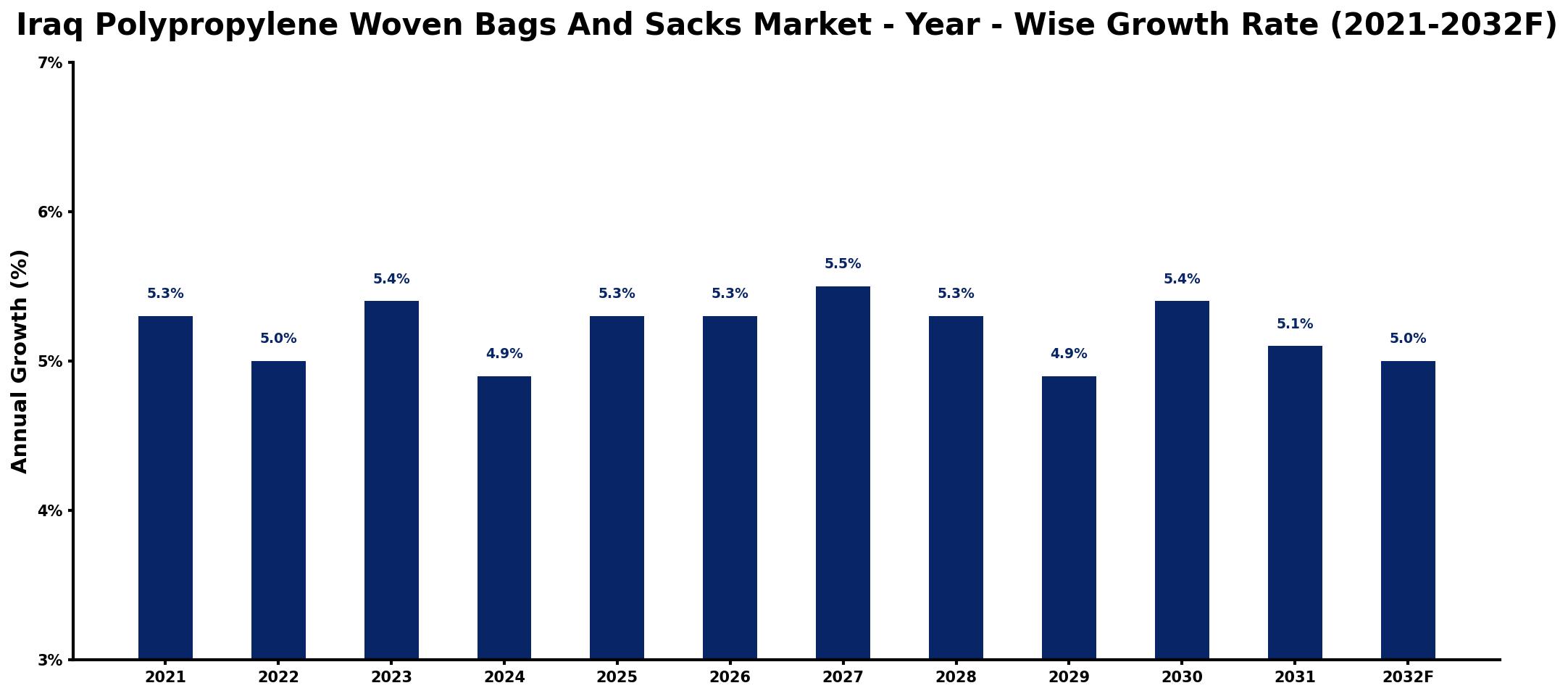
The table below presents the year‑wise growth rates along with the key drivers influencing the market
| Year | Growth Rate | Major Drivers |
| 2021 | 5.3% | Rising demand from agriculture sector |
| 2022 | 5.0% | Increased exports to neighboring markets |
| 2023 | 5.4% | Growing construction industry investments |
| 2024 | 4.9% | Expansion of retail packaging solutions |
| 2025 | 5.3% | Boosted production capabilities nationwide |
| 2026 | 5.3% | Emerging e-commerce logistics requirements |
| 2027 | 5.5% | Strengthened local manufacturing initiatives |
| 2028 | 5.3% | Enhanced supply chain efficiencies |
| 2029 | 4.9% | Diversification into new consumer markets |
| 2030 | 5.4% | Heightened awareness of sustainability practices |
| 2031 | 5.1% | Growing urbanization and infrastructure projects |
| 2032 | 5.0% | Increased agricultural modernization efforts |
Note: Market size estimations and growth projections presented in this report are based on 6Wresearch's proprietary forecasting methodology, utilizing the latest available industry data, government publications, and primary research inputs.
Iraq Polypropylene Woven Bags And Sacks Market Synopsis
Currently, the Iraq polypropylene woven bags and sacks market is witnessing a notable surge, fueled by expanding agricultural activities and significant infrastructure development projects. As industries recognize the advantages of using these versatile bags for diverse applications, the demand for such products continues to grow, setting the stage for robust market evolution.
Manufacturers are increasingly prioritizing product innovation, focusing on enhancements in durability and customization to meet the evolving needs of end-users. The shift towards sustainable practices is also notable, as businesses explore eco-friendly materials and production methods to align with global trends toward environmental responsibility.
Iraq Polypropylene Woven Bags And Sacks Market Key Takeaways
- The market is driven by robust growth in the agriculture and construction sectors.
- There is a rising demand for sustainable and recyclable packaging solutions.
- Manufacturers are innovating to meet diverse consumer needs through customization.
- Technological advancements, such as digital printing, are enhancing branding options.
- Government policies aim to bolster local production and sustainability practices.
Evaluation of Restraints in Iraq Polypropylene Woven Bags And Sacks Market
Despite its growth potential, the Iraq polypropylene woven bags and sacks market is hindered by several factors. Political instability and security concerns remain pressing challenges, often disrupting supply chains and affecting overall business operations. Additionally, fluctuations in raw material prices and currency exchange rates can significantly influence production costs, complicating pricing strategies for manufacturers. Moreover, the competition posed by alternative packaging materials and increasing environmental regulations regarding plastic usage complicates the landscape further. The need for modern infrastructure and technology in manufacturing processes also poses limitations to efficiency and output capacity.
Iraq Polypropylene Woven Bags And Sacks Market Trends
The market is witnessing several emerging trends shaping demand and technology. A key trend is the shift toward eco-friendly packaging, leading manufacturers to produce recyclable and reusable woven bags. Furthermore, product innovations focusing on enhanced durability and strength are increasingly in demand. The use of digital printing technology is gaining traction, as it allows for improved aesthetics and branding options. This trend aligns with the rising standards expected by consumers in various sectors, including retail and food packaging.
Iraq Polypropylene Woven Bags And Sacks Market Opportunities
The Iraq polypropylene woven bags and sacks market presents lucrative investment opportunities, particularly in manufacturing and supply chain development. As the industrial sector expands, there is a clear demand for high-quality packaging solutions. Additionally, the strategic location of Iraq offers access to key Middle Eastern markets, facilitating potential export growth. Investments in sustainable manufacturing practices and technological advancements can further enhance competitiveness, appealing to environmentally conscious consumers and businesses.
Government Initiatives in the Iraq Polypropylene Woven Bags And Sacks Market
The Iraqi government has implemented several policies aimed at regulating the polypropylene woven bags and sacks market while promoting local production. Import restrictions on polypropylene products are in place to protect domestic manufacturers, and various subsidies are available to enhance their competitiveness. Furthermore, quality control measures ensure that product standards meet market demands. Initiatives supporting recycling and sustainable practices are also being introduced, aiming to mitigate plastic waste and foster a more environmentally friendly industry landscape.
Future Insights of the Iraq Polypropylene Woven Bags And Sacks Market
Looking ahead to the period of 2026-2032, the outlook for the Iraq polypropylene woven bags and sacks market is optimistic. The combination of rising industrialization, an expanding agricultural sector, and growing packaging needs across various industries indicates that the market will continue to flourish. Innovations in manufacturing processes and heightened consumer awareness surrounding the advantages of polypropylene packaging will likely further stimulate growth. However, industry stakeholders must remain vigilant in navigating fluctuations in raw material prices and competition from alternative solutions.
Iraq Polypropylene Woven Bags And Sacks Market Latest Developments (2025 - 2026)
In recent months, the Iraq polypropylene woven bags and sacks market has seen a heightened focus on product innovation and sustainability. Many manufacturers are actively exploring the integration of advanced technologies to enhance production efficiency and product quality. Moreover, the growing trend toward eco-friendly materials has prompted several industry players to invest in the development of biodegradable packaging solutions. These developments indicate a proactive approach to meet evolving consumer preferences and regulatory demands.
Iraq Polypropylene Woven Bags And Sacks Market - Key Attractiveness of the Report
- 10 Years of Market Numbers
- Historical Data Starting from 2022 to 2025
- Base Year: 2025
- Forecast Data until 2032
- Key Performance Indicators Impacting the Market
- Major Upcoming Developments and Projects
Key Highlights of the Report:
- Iraq Polypropylene Woven Bags And Sacks Market Outlook
- Market Size of Iraq Polypropylene Woven Bags And Sacks Market, 2025
- Forecast of Iraq Polypropylene Woven Bags And Sacks Market, 2032
- Historical Data and Forecast of Iraq Polypropylene Woven Bags And Sacks Revenues & Volume for the Period 2022-2032F
- Iraq Polypropylene Woven Bags And Sacks Market Trend Evolution
- Iraq Polypropylene Woven Bags And Sacks Market Drivers and Challenges
- Iraq Polypropylene Woven Bags And Sacks Price Trends
- Iraq Polypropylene Woven Bags And Sacks Porter's Five Forces
- Iraq Polypropylene Woven Bags And Sacks Industry Life Cycle
- Historical Data and Forecast of Iraq Polypropylene Woven Bags And Sacks Market Revenues & Volume By Product Type for the Period 2022-2032F
- Historical Data and Forecast of Iraq Polypropylene Woven Bags And Sacks Market Revenues & Volume By Valve Bags for the Period 2022-2032F
- Historical Data and Forecast of Iraq Polypropylene Woven Bags And Sacks Market Revenues & Volume By Gusseted Bags for the Period 2022-2032F
- Historical Data and Forecast of Iraq Polypropylene Woven Bags And Sacks Market Revenues & Volume By Block Bottom Bags for the Period 2022-2032F
- Historical Data and Forecast of Iraq Polypropylene Woven Bags And Sacks Market Revenues & Volume By Pinch Bottom Bags for the Period 2022-2032F
- Historical Data and Forecast of Iraq Polypropylene Woven Bags And Sacks Market Revenues & Volume By Open Mouth Bags for the Period 2022-2032F
- Historical Data and Forecast of Iraq Polypropylene Woven Bags And Sacks Market Revenues & Volume By Other Product Type for the Period 2022-2032F
- Historical Data and Forecast of Iraq Polypropylene Woven Bags And Sacks Market Revenues & Volume By Bag Type for the Period 2022-2032F
- Historical Data and Forecast of Iraq Polypropylene Woven Bags And Sacks Market Revenues & Volume By Laminated Polypropylene Woven Bags for the Period 2022-2032F
- Historical Data and Forecast of Iraq Polypropylene Woven Bags And Sacks Market Revenues & Volume By Non Laminated Polypropylene Woven Bags for the Period 2022-2032F
- Historical Data and Forecast of Iraq Polypropylene Woven Bags And Sacks Market Revenues & Volume By End-Use for the Period 2022-2032F
- Historical Data and Forecast of Iraq Polypropylene Woven Bags And Sacks Market Revenues & Volume By Building & Construction for the Period 2022-2032F
- Historical Data and Forecast of Iraq Polypropylene Woven Bags And Sacks Market Revenues & Volume By Agriculture & Allied Industries for the Period 2022-2032F
- Historical Data and Forecast of Iraq Polypropylene Woven Bags And Sacks Market Revenues & Volume By Food for the Period 2022-2032F
- Historical Data and Forecast of Iraq Polypropylene Woven Bags And Sacks Market Revenues & Volume By Retail & Shopping for the Period 2022-2032F
- Historical Data and Forecast of Iraq Polypropylene Woven Bags And Sacks Market Revenues & Volume By Other End-Use for the Period 2022-2032F
- Iraq Polypropylene Woven Bags And Sacks Import Export Trade Statistics
- Market Opportunity Assessment By Product Type
- Market Opportunity Assessment By Bag Type
- Market Opportunity Assessment By End-Use
- Iraq Polypropylene Woven Bags And Sacks Top Companies Market Share
- Iraq Polypropylene Woven Bags And Sacks Competitive Benchmarking By Technical and Operational Parameters
- Iraq Polypropylene Woven Bags And Sacks Company Profiles
- Iraq Polypropylene Woven Bags And Sacks Key Strategic Recommendations






































