Italy Ergonomic Chair Market Size, Share & Growth Rate
The Italy Ergonomic Chair Market was estimated at USD 398 Million in 2025 and is projected to reach USD 506 Million by 2032, growing at a CAGR of 3.5% from 2026 to 2032. This growth trajectory is primarily driven by the increasing awareness surrounding the importance of ergonomics in enhancing workplace productivity and overall health. The surge in remote working arrangements has further amplified the demand for ergonomic solutions, compelling businesses and individuals alike to invest in high-quality seating options.
Italy Ergonomic Chair Market Year-wise Growth Rate and Key Drivers
This graph highlights how the Italy Ergonomic Chair Market has steadily grown over the years, supported by major growth factors.
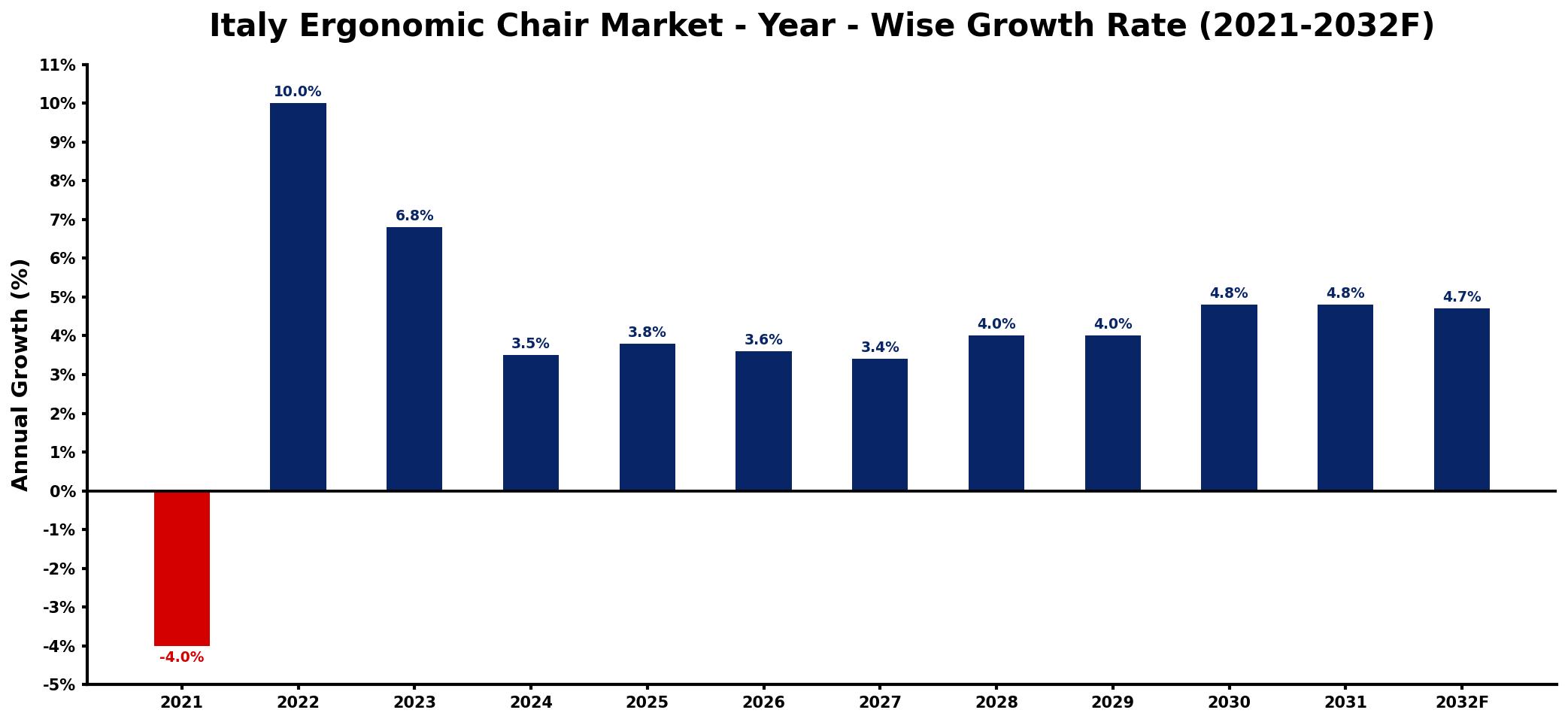
The table below presents the year‑wise growth rates along with the key drivers influencing the market
| Year | Growth Rate | Major Drivers |
| 2021 | -4.0% | shift in workplace preferences |
| 2022 | 10.0% | increased focus on wellness |
| 2023 | 6.8% | rise in remote working |
| 2024 | 3.5% | growing health awareness trends |
| 2025 | 3.8% | expansion of office spaces |
| 2026 | 3.6% | investment in employee comfort |
| 2027 | 3.4% | improvement in work-life balance |
| 2028 | 4.0% | adoption of flexible workspaces |
| 2029 | 4.0% | growth in home office setups |
| 2030 | 4.8% | enhanced digital nomad lifestyle |
| 2031 | 4.8% | surge in corporate wellness programs |
| 2032 | 4.7% | increased demand for customization |
Note: Market size estimations and growth projections presented in this report are based on 6Wresearch's proprietary forecasting methodology, utilizing the latest available industry data, government publications, and primary research inputs.
Italy Ergonomic Chair Market Synopsis
Recent momentum in the Italy Ergonomic Chair Market reflects a growing recognition of the critical role that ergonomically designed seating plays in promoting comfort and productivity. As Italy embraces a flexible work culture, the demand for sophisticated ergonomic chairs is likely to continue its upward trajectory, pushing manufacturers to innovate and meet diverse consumer needs.
Looking ahead, the market is poised for expansion as companies prioritize employee well-being and increasingly invest in ergonomic solutions. This shift not only improves health outcomes but also enhances organizational efficiency, ensuring that the ergonomic chair remains a staple in both home offices and corporate environments across Italy.
Italy Ergonomic Chair Market Key Takeaways
- The rising trend of remote work has escalated demand for ergonomic chairs as individuals seek comfort during prolonged working hours.
- Innovative features like adjustable lumbar support and breathable materials are becoming essential attributes in new product offerings.
- Sustainability is a growing concern, with consumers increasingly favoring eco-friendly materials in their purchasing decisions.
- There is intense competition in the market, requiring companies to distinguish their products through unique design and functionality.
- Government regulations on workplace ergonomics are driving demand for compliant ergonomic seating solutions.
Evaluation of Restraints in Italy Ergonomic Chair Market
While the Italy Ergonomic Chair Market is expanding, several restraints challenge its potential. Intense competition from domestic and international manufacturers leads to pricing pressures, which can adversely affect profitability. Economic fluctuations introduce uncertainty in consumer demand, making it challenging for companies to maintain consistent sales. Furthermore, navigating complex regulations and the necessity for continuous product innovation to meet evolving consumer preferences adds layers of difficulty for businesses operating in this market. Addressing these restraints is crucial for sustainable growth.
Italy Ergonomic Chair Market Trends
Current trends in the Italy Ergonomic Chair Market reflect a heightened focus on comfort, adjustability, and aesthetic appeal. Consumers are increasingly seeking chairs that not only provide physical support but also complement modern interior design. Additionally, the integration of smart technology into ergonomic seating is an emerging trend, with products that offer personalized adjustments based on user feedback. The influence of sustainable practices is also notable, as eco-friendly materials gain traction among environmentally conscious consumers.
Italy Ergonomic Chair Market Opportunities
The Italy Ergonomic Chair Market holds significant investment opportunities as both individuals and organizations prioritize ergonomic solutions. Targeting sectors such as technology, co-working spaces, and healthcare can yield substantial returns, as these industries recognize the value of enhanced employee well-being. Manufacturers that innovate with customizable options and sustainable practices are well-positioned to capitalize on this growing demand, driving profitability and market presence.
Government Initiatives in the Italy Ergonomic Chair Market
Government initiatives in Italy are increasingly geared towards promoting workplace health and safety through stringent ergonomic regulations. Legislation mandates that employers provide ergonomic seating to mitigate the risk of musculoskeletal disorders among workers. Furthermore, various guidelines and incentives encourage businesses to invest in ergonomic solutions, fostering an environment that prioritizes health and productivity. Such measures reflect a commitment to enhancing workplace standards across the nation.
Future Insights of the Italy Ergonomic Chair Market
Looking forward to 2026-2032, the Italy Ergonomic Chair Market is set to grow steadily as awareness about the importance of ergonomic design continues to rise. Companies are likely to invest more heavily in ergonomic solutions, particularly as remote work solidifies its place in modern work culture. Innovation will be pivotal, with manufacturers expected to develop new features and designs that cater to consumer needs. Overall, the market appears promising as businesses and individuals alike recognize the long-term benefits of ergonomic investments.
Italy Ergonomic Chair Market Latest Developments (2025 - 2026)
Recent developments in the Italy Ergonomic Chair Market indicate a growing emphasis on integrating technology into ergonomic solutions. Many manufacturers are exploring partnerships with tech companies to enhance chair functionality through smart features. Furthermore, sustainability continues to be a focal point, with several brands launching new lines made from recycled materials. The emphasis on aesthetics is also evident, as ergonomic chairs increasingly adopt sleek, modern designs to appeal to the contemporary consumer.
Italy Ergonomic Chair Market - Key Attractiveness of the Report
- 10 Years of Market Numbers
- Historical Data Starting from 2022 to 2025
- Base Year: 2025
- Forecast Data until 2032
- Key Performance Indicators Impacting the Market
- Major Upcoming Developments and Projects
Key Highlights of the Report:
- Italy Ergonomic Chair Market Outlook
- Market Size of Italy Ergonomic Chair Market, 2025
- Forecast of Italy Ergonomic Chair Market, 2032
- Historical Data and Forecast of Italy Ergonomic Chair Revenues & Volume for the Period 2022-2032F
- Italy Ergonomic Chair Market Trend Evolution
- Italy Ergonomic Chair Market Drivers and Challenges
- Italy Ergonomic Chair Price Trends
- Italy Ergonomic Chair Porter's Five Forces
- Italy Ergonomic Chair Industry Life Cycle
- Historical Data and Forecast of Italy Ergonomic Chair Market Revenues & Volume By Application for the Period 2022-2032F
- Historical Data and Forecast of Italy Ergonomic Chair Market Revenues & Volume By Enterprise Procurement for the Period 2022-2032F
- Historical Data and Forecast of Italy Ergonomic Chair Market Revenues & Volume By Government Procurement for the Period 2022-2032F
- Historical Data and Forecast of Italy Ergonomic Chair Market Revenues & Volume By School Procurement for the Period 2022-2032F
- Historical Data and Forecast of Italy Ergonomic Chair Market Revenues & Volume By Individual Procurement for the Period 2022-2032F
- Historical Data and Forecast of Italy Ergonomic Chair Market Revenues & Volume By Other for the Period 2022-2032F
- Italy Ergonomic Chair Import Export Trade Statistics
- Market Opportunity Assessment By Application
- Italy Ergonomic Chair Top Companies Market Share
- Italy Ergonomic Chair Competitive Benchmarking By Technical and Operational Parameters
- Italy Ergonomic Chair Company Profiles
- Italy Ergonomic Chair Key Strategic Recommendations






































