Italy Table Olives Market: Import Trend Analysis
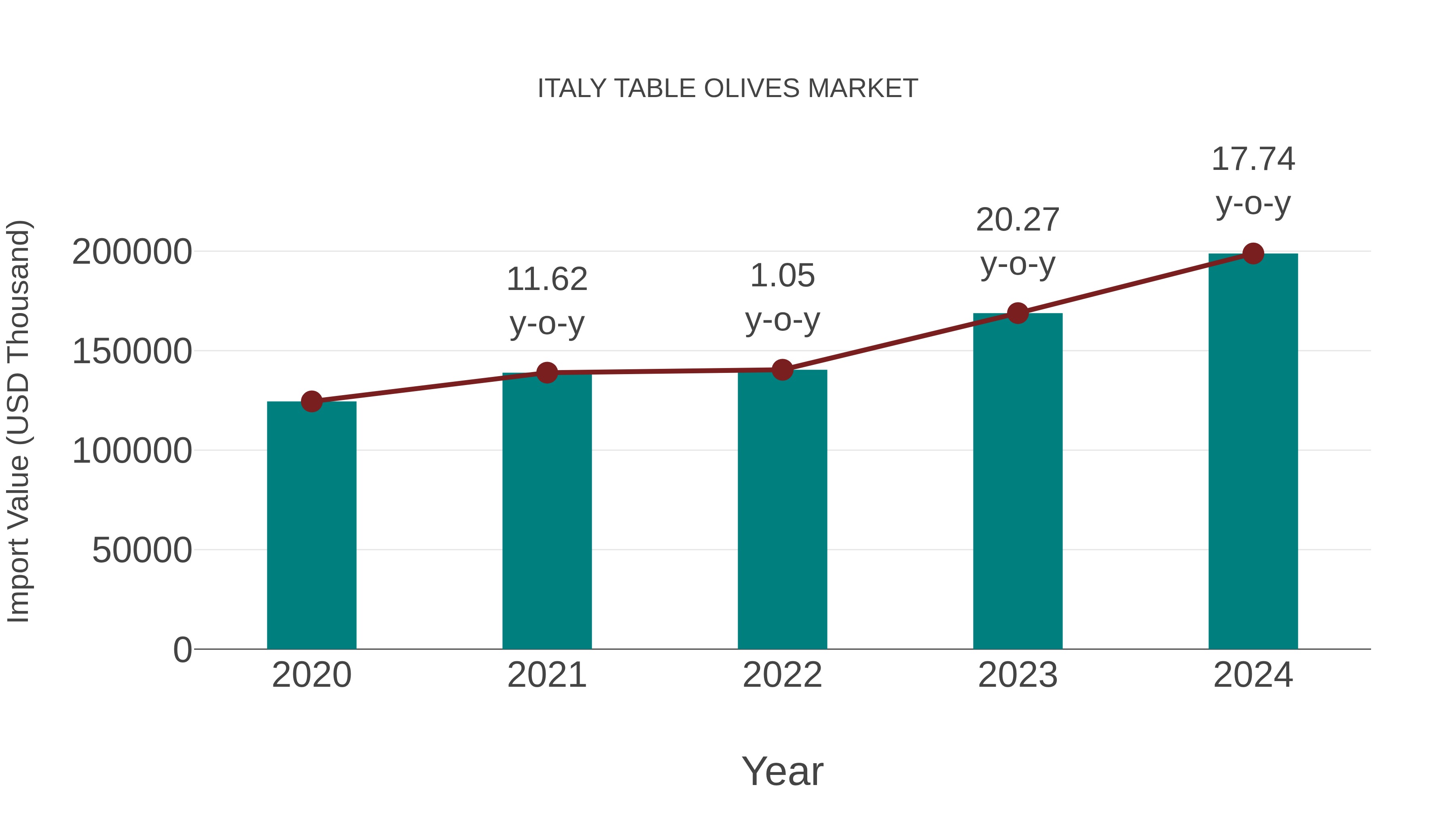
In 2024, Italy table olives Market: Import Trend Analysis witnessed a notable increase in imports. The trend reflected a growing demand for imported olives, likely driven by factors such as consumer preferences, availability, and pricing dynamics in the Market: Import Trend Analysis.
Italy Table Olives Market Synopsis
The Italy Table Olives Market is a significant sector within the country`s agricultural industry, renowned for its high-quality olives and traditional production methods. Italy is one of the leading producers and exporters of table olives globally, with a rich variety of cultivars such as Cerignola, Gaeta, and Castelvetrano. The market is characterized by a strong domestic consumption base as table olives are a staple in Italian cuisine, as well as a growing export market to countries like the United States, Germany, and France. Producers in Italy focus on both green and black olives, offering different sizes, flavors, and processing methods to cater to diverse consumer preferences. The market is also witnessing a trend towards organic and sustainable production practices to meet the increasing demand for healthier and environmentally friendly food options.
Italy Table Olives Market Trends
The Italy Table Olives Market is currently experiencing a shift towards more sustainable and organic production methods, driven by increasing consumer demand for healthier and environmentally friendly products. There is a growing interest in traditional Italian varieties such as Bella di Cerignola and Gaeta olives, as well as innovative flavor profiles like lemon or chili-infused olives. Premiumization is also a key trend, with consumers willing to pay more for high-quality, gourmet table olives. Opportunities exist for producers to differentiate their products through unique flavors, certifications such as PDO or organic, and creative packaging. Additionally, the export market presents significant growth potential, particularly in markets where Italian cuisine is popular, offering a chance for Italian table olive producers to expand their reach and increase market share.
Italy Table Olives Market Challenges
In the Italy Table Olives Market, challenges are predominantly related to competition, quality standards, and sustainability practices. The market faces stiff competition both domestically and internationally, leading to pricing pressures and the need for differentiation. Maintaining high-quality standards is crucial to meet consumer expectations and comply with regulations, requiring continuous investment in production processes and technology. Additionally, ensuring sustainable practices throughout the supply chain, from cultivation to processing and packaging, is becoming increasingly important as consumers are more conscious of environmental and social issues. Adapting to these challenges by innovating in product offerings, improving efficiency, and implementing sustainable practices will be key for players in the Italy Table Olives Market to remain competitive and meet evolving consumer demands.
Italy Table Olives Market Investment Opportunities
The Italy Table Olives Market is driven by several factors, including the increasing demand for healthy and natural food products among consumers. Table olives are widely recognized for their health benefits, such as being rich in antioxidants and healthy fats. Additionally, the popularity of Mediterranean cuisine, where table olives are a staple ingredient, continues to drive the market growth. The growing trend of snacking on healthy and convenient foods also contributes to the increasing consumption of table olives. Furthermore, innovations in packaging and product diversification, such as flavored and organic table olives, are attracting a wider consumer base. Overall, these factors are driving the growth of the Italy Table Olives Market as consumers seek out nutritious and flavorful food options.
Italy Table Olives Market Government Polices
The Italy Table Olives Market is heavily regulated by government policies aimed at ensuring consumer safety, quality standards, and fair trade practices. The European Union`s Common Agricultural Policy (CAP) provides subsidies and support for olive producers in Italy, while also enforcing strict regulations on labeling, packaging, and food safety. Additionally, the Italian government implements measures to protect the designation of origin for specific varieties of table olives, such as the Protected Designation of Origin (PDO) and Protected Geographical Indication (PGI) labels. These policies help maintain the reputation and authenticity of Italian table olives in domestic and international markets, while also promoting sustainable agricultural practices and ensuring a level playing field for producers.
Italy Table Olives Market Future Outlook
The Italy Table Olives Market is poised for steady growth in the coming years due to increasing consumer demand for healthy and natural food products. Factors such as growing awareness about the health benefits of olives, rising disposable incomes, and a shift towards Mediterranean diets are driving the market`s expansion. Additionally, innovative product offerings, such as flavored olives and convenient packaging options, are likely to attract a wider consumer base. With a strong tradition of olive cultivation and production in Italy, the country is well-positioned to capitalize on this growing trend. However, the market may face challenges related to fluctuating olive production levels, climate change impacts, and competitive pressures from other olive-producing regions. Overall, the Italy Table Olives Market is expected to maintain a positive growth trajectory in the foreseeable future.
Key Highlights of the Report:
- Italy Table Olives Market Outlook
- Market Size of Italy Table Olives Market, 2025
- Forecast of Italy Table Olives Market, 2032
- Historical Data and Forecast of Italy Table Olives Revenues & Volume for the Period 2022 - 2032F
- Italy Table Olives Market Trend Evolution
- Italy Table Olives Market Drivers and Challenges
- Italy Table Olives Price Trends
- Italy Table Olives Porter's Five Forces
- Italy Table Olives Industry Life Cycle
- Historical Data and Forecast of Italy Table Olives Market Revenues & Volume By Type for the Period 2022 - 2032F
- Historical Data and Forecast of Italy Table Olives Market Revenues & Volume By Black Olive for the Period 2022 - 2032F
- Historical Data and Forecast of Italy Table Olives Market Revenues & Volume By Green Olive for the Period 2022 - 2032F
- Historical Data and Forecast of Italy Table Olives Market Revenues & Volume By Application for the Period 2022 - 2032F
- Historical Data and Forecast of Italy Table Olives Market Revenues & Volume By Online Store for the Period 2022 - 2032F
- Historical Data and Forecast of Italy Table Olives Market Revenues & Volume By Supermarket for the Period 2022 - 2032F
- Historical Data and Forecast of Italy Table Olives Market Revenues & Volume By Convenience Store for the Period 2022 - 2032F
- Historical Data and Forecast of Italy Table Olives Market Revenues & Volume By Other for the Period 2022 - 2032F
- Italy Table Olives Import Export Trade Statistics
- Market Opportunity Assessment By Type
- Market Opportunity Assessment By Application
- Italy Table Olives Top Companies Market Share
- Italy Table Olives Competitive Benchmarking By Technical and Operational Parameters
- Italy Table Olives Company Profiles
- Italy Table Olives Key Strategic Recommendations






































