Italy Wine Glass Market Size (2020-2030)
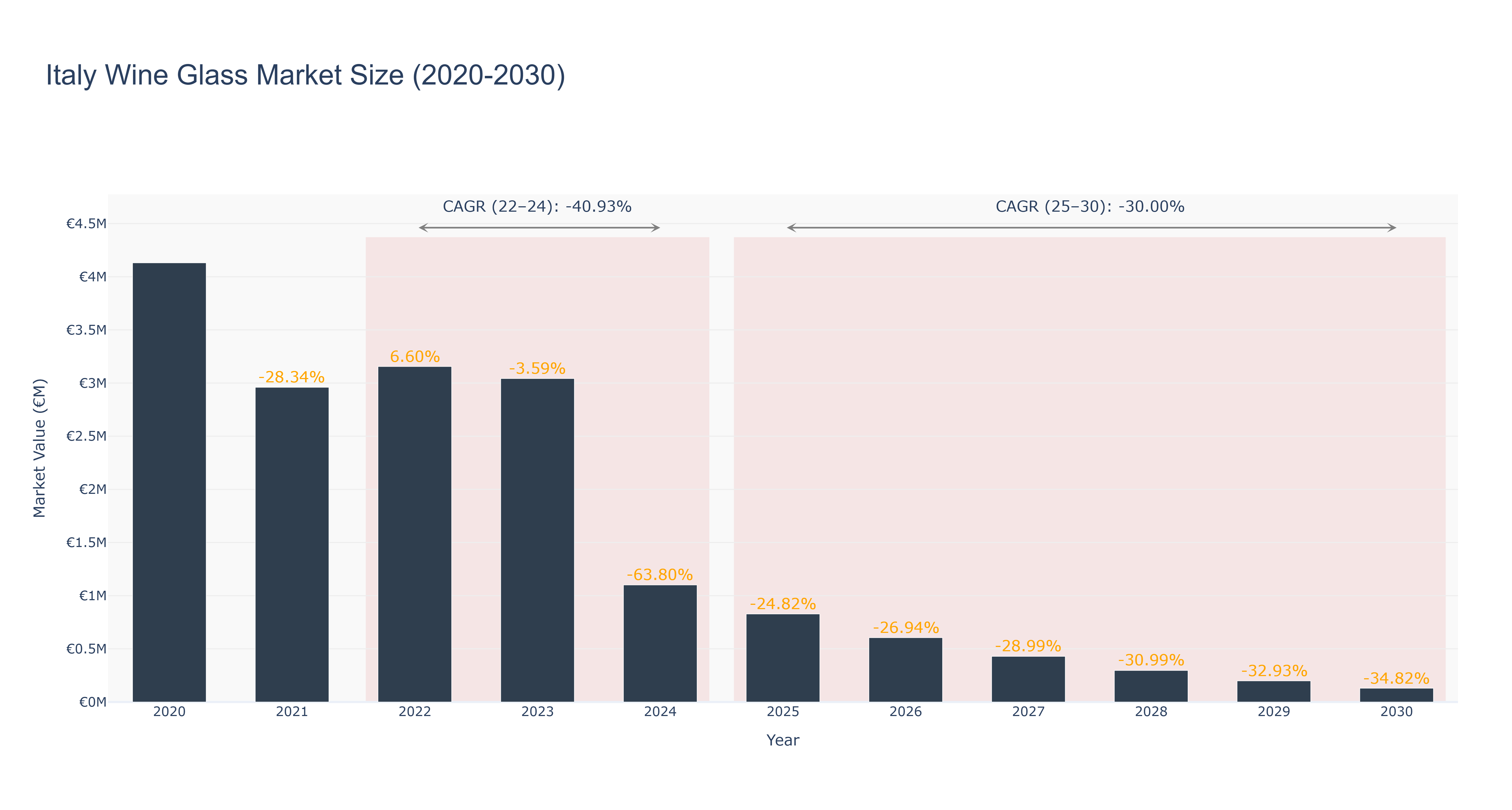
The Italy Wine Glass Market has seen a significant decline in market size over the past decade. The peak market size was €4.13 million in 2020, followed by a sharp decrease to €0.13 million in 2030. The actual market size decreased consistently from €4.13 million in 2020 to €1.10 million in 2024, with a negative CAGR of -40.93% from 2022 to 2024. The forecasted market size is expected to continue declining, with a CAGR of -30.0% from 2025 to 2030. The market's downward trend can be attributed to changing consumer preferences, economic uncertainties, and increased competition. Looking ahead, Italy is set to invest in sustainable glass production technologies to enhance market competitiveness and cater to environmentally conscious consumers. This strategic move aligns with the industry drivers of sustainability and innovation in the glassware market.
Italy Wine Glass Market: Production & Trade Performance (2019-2025)
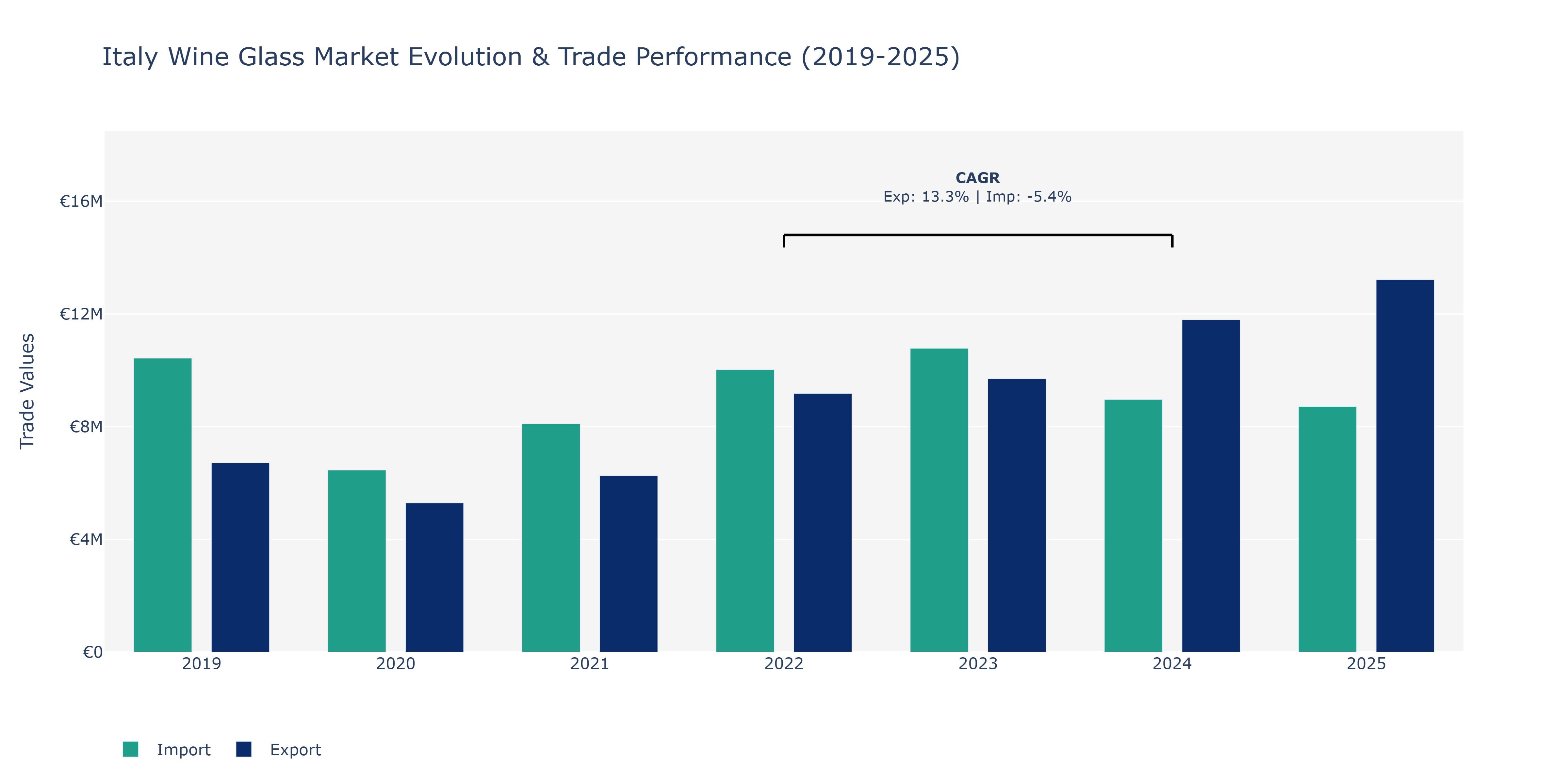
The Italy Wine Glass Market exhibited varying trends in Exports and Imports from 2019 to 2025. In 2019, Exports stood at approximately €6.71 million and Imports at around €10.43 million. By 2020, both Exports and Imports experienced a decline, with Exports dropping to about €5.29 million and Imports to around €6.46 million. However, the market showed signs of recovery in 2021, with Exports increasing to about €6.26 million and Imports rising to approximately €8.1 million. The growth trajectory continued in the following years, reaching peaks in 2025 with Exports at around €13.22 million and Imports at approximately €8.72 million. The surge in Exports can be attributed to an increased global demand for Italian wine products and a strategic marketing push by key players. On the other hand, the fluctuation in Imports may be linked to changing consumer preferences towards domestically produced wine glasses and fluctuations in international trade agreements affecting the import landscape. These insights align with the broader global trend of growing wine consumption and evolving consumer preferences for premium glassware, reflecting the dynamic nature of the wine glass market.
Key Highlights of the Report:
- Italy Wine Glass Market Outlook
- Market Size of Italy Wine Glass Market, 2025
- Forecast of Italy Wine Glass Market, 2032
- Historical Data and Forecast of Italy Wine Glass Revenues & Volume for the Period 2022-2032F
- Italy Wine Glass Market Trend Evolution
- Italy Wine Glass Market Drivers and Challenges
- Italy Wine Glass Price Trends
- Italy Wine Glass Porter's Five Forces
- Italy Wine Glass Industry Life Cycle
- Historical Data and Forecast of Italy Wine Glass Market Revenues & Volume By Type for the Period 2022-2032F
- Historical Data and Forecast of Italy Wine Glass Market Revenues & Volume By Glass for the Period 2022-2032F
- Historical Data and Forecast of Italy Wine Glass Market Revenues & Volume By Crystal for the Period 2022-2032F
- Historical Data and Forecast of Italy Wine Glass Market Revenues & Volume By Others for the Period 2022-2032F
- Historical Data and Forecast of Italy Wine Glass Market Revenues & Volume By Application for the Period 2022-2032F
- Historical Data and Forecast of Italy Wine Glass Market Revenues & Volume By Personal Consumption for the Period 2022-2032F
- Historical Data and Forecast of Italy Wine Glass Market Revenues & Volume By Commercial Consumption for the Period 2022-2032F
- Italy Wine Glass Import Export Trade Statistics
- Market Opportunity Assessment By Type
- Market Opportunity Assessment By Application
- Italy Wine Glass Top Companies Market Share
- Italy Wine Glass Competitive Benchmarking By Technical and Operational Parameters
- Italy Wine Glass Company Profiles
- Italy Wine Glass Key Strategic Recommendations






































