Japan Acrylic Bathtub Market Growth Rate
According to 6Wresearch internal database and industry insights, the Japan Acrylic Bathtub Market is growing at a compound annual growth rate (CAGR) of 6% during the forecast period (2026-2032).
Japan Acrylic Bathtub Market Year-wise Growth Rate and Key Drivers (2022-2032)
This graph illustrates the annual growth rates of the Japan Acrylic Bathtub Market from 2022 to 2032, highlighting a steady upward trajectory and projected market expansion over the forecast period.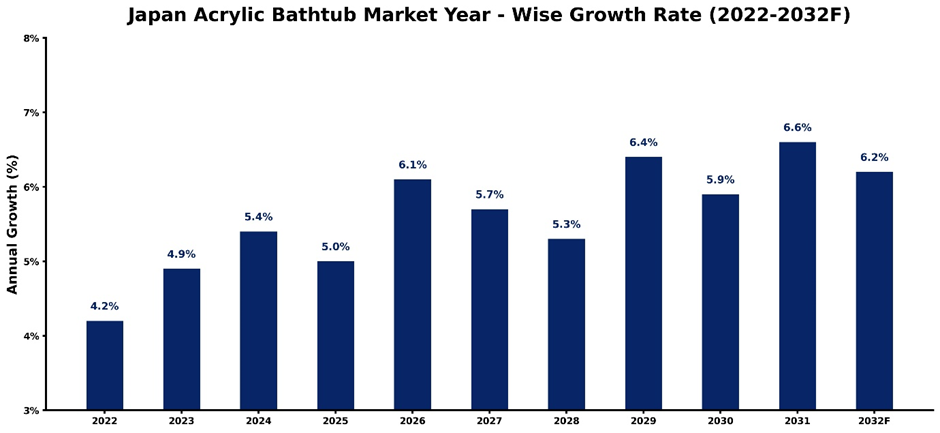
The following table presents the estimated annual growth rates of the market for each year, along with the key factors influencing market performance during the respective period. The values are intended to highlight year-wise drivers rather than provide a direct comparison between individual years.
| Year | Estimated Annual Growth (%) | Market Rationale |
| 2022 | 4.2% | Rising home improvement activities increased demand for modern bathroom fixtures. |
| 2023 | 4.9% | Growing preference for comfortable and aesthetically appealing bathroom solutions supported product adoption. |
| 2024 | 5.4% | Increasing residential renovation projects enhanced demand for lightweight acrylic bathtubs. |
| 2025 | 5% | Premium housing developments and improved bathroom designs strengthened market growth. |
| 2026 | 6.1% | Rising disposable income and consumer focus on home wellness supported market expansion. |
| 2027 | 5.7% | Increasing adoption of smart and customized bathroom solutions encouraged product demand. |
| 2028 | 5.3% | Moderate construction activity and material cost pressures slightly influenced growth momentum. |
| 2029 | 6.4% | Expansion of hospitality infrastructure increased demand for durable bathroom installations. |
| 2030 | 5.9% | Sustainable housing trends supported continued adoption of efficient sanitary products. |
| 2031 | 6.6% | Advanced bathtub designs and premium residential upgrades improved market opportunities. |
| 2032 | 6.2% | Long-term demand from renovation and hospitality sectors sustained market development. |
Topics Covered in the Japan Acrylic Bathtub Market Report
Japan Acrylic Bathtub Market report thoroughly covers the market by type and application. The market report provides an unbiased and detailed analysis of ongoing market trends, opportunities/high growth areas, and market drivers, which would help stakeholders devise and align their market strategies according to the current and future market dynamics.
Japan Acrylic Bathtub Market Highlights
| Report Name | Japan Acrylic Bathtub Market |
| Forecast period | 2026-2032 |
| CAGR | 6% |
| Growing Sector | Residential Renovation |
Japan Acrylic Bathtub Market Synopsis
Japan Acrylic Bathtub Market is expected to grow steadily owing to increasing demand for modern bathroom fixtures and growing consumer preference for comfortable home environments. Acrylic Bathtubs are lightweight, durable bathroom fixtures made from acrylic sheets reinforced with materials like fiberglass and design flexibility. In addition, the hospitality sector is driving demand for durable and visually appealing bathtub solutions. Moreover, the constructers are concentrating on lightweight materials, improved designs, and energy-efficient bathroom products to meet the changing consumer expectations and sustainability requirements.
Evaluation of Growth Drivers in the Japan Acrylic Bathtub Market (2026-2032)
Below mentioned are some major growth drivers and their influence on market dynamics:
| Drivers | Primary Segments Affected | Why It Matters |
| Growth of Residential Renovation Activities | Home Use, Large Type Bathtubs | Improves demand for modern bathroom upgrades by encouraging replacement of traditional fixtures with advanced designs. |
| Rising Preference for Premium Bathroom Designs | Home Use, Medium Type Bathtubs | It supports the adoption of aesthetic and durable products with improved comfort, functionality, and visual appeal. |
| Expansion of Hospitality Infrastructure | Commercial Use, Large Type Bathtubs | Increases demand from hotels and resorts that seeks the best-quality guest amenities and upgraded bathroom experiences. |
| Increasing Focus on Home Wellness Solutions | Home Use, Customized Bathtubs | Aids the comfortable bathing experiences by supporting relaxation, personalization, and improved residential wellness environments. |
| Development of Lightweight Sanitary Materials | All Types, Manufacturers | Enhances installation effectivity and product appeal through simple handling, durability, and advanced bathroom solutions. |
The Japan Acrylic Bathtub Market is projected to grow at a CAGR of 6% during 2026–2032. The growth is driven by growing residential renovation activities, rising preference for modern bathroom designs, and rising interest in home wellness solutions. The consumers are looking for lightweight, durable, and visually appealing bathtub options that enhance comfort and functionality. Additionally, the hospitality developments and advancements in sanitary material technologies are supporting broader adoption of acrylic bathtubs across residential and commercial applications.
Evaluation of Restraints in the Japan Acrylic Bathtub Market
Below mentioned are some major restraints and their influence on market dynamics:
| Restraints | Primary Segments Affected | What This Means |
| High Product Installation Costs | Premium Bathtubs, Home Use | Restricts the adoption among the price-sensitive consumers by growing overall investment requirements for bathroom upgrades. |
| Competition from Alternative Materials | Acrylic, Ceramic, Steel Bathtubs | Produces the pricing and preference challenges owing to availability of diverse bathtub material options. |
| Limited Bathroom Space in Urban Homes | Small Type Bathtubs, Residential Sector | It restricts installation possibilities by minimizing suitability for the compact residential bathroom layouts. |
| Raw Material Price Fluctuations | Manufacturers, Supply Chain | It impacts the production costs and pricing stability across the changes in material procurement expenses. |
| Changing Consumer Preferences | Home Use, Premium Products | Requires a continuous design innovation to meet evolving expectations for comfort, aesthetics, and functionality. |
Japan Acrylic Bathtub Market Challenges
The Japan Acrylic Bathtub Market undergoes several challenges from rising manufacturing expenses, restricted urban bathroom spaces, and steady competition from alternative materials. Japan’s economic environment, with GDP growth of around 1.2% in 2025, inflation of 3.2%, and unemployment near 2.5%, may shape the consumer expenditure on top-quality home improvement products. Additionally, the changing lifestyle preferences, installation costs, and the need for constant design innovation create the pressure on manufacturers to maintain affordability while also delivering advanced bathroom solutions.
Japan Acrylic Bathtub Market Trends
Below are some major trends contributing to the Japan Acrylic Bathtub Market Growth:
- Growing Demand for Compact Bathroom Solutions: Increasing the urbanization is supporting demand for space-effective acrylic bathtubs that are suitable for smaller residential environments by presenting practical designs, easy installation, and improved usability.
- Rising Adoption of Premium Bathroom Interiors: The consumers are gradually investing in aesthetically designed bathrooms with improved comfort and functionality that is supported by modern layouts, luxury features, and personalized interior preferences.
- Sustainable Bathroom Product Development: Suppliers are focusing on recyclable materials and water-effective designs to support the environmental goals while enhancing product efficiency, durability, and environmentally responsible bathroom solutions.
Investment Opportunities in Japan Acrylic Bathtub Market
Here are some investment opportunities in the Japan Acrylic Bathtub Industry:
- Smart Bathroom Integration: By investing in the technology-allowed bathtub solutions can support the demand for innovative home wellness systems by integrating smart controls, improved comfort features, and modified bathing experiences.
- Compact Bathtub Manufacturing: Development of space-efficient designs can address the urban housing requirements and changing consumer lifestyles by providing a functional, stylish, and practical solutions for smaller residential bathrooms.
- Premium Acrylic Material Innovation: The innovative material development can enhance durability, appearance, and sustainability of bathtub products across the lightweight structures, enhanced finishes, and improved long-term performance.
Leading Players in the Japan Acrylic Bathtub Market
Here are some top companies contributing to Japan Acrylic Bathtub Market Share:
1. TOTO Ltd.
| Company Name | TOTO Ltd. |
|---|---|
| Established Year | 1917 |
| Headquarters | Kitakyushu, Japan |
| Official Website | Click Here |
TOTO Ltd. is a leading bathroom equipment manufacturer offering advanced bathtub solutions, including acrylic-based bathing products and comfort-focused designs for residential and commercial applications.
2. LIXIL Corporation
| Company Name | LIXIL Corporation |
|---|---|
| Established Year | 2011 |
| Headquarters | Tokyo, Japan |
| Official Website | Click Here |
LIXIL Corporation provides innovative bathroom and housing solutions, including acrylic bathtub systems designed for residential and renovation markets.
3. Panasonic Holdings Corporation
| Company Name | Panasonic Holdings Corporation |
|---|---|
| Established Year | 1918 |
| Headquarters | Kadoma, Japan |
| Official Website | Click Here |
Panasonic Holdings Corporation develops bathroom equipment incorporating advanced resin technologies and durable materials.
4. Takara Standard Co., Ltd.
| Company Name | Takara Standard Co., Ltd. |
|---|---|
| Established Year | 1912 |
| Headquarters | Osaka, Japan |
| Official Website | Click Here |
Takara Standard Co., Ltd. provides bathroom systems and sanitary products with a focus on durability, customization, and long-term residential usability.
Government Initiatives Introduced in the Japan Acrylic Bathtub Market
According to Japanese government data, the Ministry of Land, Infrastructure, Transport and Tourism (MLIT) promotes housing quality development through programs that supports energy-efficient and comfortable residential environments. Some initiatives such as the Housing Life Cycle Improvement Program support renovation, barrier-free housing upgrades, and enhanced residential facilities. In addition, Japan’s Green Growth Strategy supports sustainable manufacturing practices, encouraging manufacturers to develop environmentally responsible bathroom products with improved material efficiency and reduced resource consumption.
Future Insights of the Japan Acrylic Bathtub Market
The Japan Acrylic Bathtub Market is projected to witness a steady development as the consumers are gradually prioritizing comfortable, durable, and visually appealing bathroom environments. Japan’s aging residential framework and renovation demand are estimated to support replacement activities for traditional bathroom fixtures. The industry progressions in lightweight acrylic materials and personalized bathtub solutions are likely to enhance the adoption among the residential sectors. Furthermore, increasing focus on smart homes and sustainable housing practices will support the manufacturers to launch the innovative bathtub solutions that are aligned with evolving consumer preferences.
Market Segmentation Analysis
This report presents a detailed analysis of the market segments along with their leading categories.
By Type – Large Type Led the Market, Small Type Expected to Gain Momentum
According to Ravi Bhandari, Research Head at 6Wresearch, Large Type acrylic bathtubs dominated the Japan market till 2025 with an estimated 45% market share, driven by their suitability for standard residential bathrooms and growing adoption among urban households. However, during 2026–2032, Small Type acrylic bathtubs are expected to emerge as the fastest-growing segment with a CAGR of around 6.5%, supported by rising demand for premium bathroom interiors and enhanced home wellness experiences.
By Application – Home Use Led the Market, Commercial Use to Grow Steadily
Home Use dominated till 2025 with an estimated 78% market share, supported by increasing residential renovation activities and rising investment in comfortable home environments. However, during 2026–2032, Commercial Use is expected to register steady growth with a CAGR of around 6.2%, driven by expansion of hospitality infrastructure and demand for upgraded bathroom facilities in commercial properties.
Note: Market size estimations and growth projections presented in this report are based on 6Wresearch's proprietary forecasting methodology, utilizing the latest available industry data, government publications, and primary research inputs.
Key attractiveness of the report
- 10 Years Market Numbers.
- Historical Data Starting from 2022 to 2025.
- Base Year: 2025.
- Forecast Data until 2032.
- Key Performance Indicators Impacting the Market.
- Major Upcoming Developments and Projects.
Key Highlights of the Report:
- Japan Acrylic Bathtub Market Outlook
- Market Size of Japan Acrylic Bathtub Market, 2025
- Forecast of Japan Acrylic Bathtub Market, 2032
- Historical Data and Forecast of Japan Acrylic Bathtub Revenues & Volume for the Period 2022-2032
- Japan Acrylic Bathtub Market Trend Evolution
- Japan Acrylic Bathtub Market Drivers and Challenges
- Japan Acrylic Bathtub Price Trends
- Japan Acrylic Bathtub Porter's Five Forces
- Japan Acrylic Bathtub Industry Life Cycle
- Historical Data and Forecast of Japan Acrylic Bathtub Market Revenues & Volume By Type for the Period 2022-2032
- Historical Data and Forecast of Japan Acrylic Bathtub Market Revenues & Volume By Large Type for the Period 2022-2032
- Historical Data and Forecast of Japan Acrylic Bathtub Market Revenues & Volume By Medium Type for the Period 2022-2032
- Historical Data and Forecast of Japan Acrylic Bathtub Market Revenues & Volume By Small Type for the Period 2022-2032
- Historical Data and Forecast of Japan Acrylic Bathtub Market Revenues & Volume By Application for the Period 2022-2032
- Historical Data and Forecast of Japan Acrylic Bathtub Market Revenues & Volume By Home Use for the Period 2022-2032
- Historical Data and Forecast of Japan Acrylic Bathtub Market Revenues & Volume By Commercial Use for the Period 2022-2032
- Japan Acrylic Bathtub Import Export Trade Statistics
- Market Opportunity Assessment By Type
- Market Opportunity Assessment By Application
- Japan Acrylic Bathtub Top Companies Market Share
- Japan Acrylic Bathtub Competitive Benchmarking By Technical and Operational Parameters
- Japan Acrylic Bathtub Company Profiles
- Japan Acrylic Bathtub Key Strategic Recommendations






































