Japan Aftermarket Automotive Parts And Components Market Size & Growth Rate
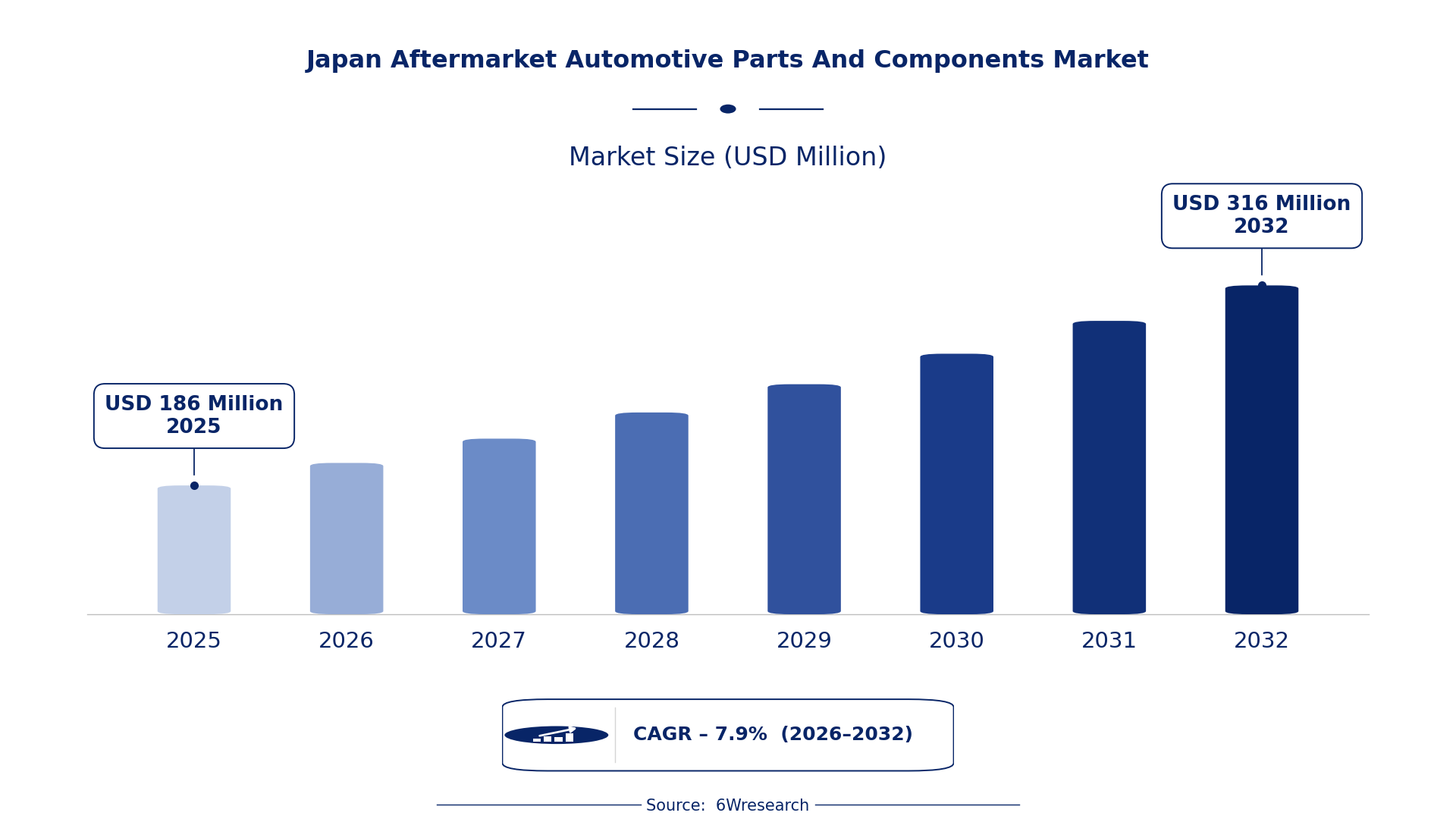
According to 6Wresearch internal database and industry insights, the Japan Aftermarket Automotive Parts And Components Market was valued at USD 186 Million in 2025 and is projected to reach USD 316 Million by 2032, growing at a CAGR of approximately 7.9% during 2026–2032.
Japan Aftermarket Automotive Parts And Components Market Highlights
| Report Metric | Details |
| Report Name | Japan Aftermarket Automotive Parts And Components Market (2026-2032) |
| Market Size 2025 | USD 186 Million |
| Market Size 2032 | USD 316 Million |
| Absolute Growth 2025–2032 | USD 130 Million |
| CAGR 2026–2032 | 7.9% |
| Peak Annual Growth | 8.6% in 2026 |
| Forecast Period | 2026–2032 |
| Historical Data | 2022–2025 |
| Base Year | 2025 |
| Leading Product Type, 2025 | Engine Components (34% share) |
| Leading Application, 2025 | Aftermarket (49% share) |
| Leading Distribution Channel, 2025 | Offline (Retail Stores, Auto Parts Stores) (49% share) |
| Leading Vehicle Type, 2025 | Passenger Cars (48% share) |
| Fastest-Growing Product Type | Electrical Components (11.3% CAGR) |
| Fastest-Growing Application | Performance Parts (10.2% CAGR) |
| Fastest-Growing Distribution Channel | Online (9.8% CAGR) |
| Fastest-Growing Vehicle Type | Two-Wheelers (10.7% CAGR) |
| Growing Sector | Aftermarket automotive parts |
| Key End Users | workshops, retailers, automotive enthusiasts, fleet operators |
Japan Aftermarket Automotive Parts And Components Market Year-wise Growth Rate and Key Drivers (2022–2032)
This graph illustrates the annual growth rates of the market from 2022 to 2032, highlighting a steady upward trajectory and projected market expansion over the forecast period.
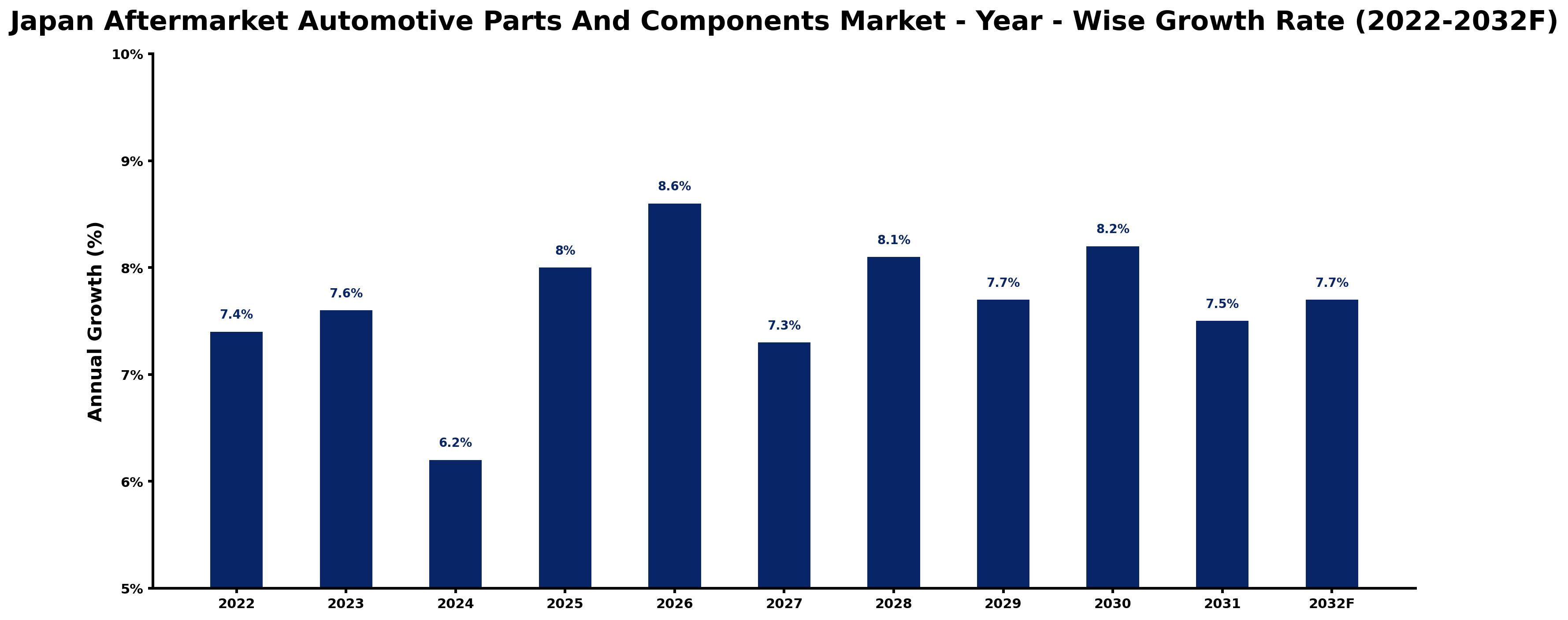
Below, each year's estimated growth is shown next to the factor that most influenced it.
| Year | Estimated Annual Growth (%) | Market Rationale |
| 2022 | 7.4 | The market saw steady growth due to increased vehicle ownership and maintenance needs. |
| 2023 | 7.6 | Demand rose as consumers sought replacement parts for aging vehicles. |
| 2024 | 6.2 | Growth slowed as supply chain issues affected parts availability. |
| 2025 | 8.0 | The market rebounded with strong demand for performance upgrades and replacements. |
| 2026 | 8.6 | Peak growth is expected as electric vehicle adoption increases aftermarket opportunities. |
| 2027 | 7.3 | A slowdown will follow as the market adjusts to new consumer preferences. |
| 2028 | 8.1 | Growth is projected to accelerate again with rising demand for advanced electrical components. |
| 2029 | 7.7 | The market will experience a slowdown as competition intensifies among suppliers. |
| 2030 | 8.2 | Demand is expected to surge as regulations push for lower emissions and better performance. |
| 2031 | 7.5 | Growth will slow slightly as market saturation begins to set in. |
| 2032 | 7.7 | The market is expected to maintain steady growth driven by ongoing vehicle maintenance needs. |
Note: Market size estimations and growth projections presented in this report are based on 6Wresearch's proprietary forecasting methodology, utilizing the latest available industry data, government publications, and primary research inputs.
Japan Aftermarket Automotive Parts And Components Market Synopsis
Aftermarket automotive parts and components play a crucial role in vehicle maintenance and performance, covering engine, brake, and electrical parts. The Japan Aftermarket Automotive Parts And Components Market was valued at approximately 4 trillion JPY in 2022, with the average age of passenger vehicles exceeding 13 years. Market growth stems from rising vehicle ownership, increased demand for replacement parts, and substantial investments in electric vehicle components, as the government aims for JPY 150 trillion in decarbonisation initiatives over the next decade.
Market Dynamics Impact Analysis (2026–2032)
| Factor | Type | Impact | Primary Segment Affected |
| Rising vehicle age increases demand for replacement parts. | Driver | High | Replacement Parts |
| Increased electric vehicle adoption drives demand for new components. | Driver | High | Electrical Components |
| Growing online sales channel presents new market opportunities. | Opportunity | High | Online |
| Expansion of performance parts market caters to automotive enthusiasts. | Opportunity | Medium | Performance Parts |
| Supply chain disruptions impact parts availability. | Restraint | High | Aftermarket |
| Rising competition among suppliers puts pressure on pricing. | Restraint | Medium | Aftermarket |
| High costs of compliance with safety standards affect profitability. | Challenge | High | Aftermarket |
| Technological advancements require continuous investment in R&D. | Challenge | Medium | Electrical Components |
Evaluation of Drivers in Japan Aftermarket Automotive Parts And Components Market (2026–2032)
Key forces behind demand, with the segment each one moves most, are listed below.
| Drivers | Primary Segment Affected | Why It Matters (Evidence) |
| Increased vehicle ownership leads to higher demand for parts. | Replacement Parts | The number of registered passenger cars reached 78 million in 2023, driving replacement needs. |
| Aging vehicles necessitate frequent maintenance and parts replacement. | Engine Components | The average age of passenger vehicles in Japan is over 13 years, increasing repair demand. |
| Electric vehicle adoption creates new opportunities for aftermarket components. | Electrical Components | Support for electric vehicle component development boosts market potential. |
| Rising consumer interest in performance upgrades fuels demand for aftermarket parts. | Performance Parts | The performance parts segment is expected to grow at a CAGR of 10.2% through 2032. |
| Online sales channels are expanding rapidly, attracting new buyers. | Online | Online sales of automotive parts have seen a 15% increase in the last year. |
Behind the steady rise in orders is the increasing average age of passenger vehicles, which exceeds 13 years, prompting more consumers to seek replacement parts. The number of registered passenger cars reached 78 million in 2023, driving demand for aftermarket components. The shift towards electric vehicles creates opportunities for new electrical components, as consumer interest in performance upgrades continues to grow. The performance parts segment is expected to expand at a CAGR of 10.2% through 2032, reflecting a broader consumer trend towards improving vehicle capabilities. Online sales channels have broadened, with a 15% increase in automotive parts sales last year, attracting a wider customer base.
Evaluation of Restraints in Japan Aftermarket Automotive Parts And Components Market
The following restraints limit how fast demand can grow.
| Market Restraint | Primary Segment Affected | Why It Matters (Evidence) |
| Supply chain disruptions limit the availability of parts. | Aftermarket | Recent global supply chain issues have delayed the delivery of essential components. |
| Intense competition among suppliers drives down prices. | Aftermarket | With many players in the market, price wars have become common, affecting margins. |
| High compliance costs with safety standards burden manufacturers. | Electrical Components | Compliance with regulations set by the Ministry of Land, Infrastructure, Transport and Tourism increases operational costs. |
| Technological advancements require continuous investment in R&D. | Electrical Components | Keeping up with rapid technological changes necessitates ongoing investment in research. |
| Market saturation limits growth potential for new entrants. | Aftermarket | As the market matures, new suppliers find it challenging to gain a foothold. |
Japan Aftermarket Automotive Parts And Components Market Challenges
In Tokyo, a shortage of advanced manufacturing technology for aftermarket components hampers production efficiency, leading to delays for producers who struggle to meet demand. Strict emissions regulations compel manufacturers to invest heavily in compliance technology, diverting funds from innovation and slowing product development. Buyers face rising prices as the average age of passenger vehicles exceeds 13 years, creating a surge in demand for replacement components that outpaces supply. Consequently, producers are forced to increase prices by up to 20% to cover compliance and technology upgrade costs, impacting affordability for consumers.
Trends in the Japan Aftermarket Automotive Parts And Components Market
Four trends stand out in the Japan Aftermarket Automotive Parts And Components Market.
- Shift towards Online Sales Channels: Retailers are increasingly adopting online platforms to sell automotive parts, responding to consumer preferences for convenience. In 2023, online sales saw a 15% increase, indicating a shift in buying behaviour.
- Growing Interest in Performance Parts: Automotive enthusiasts are increasingly investing in performance upgrades, with events like the Tokyo Auto Salon showcasing this trend. This segment is expected to grow at a CAGR of 10.2% through 2032.
- Focus on Electric Vehicle Components: The Japanese government launched a program in 2023 to support electric vehicle component development, reflecting a shift in industry focus. This initiative aligns with Japan's target for net-zero emissions by 2050.
- Emphasis on Sustainability in Aftermarket Parts: Sustainability is becoming a priority in the aftermarket sector, with manufacturers seeking ISO 9001 certification to meet quality and environmental standards. This trend is driven by the GX Basic Policy aiming for substantial decarbonisation investments.
Investment Opportunities in the Japan Aftermarket Automotive Parts And Components Market
The openings below show where demand in the Japan Aftermarket Automotive Parts And Components Market is visible and how suppliers can enter.
- Gap in Electric Vehicle Component Supply: With Japan targeting a 46% cut in greenhouse-gas emissions by 2030, there is a growing need for electric vehicle components. Suppliers can partner with workshops to meet this demand.
- Increasing Demand for Performance Parts: The performance parts market is experiencing rapid growth, driven by automotive enthusiasts. Investing in high-quality performance components can attract buyers at events like the Tokyo Auto Salon.
- Expansion of Online Sales Opportunities: The online sales channel is expanding rapidly, with a 15% increase in automotive parts sales last year. Suppliers should consider establishing partnerships with e-commerce platforms to reach more customers.
- Rising Need for Replacement Parts: The average age of passenger vehicles exceeds 13 years, creating a demand for replacement parts. Suppliers can target workshops and retailers to fulfil this need.
Government Initiatives in the Japan Aftermarket Automotive Parts And Components Market
The GX Promotion Act (2023) establishes a legal framework supporting decarbonisation efforts, building on previous strategies like the Green Growth Strategy, which targets JPY 150 trillion in investments over ten years. This act aims to facilitate investments in sustainable automotive components, encouraging manufacturers to innovate and comply with new environmental standards.
The Automotive Parts Association of Japan is instrumental in implementing these policies by advocating for aftermarket suppliers. The association supports members in navigating regulatory requirements and securing funding for projects that align with the government's decarbonisation goals.
Future Insight of the Japan Aftermarket Automotive Parts And Components Market
The emergence of electric vehicle technology will reshape demand for aftermarket components, as consumers increasingly seek parts compatible with electric models. Government investment in decarbonisation will facilitate the development of new materials and processes, improving production capabilities. As online sales of automotive parts continue to grow, suppliers will need to refine their distribution strategies to align with evolving consumer preferences. With the average age of vehicles projected to increase, the market for replacement components will expand, presenting new opportunities for suppliers to diversify their offerings.
Market Segmentation Analysis
Japan Aftermarket Automotive Parts And Components Market report covers a detailed analysis of the following market segments:
By Product Type – Engine Components Lead, Electrical Components Expected to Grow Fastest
According to Sachin Kumar Rai, Senior Research Analyst at 6Wresearch, Engine Components accounted for 34% of the market by product type in 2025. Engine components are crucial for vehicle operation and maintenance, making them a primary choice for consumers. The extensive installed base of over 78 million registered passenger cars in Japan ensures a consistent demand for these essential parts. Over 2026–2032, Electrical Components are expected to post the fastest growth, at a CAGR of 11.3%. The growth of electrical components is spurred by the increasing functionality and features of vehicles, particularly with the rise of electric vehicles. Government initiatives aimed at supporting electric vehicle component development are expected to further accelerate this segment's expansion. Suppliers should focus on enhancing their offerings in electrical components to capitalise on the growing demand.
By Application – Aftermarket Leads, Performance Parts Expected to Grow Fastest
Aftermarket took 49% of application revenue in 2025, more than any other category. The aftermarket segment leads due to its focus on providing essential parts and accessories for a wide range of vehicles. Robust aftermarket activities in major hubs like Tokyo and Osaka underscore the segment's importance in the market. Performance Parts are projected to grow fastest, at a CAGR of 10.2% during 2026–2032. Performance parts are rapidly gaining traction as automotive enthusiasts seek to enhance their vehicles, particularly during events like the Tokyo Auto Salon. The increasing average age of passenger vehicles further drives demand for upgrades and customisation. Buyers may benefit from a wider selection of performance parts as suppliers expand their offerings to meet growing interest.
By Distribution Channel – Offline (Retail Stores, Auto Parts Stores) Leads, Online Expected to Grow Fastest
Offline (Retail Stores, Auto Parts Stores) held 49% of the Japan Aftermarket Automotive Parts And Components Market by distribution channel in 2025. Offline channels, including retail and auto parts stores, remain the primary distribution method for automotive parts, providing direct access to consumers. This traditional approach is particularly effective in urban areas with high vehicle ownership rates. Online is set to record the highest CAGR in this split, 9.8% over 2026–2032. Online sales are experiencing rapid growth, evidenced by a reported 15% increase in the last year, as consumers increasingly prefer the convenience of e-commerce for purchasing automotive parts. This trend is likely to persist as digital platforms become more integral to consumer purchasing habits. Suppliers must enhance their online presence to capture the growing segment of consumers preferring digital purchasing options.
By Vehicle Type – Passenger Cars Lead, Two-Wheelers Expected to Grow Fastest
With 48% of vehicle type revenue in 2025, Passenger Cars was the largest category. Passenger cars account for the largest segment of aftermarket parts, driven by the high number of registered vehicles in Japan. The average age of these cars, exceeding 13 years, necessitates regular replacement of parts to maintain functionality and performance. The quickest growth will come from Two-Wheelers, forecast to expand at a CAGR of 10.7% between 2026 and 2032. The two-wheeler segment is witnessing rapid growth as more consumers opt for motorcycles and scooters for urban mobility. This shift is supported by increasing urbanisation and the need for cost-effective transportation solutions. Suppliers should consider diversifying their product lines to include more offerings for the two-wheeler market to meet rising demand.
Key Attractiveness of the Report
- 10 Years of Market Numbers
- Historical Data Starting from 2022 to 2025
- Base Year 2025
- Forecast Data until 2032
- Key Performance Indicators Impacting the Market
- Major Upcoming Developments and Projects
Key Highlights of the Report:
- Japan Aftermarket Automotive Parts And Components Market Outlook
- Market Size of Japan Aftermarket Automotive Parts And Components Market, 2025
- Forecast of Japan Aftermarket Automotive Parts And Components Market, 2032
- Historical Data and Forecast of Japan Aftermarket Automotive Parts And Components Revenues & Volume for the Period 2022-2032
- Japan Aftermarket Automotive Parts And Components Market Trend Evolution
- Japan Aftermarket Automotive Parts And Components Market Drivers and Challenges
- Japan Aftermarket Automotive Parts And Components Price Trends
- Japan Aftermarket Automotive Parts And Components Porter's Five Forces
- Japan Aftermarket Automotive Parts And Components Industry Life Cycle
- Historical Data and Forecast of Japan Aftermarket Automotive Parts And Components Market Revenues & Volume By Product Type for the Period 2022-2032
- Historical Data and Forecast of Japan Aftermarket Automotive Parts And Components Market Revenues & Volume By Engine Components for the Period 2022-2032
- Historical Data and Forecast of Japan Aftermarket Automotive Parts And Components Market Revenues & Volume By Brake Components for the Period 2022-2032
- Historical Data and Forecast of Japan Aftermarket Automotive Parts And Components Market Revenues & Volume By Suspension Components for the Period 2022-2032
- Historical Data and Forecast of Japan Aftermarket Automotive Parts And Components Market Revenues & Volume By Electrical Components for the Period 2022-2032
- Historical Data and Forecast of Japan Aftermarket Automotive Parts And Components Market Revenues & Volume By Exhaust Systems for the Period 2022-2032
- Historical Data and Forecast of Japan Aftermarket Automotive Parts And Components Market Revenues & Volume By Application for the Period 2022-2032
- Historical Data and Forecast of Japan Aftermarket Automotive Parts And Components Market Revenues & Volume By OEM for the Period 2022-2032
- Historical Data and Forecast of Japan Aftermarket Automotive Parts And Components Market Revenues & Volume By Aftermarket for the Period 2022-2032
- Historical Data and Forecast of Japan Aftermarket Automotive Parts And Components Market Revenues & Volume By Performance Parts for the Period 2022-2032
- Historical Data and Forecast of Japan Aftermarket Automotive Parts And Components Market Revenues & Volume By Replacement Parts for the Period 2022-2032
- Historical Data and Forecast of Japan Aftermarket Automotive Parts And Components Market Revenues & Volume By Distribution Channel for the Period 2022-2032
- Historical Data and Forecast of Japan Aftermarket Automotive Parts And Components Market Revenues & Volume By Online for the Period 2022-2032
- Historical Data and Forecast of Japan Aftermarket Automotive Parts And Components Market Revenues & Volume By Offline (Retail Stores, Auto Parts Stores) for the Period 2022-2032
- Historical Data and Forecast of Japan Aftermarket Automotive Parts And Components Market Revenues & Volume By Workshops for the Period 2022-2032
- Historical Data and Forecast of Japan Aftermarket Automotive Parts And Components Market Revenues & Volume By Vehicle Type for the Period 2022-2032
- Historical Data and Forecast of Japan Aftermarket Automotive Parts And Components Market Revenues & Volume By Passenger Cars for the Period 2022-2032
- Historical Data and Forecast of Japan Aftermarket Automotive Parts And Components Market Revenues & Volume By Commercial Vehicles for the Period 2022-2032
- Historical Data and Forecast of Japan Aftermarket Automotive Parts And Components Market Revenues & Volume By Heavy Trucks for the Period 2022-2032
- Historical Data and Forecast of Japan Aftermarket Automotive Parts And Components Market Revenues & Volume By Two-Wheelers for the Period 2022-2032
- Japan Aftermarket Automotive Parts And Components Import Export Trade Statistics
- Market Opportunity Assessment By Product Type
- Market Opportunity Assessment By Application
- Market Opportunity Assessment By Distribution Channel
- Market Opportunity Assessment By Vehicle Type
- Japan Aftermarket Automotive Parts And Components Top Companies Market Share
- Japan Aftermarket Automotive Parts And Components Competitive Benchmarking By Technical and Operational Parameters
- Japan Aftermarket Automotive Parts And Components Company Profiles
- Japan Aftermarket Automotive Parts And Components Key Strategic Recommendations
Market Covered
The following segment groups are covered in the report.
By Product Type
- Engine Components
- Brake Components
- Suspension Components
- Electrical Components
- Exhaust Systems
By Application
- OEM
- Aftermarket
- Performance Parts
- Replacement Parts
By Distribution Channel
- Online
- Offline (Retail Stores, Auto Parts Stores)
- Workshops
By Vehicle Type
- Passenger Cars
- Commercial Vehicles
- Heavy Trucks
- Two-Wheelers































