Japan Agriculture Forestry Equipment Market Size & Growth Rate
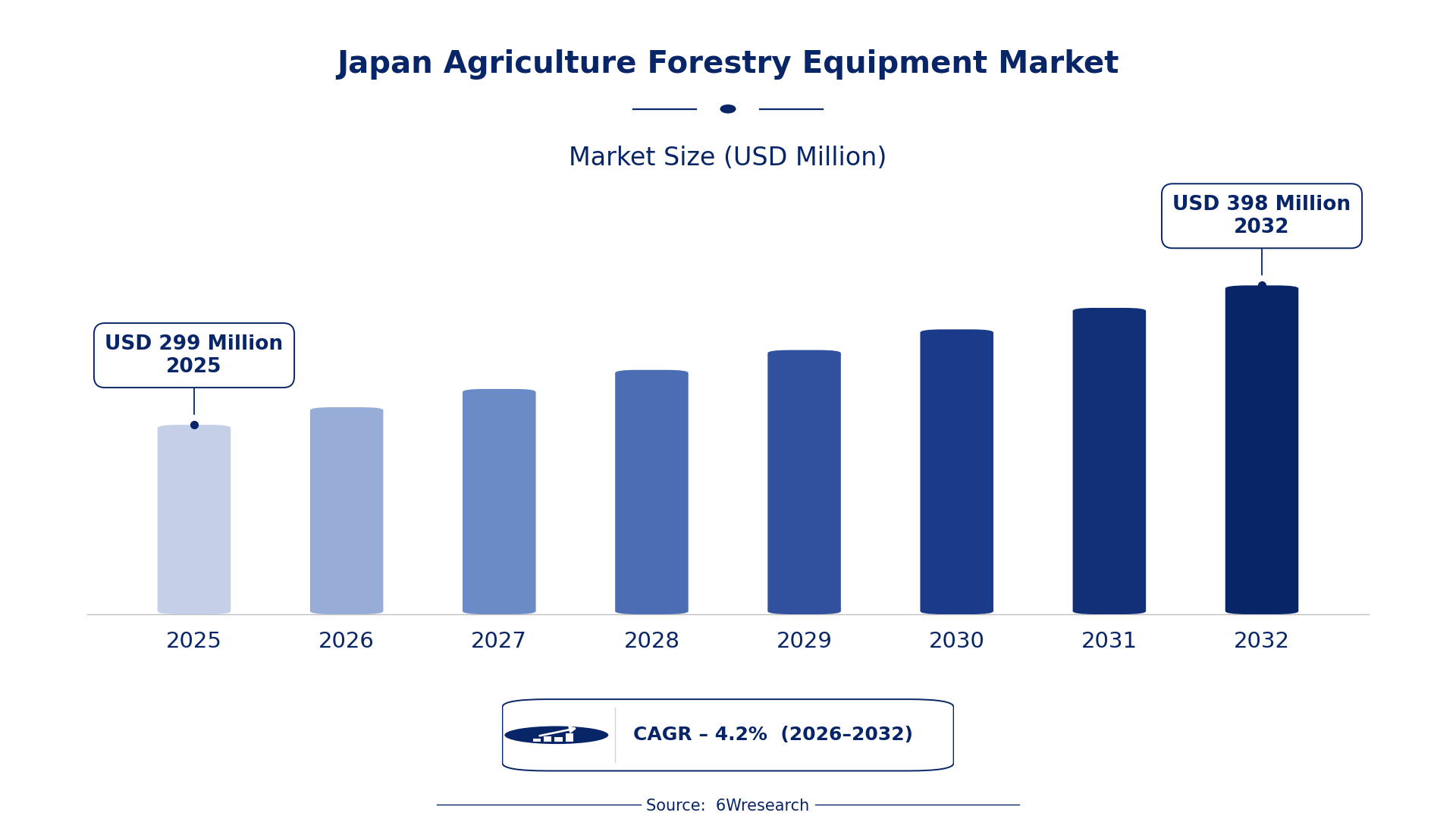
According to 6Wresearch internal database and industry insights, the Japan Agriculture Forestry Equipment Market was valued at USD 299 Million in 2025 and is projected to reach USD 398 Million by 2032, growing at a CAGR of approximately 4.2% during 2026–2032.
Japan Agriculture Forestry Equipment Market Highlights
| Report Metric | Details |
| Report Name | Japan Agriculture Forestry Equipment Market (2026-2032) |
| Market Size 2025 | USD 299 Million |
| Market Size 2032 | USD 398 Million |
| Absolute Growth 2025–2032 | USD 99 Million |
| CAGR 2026–2032 | 4.2% |
| Peak Annual Growth | 4.8% in 2026 |
| Forecast Period | 2026–2032 |
| Historical Data | 2022–2025 |
| Base Year | 2025 |
| Leading Type of Equipment, 2025 | Tree Felling Machines (39% share) |
| Leading Application, 2025 | Timber Harvesting (45% share) |
| Leading End User, 2025 | Forestry Companies (51% share) |
| Fastest-Growing Type of Equipment | Stump Grinders (5.9% CAGR) |
| Fastest-Growing Application | Reforestation Projects (5.6% CAGR) |
| Fastest-Growing End User | Agricultural Contractors (5.3% CAGR) |
| Growing Sector | Reforestation Projects |
| Key End Users | Timber Harvesting, Reforestation Projects, Forestry Maintenance |
Japan Agriculture Forestry Equipment Market Year-wise Growth Rate and Key Drivers (2022–2032)
This graph illustrates the annual growth rates of the market from 2022 to 2032, highlighting a steady upward trajectory and projected market expansion over the forecast period.
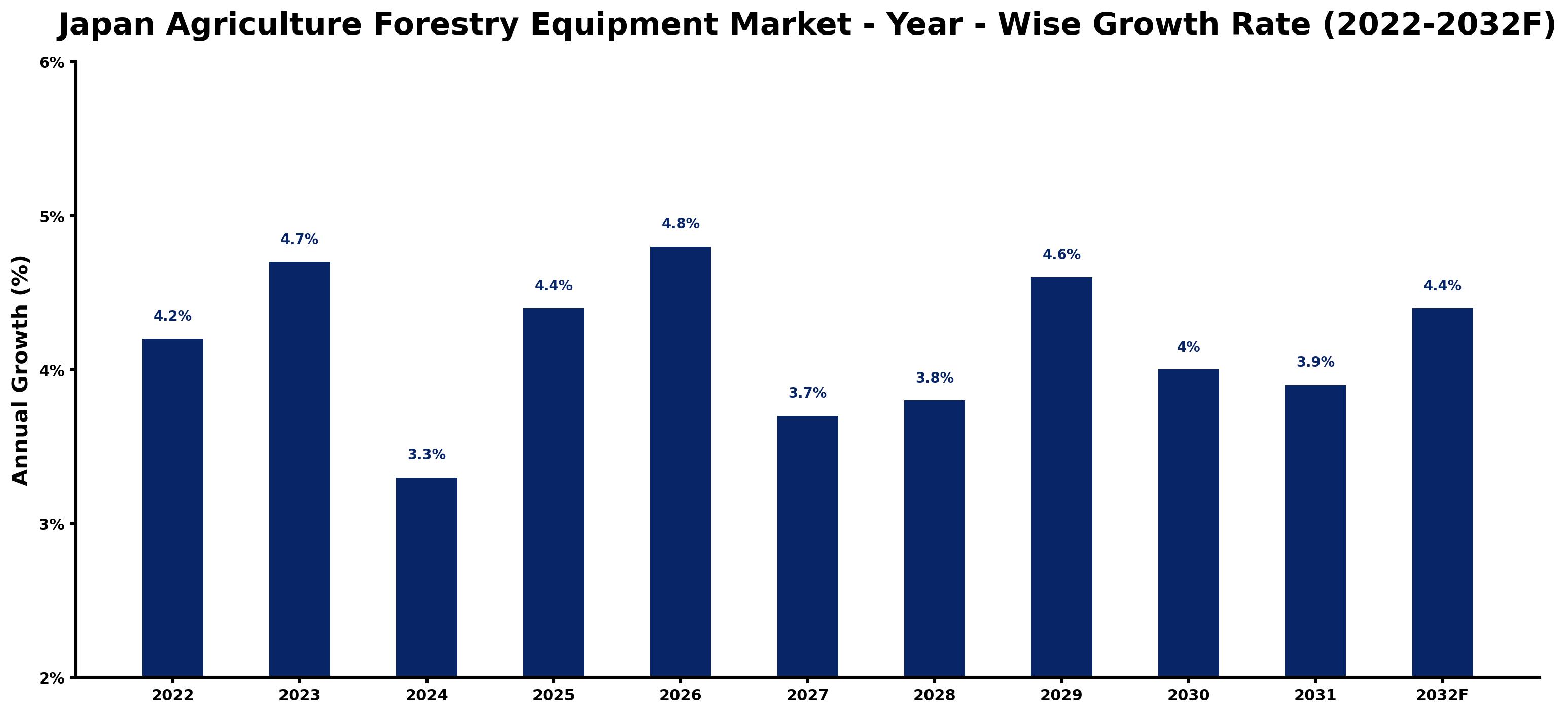
Year by year, the estimates below pair each growth rate with the development that shaped it.
| Year | Estimated Annual Growth (%) | Market Rationale |
| 2022 | 4.2 | The market experienced steady growth, supported by ongoing domestic forestry activities. |
| 2023 | 4.7 | Growth accelerated due to increased investments in sustainable forestry practices. |
| 2024 | 3.3 | Growth slowed as demand stabilised following a peak in machinery purchases. |
| 2025 | 4.4 | The market rebounded with renewed interest in timber harvesting technologies. |
| 2026 | 4.8 | Growth peaked as modernization efforts gained momentum across the sector. |
| 2027 | 3.7 | A slowdown occurred as the market adjusted to previous high levels of investment. |
| 2028 | 3.8 | Growth resumed as forestry companies adopted new technologies for efficiency. |
| 2029 | 4.6 | Demand increased as logging operations expanded in key regions like Hokkaido. |
| 2030 | 4.0 | Growth slowed again as market saturation began to affect new purchases. |
| 2031 | 3.9 | The market continued to grow but at a reduced pace as investments normalised. |
| 2032 | 4.4 | Growth picked up as new reforestation initiatives drove equipment demand. |
Note: Market size estimations and growth projections presented in this report are based on 6Wresearch's proprietary forecasting methodology, utilizing the latest available industry data, government publications, and primary research inputs.
Japan Agriculture Forestry Equipment Market Synopsis
Agriculture forestry equipment encompasses machinery used for tree felling, logging, and forest maintenance, crucial for timber harvesting and reforestation projects. The Japan Agriculture Forestry Equipment Market is growing due to rising domestic demand from forestry companies and government initiatives that promote sustainable practices. With the forestry sector contributing approximately 0.4% to GDP, investments in modernisation and reforestation efforts, such as the 2023 initiative targeting 1 million hectares by 2030, are driving growth and creating opportunities for suppliers. The average age of forestry machinery exceeds 15 years, highlighting the need for upgrades to improve operational efficiency.
Market Dynamics Impact Analysis (2026–2032)
| Factor | Type | Impact | Primary Segment Affected |
| Increasing investments in sustainable forestry practices | Driver | High | Timber Harvesting |
| Government initiatives promoting reforestation | Driver | High | Reforestation Projects |
| Growing demand for modern logging equipment | Opportunity | High | Tree Felling Machines |
| Expansion of forestry operations in key regions | Opportunity | Medium | Logging Trucks |
| Aging machinery fleet impacting efficiency | Restraint | High | Forest Harvesters |
| Regulatory compliance costs for equipment manufacturers | Restraint | Medium | Stump Grinders |
| High initial investment costs for advanced machinery | Challenge | High | Timber Harvesting |
| Limited availability of skilled operators for new technologies | Challenge | Medium | Reforestation Projects |
Evaluation of Drivers in Japan Agriculture Forestry Equipment Market (2026–2032)
These are the developments adding the most demand over the forecast period.
| Drivers | Primary Segment Affected | Why It Matters (Evidence) |
| Increased government funding for forestry modernization | Tree Felling Machines | The government allocated ¥10 billion for modernization in 2024, prompting forestry companies to upgrade equipment. |
| Growing focus on sustainable forest management | Reforestation Projects | The launch of a reforestation initiative targeting 1 million hectares by 2030 boosts demand for forestry equipment. |
| Rising timber prices encouraging harvesting activities | Timber Harvesting | Timber prices have increased by 15% in the last year, prompting companies to invest in efficient logging equipment to maximise profits. |
| Technological advancements in machinery efficiency | Forest Harvesters | Innovations in equipment technology lead to 20% higher productivity, prompting purchases from forestry companies. |
| Increasing domestic consumption of timber products | Logging Trucks | Domestic demand for timber products has risen by 10%, necessitating more logging trucks for efficient transportation. |
Several shifts outside the market lift sales. Increased funding for forestry modernization, with allocations of ¥10 billion in 2024, encourages forestry companies to invest in new equipment. Timber prices have risen by 15% in the last year, prompting companies to invest in efficient logging equipment to maximise profits, while technological advancements lead to 20% higher productivity. Domestic consumption of timber products has increased by 10%, necessitating more logging trucks for effective transportation.
Evaluation of Restraints in Japan Agriculture Forestry Equipment Market
Several factors work against faster growth; the main ones are summarised below.
| Market Restraint | Primary Segment Affected | Why It Matters (Evidence) |
| Aging machinery fleet affecting operational efficiency | Forest Harvesters | The average age of forestry machinery exceeds 15 years, leading to higher maintenance costs. |
| Compliance costs associated with regulatory standards | Stump Grinders | Manufacturers face increased costs to meet JIS specifications and safety regulations. |
| Limited access to financing for small forestry companies | Timber Harvesting | Many small firms struggle to secure loans for new equipment purchases, hindering growth. |
| High costs of advanced machinery limiting adoption | Tree Felling Machines | The initial investment for modern machinery can be prohibitive for smaller operators. |
| Shortage of skilled operators for advanced equipment | Reforestation Projects | The lack of trained personnel delays the implementation of new technologies in forestry. |
Japan Agriculture Forestry Equipment Market Challenges
Outdated machinery hampers buyers, as the average age of forestry equipment exceeds 15 years, leading to inefficiencies and higher operational costs. Suppliers face challenges with technological advancements, as Japan's forestry modernisation budget of ¥10 billion in 2024 falls short of the need for new machinery. Intense competition among domestic forestry companies for limited resources can delay project timelines, resulting in increased costs for buyers. Regulatory compliance poses challenges; strict adherence to the Forest Law increases operational burdens for suppliers and may elevate costs for buyers.
Trends in the Japan Agriculture Forestry Equipment Market
The trends below show where the Japan Agriculture Forestry Equipment Market is heading.
- Shift towards Sustainable Forestry Practices: In 2023, Japan launched a reforestation initiative targeting 1 million hectares by 2030. This shift aims to improve forest health and sustainability, creating increased demand for forestry equipment.
- Transition from Traditional to Advanced Machinery: The average age of forestry machinery in Japan is over 15 years, prompting a shift towards modern equipment. As companies seek efficiency, investments in advanced logging technologies are rising.
- Emergence of Integrated Logging Solutions: Forestry companies are increasingly adopting integrated logging operations, combining tree felling and transportation. This trend is driven by the need for efficiency and cost reduction in timber harvesting.
- Prioritisation of Compliance with Regulatory Standards: Compliance with the Forest Law is becoming essential for forestry operations. Companies are investing in equipment that meets regulatory standards to ensure sustainable practices.
Investment Opportunities in the Japan Agriculture Forestry Equipment Market
The openings below show where demand in the Japan Agriculture Forestry Equipment Market is visible and how suppliers can enter.
- Joint Ventures with Local Firms: With a projected gap in modern machinery, partnerships with local forestry companies can facilitate market entry. The government has allocated ¥10 billion for modernisation in 2024, creating a demand for advanced equipment.
- Investment in Advanced Machinery: As the average age of forestry machinery exceeds 15 years, there is an opportunity to supply modern equipment. Targeting forestry companies in regions like Hokkaido can yield substantial returns.
- Supply of Training Programs for Operators: The shortage of skilled operators presents an opportunity to offer training programs. With around 300,000 forestry workers, investing in training can enhance operational efficiency.
- Development of Eco-friendly Equipment: The rising focus on sustainable practices opens avenues for eco-friendly machinery. Engaging with government initiatives like the reforestation project can help align products with market needs.
Government Initiatives in the Japan Agriculture Forestry Equipment Market
The Industrial Standardization Act (1949; amended and renamed the Act on Japanese Industrial Standards in 2019) governs JIS product and test standards, ensuring that forestry equipment meets safety and performance criteria. This law mandates that manufacturers comply with established standards, impacting production processes and product quality. The Act on the Rational Use of Energy (1979; METI) obliges large energy users to improve energy efficiency and report energy use, influencing the operational practices of forestry equipment manufacturers and promoting sustainable energy use in production.
The Forestry Agency oversees sustainable forest management practices and supports initiatives like the 2023 reforestation programme. This agency allocates funding for modernisation projects, enabling buyers to access advanced equipment that meets regulatory standards. The agency also collaborates with industry associations to promote best practices in forestry, ensuring that buyers are informed about compliance requirements and available resources.
Future Insight of the Japan Agriculture Forestry Equipment Market
By 2032, Japan's reforestation initiative will drive demand for modern agriculture forestry equipment, encouraging suppliers to innovate and align with JIS specifications. The Forestry Agency's focus on sustainable practices will improve forest health and productivity. Buyers will benefit from advanced machinery that meets industry standards, facilitating efficient management of the 25 million hectares of forest area. Increased investment in technology and training for the 300,000 forestry workers will be essential to support these developments.
Market Segmentation Analysis
Japan Agriculture Forestry Equipment Market report covers a detailed analysis of the following market segments:
By Type of Equipment – Tree Felling Machines Lead, Stump Grinders Expected to Grow Fastest
According to Sachin Kumar Rai, Senior Research Analyst at 6Wresearch, with 39% of type of equipment revenue in 2025, Tree Felling Machines was the largest category. Tree felling machines dominate the market as they are essential for timber harvesting, a key operation for forestry companies in Japan. Their importance is underscored by the average age of over 15 years for existing machinery, prompting the need for modern equipment. The quickest growth will come from Stump Grinders, forecast to expand at a CAGR of 5.9% between 2026 and 2032. Stump grinders are experiencing rapid growth due to their increasing application in land clearing, particularly in light of the new reforestation initiative aimed at 1 million hectares by 2030. This surge is further supported by the government's ¥10 billion investment in forestry modernization for 2024. This trend indicates that suppliers must focus on enhancing their offerings of stump grinders to meet the rising market demand.
By Application – Timber Harvesting Leads, Reforestation Projects Expected to Grow Fastest
The largest application category in 2025 was Timber Harvesting, at 45% of revenue. Timber harvesting holds the largest share as it is the core activity in forestry, directly linked to the industry's output and sustainability. The regulated nature of timber harvesting under the Forest Law ensures a consistent demand for related equipment. Reforestation Projects are projected to grow fastest, at a CAGR of 5.6% during 2026–2032. Reforestation projects are the fastest-growing application due to the government's initiative targeting 1 million hectares by 2030. This focus on sustainability is driving investments and interest in equipment that supports these projects. Buyers should prioritise equipment that aligns with sustainable practices to capitalise on government initiatives and funding.
By End User – Forestry Companies Lead, Agricultural Contractors Expected to Grow Fastest
Forestry Companies took 51% of end user revenue in 2025, more than any other category. Forestry companies represent the largest segment as they are the main users of agriculture forestry equipment, directly influencing the market's demand. With around 300,000 forestry workers, the scale of their operations necessitates reliable and efficient machinery tailored to their needs. Agricultural Contractors are set to record the highest CAGR in this split, 5.3% over 2026–2032. Agricultural contractors are experiencing the fastest growth as they increasingly participate in forestry-related activities, particularly in land preparation for reforestation efforts. This trend indicates a shift in operational engagement within the forestry sector, highlighting new opportunities for equipment suppliers. Suppliers must adjust their product lines to accommodate the changing requirements of agricultural contractors entering the forestry equipment market.
Key Attractiveness of the Report
- 10 Years of Market Numbers
- Historical Data Starting from 2022 to 2025
- Base Year 2025
- Forecast Data until 2032
- Key Performance Indicators Impacting the Market
- Major Upcoming Developments and Projects
Key Highlights of the Report:
- Japan Agriculture Forestry Equipment Market Outlook
- Market Size of Japan Agriculture Forestry Equipment Market, 2025
- Forecast of Japan Agriculture Forestry Equipment Market, 2032
- Historical Data and Forecast of Japan Agriculture Forestry Equipment Revenues & Volume for the Period 2022-2032
- Japan Agriculture Forestry Equipment Market Trend Evolution
- Japan Agriculture Forestry Equipment Market Drivers and Challenges
- Japan Agriculture Forestry Equipment Price Trends
- Japan Agriculture Forestry Equipment Porter's Five Forces
- Japan Agriculture Forestry Equipment Industry Life Cycle
- Historical Data and Forecast of Japan Agriculture Forestry Equipment Market Revenues & Volume By Type of Equipment for the Period 2022-2032
- Historical Data and Forecast of Japan Agriculture Forestry Equipment Market Revenues & Volume By Tree Felling Machines for the Period 2022-2032
- Historical Data and Forecast of Japan Agriculture Forestry Equipment Market Revenues & Volume By Stump Grinders for the Period 2022-2032
- Historical Data and Forecast of Japan Agriculture Forestry Equipment Market Revenues & Volume By Logging Trucks for the Period 2022-2032
- Historical Data and Forecast of Japan Agriculture Forestry Equipment Market Revenues & Volume By Forest Harvesters for the Period 2022-2032
- Historical Data and Forecast of Japan Agriculture Forestry Equipment Market Revenues & Volume By Application for the Period 2022-2032
- Historical Data and Forecast of Japan Agriculture Forestry Equipment Market Revenues & Volume By Timber Harvesting for the Period 2022-2032
- Historical Data and Forecast of Japan Agriculture Forestry Equipment Market Revenues & Volume By Reforestation Projects for the Period 2022-2032
- Historical Data and Forecast of Japan Agriculture Forestry Equipment Market Revenues & Volume By Forestry Maintenance for the Period 2022-2032
- Historical Data and Forecast of Japan Agriculture Forestry Equipment Market Revenues & Volume By End User for the Period 2022-2032
- Historical Data and Forecast of Japan Agriculture Forestry Equipment Market Revenues & Volume By Forestry Companies for the Period 2022-2032
- Historical Data and Forecast of Japan Agriculture Forestry Equipment Market Revenues & Volume By Agricultural Contractors for the Period 2022-2032
- Historical Data and Forecast of Japan Agriculture Forestry Equipment Market Revenues & Volume By Government Agencies (Forestry) for the Period 2022-2032
- Japan Agriculture Forestry Equipment Import Export Trade Statistics
- Market Opportunity Assessment By Type of Equipment
- Market Opportunity Assessment By Application
- Market Opportunity Assessment By End User
- Japan Agriculture Forestry Equipment Top Companies Market Share
- Japan Agriculture Forestry Equipment Competitive Benchmarking By Technical and Operational Parameters
- Japan Agriculture Forestry Equipment Company Profiles
- Japan Agriculture Forestry Equipment Key Strategic Recommendations
Market Covered
The study includes the following segmentation.
By Type of Equipment
- Tree Felling Machines
- Stump Grinders
- Logging Trucks
- Forest Harvesters
By Application
- Timber Harvesting
- Reforestation Projects
- Forestry Maintenance
By End User
- Forestry Companies
- Agricultural Contractors
- Government Agencies (Forestry)































