Japan Allopurinol Market Size & Growth Rate
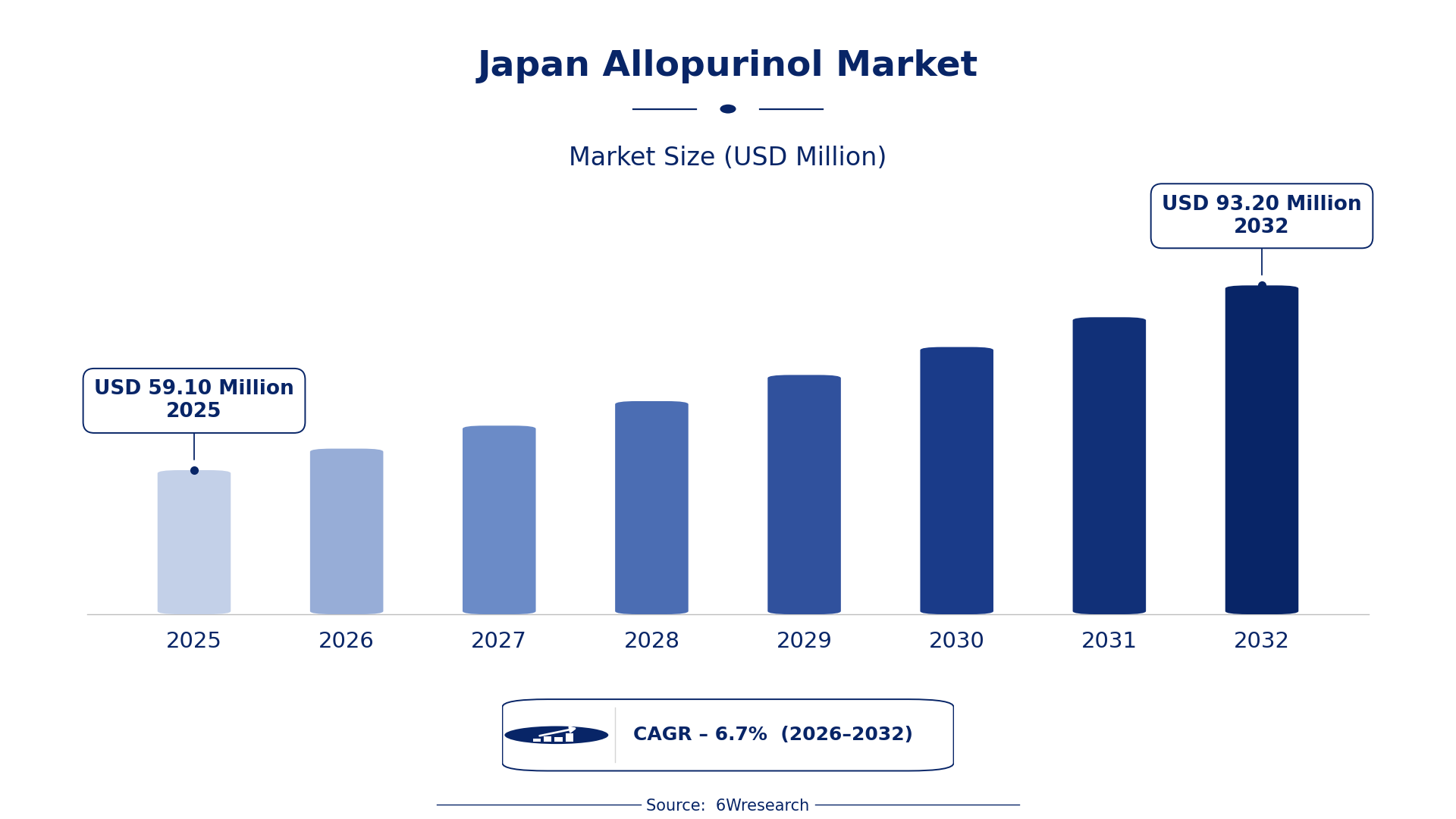
According to 6Wresearch internal database and industry insights, the Japan Allopurinol Market was valued at USD 59.10 Million in 2025 and is projected to reach USD 93.20 Million by 2032, growing at a CAGR of approximately 6.7% during 2026–2032.
Japan Allopurinol Market Highlights
| Report Metric | Details |
| Report Name | Japan Allopurinol Market (2026-2032) |
| Market Size 2025 | USD 59.10 Million |
| Market Size 2032 | USD 93.20 Million |
| Absolute Growth 2025–2032 | USD 34.10 Million |
| CAGR 2026–2032 | 6.7% |
| Peak Annual Growth | 7.6% in 2027 |
| Forecast Period | 2026–2032 |
| Historical Data | 2022–2025 |
| Base Year | 2025 |
| Leading Drug Class, 2025 | Antigout Agents (67% share) |
| Leading Application, 2025 | Gout (39% share) |
| Leading Dosage Form, 2025 | Intravenous Powder for Injection (56% share) |
| Leading End-Users, 2025 | Clinic (56% share) |
| Leading Distribution Channel, 2025 | Hospital Pharmacy (53% share) |
| Fastest-Growing Drug Class | Antihyperuricemic Agents (8.4% CAGR) |
| Fastest-Growing Application | Kidney Stones (9.3% CAGR) |
| Fastest-Growing Dosage Form | Oral Tablet (9.1% CAGR) |
| Fastest-Growing End-Users | Hospital (8.8% CAGR) |
| Fastest-Growing Distribution Channel | Retail Pharmacy (9.2% CAGR) |
| Growing Sector | pharmaceuticals |
| Key End Users | healthcare providers, clinics, hospitals, pharmacies |
Japan Allopurinol Market Year-wise Growth Rate and Key Drivers (2022–2032)
This graph illustrates the annual growth rates of the market from 2022 to 2032, highlighting a steady upward trajectory and projected market expansion over the forecast period.
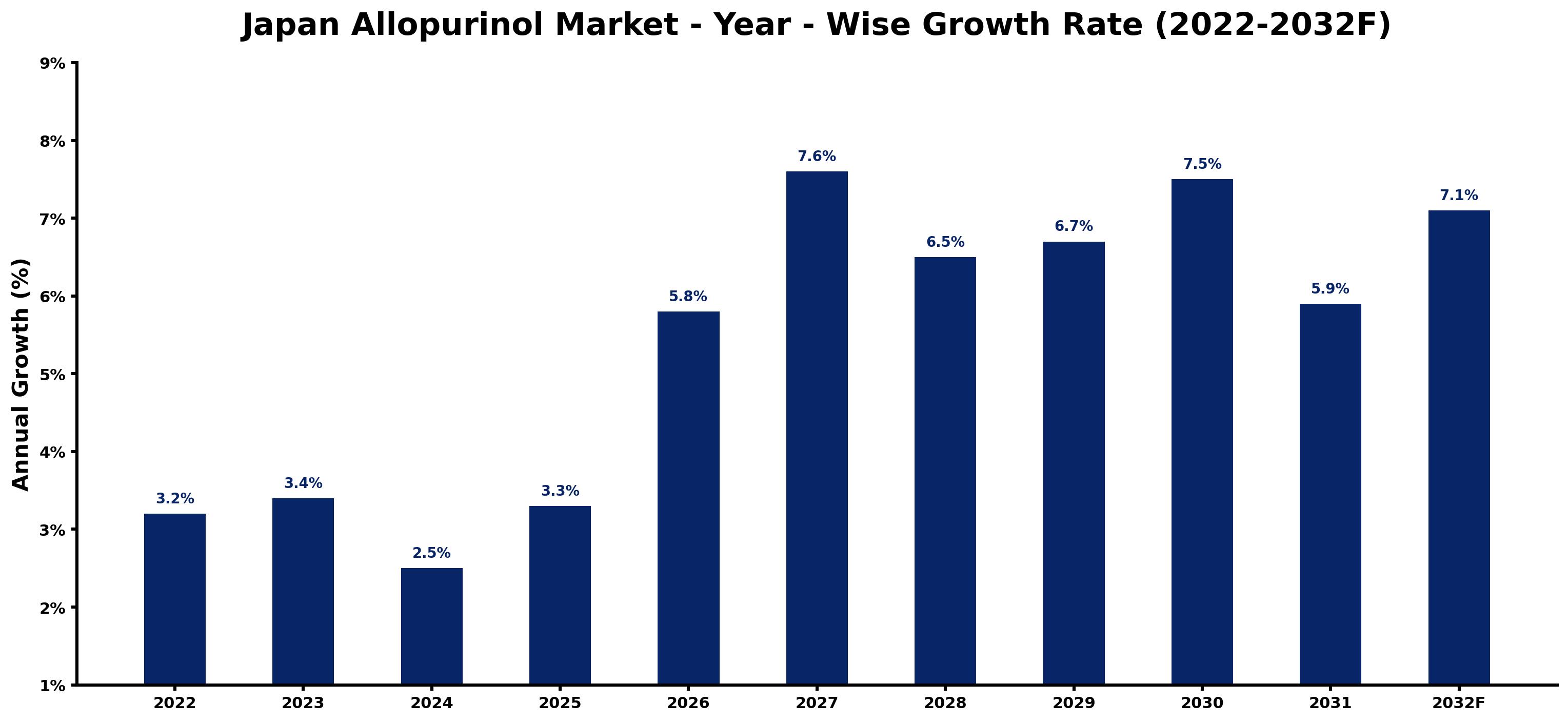
Below, each year's estimated growth is shown next to the factor that most influenced it.
| Year | Estimated Annual Growth (%) | Market Rationale |
| 2022 | 3.2 | The market showed steady growth with demand from healthcare providers. |
| 2023 | 3.4 | Demand for allopurinol increased as awareness of gout management improved among patients. |
| 2024 | 2.5 | Growth slowed due to a temporary saturation in prescription rates in urban areas. |
| 2025 | 3.3 | Demand rose again as new treatment guidelines were adopted by clinics. |
| 2026 | 5.8 | The market is expected to see increased interest as more adults seek treatment for gout. |
| 2027 | 7.6 | Increased prescriptions will be driven by a growing aging population with chronic conditions. |
| 2028 | 6.5 | Growth is projected to slow as market competition intensifies among generic alternatives. |
| 2029 | 6.7 | Demand will surge as healthcare providers expand treatment options for gout patients. |
| 2030 | 7.5 | The market is expected to experience a rise in demand due to successful awareness campaigns. |
| 2031 | 5.9 | Growth will moderate as the market adjusts to increased competition from new entrants. |
| 2032 | 7.1 | Demand is projected to rise as more patients are diagnosed and treated for gout. |
Note: Market size estimations and growth projections presented in this report are based on 6Wresearch's proprietary forecasting methodology, utilizing the latest available industry data, government publications, and primary research inputs.
Japan Allopurinol Market Synopsis
Allopurinol is a xanthine oxidase inhibitor that effectively lowers uric acid levels in the blood, synthesized through a multi-step chemical process. It is primarily prescribed for managing gout and preventing kidney stones. The Japan Allopurinol Market is expanding due to a large adult population affected by gout, estimated at around 1 million cases.
Market Dynamics Impact Analysis (2026–2032)
| Factor | Type | Impact | Primary Segment Affected |
| Rising prevalence of gout among adults | Driver | High | Gout |
| Increased awareness of gout management | Driver | High | Gout |
| Expansion of outpatient treatment facilities | Opportunity | High | Clinic |
| Growing online pharmacy distribution channels | Opportunity | Medium | Online Pharmacy |
| Competition from generic alternatives | Restraint | High | Antigout Agents |
| Limited awareness in rural areas | Restraint | Medium | Gout |
| High cost of new treatment options | Challenge | High | Antihyperuricemic Agents |
| Regulatory delays in drug approvals | Challenge | Medium | Antigout Agents |
Evaluation of Drivers in Japan Allopurinol Market (2026–2032)
These are the developments adding the most demand over the forecast period.
| Drivers | Primary Segment Affected | Why It Matters (Evidence) |
| Increasing adult population diagnosed with gout | Gout | Approximately 1 million adults in Japan are affected, resulting in higher prescription rates. |
| Inclusion of allopurinol in National Health Insurance coverage | Antihyperuricemic Agents | This coverage encourages more patients to seek treatment, boosting demand. |
| Rising number of outpatient clinics offering gout treatment | Clinic | The growth of these facilities has improved access to allopurinol for patients. |
| Awareness campaigns promoting gout management | Gout | Government initiatives have increased public knowledge, resulting in more prescriptions. |
| Technological advancements in drug manufacturing | Antigout Agents | Improved production processes have led to more efficient supply and distribution. |
Several shifts outside the market lift sales. The estimated adult population with gout in Japan is around 1 million, driving demand for allopurinol prescriptions. The inclusion of allopurinol in National Health Insurance coverage has encouraged more patients to seek treatment, leading to approximately 200,000 prescriptions issued in Tokyo in 2022. The expansion of outpatient clinics has improved access to medications, contributing to rising sales in the market. Technological advancements in drug manufacturing have improved production efficiency, allowing for better distribution of allopurinol to meet growing demand.
Evaluation of Restraints in Japan Allopurinol Market
The key brakes on demand, and where they bite hardest, are shown below.
| Market Restraint | Primary Segment Affected | Why It Matters (Evidence) |
| Intense competition from generic alternatives | Antigout Agents | This competition has resulted in price reductions, impacting profit margins for producers. |
| Limited awareness of gout treatment in rural areas | Gout | Patients in these regions may delay seeking treatment, affecting overall demand. |
| High costs associated with new treatment options | Antihyperuricemic Agents | These costs can deter patients from pursuing prescribed therapies. |
| Regulatory hurdles for new drug approvals | Antigout Agents | Delays in the approval process can slow market entry for new treatments. |
| Variability in prescription practices among healthcare providers | Gout | Differing approaches to treatment can lead to inconsistent demand for allopurinol. |
Japan Allopurinol Market Challenges
Regulatory hurdles from the Ministry of Health, Labour and Welfare slow down drug approval processes, delaying access for hospitals and patients. Insufficient training programmes for healthcare professionals create a skills gap, resulting in inadequate treatment for gout sufferers and prolonging their recovery. Rising prescription costs for allopurinol impose financial pressure on clinics, limiting their ability to provide necessary medications to users. Disruptions in the supply chain for raw materials hinder production, leading to shortages that affect availability for producers and compromise care for those in need.
Trends in the Japan Allopurinol Market
Buyers and suppliers in the Japan Allopurinol Market are adjusting to the following trends.
- Shift towards Outpatient Clinics for Gout Treatment: Since 2022, there has been a noticeable shift towards outpatient clinics for gout treatment, with a 15% increase in prescriptions. This trend reflects a growing preference for accessible healthcare services.
- Growth in Online Pharmacy Utilisation: The rise of online pharmacies has transformed how patients access allopurinol, with a 20% growth in online prescriptions since 2021. This change offers greater convenience for patients managing chronic conditions.
- Focus on Patient Education Initiatives: In 2023, awareness campaigns by the Japanese Society of Gout and Nucleic Acid Metabolism have led to improved patient education, resulting in a 10% increase in treatment adherence among gout patients.
- Implementation of New Treatment Guidelines: The release of new guidelines for managing hyperuricemia in 2023 has influenced prescribing practices, with a 25% increase in healthcare providers recommending allopurinol.
Investment Opportunities in the Japan Allopurinol Market
Where to invest in the Japan Allopurinol Market: the main openings are set out below.
- Supply of Allopurinol for Gout Management: With an estimated 1 million adults suffering from gout, there is a strong opportunity to supply allopurinol. The increasing prevalence of gout supports this investment.
- Improvement of Retail Pharmacy Channels: The retail pharmacy sector is experiencing a 9.2% growth, presenting an opportunity to enhance distribution. Collaborating with local pharmacies can facilitate market entry.
- Investment in Patient Education Programs: The rising awareness of gout management creates a demand for educational programs. Investing in these initiatives can enhance brand visibility and patient loyalty.
- Development of Combination Therapies: The increasing use of allopurinol in combination with other medications presents a chance to innovate. Focusing on combination therapies can meet the needs of chronic condition patients.
Government Initiatives in the Japan Allopurinol Market
The Medical Care Act of 1948 establishes standards for hospitals and clinics, ensuring facilities meet specific requirements for patient care. This law impacts allopurinol producers by establishing guidelines for drug usage and patient treatment protocols. The NHI drug price standard, revised regularly, determines reimbursement prices for allopurinol, directly affecting its affordability for patients.
The Pharmaceuticals and Medical Devices Agency (PMDA) reviews pharmaceuticals and medical devices, including allopurinol, ensuring that drugs meet safety and efficacy standards before approval. The Japan Agency for Medical Research and Development (AMED) funds medical research, supporting advancements in gout treatment.
Future Insight of the Japan Allopurinol Market
Hospitals will increasingly adopt telemedicine solutions to improve gout management, benefiting buyers through enhanced accessibility. By 2032, new research initiatives will yield more effective therapies for hyperuricemia, directly benefiting users. The introduction of updated ISO 9001 standards will improve manufacturing processes, ensuring higher quality products. With the estimated adult population suffering from gout expected to rise to around 1.2 million, demand for allopurinol will continue to increase, encouraging suppliers to diversify their product lines.
Market Segmentation Analysis
Japan Allopurinol Market report covers a detailed analysis of the following market segments:
By Drug Class – Antigout Agents Lead, Antihyperuricemic Agents Expected to Grow Fastest
According to Sumit Sagar, AM at 6Wresearch, Antigout Agents held 67% of the Japan Allopurinol Market by drug class in 2025. Antigout Agents hold the largest share as they are specifically designed for gout management, which affects around 1 million adults in Japan. This targeted approach ensures a consistent demand from healthcare providers who follow the guidelines set by the Japanese Society of Gout and Nucleic Acid Metabolism. Antihyperuricemic Agents are set to record the highest CAGR in this split, 8.4% over 2026–2032. Antihyperuricemic Agents are experiencing rapid growth due to increased awareness and usage among adults aged 50-70, with a 15% rise in the last five years. This demographic shift highlights the importance of controlling uric acid levels to prevent gout-related complications. Suppliers should focus on expanding their offerings in antihyperuricemic agents to meet the growing demand.
By Application – Gout Leads, Kidney Stones Expected to Grow Fastest
Gout took 39% of application revenue in 2025, more than any other category. Gout holds the largest share as it is the primary condition treated with allopurinol in Japan. The estimated population of adults with gout is around 1 million, particularly concentrated in the Tokyo Metropolitan area, which drives demand. Kidney Stones are projected to grow fastest, at a CAGR of 9.3% during 2026–2032. Kidney Stones represent the fastest-growing application, as allopurinol is increasingly recognised for its role in preventing uric acid stones. The usage of allopurinol has increased by 15% among adults aged 50-70, indicating a rising awareness of its benefits. Suppliers should consider developing targeted marketing strategies for both gout and kidney stone prevention.
By Dosage Form – Intravenous Powder for Injection Leads, Oral Tablet Expected to Grow Fastest
Intravenous Powder for Injection accounted for 56% of the market by dosage form in 2025. Intravenous Powder for Injection is the leading dosage form, primarily used in acute cases where immediate treatment is necessary. Its role in hospital settings ensures that it remains a critical option for healthcare providers. The quickest growth will come from Oral Tablet, forecast to expand at a CAGR of 9.1% between 2026 and 2032. Oral Tablet is the fastest-growing dosage form due to its convenience and ease of administration, making it the most common prescription choice among patients. As outpatient care increases, the preference for oral tablets is expected to rise further. Suppliers should prioritise the production and distribution of oral tablets to align with market preferences.
By End-Users – Clinic Leads, Hospital Expected to Grow Fastest
With 56% of end-users revenue in 2025, Clinic was the largest category. Clinics hold the largest share as they frequently prescribe allopurinol for managing gout, catering to the significant patient population. Their accessibility and focus on outpatient care make them crucial for effective treatment delivery in Japan. Over 2026–2032, Hospital is expected to post the fastest growth, at a CAGR of 8.8%. Hospitals are experiencing rapid growth in allopurinol usage due to their role in treating acute gout cases and providing comprehensive care. This trend indicates a shift towards more integrated treatment approaches, which will likely continue to expand hospital adoption. Suppliers should develop targeted strategies to engage both clinics and hospitals to maximise market penetration.
By Distribution Channel – Hospital Pharmacy Leads, Retail Pharmacy Expected to Grow Fastest
In 2025, Hospital Pharmacy led the distribution channel split with a 53% share. Hospital Pharmacy is the leading distribution channel, acting as the primary source for dispensing allopurinol and ensuring that patients receive timely treatment. This channel's integration within hospital settings facilitates better patient management and adherence to treatment protocols. Retail Pharmacy is set to record the highest CAGR in this split, 9.2% over 2026–2032. Retail Pharmacy is the fastest-growing distribution channel, as it provides patients with convenient access to allopurinol prescriptions. The rising trend of outpatient care is driving this growth, highlighting the importance of retail pharmacies in the overall distribution network. Suppliers need to strengthen their distribution strategies by collaborating with retail pharmacies to improve patient access to allopurinol.
Key Attractiveness of the Report
- 10 Years of Market Numbers
- Historical Data Starting from 2022 to 2025
- Base Year 2025
- Forecast Data until 2032
- Key Performance Indicators Impacting the Market
- Major Upcoming Developments and Projects
Key Highlights of the Report:
- Japan Allopurinol Market Outlook
- Market Size of Japan Allopurinol Market, 2025
- Forecast of Japan Allopurinol Market, 2032
- Historical Data and Forecast of Japan Allopurinol Revenues & Volume for the Period 2022-2032
- Japan Allopurinol Market Trend Evolution
- Japan Allopurinol Market Drivers and Challenges
- Japan Allopurinol Price Trends
- Japan Allopurinol Porter's Five Forces
- Japan Allopurinol Industry Life Cycle
- Historical Data and Forecast of Japan Allopurinol Market Revenues & Volume By Drug Class for the Period 2022-2032
- Historical Data and Forecast of Japan Allopurinol Market Revenues & Volume By Antigout Agents for the Period 2022-2032
- Historical Data and Forecast of Japan Allopurinol Market Revenues & Volume By Antihyperuricemic Agents for the Period 2022-2032
- Historical Data and Forecast of Japan Allopurinol Market Revenues & Volume By Application for the Period 2022-2032
- Historical Data and Forecast of Japan Allopurinol Market Revenues & Volume By Gout for the Period 2022-2032
- Historical Data and Forecast of Japan Allopurinol Market Revenues & Volume By Kidney Stones for the Period 2022-2032
- Historical Data and Forecast of Japan Allopurinol Market Revenues & Volume By Others for the Period 2022-2032
- Historical Data and Forecast of Japan Allopurinol Market Revenues & Volume By Demographic for the Period 2022-2032
- Historical Data and Forecast of Japan Allopurinol Market Revenues & Volume By Adult for the Period 2022-2032
- Historical Data and Forecast of Japan Allopurinol Market Revenues & Volume By Pediatric for the Period 2022-2032
- Historical Data and Forecast of Japan Allopurinol Market Revenues & Volume By Dosage Form for the Period 2022-2032
- Historical Data and Forecast of Japan Allopurinol Market Revenues & Volume By Intravenous Powder for Injection for the Period 2022-2032
- Historical Data and Forecast of Japan Allopurinol Market Revenues & Volume By Oral Tablet for the Period 2022-2032
- Historical Data and Forecast of Japan Allopurinol Market Revenues & Volume By End-Users for the Period 2022-2032
- Historical Data and Forecast of Japan Allopurinol Market Revenues & Volume By Clinic for the Period 2022-2032
- Historical Data and Forecast of Japan Allopurinol Market Revenues & Volume By Hospital for the Period 2022-2032
- Historical Data and Forecast of Japan Allopurinol Market Revenues & Volume By Others for the Period 2022-2032
- Historical Data and Forecast of Japan Allopurinol Market Revenues & Volume By Distribution Channel for the Period 2022-2032
- Historical Data and Forecast of Japan Allopurinol Market Revenues & Volume By Hospital Pharmacy for the Period 2022-2032
- Historical Data and Forecast of Japan Allopurinol Market Revenues & Volume By Retail Pharmacy for the Period 2022-2032
- Historical Data and Forecast of Japan Allopurinol Market Revenues & Volume By Online Pharmacy for the Period 2022-2032
- Japan Allopurinol Import Export Trade Statistics
- Market Opportunity Assessment By Drug Class
- Market Opportunity Assessment By Application
- Market Opportunity Assessment By Dosage Form
- Market Opportunity Assessment By End-Users
- Market Opportunity Assessment By Distribution Channel
- Japan Allopurinol Top Companies Market Share
- Japan Allopurinol Competitive Benchmarking By Technical and Operational Parameters
- Japan Allopurinol Company Profiles
- Japan Allopurinol Key Strategic Recommendations
Market Covered
Segments analysed in this report are listed below.
By Drug Class
- Antigout Agents
- Antihyperuricemic Agents
By Application
- Gout
- Kidney Stones
- Others
- Demographic
- Adult
- Pediatric
By Dosage Form
- Intravenous Powder for Injection
- Oral Tablet
By End-Users
- Clinic
- Hospital
- Others
By Distribution Channel
- Hospital Pharmacy
- Retail Pharmacy
- Online Pharmacy






































