Japan Alternative Building Materials Market Size & Growth Rate
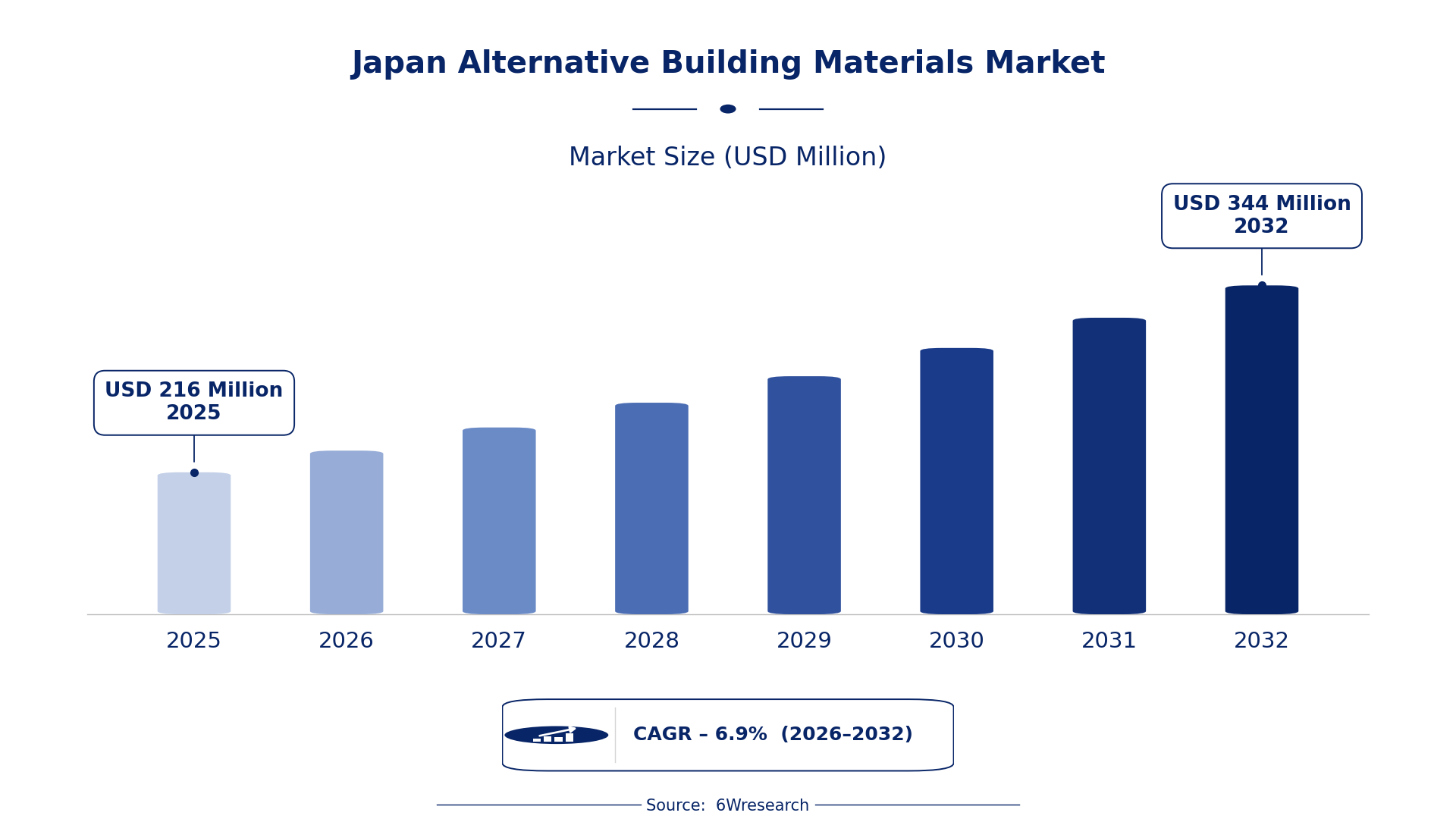
According to 6Wresearch internal database and industry insights, the Japan Alternative Building Materials Market was valued at USD 216 Million in 2025 and is projected to reach USD 344 Million by 2032, growing at a CAGR of approximately 6.9% during 2026–2032.
Japan Alternative Building Materials Market Highlights
| Report Metric | Details |
| Report Name | Japan Alternative Building Materials Market (2026-2032) |
| Market Size 2025 | USD 216 Million |
| Market Size 2032 | USD 344 Million |
| Absolute Growth 2025–2032 | USD 128 Million |
| CAGR 2026–2032 | 6.9% |
| Peak Annual Growth | 7.9% in 2029 |
| Forecast Period | 2026–2032 |
| Historical Data | 2022–2025 |
| Base Year | 2025 |
| Leading Material, 2025 | Wood (42% share) |
| Leading End User, 2025 | Residential (68% share) |
| Leading Application, 2025 | Construction (52% share) |
| Fastest-Growing Material | Bamboo (9.8% CAGR) |
| Fastest-Growing End User | Non-residential (8.5% CAGR) |
| Fastest-Growing Application | Furniture (9.0% CAGR) |
| Growing Sector | Residential |
| Key End Users | Builders, Contractors, Furniture Manufacturers, Homeowners |
Japan Alternative Building Materials Market Year-wise Growth Rate and Key Drivers (2022–2032)
This graph illustrates the annual growth rates of the market from 2022 to 2032, highlighting a steady upward trajectory and projected market expansion over the forecast period.
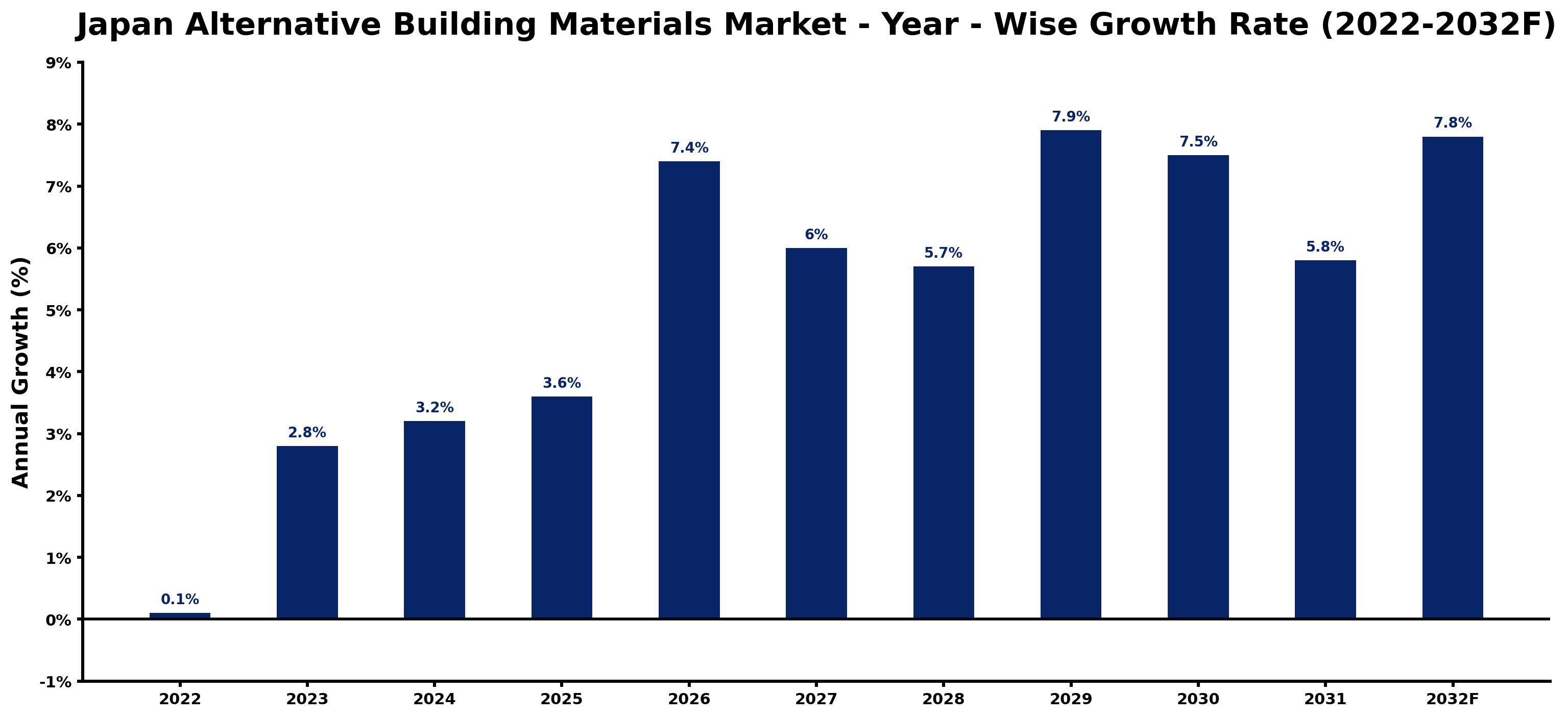
The table below sets out the estimated growth rate for each year and the main factor behind it.
| Year | Estimated Annual Growth (%) | Market Rationale |
| 2022 | 0.1 | The market showed minimal activity with a slight increase in demand for sustainable materials. |
| 2023 | 2.8 | Growth accelerated as more builders adopted eco-friendly practices in construction projects. |
| 2024 | 3.2 | Demand continued to rise, driven by increased awareness of sustainability among consumers. |
| 2025 | 3.6 | The market reached its historical peak due to heightened investments in alternative materials. |
| 2026 | 7.4 | Growth is expected to surge as the construction sector embraces new building solutions. |
| 2027 | 6.0 | The growth rate will slow as the market begins to stabilise after rapid expansion. |
| 2028 | 5.7 | A further slowdown is projected, yet demand will remain strong for sustainable options. |
| 2029 | 7.9 | The market is expected to experience a peak in growth as major projects showcase alternative materials. |
| 2030 | 7.5 | Growth will moderate slightly as the market adjusts to new supply dynamics. |
| 2031 | 5.8 | The market will continue to grow, albeit at a slower pace, reflecting stabilisation trends. |
| 2032 | 7.8 | Demand is expected to rise again as eco-friendly practices gain traction. |
Note: Market size estimations and growth projections presented in this report are based on 6Wresearch's proprietary forecasting methodology, utilizing the latest available industry data, government publications, and primary research inputs.
Japan Alternative Building Materials Market Synopsis
Alternative building materials include bamboo, recycled plastics, and sustainably sourced wood, produced through eco-friendly processes. The Japan Alternative Building Materials Market is expanding due to rising awareness of sustainability among consumers and investments in decarbonisation, targeting JPY 150 trillion over ten years. The construction sector increasingly adopts these materials, driven by initiatives from the Ministry of the Environment and a focus on reducing carbon footprints in building practices.
Market Dynamics Impact Analysis (2026–2032)
| Factor | Type | Impact | Primary Segment Affected |
| Increased focus on sustainability in construction | Driver | High | Construction |
| Growing demand for eco-friendly furniture | Driver | High | Furniture |
| Rising investments in sustainable building practices | Opportunity | High | Residential |
| Expansion of certification standards for alternative materials | Opportunity | Medium | Wood |
| High costs associated with sustainable sourcing | Restraint | High | Bamboo |
| Limited awareness of alternative materials among builders | Restraint | Medium | Recycled Plastic |
| Competition from traditional building materials | Challenge | High | Wood |
| Supply chain disruptions affecting material availability | Challenge | Medium | Bamboo |
Evaluation of Drivers in Japan Alternative Building Materials Market (2026–2032)
Demand rests on the following drivers, each shown with the segment it touches most.
| Drivers | Primary Segment Affected | Why It Matters (Evidence) |
| Increased construction of sustainable homes | Residential | Japan's population demands housing materials, leading to a 68% share in residential alternative materials. |
| Growing furniture production using eco-friendly materials | Furniture | The furniture sector is increasingly utilising recycled plastics, with a focus on reducing waste. |
| Government incentives for eco-friendly building | Construction | The 2023 government programme incentivises the use of alternative materials in construction projects. |
| Rising consumer awareness of environmental impact | Non-residential | Commercial projects are increasingly adopting sustainable practices, reflecting a shift in buyer preferences. |
| Certification standards driving quality assurance | Wood | Wood sourced from sustainable forests is certified under JAS standards, enhancing market credibility. |
Several shifts outside the market lift sales. The construction of sustainable homes has surged, driven by Japan's population of approximately 125 million, which demands eco-friendly materials. Growing awareness of environmental impacts has prompted the furniture sector to utilise recycled plastics, further driving demand. The certification of wood under JAS standards has also encouraged buyer confidence, motivating more purchases in non-residential construction.
Evaluation of Restraints in Japan Alternative Building Materials Market
The key brakes on demand, and where they bite hardest, are shown below.
| Market Restraint | Primary Segment Affected | Why It Matters (Evidence) |
| High costs associated with sourcing bamboo | Bamboo | Bamboo's sustainability comes at a premium, making it less accessible for some builders. |
| Limited awareness of alternative materials among builders | Recycled Plastic | Many builders still rely on traditional materials, hindering the growth of alternatives. |
| Competition from traditional building materials | Wood | Established materials dominate the market, making it challenging for alternatives to gain traction. |
| Supply chain disruptions affecting material availability | Bamboo | Recent global supply chain issues have delayed the availability of bamboo, impacting construction timelines. |
| Regulatory hurdles for new material adoption | Recycled Plastic | Strict regulations can slow down the introduction of new materials in construction. |
Japan Alternative Building Materials Market Challenges
High production costs for alternative building materials challenge producers, as eco-friendly options often require advanced processing techniques that can inflate expenses by 20%. Buyers face project delays due to limited availability of these materials, particularly in urban areas like Tokyo, where demand is concentrated and can lead to a 30% increase in project timelines. Supply chain issues arise from reliance on specific sustainable sources, causing shortages that can raise prices by 15% for buyers. Competition intensifies as traditional materials remain more affordable, forcing buyers to reconsider their budgets and timelines, which obstructs the broader adoption of sustainable practices.
Trends in the Japan Alternative Building Materials Market
The following changes are redrawing the Japan Alternative Building Materials Market.
- Shift towards Sustainable Construction Practices: The Tokyo metropolitan area increasingly adopts sustainable construction practices, with a target of 150 trillion JPY for decarbonisation over ten years. This shift encourages builders to invest in alternative materials.
- Emergence of Bamboo in Residential Projects: Since 2023, bamboo has gained popularity in residential construction due to its strength and sustainability. Its use is projected to rise as builders seek eco-friendly solutions.
- Growing Use of Recycled Plastics in Furniture: The furniture sector increasingly utilises recycled plastics, with a focus on reducing waste. This trend is evident as more manufacturers adopt eco-friendly materials.
- Expansion of Certification Standards for Wood: The introduction of JAS standards for sustainably sourced wood has enhanced market credibility, encouraging buyers to choose certified materials in construction.
Investment Opportunities in the Japan Alternative Building Materials Market
The openings below show where demand in the Japan Alternative Building Materials Market is visible and how suppliers can enter.
- Tokyo's Construction Sector: Tokyo's construction sector now focuses on eco-friendly materials, with a projected investment of 150 trillion JPY over ten years. Collaborating with local builders can facilitate entry into this market.
- Residential Builders Seeking Sustainable Solutions: Residential builders increasingly look for sustainable materials, presenting opportunities for suppliers of alternative materials. Forming joint ventures can help tap into this growing demand.
- Current Demand for Eco-friendly Furniture: With a rising focus on sustainability, furniture manufacturers seek alternative materials. Suppliers can enter this sector by obtaining necessary certifications and partnering with local firms.
- Government Incentives for Green Building Materials: The Japanese government incentivises the use of eco-friendly building materials, creating opportunities for suppliers. Engaging with local partners can help navigate the regulatory environment.
Government Initiatives in the Japan Alternative Building Materials Market
The Building Energy Efficiency Act, amended in 2022, mandates that all new buildings meet energy standards starting April 2025, compelling producers to adapt their materials accordingly. This regulation drives the demand for alternative building materials, as builders seek compliant solutions.
In 2023, the Japanese government launched a programme with a budget of JPY 150 trillion to incentivise eco-friendly building materials, administered by the Ministry of the Environment. This initiative aims to promote the adoption of sustainable practices in construction.
Future Insight of the Japan Alternative Building Materials Market
By 2032, Japan's commitment to a 46% reduction in greenhouse-gas emissions will drive a significant shift towards eco-friendly materials. The government's programme to incentivise sustainable practices will encourage innovation and attract new suppliers, broadening options for buyers. As the construction sector prioritises carbon footprint reduction, the adoption of standards like ISO 14001 will improve operational efficiencies. The Tokyo metropolitan area will likely see an increase in projects utilising bamboo and recycled plastics, reflecting a growing trend towards sustainable construction.
Market Segmentation Analysis
Japan Alternative Building Materials Market report covers a detailed analysis of the following market segments:
By Material – Wood Leads, Bamboo Expected to Grow Fastest
According to Ravi Bhandari, Research Head at 6Wresearch, Wood took 42% of material revenue in 2025, more than any other category. Wood holds the largest share due to its extensive use in both residential and non-residential construction across Japan, supported by standards like JAS for sustainable sourcing. The Tokyo metropolitan area showcases numerous projects that highlight wood's versatility and appeal in building applications. Over 2026–2032, Bamboo is expected to post the fastest growth, at a CAGR of 9.8%. Bamboo is experiencing rapid growth as its strength and sustainability make it increasingly popular for residential construction, with notable projects demonstrating its effectiveness. The government's push for eco-friendly building materials further accelerates bamboo's adoption in various sectors. Suppliers should focus on promoting bamboo to capitalise on its growing popularity, while buyers may benefit from exploring diverse material options.
By End User – Residential Leads, Non-residential Expected to Grow Fastest
With 68% of end user revenue in 2025, Residential was the largest category. The residential segment holds the largest share due to the strong demand for sustainable materials in homes, particularly in urban areas like Tokyo. This trend is supported by government initiatives that encourage eco-friendly building practices among homeowners. Non-residential is projected to grow fastest, at a CAGR of 8.5% during 2026–2032. The non-residential segment is experiencing rapid growth as commercial projects increasingly adopt alternative materials to meet sustainability goals. For instance, the Japanese government launched a programme in 2023 to incentivise the use of eco-friendly building materials in commercial construction. Suppliers should focus on developing products tailored for both residential and non-residential markets to capitalise on this growing demand.
By Application – Construction Leads, Furniture Expected to Grow Fastest
In 2025, Construction led the application split with a 52% share. Construction holds the largest share of alternative building materials due to its role as the primary application across diverse projects, particularly in urban areas like Tokyo. The push for sustainable building practices, supported by government initiatives, reinforces the importance of this segment in meeting environmental targets. The quickest growth will come from Furniture, forecast to expand at a CAGR of 9.0% between 2026 and 2032. The furniture segment is experiencing rapid growth, fuelled by the increasing consumer demand for sustainable and eco-friendly furniture solutions. This shift is exemplified by the rising use of recycled plastics in furniture production, reflecting a broader trend towards waste reduction. Suppliers must focus on providing sustainable materials to meet the growing demand in the furniture sector and comply with environmental regulations.
Key Attractiveness of the Report
- 10 Years of Market Numbers
- Historical Data Starting from 2022 to 2025
- Base Year 2025
- Forecast Data until 2032
- Key Performance Indicators Impacting the Market
- Major Upcoming Developments and Projects
Key Highlights of the Report:
- Japan Alternative Building Materials Market Outlook
- Market Size of Japan Alternative Building Materials Market, 2025
- Forecast of Japan Alternative Building Materials Market, 2032
- Historical Data and Forecast of Japan Alternative Building Materials Revenues & Volume for the Period 2022-2032
- Japan Alternative Building Materials Market Trend Evolution
- Japan Alternative Building Materials Market Drivers and Challenges
- Japan Alternative Building Materials Price Trends
- Japan Alternative Building Materials Porter's Five Forces
- Japan Alternative Building Materials Industry Life Cycle
- Historical Data and Forecast of Japan Alternative Building Materials Market Revenues & Volume By Material for the Period 2022-2032
- Historical Data and Forecast of Japan Alternative Building Materials Market Revenues & Volume By Bamboo for the Period 2022-2032
- Historical Data and Forecast of Japan Alternative Building Materials Market Revenues & Volume By Recycled Plastic for the Period 2022-2032
- Historical Data and Forecast of Japan Alternative Building Materials Market Revenues & Volume By Wood for the Period 2022-2032
- Historical Data and Forecast of Japan Alternative Building Materials Market Revenues & Volume By Others for the Period 2022-2032
- Historical Data and Forecast of Japan Alternative Building Materials Market Revenues & Volume By End User for the Period 2022-2032
- Historical Data and Forecast of Japan Alternative Building Materials Market Revenues & Volume By Residential for the Period 2022-2032
- Historical Data and Forecast of Japan Alternative Building Materials Market Revenues & Volume By Non-residential for the Period 2022-2032
- Historical Data and Forecast of Japan Alternative Building Materials Market Revenues & Volume By Application for the Period 2022-2032
- Historical Data and Forecast of Japan Alternative Building Materials Market Revenues & Volume By Construction for the Period 2022-2032
- Historical Data and Forecast of Japan Alternative Building Materials Market Revenues & Volume By Furniture for the Period 2022-2032
- Historical Data and Forecast of Japan Alternative Building Materials Market Revenues & Volume By Flooring for the Period 2022-2032
- Japan Alternative Building Materials Import Export Trade Statistics
- Market Opportunity Assessment By Material
- Market Opportunity Assessment By End User
- Market Opportunity Assessment By Application
- Japan Alternative Building Materials Top Companies Market Share
- Japan Alternative Building Materials Competitive Benchmarking By Technical and Operational Parameters
- Japan Alternative Building Materials Company Profiles
- Japan Alternative Building Materials Key Strategic Recommendations
Market Covered
Coverage by segment is as follows.
By Material
- Bamboo
- Recycled Plastic
- Wood
- Others
By End User
- Residential
- Non-residential
By Application
- Construction
- Furniture
- Flooring






































