Japan Antimicrobial Feed Additives Market Size & Growth Rate
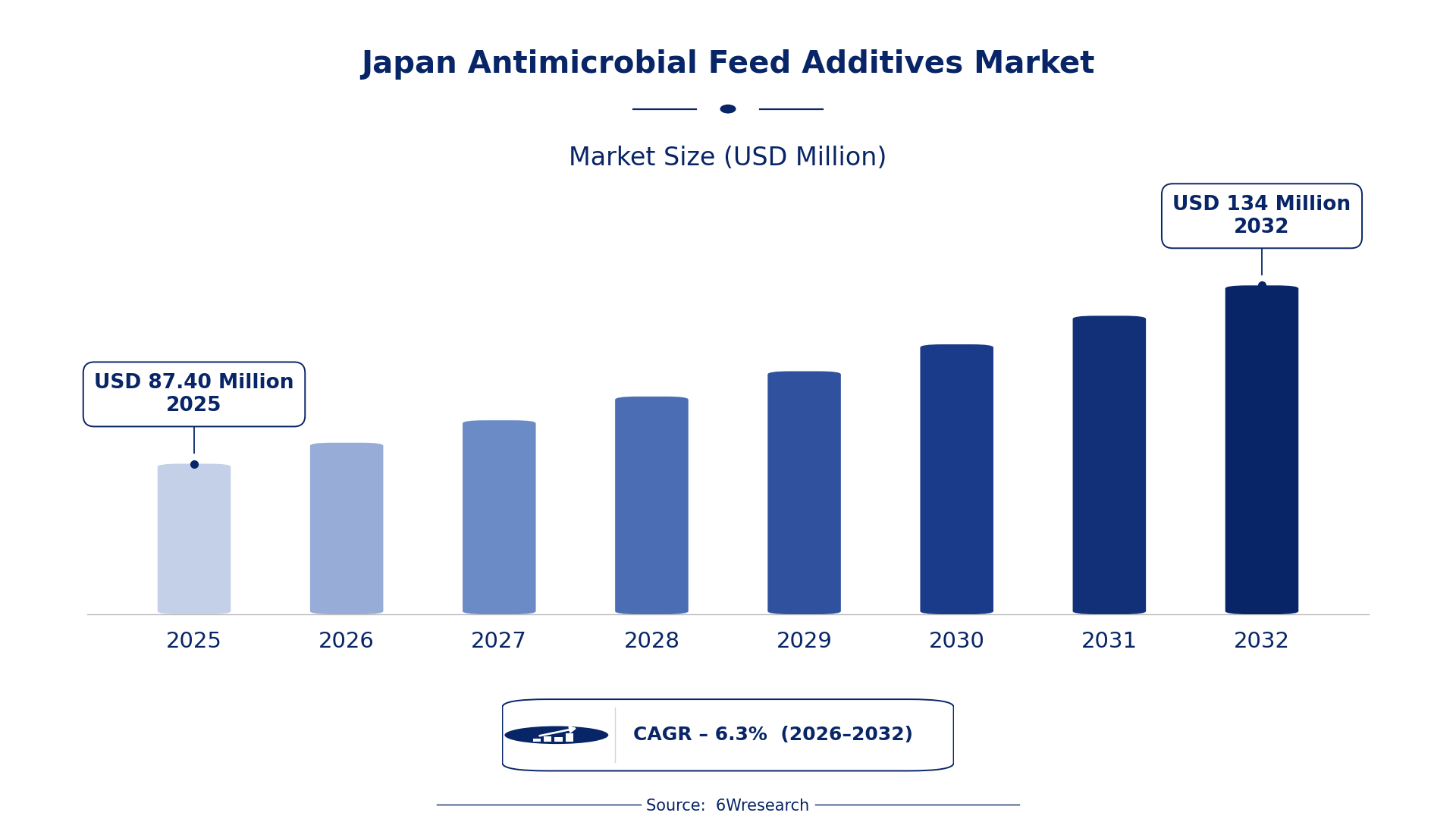
According to 6Wresearch internal database and industry insights, the Japan Antimicrobial Feed Additives Market was valued at USD 87.40 Million in 2025 and is projected to reach USD 134 Million by 2032, growing at a CAGR of approximately 6.3% during 2026–2032.
Japan Antimicrobial Feed Additives Market Highlights
| Report Metric | Details |
| Report Name | Japan Antimicrobial Feed Additives Market (2026-2032) |
| Market Size 2025 | USD 87.40 Million |
| Market Size 2032 | USD 134 Million |
| Absolute Growth 2025–2032 | USD 46.60 Million |
| CAGR 2026–2032 | 6.3% |
| Peak Annual Growth | 7.5% in 2028 |
| Forecast Period | 2026–2032 |
| Historical Data | 2022–2025 |
| Base Year | 2025 |
| Leading Additive Type, 2025 | Antibiotics (42% share) |
| Leading Animal Type, 2025 | Poultry (44% share) |
| Leading Source Type, 2025 | Synthetic (41% share) |
| Leading Distribution Channel, 2025 | Feed Distributors (51% share) |
| Leading End User, 2025 | Poultry Farms (38% share) |
| Fastest-Growing Additive Type | Essential Oils (8.8% CAGR) |
| Fastest-Growing Animal Type | Aquaculture (8.6% CAGR) |
| Fastest-Growing Source Type | Natural (9.1% CAGR) |
| Fastest-Growing Distribution Channel | Online Portals (8.2% CAGR) |
| Fastest-Growing End User | Fish Farms (7.9% CAGR) |
| Growing Sector | Aquaculture |
| Key End Users | Poultry Farms, Swine Producers, Fish Farms, Livestock Producers |
Japan Antimicrobial Feed Additives Market Year-wise Growth Rate and Key Drivers (2022–2032)
This graph illustrates the annual growth rates of the market from 2022 to 2032, highlighting a steady upward trajectory and projected market expansion over the forecast period.
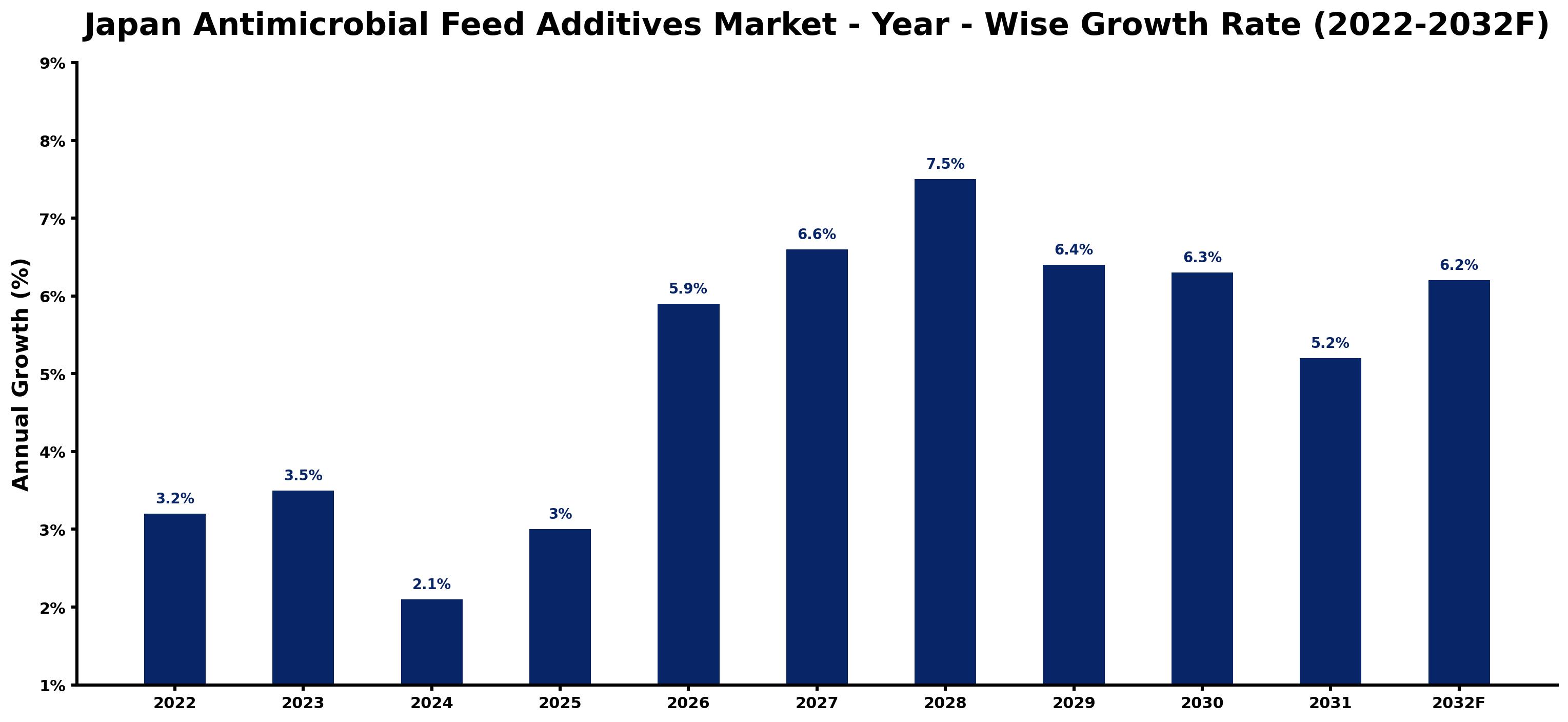
Each row of the following table gives one year's estimated growth and the event or demand shift that explains it.
| Year | Estimated Annual Growth (%) | Market Rationale |
| 2022 | 3.2 | The market experienced steady growth, reflecting ongoing demand from the livestock sector. |
| 2023 | 3.5 | Growth accelerated due to increased consumption of poultry products and feed efficiency improvements. |
| 2024 | 2.1 | A slowdown occurred as producers adjusted to market conditions and fluctuating feed costs. |
| 2025 | 3.0 | The market rebounded with renewed interest in antimicrobial solutions for livestock health. |
| 2026 | 5.9 | Demand is expected to rise as investments in aquaculture and poultry farming expand the market for additives. |
| 2027 | 6.6 | Continued growth will be driven by heightened awareness of feed safety and animal health standards. |
| 2028 | 7.5 | The peak growth rate is projected to be achieved, supported by technological advancements in feed formulations. |
| 2029 | 6.4 | A slight slowdown is anticipated as the market stabilises after rapid expansion in previous years. |
| 2030 | 6.3 | Growth is expected to moderate as producers focus on efficiency and sustainability in feed practices. |
| 2031 | 5.2 | The market will continue to grow, driven by ongoing demand for health-focused feed solutions. |
| 2032 | 6.2 | A resurgence in growth is anticipated as new products and formulations enter the market. |
Note: Market size estimations and growth projections presented in this report are based on 6Wresearch's proprietary forecasting methodology, utilizing the latest available industry data, government publications, and primary research inputs.
Japan Antimicrobial Feed Additives Market Synopsis
Antimicrobial feed additives are substances used in animal feed to prevent infections and improve livestock health. The Japan Antimicrobial Feed Additives Market is growing due to rising demand from poultry and swine farms, alongside advancements in feed formulation technologies. Japan's livestock sector, contributing approximately ¥1.5 trillion to agricultural GDP, increasingly adopts these additives to boost productivity and ensure animal welfare. The market is set to expand further as aquaculture gains traction, creating new opportunities for suppliers.
Market Dynamics Impact Analysis (2026–2032)
| Factor | Type | Impact | Primary Segment Affected |
| Rising poultry population drives demand for feed additives to enhance growth and health. | Driver | High | Poultry |
| Increased focus on feed efficiency and animal health prompts adoption of antimicrobial solutions. | Driver | High | Swine |
| Growing aquaculture sector presents opportunities for innovative feed solutions. | Opportunity | High | Aquaculture |
| Natural feed additives are gaining popularity as alternatives to synthetic options. | Opportunity | Medium | Essential Oils |
| Regulatory scrutiny on feed safety may limit certain additive types in the market. | Restraint | High | Antibiotics |
| Rising costs of raw materials could impact profitability for feed producers. | Restraint | Medium | Synthetic |
| Compliance with stringent regulations can increase operational costs for producers. | Challenge | High | Feed Distributors |
| Capacity constraints in production facilities may hinder supply chain responsiveness. | Challenge | Medium | Veterinary Clinics |
Evaluation of Drivers in Japan Antimicrobial Feed Additives Market (2026–2032)
Demand rests on the following drivers, each shown with the segment it touches most.
| Drivers | Primary Segment Affected | Why It Matters (Evidence) |
| Increased poultry production | Poultry | Japan's poultry population is approximately 150 million, leading to higher demand for feed additives. |
| Focus on disease prevention | Swine | The swine population is around 9 million, necessitating effective antimicrobial solutions in feed. |
| Technological advancements in feed formulation | Aquaculture | The aquaculture sector, with over 1,000 fish farms, is adopting new feed solutions to manage diseases. |
| Growing awareness of feed safety standards | Antibiotics | Regulations under the Food Sanitation Act drive demand for safe and effective feed additives. |
| Increased adoption of natural alternatives | Essential Oils | Natural feed additives are expected to see increased adoption due to health-conscious consumer trends. |
Several shifts outside the market lift sales. The poultry population, approximately 150 million, drives demand for additives that promote growth and health. The swine sector, with around 9 million pigs, necessitates effective antimicrobial solutions to prevent disease. The aquaculture sector, comprising over 1,000 fish farms, seeks new solutions for disease management. Awareness of feed safety standards is rising, while interest in natural alternatives reflects changing consumer preferences for healthier livestock products.
Evaluation of Restraints in Japan Antimicrobial Feed Additives Market
The key brakes on demand, and where they bite hardest, are shown below.
| Market Restraint | Primary Segment Affected | Why It Matters (Evidence) |
| Regulatory scrutiny on antibiotics may limit their use in feed formulations. | Antibiotics | The Food Sanitation Act regulates the use of certain additives, affecting market practices. |
| Rising raw material costs could impact the pricing of feed additives. | Synthetic | Fluctuating prices of raw materials may squeeze margins for producers, affecting profitability. |
| Compliance with stringent regulations can increase operational costs for producers. | Feed Distributors | Adhering to safety standards requires investments in quality assurance processes, raising expenses. |
| Limited awareness of natural alternatives may slow their market penetration. | Essential Oils | Producers may hesitate to switch from established synthetic additives without proven efficacy, limiting growth. |
| Capacity constraints in production facilities may hinder supply chain responsiveness. | Veterinary Clinics | Increased demand for feed additives may outpace current production capabilities, delaying availability. |
Japan Antimicrobial Feed Additives Market Challenges
Veterinary clinics face a shortage of skilled professionals, limiting effective health monitoring for livestock and increasing disease rates among poultry and swine. Slow technology adoption leads to outdated feed formulations that fail to optimise growth, costing producers potential revenue from the ¥1.5 trillion livestock production value. Limited access to antimicrobial feed additives disrupts supply chains, compelling buyers to hold excessive stock, which raises operational costs by up to 15%. Strict adherence to the Food Sanitation Act complicates product approvals, causing delays that impede market entry for suppliers.
Trends in the Japan Antimicrobial Feed Additives Market
The shifts below are changing how Japan Antimicrobial Feed Additives Market products are bought and supplied.
- Shift towards Natural Feed Additives: Natural feed additives are gaining traction, with essential oils becoming increasingly popular in poultry feed formulations. Approximately 41% of feed producers are exploring these alternatives, reflecting a growing trend towards health-conscious livestock management.
- Growing Aquaculture Sector: Japan's aquaculture production reached 500,000 tons in 2022, highlighting the sector's expansion. This growth creates demand for antimicrobial solutions, particularly in fish farms, which are increasingly adopting new feed additives.
- Increased Regulatory Focus on Feed Safety: The Food Sanitation Act has heightened awareness of feed safety among producers. Compliance with these regulations is essential for maintaining market access and ensuring consumer trust in livestock products.
- Technological Advancements in Feed Formulation: The introduction of fermentation-based additives is transforming feed formulations, appealing to producers seeking natural solutions. This trend is supported by ongoing research and development investments in the livestock sector.
Investment Opportunities in the Japan Antimicrobial Feed Additives Market
The following areas offer the clearest openings for investors and suppliers in the Japan Antimicrobial Feed Additives Market.
- Investment in Aquaculture Solutions: With Japan's aquaculture production reaching 500,000 tons in 2022, there is a significant opportunity to invest in antimicrobial feed solutions tailored for fish farms, enhancing disease management.
- Growing Demand for Natural Alternatives: The rising interest in natural feed additives presents an opportunity for suppliers to develop innovative products. Producers are increasingly seeking alternatives to synthetic additives, particularly in poultry farming.
- Expansion of Online Distribution Channels: The shift towards online purchasing is evident, with feed distributors exploring e-commerce platforms. This trend allows suppliers to reach a broader audience and streamline distribution.
- Focus on Sustainable Livestock Practices: The Japanese government promotes sustainable livestock practices, creating opportunities for investments in eco-friendly feed solutions that align with regulatory expectations.
Government Initiatives in the Japan Antimicrobial Feed Additives Market
The Food Sanitation Act amendment, fully applied in June 2021, mandates HACCP-based hygiene management for food businesses, including feed producers. This measure establishes higher food safety standards and ensures the quality of antimicrobial feed additives, creating a more reliable market environment for producers and consumers alike.
The Ministry of Agriculture, Forestry and Fisheries oversees feed safety standards and funds research initiatives aimed at developing alternative feed solutions. This agency plays an important role in ensuring compliance with regulations and supporting innovation in the livestock sector.
Future Insight of the Japan Antimicrobial Feed Additives Market
Investment in research for alternative feed solutions will drive innovation and create new opportunities for additives by 2032, benefiting both buyers and suppliers. The growing popularity of natural feed additives will improve animal health and feed efficiency. Adoption of ISO 22000 standards will streamline safety management systems, ensuring consistent quality throughout the supply chain. As the average age of livestock producers rises, there will be an increased emphasis on efficiency and sustainable practices, prompting shifts in production methods.
Market Segmentation Analysis
Japan Antimicrobial Feed Additives Market report covers a detailed analysis of the following market segments:
By Additive Type – Antibiotics Lead, Essential Oils Expected to Grow Fastest
According to Saurav Kr Singh, Senior Research Analyst at 6Wresearch, in 2025, Antibiotics led the additive type split with a 42% share. Antibiotics hold the largest share in the market due to their vital function in preventing infections in livestock, particularly in poultry farming. The regulatory support from the Food Sanitation Act ensures their consistent application and safety in animal feed. Essential Oils are projected to grow fastest, at a CAGR of 8.8% during 2026–2032. Essential oils are experiencing rapid growth as a result of the increasing consumer shift towards natural alternatives in feed formulations, particularly for their health benefits. This trend is reinforced by the government's initiatives promoting sustainable livestock practices, indicating a broader market transformation. Suppliers should prioritise the development of natural feed alternatives to align with the rising demand for essential oils.
By Animal Type – Poultry Leads, Aquaculture Expected to Grow Fastest
Poultry held 44% of the Japan Antimicrobial Feed Additives Market by animal type in 2025. Poultry is the dominant segment, reflecting a significant application for antimicrobial feed additives, supported by a poultry population of around 150 million in Japan. This sector's substantial contribution to the agricultural GDP further solidifies its leading position in the market. Over 2026–2032, Aquaculture is expected to post the fastest growth, at a CAGR of 8.6%. Aquaculture is witnessing rapid growth, primarily due to its essential role in disease management across over 1,000 fish farms in Japan. This expansion underscores the increasing necessity for effective antimicrobial solutions in various livestock sectors. Buyers in aquaculture should invest in antimicrobial solutions to improve disease management practices within their operations.
By Source Type – Synthetic Leads, Natural Expected to Grow Fastest
Synthetic accounted for 41% of the market by source type in 2025. Synthetic additives are prevalent as they are the most commonly used type in the market, providing proven efficacy in preventing infections in livestock. Their established acceptance is reinforced by regulatory frameworks that ensure safety and effectiveness. Natural is set to record the highest CAGR in this split, 9.1% over 2026–2032. Natural additives are gaining popularity as interest in sustainable farming practices increases, prompting a shift towards these alternatives. This reflects a broader consumer trend towards health-conscious and environmentally friendly products. Suppliers should prioritise the development of natural feed additives to capture the growing market segment.
By Distribution Channel – Feed Distributors Lead, Online Portals Expected to Grow Fastest
Feed Distributors took 51% of distribution channel revenue in 2025, more than any other category. Feed distributors are the primary distribution channel, effectively linking producers with antimicrobial feed additives across Japan. Their established networks ensure efficient supply and accessibility for livestock producers, making them crucial to the market's functioning. The quickest growth will come from Online Portals, forecast to expand at a CAGR of 8.2% between 2026 and 2032. Online portals are emerging as a rapidly expanding purchasing channel, propelled by the growing digitisation of the agricultural sector and the convenience they offer to buyers. This shift signifies a transformation in the procurement process for feed additives. Suppliers must strengthen their online presence to meet the increasing demand for digital purchasing options.
By End User – Poultry Farms Lead, Fish Farms Expected to Grow Fastest
With 38% of end user revenue in 2025, Poultry Farms was the largest category. Poultry farms represent the largest end-user segment, reflecting the substantial demand for antimicrobial solutions necessary to support the health of Japan's poultry population. The scale of this sector ensures a consistent market for these additives. Fish Farms are projected to grow fastest, at a CAGR of 7.9% during 2026–2032. Fish farms are experiencing swift growth as they increasingly require antimicrobial solutions for effective disease management in aquaculture. This trend underscores the rising importance of health in fish farming and the sector's expansion. Buyers in the aquaculture sector should explore antimicrobial solutions to address health challenges in fish farming.
Key Attractiveness of the Report
- 10 Years of Market Numbers
- Historical Data Starting from 2022 to 2025
- Base Year 2025
- Forecast Data until 2032
- Key Performance Indicators Impacting the Market
- Major Upcoming Developments and Projects
Key Highlights of the Report:
- Japan Antimicrobial Feed Additives Market Outlook
- Market Size of Japan Antimicrobial Feed Additives Market, 2025
- Forecast of Japan Antimicrobial Feed Additives Market, 2032
- Historical Data and Forecast of Japan Antimicrobial Feed Additives Revenues & Volume for the Period 2022-2032F
- Japan Antimicrobial Feed Additives Market Trend Evolution
- Japan Antimicrobial Feed Additives Market Drivers and Challenges
- Japan Antimicrobial Feed Additives Price Trends
- Japan Antimicrobial Feed Additives Porter's Five Forces
- Japan Antimicrobial Feed Additives Industry Life Cycle
- Historical Data and Forecast of Japan Antimicrobial Feed Additives Market Revenues & Volume By Additive Type for the Period 2022-2032F
- Historical Data and Forecast of Japan Antimicrobial Feed Additives Market Revenues & Volume By Antibiotics for the Period 2022-2032F
- Historical Data and Forecast of Japan Antimicrobial Feed Additives Market Revenues & Volume By Antibacterials for the Period 2022-2032F
- Historical Data and Forecast of Japan Antimicrobial Feed Additives Market Revenues & Volume By Antifungals for the Period 2022-2032F
- Historical Data and Forecast of Japan Antimicrobial Feed Additives Market Revenues & Volume By Essential Oils for the Period 2022-2032F
- Historical Data and Forecast of Japan Antimicrobial Feed Additives Market Revenues & Volume By Animal Type for the Period 2022-2032F
- Historical Data and Forecast of Japan Antimicrobial Feed Additives Market Revenues & Volume By Poultry for the Period 2022-2032F
- Historical Data and Forecast of Japan Antimicrobial Feed Additives Market Revenues & Volume By Swine for the Period 2022-2032F
- Historical Data and Forecast of Japan Antimicrobial Feed Additives Market Revenues & Volume By Cattle for the Period 2022-2032F
- Historical Data and Forecast of Japan Antimicrobial Feed Additives Market Revenues & Volume By Aquaculture for the Period 2022-2032F
- Historical Data and Forecast of Japan Antimicrobial Feed Additives Market Revenues & Volume By Source Type for the Period 2022-2032F
- Historical Data and Forecast of Japan Antimicrobial Feed Additives Market Revenues & Volume By Synthetic for the Period 2022-2032F
- Historical Data and Forecast of Japan Antimicrobial Feed Additives Market Revenues & Volume By Natural for the Period 2022-2032F
- Historical Data and Forecast of Japan Antimicrobial Feed Additives Market Revenues & Volume By Fermentation for the Period 2022-2032F
- Historical Data and Forecast of Japan Antimicrobial Feed Additives Market Revenues & Volume By Plant-based for the Period 2022-2032F
- Historical Data and Forecast of Japan Antimicrobial Feed Additives Market Revenues & Volume By Distribution Channel for the Period 2022-2032F
- Historical Data and Forecast of Japan Antimicrobial Feed Additives Market Revenues & Volume By Veterinary Clinics for the Period 2022-2032F
- Historical Data and Forecast of Japan Antimicrobial Feed Additives Market Revenues & Volume By Feed Distributors for the Period 2022-2032F
- Historical Data and Forecast of Japan Antimicrobial Feed Additives Market Revenues & Volume By Online Portals for the Period 2022-2032F
- Historical Data and Forecast of Japan Antimicrobial Feed Additives Market Revenues & Volume By Specialty Suppliers for the Period 2022-2032F
- Historical Data and Forecast of Japan Antimicrobial Feed Additives Market Revenues & Volume By End User for the Period 2022-2032F
- Historical Data and Forecast of Japan Antimicrobial Feed Additives Market Revenues & Volume By Poultry Farms for the Period 2022-2032F
- Historical Data and Forecast of Japan Antimicrobial Feed Additives Market Revenues & Volume By Livestock Producers for the Period 2022-2032F
- Historical Data and Forecast of Japan Antimicrobial Feed Additives Market Revenues & Volume By Dairy Farms for the Period 2022-2032F
- Historical Data and Forecast of Japan Antimicrobial Feed Additives Market Revenues & Volume By Fish Farms for the Period 2022-2032F
- Japan Antimicrobial Feed Additives Import Export Trade Statistics
- Market Opportunity Assessment By Additive Type
- Market Opportunity Assessment By Animal Type
- Market Opportunity Assessment By Source Type
- Market Opportunity Assessment By Distribution Channel
- Market Opportunity Assessment By End User
- Japan Antimicrobial Feed Additives Top Companies Market Share
- Japan Antimicrobial Feed Additives Competitive Benchmarking By Technical and Operational Parameters
- Japan Antimicrobial Feed Additives Company Profiles
- Japan Antimicrobial Feed Additives Key Strategic Recommendations
Market Covered
This report examines the market across the segments below.
By Additive Type
- Antibiotics
- Antibacterials
- Antifungals
- Essential Oils
By Animal Type
- Poultry
- Swine
- Cattle
- Aquaculture
By Source Type
- Synthetic
- Natural
- Fermentation
- Plant-based
By Distribution Channel
- Veterinary Clinics
- Feed Distributors
- Online Portals
- Specialty Suppliers
By End User
- Poultry Farms
- Livestock Producers
- Dairy Farms
- Fish Farms






































