Japan Apiary Supplies Market Size & Growth Rate
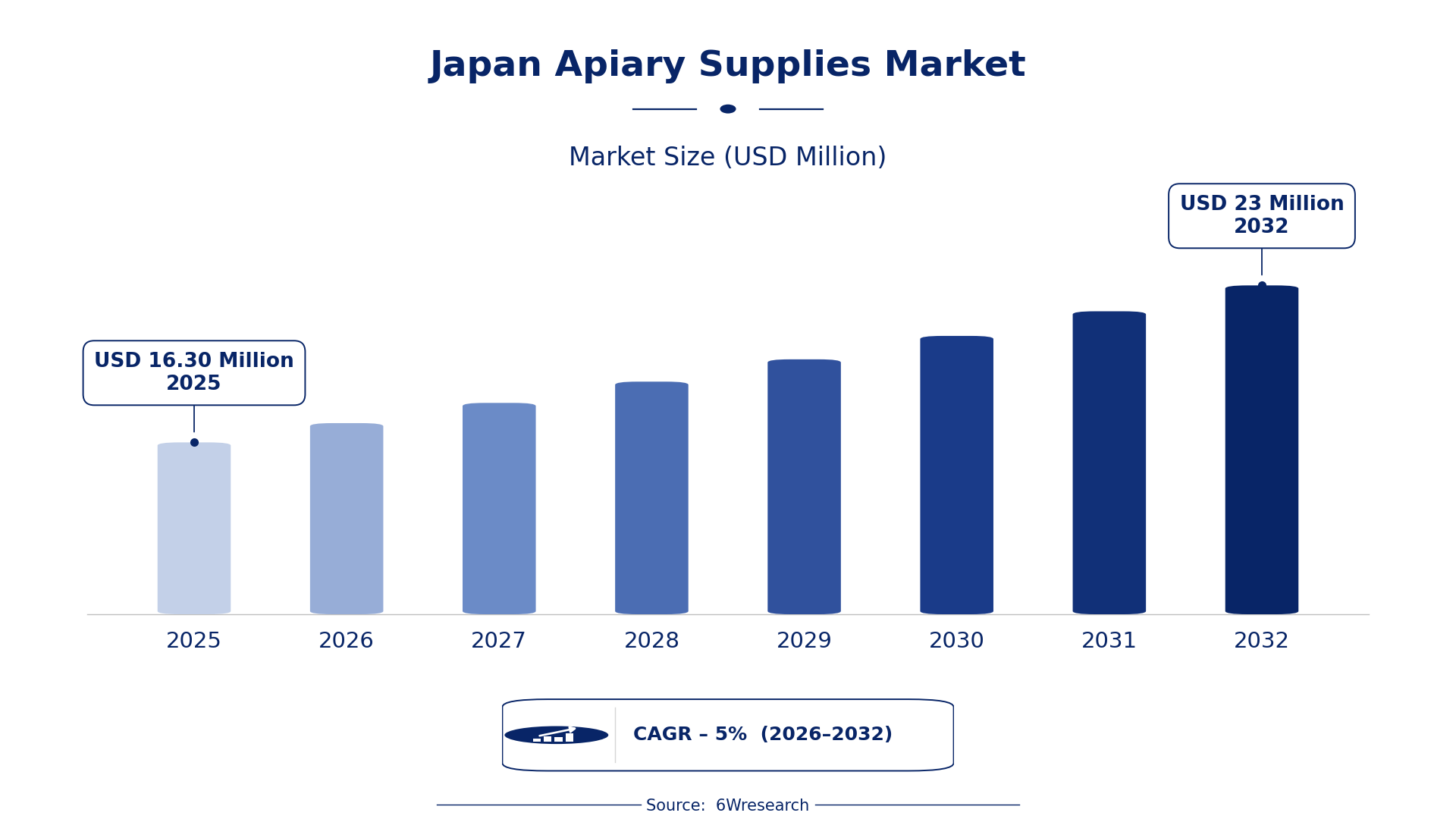
According to 6Wresearch internal database and industry insights, the Japan Apiary Supplies Market was valued at USD 16.30 Million in 2025 and is projected to reach USD 23 Million by 2032, growing at a CAGR of approximately 5% during 2026–2032.
Japan Apiary Supplies Market Highlights
| Report Metric | Details |
| Report Name | Japan Apiary Supplies Market (2026-2032) |
| Market Size 2025 | USD 16.30 Million |
| Market Size 2032 | USD 23 Million |
| Absolute Growth 2025–2032 | USD 6.70 Million |
| CAGR 2026–2032 | 5% |
| Peak Annual Growth | 6.1% in 2032 |
| Forecast Period | 2026–2032 |
| Historical Data | 2022–2025 |
| Base Year | 2025 |
| Leading Product Type, 2025 | Beehives (47% share) |
| Leading Beekeeping Use, 2025 | Bee Housing (42% share) |
| Leading Distribution Channel, 2025 | Agricultural Stores (42% share) |
| Leading Material Type, 2025 | Wood (42% share) |
| Leading End User, 2025 | Professional Beekeepers (41% share) |
| Fastest-Growing Product Type | Smokers (7.1% CAGR) |
| Fastest-Growing Beekeeping Use | Bee Control (6.6% CAGR) |
| Fastest-Growing Distribution Channel | Online Retailers (7.0% CAGR) |
| Fastest-Growing Material Type | Metal (7.2% CAGR) |
| Fastest-Growing End User | Hobbyists (6.5% CAGR) |
| Growing Sector | Hobbyist Beekeeping |
| Key End Users | Professional Beekeepers, Hobbyists, Apiarists, Honey Producers |
Japan Apiary Supplies Market Year-wise Growth Rate and Key Drivers (2022–2032)
This graph illustrates the annual growth rates of the market from 2022 to 2032, highlighting a steady upward trajectory and projected market expansion over the forecast period.
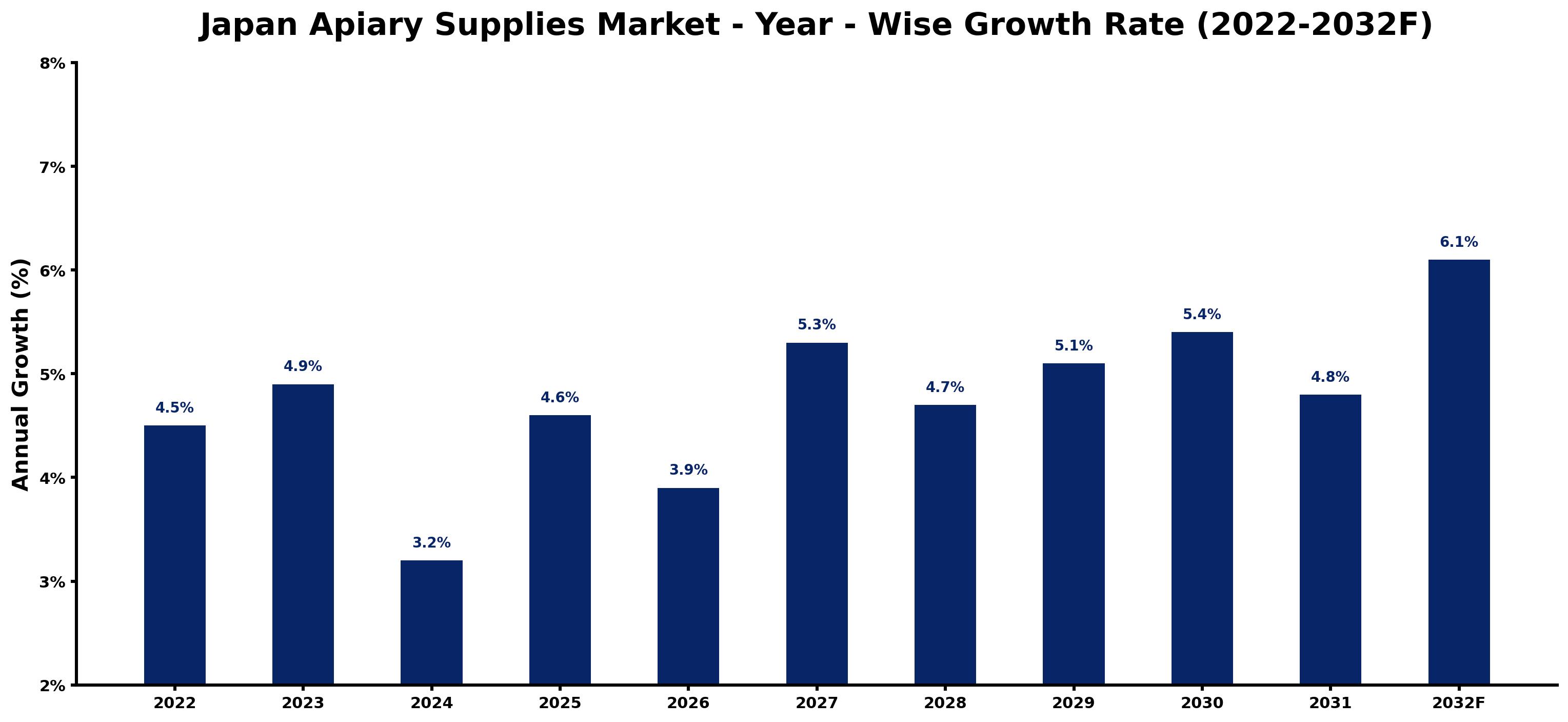
Each row of the following table gives one year's estimated growth and the event or demand shift that explains it.
| Year | Estimated Annual Growth (%) | Market Rationale |
| 2022 | 4.5 | The market showed steady growth driven by rising interest in beekeeping practices. |
| 2023 | 4.9 | Growth accelerated as more individuals engaged in hobbyist beekeeping activities. |
| 2024 | 3.2 | A slowdown occurred as market growth normalised after rapid expansion in previous years. |
| 2025 | 4.6 | Increased participation in beekeeping initiatives boosted demand for essential supplies. |
| 2026 | 3.9 | Growth is expected to slow slightly as the market adjusts to previous highs in demand. |
| 2027 | 5.3 | Demand is projected to rise as awareness of pollinator health initiatives spreads. |
| 2028 | 4.7 | Market growth is anticipated to decelerate as competition among suppliers intensifies. |
| 2029 | 5.1 | An increase in online sales is expected to drive higher demand for apiary equipment. |
| 2030 | 5.4 | Growth is projected to pick up as sustainable practices gain popularity among beekeepers. |
| 2031 | 4.8 | A slight slowdown is anticipated as market saturation begins to take effect. |
| 2032 | 6.1 | Demand is expected to surge due to heightened focus on pollinator health and sustainability. |
Note: Market size estimations and growth projections presented in this report are based on 6Wresearch's proprietary forecasting methodology, utilizing the latest available industry data, government publications, and primary research inputs.
Japan Apiary Supplies Market Synopsis
Apiary supplies include essential equipment and tools for beekeeping, primarily made from wood and metal. These supplies are vital for maintaining bee colonies, harvesting honey, and ensuring beekeeper safety. The Japan Apiary Supplies Market is expanding due to a growing interest in sustainable practices and increased participation from domestic users, including professional beekeepers and hobbyists. In 2023, online sales of apiary supplies increased by 25%, reflecting a shift in purchasing behaviour towards digital platforms, which will continue to drive growth.
Market Dynamics Impact Analysis (2026–2032)
| Factor | Type | Impact | Primary Segment Affected |
| Rising interest in sustainable beekeeping practices drives demand for eco-friendly supplies. | Driver | High | Bee Housing |
| Increased online sales channels provide greater accessibility for buyers. | Driver | High | Agricultural Stores |
| Hobbyist beekeeping is gaining traction, leading to higher demand for starter kits. | Opportunity | High | Protective Gear |
| Local governments are providing subsidies for new beekeeping operations, encouraging growth. | Opportunity | Medium | Beehives |
| The average age of beekeepers is 60, leading to concerns about future participation. | Restraint | High | Professional Beekeepers |
| Regulatory compliance under JIS standards can increase operational costs for suppliers. | Restraint | Medium | Hive Tools |
| Rising costs of raw materials may impact pricing strategies for suppliers. | Challenge | High | Metal |
| Limited availability of skilled labour in beekeeping affects operational capacity. | Challenge | Medium | Smokers |
Evaluation of Drivers in Japan Apiary Supplies Market (2026–2032)
The table below links each growth driver to the segment it affects and the evidence for it.
| Drivers | Primary Segment Affected | Why It Matters (Evidence) |
| Growing interest in sustainable beekeeping practices increases demand for eco-friendly supplies. | Bee Housing | The average hive can produce around 20-30 kg of honey annually, encouraging beekeepers to invest. |
| The rise of online sales channels improves accessibility for buyers. | Agricultural Stores | Online sales of apiary supplies increased by 25% in the last year, reflecting changing purchasing habits. |
| Increased participation in hobbyist beekeeping boosts demand for starter kits and supplies. | Protective Gear | Hobbyist beekeeping has seen a 30% increase in participation since 2020, driving supply needs. |
| Local government support for new beekeeping operations stimulates market growth. | Beehives | Subsidies for new beekeeping operations encourage supply chain resilience and investment. |
| Awareness of pollinator health initiatives encourages investment in beekeeping supplies. | Smokers | The government launched a program to promote pollinator health in 2023, increasing demand. |
Spending rises because of the growing interest in sustainable beekeeping practices, which has led to increased demand for eco-friendly supplies. In 2023, online sales of apiary supplies increased by 25%, reflecting a shift in purchasing behaviour towards digital platforms. The average hive can produce around 20-30 kg of honey annually, encouraging beekeepers to invest in better housing solutions. Increased participation in beekeeping has spurred interest in protective gear and starter kits among new beekeepers.
Evaluation of Restraints in Japan Apiary Supplies Market
The main factors holding the market back are set out below.
| Market Restraint | Primary Segment Affected | Why It Matters (Evidence) |
| The average age of beekeepers is 60, leading to concerns about future participation. | Professional Beekeepers | This demographic trend may limit the growth of the beekeeping community and reduce overall supply demand. |
| Regulatory compliance under JIS standards can increase operational costs for suppliers. | Hive Tools | Meeting these standards requires investment in testing and certification, impacting pricing. |
| Rising costs of raw materials may impact pricing strategies for suppliers. | Metal | Increased material costs can lead to higher prices for essential tools and equipment. |
| Limited availability of skilled labour in beekeeping affects operational capacity. | Smokers | This shortage can delay production and reduce the ability to meet market demand. |
| Competition among suppliers can lead to price wars, affecting profitability. | Beehives | Intense competition may force suppliers to lower prices, impacting their financial sustainability. |
Japan Apiary Supplies Market Challenges
Regulatory standards under JIS complicate production for beekeeping equipment, as manufacturers must ensure compliance, raising costs by up to 15%. Supply chain disruptions impede importers of specialised tools, causing delays that can extend lead times by over three months, affecting their ability to meet demand. Skills shortages among younger generations restrict the growth of new beekeepers, with the average age of beekeepers at 60, potentially diminishing active market participants. Rapid technological advancements in beekeeping tools require constant updates, compelling suppliers to invest heavily in new equipment, straining budgets and limiting product availability for buyers.
Trends in the Japan Apiary Supplies Market
Several trends are reshaping the Japan Apiary Supplies Market; the most important are set out below.
- Government Initiative to Promote Sustainable Practices: A 2023 programme launched by the government aims to encourage beekeepers to adopt sustainable practices, which is projected to increase the use of eco-friendly materials in apiary supplies.
- Rise of Online Retail Channels: Online retailers are becoming increasingly popular for purchasing apiary supplies, with a 25% increase in sales last year. This trend reflects changing consumer behaviour, making it easier for hobbyists and professionals to access necessary equipment.
- Surge in Hobbyist Beekeeping: Hobbyist beekeeping has seen a 30% increase in participation since 2020, indicating a growing interest in the craft. This trend is driving higher demand for beginner kits and protective gear among new beekeepers.
- Focus on Pollinator Health Initiatives: The Ministry of Agriculture, Forestry and Fisheries is actively promoting pollinator health, aiming to increase habitats by 15% by 2025. This initiative is likely to drive demand for supplies that support healthy bee populations.
Investment Opportunities in the Japan Apiary Supplies Market
Investors looking at the Japan Apiary Supplies Market should consider the following areas.
- Professional Beekeepers Seeking Advanced Equipment: Professional beekeepers require high-quality supplies to maintain their operations. Suppliers can enter this market by partnering with local beekeeping associations to provide advanced equipment.
- Expanding Online Retail Opportunities: Online retailers are looking to expand their product offerings to meet the growing demand for apiary supplies. With a 25% increase in online sales, suppliers should consider establishing partnerships with these platforms.
- Support for New Beekeeping Operations: Local governments are providing subsidies for new beekeeping operations, creating opportunities for suppliers. Investing in starter kits and essential equipment can tap into this growing market segment.
- Hobbyists Investing in Sustainable Practices: Hobbyists are increasingly interested in sustainable beekeeping practices, leading to a demand for eco-friendly supplies. Suppliers can benefit from this trend by offering products made from sustainable materials.
Government Initiatives in the Japan Apiary Supplies Market
The Economic Security Promotion Act, enacted in 2022, supports supply-chain resilience for critical products like apiary supplies. This law builds upon previous regulations by providing financial support for local producers, ensuring a steady supply of essential materials for beekeeping operations. The act aims to secure the local supply chain, ensuring that beekeepers have access to necessary resources for their operations.
Beekeepers benefit from the subsidies provided by local governments under the Economic Security Promotion Act. These funds help new beekeeping operations acquire necessary equipment, ensuring compliance with JIS standards and promoting sustainable practices. This support is vital for encouraging new entrants into the market and maintaining the health of bee populations.
Future Insight of the Japan Apiary Supplies Market
A shift towards increasing pollinator habitats by 15% by 2025 will enhance local ecosystems, benefiting both buyers and suppliers. By 2032, the transition to sustainable materials in beekeeping supplies will reshape product offerings, aligning with consumer preferences. Online sales of apiary supplies, which increased by 25% last year, will likely continue to grow, reflecting a trend that suppliers must adapt to. Educational workshops hosted by beekeeping associations will ensure a steady influx of skilled individuals into the market, strengthening the industry's future.
Market Segmentation Analysis
Japan Apiary Supplies Market report covers a detailed analysis of the following market segments:
By Product Type – Beehives Lead, Smokers Expected to Grow Fastest
According to Saurav Kr Singh, Senior Research Analyst at 6Wresearch, Beehives took 47% of product type revenue in 2025, more than any other category. Beehives hold the largest share as they are essential for housing bee colonies, which is fundamental for successful honey production. With the average hive yielding around 20-30 kg of honey annually, they are indispensable for both professional and hobbyist beekeepers. Smokers are set to record the highest CAGR in this split, 7.1% over 2026–2032. Smokers are experiencing rapid growth due to their increasing use for calming bees during hive inspections, which is becoming more common among beekeepers. The rise in the number of registered beekeepers, now exceeding 100,000, is further driving this demand. Suppliers should focus on expanding their smoker product lines to meet the rising interest among beekeepers.
By Beekeeping Use – Bee Housing Leads, Bee Control Expected to Grow Fastest
Bee Housing accounted for 42% of the market by beekeeping use in 2025. Bee Housing leads the market as it serves the primary purpose of beehives, crucial for maintaining healthy bee colonies. The presence of over 100,000 registered beekeepers ensures a steady demand for effective housing solutions that support honey production. The quickest growth will come from Bee Control, forecast to expand at a CAGR of 6.6% between 2026 and 2032. Bee Control is witnessing rapid growth as beekeepers increasingly seek effective methods for managing bee populations, especially with government initiatives promoting pollinator health. This heightened focus on sustainability is motivating more beekeepers to invest in control solutions. Suppliers should consider developing targeted bee control products to address the growing demand from beekeepers.
By Distribution Channel – Agricultural Stores Lead, Online Retailers Expected to Grow Fastest
Agricultural Stores held 42% of the Japan Apiary Supplies Market by distribution channel in 2025. Agricultural Stores command the largest market share as they serve as a primary retail channel for beekeeping supplies, providing easy access for beekeepers. Their established presence in rural areas ensures consistent sales to local beekeepers who rely on these outlets for their needs. Over 2026–2032, Online Retailers are expected to post the fastest growth, at a CAGR of 7.0%. Online Retailers are experiencing significant growth as more beekeepers prefer digital platforms for purchasing equipment, evidenced by a 25% rise in online sales last year. This shift reflects changing consumer preferences towards convenience and accessibility. Suppliers must enhance their online presence to capitalise on the growing trend of e-commerce in the apiary supplies market.
By Material Type – Wood Leads, Metal Expected to Grow Fastest
With 42% of material type revenue in 2025, Wood was the largest category. Wood is the leading material type as it is the main material used for constructing beehives, which are essential for housing bees. Its natural properties make it a preferred choice among beekeepers. Metal is projected to grow fastest, at a CAGR of 7.2% during 2026–2032. Metal is growing rapidly in popularity due to its durability and longevity in tools and equipment, appealing to beekeepers looking for long-lasting solutions. This trend aligns with the increasing demand for high-quality supplies. Suppliers should focus on offering a wider range of metal products to meet the evolving preferences of beekeepers.
By End User – Professional Beekeepers Lead, Hobbyists Expected to Grow Fastest
The largest end user category in 2025 was Professional Beekeepers, at 41% of revenue. Professional Beekeepers dominate the market due to their reliance on apiary supplies for commercial honey production, which requires a consistent supply of quality equipment. Their established practices and larger operations contribute to their substantial market share, making them key players in the industry. Hobbyists are set to record the highest CAGR in this split, 6.5% over 2026–2032. Hobbyists represent the fastest-growing segment, with a 30% increase in participation since 2020, driven by a rising interest in sustainable beekeeping. This trend indicates a shift towards more individuals engaging in beekeeping as a leisure activity, expanding the market further. Suppliers should tailor their marketing strategies to attract and cater to the increasing number of hobbyist beekeepers.
Key Attractiveness of the Report
- 10 Years of Market Numbers
- Historical Data Starting from 2022 to 2025
- Base Year 2025
- Forecast Data until 2032
- Key Performance Indicators Impacting the Market
- Major Upcoming Developments and Projects
Key Highlights of the Report:
- Japan Apiary Supplies Market Outlook
- Market Size of Japan Apiary Supplies Market, 2025
- Forecast of Japan Apiary Supplies Market, 2032
- Historical Data and Forecast of Japan Apiary Supplies Revenues & Volume for the Period 2022-2032F
- Japan Apiary Supplies Market Trend Evolution
- Japan Apiary Supplies Market Drivers and Challenges
- Japan Apiary Supplies Price Trends
- Japan Apiary Supplies Porter's Five Forces
- Japan Apiary Supplies Industry Life Cycle
- Historical Data and Forecast of Japan Apiary Supplies Market Revenues & Volume By Product Type for the Period 2022-2032F
- Historical Data and Forecast of Japan Apiary Supplies Market Revenues & Volume By Beehives for the Period 2022-2032F
- Historical Data and Forecast of Japan Apiary Supplies Market Revenues & Volume By Smokers for the Period 2022-2032F
- Historical Data and Forecast of Japan Apiary Supplies Market Revenues & Volume By Hive Tools for the Period 2022-2032F
- Historical Data and Forecast of Japan Apiary Supplies Market Revenues & Volume By Protective Gear for the Period 2022-2032F
- Historical Data and Forecast of Japan Apiary Supplies Market Revenues & Volume By Beekeeping Use for the Period 2022-2032F
- Historical Data and Forecast of Japan Apiary Supplies Market Revenues & Volume By Bee Housing for the Period 2022-2032F
- Historical Data and Forecast of Japan Apiary Supplies Market Revenues & Volume By Bee Control for the Period 2022-2032F
- Historical Data and Forecast of Japan Apiary Supplies Market Revenues & Volume By Maintenance for the Period 2022-2032F
- Historical Data and Forecast of Japan Apiary Supplies Market Revenues & Volume By Beekeeper Safety for the Period 2022-2032F
- Historical Data and Forecast of Japan Apiary Supplies Market Revenues & Volume By Distribution Channel for the Period 2022-2032F
- Historical Data and Forecast of Japan Apiary Supplies Market Revenues & Volume By Agricultural Stores for the Period 2022-2032F
- Historical Data and Forecast of Japan Apiary Supplies Market Revenues & Volume By Online Retailers for the Period 2022-2032F
- Historical Data and Forecast of Japan Apiary Supplies Market Revenues & Volume By Farming Cooperatives for the Period 2022-2032F
- Historical Data and Forecast of Japan Apiary Supplies Market Revenues & Volume By Direct Sales for the Period 2022-2032F
- Historical Data and Forecast of Japan Apiary Supplies Market Revenues & Volume By Material Type for the Period 2022-2032F
- Historical Data and Forecast of Japan Apiary Supplies Market Revenues & Volume By Wood for the Period 2022-2032F
- Historical Data and Forecast of Japan Apiary Supplies Market Revenues & Volume By Metal for the Period 2022-2032F
- Historical Data and Forecast of Japan Apiary Supplies Market Revenues & Volume By Steel for the Period 2022-2032F
- Historical Data and Forecast of Japan Apiary Supplies Market Revenues & Volume By Fabric & Mesh for the Period 2022-2032F
- Historical Data and Forecast of Japan Apiary Supplies Market Revenues & Volume By End User for the Period 2022-2032F
- Historical Data and Forecast of Japan Apiary Supplies Market Revenues & Volume By Professional Beekeepers for the Period 2022-2032F
- Historical Data and Forecast of Japan Apiary Supplies Market Revenues & Volume By Hobbyists for the Period 2022-2032F
- Historical Data and Forecast of Japan Apiary Supplies Market Revenues & Volume By Apiarists for the Period 2022-2032F
- Historical Data and Forecast of Japan Apiary Supplies Market Revenues & Volume By Honey Producers for the Period 2022-2032F
- Japan Apiary Supplies Import Export Trade Statistics
- Market Opportunity Assessment By Product Type
- Market Opportunity Assessment By Beekeeping Use
- Market Opportunity Assessment By Distribution Channel
- Market Opportunity Assessment By Material Type
- Market Opportunity Assessment By End User
- Japan Apiary Supplies Top Companies Market Share
- Japan Apiary Supplies Competitive Benchmarking By Technical and Operational Parameters
- Japan Apiary Supplies Company Profiles
- Japan Apiary Supplies Key Strategic Recommendations
Market Covered
Coverage by segment is as follows.
By Product Type
- Beehives
- Smokers
- Hive Tools
- Protective Gear
By Beekeeping Use
- Bee Housing
- Bee Control
- Maintenance
- Beekeeper Safety
By Distribution Channel
- Agricultural Stores
- Online Retailers
- Farming Cooperatives
- Direct Sales
By Material Type
- Wood
- Metal
- Steel
- Fabric & Mesh
By End User
- Professional Beekeepers
- Hobbyists
- Apiarists
- Honey Producers






































