Japan Aromatic Plants Market Size & Growth Rate
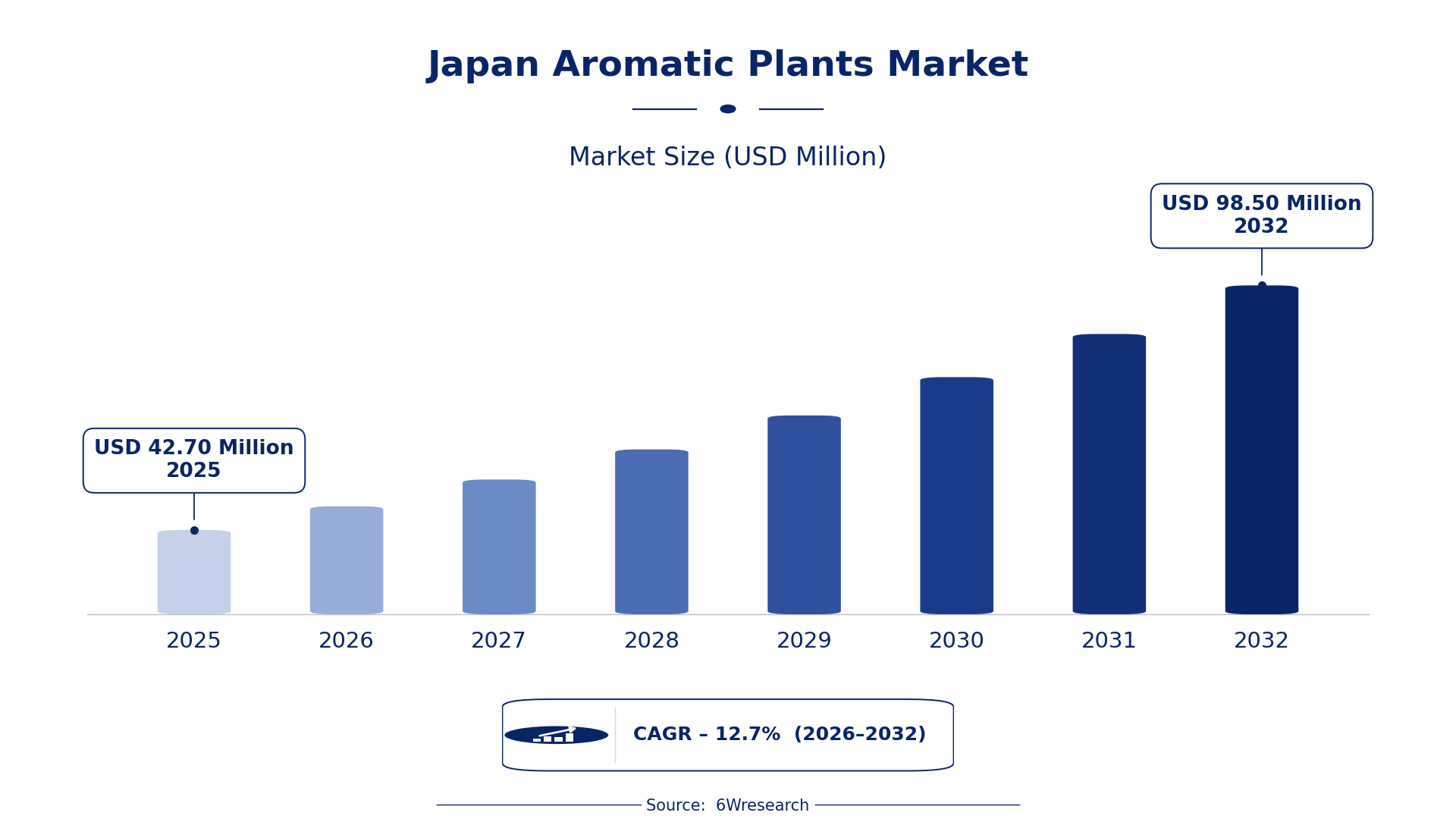
According to 6Wresearch internal database and industry insights, the Japan Aromatic Plants Market was valued at USD 42.70 Million in 2025 and is projected to reach USD 98.50 Million by 2032, growing at a CAGR of approximately 12.7% during 2026–2032.
Japan Aromatic Plants Market Highlights
| Report Metric | Details |
| Report Name | Japan Aromatic Plants Market (2026-2032) |
| Market Size 2025 | USD 42.70 Million |
| Market Size 2032 | USD 98.50 Million |
| Absolute Growth 2025–2032 | USD 55.80 Million |
| CAGR 2026–2032 | 12.7% |
| Peak Annual Growth | 14.9% in 2026 |
| Forecast Period | 2026–2032 |
| Historical Data | 2022–2025 |
| Base Year | 2025 |
| Leading Plant Type, 2025 | Lemongrass (40% share) |
| Leading Cultivation Method, 2025 | Organic Farming (43% share) |
| Leading Usage Type, 2025 | Essential Oil Extraction (41% share) |
| Leading Distribution Channel, 2025 | Direct Sales (44% share) |
| Leading End User, 2025 | Essential Oil Producers (38% share) |
| Fastest-Growing Plant Type | Rosemary (17.3% CAGR) |
| Fastest-Growing Cultivation Method | Greenhouse (17.8% CAGR) |
| Fastest-Growing Usage Type | Culinary Herbs (16.6% CAGR) |
| Fastest-Growing Distribution Channel | Online Platforms (16.2% CAGR) |
| Fastest-Growing End User | Spice & Food Companies (16.3% CAGR) |
| Growing Sector | culinary herbs |
| Key End Users | essential oil producers, spice and food companies, culinary herb suppliers |
Japan Aromatic Plants Market Year-wise Growth Rate and Key Drivers (2022–2032)
This graph illustrates the annual growth rates of the market from 2022 to 2032, highlighting a steady upward trajectory and projected market expansion over the forecast period.
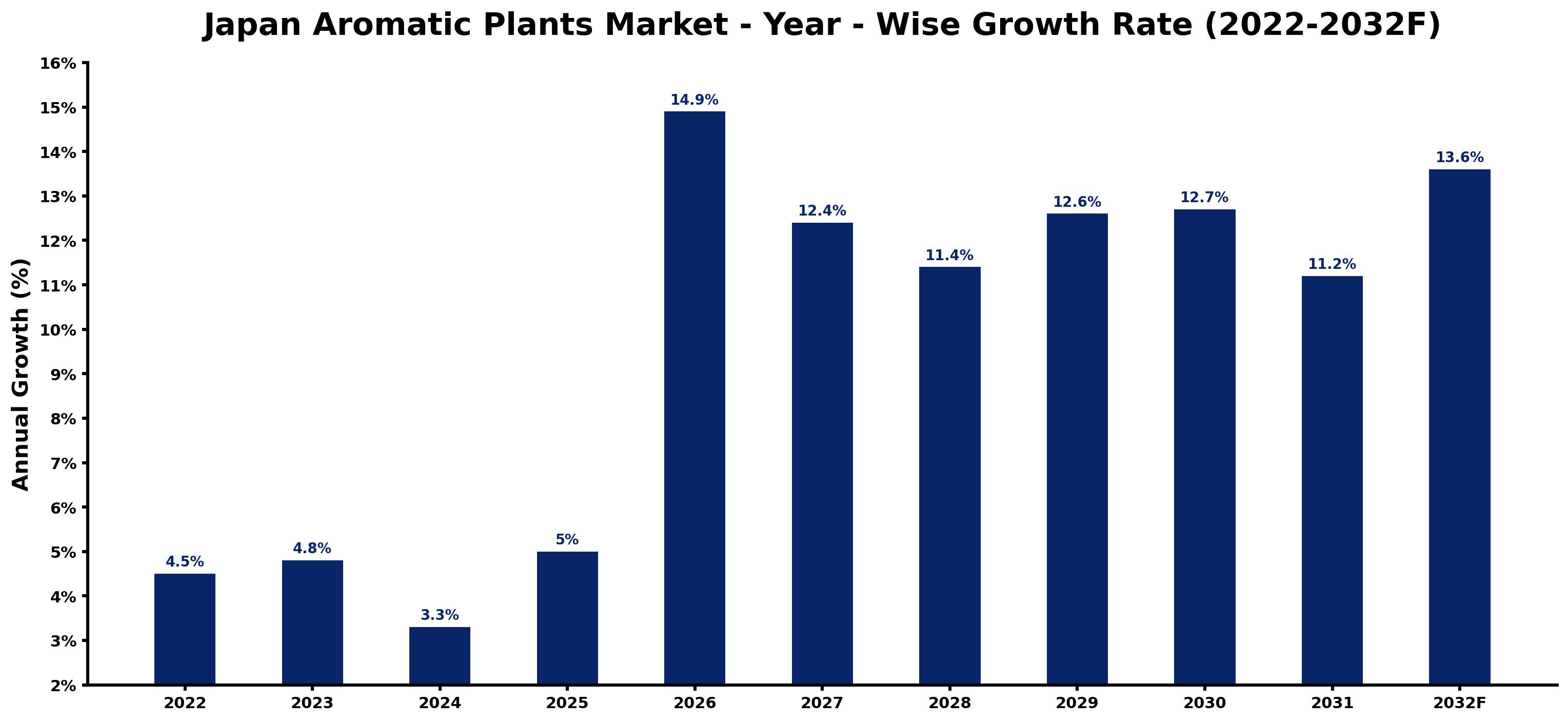
The following figures match every annual growth estimate with the main market development of that year, giving the reasoning behind each rise or slowdown.
| Year | Estimated Annual Growth (%) | Market Rationale |
| 2022 | 4.5 | Demand was steady, supported by a population of approximately 126 million. |
| 2023 | 4.8 | Growth accelerated due to increased interest in culinary herbs and essential oils. |
| 2024 | 3.3 | Growth slowed as market activity stabilised after a strong previous year. |
| 2025 | 5.0 | Market growth improved, driven by rising production of rosemary and lemongrass. |
| 2026 | 14.9 | The market is expected to surge as organic farming initiatives gain traction and consumer interest increases. |
| 2027 | 12.4 | Growth is projected to decelerate slightly as the market adjusts to new production capacities. |
| 2028 | 11.4 | A further slowdown is anticipated, though demand for culinary herbs will remain strong. |
| 2029 | 12.6 | Growth is expected to pick up again, driven by rising sales of essential oils and culinary herbs. |
| 2030 | 12.7 | Demand will continue to rise, supported by increased production and consumption of aromatic plants. |
| 2031 | 11.2 | Growth is projected to slow as the market matures, but interest in organic products will persist. |
| 2032 | 13.6 | The market is set to grow faster due to expanded investment in sustainable farming practices. |
Note: Market size estimations and growth projections presented in this report are based on 6Wresearch's proprietary forecasting methodology, utilizing the latest available industry data, government publications, and primary research inputs.
Japan Aromatic Plants Market Synopsis
Aromatic plants are cultivated for their essential oils, culinary applications, and medicinal properties. The Japan Aromatic Plants Market is experiencing growth driven by a population of approximately 126 million, with rising interest in organic farming and essential oil extraction. The government has launched initiatives to promote sustainable practices, while the Tokyo metropolitan area hosts numerous spice and food companies. The market is expanding due to increasing consumer interest in natural products and improved production capabilities.
Market Dynamics Impact Analysis (2026–2032)
| Factor | Type | Impact | Primary Segment Affected |
| Growing interest in organic farming practices | Driver | High | Organic Farming |
| Increased demand for culinary herbs among consumers | Driver | High | Culinary Herbs |
| Expansion of organic farming initiatives | Opportunity | High | Organic Farming |
| Rising online sales of culinary herbs | Opportunity | Medium | Culinary Herbs |
| Compliance with JAS standards for organic certification | Restraint | High | Organic Farming |
| Limited awareness of aromatic plants' benefits among consumers | Restraint | Medium | Culinary Herbs |
| High costs associated with organic certification | Challenge | High | Organic Farming |
| Capacity constraints in production facilities | Challenge | Medium | Essential Oil Extraction |
Evaluation of Drivers in Japan Aromatic Plants Market (2026–2032)
The factors lifting demand, and the evidence behind each, are summarised below.
| Drivers | Primary Segment Affected | Why It Matters (Evidence) |
| Rising consumer interest in natural products | Culinary Herbs | This interest has led to a 20% increase in online sales, prompting spice and food companies to source more culinary herbs. |
| Government initiatives promoting organic farming | Organic Farming | The 2023 programme allocates ¥500 million to support organic practices, encouraging farmers to invest in aromatic plants. |
| Improved production techniques in greenhouse cultivation | Greenhouse | These techniques increase yield and quality, attracting more buyers and enhancing market supply. |
| Growing health consciousness among consumers | Medicinal Herbs | This trend expands market opportunities as consumers seek natural remedies, driving demand for medicinal herbs. |
| Increased sourcing by spice and food companies | Essential Oil Extraction | As companies adapt to consumer preferences, they are purchasing more aromatic plants for essential oil production. |
Volumes grow on the back of rising consumer interest in natural products, which has led to a 20% increase in online sales of culinary herbs. Improved production techniques in greenhouse cultivation increase yield and quality, attracting more buyers. The growing health consciousness among consumers drives demand for medicinal herbs, expanding market opportunities. Spice and food companies are sourcing more culinary herbs to meet consumer preferences, further boosting purchases.
Evaluation of Restraints in Japan Aromatic Plants Market
Below are the constraints most often cited by buyers and suppliers, with the segment each affects.
| Market Restraint | Primary Segment Affected | Why It Matters (Evidence) |
| High costs associated with organic certification | Organic Farming | Compliance with JAS standards incurs expenses for producers, limiting market entry. |
| Limited awareness of aromatic plants' benefits among consumers | Culinary Herbs | Many consumers remain unaware of the advantages of aromatic plants, hindering demand growth. |
| Regulatory compliance for essential oils | Essential Oil Extraction | Strict regulations under JIS standards increase operational costs for essential oil producers. |
| Seasonal production limitations | Culinary Herbs | Seasonal variations affect the availability of fresh culinary herbs, impacting supply consistency. |
| Competition from imported herbs | Culinary Herbs | Imported herbs often offer lower prices, challenging local producers to compete effectively. |
Japan Aromatic Plants Market Challenges
Buyers are facing higher costs due to compliance with JIS standards for essential oils, which could raise production expenses by up to 15%. Competition is intensifying as the Shizuoka region's output of lemongrass and mint struggles to meet rising demand, risking price increases for spice and food companies. Skills shortages in organic farming techniques have led to a 10% decline in production efficiency, negatively affecting suppliers' ability to deliver quality products. Technology adoption is lagging, with many producers unable to implement advanced extraction methods, resulting in delays in essential oil availability that disrupt buyers' supply chains.
Trends in the Japan Aromatic Plants Market
These developments are changing demand patterns in the Japan Aromatic Plants Market.
- Shift towards Organic Farming: The Japanese government initiated a programme in 2023 to promote organic farming of aromatic plants, allocating ¥500 million to support sustainable practices. This shift encourages more farmers to adopt organic methods, increasing the availability of certified products.
- Rising Online Sales of Culinary Herbs: Online sales of culinary herbs increased by 20% last year, reflecting changing consumer purchasing habits. This trend is particularly noticeable in urban areas like Tokyo, where convenience drives demand for easy access to fresh herbs.
- Growing Demand for Medicinal Herbs: The demand for medicinal herbs in Japan is rising, particularly among health-conscious consumers. This trend is evident in regions like Shizuoka, known for its cultivation of various aromatic plants, including those used for health supplements.
- Expansion of Greenhouse Cultivation: Greenhouse cultivation of aromatic plants is gaining traction, with a CAGR of 17.8% projected. This method allows for controlled growth conditions, making it increasingly popular among producers in Japan.
Investment Opportunities in the Japan Aromatic Plants Market
The openings below show where demand in the Japan Aromatic Plants Market is visible and how suppliers can enter.
- Local Partnerships for Organic Farming: Investing in organic farming partnerships is timely, especially in regions like Aichi, where contract farming agreements are increasing. This approach can help producers meet rising demand for organic aromatic plants.
- Supply of Culinary Herbs: With online sales of culinary herbs rising by 20%, there is an opportunity to supply fresh herbs through e-commerce platforms. Collaborating with local spice and food companies can facilitate market entry.
- Investment in Greenhouse Facilities: Investing in greenhouse facilities can yield high returns, as this cultivation method is projected to grow at 17.8%. Producers in Shizuoka should consider expanding their operations to meet increasing demand.
- Focus on Medicinal Herbs: The growing health consciousness among consumers creates an opportunity to supply medicinal herbs. By targeting health-conscious buyer groups, producers can tap into this expanding market.
Government Initiatives in the Japan Aromatic Plants Market
The 2023 initiative to promote organic farming of aromatic plants builds upon the Next-Generation Medical Infrastructure Act of 2017, which supports sustainable agricultural practices. This new initiative allocates ¥500 million to improve organic certification processes, encouraging more farmers to transition to organic methods and ensuring compliance with JAS standards.
Spice and food companies in the Tokyo metropolitan area benefit from the Ministry of Agriculture, Forestry and Fisheries' oversight of cultivation standards. This agency ensures that producers meet quality requirements, enabling buyers to trust the products they source and facilitating smoother market access for compliant producers.
Future Insight of the Japan Aromatic Plants Market
Government funding will enhance the organic farming sector, creating an investment pipeline that addresses rising consumer demand. By 2032, interest in medicinal herbs will grow, driven by health-conscious trends among consumers. New cultivation techniques will emerge, enabling producers to better serve spice and food companies. The Tokyo metropolitan area is set to see an increase in facilities dedicated to aromatic plant processing, improving product availability for buyers and expanding opportunities for suppliers.
Market Segmentation Analysis
Japan Aromatic Plants Market report covers a detailed analysis of the following market segments:
By Plant Type – Lemongrass Leads, Rosemary Expected to Grow Fastest
According to Vasu Joshi, Associate Consultant at 6Wresearch, in 2025, Lemongrass led the plant type split with a 40% share. Lemongrass holds the largest share due to its extensive use in essential oil production, particularly in the Shizuoka region where it is cultivated. The high demand for lemongrass essential oils among various industries supports its dominant position. The quickest growth will come from Rosemary, forecast to expand at a CAGR of 17.3% between 2026 and 2032. Rosemary is experiencing rapid growth as a culinary herb, with an increasing trend in its use for flavouring food and in essential oils. This surge is partly attributed to the rising popularity of culinary herbs among health-conscious consumers. Suppliers should focus on expanding their offerings of rosemary to capitalise on its growing demand.
By Cultivation Method – Organic Farming Leads, Greenhouse Expected to Grow Fastest
Organic Farming held 43% of the Japan Aromatic Plants Market by cultivation method in 2025. Organic farming leads the market as it aligns with the growing consumer demand for sustainably sourced products, further supported by government initiatives promoting organic practices. The 2023 programme aimed at enhancing organic farming has solidified its position as the preferred cultivation method. Greenhouse is projected to grow fastest, at a CAGR of 17.8% during 2026–2032. Greenhouse cultivation is experiencing rapid growth due to its ability to provide controlled conditions for year-round production, ensuring consistent quality. This method is increasingly chosen by farmers who seek to maximise yield and satisfy market needs. Suppliers must focus on organic and greenhouse-grown aromatic plants to align with the increasing consumer preference for sustainable sourcing.
By Usage Type – Essential Oil Extraction Leads, Culinary Herbs Expected to Grow Fastest
Essential Oil Extraction took 41% of usage type revenue in 2025, more than any other category. Essential oil extraction is the primary use of aromatic plants, driven by the high demand for essential oils in various sectors including cosmetics and wellness. This widespread application reinforces its leading status in the market. Over 2026–2032, Culinary Herbs are expected to post the fastest growth, at a CAGR of 16.6%. Culinary herbs are rapidly gaining traction, particularly with the rise in online sales, which increased by 20% last year. The growing interest in cooking and natural flavouring options fuels this segment's growth. Suppliers should consider expanding their culinary herb product lines to meet the increasing consumer interest.
By Distribution Channel – Direct Sales Leads, Online Platforms Expected to Grow Fastest
The largest distribution channel category in 2025 was Direct Sales, at 44% of revenue. Direct sales lead the distribution of aromatic plants, allowing producers to build closer relationships with buyers and ensure product freshness. This method is particularly effective in local markets, where consumers value direct sourcing. Online Platforms are set to record the highest CAGR in this split, 16.2% over 2026–2032. Online platforms are experiencing the fastest growth due to the convenience they provide for consumers, especially in purchasing culinary herbs. The shift towards digital shopping is transforming the marketing and sales strategies for aromatic plants. Suppliers need to strengthen their online sales strategies to capture the growing consumer base that prefers digital purchasing options.
By End User – Essential Oil Producers Lead, Spice & Food Companies Expected to Grow Fastest
With 38% of end user revenue in 2025, Essential Oil Producers was the largest category. Essential oil producers represent the largest end user segment, as they depend on aromatic plants for their primary products. The consistent demand for essential oils across various applications solidifies their leading position in the market. The quickest growth will come from Spice & Food Companies, forecast to expand at a CAGR of 16.3% between 2026 and 2032. Spice and food companies are rapidly increasing their utilisation of aromatic plants, driven by a consumer shift towards natural ingredients and flavouring. This trend is expected to continue, expanding the sector's growth in the coming years. Suppliers should focus on establishing partnerships with spice and food companies to capitalise on the increasing demand for aromatic plants in culinary applications.
Key Attractiveness of the Report
- 10 Years of Market Numbers
- Historical Data Starting from 2022 to 2025
- Base Year 2025
- Forecast Data until 2032
- Key Performance Indicators Impacting the Market
- Major Upcoming Developments and Projects
Key Highlights of the Report:
- Japan Aromatic Plants Market Outlook
- Market Size of Japan Aromatic Plants Market, 2025
- Forecast of Japan Aromatic Plants Market, 2032
- Historical Data and Forecast of Japan Aromatic Plants Revenues & Volume for the Period 2022-2032F
- Japan Aromatic Plants Market Trend Evolution
- Japan Aromatic Plants Market Drivers and Challenges
- Japan Aromatic Plants Price Trends
- Japan Aromatic Plants Porter's Five Forces
- Japan Aromatic Plants Industry Life Cycle
- Historical Data and Forecast of Japan Aromatic Plants Market Revenues & Volume By Plant Type for the Period 2022-2032F
- Historical Data and Forecast of Japan Aromatic Plants Market Revenues & Volume By Lemongrass for the Period 2022-2032F
- Historical Data and Forecast of Japan Aromatic Plants Market Revenues & Volume By Rosemary for the Period 2022-2032F
- Historical Data and Forecast of Japan Aromatic Plants Market Revenues & Volume By Basil for the Period 2022-2032F
- Historical Data and Forecast of Japan Aromatic Plants Market Revenues & Volume By Mint for the Period 2022-2032F
- Historical Data and Forecast of Japan Aromatic Plants Market Revenues & Volume By Cultivation Method for the Period 2022-2032F
- Historical Data and Forecast of Japan Aromatic Plants Market Revenues & Volume By Organic Farming for the Period 2022-2032F
- Historical Data and Forecast of Japan Aromatic Plants Market Revenues & Volume By Greenhouse for the Period 2022-2032F
- Historical Data and Forecast of Japan Aromatic Plants Market Revenues & Volume By Open Field for the Period 2022-2032F
- Historical Data and Forecast of Japan Aromatic Plants Market Revenues & Volume By Contract Farming for the Period 2022-2032F
- Historical Data and Forecast of Japan Aromatic Plants Market Revenues & Volume By Usage Type for the Period 2022-2032F
- Historical Data and Forecast of Japan Aromatic Plants Market Revenues & Volume By Essential Oil Extraction for the Period 2022-2032F
- Historical Data and Forecast of Japan Aromatic Plants Market Revenues & Volume By Culinary Herbs for the Period 2022-2032F
- Historical Data and Forecast of Japan Aromatic Plants Market Revenues & Volume By Medicinal Herbs for the Period 2022-2032F
- Historical Data and Forecast of Japan Aromatic Plants Market Revenues & Volume By Menthol Products for the Period 2022-2032F
- Historical Data and Forecast of Japan Aromatic Plants Market Revenues & Volume By Distribution Channel for the Period 2022-2032F
- Historical Data and Forecast of Japan Aromatic Plants Market Revenues & Volume By Direct Sales for the Period 2022-2032F
- Historical Data and Forecast of Japan Aromatic Plants Market Revenues & Volume By Online Platforms for the Period 2022-2032F
- Historical Data and Forecast of Japan Aromatic Plants Market Revenues & Volume By Specialty Distributors for the Period 2022-2032F
- Historical Data and Forecast of Japan Aromatic Plants Market Revenues & Volume By Industrial Suppliers for the Period 2022-2032F
- Historical Data and Forecast of Japan Aromatic Plants Market Revenues & Volume By End User for the Period 2022-2032F
- Historical Data and Forecast of Japan Aromatic Plants Market Revenues & Volume By Essential Oil Producers for the Period 2022-2032F
- Historical Data and Forecast of Japan Aromatic Plants Market Revenues & Volume By Spice & Food Companies for the Period 2022-2032F
- Historical Data and Forecast of Japan Aromatic Plants Market Revenues & Volume By Natural Supplement Brands for the Period 2022-2032F
- Historical Data and Forecast of Japan Aromatic Plants Market Revenues & Volume By FMCG Producers for the Period 2022-2032F
- Japan Aromatic Plants Import Export Trade Statistics
- Market Opportunity Assessment By Plant Type
- Market Opportunity Assessment By Cultivation Method
- Market Opportunity Assessment By Usage Type
- Market Opportunity Assessment By Distribution Channel
- Market Opportunity Assessment By End User
- Japan Aromatic Plants Top Companies Market Share
- Japan Aromatic Plants Competitive Benchmarking By Technical and Operational Parameters
- Japan Aromatic Plants Company Profiles
- Japan Aromatic Plants Key Strategic Recommendations
Market Covered
The study includes the following segmentation.
By Plant Type
- Lemongrass
- Rosemary
- Basil
- Mint
By Cultivation Method
- Organic Farming
- Greenhouse
- Open Field
- Contract Farming
By Usage Type
- Essential Oil Extraction
- Culinary Herbs
- Medicinal Herbs
- Menthol Products
By Distribution Channel
- Direct Sales
- Online Platforms
- Specialty Distributors
- Industrial Suppliers
By End User
- Essential Oil Producers
- Spice & Food Companies
- Natural Supplement Brands
- FMCG Producers






































