Japan Automotive Automatic Tire Inflation System Market Size & Growth Rate
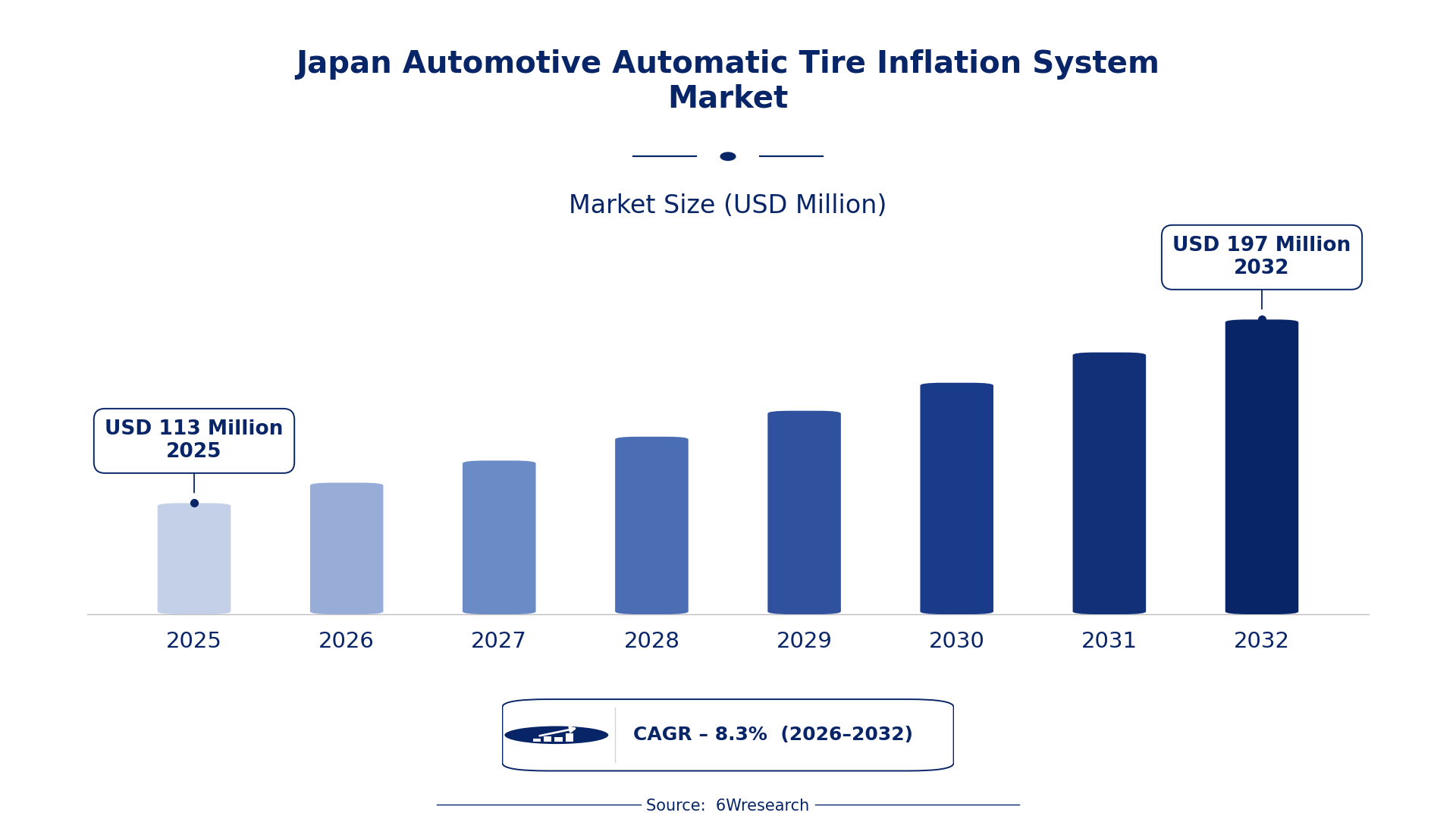
According to 6Wresearch internal database and industry insights, the Japan Automotive Automatic Tire Inflation System Market was valued at USD 113 Million in 2025 and is projected to reach USD 197 Million by 2032, growing at a CAGR of approximately 8.3% during 2026–2032.
Japan Automotive Automatic Tire Inflation System Market Highlights
| Report Metric | Details |
| Report Name | Japan Automotive Automatic Tire Inflation System Market (2026-2032) |
| Market Size 2025 | USD 113 Million |
| Market Size 2032 | USD 197 Million |
| Absolute Growth 2025–2032 | USD 84 Million |
| CAGR 2026–2032 | 8.3% |
| Peak Annual Growth | 9.7% in 2026 |
| Forecast Period | 2026–2032 |
| Historical Data | 2022–2025 |
| Base Year | 2025 |
| Leading Product Type, 2025 | Central Tire Inflation (54% share) |
| Leading Application, 2025 | Light Duty Vehicle (57% share) |
| Leading Sales Channel, 2025 | OEM (54% share) |
| Fastest-Growing Product Type | Continuous Tire Inflation (10.9% CAGR) |
| Fastest-Growing Application | Heavy Duty Vehicles (10.4% CAGR) |
| Fastest-Growing Sales Channel | Aftermarket (9.8% CAGR) |
| Growing Sector | Heavy Duty Vehicles |
| Key End Users | Light Duty Vehicle, Heavy Duty Vehicles |
Japan Automotive Automatic Tire Inflation System Market Year-wise Growth Rate and Key Drivers (2022–2032)
This graph illustrates the annual growth rates of the market from 2022 to 2032, highlighting a steady upward trajectory and projected market expansion over the forecast period.
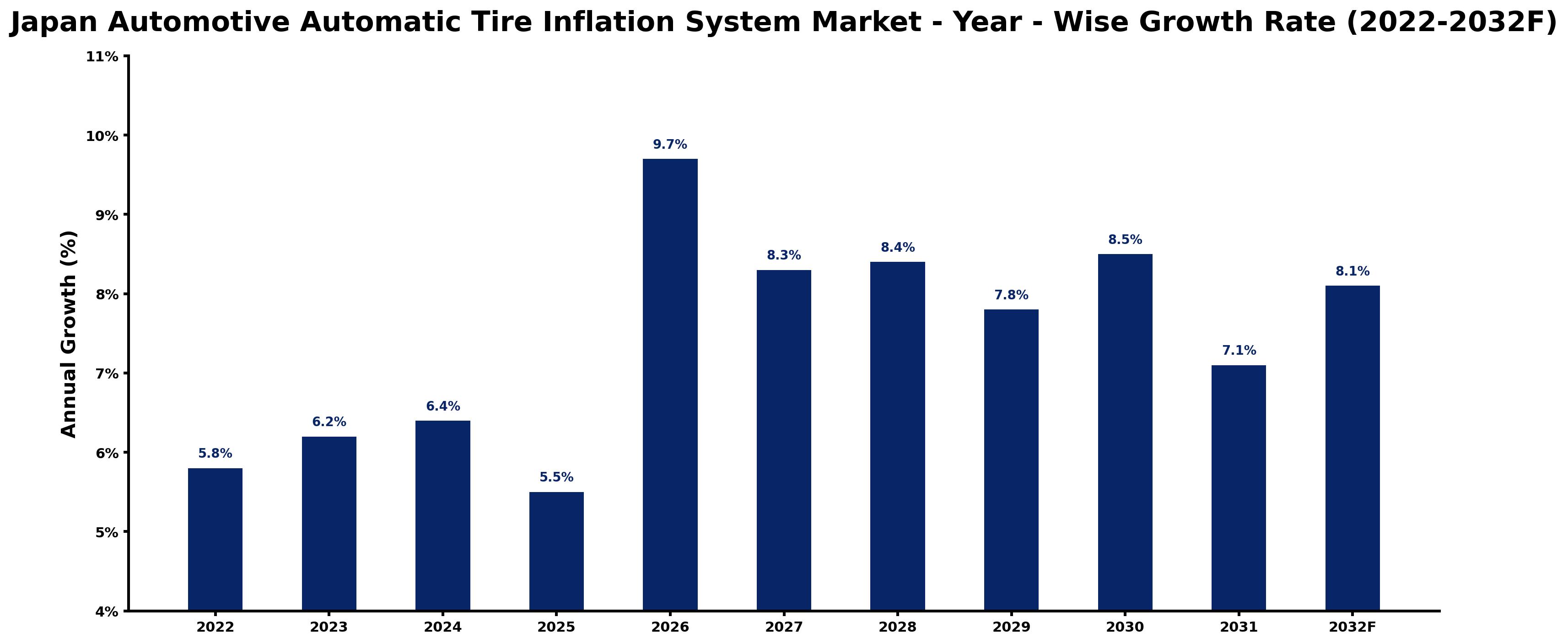
Each row of the following table gives one year's estimated growth and the event or demand shift that explains it.
| Year | Estimated Annual Growth (%) | Market Rationale |
| 2022 | 5.8 | The market showed steady growth due to increasing awareness of tire safety. |
| 2023 | 6.2 | Demand rose as more consumers opted for vehicles equipped with advanced safety features. |
| 2024 | 6.4 | Growth accelerated with the introduction of new tire inflation technologies in the market. |
| 2025 | 5.5 | A slight slowdown occurred as market saturation began to affect growth rates. |
| 2026 | 9.7 | The market is projected to surge as manufacturers ramp up production in response to rising demand. |
| 2027 | 8.3 | Growth is expected to moderate as supply chain challenges begin to impact delivery timelines. |
| 2028 | 8.4 | Demand is anticipated to pick up again as technological advancements improve system efficiency. |
| 2029 | 7.8 | A slight slowdown is expected as competition intensifies among suppliers. |
| 2030 | 8.5 | Growth is likely to accelerate again due to increased investments in eco-friendly technologies. |
| 2031 | 7.1 | The market is projected to experience a slowdown as consumer preferences stabilise. |
| 2032 | 8.1 | Demand is expected to increase as more vehicles adopt automatic tire inflation systems. |
Note: Market size estimations and growth projections presented in this report are based on 6Wresearch's proprietary forecasting methodology, utilizing the latest available industry data, government publications, and primary research inputs.
Japan Automotive Automatic Tire Inflation System Market Synopsis
This technology improves fuel efficiency, safety, and tire longevity. The Japan Automotive Automatic Tire Inflation System Market is growing, driven by the expanding automotive sector, which employs millions and is backed by a JPY 150 trillion investment in decarbonisation over the next decade. The Tokyo metropolitan area serves as a centre for automotive innovation, further increasing demand for these systems.
Market Dynamics Impact Analysis (2026–2032)
| Factor | Type | Impact | Primary Segment Affected |
| Increasing vehicle safety regulations | Driver | High | Light Duty Vehicle |
| Growing aftermarket for vehicle maintenance | Driver | High | Aftermarket |
| Rising demand for eco-friendly technologies | Opportunity | High | Heavy Duty Vehicles |
| Expansion of advanced automotive technologies | Opportunity | High | Central Tire Inflation |
| Supply chain disruptions affecting production | Restraint | Medium | Continuous Tire Inflation |
| Market saturation limiting new installations | Restraint | Medium | OEM |
| High costs of retrofitting existing vehicles | Challenge | High | Aftermarket |
| Technological complexity hindering adoption | Challenge | Medium | Light Duty Vehicle |
Evaluation of Drivers in Japan Automotive Automatic Tire Inflation System Market (2026–2032)
The factors lifting demand, and the evidence behind each, are summarised below.
| Drivers | Primary Segment Affected | Why It Matters (Evidence) |
| Growing awareness of tire safety | Light Duty Vehicle | Increased consumer focus on safety features has led to higher demand for automatic tire inflation systems. |
| Rising fuel prices | Heavy Duty Vehicles | Higher fuel costs incentivise fleet operators to adopt technologies that improve fuel efficiency. |
| Technological advancements in automotive systems | Central Tire Inflation | Innovations in tire inflation technology are driving demand for modern systems in new vehicles. |
| Government initiatives promoting eco-friendly technologies | Continuous Tire Inflation | Policies supporting green technologies are encouraging the adoption of automatic tire inflation systems. |
| Expansion of the automotive aftermarket | Aftermarket | The increasing average age of vehicles in Japan boosts demand for retrofitting with advanced tire systems. |
Orders keep climbing as the automotive sector invests heavily in research and development, with JPY 150 trillion allocated for decarbonisation over the next decade. The average age of vehicles exceeds 13 years, driving aftermarket demand for tire inflation systems. Heavy-duty vehicles, which account for a large portion of road transport, are increasingly adopting these technologies to prevent blowouts. The Tokyo Motor Show showcases innovations, further stimulating interest in automatic tire inflation systems. Rising fuel prices encourage fleet operators to seek efficiency improvements, boosting overall market growth.
Evaluation of Restraints in Japan Automotive Automatic Tire Inflation System Market
The following restraints limit how fast demand can grow.
| Market Restraint | Primary Segment Affected | Why It Matters (Evidence) |
| High costs associated with retrofitting existing vehicles | Aftermarket | Many vehicle owners hesitate to invest in retrofitting due to the substantial costs involved. |
| Limited awareness among consumers about tire inflation systems | Light Duty Vehicle | Consumers often overlook the benefits of automatic tire inflation, which hinders market growth. |
| Supply chain disruptions affecting component availability | Continuous Tire Inflation | Manufacturers face challenges in sourcing necessary components, impacting production timelines. |
| Market saturation in urban areas | OEM | High penetration rates in urban markets limit growth opportunities for new installations. |
| Technological complexity deterring adoption | Heavy Duty Vehicles | The intricate nature of installation and maintenance can discourage fleet operators from adopting new systems. |
Japan Automotive Automatic Tire Inflation System Market Challenges
In Japan, outdated technology restricts the widespread adoption of Automotive Automatic Tire Inflation Systems, as over 13 million vehicles are over 13 years old, limiting options for buyers seeking modern solutions. Supply chain disruptions arise from reliance on specific components, causing production delays for manufacturers and extending lead times for buyers. Intense competition among local producers drives prices down, squeezing margins for suppliers and limiting their ability to invest in research and development. Stringent JIS standards create regulatory hurdles, prolonging certification processes and increasing costs for manufacturers striving to comply with safety regulations.
Trends in the Japan Automotive Automatic Tire Inflation System Market
Several trends are reshaping the Japan Automotive Automatic Tire Inflation System Market; the most important are set out below.
- Shift from Manual to Automatic Systems: The Tokyo metropolitan area is experiencing a shift from manual tire inflation to automatic systems, reflecting changing consumer preferences. In 2023, over 30% of new vehicles featured automatic tire inflation systems, indicating a growing acceptance of this technology.
- Increased Adoption in Heavy Duty Vehicles: Fleet operators are increasingly adopting automatic tire inflation systems, with heavy-duty vehicles seeing a 10% rise in installations since 2025. This trend is driven by the need to reduce operational costs and improve safety.
- Emergence of Eco-Friendly Technologies: The automotive industry is prioritising eco-friendly technologies, with the GX Promotion Act (2023) encouraging investments in sustainable solutions. This has led to a noticeable increase in demand for automatic tire inflation systems that support fuel efficiency.
- Standardisation of Tire Inflation Systems: The Japan Automobile Manufacturers Association is working towards standardising tire inflation systems across the industry. This initiative aims to improve safety and efficiency, with a target of 50% standardisation by 2026.
Investment Opportunities in the Japan Automotive Automatic Tire Inflation System Market
Where to invest in the Japan Automotive Automatic Tire Inflation System Market: the main openings are set out below.
- Aftermarket Demand for Retrofitting: The aftermarket sector is seeking advanced tire inflation systems, as the average vehicle age exceeds 13 years. This presents an opportunity to supply retrofitting solutions to vehicle owners looking to improve safety and efficiency.
- Supply of Advanced Technologies: The growing automotive sector requires innovative tire inflation technologies. Suppliers can focus on developing systems that meet the rising demand for efficiency and safety in vehicles, particularly in urban areas.
- Investment in Eco-Friendly Solutions: With JPY 150 trillion allocated for decarbonisation, there is a significant opportunity to invest in eco-friendly tire inflation technologies. Collaborating with local manufacturers can facilitate entry into this growing market.
- Expansion in Heavy Duty Vehicles: Heavy-duty vehicle operators are increasingly adopting automatic tire inflation systems, creating a demand for suppliers who can provide reliable and efficient solutions. This trend is expected to continue as operational costs rise.
Government Initiatives in the Japan Automotive Automatic Tire Inflation System Market
The GX Promotion Act (2023) establishes a framework for promoting eco-friendly technologies, building on previous measures to reduce greenhouse gas emissions. This act encourages manufacturers to invest in automatic tire inflation systems, ensuring compliance with safety and environmental standards. The government aims to achieve a 46% cut in greenhouse-gas emissions from fiscal 2013 levels by fiscal 2030, providing a clear incentive for adopting sustainable technologies.
The Ministry of Land, Infrastructure, Transport and Tourism oversees the implementation of vehicle safety regulations, approving new technologies like automatic tire inflation systems. This agency ensures that these systems meet the necessary safety and performance criteria, facilitating their integration into the market. In 2023, the ministry approved several new technologies that align with the country's decarbonisation goals.
Future Insight of the Japan Automotive Automatic Tire Inflation System Market
Japan's decarbonisation policies will drive demand for energy-efficient technologies by 2032, creating opportunities for Automotive Automatic Tire Inflation Systems. A projected JPY 150 trillion investment in decarbonisation will stimulate innovation and strengthen the supply chain for eco-friendly automotive solutions. National initiatives promoting advanced automotive technologies will motivate suppliers to create smarter systems. As the Tokyo Motor Show highlights emerging innovations, buyers will benefit from improved safety and efficiency in their vehicles.
Market Segmentation Analysis
Japan Automotive Automatic Tire Inflation System Market report covers a detailed analysis of the following market segments:
By Product Type – Central Tire Inflation Leads, Continuous Tire Inflation Expected to Grow Fastest
According to Sumit Sagar, AM at 6Wresearch, the largest product type category in 2025 was Central Tire Inflation, at 54% of revenue. Central Tire Inflation systems play a crucial role in maintaining optimal tire pressure during vehicle operation, which enhances both safety and efficiency. Their widespread integration in various vehicle types across Japan's automotive landscape solidifies their leading market position. Continuous Tire Inflation is set to record the highest CAGR in this split, 10.9% over 2026–2032. Continuous Tire Inflation systems are gaining traction due to increasing awareness of their performance benefits, particularly among manufacturers of high-performance vehicles. This heightened focus on vehicle efficiency will likely accelerate the growth of this segment. Suppliers should prioritise the development of Continuous Tire Inflation systems to cater to the rising market demand.
By Application – Light Duty Vehicle Leads, Heavy Duty Vehicles Expected to Grow Fastest
In 2025, Light Duty Vehicle led the application split with a 57% share. Light Duty Vehicles are predominant in the market as they are vital for ensuring passenger safety and efficiency, with a substantial number of these vehicles currently in operation throughout Japan. This extensive installed base underscores the significance of this application within the automotive sector. The quickest growth will come from Heavy Duty Vehicles, forecast to expand at a CAGR of 10.4% between 2026 and 2032. Heavy Duty Vehicles are experiencing rapid growth as the demand for improved fuel efficiency and safety in commercial transport escalates. The critical need to prevent tire blowouts in this segment is driving the adoption of advanced tire inflation technologies. Buyers in the commercial vehicle sector should consider investing in tire inflation systems to enhance safety and operational efficiency.
By Sales Channel – OEM Leads, Aftermarket Expected to Grow Fastest
OEM took 54% of sales channel revenue in 2025, more than any other category. OEM sales represent the primary channel for tire inflation systems, as manufacturers integrate these technologies into new vehicles to comply with safety regulations. This channel benefits from Japan's robust automotive production, which is further supported by favourable government policies. Over 2026–2032, Aftermarket is expected to post the fastest growth, at a CAGR of 9.8%. The Aftermarket channel is expanding swiftly as vehicle owners increasingly seek retrofitting solutions for older models, reflecting a trend towards maintenance and safety improvements. The rising average age of vehicles in Japan is fuelling this demand. Suppliers need to enhance their aftermarket offerings to effectively address the growing market of older vehicles requiring modern tire inflation solutions.
Key Attractiveness of the Report
- 10 Years of Market Numbers
- Historical Data Starting from 2022 to 2025
- Base Year 2025
- Forecast Data until 2032
- Key Performance Indicators Impacting the Market
- Major Upcoming Developments and Projects
Key Highlights of the Report:
- Japan Automotive Automatic Tire Inflation System Market Outlook
- Market Size of Japan Automotive Automatic Tire Inflation System Market, 2025
- Forecast of Japan Automotive Automatic Tire Inflation System Market, 2032
- Historical Data and Forecast of Japan Automotive Automatic Tire Inflation System Revenues & Volume for the Period 2022-2032
- Japan Automotive Automatic Tire Inflation System Market Trend Evolution
- Japan Automotive Automatic Tire Inflation System Market Drivers and Challenges
- Japan Automotive Automatic Tire Inflation System Price Trends
- Japan Automotive Automatic Tire Inflation System Porter's Five Forces
- Japan Automotive Automatic Tire Inflation System Industry Life Cycle
- Historical Data and Forecast of Japan Automotive Automatic Tire Inflation System Market Revenues & Volume By Product Type for the Period 2022-2032
- Historical Data and Forecast of Japan Automotive Automatic Tire Inflation System Market Revenues & Volume By Central Tire Inflation for the Period 2022-2032
- Historical Data and Forecast of Japan Automotive Automatic Tire Inflation System Market Revenues & Volume By Continuous Tire Inflation for the Period 2022-2032
- Historical Data and Forecast of Japan Automotive Automatic Tire Inflation System Market Revenues & Volume By Application for the Period 2022-2032
- Historical Data and Forecast of Japan Automotive Automatic Tire Inflation System Market Revenues & Volume By Light Duty Vehicle for the Period 2022-2032
- Historical Data and Forecast of Japan Automotive Automatic Tire Inflation System Market Revenues & Volume By Heavy Duty Vehicles for the Period 2022-2032
- Historical Data and Forecast of Japan Automotive Automatic Tire Inflation System Market Revenues & Volume By Sales Channel for the Period 2022-2032
- Historical Data and Forecast of Japan Automotive Automatic Tire Inflation System Market Revenues & Volume By OEM for the Period 2022-2032
- Historical Data and Forecast of Japan Automotive Automatic Tire Inflation System Market Revenues & Volume By Aftermarket for the Period 2022-2032
- Japan Automotive Automatic Tire Inflation System Import Export Trade Statistics
- Market Opportunity Assessment By Product Type
- Market Opportunity Assessment By Application
- Market Opportunity Assessment By Sales Channel
- Japan Automotive Automatic Tire Inflation System Top Companies Market Share
- Japan Automotive Automatic Tire Inflation System Competitive Benchmarking By Technical and Operational Parameters
- Japan Automotive Automatic Tire Inflation System Company Profiles
- Japan Automotive Automatic Tire Inflation System Key Strategic Recommendations
Market Covered
Coverage by segment is as follows.
By Product Type
- Central Tire Inflation
- Continuous Tire Inflation
By Application
- Light Duty Vehicle
- Heavy Duty Vehicles
By Sales Channel
- OEM
- Aftermarket































