Japan Bariatric Surgery Market Size & Growth Rate
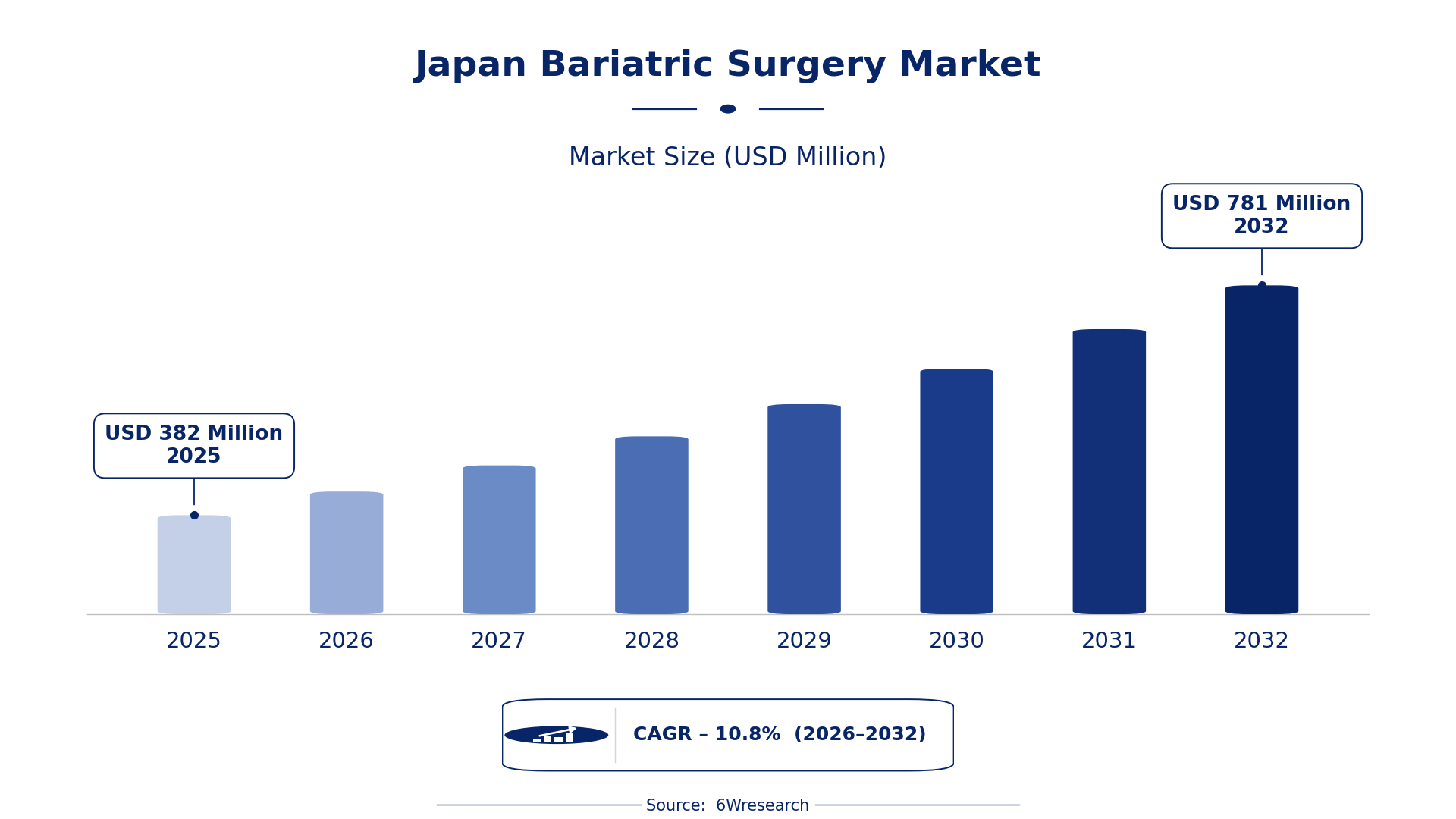
According to 6Wresearch internal database and industry insights, the Japan Bariatric Surgery Market was valued at USD 382 Million in 2025 and is projected to reach USD 781 Million by 2032, growing at a CAGR of approximately 10.8% during 2026–2032.
Japan Bariatric Surgery Market Highlights
| Report Metric | Details |
| Report Name | Japan Bariatric Surgery Market (2026-2032) |
| Market Size 2025 | USD 382 Million |
| Market Size 2032 | USD 781 Million |
| Absolute Growth 2025–2032 | USD 399 Million |
| CAGR 2026–2032 | 10.8% |
| Peak Annual Growth | 13.2% in 2031 |
| Forecast Period | 2026–2032 |
| Historical Data | 2022–2025 |
| Base Year | 2025 |
| Leading Surgery Type, 2025 | Gastric Bypass (55% share) |
| Leading Procedure, 2025 | Laparoscopic (50% share) |
| Leading Device Type, 2025 | Stapling Devices (52% share) |
| Leading End User, 2025 | Hospitals (55% share) |
| Fastest-Growing Surgery Type | Sleeve Gastrectomy (15.3% CAGR) |
| Fastest-Growing Procedure | Open Surgery (13.9% CAGR) |
| Fastest-Growing Device Type | Suturing Devices (15.0% CAGR) |
| Fastest-Growing End User | Specialty Clinics (14.4% CAGR) |
| Growing Sector | weight loss surgery |
| Key End Users | hospitals, specialty clinics, ambulatory surgical centers |
Japan Bariatric Surgery Market Year-wise Growth Rate and Key Drivers (2022–2032)
This graph illustrates the annual growth rates of the market from 2022 to 2032, highlighting a steady upward trajectory and projected market expansion over the forecast period.
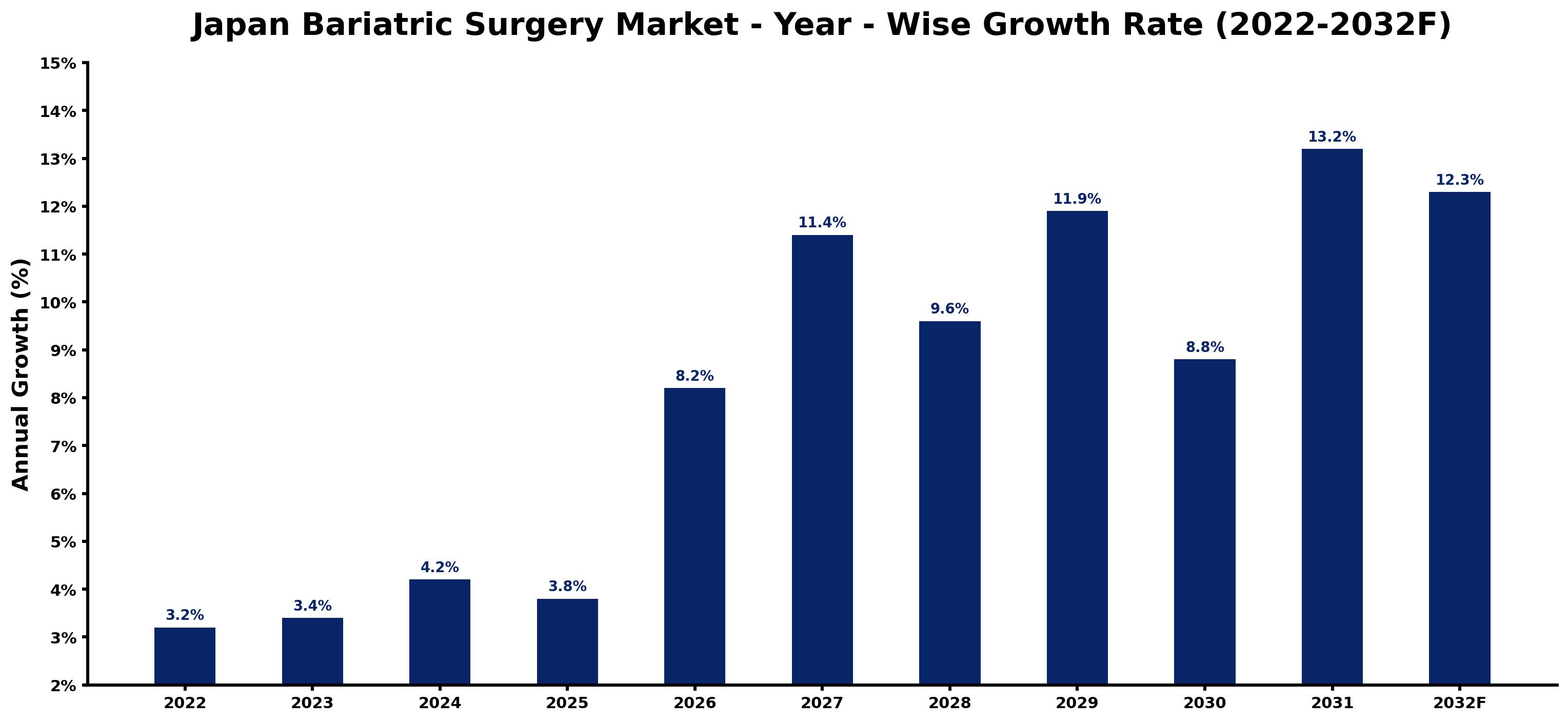
The table below sets out the estimated growth rate for each year and the main factor behind it.
| Year | Estimated Annual Growth (%) | Market Rationale |
| 2022 | 3.2 | The market experienced steady growth as awareness of obesity-related health issues increased. |
| 2023 | 3.4 | Demand for bariatric procedures grew as more patients sought surgical options for weight loss. |
| 2024 | 4.2 | The introduction of new surgical techniques contributed to faster growth in the market. |
| 2025 | 3.8 | A slight slowdown occurred as the market adjusted to increased competition among facilities. |
| 2026 | 8.2 | Growth is anticipated to rise as urban hospitals expand their bariatric surgery offerings. |
| 2027 | 11.4 | Rising obesity rates will continue to drive demand for effective weight loss solutions. |
| 2028 | 9.6 | A slowdown is projected as the market stabilises after rapid growth in previous years. |
| 2029 | 11.9 | Demand is expected to surge again as specialty clinics gain popularity for bariatric procedures. |
| 2030 | 8.8 | The market will experience another slowdown as hospitals face increased operational costs. |
| 2031 | 13.2 | Growth is projected to peak as new surgical techniques attract more patients seeking treatment. |
| 2032 | 12.3 | A slight slowdown is expected as the market matures and competition intensifies. |
Note: Market size estimations and growth projections presented in this report are based on 6Wresearch's proprietary forecasting methodology, utilizing the latest available industry data, government publications, and primary research inputs.
Japan Bariatric Surgery Market Synopsis
Bariatric surgery is a medical procedure aimed at weight loss through surgical intervention, primarily performed in hospitals and clinics. The Japan Bariatric Surgery Market is growing, with approximately 20,000 surgeries conducted in 2022, driven by rising obesity rates and associated health issues. The increasing number of specialty clinics and urban hospitals offering these procedures, alongside effective surgical techniques like sleeve gastrectomy, propels market growth. The government’s allocation of ¥1 billion for obesity treatment initiatives further supports this upward trend.
Market Dynamics Impact Analysis (2026–2032)
| Factor | Type | Impact | Primary Segment Affected |
| Rising obesity rates are driving demand for effective weight loss solutions. | Driver | High | Gastric Bypass |
| The growing number of specialty clinics is expanding access to bariatric procedures. | Driver | High | Sleeve Gastrectomy |
| Increased investment in obesity management programs presents opportunities for new entrants. | Opportunity | High | Specialty Clinics |
| The rising popularity of laparoscopic procedures creates demand for advanced surgical devices. | Opportunity | Medium | Stapling Devices |
| High operational costs in hospitals can limit the number of procedures performed. | Restraint | High | Hospitals |
| Limited awareness among patients about available surgical options may hinder growth. | Restraint | Medium | Specialty Clinics |
| The high cost of surgical procedures can deter potential patients from seeking treatment. | Challenge | High | Gastric Banding |
| Competition among healthcare providers can lead to price wars, affecting profitability. | Challenge | Medium | Ambulatory Surgical Centers |
Evaluation of Drivers in Japan Bariatric Surgery Market (2026–2032)
The following drivers explain most of the expected growth.
| Drivers | Primary Segment Affected | Why It Matters (Evidence) |
| Increasing obesity rates lead to higher demand for weight loss surgeries. | Gastric Bypass | In Japan, obesity rates have risen to approximately 30%, prompting more patients to seek surgical interventions. |
| Expansion of specialty clinics improves access to bariatric procedures. | Sleeve Gastrectomy | The number of specialty clinics offering these services has increased by 15% since 2020. |
| Technological advancements in surgical techniques improve patient outcomes. | Laparoscopic | Laparoscopic procedures have a shorter recovery time of 3-5 days compared to open surgery. |
| Government funding for obesity treatment initiatives supports market growth. | Specialty Clinics | In 2023, the government allocated ¥1 billion for obesity management programs, boosting demand. |
| Growing awareness of obesity-related health issues encourages more patients to seek surgery. | Gastric Banding | As awareness increases, more patients are opting for surgical solutions to manage their weight. |
What keeps demand rising is the increasing prevalence of obesity, prompting more patients to consider surgical options for weight loss. In Japan, obesity rates have reached approximately 30%, with about 20,000 bariatric surgeries performed in 2022. The expansion of specialty clinics has improved access to these procedures, with a 15% increase in such facilities since 2020. Advancements in surgical techniques have made surgeries safer and more effective, leading to a preference for these methods.
Evaluation of Restraints in Japan Bariatric Surgery Market
Below are the constraints most often cited by buyers and suppliers, with the segment each affects.
| Market Restraint | Primary Segment Affected | Why It Matters (Evidence) |
| High operational costs in hospitals can limit the number of procedures performed. | Hospitals | Increased operational expenses can restrict the number of bariatric surgeries hospitals are able to conduct. |
| Limited awareness among patients about available surgical options may hinder growth. | Specialty Clinics | In Japan, only about 20% of the population is aware of the benefits of bariatric surgery. |
| Financial constraints can deter potential patients from seeking treatment. | Gastric Banding | Patients may avoid surgery due to financial constraints, limiting market growth. |
| Insurance coverage for bariatric surgery varies, affecting patient access. | Sleeve Gastrectomy | Inconsistent insurance policies can create barriers for patients seeking surgical options. |
| Regulatory hurdles can delay the introduction of new surgical devices. | Stapling Devices | Stringent approval processes can slow down the availability of new surgical technologies. |
Japan Bariatric Surgery Market Challenges
Buyers face a shortage of skilled surgeons, which limits the number of bariatric surgeries performed. This challenge exists due to a lack of comprehensive training programs in Japan, resulting in waiting times that can extend by three months for patients seeking surgery. Competition among clinics and hospitals drives down prices, which can compromise the quality of care for buyers. Regulatory guidelines from the Japanese Society for Treatment of Obesity delay the introduction of new surgical techniques, leading to longer approval times for producers. High costs associated with advanced surgical devices can increase procedure prices for buyers by approximately 15%.
Trends in the Japan Bariatric Surgery Market
Buyers and suppliers in the Japan Bariatric Surgery Market are adjusting to the following trends.
- Growth of Specialty Clinics in Urban Areas: Tokyo and Osaka are experiencing a rise in specialty clinics focused on bariatric surgery, with a 15% increase since 2020. This trend is making weight loss procedures more accessible and tailored to patient needs.
- Shift towards Laparoscopic Procedures: Laparoscopic surgery is becoming the preferred method for bariatric procedures due to its minimally invasive nature. This shift is supported by advancements in surgical technology, leading to shorter recovery times for patients.
- Increased Government Support for Obesity Treatment: The government allocated ¥1 billion in 2023 for obesity management initiatives, reflecting a growing commitment to addressing obesity in Japan. This funding is expected to improve the availability of bariatric surgery options.
- Rising Awareness of Obesity-Related Health Risks: Public health campaigns are increasing awareness of obesity-related health issues, driving more patients to consider bariatric surgery. This trend is important as it directly impacts the number of procedures performed annually.
Investment Opportunities in the Japan Bariatric Surgery Market
The following opportunities in the Japan Bariatric Surgery Market pair current demand with a clear way in.
- Investment in Surgical Devices for Bariatric Procedures: With the rise in bariatric surgeries, there is a growing need for advanced surgical devices. Specialty clinics are looking to invest in high-quality stapling devices to improve patient outcomes, as the market for these devices is expanding.
- Expansion of Specialty Clinics in Urban Regions: Now is an opportune time to establish specialty clinics in urban areas, where demand for bariatric surgery is increasing. Partnering with local healthcare providers can facilitate market entry, especially in regions like Tokyo.
- Development of Outpatient Surgical Centers: Ambulatory surgical centers are gaining popularity for outpatient bariatric procedures. Investing in these facilities can cater to the growing patient base seeking minimally invasive options, particularly in metropolitan areas.
- Focus on Patient Education and Awareness Programs: There is a significant opportunity to develop educational programs about obesity and surgical options. Engaging with healthcare professionals can help raise awareness among potential patients, boosting demand for surgeries.
Government Initiatives in the Japan Bariatric Surgery Market
The Medical Care Act of 1948 sets essential standards for hospitals and clinics, ensuring they meet the necessary requirements for bariatric surgery. This law has been instrumental in shaping the quality of care patients receive, promoting safe surgical practices across Japan. Additionally, the Japanese Society for Treatment of Obesity provides guidelines that further improve surgical standards and patient safety.
The Pharmaceuticals and Medical Devices Agency (PMDA) plays a critical role in approving and monitoring medical devices used in bariatric surgery. Established in 2004, the PMDA ensures that surgical devices meet safety and efficacy standards, which is vital for both producers and patients. This oversight supports the growth of the bariatric surgery market by building trust in surgical technologies.
Future Insight of the Japan Bariatric Surgery Market
New obesity management programmes will commence by 2032, focusing on preventive strategies to address rising obesity rates. The expansion of outpatient bariatric procedures will improve access, allowing patients to recover more quickly and reduce overall costs. Surgical standards from the Japanese Society for Treatment of Obesity will adapt, ensuring better quality of care and outcomes for patients. By 2032, around 30,000 bariatric surgeries are expected to be performed annually, reflecting the growing acceptance and demand for these procedures in urban areas.
Market Segmentation Analysis
Japan Bariatric Surgery Market report covers a detailed analysis of the following market segments:
By Surgery Type – Gastric Bypass Leads, Sleeve Gastrectomy Expected to Grow Fastest
According to Sachin Kumar Rai, Senior Research Analyst at 6Wresearch, in 2025, Gastric Bypass led the surgery type split with a 55% share. Gastric bypass is the leading procedure due to its frequent use for substantial weight loss, especially in urban hospitals like those in Tokyo. Its established efficacy among healthcare providers maintains a consistent demand, solidifying its position in the market. Sleeve Gastrectomy is set to record the highest CAGR in this split, 15.3% over 2026–2032. Sleeve gastrectomy is rapidly gaining popularity because it is widely recognised for its effectiveness in facilitating weight loss. The increasing preference for this method among patients indicates that its market share will continue to expand. Suppliers must prioritise the availability of sleeve gastrectomy options to align with the rising patient demand.
By Procedure – Laparoscopic Leads, Open Surgery Expected to Grow Fastest
Laparoscopic held 50% of the Japan Bariatric Surgery Market by procedure in 2025. Laparoscopic procedures are predominant as they are favoured for their minimally invasive nature, resulting in shorter recovery periods for patients. This approach has become the norm in many healthcare facilities across Japan, contributing to its substantial market share. Over 2026–2032, Open Surgery is expected to post the fastest growth, at a CAGR of 13.9%. Open surgery is experiencing growth as it remains necessary for certain patients requiring traditional surgical methods. This trend suggests a demand for a variety of surgical options, allowing open surgery to gain market presence. Buyers should consider both laparoscopic and open surgery alternatives to ensure a comprehensive range of treatment options.
By Device Type – Stapling Devices Lead, Suturing Devices Expected to Grow Fastest
The largest device type category in 2025 was Stapling Devices, at 52% of revenue. Stapling devices are essential for various bariatric procedures, making them the leading device type in the market. Their widespread use in hospitals, particularly for gastric bypass and sleeve gastrectomy, underscores their importance in achieving successful surgical outcomes. The quickest growth will come from Suturing Devices, forecast to expand at a CAGR of 15.0% between 2026 and 2032. Suturing devices are gaining traction as they are increasingly used in many surgical techniques, reflecting advancements in surgical practices. Their growing adoption indicates a shift towards more versatile surgical tools, positioning them for rapid market growth. Suppliers should consider expanding their product lines to include suturing devices to align with market trends.
By End User – Hospitals Lead, Specialty Clinics Expected to Grow Fastest
Hospitals accounted for 55% of the market by end user in 2025. Hospitals are the primary setting for bariatric surgeries, accounting for the largest share of procedures performed. Their established infrastructure and surgical expertise make them the preferred choice for patients seeking treatment. Specialty Clinics are projected to grow fastest, at a CAGR of 14.4% during 2026–2032. Specialty clinics are rapidly gaining popularity as they focus specifically on weight loss treatments, appealing to patients seeking dedicated care. This trend suggests a shift towards more specialised healthcare options. Suppliers should target specialty clinics to capitalise on the growing demand for focused weight loss treatment facilities.
Key Attractiveness of the Report
- 10 Years of Market Numbers
- Historical Data Starting from 2022 to 2025
- Base Year 2025
- Forecast Data until 2032
- Key Performance Indicators Impacting the Market
- Major Upcoming Developments and Projects
Key Highlights of the Report:
- Japan Bariatric Surgery Market Outlook
- Market Size of Japan Bariatric Surgery Market,2025
- Forecast of Japan Bariatric Surgery Market, 2032
- Historical Data and Forecast of Japan Bariatric Surgery Revenues & Volume for the Period 2022-2032
- Japan Bariatric Surgery Market Trend Evolution
- Japan Bariatric Surgery Market Drivers and Challenges
- Japan Bariatric Surgery Price Trends
- Japan Bariatric Surgery Porter's Five Forces
- Japan Bariatric Surgery Industry Life Cycle
- Historical Data and Forecast of Japan Bariatric Surgery Market Revenues & Volume By Surgery Type for the Period 2022-2032
- Historical Data and Forecast of Japan Bariatric Surgery Market Revenues & Volume By Gastric Bypass for the Period 2022-2032
- Historical Data and Forecast of Japan Bariatric Surgery Market Revenues & Volume By Sleeve Gastrectomy for the Period 2022-2032
- Historical Data and Forecast of Japan Bariatric Surgery Market Revenues & Volume By Gastric Banding for the Period 2022-2032
- Historical Data and Forecast of Japan Bariatric Surgery Market Revenues & Volume By Biliopancreatic Diversion for the Period 2022-2032
- Historical Data and Forecast of Japan Bariatric Surgery Market Revenues & Volume By Procedure for the Period 2022-2032
- Historical Data and Forecast of Japan Bariatric Surgery Market Revenues & Volume By Laparoscopic for the Period 2022-2032
- Historical Data and Forecast of Japan Bariatric Surgery Market Revenues & Volume By Open Surgery for the Period 2022-2032
- Historical Data and Forecast of Japan Bariatric Surgery Market Revenues & Volume By Endoscopic for the Period 2022-2032
- Historical Data and Forecast of Japan Bariatric Surgery Market Revenues & Volume By Device Type for the Period 2022-2032
- Historical Data and Forecast of Japan Bariatric Surgery Market Revenues & Volume By Stapling Devices for the Period 2022-2032
- Historical Data and Forecast of Japan Bariatric Surgery Market Revenues & Volume By Suturing Devices for the Period 2022-2032
- Historical Data and Forecast of Japan Bariatric Surgery Market Revenues & Volume By Closure Devices for the Period 2022-2032
- Historical Data and Forecast of Japan Bariatric Surgery Market Revenues & Volume By End User for the Period 2022-2032
- Historical Data and Forecast of Japan Bariatric Surgery Market Revenues & Volume By Hospitals for the Period 2022-2032
- Historical Data and Forecast of Japan Bariatric Surgery Market Revenues & Volume By Specialty Clinics for the Period 2022-2032
- Historical Data and Forecast of Japan Bariatric Surgery Market Revenues & Volume By Ambulatory Surgical Centers for the Period 2022-2032
- Japan Bariatric Surgery Import Export Trade Statistics
- Market Opportunity Assessment By Surgery Type
- Market Opportunity Assessment By Procedure
- Market Opportunity Assessment By Device Type
- Market Opportunity Assessment By End User
- Japan Bariatric Surgery Top Companies Market Share
- Japan Bariatric Surgery Competitive Benchmarking By Technical and Operational Parameters
- Japan Bariatric Surgery Company Profiles
- Japan Bariatric Surgery Key Strategic Recommendations
Market Covered
The following segment groups are covered in the report.
By Surgery Type
- Gastric Bypass
- Sleeve Gastrectomy
- Gastric Banding
- Biliopancreatic Diversion
By Procedure
- Laparoscopic
- Open Surgery
- Endoscopic
By Device Type
- Stapling Devices
- Suturing Devices
- Closure Devices
By End User
- Hospitals
- Specialty Clinics
- Ambulatory Surgical Centers






































