Japan Biosecurity Products Market Size & Growth Rate
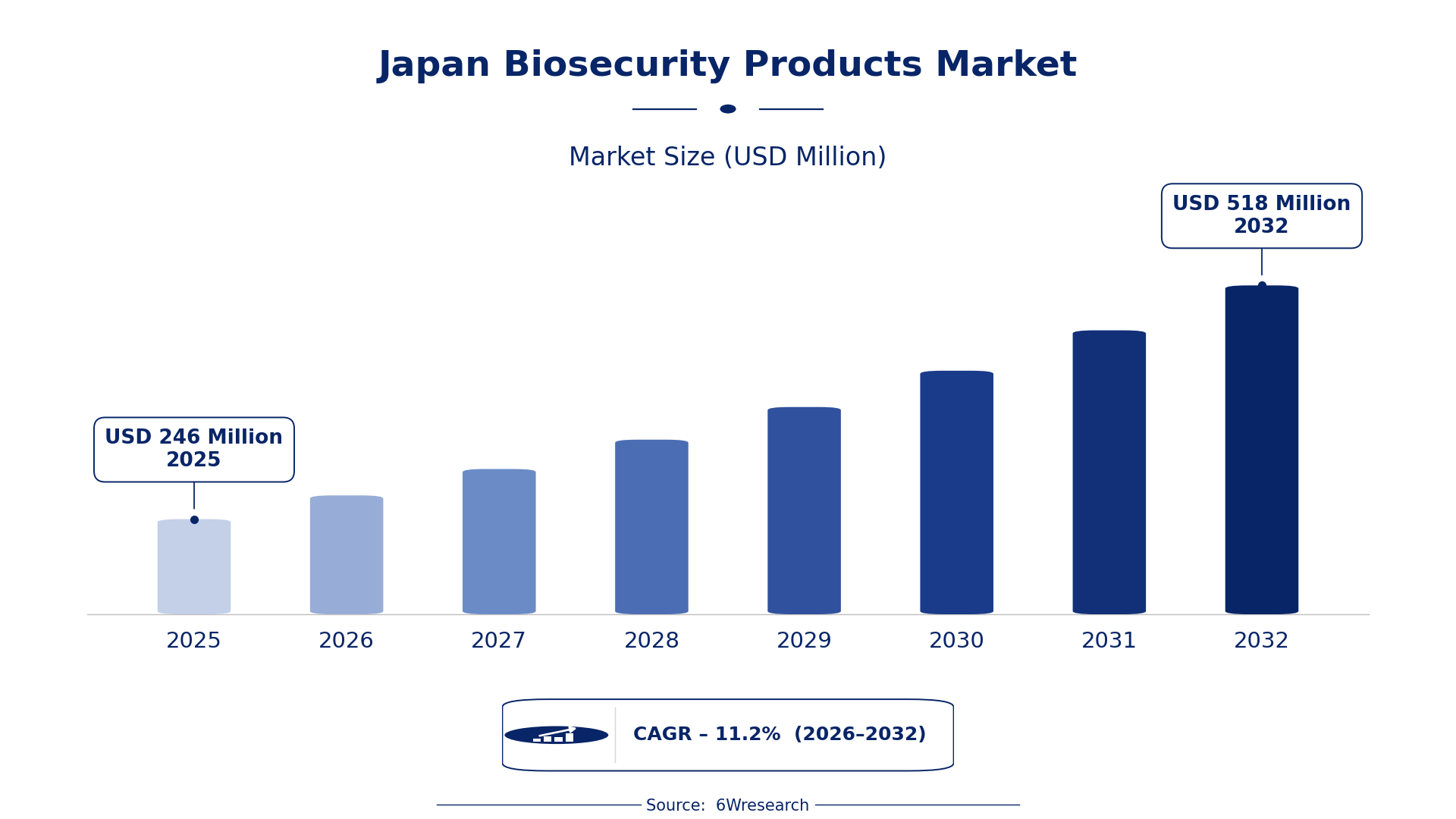
According to 6Wresearch internal database and industry insights, the Japan Biosecurity Products Market was valued at USD 246 Million in 2025 and is projected to reach USD 518 Million by 2032, growing at a CAGR of approximately 11.2% during 2026–2032.
Japan Biosecurity Products Market Highlights
| Report Metric | Details |
| Report Name | Japan Biosecurity Products Market (2026-2032) |
| Market Size 2025 | USD 246 Million |
| Market Size 2032 | USD 518 Million |
| Absolute Growth 2025–2032 | USD 272 Million |
| CAGR 2026–2032 | 11.2% |
| Peak Annual Growth | 12.9% in 2030 |
| Forecast Period | 2026–2032 |
| Historical Data | 2022–2025 |
| Base Year | 2025 |
| Leading Segment, 2025 | Disinfectants (37% share) |
| Leading Product Type, 2025 | Surface Sanitization (50% share) |
| Leading Application, 2025 | Hospitals (39% share) |
| Leading End Use, 2025 | Healthcare Facilities (43% share) |
| Fastest-Growing Segment | Protective Gear (15.2% CAGR) |
| Fastest-Growing Product Type | Pathogen Control (15.5% CAGR) |
| Fastest-Growing Application | Animal Health (14.8% CAGR) |
| Fastest-Growing End Use | Poultry Farms (14.3% CAGR) |
| Growing Sector | Healthcare Facilities |
| Key End Users | Healthcare Facilities, Veterinary Clinics, Research Institutions, Agricultural Producers |
Japan Biosecurity Products Market Year-wise Growth Rate and Key Drivers (2022–2032)
This graph illustrates the annual growth rates of the market from 2022 to 2032, highlighting a steady upward trajectory and projected market expansion over the forecast period.
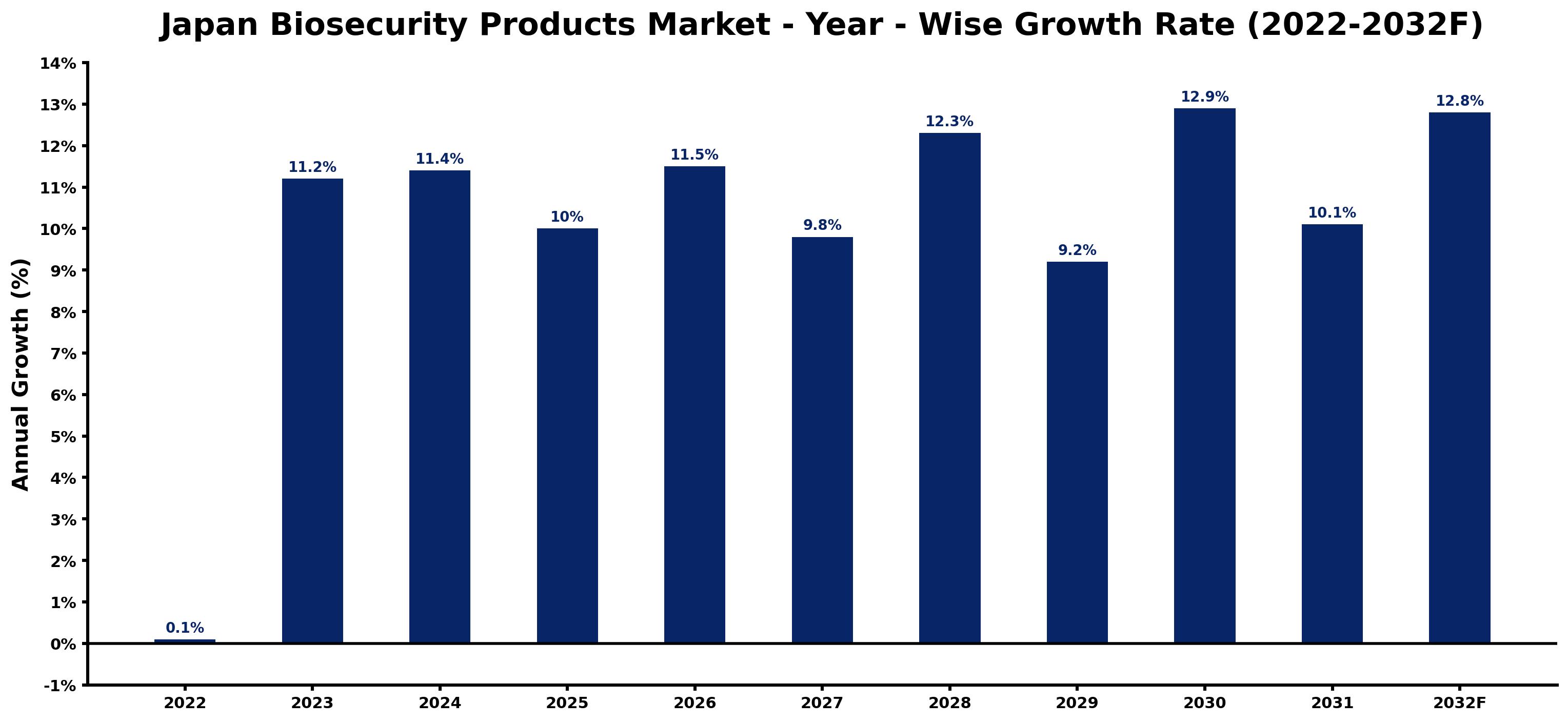
For each year, the table pairs the estimated growth rate with the leading influence on demand, showing how the drivers changed across the period.
| Year | Estimated Annual Growth (%) | Market Rationale |
| 2022 | 0.1 | The market experienced minimal growth as it adjusted to post-health crisis conditions. |
| 2023 | 11.2 | Demand surged due to increased awareness of hygiene practices following health emergencies. |
| 2024 | 11.4 | Growth continued as healthcare facilities expanded their biosecurity measures in response to rising health concerns. |
| 2025 | 10.0 | Market growth slowed as demand stabilised after rapid increases in previous years. |
| 2026 | 11.5 | Investment in pathogen detection technologies is expected to drive renewed interest in biosecurity products. |
| 2027 | 9.8 | Growth will decelerate as the market reaches a more mature phase of development. |
| 2028 | 12.3 | Increased focus on agricultural biosecurity measures is projected to spur growth in this segment. |
| 2029 | 9.2 | The market will experience another slowdown as competition intensifies among suppliers. |
| 2030 | 12.9 | Demand is expected to peak as healthcare facilities upgrade their biosecurity protocols extensively. |
| 2031 | 10.1 | Growth will decelerate slightly as the market begins to normalise after peak demand. |
| 2032 | 12.8 | A resurgence in healthcare spending will revitalise the market, driving further growth. |
Note: Market size estimations and growth projections presented in this report are based on 6Wresearch's proprietary forecasting methodology, utilizing the latest available industry data, government publications, and primary research inputs.
Japan Biosecurity Products Market Synopsis
Biosecurity products comprise technologies and chemicals designed to prevent the spread of harmful pathogens, produced under strict safety standards. Key applications encompass sanitation in healthcare, veterinary practices, and agriculture. The Japan Biosecurity Products Market is on an upward trend, driven by increased hygiene awareness, especially in healthcare facilities, which are projected to hold 43% of the market share by 2025. Government initiatives, including a programme launched in 2023 to strengthen biosecurity in hospitals, are generating new demand, particularly within the agricultural sector, where livestock health is paramount.
Market Dynamics Impact Analysis (2026–2032)
| Factor | Type | Impact | Primary Segment Affected |
| Rising healthcare expenditures are increasing demand for biosecurity products. | Driver | High | Healthcare Facilities |
| The growing livestock population necessitates enhanced biosecurity measures. | Driver | High | Animal Health |
| Investment in pathogen detection technologies is expanding market opportunities. | Opportunity | High | Diagnostic Kits |
| The increasing focus on agricultural biosecurity presents new supply avenues. | Opportunity | Medium | Biocontainment Devices |
| Stringent regulations may limit the entry of new products into the market. | Restraint | High | Disinfectants |
| High competition among suppliers can lead to price pressures. | Restraint | Medium | Protective Gear |
| High costs of compliance with regulations can deter new entrants. | Challenge | High | Pathogen Control |
| Technological advancements require continuous investment from manufacturers. | Challenge | Medium | Surface Sanitization |
Evaluation of Drivers in Japan Biosecurity Products Market (2026–2032)
The following drivers explain most of the expected growth.
| Drivers | Primary Segment Affected | Why It Matters (Evidence) |
| Increased healthcare spending drives demand for sanitation products. | Disinfectants | Japan's national medical care expenditure was about JPY 46.7 trillion in fiscal 2022, prompting hospitals to invest more in biosecurity. |
| Growing livestock population boosts demand for veterinary biosecurity. | Protective Gear | With 4 million cattle and 10 million pigs in Japan, veterinary clinics are increasingly purchasing protective gear to ensure animal health. |
| Investment in diagnostic capabilities enhances market growth. | Diagnostic Kits | In 2023, the government allocated ¥500 million to improve diagnostic capabilities in labs, increasing demand for biosecurity products. |
| Rising awareness of disease prevention in agriculture drives purchases. | Biocontainment Devices | The poultry industry, producing approximately 1.5 million tons of meat annually, is prioritising biosecurity measures to prevent disease outbreaks. |
| Regulatory compliance necessitates the use of biosecurity products. | Surface Sanitization | ISO 9001 certification is commonly sought by manufacturers, ensuring quality and efficacy in sanitation products. |
Several shifts outside the market lift sales. Japan's national medical care expenditure reached about JPY 46.7 trillion in fiscal 2022, prompting hospitals to invest more in biosecurity products. The livestock sector, with 4 million cattle and 10 million pigs, is increasingly purchasing protective gear to ensure animal health. The poultry industry, producing approximately 1.5 million tons of meat annually, is prioritising biosecurity measures to prevent disease outbreaks. Compliance with ISO 9001 certification drives manufacturers to maintain product quality, further boosting market growth.
Evaluation of Restraints in Japan Biosecurity Products Market
The table below lists the restraints and the evidence behind each.
| Market Restraint | Primary Segment Affected | Why It Matters (Evidence) |
| Regulatory compliance costs can be prohibitive for new entrants. | Disinfectants | Stringent regulations under the PMD Act increase the costs for manufacturers, limiting competition. |
| Intense competition leads to price pressures among suppliers. | Protective Gear | With numerous suppliers in the market, maintaining profitability becomes challenging due to aggressive pricing strategies. |
| High costs associated with maintaining biosecurity standards can deter adoption. | Diagnostic Kits | Facilities may hesitate to invest in new diagnostic technologies due to the financial burden. |
| Limited awareness in some sectors can restrict market growth. | Biocontainment Devices | Not all agricultural producers are fully aware of the importance of biocontainment, impacting demand. |
| Technological advancements require ongoing investment from manufacturers. | Surface Sanitization | Keeping up with innovations can strain resources for smaller manufacturers, limiting their market presence. |
Japan Biosecurity Products Market Challenges
Japan's stringent regulations for biosecurity products result in delays for manufacturers, as adherence to the Ministry of Agriculture's standards can prolong product development timelines by six months. Elevated manufacturing costs associated with the demand for ISO 9001 certification inflate prices for buyers, with some products experiencing a 20% increase. A shortage of skilled technicians in biosecurity hampers service delivery, affecting over 2,000 veterinary clinics that require expert knowledge for effective practices.
Trends in the Japan Biosecurity Products Market
Four trends stand out in the Japan Biosecurity Products Market.
- Shift in Focus to Agricultural Biosecurity: The Tokyo metropolitan area is experiencing a shift towards enhanced biosecurity measures in agriculture, particularly in livestock. This change is driven by the need to prevent disease outbreaks, with the livestock population including 4 million cattle and 10 million pigs.
- Increased Demand for Diagnostic Kits in Research: Research institutions are increasingly adopting advanced diagnostic kits to improve pathogen detection. Over 500 research institutions across Japan are utilising these kits, reflecting a growing emphasis on biosecurity in scientific research.
- New Guidelines for Surface Sanitization: The Japanese Society for Infectious Diseases has set new guidelines for surface sanitization in healthcare facilities. This initiative, supported by the fact that over 60% of hospitals use sanitization products, is raising the bar for hygiene standards.
- Expansion of Veterinary Clinics Offering Biosecurity Services: Japan has a network of over 2,000 veterinary clinics providing biosecurity services. This expansion is essential for maintaining animal health, particularly as protective gear becomes a legal requirement in all veterinary clinics.
Investment Opportunities in the Japan Biosecurity Products Market
Several openings in the Japan Biosecurity Products Market merit attention from investors.
- Healthcare Facilities Increasing Biosecurity Investments: Healthcare facilities are currently investing in biosecurity products, driven by rising medical expenditures. With over 8,000 hospitals in Japan, there is a clear demand for advanced disinfectants and sanitizers.
- Agricultural Sector Requires Biosecurity Solutions: The timing is ideal as the agricultural sector seeks to improve biosecurity measures. With the poultry industry producing approximately 1.5 million tons of meat annually, suppliers can target this market with tailored solutions.
- Diagnostic Capabilities Expansion in Labs: The government’s ¥500 million allocation for improving diagnostic capabilities presents an opportunity for suppliers. Labs across Japan are looking for advanced diagnostic kits to meet new standards.
- Veterinary Clinics Need Enhanced Protective Gear: Veterinary clinics are required by law to use protective gear, creating a steady demand. Suppliers can enter this market through partnerships with local veterinary associations.
Government Initiatives in the Japan Biosecurity Products Market
The PMD Act regulates the approval and quality of pharmaceuticals and medical devices, impacting biosecurity product manufacturers. Compliance with this law ensures that products meet safety standards necessary for maintaining market access, with a focus on biosecurity products in healthcare settings and agriculture.
The Ministry of Health oversees biosecurity standards in healthcare facilities, ensuring that hospitals adhere to strict regulations. This oversight includes funding for initiatives like the 2023 programme aimed at improving biosecurity in hospitals, benefiting healthcare providers and enhancing safety protocols.
Future Insight of the Japan Biosecurity Products Market
Healthcare facilities will implement advanced pathogen detection technologies by 2032, improving their biosecurity measures significantly. The government's allocation of ¥500 million to improve diagnostic capabilities will enhance lab efficiency and safety. Training programmes will address the skills gap, ensuring clinics can adopt modern practices. The ongoing promotion of biosecurity standards will facilitate collaboration among stakeholders, leading to improved protocols and practices across the healthcare and veterinary sectors.
Market Segmentation Analysis
Japan Biosecurity Products Market report covers a detailed analysis of the following market segments:
By Segment – Disinfectants Lead, Protective Gear Expected to Grow Fastest
According to Saurav Kr Singh, Senior Research Analyst at 6Wresearch, the largest segment category in 2025 was Disinfectants, at 37% of revenue. Disinfectants hold the largest share due to their essential role in sanitation across hospitals and laboratories, where maintaining hygiene is critical. The widespread use of these products in over 60% of hospitals in Japan underscores their importance in ensuring a safe environment for patients and staff. Protective Gear is set to record the highest CAGR in this split, 15.2% over 2026–2032. The protective gear segment is experiencing rapid growth as it is necessary for personnel safety in healthcare settings, especially with increasing awareness of infection control. Legal requirements for protective gear in all veterinary clinics further drive this segment's expansion, indicating a sustained demand. Suppliers should focus on enhancing the availability of protective gear to meet the rising demand in healthcare.
By Product Type – Surface Sanitization Leads, Pathogen Control Expected to Grow Fastest
In 2025, Surface Sanitization led the product type split with a 50% share. Surface sanitization products dominate the market as they are vital for maintaining hygiene in various facilities, particularly in healthcare settings. Their widespread use in hospitals underscores their importance in preventing infections and ensuring patient safety. Over 2026–2032, Pathogen Control is expected to post the fastest growth, at a CAGR of 15.5%. Pathogen control products are growing quickly due to their importance in managing disease spread, especially in response to recent health crises. The increasing focus on biosecurity measures in healthcare and agriculture is propelling this segment's growth. Buyers will benefit from a broader range of pathogen control solutions as demand continues to rise.
By Application – Hospitals Lead, Animal Health Expected to Grow Fastest
Hospitals held 39% of the Japan Biosecurity Products Market by application in 2025. Hospitals are the primary users of biosecurity products, utilising them extensively to ensure a safe environment for patients and staff. The high number of healthcare facilities in Japan, exceeding 8,000 hospitals, contributes to the dominance of this application segment. The quickest growth will come from Animal Health, forecast to expand at a CAGR of 14.8% between 2026 and 2032. The animal health application is witnessing rapid growth as it plays a crucial role in preventing disease in livestock, particularly with the livestock population including 4 million cattle and 10 million pigs. The emphasis on biosecurity in veterinary practices is driving this segment's expansion, indicating a robust future. Suppliers should consider developing tailored solutions for the animal health sector to capitalise on this growth.
By End Use – Healthcare Facilities Lead, Poultry Farms Expected to Grow Fastest
Healthcare Facilities accounted for 43% of the market by end use in 2025. Healthcare facilities represent the largest consumer group for biosecurity products, driven by the need for stringent hygiene and safety protocols. The substantial national medical care expenditure of about JPY 46.7 trillion in fiscal 2022 reflects the prioritisation of health and safety in these environments. Poultry Farms are projected to grow fastest, at a CAGR of 14.3% during 2026–2032. Poultry farms are experiencing rapid growth as they are crucial for disease prevention in the poultry industry, which produces approximately 1.5 million tons of meat annually. The increasing focus on biosecurity in agriculture is fuelling this segment's growth, suggesting a promising trajectory. Suppliers should enhance their offerings for poultry farms to meet the growing demand for biosecurity solutions.
Key Attractiveness of the Report
- 10 Years of Market Numbers
- Historical Data Starting from 2022 to 2025
- Base Year 2025
- Forecast Data until 2032
- Key Performance Indicators Impacting the Market
- Major Upcoming Developments and Projects
Key Highlights of the Report:
- Japan Biosecurity Products Market Outlook
- Market Size of Japan Biosecurity Products Market, 2025
- Forecast of Japan Biosecurity Products Market, 2032
- Historical Data and Forecast of Japan Biosecurity Products Revenues & Volume for the Period 2022-2032F
- Japan Biosecurity Products Market Trend Evolution
- Japan Biosecurity Products Market Drivers and Challenges
- Japan Biosecurity Products Price Trends
- Japan Biosecurity Products Porter's Five Forces
- Japan Biosecurity Products Industry Life Cycle
- Historical Data and Forecast of Japan Biosecurity Products Market Revenues & Volume By Segment for the Period 2022-2032F
- Historical Data and Forecast of Japan Biosecurity Products Market Revenues & Volume By Disinfectants for the Period 2022-2032F
- Historical Data and Forecast of Japan Biosecurity Products Market Revenues & Volume By Protective Gear for the Period 2022-2032F
- Historical Data and Forecast of Japan Biosecurity Products Market Revenues & Volume By Diagnostic Kits for the Period 2022-2032F
- Historical Data and Forecast of Japan Biosecurity Products Market Revenues & Volume By Biocontainment Devices for the Period 2022-2032F
- Historical Data and Forecast of Japan Biosecurity Products Market Revenues & Volume By Product Type for the Period 2022-2032F
- Historical Data and Forecast of Japan Biosecurity Products Market Revenues & Volume By Surface Sanitization for the Period 2022-2032F
- Historical Data and Forecast of Japan Biosecurity Products Market Revenues & Volume By Pathogen Control for the Period 2022-2032F
- Historical Data and Forecast of Japan Biosecurity Products Market Revenues & Volume By Pathogen Detection for the Period 2022-2032F
- Historical Data and Forecast of Japan Biosecurity Products Market Revenues & Volume By Facility Isolation for the Period 2022-2032F
- Historical Data and Forecast of Japan Biosecurity Products Market Revenues & Volume By Application for the Period 2022-2032F
- Historical Data and Forecast of Japan Biosecurity Products Market Revenues & Volume By Hospitals for the Period 2022-2032F
- Historical Data and Forecast of Japan Biosecurity Products Market Revenues & Volume By Animal Health for the Period 2022-2032F
- Historical Data and Forecast of Japan Biosecurity Products Market Revenues & Volume By Livestock for the Period 2022-2032F
- Historical Data and Forecast of Japan Biosecurity Products Market Revenues & Volume By Labs for the Period 2022-2032F
- Historical Data and Forecast of Japan Biosecurity Products Market Revenues & Volume By End Use for the Period 2022-2032F
- Historical Data and Forecast of Japan Biosecurity Products Market Revenues & Volume By Healthcare Facilities for the Period 2022-2032F
- Historical Data and Forecast of Japan Biosecurity Products Market Revenues & Volume By Poultry Farms for the Period 2022-2032F
- Historical Data and Forecast of Japan Biosecurity Products Market Revenues & Volume By Veterinary Clinics for the Period 2022-2032F
- Historical Data and Forecast of Japan Biosecurity Products Market Revenues & Volume By Research Institutions for the Period 2022-2032F
- Japan Biosecurity Products Import Export Trade Statistics
- Market Opportunity Assessment By Segment
- Market Opportunity Assessment By Product Type
- Market Opportunity Assessment By Application
- Market Opportunity Assessment By End Use
- Japan Biosecurity Products Top Companies Market Share
- Japan Biosecurity Products Competitive Benchmarking By Technical and Operational Parameters
- Japan Biosecurity Products Company Profiles
- Japan Biosecurity Products Key Strategic Recommendations
Market Covered
This report examines the market across the segments below.
By Segment
- Disinfectants
- Protective Gear
- Diagnostic Kits
- Biocontainment Devices
By Product Type
- Surface Sanitization
- Pathogen Control
- Pathogen Detection
- Facility Isolation
By Application
- Hospitals
- Animal Health
- Livestock
- Labs
By End Use
- Healthcare Facilities
- Poultry Farms
- Veterinary Clinics
- Research Institutions






































