Japan Bovine Genetics Market Size & Growth Rate
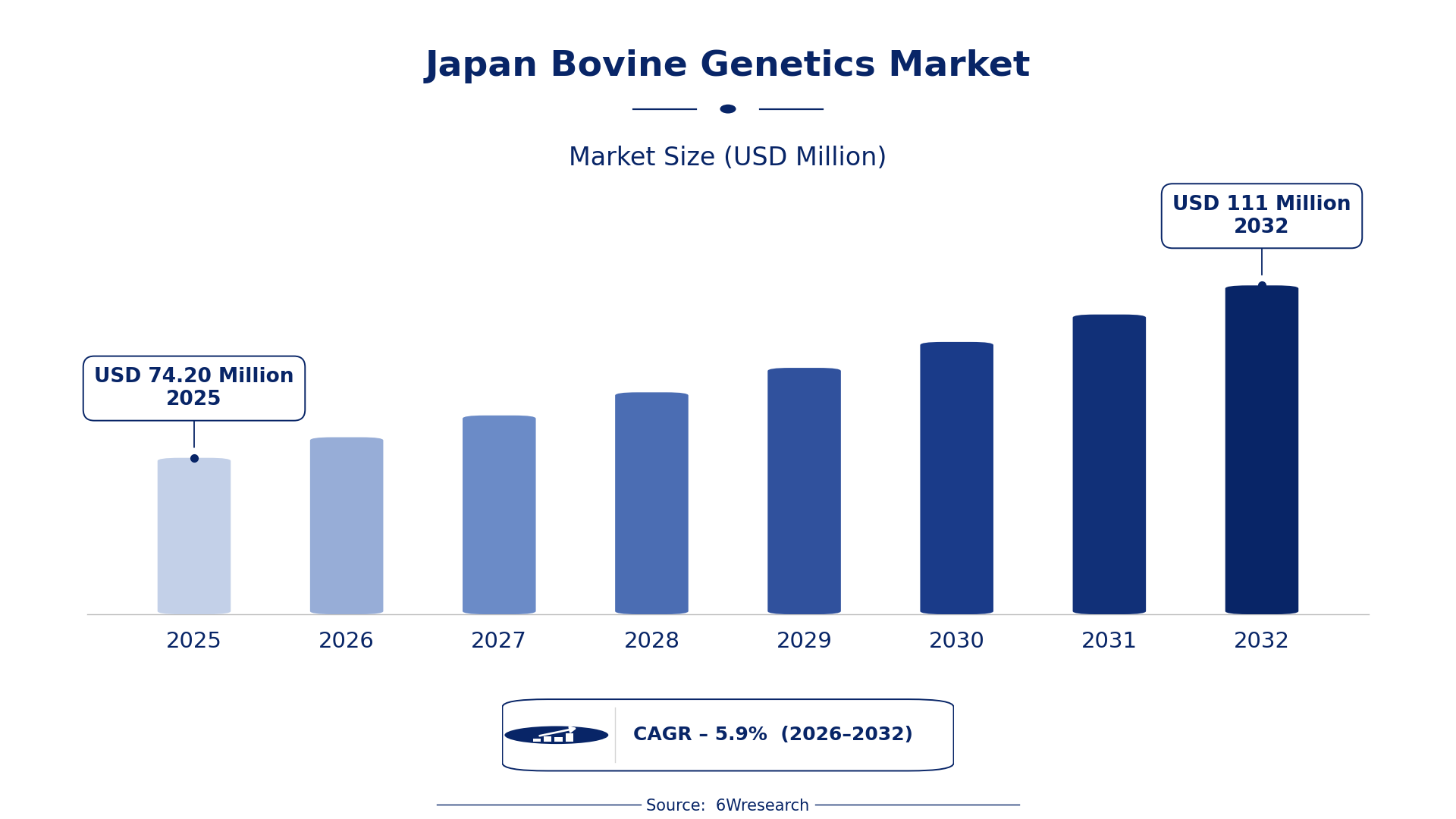
According to 6Wresearch internal database and industry insights, the Japan Bovine Genetics Market was valued at USD 74.20 Million in 2025 and is projected to reach USD 111 Million by 2032, growing at a CAGR of approximately 5.9% during 2026–2032.
Japan Bovine Genetics Market Highlights
| Report Metric | Details |
| Report Name | Japan Bovine Genetics Market (2026-2032) |
| Market Size 2025 | USD 74.20 Million |
| Market Size 2032 | USD 111 Million |
| Absolute Growth 2025–2032 | USD 36.80 Million |
| CAGR 2026–2032 | 5.9% |
| Peak Annual Growth | 6.7% in 2029 |
| Forecast Period | 2026–2032 |
| Historical Data | 2022–2025 |
| Base Year | 2025 |
| Leading Genetic Material Type, 2025 | Semen (49% share) |
| Leading Cattle Breed, 2025 | Holstein (44% share) |
| Leading Application Area, 2025 | Artificial Insemination (42% share) |
| Leading Technology Used, 2025 | Cryopreservation (45% share) |
| Fastest-Growing Genetic Material Type | Embryos (8.3% CAGR) |
| Fastest-Growing Cattle Breed | Jersey (7.7% CAGR) |
| Fastest-Growing Application Area | Embryo Transfer (7.2% CAGR) |
| Fastest-Growing Technology Used | IVF (8.8% CAGR) |
| Growing Sector | Embryo Transfer |
| Key End Users | Artificial Insemination, Embryo Transfer, Trait Selection, Research |
Japan Bovine Genetics Market Year-wise Growth Rate and Key Drivers (2022–2032)
This graph illustrates the annual growth rates of the market from 2022 to 2032, highlighting a steady upward trajectory and projected market expansion over the forecast period.
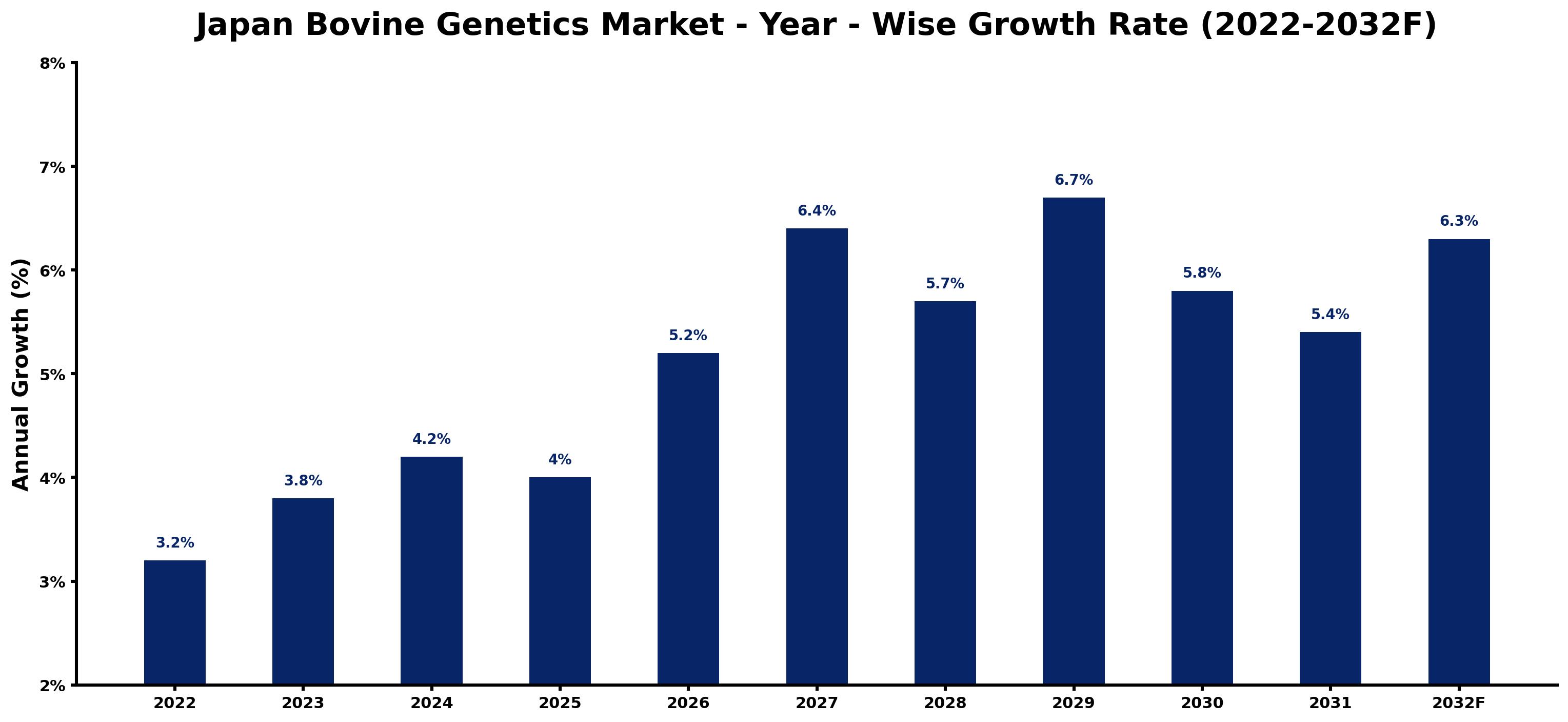
Annual growth estimates for each year appear below with the principal reason behind them, explaining the shifts that set the pace of the market.
| Year | Estimated Annual Growth (%) | Market Rationale |
| 2022 | 3.2 | The market experienced steady growth, driven by increased dairy production demands. |
| 2023 | 3.8 | Growth accelerated as dairy farmers adopted advanced breeding techniques. |
| 2024 | 4.2 | The market continued to expand, supported by rising milk production per cow. |
| 2025 | 4.0 | Growth slowed slightly as market conditions stabilised after previous gains. |
| 2026 | 5.2 | Demand is expected to increase as genomic testing adoption begins to rise. |
| 2027 | 6.4 | Growth is projected to surge with artificial insemination techniques gaining traction. |
| 2028 | 5.7 | Growth will slow as the market adjusts to new breeding technologies. |
| 2029 | 6.7 | The peak growth year will see strong investments in genetic improvement programs. |
| 2030 | 5.8 | Growth is anticipated to decelerate slightly as the market matures and competition intensifies. |
| 2031 | 5.4 | The market is expected to continue to grow, supported by ongoing research advancements. |
| 2032 | 6.3 | Growth will accelerate again as genomic testing adoption reaches new heights. |
Note: Market size estimations and growth projections presented in this report are based on 6Wresearch's proprietary forecasting methodology, utilizing the latest available industry data, government publications, and primary research inputs.
Japan Bovine Genetics Market Synopsis
Bovine genetics involves utilising genetic material like semen and embryos to improve cattle breeding, primarily through artificial insemination and IVF. In Japan, the Holstein breed dominates the dairy sector, representing about 80% of the cattle population. The Japan Bovine Genetics Market is expanding due to rising domestic dairy and beef production demands, with artificial insemination accounting for over 70% of breeding practices. Advancements in genomic testing and embryo transfer techniques are driving investments in the sector, with the average milk production per Holstein cow reaching approximately 8,000 litres annually.
Market Dynamics Impact Analysis (2026–2032)
| Factor | Type | Impact | Primary Segment Affected |
| Rising demand for high-quality dairy products | Driver | High | Semen |
| Increased adoption of genomic testing | Driver | High | Embryos |
| Growing interest in advanced breeding techniques | Opportunity | High | Artificial Insemination |
| Expansion of embryo transfer programs | Opportunity | High | Embryo Transfer |
| Limited awareness of new technologies | Restraint | Medium | DNA Markers |
| High costs associated with advanced breeding technologies | Restraint | High | IVF |
| Competition from alternative breeding methods | Challenge | High | Cloned Cells |
| Dependence on traditional breeding practices | Challenge | Medium | Trait Selection |
Evaluation of Drivers in Japan Bovine Genetics Market (2026–2032)
Demand rests on the following drivers, each shown with the segment it touches most.
| Drivers | Primary Segment Affected | Why It Matters (Evidence) |
| Increasing milk production per cow | Semen | The average milk production per Holstein cow is approximately 8,000 liters annually, driving demand for high-quality genetic material. |
| Growing adoption of genomic testing | Embryos | Genomic testing adoption is projected to increase by 20% by 2025, improving breeding decisions. |
| Rising investments in advanced breeding technologies | Artificial Insemination | Artificial insemination accounts for over 70% of breeding, prompting investments in improved techniques. |
| Expansion of embryo transfer techniques | Embryo Transfer | Embryo transfer is used in over 30% of elite breeding programs, increasing the demand for embryos. |
| Growing research in cattle genetics | Research | The National Livestock Breeding Center focuses on improving cattle genetics, driving innovation in the sector. |
Much of the new demand traces back to the average milk production per cow, which is approximately 8,000 litres annually, prompting dairy farmers to seek superior genetic material for breeding. The adoption of genomic testing is projected to rise by 20% by 2025, allowing producers to make informed breeding decisions. Investments in advanced breeding technologies are increasing, with artificial insemination accounting for over 70% of breeding practices, leading to higher-quality herds.
Evaluation of Restraints in Japan Bovine Genetics Market
The following restraints limit how fast demand can grow.
| Market Restraint | Primary Segment Affected | Why It Matters (Evidence) |
| Limited awareness of genomic testing benefits | DNA Markers | Many producers remain unaware of the advantages of genomic testing, hindering its adoption. |
| High costs associated with IVF techniques | IVF | The costs related to IVF can be prohibitive for smaller farms, limiting access to advanced breeding. |
| Slow adoption of new technologies | Trait Selection | Traditional methods dominate, causing delays in the uptake of new breeding practices. |
| Regulatory hurdles in breeding practices | Cloned Cells | Strict regulations surrounding cloning can deter adoption of these advanced techniques. |
| Market competition from alternative breeding methods | Cloned Cells | Alternative methods may offer lower costs, impacting the demand for cloned genetic material. |
Japan Bovine Genetics Market Challenges
Over 30% of elite breeding programs in Japan use embryo transfer techniques, which require advanced technology that many dairy and beef producers cannot afford, delaying genetic improvements and reducing herd quality. The average cost of genomic testing can reach 200,000 yen per farm, making it prohibitive for smaller producers and limiting their ability to compete effectively. New regulations under JIS Z 8401 complicate compliance for distributors, resulting in increased operational costs that are passed on to buyers. Intense competition from imported beef, valued at approximately 1.5 trillion yen annually, pressures local producers to lower prices, impacting their profitability.
Trends in the Japan Bovine Genetics Market
Buyers and suppliers in the Japan Bovine Genetics Market are adjusting to the following trends.
- Shift towards Genomic Testing in Breeding: The adoption of genomic testing in cattle breeding is increasing, with a projected 20% rise by 2025. This trend is influencing dairy farmers who seek to improve herd quality through better genetic insights.
- Transition from Traditional to Advanced Breeding Techniques: Dairy producers are moving away from traditional breeding methods towards advanced techniques, such as IVF, which is projected to grow at a CAGR of 8.8% from 2026 to 2032. This shift is reshaping breeding practices across Japan.
- Emerging Focus on Embryo Transfer: Embryo transfer is becoming a focal point in elite breeding programs, with over 30% of such programs utilizing this method. This trend indicates a growing interest in rapid genetic improvement among producers.
- Increased Investment in Research Initiatives: Research institutions are prioritising advancements in cattle genetics, with the National Livestock Breeding Center leading initiatives. The Japanese government allocated 500 million yen for bovine genetics research in 2023.
Investment Opportunities in the Japan Bovine Genetics Market
The opportunities below stand out in the Japan Bovine Genetics Market for new entrants and existing suppliers.
- Investment in Genomic Testing Facilities: The demand for genomic testing is rising, with a projected 20% increase by 2025. Investing in testing facilities can cater to dairy farmers in regions like Hokkaido, where dairy production is concentrated.
- Expansion of IVF Services: With IVF techniques projected to grow at a rate of 8.8%, there is a strong opportunity to supply IVF services to breeders. The demand for these services is particularly strong among elite breeding programs.
- Development of Advanced Breeding Technologies: The market gap for advanced breeding technologies presents an opportunity for investment. Dairy farmers in Japan are increasingly seeking effective solutions to improve herd quality.
- Support for Embryo Transfer Programs: The growing use of embryo transfer techniques, with over 30% adoption in elite programs, creates an opportunity to supply related services. Collaborating with research institutions can facilitate market entry.
Government Initiatives in the Japan Bovine Genetics Market
The GX Basic Policy adopted in 2023 aims for approximately JPY 150 trillion in public-private decarbonisation investments over the next decade, impacting bovine genetics producers by promoting sustainable practices. This initiative builds on the Industrial Standardization Act, which governs product standards, ensuring compliance and quality in genetic material.
The Livestock Industry Promotion Agency oversees funding for bovine genetics research, approving projects that support genetic improvement initiatives. In 2023, the agency allocated 500 million yen to support advancements in cattle genetics, benefiting producers and researchers alike.
Future Insight of the Japan Bovine Genetics Market
Advanced reproductive technologies will transform cattle breeding by 2032, with genomic testing adoption rates expected to rise by 20%, improving genetic quality for buyers. Enhanced accessibility to these technologies will allow suppliers to increase herd productivity. The launch of new subsidy programs will encourage farmers to implement innovative practices, driving demand for high-quality genetic material. Collaboration between institutions and producers will lead to breakthroughs in disease resistance, ensuring a healthier cattle population.
Market Segmentation Analysis
Japan Bovine Genetics Market report covers a detailed analysis of the following market segments:
By Genetic Material Type – Semen Leads, Embryos Expected to Grow Fastest
According to Saurav Kr Singh, Senior Research Analyst at 6Wresearch, Semen took 49% of genetic material type revenue in 2025, more than any other category. Semen is the primary choice for breeding, essential for artificial insemination which accounts for over 70% of breeding in the dairy sector. Its established role ensures consistent demand from dairy and beef producers in Japan, particularly among those with large herds. Over 2026–2032, Embryos are expected to post the fastest growth, at a CAGR of 8.3%. Embryos are witnessing rapid growth due to their crucial role in embryo transfer techniques, which are utilised in over 30% of elite breeding programs. This method's efficiency is attracting more producers aiming for enhanced genetic quality in their herds. Suppliers should focus on increasing embryo production to cater to the rising interest in advanced breeding techniques.
By Cattle Breed – Holstein Leads, Jersey Expected to Grow Fastest
Holstein held 44% of the Japan Bovine Genetics Market by cattle breed in 2025. Holsteins are the predominant breed in Japan, comprising about 80% of the dairy cattle population and being the main choice for milk production. Their high average yield of approximately 8,000 liters annually reinforces their leading market position. Jersey is projected to grow fastest, at a CAGR of 7.7% during 2026–2032. Jersey cattle are becoming increasingly popular due to their high butterfat content, appealing to producers focused on improving dairy quality. This trend is expected to continue as consumer preferences evolve towards richer dairy products. Buyers may need to consider incorporating Jersey cattle into their herds to adapt to changing market demands.
By Application Area – Artificial Insemination Leads, Embryo Transfer Expected to Grow Fastest
In 2025, Artificial Insemination led the application area split with a 42% share. Artificial insemination is the dominant breeding method in Japan, accounting for a substantial portion of the cattle breeding process. Its widespread adoption among dairy and beef producers ensures a strong market presence. Embryo Transfer is set to record the highest CAGR in this split, 7.2% over 2026–2032. Embryo transfer is gaining momentum as it facilitates quicker genetic improvements, with its application in elite breeding programs on the rise. This efficiency is driving increased adoption among forward-thinking breeders. Suppliers must invest in technologies that support embryo transfer to capitalise on this growth opportunity.
By Technology Used – Cryopreservation Leads, IVF Expected to Grow Fastest
The largest technology used category in 2025 was Cryopreservation, at 45% of revenue. Cryopreservation is the leading technology as it effectively preserves genetic material for future use, making it essential for breeding programs. The 15% improvement in success rates of artificial insemination through these techniques highlights its critical role in the industry. The quickest growth will come from IVF, forecast to expand at a CAGR of 8.8% between 2026 and 2032. IVF is rapidly gaining traction as research institutions increasingly adopt this method for cattle breeding, allowing for more efficient embryo creation. This trend is likely to expand as producers seek to implement advanced reproductive technologies in their operations. Suppliers should enhance their IVF offerings to align with the increasing adoption rates in the market.
Key Attractiveness of the Report
- 10 Years of Market Numbers
- Historical Data Starting from 2022 to 2025
- Base Year 2025
- Forecast Data until 2032
- Key Performance Indicators Impacting the Market
- Major Upcoming Developments and Projects
Key Highlights of the Report:
- Japan Bovine Genetics Market Outlook
- Market Size of Japan Bovine Genetics Market, 2025
- Forecast of Japan Bovine Genetics Market, 2032
- Historical Data and Forecast of Japan Bovine Genetics Revenues & Volume for the Period 2022-2032F
- Japan Bovine Genetics Market Trend Evolution
- Japan Bovine Genetics Market Drivers and Challenges
- Japan Bovine Genetics Price Trends
- Japan Bovine Genetics Porter's Five Forces
- Japan Bovine Genetics Industry Life Cycle
- Historical Data and Forecast of Japan Bovine Genetics Market Revenues & Volume By Genetic Material Type for the Period 2022-2032F
- Historical Data and Forecast of Japan Bovine Genetics Market Revenues & Volume By Semen for the Period 2022-2032F
- Historical Data and Forecast of Japan Bovine Genetics Market Revenues & Volume By Embryos for the Period 2022-2032F
- Historical Data and Forecast of Japan Bovine Genetics Market Revenues & Volume By DNA Markers for the Period 2022-2032F
- Historical Data and Forecast of Japan Bovine Genetics Market Revenues & Volume By Cloned Cells for the Period 2022-2032F
- Historical Data and Forecast of Japan Bovine Genetics Market Revenues & Volume By Cattle Breed for the Period 2022-2032F
- Historical Data and Forecast of Japan Bovine Genetics Market Revenues & Volume By Holstein for the Period 2022-2032F
- Historical Data and Forecast of Japan Bovine Genetics Market Revenues & Volume By Jersey for the Period 2022-2032F
- Historical Data and Forecast of Japan Bovine Genetics Market Revenues & Volume By Angus for the Period 2022-2032F
- Historical Data and Forecast of Japan Bovine Genetics Market Revenues & Volume By Crossbred for the Period 2022-2032F
- Historical Data and Forecast of Japan Bovine Genetics Market Revenues & Volume By Application Area for the Period 2022-2032F
- Historical Data and Forecast of Japan Bovine Genetics Market Revenues & Volume By Artificial Insemination for the Period 2022-2032F
- Historical Data and Forecast of Japan Bovine Genetics Market Revenues & Volume By Embryo Transfer for the Period 2022-2032F
- Historical Data and Forecast of Japan Bovine Genetics Market Revenues & Volume By Trait Selection for the Period 2022-2032F
- Historical Data and Forecast of Japan Bovine Genetics Market Revenues & Volume By Research for the Period 2022-2032F
- Historical Data and Forecast of Japan Bovine Genetics Market Revenues & Volume By Technology Used for the Period 2022-2032F
- Historical Data and Forecast of Japan Bovine Genetics Market Revenues & Volume By Cryopreservation for the Period 2022-2032F
- Historical Data and Forecast of Japan Bovine Genetics Market Revenues & Volume By IVF for the Period 2022-2032F
- Historical Data and Forecast of Japan Bovine Genetics Market Revenues & Volume By Genomic Testing for the Period 2022-2032F
- Historical Data and Forecast of Japan Bovine Genetics Market Revenues & Volume By Cell Reprogramming for the Period 2022-2032F
- Japan Bovine Genetics Import Export Trade Statistics
- Market Opportunity Assessment By Genetic Material Type
- Market Opportunity Assessment By Cattle Breed
- Market Opportunity Assessment By Application Area
- Market Opportunity Assessment By Technology Used
- Japan Bovine Genetics Top Companies Market Share
- Japan Bovine Genetics Competitive Benchmarking By Technical and Operational Parameters
- Japan Bovine Genetics Company Profiles
- Japan Bovine Genetics Key Strategic Recommendations
Market Covered
The study includes the following segmentation.
By Genetic Material Type
- Semen
- Embryos
- DNA Markers
- Cloned Cells
By Cattle Breed
- Holstein
- Jersey
- Angus
- Crossbred
By Application Area
- Artificial Insemination
- Embryo Transfer
- Trait Selection
- Research
By Technology Used
- Cryopreservation
- IVF
- Genomic Testing
- Cell Reprogramming






































