Japan Breakfast Restaurant Market Size & Growth Rate
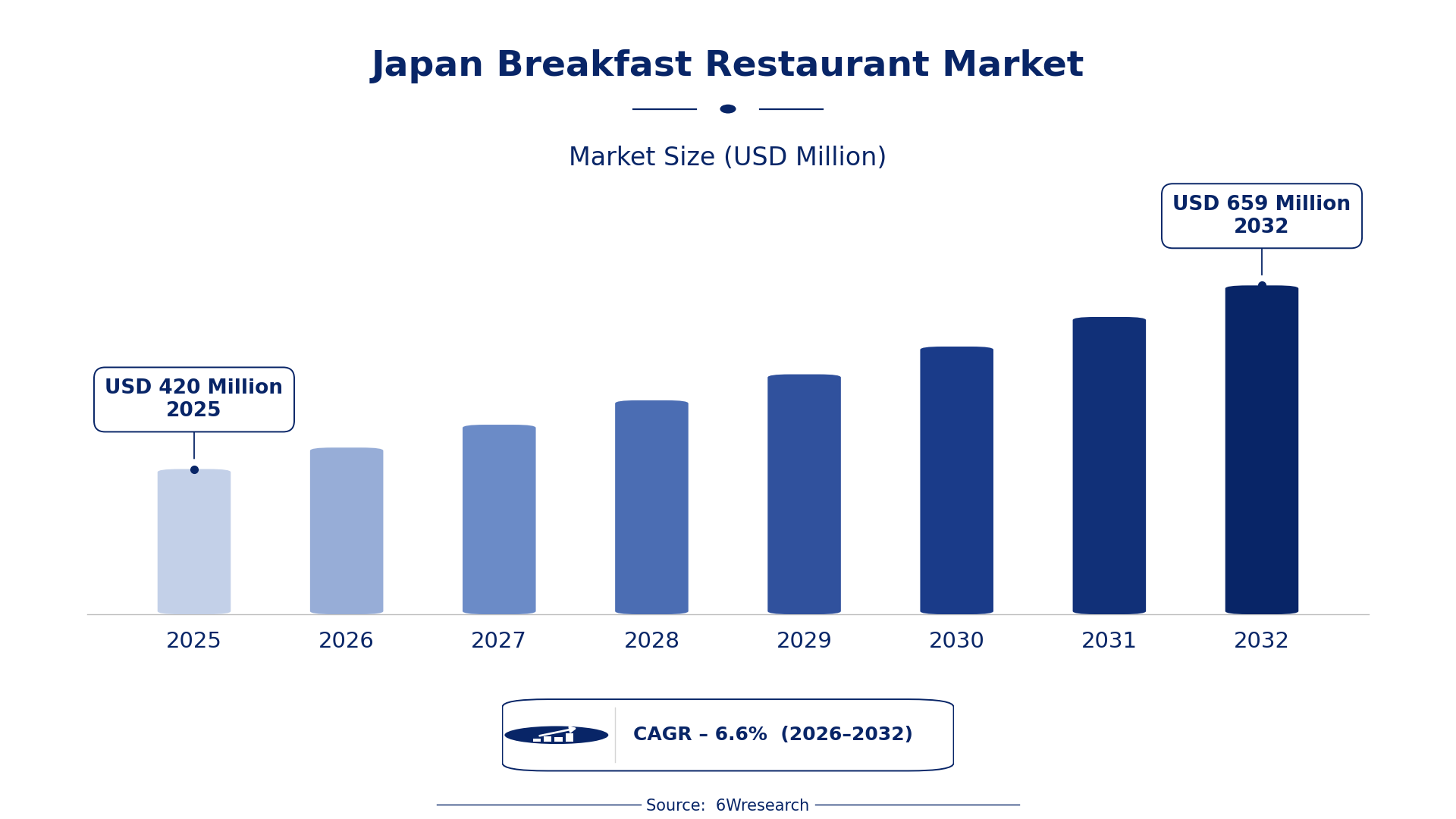
According to 6Wresearch internal database and industry insights, the Japan Breakfast Restaurant Market was valued at USD 420 Million in 2025 and is projected to reach USD 659 Million by 2032, growing at a CAGR of approximately 6.6% during 2026–2032.
Japan Breakfast Restaurant Market Highlights
| Report Metric | Details |
| Report Name | Japan Breakfast Restaurant Market (2026-2032) |
| Market Size 2025 | USD 420 Million |
| Market Size 2032 | USD 659 Million |
| Absolute Growth 2025–2032 | USD 239 Million |
| CAGR 2026–2032 | 6.6% |
| Peak Annual Growth | 7.5% in 2028 |
| Forecast Period | 2026–2032 |
| Historical Data | 2022–2025 |
| Base Year | 2025 |
| Leading Category, 2025 | Quick Service Restaurant (QSR) (59% share) |
| Fastest-Growing Category | Fast Casual Restaurant (8.3% CAGR) |
| Growing Sector | Fast Casual Restaurant |
| Key End Users | Quick Service Restaurant (QSR), Fast Casual Restaurant |
Japan Breakfast Restaurant Market Year-wise Growth Rate and Key Drivers (2022–2032)
This graph illustrates the annual growth rates of the market from 2022 to 2032, highlighting a steady upward trajectory and projected market expansion over the forecast period.
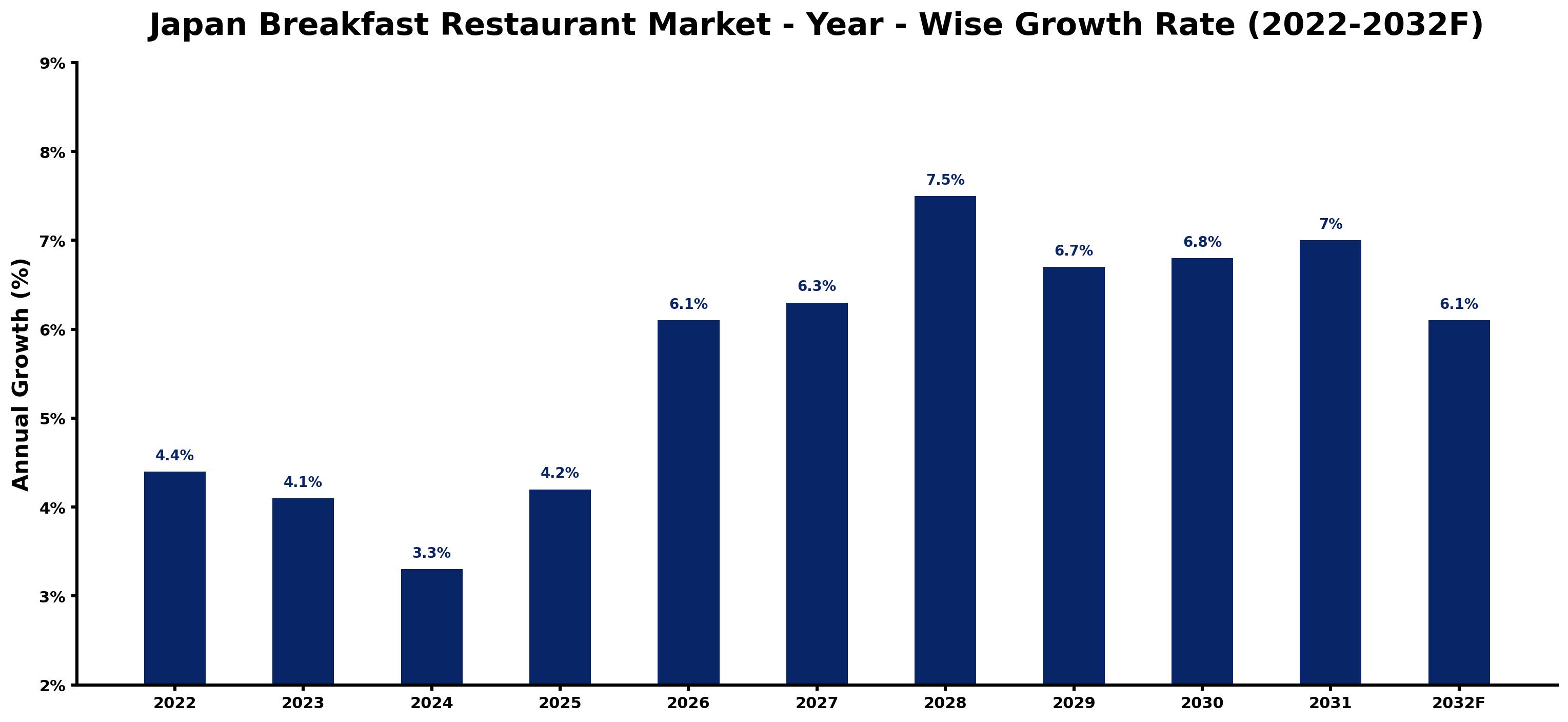
The following figures match every annual growth estimate with the main market development of that year, giving the reasoning behind each rise or slowdown.
| Year | Estimated Annual Growth (%) | Market Rationale |
| 2022 | 4.4 | The market experienced strong demand for breakfast options from urban consumers. |
| 2023 | 4.1 | Growth slowed due to increased competition among breakfast restaurants in major cities. |
| 2024 | 3.3 | Demand continued to rise, but at a slower pace as consumer preferences shifted. |
| 2025 | 4.2 | The market rebounded with renewed interest in breakfast dining experiences. |
| 2026 | 6.1 | Growth is expected to accelerate as younger generations increasingly opt for breakfast outside the home. |
| 2027 | 6.3 | The trend of dining out for breakfast will continue, driving higher revenues. |
| 2028 | 7.5 | The peak growth year will see investments in breakfast restaurant innovations. |
| 2029 | 6.7 | Growth is projected to slow slightly as market saturation begins to affect new openings. |
| 2030 | 6.8 | Demand will rise again as health-conscious options become more popular. |
| 2031 | 7.0 | Continued interest in breakfast dining will help maintain a steady growth rate. |
| 2032 | 6.1 | Growth is expected to slow as the market stabilises but remain strong overall. |
Note: Market size estimations and growth projections presented in this report are based on 6Wresearch's proprietary forecasting methodology, utilizing the latest available industry data, government publications, and primary research inputs.
Japan Breakfast Restaurant Market Synopsis
Breakfast restaurants in Japan serve morning meals featuring traditional items such as rice and miso soup, along with Western options like pancakes and toast. The Japan Breakfast Restaurant Market is expanding due to rising breakfast consumption among younger generations and initiatives like the 'Healthy Breakfast Campaign' launched in 2021. Increased urbanisation and disposable incomes are driving demand, particularly in urban areas like Tokyo and Osaka, where a diverse population seeks convenient meal options.
Market Dynamics Impact Analysis (2026–2032)
| Factor | Type | Impact | Primary Segment Affected |
| Rising breakfast consumption among youth | Driver | High | Quick Service Restaurant (QSR) |
| Increasing urbanisation leading to busy lifestyles | Driver | High | Quick Service Restaurant (QSR) |
| Growing demand for healthy breakfast options | Opportunity | High | Fast Casual Restaurant |
| Expansion of breakfast restaurant offerings in urban areas | Opportunity | Medium | Fast Casual Restaurant |
| High operational costs due to minimum wage increases | Restraint | High | Quick Service Restaurant (QSR) |
| Intense competition among breakfast restaurants | Restraint | Medium | Fast Casual Restaurant |
| Limited supply chain for seasonal ingredients | Challenge | High | Fast Casual Restaurant |
| Rising costs of compliance with food safety standards | Challenge | Medium | Quick Service Restaurant (QSR) |
Evaluation of Drivers in Japan Breakfast Restaurant Market (2026–2032)
Key forces behind demand, with the segment each one moves most, are listed below.
| Drivers | Primary Segment Affected | Why It Matters (Evidence) |
| Increased breakfast consumption among younger generations | Quick Service Restaurant (QSR) | 30% of youth now opt for breakfast outside the home, boosting demand. |
| Urbanisation leading to busier lifestyles | Quick Service Restaurant (QSR) | Tokyo has over 1,000 breakfast-focused restaurants, making convenience a priority. |
| Health initiatives promoting nutritious options | Fast Casual Restaurant | The 'Healthy Breakfast Campaign' encourages restaurants to offer healthier meals, increasing appeal. |
| Rising disposable incomes among urban consumers | Fast Casual Restaurant | Increased spending power allows consumers to choose higher-quality breakfast options. |
| Seasonal ingredient sourcing aligning with local practices | Quick Service Restaurant (QSR) | Restaurants featuring seasonal menus attract health-conscious customers. |
Spending rises because breakfast consumption has increased among younger generations, with a notable portion opting for meals outside the home. Urbanisation drives demand, particularly in urban areas where numerous breakfast-focused restaurants cater to busy lifestyles. Rising disposable incomes enable consumers to afford higher-quality breakfast choices, while sourcing seasonal ingredients aligns with local agricultural practices, appealing to health-conscious patrons.
Evaluation of Restraints in Japan Breakfast Restaurant Market
These are the pressures that could keep growth below its potential.
| Market Restraint | Primary Segment Affected | Why It Matters (Evidence) |
| Operational costs rising due to minimum wage increases | Quick Service Restaurant (QSR) | Japan's national minimum wage rose to JPY 1,055 per hour, impacting profitability. |
| Intense competition among breakfast restaurants | Fast Casual Restaurant | With many establishments in urban areas, differentiation becomes essential for survival. |
| Supply chain limitations for seasonal ingredients | Fast Casual Restaurant | Restaurants struggle to maintain consistent quality and availability of fresh produce. |
| Compliance costs with food safety standards | Quick Service Restaurant (QSR) | Adhering to ISO 22000 standards increases operational expenses for restaurants. |
| Consumer price sensitivity affecting menu pricing | Quick Service Restaurant (QSR) | Price competition limits the ability to raise prices without losing customers. |
Japan Breakfast Restaurant Market Challenges
Tokyo has over 1,000 breakfast-focused restaurants, creating a supply glut that pressures operators to compete on price. This competition can erode profit margins, forcing many to compromise on quality, which ultimately affects consumers seeking value. Rising minimum wage, now at JPY 1,055 per hour, escalates operational costs for operators, leading to potential price hikes that burden families. Regulatory guidelines from the Ministry of Health, Labour and Welfare impose strict dietary standards, complicating menu development for operators and delaying new offerings for consumers, while skills shortages in the food service sector result in longer wait times for patrons.
Trends in the Japan Breakfast Restaurant Market
Four trends stand out in the Japan Breakfast Restaurant Market.
- Shift towards healthier breakfast options: The trend of offering healthier breakfast choices is gaining momentum, with initiatives like the 'Healthy Breakfast Campaign' launched in 2021 promoting nutritious meals. Approximately 15% of fast casual breakfast offerings have increased since 2020, indicating a shift in consumer preferences.
- Increase in breakfast-focused dining experiences: Breakfast-focused dining experiences are becoming more popular, particularly in urban areas. The Tokyo Metropolitan Government's subsidy program for healthy breakfast options encourages restaurants to innovate, leading to a rise in breakfast consumption among youth.
- Growth of Quick Service Restaurants (QSR): Quick Service Restaurants are expanding rapidly to meet the demand for fast breakfast options. With an average breakfast price ranging from 500 to 1,000 yen, these establishments cater to busy consumers seeking convenience.
- Rise of seasonal ingredient menus: Restaurants are increasingly featuring seasonal ingredients in their breakfast offerings, aligning with local agricultural practices. This trend not only improves menu appeal but also supports local farmers, strengthening community ties.
Investment Opportunities in the Japan Breakfast Restaurant Market
Where to invest in the Japan Breakfast Restaurant Market: the main openings are set out below.
- Urban consumers seeking convenience: Urban consumers are increasingly looking for quick breakfast options, particularly in metropolitan areas. Investing in Quick Service Restaurants (QSR) can capture this demand. Collaborating with local suppliers can improve menu offerings.
- Health-conscious breakfast options: There is a growing opportunity to supply healthier breakfast options in response to consumer preferences. The 'Healthy Breakfast Campaign' supports this shift, making it an ideal time for Fast Casual Restaurants to innovate their menus. Engaging with local health-focused organisations can facilitate entry.
- Seasonal ingredient sourcing: Restaurants are focusing on seasonal ingredients to attract health-conscious customers. With a rising demand for fresh produce, suppliers can benefit from partnerships with local farms. Establishing joint ventures can streamline sourcing and distribution.
- Expanding breakfast delivery services: With the rise of digital ordering, breakfast delivery services are gaining traction. The Tokyo Metropolitan Government's support for innovative dining solutions presents an opportunity for new entrants. Forming partnerships with local delivery platforms can strengthen market presence.
Government Initiatives in the Japan Breakfast Restaurant Market
The Food Recycling Law, enacted in 2000, mandates food businesses to reduce waste and recycle it into feed, fertiliser, and energy. This law impacts breakfast restaurant operations by requiring them to implement waste management practices, which can incur additional costs but also promote sustainability. The law aims to reduce food waste by 20% by 2030, benefiting both the environment and the food service industry.
The Ministry of Health, Labour and Welfare oversees dietary guidelines that influence restaurant menus. By adhering to these guidelines, breakfast restaurants can attract health-conscious consumers, ensuring compliance while appealing to a broader customer base. The ministry's initiatives aim to increase healthy eating habits among 50% of the population by 2025, which can directly impact breakfast offerings.
Future Insight of the Japan Breakfast Restaurant Market
The rise of digital ordering technology will transform demand for breakfast restaurants by 2032, streamlining service and improving customer experience. The 'Healthy Breakfast Campaign' will encourage more establishments to adopt nutritious menus, aligning with dietary guidelines. Subsidy programs for healthy options will incentivise operators to innovate, potentially increasing the average breakfast price to 1,200 yen. Seasonal ingredient sourcing will become more prevalent, improving the quality and appeal of offerings to younger consumers.
Market Segmentation Analysis
Japan Breakfast Restaurant Market report covers a detailed analysis of the following market segments:
By Category – Quick Service Restaurant (QSR) Leads, Fast Casual Restaurant Expected to Grow Fastest
According to Sumit Sagar, AM at 6Wresearch, with 59% of category revenue in 2025, Quick Service Restaurant (QSR) was the largest category. Quick Service Restaurants dominate the breakfast segment due to their ability to deliver speedy meals, catering to busy individuals and families. For instance, urban areas like Tokyo and Osaka see a high concentration of these establishments, which are popular for their convenience. The quickest growth will come from Fast Casual Restaurant, forecast to expand at a CAGR of 8.3% between 2026 and 2032. Fast Casual Restaurants are experiencing rapid growth as they cater to a rising demand for more relaxed dining experiences during breakfast. The segment has seen a 15% increase since 2020, appealing particularly to younger patrons seeking quality and atmosphere. Suppliers should consider expanding offerings to include fast casual options to meet the changing preferences of consumers.
Key Attractiveness of the Report
- 10 Years of Market Numbers
- Historical Data Starting from 2022 to 2025
- Base Year 2025
- Forecast Data until 2032
- Key Performance Indicators Impacting the Market
- Major Upcoming Developments and Projects
Key Highlights of the Report:
- Japan Breakfast Restaurant Market Outlook
- Market Size of Japan Breakfast Restaurant Market, 2025
- Forecast of Japan Breakfast Restaurant Market, 2032
- Historical Data and Forecast of Japan Breakfast Restaurant Revenues & Volume for the Period 2022-2032
- Japan Breakfast Restaurant Market Trend Evolution
- Japan Breakfast Restaurant Market Drivers and Challenges
- Japan Breakfast Restaurant Price Trends
- Japan Breakfast Restaurant Porter's Five Forces
- Japan Breakfast Restaurant Industry Life Cycle
- Historical Data and Forecast of Japan Breakfast Restaurant Market Revenues & Volume By Category for the Period 2022-2032
- Historical Data and Forecast of Japan Breakfast Restaurant Market Revenues & Volume By Quick Service Restaurant (QSR) for the Period 2022-2032
- Historical Data and Forecast of Japan Breakfast Restaurant Market Revenues & Volume By Fast Casual Restaurant for the Period 2022-2032
- Japan Breakfast Restaurant Import Export Trade Statistics
- Market Opportunity Assessment By Category
- Japan Breakfast Restaurant Top Companies Market Share
- Japan Breakfast Restaurant Competitive Benchmarking By Technical and Operational Parameters
- Japan Breakfast Restaurant Company Profiles
- Japan Breakfast Restaurant Key Strategic Recommendations
Market Covered
Segments analysed in this report are listed below.
By Category
- Quick Service Restaurant (QSR)
- Fast Casual Restaurant































