Japan Building to Grid Technology Market Size & Growth Rate
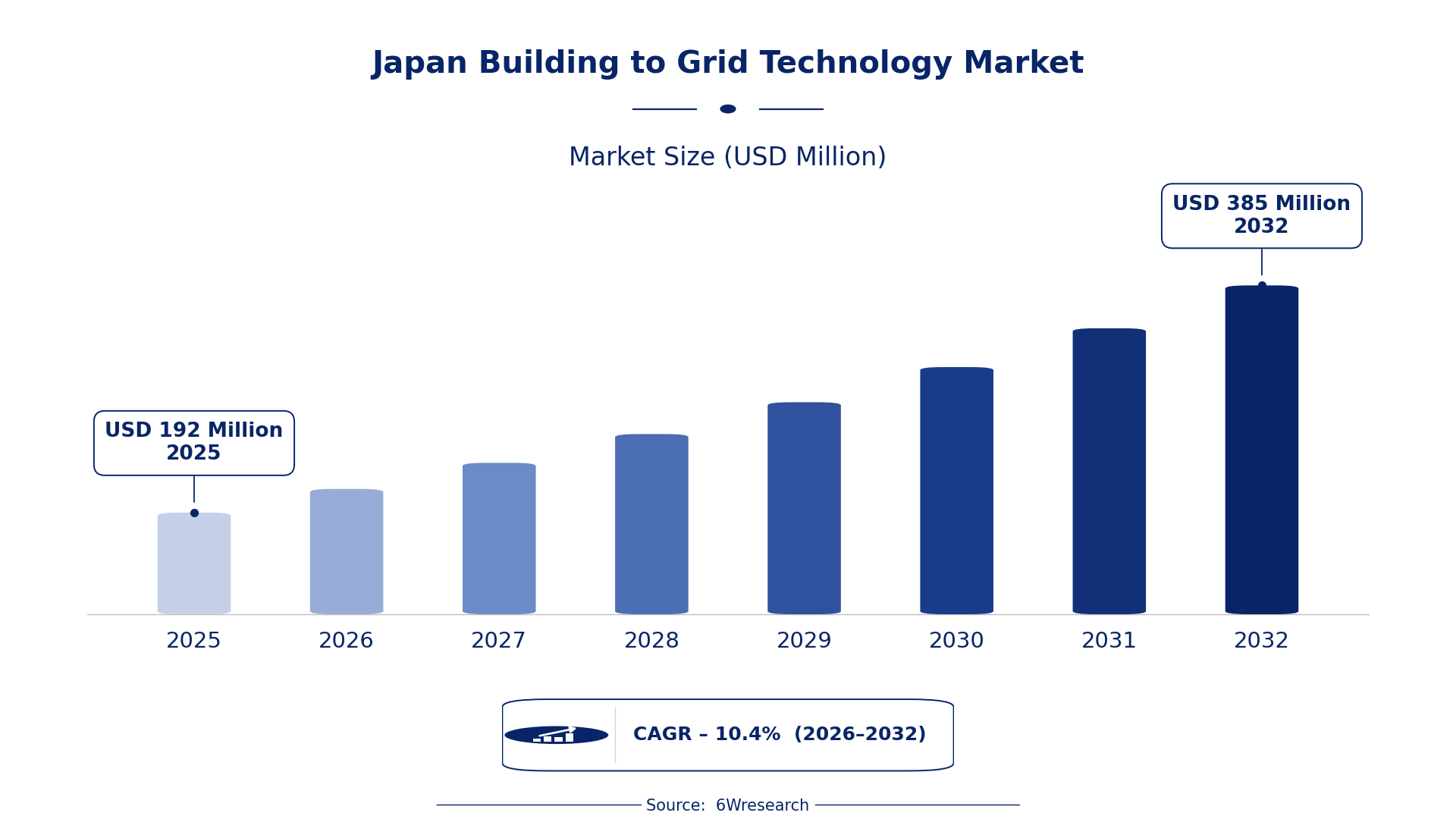
According to 6Wresearch internal database and industry insights, the Japan Building to Grid Technology Market was valued at USD 192 Million in 2025 and is projected to reach USD 385 Million by 2032, growing at a CAGR of approximately 10.4% during 2026–2032.
Japan Building to Grid Technology Market Highlights
| Report Metric | Details |
| Report Name | Japan Building to Grid Technology Market (2026-2032) |
| Market Size 2025 | USD 192 Million |
| Market Size 2032 | USD 385 Million |
| Absolute Growth 2025–2032 | USD 193 Million |
| CAGR 2026–2032 | 10.4% |
| Peak Annual Growth | 12.1% in 2028 |
| Forecast Period | 2026–2032 |
| Historical Data | 2022–2025 |
| Base Year | 2025 |
| Leading Technology Type, 2025 | Building Management Systems (37% share) |
| Leading Energy Flow, 2025 | Bi-directional (43% share) |
| Leading Application Area, 2025 | Commercial Buildings (37% share) |
| Leading Integration Type, 2025 | Grid-integrated (38% share) |
| Leading End User, 2025 | Building Owners (43% share) |
| Fastest-Growing Technology Type | Energy Storage Systems (14.5% CAGR) |
| Fastest-Growing Energy Flow | Distributed Storage (13.2% CAGR) |
| Fastest-Growing Application Area | Smart Cities (12.7% CAGR) |
| Fastest-Growing Integration Type | Utility-linked (15.0% CAGR) |
| Fastest-Growing End User | Municipalities (13.1% CAGR) |
| Growing Sector | Energy Management Solutions |
| Key End Users | Building Owners, Homeowners, Municipalities, Facility Managers |
Japan Building to Grid Technology Market Year-wise Growth Rate and Key Drivers (2022–2032)
This graph illustrates the annual growth rates of the market from 2022 to 2032, highlighting a steady upward trajectory and projected market expansion over the forecast period.
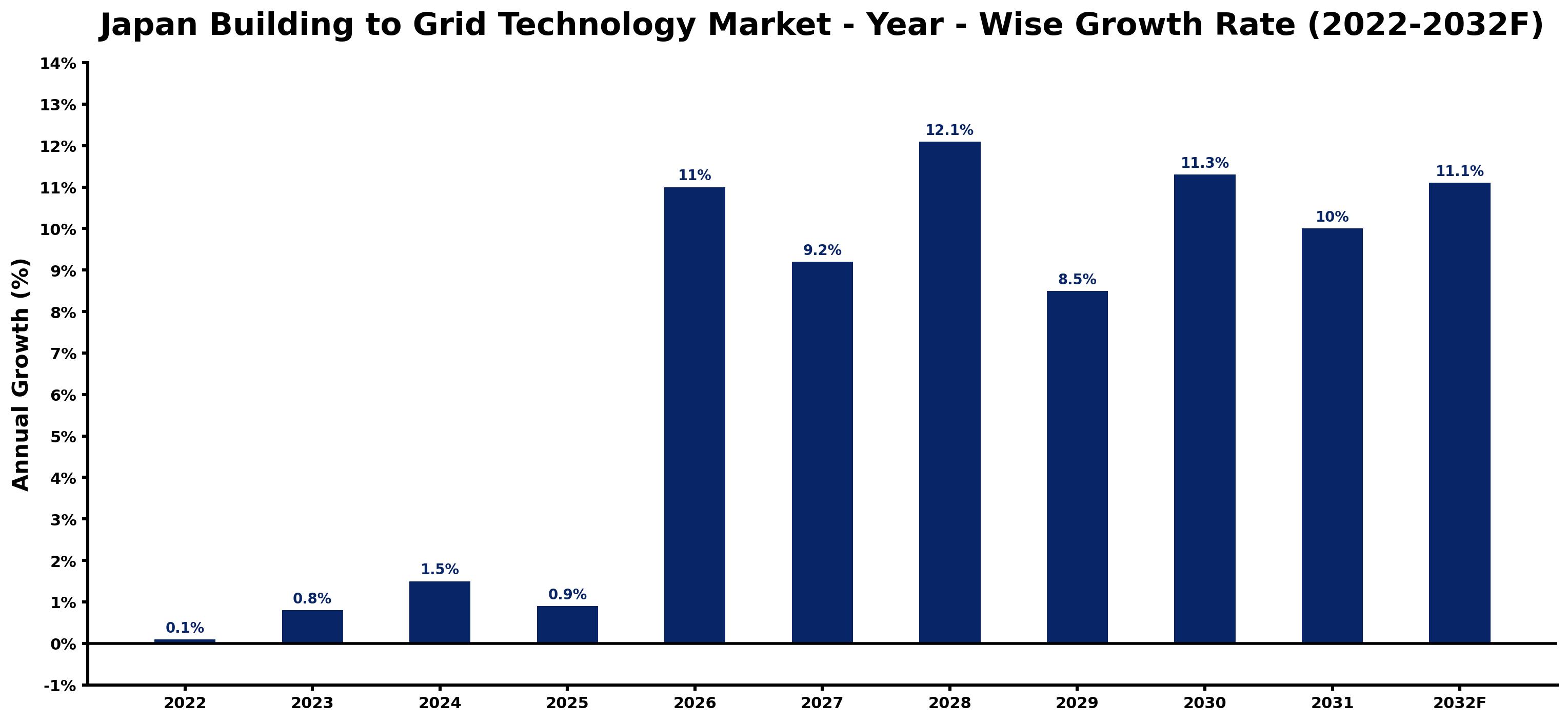
The following figures match every annual growth estimate with the main market development of that year, giving the reasoning behind each rise or slowdown.
| Year | Estimated Annual Growth (%) | Market Rationale |
| 2022 | 0.1 | Demand was stable, reflecting ongoing interest in energy efficiency solutions. |
| 2023 | 0.8 | Growth accelerated as smart meter installations reached 30 million units. |
| 2024 | 1.5 | Increased adoption of energy management technologies drove higher demand. |
| 2025 | 0.9 | Growth slowed as the market adjusted to previous rapid expansions. |
| 2026 | 11.0 | Investment surged following the GX Basic Policy's adoption, boosting demand. |
| 2027 | 9.2 | Market growth is expected to decelerate as supply chain challenges emerge. |
| 2028 | 12.1 | Peak growth is projected due to heightened demand for energy storage systems. |
| 2029 | 8.5 | Growth is expected to slow as market saturation begins to impact new installations. |
| 2030 | 11.3 | Demand is projected to increase as municipalities expand smart city initiatives. |
| 2031 | 10.0 | Growth is expected to moderate as the market stabilises after rapid expansions. |
| 2032 | 11.1 | Demand is projected to rise with ongoing investments in renewable technologies. |
Note: Market size estimations and growth projections presented in this report are based on 6Wresearch's proprietary forecasting methodology, utilizing the latest available industry data, government publications, and primary research inputs.
Japan Building to Grid Technology Market Synopsis
Building to Grid Technology integrates renewable energy sources with the electrical grid, utilising smart meters and energy storage systems for real-time energy management. The Japan Building to Grid Technology Market is expanding as municipalities and building owners seek to improve energy efficiency, driven by Japan's commitment to reducing greenhouse gas emissions by 46% by 2030. Investment in energy management solutions is increasing, particularly in urban areas where demand for smart city initiatives is high. This growth is supported by the installation of energy-efficient technologies and the push for sustainable urban development.
Market Dynamics Impact Analysis (2026–2032)
| Factor | Type | Impact | Primary Segment Affected |
| Increasing installations of smart meters enhance real-time energy management capabilities. | Driver | High | Smart Meters |
| Growing energy storage systems are essential for balancing supply and demand. | Driver | High | Energy Storage Systems |
| The Smart City Initiative aims to integrate 100 smart cities by 2030, creating demand for technology. | Opportunity | High | Smart Cities |
| Investment in energy optimization projects is rising, driven by government subsidies. | Opportunity | Medium | Energy Optimization |
| The high cost of initial technology implementation can deter adoption. | Restraint | High | Building Management Systems |
| Limited awareness of energy management benefits restricts market growth. | Restraint | Medium | Demand Response Systems |
| Supply chain disruptions can delay project timelines and increase costs. | Challenge | High | Energy Storage Systems |
| Competition among technology providers can lead to pricing pressures. | Challenge | Medium | Smart Meters |
Evaluation of Drivers in Japan Building to Grid Technology Market (2026–2032)
The following drivers explain most of the expected growth.
| Drivers | Primary Segment Affected | Why It Matters (Evidence) |
| Rising installations of smart meters enable real-time monitoring. | Smart Meters | In 2023, Japan's smart meter installation reached 30 million units, prompting higher demand from building owners. |
| Increased demand for energy storage systems balances renewable energy supply. | Energy Storage Systems | The residential energy storage market grew by 15% in 2023, reflecting homeowner interest in energy independence. |
| Government initiatives promote energy efficiency in buildings. | Demand Response Systems | The Energy Efficiency Act encourages demand response systems in commercial buildings, driving investment. |
| Growing urbanisation increases the need for energy management in cities. | Smart Cities | Tokyo's population of approximately 14 million drives demand for integrated energy solutions. |
| Technological advancements improve energy optimisation capabilities. | Building Management Systems | The Ministry of Economy, Trade and Industry oversees energy efficiency regulations, ensuring large energy users improve efficiency. |
Purchasing is picking up as the market sees rising installations of smart meters, with Japan reaching 30 million units in 2023. Increased demand for energy storage systems is clear, as the residential market grew by 15% in 2023, allowing homeowners to manage energy better. Urbanisation in Tokyo, with a population of 14 million, drives the need for smart city solutions, while technological advancements improve energy optimisation capabilities.
Evaluation of Restraints in Japan Building to Grid Technology Market
These are the pressures that could keep growth below its potential.
| Market Restraint | Primary Segment Affected | Why It Matters (Evidence) |
| High initial costs of technology deter widespread adoption. | Building Management Systems | The average installed capacity of energy storage systems is 10 kWh per household, which can be costly. |
| Limited awareness of energy management benefits restricts market growth. | Demand Response Systems | Many building owners lack knowledge about the advantages of implementing demand response systems. |
| Supply chain disruptions can delay project timelines and increase costs. | Energy Storage Systems | Challenges in sourcing materials for energy storage systems can lead to project delays. |
| Competition among technology providers can lead to pricing pressures. | Smart Meters | Numerous providers in the smart meter market can drive prices down, affecting profitability. |
| Regulatory changes can impact technology deployment timelines. | Building Management Systems | Changes in energy efficiency regulations can cause delays in project approvals. |
Japan Building to Grid Technology Market Challenges
Municipalities in Japan face considerable supply chain disruptions due to reliance on imported materials for energy storage systems, resulting in project delays of up to six months. Regulatory complexities hinder the swift implementation of energy management technologies, causing compliance delays that can extend project initiation by 20%. Buyers struggle with insufficient awareness and training on new technologies, leading to a 30% lower uptake of energy-efficient solutions. Rising costs of advanced technology can inflate project budgets by 15%, placing financial strain on municipalities pursuing smart city initiatives.
Trends in the Japan Building to Grid Technology Market
Several trends are reshaping the Japan Building to Grid Technology Market; the most important are set out below.
- Shift towards Smart City Integration: The initiative to integrate 100 smart cities by 2030 is transforming urban energy management. This shift is expected to drive demand for energy management technologies, with Tokyo leading in installations, reflecting a growing trend.
- Transition from Traditional to Smart Energy Solutions: Japan is moving from traditional energy systems to smart solutions, driven by the need for efficiency. The adoption of the ISO 50001 standard for energy management is a key example, with widespread implementation across commercial buildings.
- Emergence of Bi-directional Energy Systems: Bi-directional energy systems are gaining traction, allowing energy flow to and from the grid. The Energy Agency promotes these systems, essential for modern urban energy management, especially in metropolitan areas.
- Prioritisation of Energy Storage Solutions: Energy storage systems are becoming a priority for balancing renewable energy supply. The Tokyo metropolitan area leads in installations, reflecting a growing trend towards localized energy generation.
Investment Opportunities in the Japan Building to Grid Technology Market
The following opportunities in the Japan Building to Grid Technology Market pair current demand with a clear way in.
- Tokyo Metropolitan Area: Demand for energy management technologies is surging in the Tokyo metropolitan area, home to 14 million residents. Investing in energy storage systems now can tap into this growing market and meet urban energy needs.
- Current Smart City Initiatives: With the initiative aiming for 100 smart cities by 2030, there is a pressing need for energy management solutions. Suppliers can engage municipalities to provide technologies for urban energy efficiency.
- Energy Optimisation Projects: Funding for energy optimisation projects is creating opportunities for technology providers. Engaging with local governments can facilitate entry into this expanding market.
- Integrated Building Management Solutions: As the market for Building Management Systems grows, suppliers should focus on providing integrated solutions. Members of the Building Owners Association are key buyers looking for energy-efficient technologies.
Government Initiatives in the Japan Building to Grid Technology Market
The Building Energy Efficiency Act, amended in 2022, mandates that all new buildings meet energy standards from April 2025. This law promotes energy-efficient technologies, compelling producers to innovate and comply with regulations. The Act on the Rational Use of Energy obliges large energy users to improve efficiency and report energy use, further driving the adoption of energy management solutions.
The GX Basic Policy aims for JPY 150 trillion in public-private decarbonisation investment over 10 years, benefiting municipalities implementing energy management solutions. The Ministry of Economy, Trade and Industry oversees energy efficiency regulations, ensuring large energy users improve efficiency.
Future Insight of the Japan Building to Grid Technology Market
The integration of advanced energy management technologies will reshape demand by 2032, enhancing real-time monitoring and optimisation of consumption. The Smart City Initiative will facilitate the establishment of 100 smart cities, driving demand for efficient solutions and renewable energy sources. Energy storage systems will become more prevalent, with the average capacity projected to increase to 15 kWh per household. The widespread adoption of ISO 50001 will standardise practices, improving efficiency for both buyers and suppliers.
Market Segmentation Analysis
Japan Building to Grid Technology Market report covers a detailed analysis of the following market segments:
By Technology Type – Building Management Systems Lead, Energy Storage Systems Expected to Grow Fastest
According to Ayushi Shukla, Senior Research Analyst at 6Wresearch, with 37% of technology type revenue in 2025, Building Management Systems was the largest category. Building Management Systems hold the largest share due to their capability to integrate various technologies, which enhances energy efficiency across diverse facility types. This integration is critical as Japan aims for a 46% reduction in greenhouse-gas emissions by 2030, driving demand for these systems. The quickest growth will come from Energy Storage Systems, forecast to expand at a CAGR of 14.5% between 2026 and 2032. Energy Storage Systems are experiencing rapid growth as they are crucial for balancing renewable energy supply and demand in buildings. The residential energy storage market's 15% growth in 2023 indicates a strong market shift towards these solutions. Suppliers should focus on advancing Building Management Systems to meet the increasing demand for energy efficiency.
By Energy Flow – Bi-directional Leads, Distributed Storage Expected to Grow Fastest
Bi-directional took 43% of energy flow revenue in 2025, more than any other category. Bi-directional systems lead the market as they enable energy flow to and from the grid, which is essential for the integration of renewable energy sources. This capability aligns with Japan's goal of achieving 22-24% of energy from renewables by 2030. Over 2026–2032, Distributed Storage is expected to post the fastest growth, at a CAGR of 13.2%. Distributed Storage is experiencing rapid growth as it supports localized energy generation and usage, becoming increasingly important in urban settings. The Smart City Initiative aims to integrate 100 smart cities by 2030, which will further drive this segment. Buyers should invest in Distributed Storage solutions to improve their energy management strategies.
By Application Area – Commercial Buildings Lead, Smart Cities Expected to Grow Fastest
Commercial Buildings held 37% of the Japan Building to Grid Technology Market by application area in 2025. Commercial Buildings represent the largest share due to their high demand for energy management solutions, driven by the need for efficiency and cost savings. The Energy Efficiency Act promotes demand response systems specifically in these buildings. Smart Cities are set to record the highest CAGR in this split, 12.7% over 2026–2032. Smart Cities are the fastest-growing area as they are integral to urban energy management strategies, reflecting the push for sustainable urban development. The Tokyo metropolitan area leads in energy storage system installations, supporting smart city initiatives. Suppliers must tailor their offerings to meet the unique needs of Smart Cities to capitalise on this growth.
By Integration Type – Grid-integrated Leads, Utility-linked Expected to Grow Fastest
Grid-integrated accounted for 38% of the market by integration type in 2025. Grid-integrated systems lead the market because they play a vital role in modern energy systems, facilitating seamless interaction with the electrical grid. The Energy Agency's promotion of bi-directional energy systems underscores the necessity of these integrations for future energy management. Utility-linked is projected to grow fastest, at a CAGR of 15.0% during 2026–2032. Utility-linked systems are growing quickly as they connect buildings with utility services, ensuring efficient energy distribution. The average installed capacity of energy storage systems at 10 kWh per household highlights the increasing need for such utility connections. Buyers should prioritise Utility-linked solutions to optimise their energy consumption and management.
By End User – Building Owners Lead, Municipalities Expected to Grow Fastest
In 2025, Building Owners led the end user split with a 43% share. Building Owners account for the largest segment as they invest in technology for energy savings and compliance with regulatory standards. Their active engagement in energy-efficient technologies reflects a strong commitment to sustainability and efficiency. The quickest growth will come from Municipalities, forecast to expand at a CAGR of 13.1% between 2026 and 2032. Municipalities are the fastest-growing end user as they adopt energy solutions for public infrastructure efficiency, driven by government initiatives. The Tokyo metropolitan government's investments in energy optimisation programmes illustrate this trend. Suppliers should target Municipalities to provide tailored solutions that align with public energy efficiency goals.
Key Attractiveness of the Report
- 10 Years of Market Numbers
- Historical Data Starting from 2022 to 2025
- Base Year 2025
- Forecast Data until 2032
- Key Performance Indicators Impacting the Market
- Major Upcoming Developments and Projects
Key Highlights of the Report:
- Japan Building to Grid Technology Market Outlook
- Market Size of Japan Building to Grid Technology Market, 2025
- Forecast of Japan Building to Grid Technology Market, 2032
- Historical Data and Forecast of Japan Building to Grid Technology Market Revenues & Volume for the Period 2022-2032F
- Japan Building to Grid Technology Market Trend Evolution
- Japan Building to Grid Technology Market Drivers and Challenges
- Japan Building to Grid Technology Market Price Trends
- Japan Building to Grid Technology Market Porter's Five Forces
- Japan Building to Grid Technology Market Industry Life Cycle
- Historical Data and Forecast of Japan Building to Grid Technology Market Revenues & Volume By Technology Type for the Period 2022-2032F
- Historical Data and Forecast of Japan Building to Grid Technology Market Revenues & Volume By Smart Meters for the Period 2022-2032F
- Historical Data and Forecast of Japan Building to Grid Technology Market Revenues & Volume By Energy Storage Systems for the Period 2022-2032F
- Historical Data and Forecast of Japan Building to Grid Technology Market Revenues & Volume By Demand Response Systems for the Period 2022-2032F
- Historical Data and Forecast of Japan Building to Grid Technology Market Revenues & Volume By Building Management Systems for the Period 2022-2032F
- Historical Data and Forecast of Japan Building to Grid Technology Market Revenues & Volume By Energy Flow for the Period 2022-2032F
- Historical Data and Forecast of Japan Building to Grid Technology Market Revenues & Volume By Bi-directional for the Period 2022-2032F
- Historical Data and Forecast of Japan Building to Grid Technology Market Revenues & Volume By Distributed Storage for the Period 2022-2032F
- Historical Data and Forecast of Japan Building to Grid Technology Market Revenues & Volume By Load Control for the Period 2022-2032F
- Historical Data and Forecast of Japan Building to Grid Technology Market Revenues & Volume By Energy Optimization for the Period 2022-2032F
- Historical Data and Forecast of Japan Building to Grid Technology Market Revenues & Volume By Application Area for the Period 2022-2032F
- Historical Data and Forecast of Japan Building to Grid Technology Market Revenues & Volume By Commercial Buildings for the Period 2022-2032F
- Historical Data and Forecast of Japan Building to Grid Technology Market Revenues & Volume By Residential Buildings for the Period 2022-2032F
- Historical Data and Forecast of Japan Building to Grid Technology Market Revenues & Volume By Smart Cities for the Period 2022-2032F
- Historical Data and Forecast of Japan Building to Grid Technology Market Revenues & Volume By Industrial Buildings for the Period 2022-2032F
- Historical Data and Forecast of Japan Building to Grid Technology Market Revenues & Volume By Integration Type for the Period 2022-2032F
- Historical Data and Forecast of Japan Building to Grid Technology Market Revenues & Volume By Grid-integrated for the Period 2022-2032F
- Historical Data and Forecast of Japan Building to Grid Technology Market Revenues & Volume By On-site for the Period 2022-2032F
- Historical Data and Forecast of Japan Building to Grid Technology Market Revenues & Volume By Utility-linked for the Period 2022-2032F
- Historical Data and Forecast of Japan Building to Grid Technology Market Revenues & Volume By Digital Platforms for the Period 2022-2032F
- Historical Data and Forecast of Japan Building to Grid Technology Market Revenues & Volume By End User for the Period 2022-2032F
- Historical Data and Forecast of Japan Building to Grid Technology Market Revenues & Volume By Building Owners for the Period 2022-2032F
- Historical Data and Forecast of Japan Building to Grid Technology Market Revenues & Volume By Homeowners for the Period 2022-2032F
- Historical Data and Forecast of Japan Building to Grid Technology Market Revenues & Volume By Municipalities for the Period 2022-2032F
- Historical Data and Forecast of Japan Building to Grid Technology Market Revenues & Volume By Facility Managers for the Period 2022-2032F
- Japan Building to Grid Technology Market Import Export Trade Statistics
- Market Opportunity Assessment By Technology Type
- Market Opportunity Assessment By Energy Flow
- Market Opportunity Assessment By Application Area
- Market Opportunity Assessment By Integration Type
- Market Opportunity Assessment By End User
- Japan Building to Grid Technology Market Top Companies Market Share
- Japan Building to Grid Technology Market Competitive Benchmarking By Technical and Operational Parameters
- Japan Building to Grid Technology Market Company Profiles
- Japan Building to Grid Technology Market Key Strategic Recommendations
Market Covered
This report examines the market across the segments below.
By Technology Type
- Smart Meters
- Energy Storage Systems
- Demand Response Systems
- Building Management Systems
By Energy Flow
- Bi-directional
- Distributed Storage
- Load Control
- Energy Optimization
By Application Area
- Commercial Buildings
- Residential Buildings
- Smart Cities
- Industrial Buildings
By Integration Type
- Grid-integrated
- On-site
- Utility-linked
- Digital Platforms
By End User
- Building Owners
- Homeowners
- Municipalities
- Facility Managers






































