Japan Cafe and Bars Market Size & Growth Rate
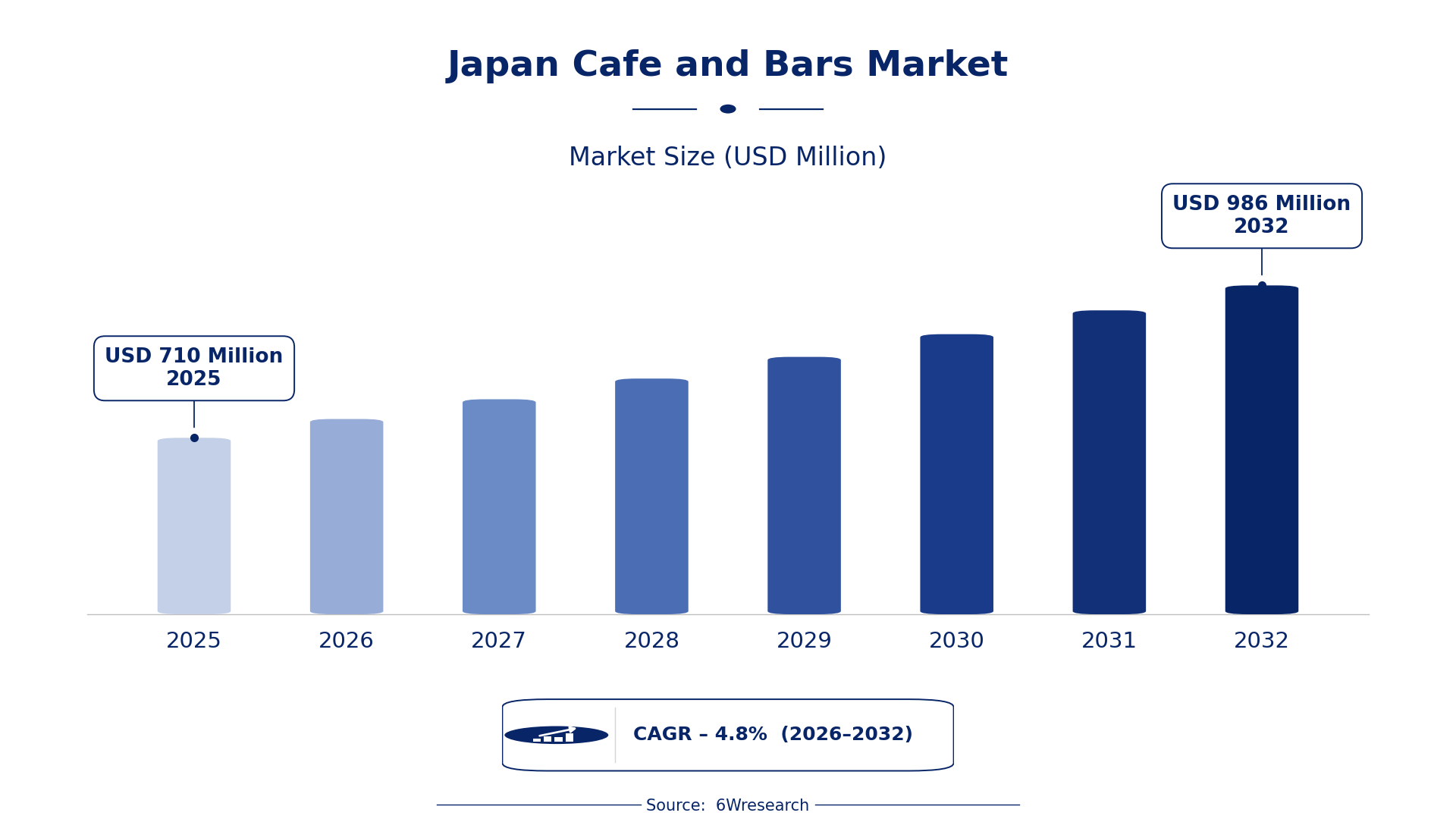
According to 6Wresearch internal database and industry insights, the Japan Cafe and Bars Market was valued at USD 710 Million in 2025 and is projected to reach USD 986 Million by 2032, growing at a CAGR of approximately 4.8% during 2026–2032.
Japan Cafe and Bars Market Highlights
| Report Metric | Details |
| Report Name | Japan Cafe and Bars Market (2026-2032) |
| Market Size 2025 | USD 710 Million |
| Market Size 2032 | USD 986 Million |
| Absolute Growth 2025–2032 | USD 276 Million |
| CAGR 2026–2032 | 4.8% |
| Peak Annual Growth | 5.9% in 2032 |
| Forecast Period | 2026–2032 |
| Historical Data | 2022–2025 |
| Base Year | 2025 |
| Leading Service Type, 2025 | Cafes (54% share) |
| Leading Outlet, 2025 | Chained Outlets (59% share) |
| Fastest-Growing Service Type | Coffee Shops (6.4% CAGR) |
| Fastest-Growing Outlet | Independent Outlets (6.1% CAGR) |
| Growing Sector | Social dining and entertainment |
| Key End Users | Domestic consumers, tourists, local food producers, beverage suppliers |
Japan Cafe and Bars Market Year-wise Growth Rate and Key Drivers (2022–2032)
This graph illustrates the annual growth rates of the market from 2022 to 2032, highlighting a steady upward trajectory and projected market expansion over the forecast period.
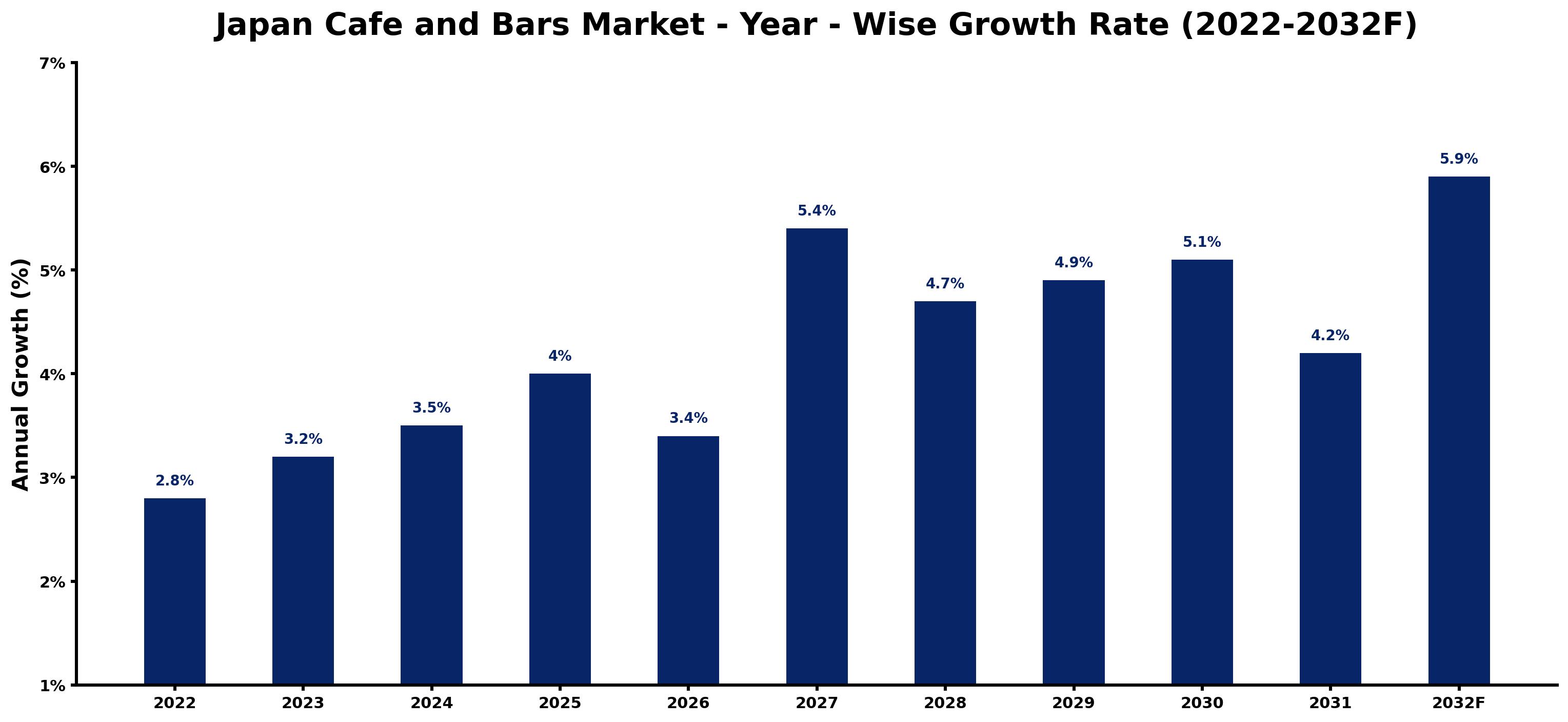
Year by year, the estimates below pair each growth rate with the development that shaped it.
| Year | Estimated Annual Growth (%) | Market Rationale |
| 2022 | 2.8 | Consumer interest in social dining experiences increased, driving initial growth. |
| 2023 | 3.2 | The rise of urban nightlife contributed to a higher patronage in cafes and bars. |
| 2024 | 3.5 | Continued growth in domestic tourism boosted demand for social venues. |
| 2025 | 4.0 | The Tokyo Metropolitan Government's support for small cafes improved local offerings. |
| 2026 | 3.4 | A slight slowdown is expected as market saturation begins to affect growth rates. |
| 2027 | 5.4 | Increased disposable income will allow consumers to spend more on dining out. |
| 2028 | 4.7 | A return to previous social habits will lead to renewed interest in cafes and bars. |
| 2029 | 4.9 | Growing coffee culture and events like the Tokyo Coffee Festival will attract more visitors. |
| 2030 | 5.1 | Expansion of independent outlets will diversify the market and attract new customers. |
| 2031 | 4.2 | The market will experience a slowdown as competition intensifies among cafes and bars. |
| 2032 | 5.9 | The introduction of new beverage trends is expected to boost consumer interest. |
Note: Market size estimations and growth projections presented in this report are based on 6Wresearch's proprietary forecasting methodology, utilizing the latest available industry data, government publications, and primary research inputs.
Japan Cafe and Bars Market Synopsis
The cafe and bars market in Japan encompasses establishments that serve beverages and food, primarily coffee, alcohol, and light meals, facilitating social interactions and relaxation. Growth stems from increased domestic tourism, a lively urban nightlife, and government initiatives like the "Food Nation Japan" programme, which promotes local food culture. With over 100,000 cafes and bars combined, demand from both local patrons and international visitors continues to rise, driving market expansion.
Market Dynamics Impact Analysis (2026–2032)
| Factor | Type | Impact | Primary Segment Affected |
| Increasing domestic tourism drives demand for cafes and bars. | Driver | High | Cafes |
| Urban nightlife is thriving, encouraging social dining experiences. | Driver | High | Bars |
| The rise of independent outlets presents new market opportunities. | Opportunity | High | Independent Outlets |
| Government support for local food culture opens new avenues for growth. | Opportunity | Medium | Cafes |
| Market saturation limits growth potential for existing establishments. | Restraint | High | Chained Outlets |
| Intense competition among cafes and bars can reduce profit margins. | Restraint | Medium | Coffee Shops |
| High operational costs affect profitability for small cafes. | Challenge | High | Independent Outlets |
| Regulatory compliance can be burdensome for new entrants. | Challenge | Medium | Cafes |
Evaluation of Drivers in Japan Cafe and Bars Market (2026–2032)
The following drivers explain most of the expected growth.
| Drivers | Primary Segment Affected | Why It Matters (Evidence) |
| Rising domestic tourism boosts foot traffic in cafes and bars. | Cafes | In 2023, domestic tourism increased, leading to higher patronage in urban areas. |
| Urban nightlife growth encourages social gatherings at bars. | Bars | Tokyo's vibrant nightlife attracts both locals and tourists, increasing bar visits. |
| Increased disposable income allows consumers to dine out more frequently. | Coffee Shops | As disposable income rises, coffee consumption increases, averaging 4.2 kg per person annually. |
| Government initiatives promote local food culture, improving cafe offerings. | Cafes | The "Food Nation Japan" initiative encourages cafes to source local ingredients. |
| Events like the Tokyo Coffee Festival stimulate interest in coffee culture. | Coffee Shops | The festival attracts thousands, boosting coffee shop patronage and sales. |
Purchasing is picking up as domestic tourism rises, increasing foot traffic in cafes and bars. In 2023, coffee consumption reached approximately 4.2 kg per person annually, reflecting a growing appreciation for coffee culture. Urban nightlife thrives in cities, attracting both locals and tourists to bars, driving demand for social experiences. Increased disposable income allows consumers to spend more on dining out, further supporting market growth. Events such as the Tokyo Coffee Festival draw thousands, enhancing coffee shop patronage.
Evaluation of Restraints in Japan Cafe and Bars Market
These are the pressures that could keep growth below its potential.
| Market Restraint | Primary Segment Affected | Why It Matters (Evidence) |
| Market saturation limits growth potential for existing establishments. | Chained Outlets | With over 100,000 cafes and bars, competition is fierce, impacting profitability. |
| High operational costs affect profitability for small cafes. | Independent Outlets | Rising rent and ingredient costs challenge the sustainability of small cafes. |
| Regulatory compliance can be burdensome for new entrants. | Cafes | Compliance with JIS standards requires substantial investment in safety measures. |
| Intense competition among cafes and bars can reduce profit margins. | Coffee Shops | The proliferation of coffee shops leads to price wars, affecting profitability. |
| Consumer preferences shift rapidly, making it hard to keep up. | Bars | Changing trends in beverages require constant adaptation and innovation. |
Japan Cafe and Bars Market Challenges
In 2023, many establishments grapple with outdated point-of-sale technology, resulting in longer transaction times that frustrate customers. Local cafes face heightened competition from international chains, compelling them to lower prices, which can erode profit margins for independent operators. Ingredient costs, particularly for matcha and coffee, have surged by 15% this year, affecting the financial viability of smaller venues. Buyers encounter limited options as the average age of bar patrons, between 30-40 years, indicates a shift in preferences that some cafes have yet to adapt to, leading to lost sales opportunities.
Trends in the Japan Cafe and Bars Market
These developments are changing demand patterns in the Japan Cafe and Bars Market.
- Tokyo Coffee Festival Celebrating Coffee Culture: The Tokyo Coffee Festival has become a key event in promoting coffee culture, attracting over 30,000 visitors annually and boosting local coffee shops' sales.
- Shift Towards Independent Outlets: Independent outlets are gaining popularity as consumers seek unique experiences, with a growth rate of 6.1% projected for 2026-2032, reflecting changing consumer preferences.
- Emergence of Matcha in Cafes: Cafes are increasingly serving matcha, a traditional green tea, as part of their beverage offerings, catering to health-conscious consumers and diversifying menus.
- Urban Nightlife Thriving in Tokyo: Tokyo's nightlife is flourishing, with a vibrant bar scene that attracts both locals and tourists, contributing to increased patronage and social dining experiences.
Investment Opportunities in the Japan Cafe and Bars Market
The following opportunities in the Japan Cafe and Bars Market pair current demand with a clear way in.
- Timing for Independent Outlets: With a projected growth rate of 6.1%, now is an ideal time to invest in independent outlets, catering to consumers seeking unique experiences in urban areas.
- Partnerships with Local Producers: Establishing partnerships with local food producers can improve cafe offerings, particularly in regions like Tokyo, where local sourcing is highly valued.
- Expansion of Coffee Shop Offerings: Investing in diverse coffee shop offerings, including specialty brews, can attract a broader customer base, particularly in urban centres with high foot traffic.
- Support from Government Initiatives: Utilising government support, such as subsidies for local beverage producers, can provide a competitive edge for cafes and bars in Japan.
Government Initiatives in the Japan Cafe and Bars Market
The GX Basic Policy, adopted in 2023, aims for about JPY 150 trillion in public-private decarbonisation investment over the next decade, promoting sustainability in the cafe and bars sector. This policy builds on the Industrial Standardization Act, which governs product standards, ensuring compliance and quality in food and beverage offerings.
In 2023, the Tokyo Metropolitan Government launched a campaign supporting small independent cafes with a budget of JPY 5 billion. The Consumer Affairs Agency oversees compliance with regulations to ensure fair advertising practices in the cafe and bars market.
Future Insight of the Japan Cafe and Bars Market
By 2032, patrons will experience improved digital ordering systems that streamline service and boost customer satisfaction. The Tokyo Metropolitan Government's initiatives will support small independent venues, promoting a vibrant market with diverse offerings. New food safety standards, such as ISO 22000, will ensure higher quality across establishments, boosting consumer trust. Coffee consumption is projected to rise to 4.2 kg per person annually, compelling suppliers to adjust sourcing strategies to meet growing demand.
Market Segmentation Analysis
Japan Cafe and Bars Market report covers a detailed analysis of the following market segments:
By Service Type – Cafes Lead, Coffee Shops Expected to Grow Fastest
According to Summon Dutta, Assistant Manager at 6Wresearch, Cafes accounted for 54% of the market by service type in 2025. Cafes hold the largest share as they provide a welcoming environment for social interactions and light meals, appealing to a diverse clientele. Events like the Tokyo Coffee Festival showcase the importance of cafes in Japan's social fabric. Over 2026–2032, Coffee Shops are expected to post the fastest growth, at a CAGR of 6.4%. Coffee shops are experiencing rapid growth, with a coffee consumption rate of approximately 4.2 kg per person annually highlighting the increasing preference for coffee among consumers. This trend indicates that cafes will likely expand their coffee selections to cater to this demand. Suppliers should focus on enhancing coffee-related offerings to capitalise on the growing consumer interest in coffee culture.
By Outlet – Chained Outlets Lead, Independent Outlets Expected to Grow Fastest
The largest outlet category in 2025 was Chained Outlets, at 59% of revenue. Chained outlets dominate the market by delivering consistent services and products that attract consumers looking for familiar experiences. Their widespread presence in urban centres, particularly Tokyo, reinforces their leading position in the market. Independent Outlets are projected to grow fastest, at a CAGR of 6.1% during 2026–2032. Independent outlets are expanding quickly as consumers show a preference for distinctive and personalised dining experiences. Initiatives supporting small cafes contribute to this trend, indicating a vibrant market for unique offerings. Buyers can anticipate a wider array of distinctive dining choices as independent outlets continue to flourish.
Key Attractiveness of the Report
- 10 Years of Market Numbers
- Historical Data Starting from 2022 to 2025
- Base Year 2025
- Forecast Data until 2032
- Key Performance Indicators Impacting the Market
- Major Upcoming Developments and Projects
Key Highlights of the Report:
- Japan Cafe and Bars Market Outlook
- Market Size of Japan Cafe and Bars Market, 2025
- Forecast of Japan Cafe and Bars Market, 2032
- Historical Data and Forecast of Japan Cafe and Bars Revenues & Volume for the Period 2022-2032
- Japan Cafe and Bars Market Trend Evolution
- Japan Cafe and Bars Market Drivers and Challenges
- Japan Cafe and Bars Price Trends
- Japan Cafe and Bars Porter's Five Forces
- Japan Cafe and Bars Industry Life Cycle
- Historical Data and Forecast of Japan Cafe and Bars Market Revenues & Volume By Service Type for the Period 2022-2032
- Historical Data and Forecast of Japan Cafe and Bars Market Revenues & Volume By Bars for the Period 2022-2032
- Historical Data and Forecast of Japan Cafe and Bars Market Revenues & Volume By Cafes for the Period 2022-2032
- Historical Data and Forecast of Japan Cafe and Bars Market Revenues & Volume By Coffee Shops for the Period 2022-2032
- Historical Data and Forecast of Japan Cafe and Bars Market Revenues & Volume By Outlet for the Period 2022-2032
- Historical Data and Forecast of Japan Cafe and Bars Market Revenues & Volume By Chained Outlets for the Period 2022-2032
- Historical Data and Forecast of Japan Cafe and Bars Market Revenues & Volume By Independent Outlets for the Period 2022-2032
- Japan Cafe and Bars Import Export Trade Statistics
- Market Opportunity Assessment By Service Type
- Market Opportunity Assessment By Outlet
- Japan Cafe and Bars Top Companies Market Share
- Japan Cafe and Bars Competitive Benchmarking By Technical and Operational Parameters
- Japan Cafe and Bars Company Profiles
- Japan Cafe and Bars Key Strategic Recommendations
Market Covered
The report covers the following segments.
By Service Type
- Bars
- Cafes
- Coffee Shops
By Outlet
- Chained Outlets
- Independent Outlets































