Japan Canned and Cured Seafoods Market Size & Growth Rate
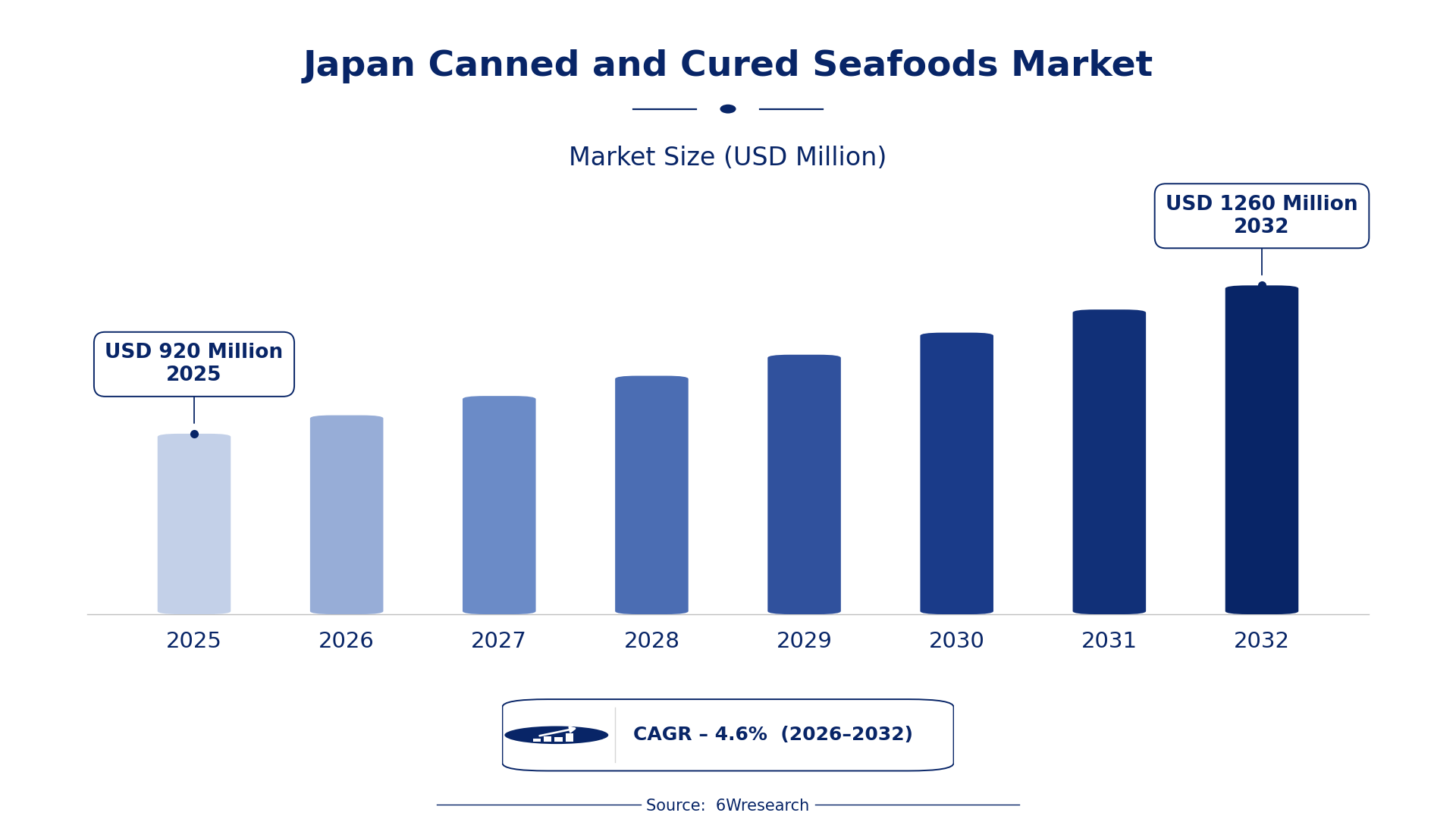
According to 6Wresearch internal database and industry insights, the Japan Canned and Cured Seafoods Market was valued at USD 920 Million in 2025 and is projected to reach USD 1,260 Million by 2032, growing at a CAGR of approximately 4.6% during 2026–2032.
Japan Canned and Cured Seafoods Market Highlights
| Report Metric | Details |
| Report Name | Japan Canned and Cured Seafoods Market (2026-2032) |
| Market Size 2025 | USD 920 Million |
| Market Size 2032 | USD 1,260 Million |
| Absolute Growth 2025–2032 | USD 340 Million |
| CAGR 2026–2032 | 4.6% |
| Peak Annual Growth | 5.3% in 2028 |
| Forecast Period | 2026–2032 |
| Historical Data | 2022–2025 |
| Base Year | 2025 |
| Leading Product, 2025 | Tuna (43% share) |
| Leading Distribution Channel, 2025 | Supermarkets & Hypermarkets (51% share) |
| Fastest-Growing Product | Salmon (6.5% CAGR) |
| Fastest-Growing Distribution Channel | Convenience Store (6.0% CAGR) |
| Growing Sector | Canned seafood |
| Key End Users | Retailers, food service providers, health-conscious consumers |
Japan Canned and Cured Seafoods Market Year-wise Growth Rate and Key Drivers (2022–2032)
This graph illustrates the annual growth rates of the market from 2022 to 2032, highlighting a steady upward trajectory and projected market expansion over the forecast period.
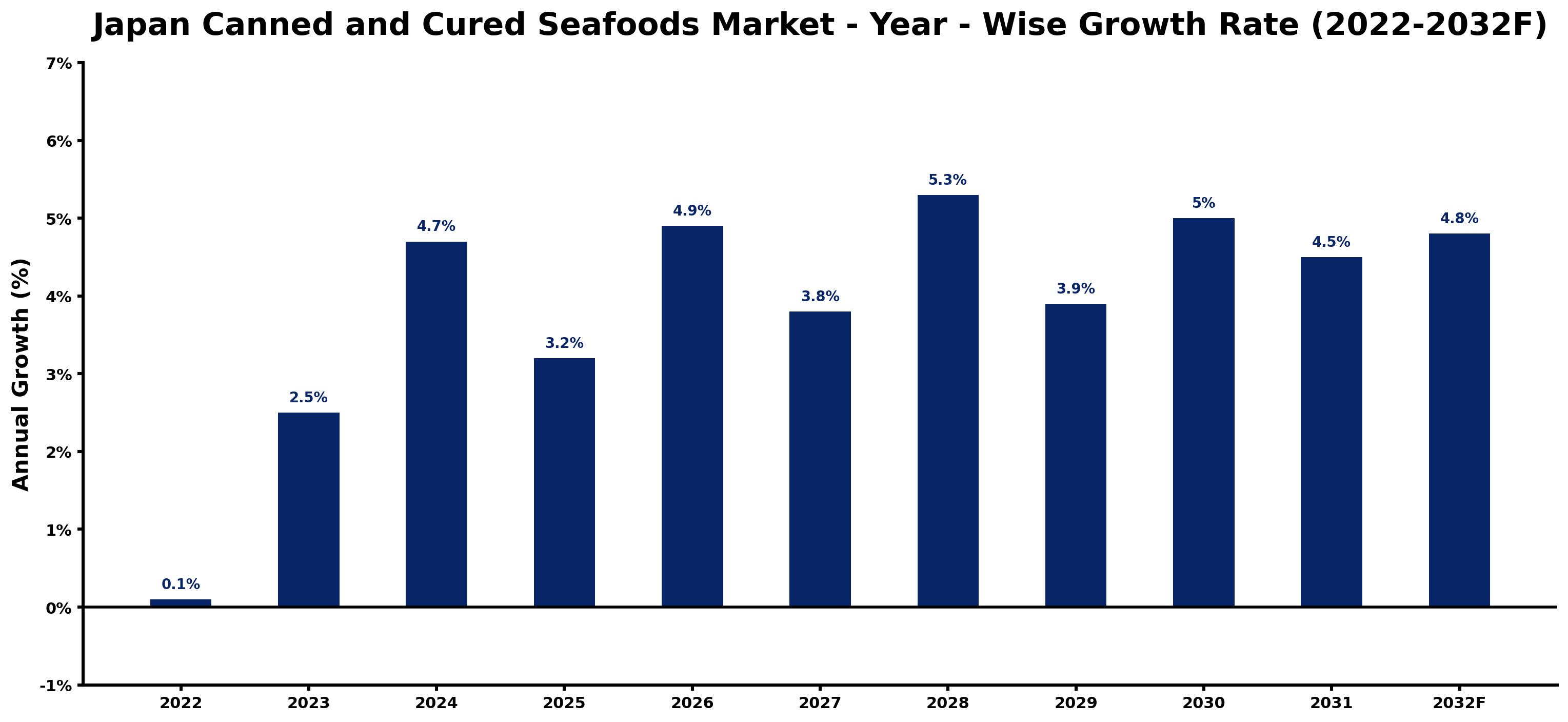
Below, each year's estimated growth is shown next to the factor that most influenced it.
| Year | Estimated Annual Growth (%) | Market Rationale |
| 2022 | 0.1 | The market experienced minimal growth, reflecting stable consumer interest in seafood products. |
| 2023 | 2.5 | Growth accelerated as consumers increasingly sought convenient meal options amid busy lifestyles. |
| 2024 | 4.7 | Demand surged due to heightened interest in sustainable seafood practices and health benefits. |
| 2025 | 3.2 | Growth slowed as market saturation began to impact purchasing frequency among consumers. |
| 2026 | 4.9 | An increase in health-conscious eating habits is expected to spur renewed interest in canned seafood products. |
| 2027 | 3.8 | Growth is projected to slow again as competition intensifies among various food categories. |
| 2028 | 5.3 | The market is expected to peak with strong demand driven by promotional campaigns and new product launches. |
| 2029 | 3.9 | Growth is projected to slow as consumer preferences shift towards fresh seafood options. |
| 2030 | 5.0 | Demand is expected to rebound as new packaging and marketing strategies attract more buyers. |
| 2031 | 4.5 | Growth is projected to slow due to economic factors affecting consumer spending on non-essential goods. |
| 2032 | 4.8 | The market is expected to grow steadily as awareness of health benefits continues to rise. |
Note: Market size estimations and growth projections presented in this report are based on 6Wresearch's proprietary forecasting methodology, utilizing the latest available industry data, government publications, and primary research inputs.
Japan Canned and Cured Seafoods Market Synopsis
Canned and cured seafoods are processed food products made from various fish and seafood, preserved through canning or curing methods. These products serve as convenient meal solutions and ingredients in numerous dishes, appealing to a broad consumer base. The Japan Canned and Cured Seafoods Market is expanding, driven by an ageing population, increased health awareness, and a shift towards sustainable seafood practices. In 2022, total seafood consumption reached approximately 3.5 million tons, with consumers purchasing canned seafood an average of four times per year.
Market Dynamics Impact Analysis (2026–2032)
| Factor | Type | Impact | Primary Segment Affected |
| Aging population driving demand for convenient food options | Driver | High | Tuna |
| Growing health consciousness among consumers | Driver | High | Salmon |
| Rising online sales channel for convenience | Opportunity | Medium | Convenience Store |
| Increased interest in sustainable seafood practices | Opportunity | Medium | Other Seafood |
| Competition from fresh seafood options | Restraint | High | Sardines |
| Economic factors affecting consumer spending | Restraint | Medium | Prawns |
| Rising production costs impacting pricing | Challenge | High | Shrimps |
| Compliance with food safety regulations | Challenge | Medium | Other Fish |
Evaluation of Drivers in Japan Canned and Cured Seafoods Market (2026–2032)
The factors lifting demand, and the evidence behind each, are summarised below.
| Drivers | Primary Segment Affected | Why It Matters (Evidence) |
| Increased consumption of canned tuna due to its versatility | Tuna | In 2022, canned tuna accounted for 43% of total seafood consumption, appealing to busy consumers looking for quick meal solutions. |
| Popularity of salmon in sushi and other dishes | Salmon | The annual seafood consumption per capita in Japan is about 27 kg, with salmon being a preferred choice among consumers. |
| Growth in online sales of canned seafood | Convenience Store | Online sales of canned seafood grew by 15% in 2023, reflecting changing shopping habits among consumers. |
| Rising awareness of health benefits associated with seafood | Other Seafood | The Japan Fisheries Agency promotes sustainable seafood practices, encouraging consumers to incorporate more seafood into their diets. |
| Increased promotional activities by retailers | Sardines | Supermarkets account for over 60% of canned seafood sales, driving demand through targeted marketing campaigns. |
What keeps demand rising is the increasing consumption of canned tuna, which accounted for 43% of total seafood consumption in 2022. The popularity of salmon in sushi and other dishes drives its sales, appealing to health-conscious consumers. The average Japanese consumer purchases canned seafood four times a year, reflecting consistent interest. Canned seafood sales benefit from promotional activities in supermarkets, which represent over 60% of sales. The growing focus on health benefits encourages consumers to include more seafood in their diets, further driving demand.
Evaluation of Restraints in Japan Canned and Cured Seafoods Market
The following restraints limit how fast demand can grow.
| Market Restraint | Primary Segment Affected | Why It Matters (Evidence) |
| Competition from fresh seafood options limits market growth | Sardines | Fresh seafood alternatives are increasingly preferred by consumers, impacting canned seafood sales. |
| Economic factors affecting consumer spending reduce demand | Prawns | Economic downturns can lead to consumers prioritising essential purchases over canned seafood. |
| Rising production costs impact pricing strategies | Shrimps | Higher costs for raw materials and processing can lead to increased prices for consumers. |
| Compliance with food safety regulations adds operational costs | Other Fish | Strict adherence to food safety standards requires investments in quality control measures. |
| Limited awareness of lesser-known canned seafood varieties | Other Seafood | Consumers often prefer familiar products, leaving niche varieties underrepresented in the market. |
Japan Canned and Cured Seafoods Market Challenges
Many producers struggle to find skilled workers, as Japan's ageing population means fewer young people are entering the workforce, delaying production timelines for seafood processors. Intense competition from imported canned seafood pressures local suppliers to lower prices, which can erode profit margins and limit investment in quality improvements. Rising costs of raw materials, driven by global supply chain disruptions, can increase production expenses by up to 15%, forcing producers to pass these costs onto buyers, which may reduce demand. Outdated technology in some processing plants hampers efficiency, resulting in lead times extending by 20%, impacting availability for consumers.
Trends in the Japan Canned and Cured Seafoods Market
These developments are changing demand patterns in the Japan Canned and Cured Seafoods Market.
- Shift towards Sustainable Seafood Practices: The trend towards sustainable seafood practices is gaining momentum, with the Japan Fisheries Agency promoting responsible sourcing. In 2023, approximately 30% of seafood products were certified sustainable, reflecting consumer demand for environmentally friendly options.
- Growing Popularity of Online Sales Channels: Consumers are increasingly turning to online platforms for purchasing canned seafood, with online sales growing by 15% in 2023. This shift is reshaping how consumers access their favourite products, particularly among younger demographics.
- Increased Focus on Health Benefits of Seafood: Health-conscious consumers are prioritising seafood in their diets, leading to a rise in canned seafood consumption. In 2022, 70% of consumers cited health benefits as a key reason for their purchases.
- Expansion of Convenience Store Offerings: Convenience stores are expanding their canned seafood selections to cater to busy consumers. By 2023, these stores accounted for 20% of total canned seafood sales, reflecting changing shopping habits.
Investment Opportunities in the Japan Canned and Cured Seafoods Market
The openings below show where demand in the Japan Canned and Cured Seafoods Market is visible and how suppliers can enter.
- Timing for Sustainable Seafood Investments: With 30% of seafood products certified sustainable in 2023, there is a growing opportunity for investments in sustainable seafood sourcing. Retailers and distributors can capitalise on this trend by partnering with certification bodies.
- Entry into Online Sales Channels: The rise of online sales, which grew by 15% in 2023, presents opportunities for companies to enter the market. Collaborating with e-commerce platforms can increase visibility and reach new consumer segments.
- Supply of Health-Focused Seafood Products: As health awareness rises, there is a demand for health-focused canned seafood products. Targeting health-conscious consumers in urban areas can lead to increased sales and brand loyalty.
- Expansion in Convenience Store Segments: The convenience store segment, accounting for 20% of total canned seafood sales, offers growth potential. Establishing partnerships with local chains can facilitate market entry.
Government Initiatives in the Japan Canned and Cured Seafoods Market
The Food Sanitation Act amendment introduced in 2018 mandates HACCP-based hygiene management for food businesses, ensuring that producers maintain high safety standards. This measure directly impacts canned seafood producers, requiring them to implement rigorous quality control processes and invest in safety protocols.
In 2023, the Ministry of Agriculture, Forestry and Fisheries allocated JPY 1 billion to support sustainable seafood initiatives. This funding helps promote responsible fishing practices and supports the Japan Fisheries Agency in its efforts to improve the seafood industry's sustainability.
Future Insight of the Japan Canned and Cured Seafoods Market
A shift towards sustainable seafood practices will prompt suppliers to adopt eco-friendly processing methods by 2032. The implementation of ISO 22000 standards will enhance food safety protocols, benefiting buyers with higher quality products. Online sales are expected to grow by 15%, allowing consumers greater access to a variety of canned seafood. Increased support from the Ministry of Agriculture, Forestry and Fisheries for processing facilities will enable suppliers to improve operational efficiency and meet rising consumer demand.
Market Segmentation Analysis
Japan Canned and Cured Seafoods Market report covers a detailed analysis of the following market segments:
By Product – Tuna Leads, Salmon Expected to Grow Fastest
According to Ravi Bhandari, Research Head at 6Wresearch, in 2025, Tuna led the product split with a 43% share. Tuna holds the largest share due to its widespread consumption and versatility in various dishes, making it a staple in Japanese cuisine. The average Japanese consumer purchases canned tuna multiple times a year, reflecting its strong presence in households. Salmon is projected to grow fastest, at a CAGR of 6.5% during 2026–2032. Salmon is experiencing rapid growth as it gains popularity in sushi and other cuisines, appealing to both traditional and modern culinary trends. The increasing interest in diverse seafood options has contributed to its rising consumption rates. Suppliers should focus on expanding their tuna offerings while also investing in salmon products to meet changing consumer preferences.
By Distribution Channel – Supermarkets & Hypermarkets Lead, Convenience Store Expected to Grow Fastest
Supermarkets & Hypermarkets accounted for 51% of the market by distribution channel in 2025. Supermarkets and hypermarkets dominate the canned seafood market, accounting for over 60% of sales due to their wide product selection and established logistics. Their ability to cater to a large consumer base, particularly in urban areas, solidifies their leading position in the market. Over 2026–2032, Convenience Store is expected to post the fastest growth, at a CAGR of 6.0%. Convenience stores are rapidly growing as they cater to consumers seeking quick meal solutions, particularly in urban settings where time is limited. The rise in foot traffic in these stores reflects changing consumer habits, driving their sales upward. This trend indicates that suppliers must adapt their distribution strategies to include convenience stores to meet the demand for accessible meal options.
Key Attractiveness of the Report
- 10 Years of Market Numbers
- Historical Data Starting from 2022 to 2025
- Base Year 2025
- Forecast Data until 2032
- Key Performance Indicators Impacting the Market
- Major Upcoming Developments and Projects
Key Highlights of the Report:
- Japan Canned and Cured Seafoods Market Outlook
- Market Size of Japan Canned and Cured Seafoods Market, 2025
- Forecast of Japan Canned and Cured Seafoods Market, 2032
- Historical Data and Forecast of Japan Canned and Cured Seafoods Revenues & Volume for the Period 2022-2032
- Japan Canned and Cured Seafoods Market Trend Evolution
- Japan Canned and Cured Seafoods Market Drivers and Challenges
- Japan Canned and Cured Seafoods Price Trends
- Japan Canned and Cured Seafoods Porter's Five Forces
- Japan Canned and Cured Seafoods Industry Life Cycle
- Historical Data and Forecast of Japan Canned and Cured Seafoods Market Revenues & Volume By Product for the Period 2022-2032
- Historical Data and Forecast of Japan Canned and Cured Seafoods Market Revenues & Volume By Tuna for the Period 2022-2032
- Historical Data and Forecast of Japan Canned and Cured Seafoods Market Revenues & Volume By Salmon for the Period 2022-2032
- Historical Data and Forecast of Japan Canned and Cured Seafoods Market Revenues & Volume By Sardines for the Period 2022-2032
- Historical Data and Forecast of Japan Canned and Cured Seafoods Market Revenues & Volume By Other Fish for the Period 2022-2032
- Historical Data and Forecast of Japan Canned and Cured Seafoods Market Revenues & Volume By Prawns for the Period 2022-2032
- Historical Data and Forecast of Japan Canned and Cured Seafoods Market Revenues & Volume By Shrimps for the Period 2022-2032
- Historical Data and Forecast of Japan Canned and Cured Seafoods Market Revenues & Volume By Other Seafood for the Period 2022-2032
- Historical Data and Forecast of Japan Canned and Cured Seafoods Market Revenues & Volume By Distribution Channel for the Period 2022-2032
- Historical Data and Forecast of Japan Canned and Cured Seafoods Market Revenues & Volume By Supermarkets & Hypermarkets for the Period 2022-2032
- Historical Data and Forecast of Japan Canned and Cured Seafoods Market Revenues & Volume By Convenience Store for the Period 2022-2032
- Historical Data and Forecast of Japan Canned and Cured Seafoods Market Revenues & Volume By Online for the Period 2022-2032
- Japan Canned and Cured Seafoods Import Export Trade Statistics
- Market Opportunity Assessment By Product
- Market Opportunity Assessment By Distribution Channel
- Japan Canned and Cured Seafoods Top Companies Market Share
- Japan Canned and Cured Seafoods Competitive Benchmarking By Technical and Operational Parameters
- Japan Canned and Cured Seafoods Company Profiles
- Japan Canned and Cured Seafoods Key Strategic Recommendations
Market Covered
This report examines the market across the segments below.
By Product
- Tuna
- Salmon
- Sardines
- Other Fish
- Prawns
- Shrimps
- Other Seafood
By Distribution Channel
- Supermarkets & Hypermarkets
- Convenience Store
- Online






































