Japan Chemical Peel Market Size & Growth Rate
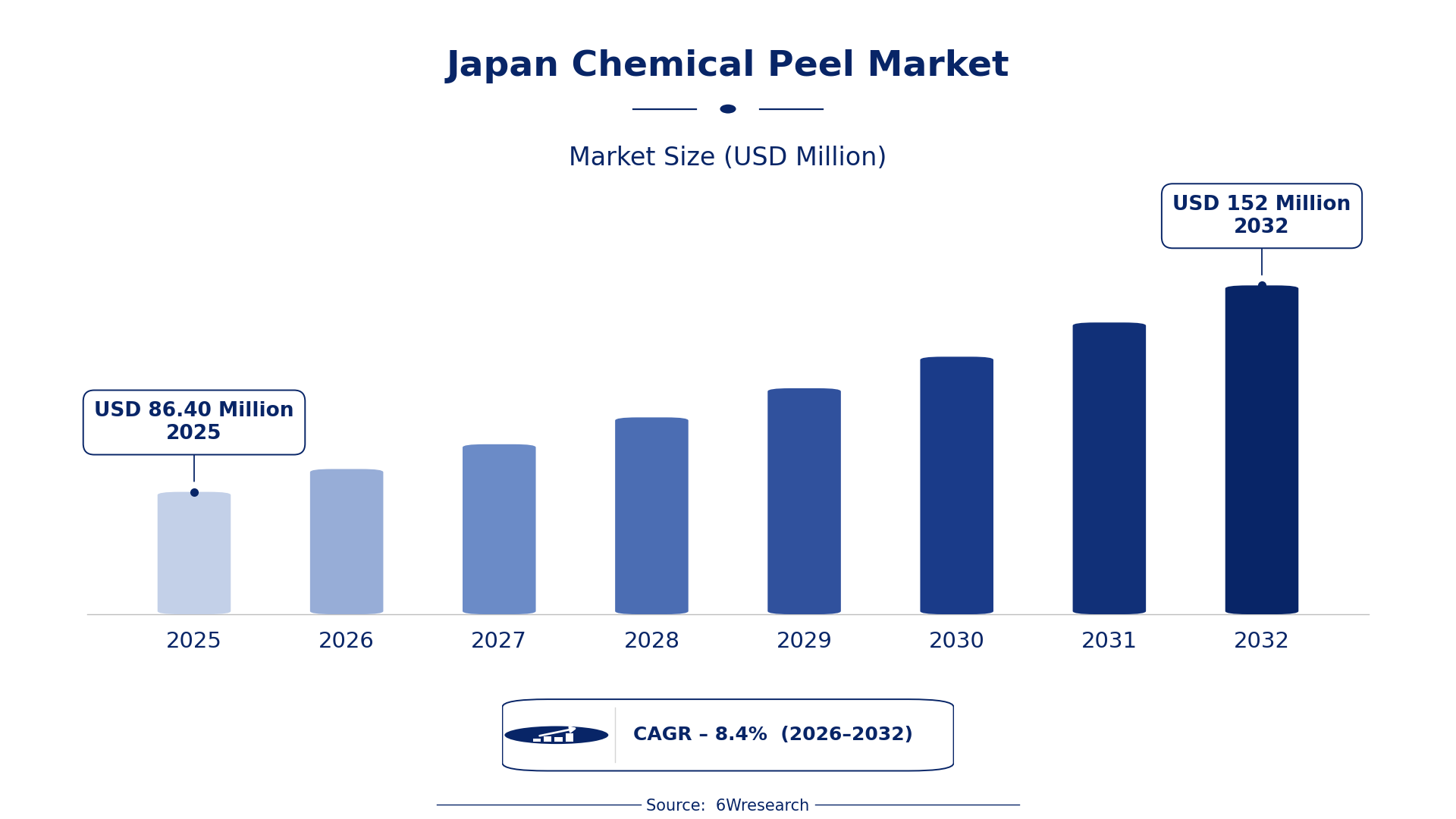
According to 6Wresearch internal database and industry insights, the Japan Chemical Peel Market was valued at USD 86.40 Million in 2025 and is projected to reach USD 152 Million by 2032, growing at a CAGR of approximately 8.4% during 2026–2032.
Japan Chemical Peel Market Highlights
| Report Metric | Details |
| Report Name | Japan Chemical Peel Market (2026-2032) |
| Market Size 2025 | USD 86.40 Million |
| Market Size 2032 | USD 152 Million |
| Absolute Growth 2025–2032 | USD 65.60 Million |
| CAGR 2026–2032 | 8.4% |
| Peak Annual Growth | 10.6% in 2028 |
| Forecast Period | 2026–2032 |
| Historical Data | 2022–2025 |
| Base Year | 2025 |
| Leading Product, 2025 | Lactic Peel (49% share) |
| Leading Application, 2025 | Wrinkles (31% share) |
| Leading End-use, 2025 | Clinics and Spas (46% share) |
| Leading Type, 2025 | Superficial or Light Peel (50% share) |
| Fastest-Growing Product | Vitalize Peel (11.8% CAGR) |
| Fastest-Growing Application | Skin Brightening (11.5% CAGR) |
| Fastest-Growing Type | Medium Peel (11.3% CAGR) |
| Growing Sector | Clinics and Spas |
| Key End Users | Dermatologists, Clinics, Spas, Consumers |
Japan Chemical Peel Market Year-wise Growth Rate and Key Drivers (2022–2032)
This graph illustrates the annual growth rates of the market from 2022 to 2032, highlighting a steady upward trajectory and projected market expansion over the forecast period.
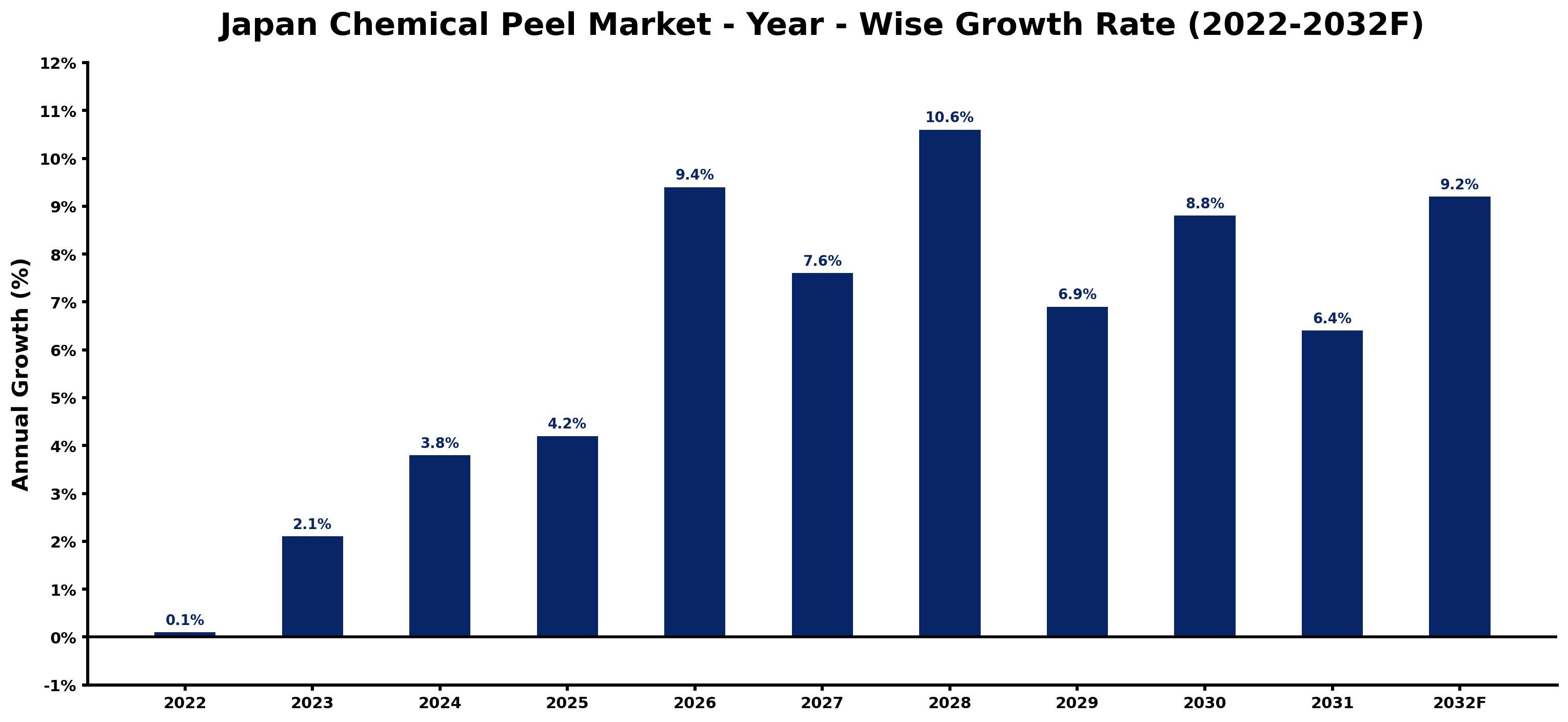
Below, each year's estimated growth is shown next to the factor that most influenced it.
| Year | Estimated Annual Growth (%) | Market Rationale |
| 2022 | 0.1 | The market showed minimal growth due to limited consumer awareness of chemical peel options. |
| 2023 | 2.1 | Demand increased as more clinics began offering chemical peel services to clients. |
| 2024 | 3.8 | The rise in acne treatment products spurred greater interest in chemical peels among consumers. |
| 2025 | 4.2 | Consumer acceptance of chemical peels grew, leading to higher treatment rates in clinics. |
| 2026 | 9.4 | The market is expected to experience growth as new dermatological techniques gain popularity. |
| 2027 | 7.6 | Growth is projected to slow as the market adjusts to increased supply and competition among clinics. |
| 2028 | 10.6 | The introduction of advanced peel techniques is expected to drive demand to new heights. |
| 2029 | 6.9 | Growth is anticipated to slow as market saturation begins to affect new customer acquisition. |
| 2030 | 8.8 | Increased awareness of skin health initiatives will boost consumer interest in treatments. |
| 2031 | 6.4 | Growth is projected to slow as the market stabilises after rapid expansion in previous years. |
| 2032 | 9.2 | The market is expected to grow as new products and techniques continue to emerge. |
Note: Market size estimations and growth projections presented in this report are based on 6Wresearch's proprietary forecasting methodology, utilizing the latest available industry data, government publications, and primary research inputs.
Japan Chemical Peel Market Synopsis
Chemical peels are dermatological treatments that exfoliate the skin, improving texture and appearance. They are primarily used in clinics and spas for treating acne, reducing wrinkles, and addressing hyperpigmentation. According to the Japan Chemical Peel Market, rising consumer demand for skincare treatments, particularly among younger demographics, is driving expansion. The average patient age is around 30-50 years, and the market is projected to grow as awareness of skin health increases, supported by initiatives such as the skin health initiative launched in 2023.
Market Dynamics Impact Analysis (2026–2032)
| Factor | Type | Impact | Primary Segment Affected |
| Rising consumer awareness of skin health and aesthetics | Driver | High | Wrinkles |
| Increased availability of advanced dermatological techniques | Driver | High | Vitalize Peel |
| Growing demand for acne treatment products | Opportunity | High | Salicylic Acid Peel |
| Expansion of dermatological clinics and spas | Opportunity | High | Clinics and Spas |
| Limited consumer knowledge about chemical peel options | Restraint | Medium | Fruit Peel |
| Regulatory compliance costs for clinics offering chemical peels | Restraint | Medium | Trichloroacetic Acid Peel |
| Competition among clinics leading to pricing pressures | Challenge | High | Medium Peel |
| Supply chain disruptions affecting product availability | Challenge | Medium | Deep Peel |
Evaluation of Drivers in Japan Chemical Peel Market (2026–2032)
Below are the drivers that matter most for revenue growth, with supporting evidence.
| Drivers | Primary Segment Affected | Why It Matters (Evidence) |
| Increased consumer interest in skincare treatments | Acne Spots | The demand for acne treatment products has increased by 15% in recent years, prompting more clinics to offer chemical peels. |
| Growth of dermatological clinics in urban areas | Clinics and Spas | Tokyo is a major hub for dermatological clinics, with over 3,000 clinics offering chemical peels. |
| Rising patient satisfaction rates for chemical peels | Wrinkles | The average patient satisfaction rate for chemical peels is reported at 85%, encouraging repeat treatments. |
| Popularity of lactic acid peels for hydration | Lactic Peel | Lactic acid peels are gaining popularity due to their moisturizing properties, attracting more clients seeking hydration. |
| Increasing awareness of skin health initiatives | Skin Brightening | The Tokyo Metropolitan Government supports dermatological health awareness campaigns, boosting interest in skin treatments. |
Purchasing is picking up as consumer interest in skincare treatments rises. The average patient age seeking chemical peels is around 30-50 years, indicating a younger demographic is increasingly prioritising skin health. Clinics in urban areas, particularly in Tokyo, are expanding their offerings, improving access to these treatments. With an average patient satisfaction rate for chemical peels at 85%, repeat visits are encouraged. The demand for acne treatment products has surged by 15%, leading to more clinics offering targeted chemical peels.
Evaluation of Restraints in Japan Chemical Peel Market
The main factors holding the market back are set out below.
| Market Restraint | Primary Segment Affected | Why It Matters (Evidence) |
| Limited consumer knowledge about chemical peel options | Fruit Peel | Many consumers remain unaware of the various chemical peel options available, limiting their willingness to seek treatments. |
| Regulatory compliance costs for clinics offering chemical peels | Trichloroacetic Acid Peel | Clinics face high costs to comply with regulations set by the Ministry of Health, Labour and Welfare, impacting profitability. |
| Availability of trained professionals for advanced techniques | Vitalize Peel | The recent training program for dermatologists in advanced peel techniques may not meet the growing demand. |
| Market saturation in urban areas | Medium Peel | As more clinics enter the market, competition increases, making it harder for new entrants to attract clients. |
| Consumer hesitation regarding treatment side effects | Deep Peel | Potential side effects from deeper peels may deter some consumers from seeking these treatments. |
Japan Chemical Peel Market Challenges
High competition among buyers leads to price sensitivity, forcing clinics to charge between 10,000 and 30,000 JPY for chemical peels that may not always fulfil patient expectations. Rapid technological advancements create a knowledge gap for suppliers, delaying the introduction of new products and techniques, which can result in a 20% increase in treatment wait times for clinics. Supply chain disruptions hinder the availability of essential ingredients like salicylic acid, causing delays in treatments for patients relying on timely access. Stringent regulations from the Ministry of Health, Labour and Welfare increase compliance costs for suppliers, limiting the number of clinics able to offer chemical peels.
Trends in the Japan Chemical Peel Market
These developments are changing demand patterns in the Japan Chemical Peel Market.
- Tokyo's Shift towards Advanced Dermatological Techniques: Tokyo is experiencing a shift towards advanced dermatological techniques, with a new training program for dermatologists launched in 2023. This initiative aims to improve practitioners' skills, ensuring better treatment outcomes and patient satisfaction.
- Increase in Spa Offerings for Chemical Peels: The use of chemical peels in spas has increased by 20% since 2020, reflecting a growing trend towards non-invasive skincare treatments. This shift caters to consumers seeking convenient and relaxing treatment options.
- Growing Popularity of Lactic Acid Peels: Lactic acid peels are gaining traction for their moisturizing properties, appealing to clients looking for gentle yet effective treatments. This trend is evidenced by their rising use in over 3,000 clinics across Japan.
- Emergence of Skin Health Initiatives: In 2023, the Japanese government launched a skin health initiative promoting dermatological treatments. This program aims to raise awareness and encourage more individuals to seek skin health solutions.
Investment Opportunities in the Japan Chemical Peel Market
Investors looking at the Japan Chemical Peel Market should consider the following areas.
- Clinics and Spas Seeking Advanced Treatments: Clinics and spas are increasingly looking for advanced chemical peel options, with the market expected to grow by 8.4% by 2032. Investing in training and product offerings can capture this rising interest.
- Rising Demand for Acne Treatment Solutions: The demand for acne treatment products has surged by 15% recently, creating opportunities for suppliers of chemical peels. Targeting clinics and dermatologists can facilitate market entry.
- Expansion of Dermatological Clinics in Urban Areas: Tokyo is a major hub for dermatological clinics, with over 3,000 clinics offering chemical peels. This presents a significant opportunity for suppliers to provide innovative products.
- Growing Interest in Skin Brightening Treatments: The average patient satisfaction rate for chemical peels is reported at 85%, indicating strong interest in skin brightening solutions. Suppliers can capitalise on this trend by introducing effective products.
Government Initiatives in the Japan Chemical Peel Market
The regulatory framework for chemical peels in Japan is shaped by several laws, including the Chemical Substances Control Law of 1973 and the PRTR Law of 1999. These laws require businesses to evaluate and report on chemical substances used in treatments, ensuring safety and compliance for producers and buyers alike. The Industrial Safety and Health Act of 1972 also mandates employer duties regarding hazardous substances, adding another layer of regulatory oversight.
In 2023, the Japanese government launched a skin health initiative promoting dermatological treatments, with the Ministry of Health, Labour and Welfare overseeing implementation. This initiative aims to raise awareness about skin health, encouraging more consumers to seek chemical peels and related treatments. The program is expected to benefit thousands of clinics nationwide, enhancing access to these services.
Future Insight of the Japan Chemical Peel Market
A new skin health initiative will promote awareness of dermatological treatments, encouraging more buyers to seek chemical peels. By 2032, advanced training programs for dermatologists will enhance treatment quality and increase patient satisfaction rates, projected to rise to 90%. Investment in eco-friendly chemical solutions will align with Japan's decarbonisation goals, fostering innovation in product offerings. As demand for effective treatments grows, suppliers will need to adapt their formulations to meet evolving consumer preferences.
Market Segmentation Analysis
Japan Chemical Peel Market report covers a detailed analysis of the following market segments:
By Product – Lactic Peel Leads, Vitalize Peel Expected to Grow Fastest
According to Sumit Sagar, AM at 6Wresearch, in 2025, Lactic Peel led the product split with a 49% share. Lactic peels hold the largest share due to their widespread use for mild exfoliation and hydration, appealing to a broad demographic. Their effectiveness in addressing common skin concerns makes them a preferred choice in over 3,000 clinics across Japan. Vitalize Peel is set to record the highest CAGR in this split, 11.8% over 2026–2032. The Vitalize peel is experiencing rapid growth as it is specifically sought after for its effectiveness in anti-aging treatments, which are increasingly popular among the 30-50 age group. This trend is further supported by the ongoing skin health initiative launched by the government in 2023. Suppliers should focus on expanding their offerings of lactic and vitalize peels to meet the growing demand in clinics.
By Application – Wrinkles Lead, Skin Brightening Expected to Grow Fastest
Wrinkles accounted for 31% of the market by application in 2025. Wrinkles represent the largest application segment as chemical peels are particularly effective in treating this common concern among patients aged 30-50. The high patient satisfaction rate of 85% further solidifies the preference for these treatments. The quickest growth will come from Skin Brightening, forecast to expand at a CAGR of 11.5% between 2026 and 2032. Skin brightening is the fastest-growing application, driven by a rising demand for brighter, more youthful skin among consumers. This trend aligns with the increasing popularity of chemical peels as part of skincare routines in Japan. Buyers are likely to seek treatments that specifically target skin brightening, prompting suppliers to adapt their product offerings accordingly.
By End-use – Clinics and Spas Lead and Record the Fastest Growth
Clinics and Spas took 46% of end-use revenue in 2025, more than any other category. Clinics and spas hold the largest share in the end-use segment as they serve as the main venues for chemical peel applications, averaging around 100 treatments per month. Their established reputation in providing dermatological services ensures consistent demand for these procedures among clients seeking skin improvement. Its lead should widen, with a projected CAGR of 10.5% during 2026–2032, the highest in this split. Clinics and spas are also the fastest-growing end-use segment, driven by an increasing number of clients seeking advanced skincare solutions. The 2023 training programs for dermatologists will likely improve service quality, further accelerating growth in this area. This trend indicates that suppliers should focus on building strong partnerships with clinics and spas to meet the rising demand for chemical peel treatments.
By Type – Superficial or Light Peel Leads, Medium Peel Expected to Grow Fastest
Superficial or Light Peel held 50% of the Japan Chemical Peel Market by type in 2025. The superficial or light peel leads the type segment due to its widespread application for mild skin issues, making it accessible to a larger patient base. Its popularity is reflected in the high volume of treatments performed monthly across Japan. Over 2026–2032, Medium Peel is expected to post the fastest growth, at a CAGR of 11.3%. Medium peels are growing rapidly as they address moderate skin concerns more effectively, appealing to a demographic seeking more pronounced results. This trend is likely to continue as patient awareness of various peel types increases. Suppliers should consider expanding their range of medium peels to cater to the increasing consumer interest in more effective treatments.
Key Attractiveness of the Report
- 10 Years of Market Numbers
- Historical Data Starting from 2022 to 2025
- Base Year 2025
- Forecast Data until 2032
- Key Performance Indicators Impacting the Market
- Major Upcoming Developments and Projects
Key Highlights of the Report:
- Japan Chemical Peel Market Outlook
- Market Size of Japan Chemical Peel Market, 2025
- Forecast of Japan Chemical Peel Market, 2032
- Historical Data and Forecast of Japan Chemical Peel Revenues & Volume for the Period 2022-2032
- Japan Chemical Peel Market Trend Evolution
- Japan Chemical Peel Market Drivers and Challenges
- Japan Chemical Peel Price Trends
- Japan Chemical Peel Porter's Five Forces
- Japan Chemical Peel Industry Life Cycle
- Historical Data and Forecast of Japan Chemical Peel Market Revenues & Volume By Product for the Period 2022-2032
- Historical Data and Forecast of Japan Chemical Peel Market Revenues & Volume By Lactic Peel for the Period 2022-2032
- Historical Data and Forecast of Japan Chemical Peel Market Revenues & Volume By Fruit Peel for the Period 2022-2032
- Historical Data and Forecast of Japan Chemical Peel Market Revenues & Volume By Salicylic Acid Peel for the Period 2022-2032
- Historical Data and Forecast of Japan Chemical Peel Market Revenues & Volume By Pigment Balancing Peel for the Period 2022-2032
- Historical Data and Forecast of Japan Chemical Peel Market Revenues & Volume By Trichloroacetic Acid Peel for the Period 2022-2032
- Historical Data and Forecast of Japan Chemical Peel Market Revenues & Volume By Vitalize Peel for the Period 2022-2032
- Historical Data and Forecast of Japan Chemical Peel Market Revenues & Volume By Application for the Period 2022-2032
- Historical Data and Forecast of Japan Chemical Peel Market Revenues & Volume By Acne Spots for the Period 2022-2032
- Historical Data and Forecast of Japan Chemical Peel Market Revenues & Volume By Wrinkles for the Period 2022-2032
- Historical Data and Forecast of Japan Chemical Peel Market Revenues & Volume By Fine Lines for the Period 2022-2032
- Historical Data and Forecast of Japan Chemical Peel Market Revenues & Volume By Hyperpigmentation for the Period 2022-2032
- Historical Data and Forecast of Japan Chemical Peel Market Revenues & Volume By Scars for the Period 2022-2032
- Historical Data and Forecast of Japan Chemical Peel Market Revenues & Volume By Dark Circle for the Period 2022-2032
- Historical Data and Forecast of Japan Chemical Peel Market Revenues & Volume By Skin Brightening for the Period 2022-2032
- Historical Data and Forecast of Japan Chemical Peel Market Revenues & Volume By End-use for the Period 2022-2032
- Historical Data and Forecast of Japan Chemical Peel Market Revenues & Volume By Hospitals for the Period 2022-2032
- Historical Data and Forecast of Japan Chemical Peel Market Revenues & Volume By Clinics and Spas for the Period 2022-2032
- Historical Data and Forecast of Japan Chemical Peel Market Revenues & Volume By Consumer for the Period 2022-2032
- Historical Data and Forecast of Japan Chemical Peel Market Revenues & Volume By Type for the Period 2022-2032
- Historical Data and Forecast of Japan Chemical Peel Market Revenues & Volume By Superficial or Light Peel for the Period 2022-2032
- Historical Data and Forecast of Japan Chemical Peel Market Revenues & Volume By Medium Peel for the Period 2022-2032
- Historical Data and Forecast of Japan Chemical Peel Market Revenues & Volume By Deep Peel for the Period 2022-2032
- Japan Chemical Peel Import Export Trade Statistics
- Market Opportunity Assessment By Product
- Market Opportunity Assessment By Application
- Market Opportunity Assessment By End-use
- Market Opportunity Assessment By Type
- Japan Chemical Peel Top Companies Market Share
- Japan Chemical Peel Competitive Benchmarking By Technical and Operational Parameters
- Japan Chemical Peel Company Profiles
- Japan Chemical Peel Key Strategic Recommendations
Market Covered
The study includes the following segmentation.
By Product
- Lactic Peel
- Fruit Peel
- Salicylic Acid Peel
- Pigment Balancing Peel
- Trichloroacetic Acid Peel
- Vitalize Peel
By Application
- Acne Spots
- Wrinkles
- Fine Lines
- Hyperpigmentation
- Scars
- Dark Circle
- Skin Brightening
By End-use
- Hospitals
- Clinics and Spas
- Consumer
By Type
- Superficial or Light Peel
- Medium Peel
- Deep Peel































