Japan Crop Protection Films Market Size & Growth Rate
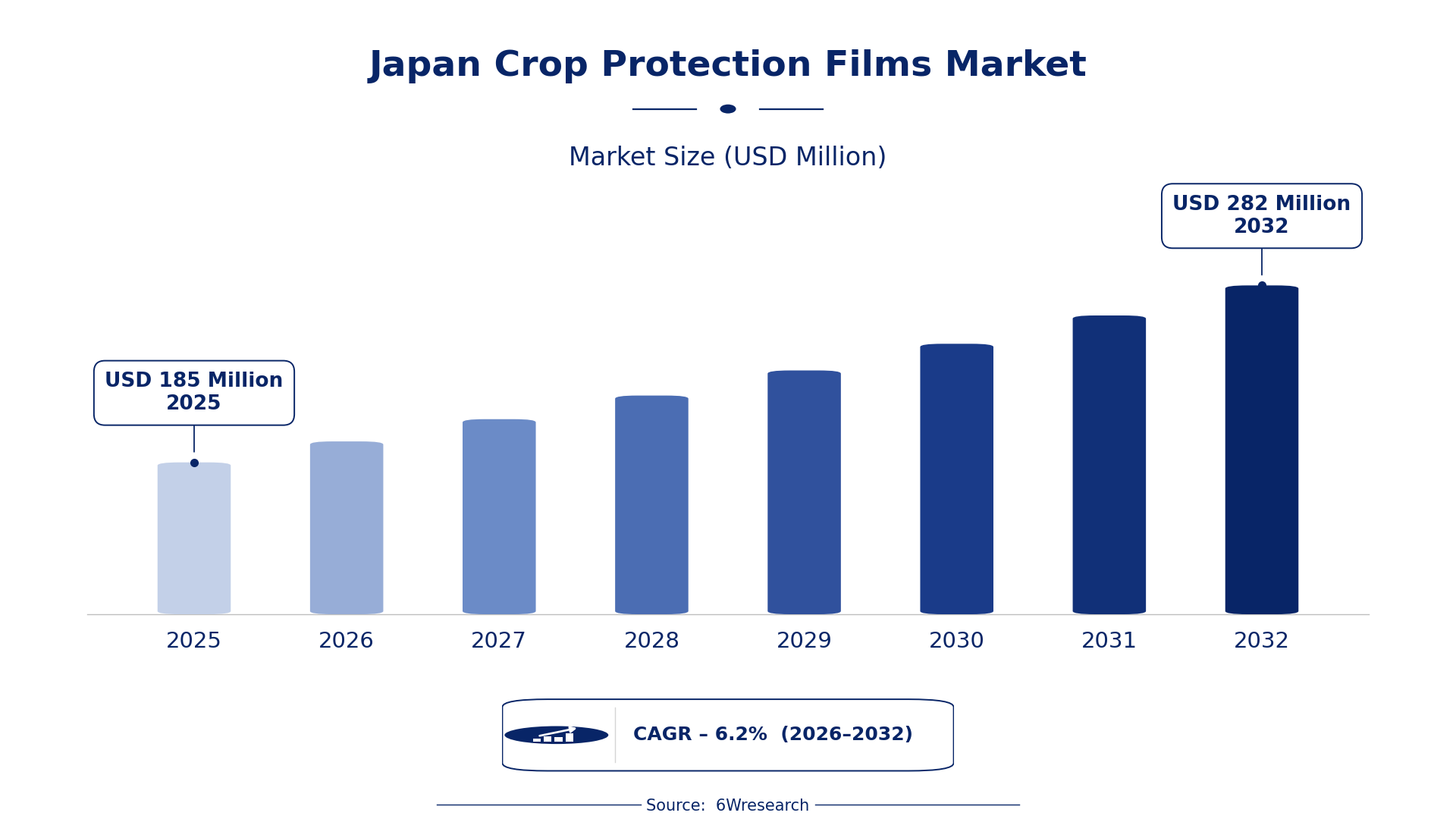
According to 6Wresearch internal database and industry insights, the Japan Crop Protection Films Market was valued at USD 185 Million in 2025 and is projected to reach USD 282 Million by 2032, growing at a CAGR of approximately 6.2% during 2026–2032.
Japan Crop Protection Films Market Highlights
| Report Metric | Details |
| Report Name | Japan Crop Protection Films Market (2026-2032) |
| Market Size 2025 | USD 185 Million |
| Market Size 2032 | USD 282 Million |
| Absolute Growth 2025–2032 | USD 97 Million |
| CAGR 2026–2032 | 6.2% |
| Peak Annual Growth | 7.1% in 2027 |
| Forecast Period | 2026–2032 |
| Historical Data | 2022–2025 |
| Base Year | 2025 |
| Leading Film Type, 2025 | Mulch Films (37% share) |
| Leading Thickness Type, 2025 | Thin (44% share) |
| Leading Application Area, 2025 | Vegetable Farming (38% share) |
| Leading End User, 2025 | Farmers (38% share) |
| Fastest-Growing Film Type | Greenhouse Films (8.8% CAGR) |
| Fastest-Growing Thickness Type | Thick (8.6% CAGR) |
| Fastest-Growing Application Area | Polyhouse (7.3% CAGR) |
| Fastest-Growing End User | Agribusinesses (7.9% CAGR) |
| Growing Sector | Vegetable Farming |
| Key End Users | Farmers, Agribusinesses, Agro Firms |
Japan Crop Protection Films Market Year-wise Growth Rate and Key Drivers (2022–2032)
This graph illustrates the annual growth rates of the market from 2022 to 2032, highlighting a steady upward trajectory and projected market expansion over the forecast period.
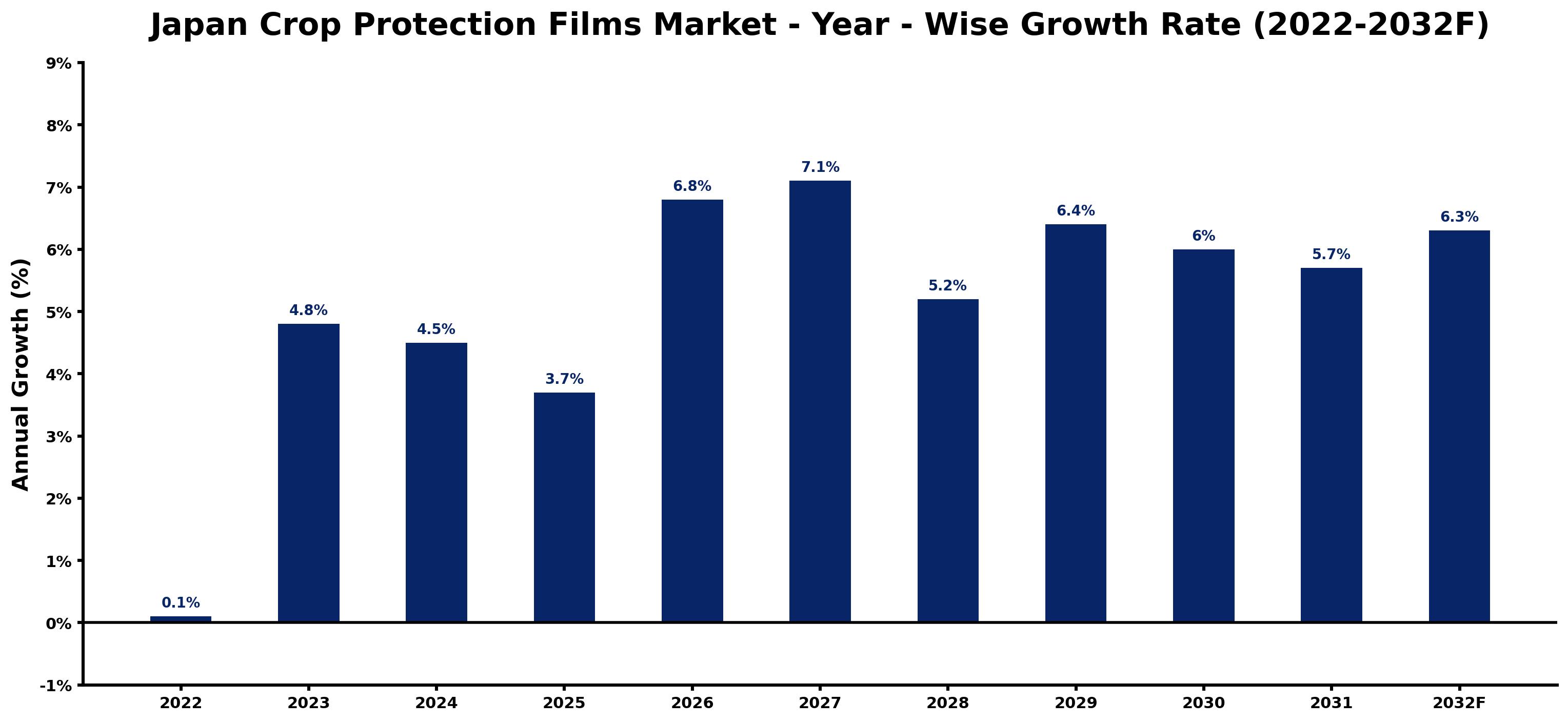
The yearly estimates that follow link every growth rate to its principal driver, so readers can see why the pace changed in each period.
| Year | Estimated Annual Growth (%) | Market Rationale |
| 2022 | 0.1 | The market showed minimal activity with low demand from farmers due to limited adoption of new technologies. |
| 2023 | 4.8 | Growth was driven by increased adoption of crop protection films among vegetable farmers seeking higher yields. |
| 2024 | 4.5 | Growth slowed as farmers adjusted to market conditions and demand stabilised following previous investments. |
| 2025 | 3.7 | Demand continued to grow, albeit at a slower pace, as agribusinesses expanded their operations and offerings. |
| 2026 | 6.8 | Growth is expected to accelerate with rising investments in advanced agricultural technologies and practices. |
| 2027 | 7.1 | The peak growth will be attributed to the successful implementation of new farming practices and technologies. |
| 2028 | 5.2 | Growth is projected to slow as market conditions normalise after peak demand levels are reached. |
| 2029 | 6.4 | Demand will increase again as farmers seek to improve yields with better crop protection solutions. |
| 2030 | 6.0 | Growth is expected to moderate as the market adjusts to previous high levels of demand and competition increases. |
| 2031 | 5.7 | The market will continue to grow, driven by ongoing technological advancements and farmer education. |
| 2032 | 6.3 | Growth is projected to pick up again as farmers increasingly embrace eco-friendly practices and technologies. |
Note: Market size estimations and growth projections presented in this report are based on 6Wresearch's proprietary forecasting methodology, utilizing the latest available industry data, government publications, and primary research inputs.
Japan Crop Protection Films Market Synopsis
Crop protection films are specialised plastic films used in agriculture to shield crops from pests, diseases, and adverse environmental conditions. The Japan Crop Protection Films Market is growing, driven by vegetable farming, which constitutes about 30% of the country's total agricultural production. Increased investments in agricultural technologies and the rising need for improved crop yields are propelling demand for these products, particularly in polyhouse cultivation.
Market Dynamics Impact Analysis (2026–2032)
| Factor | Type | Impact | Primary Segment Affected |
| Growing demand for vegetable farming due to increased food production needs. | Driver | High | Vegetable Farming |
| Rising adoption of greenhouse technology among agribusinesses. | Driver | High | Greenhouse Films |
| The shift towards eco-friendly agricultural practices creates new market opportunities. | Opportunity | High | Mulch Films |
| Increasing investments in polyhouse cultivation facilities open new avenues for growth. | Opportunity | High | Polyhouse |
| Aging farmer population affects labor availability for crop production. | Restraint | Medium | Farmers |
| Limited awareness of advanced crop protection technologies restricts market growth. | Restraint | Medium | Agribusinesses |
| High costs associated with advanced film technologies may deter some buyers. | Challenge | Medium | Farmers |
| Competition from alternative crop protection methods poses a risk to market share. | Challenge | Medium | Agribusinesses |
Evaluation of Drivers in Japan Crop Protection Films Market (2026–2032)
The main growth drivers and the segments they affect most are set out below.
| Drivers | Primary Segment Affected | Why It Matters (Evidence) |
| Increased vegetable production drives demand for mulch films. | Mulch Films | The use of mulch films increases crop yield by 10-30% in vegetable farming, encouraging farmers to invest. |
| Rising greenhouse technology adoption boosts demand for greenhouse films. | Greenhouse Films | The adoption of greenhouse technology has increased by 15% over the last decade, leading to greater film usage. |
| Growing polyhouse area increases the need for protective films. | Polyhouse | The polyhouse area in Japan is estimated to be around 10,000 hectares, driving demand for protective solutions. |
| Sustainable farming practices promote the use of crop protection films. | Silage Films | MAFF promotes sustainable farming practices that include using protective films, enhancing their market appeal. |
| The need for forage preservation increases demand for silage films. | Silage Films | Silage films are essential for preserving over 5 million tons of forage annually, crucial for livestock. |
Several shifts outside the market lift sales. The agricultural sector's focus on increasing vegetable production drives demand for mulch films, which raise crop yield by 10-30%. The polyhouse area in Japan, estimated at around 10,000 hectares, boosts the need for protective films. The adoption of greenhouse technology has risen by 15% over the last decade, further increasing demand.
Evaluation of Restraints in Japan Crop Protection Films Market
The main factors holding the market back are set out below.
| Market Restraint | Primary Segment Affected | Why It Matters (Evidence) |
| Aging farmer population limits labor availability for crop production. | Farmers | The average age of farmers in Japan is around 67 years, affecting labor supply and productivity. |
| Limited awareness of advanced technologies restricts market growth. | Agribusinesses | Many agribusinesses lack knowledge about the benefits of modern crop protection films, hindering adoption. |
| High costs of advanced film technologies deter some buyers. | Farmers | Investing in advanced crop protection films can be financially challenging for small farmers with tight budgets. |
| Competition from alternative pest management methods affects sales. | Agribusinesses | Farmers may opt for cheaper or traditional pest control methods over films, impacting sales volumes. |
| Regulatory compliance can complicate the adoption of new films. | Agro Firms | The agrochemical industry is regulated, adding complexity and costs to the usage of crop protection films. |
Japan Crop Protection Films Market Challenges
In Japan, producers face intense competition in the crop protection films market, leading to price wars that erode profit margins for manufacturers. Buyers encounter challenges due to the high average age of farmers, currently around 67 years, which limits the availability of skilled labour and slows the adoption of modern farming techniques. A lack of technological integration hampers productivity, as many producers hesitate to invest in advanced crop protection technologies, resulting in lower yields. Compliance with JIS standards imposes additional costs on suppliers, with estimates suggesting that adhering to these regulations can increase production expenses by up to 15%.
Trends in the Japan Crop Protection Films Market
The shifts below are changing how Japan Crop Protection Films Market products are bought and supplied.
- Shift in Vegetable Farming Practices: The Tokyo region is experiencing a shift towards advanced vegetable farming practices, with a growing emphasis on using crop protection films. In 2022, vegetable farming accounted for about 30% of Japan's total agricultural production, underscoring the trend's importance.
- Adoption of Eco-Friendly Practices: The initiative aims to promote environmentally friendly methods in agriculture, influencing purchasing decisions.
- Transition to Advanced Greenhouse Technologies: The adoption of advanced greenhouse technologies is becoming more prevalent among Japanese farmers, with a reported 15% increase over the last decade. This shift is driving demand for greenhouse films that create controlled growth environments.
- Increasing Polyhouse Cultivation: There is a notable increase in polyhouse cultivation, with the area estimated at around 10,000 hectares. This trend encourages farmers to invest in crop protection films to maximise yield and protect crops.
Investment Opportunities in the Japan Crop Protection Films Market
Several openings in the Japan Crop Protection Films Market merit attention from investors.
- Current Demand for Sustainable Solutions: With the government's focus on sustainable farming, there is a rising need for eco-friendly crop protection films. In 2023, the government allocated substantial funds for promoting agricultural technologies, creating opportunities for suppliers to enter the market.
- Investment in Polyhouse Technology: The increasing polyhouse area presents a significant opportunity, with an estimated 10,000 hectares in Japan. Suppliers can enter this market by partnering with agribusinesses to provide advanced films tailored to specific needs.
- Expansion of Vegetable Farming: Vegetable farming, accounting for about 30% of agricultural production, continues to grow, creating demand for protective films. Suppliers can target this sector by offering tailored solutions to farmers looking to enhance their yields.
- Technological Advancements in Agriculture: The adoption of advanced agricultural technologies is on the rise, with MAFF's Smart Agriculture initiative launched in 2023. This creates opportunities for suppliers to provide crop protection films that meet evolving market needs.
Government Initiatives in the Japan Crop Protection Films Market
The Plastic Resource Circulation Act promotes the reduction, reuse, and recycling of plastics, affecting producers of crop protection films. This law encourages manufacturers to adopt sustainable practices, ensuring compliance with environmental standards and increasing market acceptance. In 2023, the government allocated substantial funds to support agricultural technologies, benefiting buyers of crop protection films.
The Ministry of Agriculture, Forestry and Fisheries (MAFF) oversees the implementation of agricultural policies, including funding for sustainable farming practices. In 2023, MAFF allocated significant funds to support innovative technologies, benefiting buyers of crop protection films.
Future Insight of the Japan Crop Protection Films Market
By 2032, suppliers will adapt to increased demand for advanced crop protection technologies, driven by the 'Smart Agriculture' initiative aimed at improving productivity. The adoption of greenhouse technology is projected to rise, leading to enhanced sustainability and higher crop yields. Government funding for agricultural technologies will support the development of high-quality films. With the average yield of tomatoes potentially reaching 70 tons per hectare with proper film use, buyers will benefit from improved crop outputs and profitability.
Market Segmentation Analysis
Japan Crop Protection Films Market report covers a detailed analysis of the following market segments:
By Film Type – Mulch Films Lead, Greenhouse Films Expected to Grow Fastest
According to Saurav Kr Singh, Senior Research Analyst at 6Wresearch, in 2025, Mulch Films led the film type split with a 37% share. Mulch films hold the largest market share as they are extensively utilised by farmers for soil temperature regulation and weed control, particularly in the Tokyo region where vegetable farming is prevalent. Their effectiveness in enhancing crop yield by 10-30% makes them the preferred choice among growers. Greenhouse Films are set to record the highest CAGR in this split, 8.8% over 2026–2032. Greenhouse films are experiencing rapid growth as agribusinesses increasingly adopt advanced crop protection technologies, with a notable 15% rise in greenhouse technology adoption over the last decade. This trend towards controlled growth environments will likely expand the demand for greenhouse films even further. Suppliers should prioritise the availability of greenhouse films to meet the rising demand from agribusinesses.
By Thickness Type – Thin Leads, Thick Expected to Grow Fastest
The largest thickness type category in 2025 was Thin, at 44% of revenue. Thin films dominate the market as they are commonly used in less demanding applications, providing cost-effective solutions for farmers. Their lightweight nature makes them suitable for various agricultural practices without compromising on functionality. The quickest growth will come from Thick, forecast to expand at a CAGR of 8.6% between 2026 and 2032. Thick films are witnessing the fastest growth due to their durability for long-term use, appealing to farmers who seek reliable solutions that withstand environmental challenges. The increasing focus on sustainability in agriculture is propelling this trend. Buyers may find value in investing in thicker films for enhanced durability and performance in their agricultural activities.
By Application Area – Vegetable Farming Leads, Polyhouse Expected to Grow Fastest
With 38% of application area revenue in 2025, Vegetable Farming was the largest category. Vegetable farming is the leading application area for crop protection films, accounting for approximately 30% of Japan's total agricultural production. The high demand for these films in vegetable cultivation underscores their essential role in improving crop yields and protecting produce. Polyhouse is projected to grow fastest, at a CAGR of 7.3% during 2026–2032. Polyhouse applications are growing rapidly as more farmers adopt protected cultivation methods, with the polyhouse area estimated at around 10,000 hectares. This trend indicates a broader movement towards optimising agricultural practices for enhanced productivity. Suppliers should focus on polyhouse solutions to capitalise on the increasing interest in protected cultivation among farmers.
By End User – Farmers Lead, Agribusinesses Expected to Grow Fastest
Farmers took 38% of end user revenue in 2025, more than any other category. Farmers are the primary end users of crop protection films, making up a significant portion of the 1.4 million farmers in Japan who rely on these products for effective crop management. Their direct engagement in agricultural activities drives the demand for these films. Over 2026–2032, Agribusinesses are expected to post the fastest growth, at a CAGR of 7.9%. Agribusinesses are emerging as the fastest-growing end user segment, as they increasingly adopt advanced technologies to enhance productivity within agricultural supply chains. This shift reflects a broader trend towards collaboration in the agricultural sector. Suppliers should consider developing tailored solutions for agribusinesses to address their changing needs in crop protection.
Key Attractiveness of the Report
- 10 Years of Market Numbers
- Historical Data Starting from 2022 to 2025
- Base Year 2025
- Forecast Data until 2032
- Key Performance Indicators Impacting the Market
- Major Upcoming Developments and Projects
Key Highlights of the Report:
- Japan Crop Protection Films Market Outlook
- Market Size of Japan Crop Protection Films Market, 2025
- Forecast of Japan Crop Protection Films Market, 2032
- Historical Data and Forecast of Japan Crop Protection Films Revenues & Volume for the Period 2022-2032F
- Japan Crop Protection Films Market Trend Evolution
- Japan Crop Protection Films Market Drivers and Challenges
- Japan Crop Protection Films Price Trends
- Japan Crop Protection Films Porter's Five Forces
- Japan Crop Protection Films Industry Life Cycle
- Historical Data and Forecast of Japan Crop Protection Films Market Revenues & Volume By Film Type for the Period 2022-2032F
- Historical Data and Forecast of Japan Crop Protection Films Market Revenues & Volume By Mulch Films for the Period 2022-2032F
- Historical Data and Forecast of Japan Crop Protection Films Market Revenues & Volume By Greenhouse Films for the Period 2022-2032F
- Historical Data and Forecast of Japan Crop Protection Films Market Revenues & Volume By Silage Films for the Period 2022-2032F
- Historical Data and Forecast of Japan Crop Protection Films Market Revenues & Volume By Fumigation Films for the Period 2022-2032F
- Historical Data and Forecast of Japan Crop Protection Films Market Revenues & Volume By Thickness Type for the Period 2022-2032F
- Historical Data and Forecast of Japan Crop Protection Films Market Revenues & Volume By Thin for the Period 2022-2032F
- Historical Data and Forecast of Japan Crop Protection Films Market Revenues & Volume By Thick for the Period 2022-2032F
- Historical Data and Forecast of Japan Crop Protection Films Market Revenues & Volume By Medium for the Period 2022-2032F
- Historical Data and Forecast of Japan Crop Protection Films Market Revenues & Volume By Barrier Layer for the Period 2022-2032F
- Historical Data and Forecast of Japan Crop Protection Films Market Revenues & Volume By Application Area for the Period 2022-2032F
- Historical Data and Forecast of Japan Crop Protection Films Market Revenues & Volume By Vegetable Farming for the Period 2022-2032F
- Historical Data and Forecast of Japan Crop Protection Films Market Revenues & Volume By Polyhouse for the Period 2022-2032F
- Historical Data and Forecast of Japan Crop Protection Films Market Revenues & Volume By Forage Storage for the Period 2022-2032F
- Historical Data and Forecast of Japan Crop Protection Films Market Revenues & Volume By Soil Disinfection for the Period 2022-2032F
- Historical Data and Forecast of Japan Crop Protection Films Market Revenues & Volume By End User for the Period 2022-2032F
- Historical Data and Forecast of Japan Crop Protection Films Market Revenues & Volume By Farmers for the Period 2022-2032F
- Historical Data and Forecast of Japan Crop Protection Films Market Revenues & Volume By Agribusinesses for the Period 2022-2032F
- Historical Data and Forecast of Japan Crop Protection Films Market Revenues & Volume By Livestock Farms for the Period 2022-2032F
- Historical Data and Forecast of Japan Crop Protection Films Market Revenues & Volume By Agro Firms for the Period 2022-2032F
- Japan Crop Protection Films Import Export Trade Statistics
- Market Opportunity Assessment By Film Type
- Market Opportunity Assessment By Thickness Type
- Market Opportunity Assessment By Application Area
- Market Opportunity Assessment By End User
- Japan Crop Protection Films Top Companies Market Share
- Japan Crop Protection Films Competitive Benchmarking By Technical and Operational Parameters
- Japan Crop Protection Films Company Profiles
- Japan Crop Protection Films Key Strategic Recommendations
Market Covered
This report examines the market across the segments below.
By Film Type
- Mulch Films
- Greenhouse Films
- Silage Films
- Fumigation Films
By Thickness Type
- Thin
- Thick
- Medium
- Barrier Layer
By Application Area
- Vegetable Farming
- Polyhouse
- Forage Storage
- Soil Disinfection
By End User
- Farmers
- Agribusinesses
- Livestock Farms
- Agro Firms






































