Japan Culinary Seeds Market Size & Growth Rate
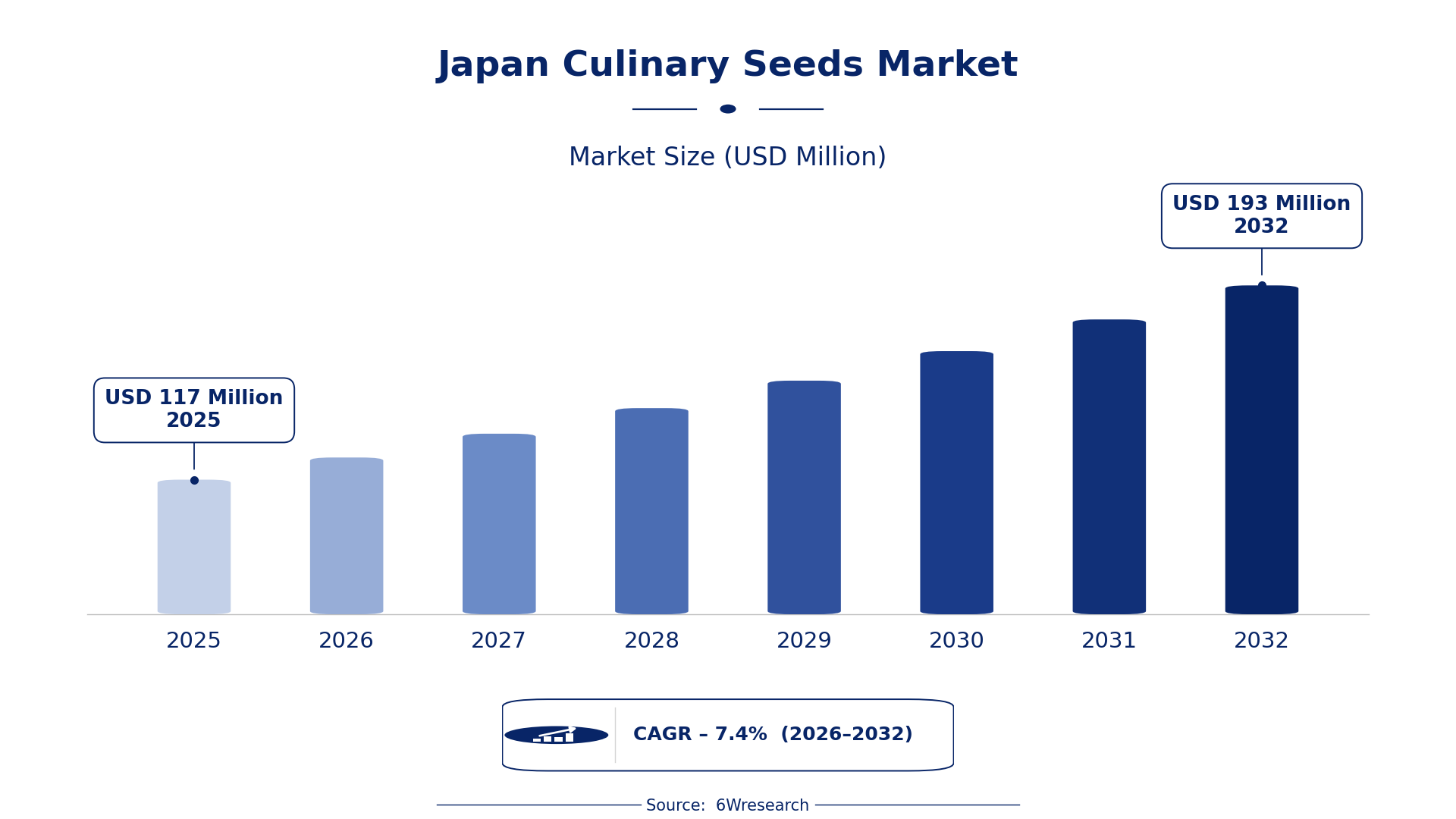
According to 6Wresearch internal database and industry insights, the Japan Culinary Seeds Market was valued at USD 117 Million in 2025 and is projected to reach USD 193 Million by 2032, growing at a CAGR of approximately 7.4% during 2026–2032.
Japan Culinary Seeds Market Highlights
| Report Metric | Details |
| Report Name | Japan Culinary Seeds Market (2026-2032) |
| Market Size 2025 | USD 117 Million |
| Market Size 2032 | USD 193 Million |
| Absolute Growth 2025–2032 | USD 76 Million |
| CAGR 2026–2032 | 7.4% |
| Peak Annual Growth | 8.5% in 2026 |
| Forecast Period | 2026–2032 |
| Historical Data | 2022–2025 |
| Base Year | 2025 |
| Leading Seed Type, 2025 | Fennel Seeds (50% share) |
| Leading Processing Type, 2025 | Roasted (40% share) |
| Leading Use Case, 2025 | Seasoning (38% share) |
| Leading End User, 2025 | Restaurants (40% share) |
| Fastest-Growing Seed Type | Coriander Seeds (10.1% CAGR) |
| Fastest-Growing Processing Type | Whole (10.6% CAGR) |
| Fastest-Growing Use Case | Pickling (9.6% CAGR) |
| Fastest-Growing End User | Home Consumers (9.3% CAGR) |
| Growing Sector | Restaurants |
| Key End Users | Restaurants, Food Processors, Home Consumers |
Japan Culinary Seeds Market Year-wise Growth Rate and Key Drivers (2022–2032)
This graph illustrates the annual growth rates of the market from 2022 to 2032, highlighting a steady upward trajectory and projected market expansion over the forecast period.
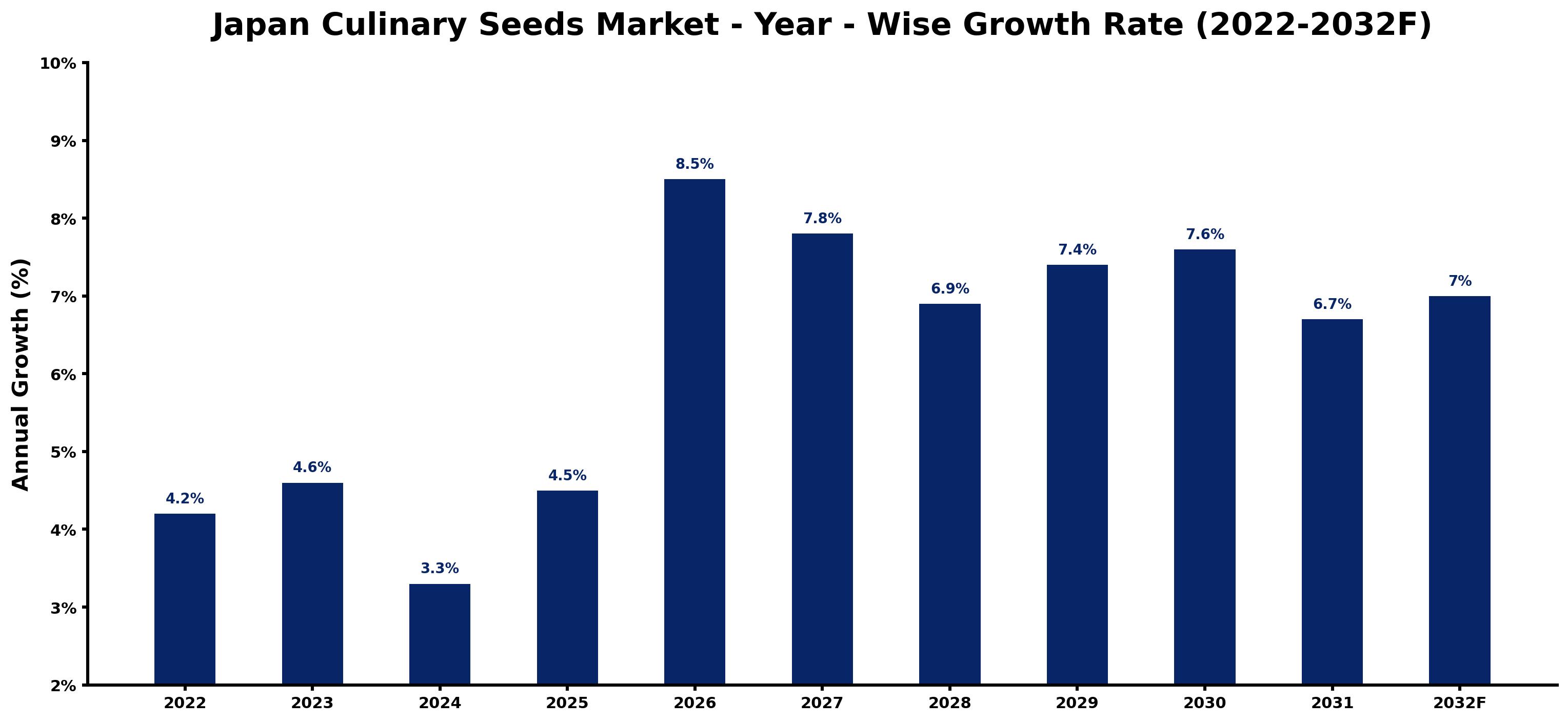
The yearly estimates that follow link every growth rate to its principal driver, so readers can see why the pace changed in each period.
| Year | Estimated Annual Growth (%) | Market Rationale |
| 2022 | 4.2 | The market experienced steady growth, reflecting stable culinary seed usage across various sectors. |
| 2023 | 4.6 | Demand increased as restaurants reported a rise in culinary seed applications in their dishes. |
| 2024 | 3.3 | Growth slowed as consumers faced rising prices, impacting purchasing decisions for culinary seeds. |
| 2025 | 4.5 | A resurgence in demand occurred as food processors expanded their use of culinary seeds in products. |
| 2026 | 8.5 | The market is expected to peak with heightened interest in culinary seeds driven by health trends and culinary innovation. |
| 2027 | 7.8 | Growth is projected to slow as supply chain issues affect the availability of certain culinary seed varieties. |
| 2028 | 6.9 | Demand is expected to remain strong, but growth rates will moderate due to market saturation in some segments. |
| 2029 | 7.4 | Increased consumer awareness of culinary seeds' health benefits will lead to renewed interest and purchases. |
| 2030 | 7.6 | Demand is projected to rise as culinary seeds become more prominent in home cooking and restaurant menus. |
| 2031 | 6.7 | Growth is expected to slow as competition intensifies among suppliers, impacting pricing strategies. |
| 2032 | 7.0 | The market is projected to grow as new culinary trends emerge, driving further interest in diverse seed varieties. |
Note: Market size estimations and growth projections presented in this report are based on 6Wresearch's proprietary forecasting methodology, utilizing the latest available industry data, government publications, and primary research inputs.
Japan Culinary Seeds Market Synopsis
Culinary seeds serve as important flavouring agents harvested from various plants and processed through methods like roasting or grinding. The Japan Culinary Seeds Market is growing, driven by domestic users, food processors, and restaurants. Rising health awareness, increased culinary experimentation, and a notable 20% rise in culinary seed usage in restaurants indicate a shift towards more flavourful and health-conscious dining options, contributing to market growth.
Market Dynamics Impact Analysis (2026–2032)
| Factor | Type | Impact | Primary Segment Affected |
| Rising health consciousness among consumers drives demand for culinary seeds as natural flavour enhancers. | Driver | High | Coriander Seeds |
| The growing trend of home cooking boosts demand for culinary seeds among domestic users. | Driver | High | Fennel Seeds |
| The organic culinary seeds segment is expanding due to increasing consumer interest in health and wellness. | Opportunity | High | Organic |
| Restaurants are seeking diverse culinary seeds to enhance their menus, creating new purchasing opportunities. | Opportunity | High | Seasoning |
| Supply chain disruptions can limit the availability of certain culinary seeds, affecting market growth. | Restraint | High | Cumin Seeds |
| Price fluctuations for raw seeds can impact profitability for food processors and restaurants. | Restraint | Medium | Grounded |
| Intense competition among suppliers may lead to price wars, affecting margins for producers. | Challenge | High | Roasted |
| Limited awareness of specialty culinary seeds can hinder market expansion in niche segments. | Challenge | Medium | Nigella Seeds |
Evaluation of Drivers in Japan Culinary Seeds Market (2026–2032)
Key forces behind demand, with the segment each one moves most, are listed below.
| Drivers | Primary Segment Affected | Why It Matters (Evidence) |
| Increased health awareness encourages consumers to seek natural flavouring options, boosting culinary seed sales. | Coriander Seeds | Coriander seeds are commonly used in spice mixes for traditional dishes, leading to higher demand. |
| The rise in home cooking trends drives demand for culinary seeds as consumers experiment with flavours. | Fennel Seeds | Fennel seeds are popular in Japanese cuisine, especially in pickling, increasing their market presence. |
| Food processors are incorporating grounded culinary seeds into products, improving flavour profiles and nutrition. | Grounded | Food processors in Japan are increasingly using grounded culinary seeds in products, reflecting their growing importance. |
| Restaurants are expanding their menus to include diverse culinary seeds, responding to consumer preferences. | Seasoning | Restaurants in Japan report a 20% increase in the use of culinary seeds in dishes, driving demand. |
| The organic culinary seeds market is expanding as health trends influence consumer choices. | Organic | The organic culinary seeds market is growing due to health trends, appealing to health-conscious consumers. |
Buyers are adding capacity as health awareness rises, which increases demand for culinary seeds. In Japan, the average household spends approximately 5,000 yen annually on these seeds, reflecting their importance in daily cooking. Restaurants are responding to this trend, reporting a 20% increase in culinary seed usage, particularly in seasoning. Food processors are incorporating grounded culinary seeds into products, improving flavour and nutrition. The organic culinary seeds market is expanding, driven by health trends that encourage consumers to seek natural flavouring options, with these seeds becoming staples in many households.
Evaluation of Restraints in Japan Culinary Seeds Market
The table below lists the restraints and the evidence behind each.
| Market Restraint | Primary Segment Affected | Why It Matters (Evidence) |
| Supply chain disruptions can lead to delays in seed availability, affecting production schedules. | Cumin Seeds | Cumin seeds are essential in many Japanese recipes, particularly in curry, making supply reliability important. |
| Price fluctuations in raw seeds can impact the operational costs for food processors and restaurants. | Grounded | Grounded culinary seeds are common in spice mixes and seasonings, where price stability is vital for profitability. |
| Limited awareness of specialty culinary seeds can restrict market growth in niche segments. | Nigella Seeds | Nigella seeds are gaining popularity in specialty foods in Japan, but awareness remains low. |
| Regulatory challenges can complicate the introduction of new culinary seed varieties into the market. | Organic | The organic culinary seeds market is growing due to health trends, but compliance with standards can be complex. |
| Competition among suppliers may lead to aggressive pricing strategies, affecting profit margins. | Roasted | Roasted culinary seeds are popular for flavour in culinary applications, but price wars can erode profitability. |
Japan Culinary Seeds Market Challenges
Limited skilled labour in culinary seed processing restricts suppliers' ability to meet rising demand. Many suppliers struggle to find qualified workers, resulting in delays that impact food processors' production schedules. Intense competition among suppliers drives down prices, which reduces profit margins and affects quality for buyers. Underutilisation of modern processing technology leads to inefficiencies, extending lead times for restaurants. Buyers face increased costs, with the average household spending approximately 5,000 yen annually on culinary seeds, influencing their purchasing decisions.
Trends in the Japan Culinary Seeds Market
These developments are changing demand patterns in the Japan Culinary Seeds Market.
- Shift from Conventional to Organic Culinary Seeds: The organic culinary seeds market began gaining traction in 2023 as health-conscious consumers sought natural options. In 2023, Japan introduced new standards for organic culinary seeds under JAS, resulting in increased offerings in this segment.
- Transition from Whole to Grounded Seeds: A growing preference for ground culinary seeds is emerging as consumers seek convenience in cooking. In 2023, food processors reported a rise in the use of ground seeds in their products, improving flavour profiles.
- Emergence of Specialty Culinary Seeds: Specialty culinary seeds, such as Nigella seeds, are becoming more popular among consumers. In 2023, restaurants began incorporating these seeds into their dishes, reflecting a 20% increase in culinary seed usage.
- Prioritisation of Local Sourcing: Local sourcing of culinary seeds has become a priority for many restaurants in Japan. In 2023, Tokyo emerged as a major hub for culinary seed distribution, promoting regional varieties.
Investment Opportunities in the Japan Culinary Seeds Market
The openings below show where demand in the Japan Culinary Seeds Market is visible and how suppliers can enter.
- Growing Demand for Organic Culinary Seeds: With the organic culinary seeds market expanding, there is a gap for suppliers to fill. Restaurants and food processors are increasingly seeking organic options to meet consumer demand for health-conscious ingredients, with a notable rise in organic offerings.
- Increase in Home Cooking: The rise in home cooking presents an opportunity for suppliers to target domestic users. Home consumers are looking for diverse culinary seeds to enrich their cooking experiences, creating a need for local partnerships and distribution channels.
- Expansion of Culinary Seed Offerings: As restaurants seek to diversify their menus, there is a demand for unique culinary seed varieties. Suppliers can enter the market by collaborating with local distributors to provide these specialty seeds, meeting the evolving preferences of consumers.
- Investment in Culinary Seed Processing: Investment in processing facilities for culinary seeds is timely, given the increasing demand. Food processors are looking for local partners to improve their product offerings with ground and roasted seeds, enhancing their market competitiveness.
Government Initiatives in the Japan Culinary Seeds Market
The Food Recycling Law, enacted in 2000, mandates food businesses to minimise waste and recycle it into feed, fertiliser, and energy, impacting culinary seed producers by promoting sustainable practices. The Food Sanitation Act amendment in 2018 introduced a system to ensure safety in food packaging, enhancing consumer trust in culinary seed distribution.
In 2023, the Japan Food Safety Commission funded the implementation of new standards for organic culinary seeds under JAS, aiming to build consumer confidence. The Ministry of Health, Labour and Welfare oversees these regulations, ensuring compliance among producers and protecting buyers.
Future Insight of the Japan Culinary Seeds Market
New distribution centres in Tokyo will improve logistics by 2032, ensuring better access to culinary seeds for buyers and suppliers. The implementation of advanced processing techniques will enhance product quality, benefiting food processors significantly. As health trends continue to influence consumer choices, demand for organic culinary seeds will increase, prompting suppliers to expand their product ranges. By 2032, restaurants are expected to incorporate culinary seeds more frequently in their dishes, aligning with changing culinary preferences.
Market Segmentation Analysis
Japan Culinary Seeds Market report covers a detailed analysis of the following market segments:
By Seed Type – Fennel Seeds Lead, Coriander Seeds Expected to Grow Fastest
According to Saurav Kr Singh, Senior Research Analyst at 6Wresearch, Fennel Seeds held 50% of the Japan Culinary Seeds Market by seed type in 2025. Fennel seeds hold the largest market share due to their essential role in traditional Japanese dishes, particularly in pickling. Their widespread use in restaurants across Japan reinforces their importance in culinary applications. Coriander Seeds are projected to grow fastest, at a CAGR of 10.1% during 2026–2032. Coriander seeds are experiencing rapid growth as they are increasingly incorporated into spice mixes for traditional dishes, with restaurants noting a 20% rise in culinary seed usage. This trend indicates a shift towards more intricate flavour profiles in Japanese cuisine. Suppliers should focus on ensuring a steady supply of coriander seeds to meet the growing demand from culinary professionals.
By Processing Type – Roasted Leads, Whole Expected to Grow Fastest
Roasted took 40% of processing type revenue in 2025, more than any other category. Roasted culinary seeds dominate the market as they significantly enhance flavour in various culinary applications, making them vital in both home and professional kitchens. Their popularity arises from their ability to elevate the taste of numerous dishes across different cuisines. Over 2026–2032, Whole is expected to post the fastest growth, at a CAGR of 10.6%. Whole culinary seeds are witnessing notable growth as they are preferred for cooking and baking, aligning with health trends that favour less processed ingredients. This shift points to a consumer preference for more natural culinary options in meal preparation. Suppliers may need to diversify their offerings to include a broader range of whole seeds to cater to changing consumer preferences.
By Use Case – Seasoning Leads, Pickling Expected to Grow Fastest
Seasoning accounted for 38% of the market by use case in 2025. Seasoning is the predominant use case for culinary seeds, extensively utilised in both home and restaurant cooking to enhance flavour. This high demand highlights the essential role of seasoning in Japanese culinary practices and everyday cooking. Pickling is set to record the highest CAGR in this split, 9.6% over 2026–2032. Pickling is the fastest-growing use case, driven by its vital role in preserving vegetables and enhancing the flavours of traditional dishes. The increasing interest in pickling reflects a broader trend towards homemade and artisanal food preparation methods. Buyers should consider increasing their procurement of pickling seeds to capitalise on this expanding market opportunity.
By End User – Restaurants Lead, Home Consumers Expected to Grow Fastest
With 40% of end user revenue in 2025, Restaurants was the largest category. Restaurants are the leading consumers of culinary seeds, using them extensively to create appealing dishes that attract patrons. Their significant role in the culinary sector ensures a steady demand for various seed types across the industry. The quickest growth will come from Home Consumers, forecast to expand at a CAGR of 9.3% between 2026 and 2032. Home consumers are rapidly increasing their culinary seed usage, reflecting a shift towards more home cooking and flavour experimentation. This trend indicates a growing market for culinary seeds among everyday cooks and food enthusiasts. Suppliers should implement targeted marketing strategies to engage home consumers and promote the use of culinary seeds in their cooking.
Key Attractiveness of the Report
- 10 Years of Market Numbers
- Historical Data Starting from 2022 to 2025
- Base Year 2025
- Forecast Data until 2032
- Key Performance Indicators Impacting the Market
- Major Upcoming Developments and Projects
Key Highlights of the Report:
- Japan Culinary Seeds Market Outlook
- Market Size of Japan Culinary Seeds Market, 2025
- Forecast of Japan Culinary Seeds Market, 2032
- Historical Data and Forecast of Japan Culinary Seeds Revenues & Volume for the Period 2022-2032F
- Japan Culinary Seeds Market Trend Evolution
- Japan Culinary Seeds Market Drivers and Challenges
- Japan Culinary Seeds Price Trends
- Japan Culinary Seeds Porter's Five Forces
- Japan Culinary Seeds Industry Life Cycle
- Historical Data and Forecast of Japan Culinary Seeds Market Revenues & Volume By Seed Type for the Period 2022-2032F
- Historical Data and Forecast of Japan Culinary Seeds Market Revenues & Volume By Fennel Seeds for the Period 2022-2032F
- Historical Data and Forecast of Japan Culinary Seeds Market Revenues & Volume By Coriander Seeds for the Period 2022-2032F
- Historical Data and Forecast of Japan Culinary Seeds Market Revenues & Volume By Cumin Seeds for the Period 2022-2032F
- Historical Data and Forecast of Japan Culinary Seeds Market Revenues & Volume By Nigella Seeds for the Period 2022-2032F
- Historical Data and Forecast of Japan Culinary Seeds Market Revenues & Volume By Processing Type for the Period 2022-2032F
- Historical Data and Forecast of Japan Culinary Seeds Market Revenues & Volume By Roasted for the Period 2022-2032F
- Historical Data and Forecast of Japan Culinary Seeds Market Revenues & Volume By Whole for the Period 2022-2032F
- Historical Data and Forecast of Japan Culinary Seeds Market Revenues & Volume By Grounded for the Period 2022-2032F
- Historical Data and Forecast of Japan Culinary Seeds Market Revenues & Volume By Organic for the Period 2022-2032F
- Historical Data and Forecast of Japan Culinary Seeds Market Revenues & Volume By Use Case for the Period 2022-2032F
- Historical Data and Forecast of Japan Culinary Seeds Market Revenues & Volume By Seasoning for the Period 2022-2032F
- Historical Data and Forecast of Japan Culinary Seeds Market Revenues & Volume By Pickling for the Period 2022-2032F
- Historical Data and Forecast of Japan Culinary Seeds Market Revenues & Volume By Spice Mix for the Period 2022-2032F
- Historical Data and Forecast of Japan Culinary Seeds Market Revenues & Volume By Bakery Topping for the Period 2022-2032F
- Historical Data and Forecast of Japan Culinary Seeds Market Revenues & Volume By End User for the Period 2022-2032F
- Historical Data and Forecast of Japan Culinary Seeds Market Revenues & Volume By Restaurants for the Period 2022-2032F
- Historical Data and Forecast of Japan Culinary Seeds Market Revenues & Volume By Home Consumers for the Period 2022-2032F
- Historical Data and Forecast of Japan Culinary Seeds Market Revenues & Volume By Food Processors for the Period 2022-2032F
- Historical Data and Forecast of Japan Culinary Seeds Market Revenues & Volume By Bakeries for the Period 2022-2032F
- Japan Culinary Seeds Import Export Trade Statistics
- Market Opportunity Assessment By Seed Type
- Market Opportunity Assessment By Processing Type
- Market Opportunity Assessment By Use Case
- Market Opportunity Assessment By End User
- Japan Culinary Seeds Top Companies Market Share
- Japan Culinary Seeds Competitive Benchmarking By Technical and Operational Parameters
- Japan Culinary Seeds Company Profiles
- Japan Culinary Seeds Key Strategic Recommendations
Market Covered
Segments analysed in this report are listed below.
By Seed Type
- Fennel Seeds
- Coriander Seeds
- Cumin Seeds
- Nigella Seeds
By Processing Type
- Roasted
- Whole
- Grounded
- Organic
By Use Case
- Seasoning
- Pickling
- Spice Mix
- Bakery Topping
By End User
- Restaurants
- Home Consumers
- Food Processors
- Bakeries






































