Japan Decorative Plants Market Size & Growth Rate
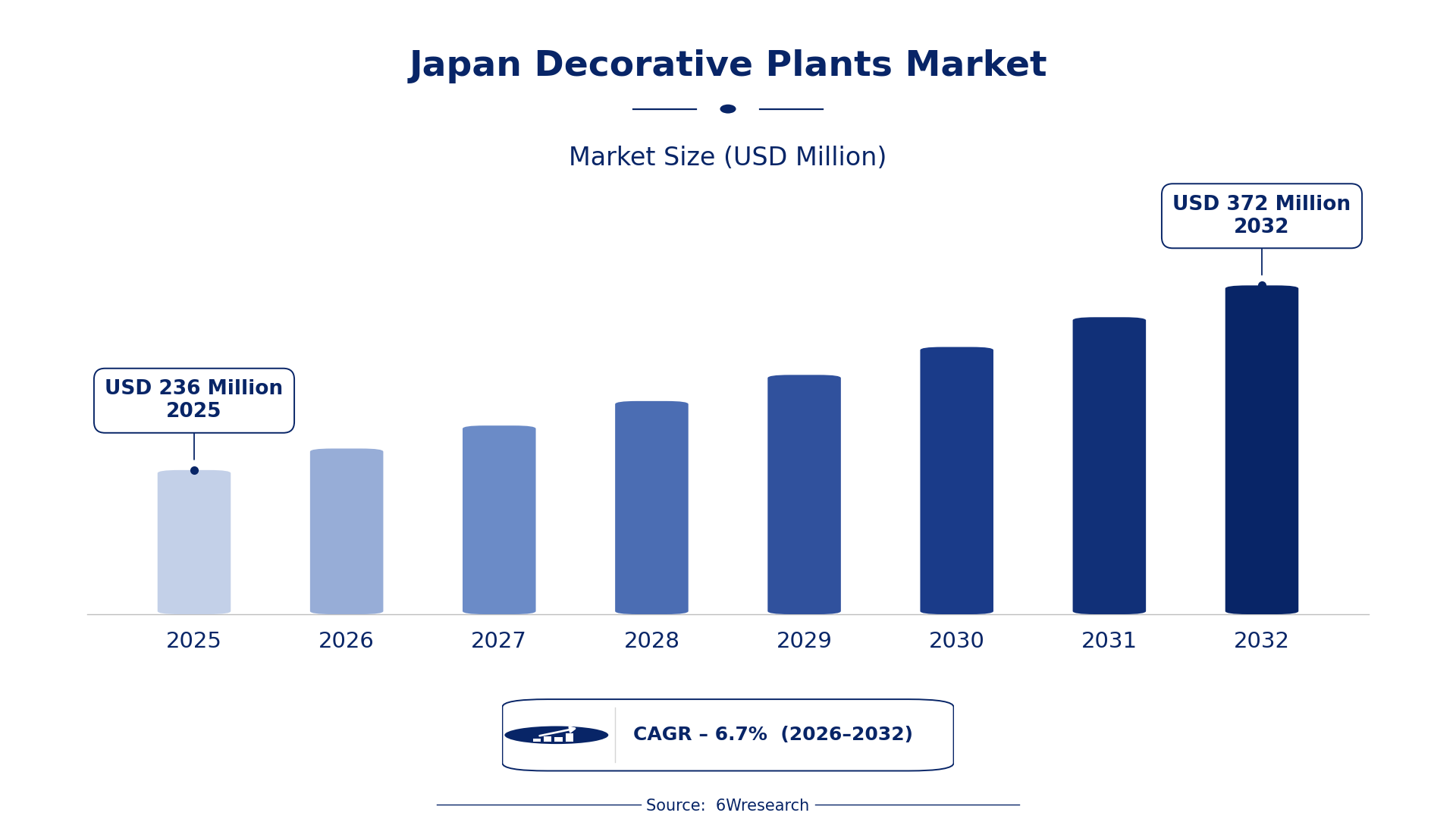
According to 6Wresearch internal database and industry insights, the Japan Decorative Plants Market was valued at USD 236 Million in 2025 and is projected to reach USD 372 Million by 2032, growing at a CAGR of approximately 6.7% during 2026–2032.
Japan Decorative Plants Market Highlights
| Report Metric | Details |
| Report Name | Japan Decorative Plants Market (2026-2032) |
| Market Size 2025 | USD 236 Million |
| Market Size 2032 | USD 372 Million |
| Absolute Growth 2025–2032 | USD 136 Million |
| CAGR 2026–2032 | 6.7% |
| Peak Annual Growth | 7.3% in 2028 |
| Forecast Period | 2026–2032 |
| Historical Data | 2022–2025 |
| Base Year | 2025 |
| Leading Plant Type, 2025 | Indoor Plants (48% share) |
| Leading Growth Medium, 2025 | Soil/Pot Mix (42% share) |
| Leading Placement Area, 2025 | Living Rooms (42% share) |
| Leading End User, 2025 | Households (45% share) |
| Fastest-Growing Plant Type | Succulents (9.3% CAGR) |
| Fastest-Growing Growth Medium | Cocopeat (8.9% CAGR) |
| Fastest-Growing Placement Area | Balconies (7.9% CAGR) |
| Fastest-Growing End User | Urban Residents (8.5% CAGR) |
| Growing Sector | Indoor Gardening |
| Key End Users | Households, Urban Residents, Landscapers, Office Spaces |
Japan Decorative Plants Market Year-wise Growth Rate and Key Drivers (2022–2032)
This graph illustrates the annual growth rates of the market from 2022 to 2032, highlighting a steady upward trajectory and projected market expansion over the forecast period.
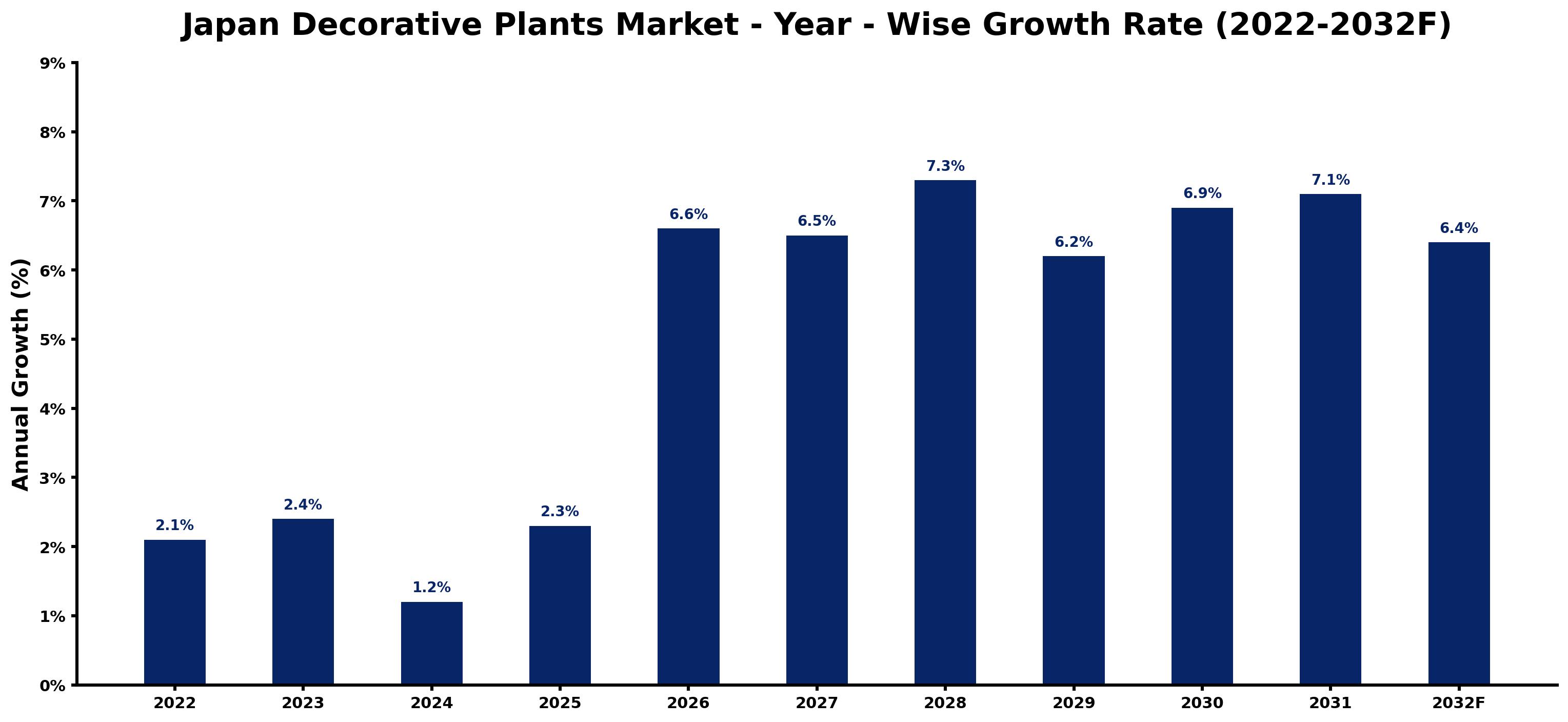
For each year, the table pairs the estimated growth rate with the leading influence on demand, showing how the drivers changed across the period.
| Year | Estimated Annual Growth (%) | Market Rationale |
| 2022 | 2.1 | Households showed a growing interest in indoor gardening, leading to increased plant purchases. |
| 2023 | 2.4 | The trend of owning indoor plants continued to rise, reflecting consumer preferences for home aesthetics. |
| 2024 | 1.2 | Growth slowed due to market saturation and consumers' cautious spending habits on non-essential items. |
| 2025 | 2.3 | Increased awareness of air quality benefits spurred more households to invest in decorative plants. |
| 2026 | 6.6 | Urban residents are expected to drive demand as indoor gardening becomes more popular in city settings. |
| 2027 | 6.5 | The market is projected to slow slightly as competition among suppliers intensifies. |
| 2028 | 7.3 | Demand will peak as innovative plant designs attract more buyers, particularly in urban areas. |
| 2029 | 6.2 | Growth is anticipated to slow as consumer preferences stabilise after the peak. |
| 2030 | 6.9 | Interest in sustainable gardening practices will encourage more purchases of eco-friendly plants. |
| 2031 | 7.1 | The market will see renewed interest as urban greening initiatives gain momentum. |
| 2032 | 6.4 | Growth is expected to slow as market maturity sets in, yet demand remains strong. |
Note: Market size estimations and growth projections presented in this report are based on 6Wresearch's proprietary forecasting methodology, utilizing the latest available industry data, government publications, and primary research inputs.
Japan Decorative Plants Market Synopsis
Decorative plants serve aesthetic purposes in homes and offices, improving interior design and air quality. In Japan, the market is expanding due to rising interest in indoor gardening and urban greening initiatives. Approximately 30% of households own indoor plants, with urban residents driving demand as they seek to beautify their spaces. On average, households spend around ¥10,000 annually on decorative plants, indicating a growing commitment to enhancing living environments.
Market Dynamics Impact Analysis (2026–2032)
| Factor | Type | Impact | Primary Segment Affected |
| Growing interest in indoor gardening and air purification benefits drives demand for indoor plants. | Driver | High | Indoor Plants |
| Urban greening initiatives are creating opportunities for decorative plant suppliers. | Opportunity | High | Outdoor Plants |
| Sustainable practices in gardening are becoming increasingly important for consumers. | Driver | Medium | Succulents |
| The rising popularity of eco-friendly gardening mediums presents a chance for growth. | Opportunity | Medium | Cocopeat |
| Market saturation may limit growth potential for some decorative plant segments. | Restraint | High | Indoor Plants |
| Consumer spending on non-essential items may affect decorative plant purchases. | Restraint | Medium | Outdoor Plants |
| Competition among suppliers is intensifying, impacting pricing strategies. | Challenge | High | Succulents |
| Shifts in consumer preferences towards sustainable products may disrupt traditional sales. | Challenge | Medium | Cocopeat |
Evaluation of Drivers in Japan Decorative Plants Market (2026–2032)
The following drivers explain most of the expected growth.
| Drivers | Primary Segment Affected | Why It Matters (Evidence) |
| Increased interest in air quality improvement drives demand for indoor plants. | Indoor Plants | In 2022, over 30% of households reported owning indoor plants, resulting in higher purchases. |
| Urban greening initiatives are boosting demand for outdoor plants in public spaces. | Outdoor Plants | Tokyo's urban greening initiatives have increased the need for decorative plants in public areas. |
| The popularity of low-maintenance plants is rising among urban residents. | Succulents | Succulents are growing in popularity, with a projected CAGR of 9.3% from 2026 to 2032. |
| Sustainable gardening practices are driving interest in eco-friendly plant mediums. | Cocopeat | Cocopeat is increasingly used as a sustainable alternative to peat, appealing to eco-conscious consumers. |
| Households are investing more in home aesthetics, leading to increased plant purchases. | Indoor Plants | The average household spends around ¥10,000 annually on decorative plants, reflecting this trend. |
Volumes grow on the back of rising interest in indoor gardening, with over 30% of households owning indoor plants. Urban greening efforts in Tokyo are increasing demand for outdoor plants, as residents seek to beautify public spaces. The popularity of succulents is projected to rise, appealing to urban dwellers. Consumers are increasingly opting for sustainable gardening practices, driving interest in cocopeat as an eco-friendly alternative. Households are investing an average of ¥10,000 annually on decorative plants, reflecting their commitment to improving home aesthetics.
Evaluation of Restraints in Japan Decorative Plants Market
Below are the constraints most often cited by buyers and suppliers, with the segment each affects.
| Market Restraint | Primary Segment Affected | Why It Matters (Evidence) |
| Market saturation may limit growth potential for indoor plants as options become abundant. | Indoor Plants | With many households already owning indoor plants, new sales opportunities are diminishing. |
| Consumer spending on non-essential items may affect decorative plant purchases during economic downturns. | Outdoor Plants | Economic uncertainty can lead consumers to prioritise essential goods over decorative items. |
| Intensifying competition among suppliers may lead to price wars, affecting profitability. | Succulents | As more suppliers enter the market, price competition could impact margins for existing players. |
| Shifts in consumer preferences towards sustainable products may disrupt traditional sales channels. | Cocopeat | As consumers demand more eco-friendly options, traditional products may see declining sales. |
| Seasonal fluctuations can impact demand for decorative plants, particularly in outdoor segments. | Outdoor Plants | Demand for outdoor plants can vary significantly with changing seasons, affecting sales consistency. |
Japan Decorative Plants Market Challenges
Households face increased costs due to strict environmental regulations that require compliance with ISO 14001, raising operational expenses for nurseries by approximately 10%. Producers incur higher input costs as the Japanese Gardening Association's focus on sustainable practices forces investments in eco-friendly materials, inflating prices by up to 15%. Limited technology adoption restricts production efficiency; suppliers may experience order fulfilment delays of 20%. Supply chain disruptions stem from urban greening initiatives by the Tokyo Metropolitan Government, creating demand spikes that extend delivery times for retailers by an average of two weeks.
Trends in the Japan Decorative Plants Market
The trends below show where the Japan Decorative Plants Market is heading.
- Shift from Traditional to Sustainable Gardening Practices: Since 2023, consumers have increasingly favoured sustainable gardening methods, resulting in a rise in eco-friendly products. The Japanese Gardening Association promotes these practices, reflecting a growing environmental consciousness.
- Transition from Indoor to Outdoor Plant Purchases: As urban greening efforts gain traction, there is a noticeable shift towards outdoor plants. The Tokyo Metropolitan Government's support for these efforts has resulted in increased demand for decorative plants in public spaces.
- Emergence of Succulents as a Preferred Choice: In recent years, succulents have become a popular choice for urban residents due to their low maintenance needs. This trend is reflected in their projected CAGR of 9.3% from 2026 to 2032.
- Growing Interest in Indoor Gardening: Since 2022, more households have embraced indoor gardening, with over 30% reporting ownership of indoor plants. This trend highlights a shift towards improving home aesthetics and air quality.
Investment Opportunities in the Japan Decorative Plants Market
The openings below show where demand in the Japan Decorative Plants Market is visible and how suppliers can enter.
- Collaborate with Local Nurseries for Sustainable Practices: Now is the time to invest in partnerships with local nurseries to promote sustainable gardening practices. The Japanese Gardening Association supports these initiatives, creating a pathway for collaboration.
- Supply Eco-Friendly Plant Mediums: With the rising demand for sustainable products, there is an opportunity to supply cocopeat as an alternative to peat. Urban residents seeking eco-friendly options are a key target market.
- Focus on Urban Gardening Products: As urban greening initiatives continue, suppliers should concentrate on products suitable for urban gardening. The Tokyo Metropolitan Government's support for these efforts indicates a growing market.
- Create Unique Indoor Plant Designs: With households spending around ¥10,000 annually on decorative plants, there is an opportunity to develop unique indoor plant designs. Targeting urban residents can drive sales in this segment.
Government Initiatives in the Japan Decorative Plants Market
The Waste Management and Public Cleansing Act regulates waste treatment, impacting producers of decorative plants by ensuring sustainable disposal practices. Compliance with this law is essential for maintaining environmental standards and consumer trust, with over 10,000 nurseries needing to adhere to its guidelines.
The GX Basic Policy aims for JPY 150 trillion in public-private decarbonisation investment over ten years, administered by the Government of Japan. This funding supports local plant nurseries, enhancing their capacity to meet growing demand for decorative plants.
Future Insight of the Japan Decorative Plants Market
Urban residents will increase their spending on decorative plants by 2032, reflecting a shift towards indoor gardening and sustainable practices. The Ministry of Agriculture's programme to promote local nurseries will enhance access to native plant species, aligning with consumer preferences for environmentally friendly options. Advancements in hydroponic systems will optimise production processes, reducing costs for suppliers. The annual Flower and Garden Show in Tokyo will continue to showcase emerging trends, shaping buyer preferences and expanding the market for unique plant designs.
Market Segmentation Analysis
Japan Decorative Plants Market report covers a detailed analysis of the following market segments:
By Plant Type – Indoor Plants Lead, Succulents Expected to Grow Fastest
According to Saurav Kr Singh, Senior Research Analyst at 6Wresearch, Indoor Plants took 48% of plant type revenue in 2025, more than any other category. Indoor plants dominate the market as they are widely used for home decoration and improving air quality. For instance, over 30% of households in Japan have adopted indoor plants, reflecting their essential role in enhancing living spaces. Over 2026–2032, Succulents are expected to post the fastest growth, at a CAGR of 9.3%. Succulents are experiencing rapid growth due to their low-maintenance requirements and unique aesthetic appeal, particularly among urban residents seeking easy-care options. This trend is likely to expand as more consumers look for practical yet attractive decorative solutions. Suppliers should diversify their succulent offerings to meet the rising consumer demand for low-maintenance decorative plants.
By Growth Medium – Soil/Pot Mix Leads, Cocopeat Expected to Grow Fastest
Soil/Pot Mix accounted for 42% of the market by growth medium in 2025. Soil/pot mix holds the largest share as it is vital for the growth and health of decorative plants. Its widespread application in nurseries and residential gardens reinforces its leading position in the market. The quickest growth will come from Cocopeat, forecast to expand at a CAGR of 8.9% between 2026 and 2032. Cocopeat is gaining traction as a sustainable alternative to traditional soil, reflecting a shift towards environmentally friendly gardening practices. This growth is further encouraged by initiatives promoting sustainable gardening across Japan. Suppliers should increase their cocopeat product lines to cater to the growing demand from environmentally conscious consumers.
By Placement Area – Living Rooms Lead, Balconies Expected to Grow Fastest
The largest placement area category in 2025 was Living Rooms, at 42% of revenue. Living rooms are the primary placement area for decorative plants, serving as a focal point for aesthetic enhancement in homes. This trend is supported by the rising interest in indoor gardening among Japanese households. Balconies are projected to grow fastest, at a CAGR of 7.9% during 2026–2032. Balconies are emerging as a rapidly growing space for plant placement, especially in urban areas where space is limited. Local government initiatives promoting urban greening are further driving this trend. Suppliers should develop plant varieties specifically suited for balcony gardening to capitalise on this expanding market.
By End User – Households Lead, Urban Residents Expected to Grow Fastest
With 45% of end user revenue in 2025, Households was the largest category. Households represent the largest user segment for decorative plants, motivated by the desire to beautify their living environments. The average annual expenditure of around ¥10,000 on these plants indicates strong consumer interest. Urban Residents are set to record the highest CAGR in this split, 8.5% over 2026–2032. Urban residents are the fastest-growing end user segment, reflecting the increasing demand for decorative plants in densely populated areas. This growth is supported by the rising trend of urban gardening practices. Suppliers should tailor their marketing efforts to effectively reach urban residents seeking decorative plants.
Key Attractiveness of the Report
- 10 Years of Market Numbers
- Historical Data Starting from 2022 to 2025
- Base Year 2025
- Forecast Data until 2032
- Key Performance Indicators Impacting the Market
- Major Upcoming Developments and Projects
Key Highlights of the Report:
- Japan Decorative Plants Market Outlook
- Market Size of Japan Decorative Plants Market, 2025
- Forecast of Japan Decorative Plants Market, 2032
- Historical Data and Forecast of Japan Decorative Plants Revenues & Volume for the Period 2022-2032F
- Japan Decorative Plants Market Trend Evolution
- Japan Decorative Plants Market Drivers and Challenges
- Japan Decorative Plants Price Trends
- Japan Decorative Plants Porter's Five Forces
- Japan Decorative Plants Industry Life Cycle
- Historical Data and Forecast of Japan Decorative Plants Market Revenues & Volume By Plant Type for the Period 2022-2032F
- Historical Data and Forecast of Japan Decorative Plants Market Revenues & Volume By Indoor Plants for the Period 2022-2032F
- Historical Data and Forecast of Japan Decorative Plants Market Revenues & Volume By Outdoor Plants for the Period 2022-2032F
- Historical Data and Forecast of Japan Decorative Plants Market Revenues & Volume By Succulents for the Period 2022-2032F
- Historical Data and Forecast of Japan Decorative Plants Market Revenues & Volume By Hanging Plants for the Period 2022-2032F
- Historical Data and Forecast of Japan Decorative Plants Market Revenues & Volume By Growth Medium for the Period 2022-2032F
- Historical Data and Forecast of Japan Decorative Plants Market Revenues & Volume By Soil/Pot Mix for the Period 2022-2032F
- Historical Data and Forecast of Japan Decorative Plants Market Revenues & Volume By Ground/Planter for the Period 2022-2032F
- Historical Data and Forecast of Japan Decorative Plants Market Revenues & Volume By Dry Soil for the Period 2022-2032F
- Historical Data and Forecast of Japan Decorative Plants Market Revenues & Volume By Cocopeat for the Period 2022-2032F
- Historical Data and Forecast of Japan Decorative Plants Market Revenues & Volume By Placement Area for the Period 2022-2032F
- Historical Data and Forecast of Japan Decorative Plants Market Revenues & Volume By Living Rooms for the Period 2022-2032F
- Historical Data and Forecast of Japan Decorative Plants Market Revenues & Volume By Gardens for the Period 2022-2032F
- Historical Data and Forecast of Japan Decorative Plants Market Revenues & Volume By Desktops for the Period 2022-2032F
- Historical Data and Forecast of Japan Decorative Plants Market Revenues & Volume By Balconies for the Period 2022-2032F
- Historical Data and Forecast of Japan Decorative Plants Market Revenues & Volume By End User for the Period 2022-2032F
- Historical Data and Forecast of Japan Decorative Plants Market Revenues & Volume By Households for the Period 2022-2032F
- Historical Data and Forecast of Japan Decorative Plants Market Revenues & Volume By Landscapers for the Period 2022-2032F
- Historical Data and Forecast of Japan Decorative Plants Market Revenues & Volume By Office Spaces for the Period 2022-2032F
- Historical Data and Forecast of Japan Decorative Plants Market Revenues & Volume By Urban Residents for the Period 2022-2032F
- Japan Decorative Plants Import Export Trade Statistics
- Market Opportunity Assessment By Plant Type
- Market Opportunity Assessment By Growth Medium
- Market Opportunity Assessment By Placement Area
- Market Opportunity Assessment By End User
- Japan Decorative Plants Top Companies Market Share
- Japan Decorative Plants Competitive Benchmarking By Technical and Operational Parameters
- Japan Decorative Plants Company Profiles
- Japan Decorative Plants Key Strategic Recommendations
Market Covered
The following segment groups are covered in the report.
By Plant Type
- Indoor Plants
- Outdoor Plants
- Succulents
- Hanging Plants
By Growth Medium
- Soil/Pot Mix
- Ground/Planter
- Dry Soil
- Cocopeat
By Placement Area
- Living Rooms
- Gardens
- Desktops
- Balconies
By End User
- Households
- Landscapers
- Office Spaces
- Urban Residents






































