Japan Dried Herbs Market Size & Growth Rate
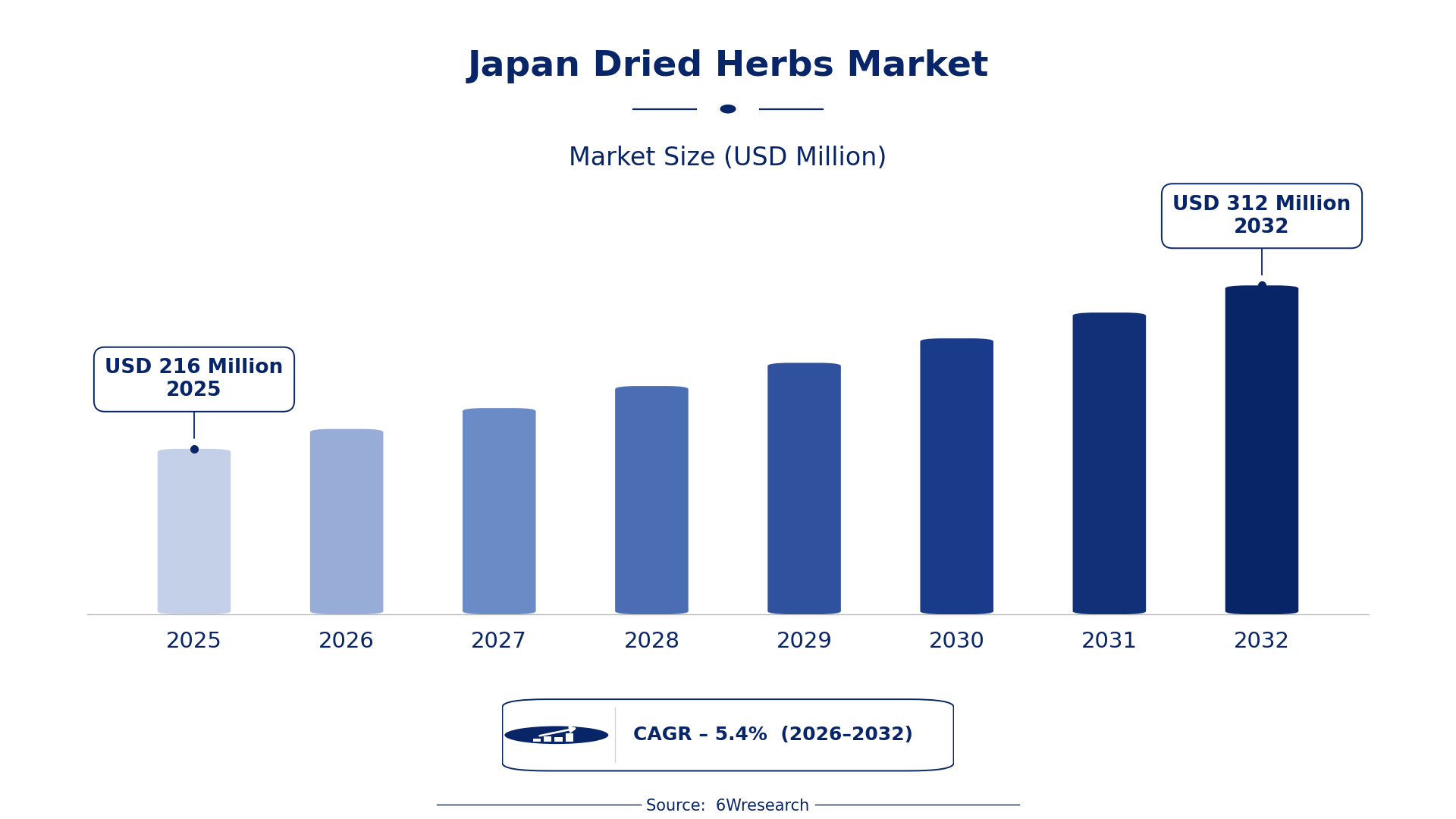
According to 6Wresearch internal database and industry insights, the Japan Dried Herbs Market was valued at USD 216 Million in 2025 and is projected to reach USD 312 Million by 2032, growing at a CAGR of approximately 5.4% during 2026–2032.
Japan Dried Herbs Market Highlights
| Report Metric | Details |
| Report Name | Japan Dried Herbs Market (2026-2032) |
| Market Size 2025 | USD 216 Million |
| Market Size 2032 | USD 312 Million |
| Absolute Growth 2025–2032 | USD 96 Million |
| CAGR 2026–2032 | 5.4% |
| Peak Annual Growth | 6.4% in 2027 |
| Forecast Period | 2026–2032 |
| Historical Data | 2022–2025 |
| Base Year | 2025 |
| Leading Product Type, 2025 | Oregano (42% share) |
| Leading Nature, 2025 | Organic (60% share) |
| Leading Application, 2025 | Food and Beverage (35% share) |
| Leading Form, 2025 | Whole/Intact Herb (54% share) |
| Leading Distribution Channel, 2025 | Business to Business (B2B) (57% share) |
| Fastest-Growing Product Type | Rosemary (7.8% CAGR) |
| Fastest-Growing Nature | Conventional (6.9% CAGR) |
| Fastest-Growing Application | Pharmaceuticals (7.6% CAGR) |
| Fastest-Growing Form | Powdered Herb (7.3% CAGR) |
| Fastest-Growing Distribution Channel | Business to Consumer (B2C) (6.5% CAGR) |
| Growing Sector | Food and Beverage |
| Key End Users | Food manufacturers, Restaurants, Retailers, Herbal product developers |
Japan Dried Herbs Market Year-wise Growth Rate and Key Drivers (2022–2032)
This graph illustrates the annual growth rates of the market from 2022 to 2032, highlighting a steady upward trajectory and projected market expansion over the forecast period.
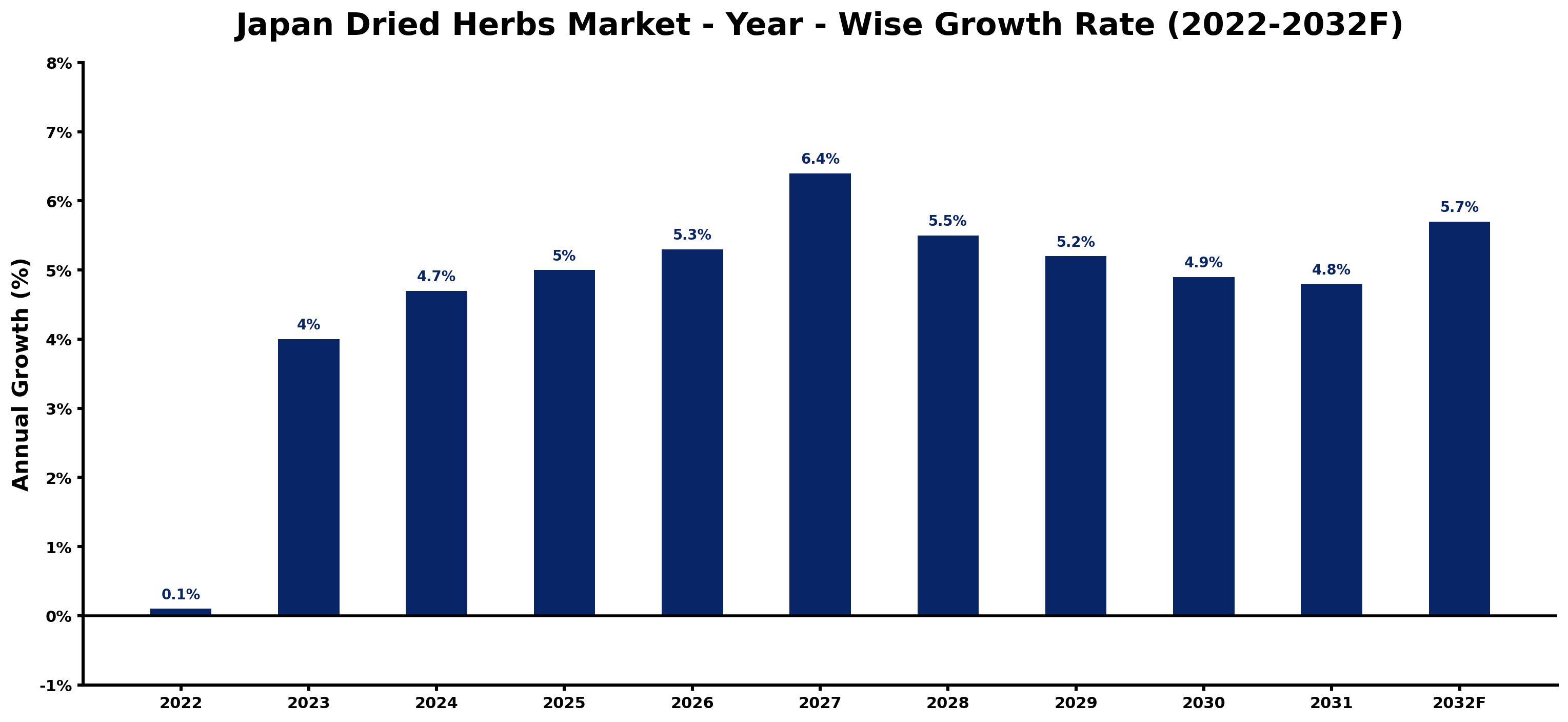
The following figures match every annual growth estimate with the main market development of that year, giving the reasoning behind each rise or slowdown.
| Year | Estimated Annual Growth (%) | Market Rationale |
| 2022 | 0.1 | The market showed minimal growth due to stable demand patterns. |
| 2023 | 4.0 | Increased consumer interest in organic options boosted growth. |
| 2024 | 4.7 | The rise in culinary experimentation contributed to higher herb usage. |
| 2025 | 5.0 | The food and beverage sector's expansion led to strong demand for dried herbs. |
| 2026 | 5.3 | Health consciousness among consumers is expected to spur interest in herbal products. |
| 2027 | 6.4 | Heightened demand for organic herbs will drive peak growth. |
| 2028 | 5.5 | A slight slowdown is expected as the market stabilises after peak growth. |
| 2029 | 5.2 | Continued interest in culinary herbs will maintain positive growth rates. |
| 2030 | 4.9 | The market will experience a further slowdown as growth rates normalise. |
| 2031 | 4.8 | Demand is expected to remain steady, influenced by ongoing culinary trends. |
| 2032 | 5.7 | The market is projected to grow faster again due to rising health trends. |
Note: Market size estimations and growth projections presented in this report are based on 6Wresearch's proprietary forecasting methodology, utilizing the latest available industry data, government publications, and primary research inputs.
Japan Dried Herbs Market Synopsis
Dried herbs are dehydrated plant materials that preserve flavour and aroma, extensively used in culinary applications, herbal medicine, and cosmetics. The Japan Dried Herbs Market is primarily driven by the food and beverage industry, which accounts for over 60% of consumption. In 2023, the organic segment saw a 15% rise in household expenditure, reflecting increasing consumer interest. This growth is supported by initiatives promoting local herb production and the rising popularity of dried herbs in cosmetic formulations, reshaping market trends.
Market Dynamics Impact Analysis (2026–2032)
| Factor | Type | Impact | Primary Segment Affected |
| Growing interest in organic herbs | Driver | High | Organic |
| Expansion of the food and beverage industry | Driver | High | Food and Beverage |
| Increased demand for convenient cooking solutions | Opportunity | Medium | Powdered Herb |
| Rising popularity of herbal teas | Opportunity | Medium | Food and Beverage |
| Regulatory compliance costs for producers | Restraint | High | Conventional |
| Limited awareness of dried herbs among consumers | Restraint | Medium | Retail/Household |
| High production costs for organic herbs | Challenge | High | Organic |
| Competition from fresh herbs | Challenge | Medium | Whole/Intact Herb |
Evaluation of Drivers in Japan Dried Herbs Market (2026–2032)
The following drivers explain most of the expected growth.
| Drivers | Primary Segment Affected | Why It Matters (Evidence) |
| Increased consumer interest in organic products | Organic | The organic dried herbs segment saw heightened interest, with a 15% rise in household expenditure on herbs. |
| Expansion of the food and beverage industry | Food and Beverage | The food and beverage sector accounts for over 60% of dried herb usage, driving demand. |
| Growing popularity of herbal teas | Food and Beverage | The herbal tea market is expanding, utilising dried herbs for flavour, contributing to demand. |
| Rising health consciousness among consumers | Conventional | Health trends are increasing the use of dried herbs in culinary applications and herbal remedies. |
| Increased retail sector expansion | Retail/Household | The retail sector for dried herbs is expanding with more household usage, leading to higher sales. |
Most of the extra volume comes from the food and beverage industry, which accounts for over 60% of dried herb usage. The herbal tea market is growing, utilising dried herbs for flavour, and this trend is propelled by rising health consciousness among consumers. In 2023, household expenditure on herbs increased by 15%, indicating a shift towards organic products. The retail sector is expanding, with more households incorporating dried herbs into their cooking routines. The demand for powdered herbs has surged due to their convenience in meal preparation, particularly in foodservice settings.
Evaluation of Restraints in Japan Dried Herbs Market
The main factors holding the market back are set out below.
| Market Restraint | Primary Segment Affected | Why It Matters (Evidence) |
| High production costs for organic herbs | Organic | Producers face high costs associated with organic certification and farming practices, limiting supply. |
| Regulatory compliance costs for producers | Conventional | Producers must adhere to strict quality standards, increasing operational expenses. |
| Limited consumer awareness of dried herbs | Retail/Household | Many consumers are unaware of the benefits and uses of dried herbs, hindering market growth. |
| Competition from fresh herbs | Whole/Intact Herb | Fresh herbs are often preferred for their flavour, impacting the demand for dried alternatives. |
| Supply chain disruptions affecting availability | Business to Business (B2B) | Logistical challenges can lead to inconsistent supply, affecting restaurant and manufacturer operations. |
Japan Dried Herbs Market Challenges
High production costs challenge producers, as traditional farming methods and limited technological adoption inflate expenses by over 20%. Intense competition from imported dried herbs pressures local suppliers, leading to a 15% decline in market share for domestic products. Compliance with JIS and ISO 22000 standards imposes significant burdens on producers, resulting in delays of up to three months for product launches. Supply chain disruptions in the Tokyo region can delay deliveries for buyers, impacting their ability to meet rising demand from the food and beverage industry, which accounts for over 60% of dried herb usage.
Trends in the Japan Dried Herbs Market
Buyers and suppliers in the Japan Dried Herbs Market are adjusting to the following trends.
- Shift from Fresh to Dried Herbs: Since 2023, there has been a noticeable shift towards dried herbs as consumers seek longer shelf life. The Tokyo region has seen a 20% increase in dried herb sales, reflecting this trend.
- Rising Demand for Organic Products: The growing health consciousness among consumers has led to increased demand for organic dried herbs. In 2023, the organic segment saw a 15% rise in sales, indicating a strong market shift.
- Expansion of Dried Herbs in Cosmetics: Dried herbs are increasingly featured in Japanese cosmetic products, with a 10% growth in usage since 2023. This trend aligns with consumer preferences for natural ingredients.
- Emergence of Herbal Tea Culture: The herbal tea market is expanding, utilising dried herbs for flavour. In 2023, the market grew by 12%, showcasing the rising popularity of herbal infusions.
Investment Opportunities in the Japan Dried Herbs Market
The openings below show where demand in the Japan Dried Herbs Market is visible and how suppliers can enter.
- Partnerships with Local Farmers: Local partnerships can strengthen supply chains, particularly for organic herbs. The Tokyo region shows a gap in organic herb supply, with a 15% increase in demand.
- Investment in Retail Expansion: Retailers are expanding their dried herb offerings to meet rising consumer demand. The average household expenditure on herbs has risen, indicating a significant opportunity.
- Development of Convenience Products: There is a growing need for convenient cooking solutions, such as powdered herbs. The foodservice sector is projected to increase its use of dried herbs by 10% by 2025.
- Certification for Organic Products: Investing in organic certification can open new markets for producers. The organic segment is expected to grow significantly, driven by consumer preferences for healthier options.
Government Initiatives in the Japan Dried Herbs Market
The Food Recycling Law, enacted in 2000, mandates food businesses to reduce waste and recycle it into feed and fertiliser. This law supports dried herb producers by promoting sustainable practices and reducing waste in the supply chain. The Food Sanitation Act amendment in 2018 introduced a positive list system for food packaging, ensuring safety and quality in herb processing.
The Ministry of Agriculture, Forestry and Fisheries oversees quality standards for dried herbs, approving local farmers and funding initiatives to support organic farming. In 2023, a new initiative was launched to support local herb farmers, improving production capabilities and promoting local sourcing.
Future Insight of the Japan Dried Herbs Market
A shift towards organic farming will prompt increased government subsidies, encouraging local producers to modernise their practices. The retail sector will respond to rising household expenditure, which has increased by 15% in recent years, by expanding product offerings. Technological advancements in drying methods will improve efficiency and lower costs for producers. The growing herbal tea market will stimulate demand for dried herbs, as consumers increasingly prefer natural ingredients in their beverages.
Market Segmentation Analysis
Japan Dried Herbs Market report covers a detailed analysis of the following market segments:
By Product Type – Oregano Leads, Rosemary Expected to Grow Fastest
According to Sumit Sagar, AM at 6Wresearch, Oregano accounted for 42% of the market by product type in 2025. Oregano holds the largest share due to its extensive use in culinary applications across Japan, particularly in traditional and international dishes. Its established presence in both restaurants and homes reinforces its status as a fundamental herb for flavouring. Rosemary is set to record the highest CAGR in this split, 7.8% over 2026–2032. Rosemary is experiencing rapid growth as its popularity rises in gourmet cooking, appealing to consumers seeking aromatic herbs. This trend is supported by a growing interest in enhancing the dining experience with distinctive flavours. Suppliers should prioritise expanding their oregano offerings while promoting rosemary to leverage its increasing popularity.
By Nature – Organic Leads, Conventional Expected to Grow Fastest
In 2025, Organic led the nature split with a 60% share. The organic segment leads the market as consumers increasingly seek organic products for health and sustainability reasons. This shift is supported by government initiatives promoting organic farming, which have heightened awareness and availability. Over 2026–2032, Conventional is expected to post the fastest growth, at a CAGR of 6.9%. Conventional herbs are growing quickly due to their widespread use in various applications, especially among consumers who prioritise cost-effectiveness over organic certification. The balance between organic and conventional is shifting as more consumers explore different herb options. Suppliers must adapt their product lines to include both organic and conventional herbs to meet diverse consumer preferences.
By Application – Food and Beverage Leads, Pharmaceuticals Expected to Grow Fastest
Food and Beverage held 35% of the Japan Dried Herbs Market by application in 2025. The food and beverage sector leads the market, accounting for over 60% of dried herb consumption in Japan. This demand is largely due to the herb's vital role in enhancing flavours in both home cooking and professional culinary environments. Pharmaceuticals are projected to grow fastest, at a CAGR of 7.6% during 2026–2032. Pharmaceuticals are the fastest-growing application as the trend towards herbal remedies gains momentum among health-conscious consumers. This growth is driven by an increasing preference for natural health solutions and traditional medicinal practices. Suppliers should consider targeting the pharmaceutical sector to diversify their customer base and increase revenue opportunities.
By Form – Whole/Intact Herb Leads, Powdered Herb Expected to Grow Fastest
With 54% of form revenue in 2025, Whole/Intact Herb was the largest category. Whole/intact herbs are favoured for specific culinary applications, especially in traditional dishes where their presentation and flavour are essential. Their established presence in kitchens throughout Japan contributes to their leading market share. The quickest growth will come from Powdered Herb, forecast to expand at a CAGR of 7.3% between 2026 and 2032. Powdered herbs are quickly gaining traction due to their convenience in meal preparation, appealing to consumers who prefer quick and easy cooking solutions. This trend is likely to continue as more households adopt time-saving culinary methods. Suppliers should invest in powdered herb products to meet the growing demand for convenience in meal preparation.
By Distribution Channel – Business to Business (B2B) Leads, Business to Consumer (B2C) Expected to Grow Fastest
Business to Business (B2B) took 57% of distribution channel revenue in 2025, more than any other category. The Business to Business (B2B) channel dominates as it supplies essential herbs to restaurants and food manufacturers for their culinary needs. This segment's strength is bolstered by the high volume of herbs required for food production and service. Business to Consumer (B2C) is set to record the highest CAGR in this split, 6.5% over 2026–2032. Business to Consumer (B2C) is the fastest-growing channel as more consumers purchase dried herbs directly from retail outlets. This shift reflects a trend towards home cooking and a desire for high-quality ingredients among consumers. Suppliers should enhance their retail strategies to effectively reach consumers and capitalise on the expanding B2C market.
Key Attractiveness of the Report
- 10 Years of Market Numbers
- Historical Data Starting from 2022 to 2025
- Base Year 2025
- Forecast Data until 2032
- Key Performance Indicators Impacting the Market
- Major Upcoming Developments and Projects
Key Highlights of the Report:
- Japan Dried Herbs Market Outlook
- Market Size of Japan Dried Herbs Market, 2025
- Forecast of Japan Dried Herbs Market, 2032
- Historical Data and Forecast of Japan Dried Herbs Revenues & Volume for the Period 2022-2032
- Japan Dried Herbs Market Trend Evolution
- Japan Dried Herbs Market Drivers and Challenges
- Japan Dried Herbs Price Trends
- Japan Dried Herbs Porter's Five Forces
- Japan Dried Herbs Industry Life Cycle
- Historical Data and Forecast of Japan Dried Herbs Market Revenues & Volume By Product Type for the Period 2022-2032
- Historical Data and Forecast of Japan Dried Herbs Market Revenues & Volume By Oregano for the Period 2022-2032
- Historical Data and Forecast of Japan Dried Herbs Market Revenues & Volume By Rosemary for the Period 2022-2032
- Historical Data and Forecast of Japan Dried Herbs Market Revenues & Volume By Sage for the Period 2022-2032
- Historical Data and Forecast of Japan Dried Herbs Market Revenues & Volume By Savory for the Period 2022-2032
- Historical Data and Forecast of Japan Dried Herbs Market Revenues & Volume By Mint for the Period 2022-2032
- Historical Data and Forecast of Japan Dried Herbs Market Revenues & Volume By Thyme for the Period 2022-2032
- Historical Data and Forecast of Japan Dried Herbs Market Revenues & Volume By Bay Leaves for the Period 2022-2032
- Historical Data and Forecast of Japan Dried Herbs Market Revenues & Volume By Nature for the Period 2022-2032
- Historical Data and Forecast of Japan Dried Herbs Market Revenues & Volume By Organic for the Period 2022-2032
- Historical Data and Forecast of Japan Dried Herbs Market Revenues & Volume By Conventional for the Period 2022-2032
- Historical Data and Forecast of Japan Dried Herbs Market Revenues & Volume By Application for the Period 2022-2032
- Historical Data and Forecast of Japan Dried Herbs Market Revenues & Volume By Food and Beverage for the Period 2022-2032
- Historical Data and Forecast of Japan Dried Herbs Market Revenues & Volume By Pharmaceuticals for the Period 2022-2032
- Historical Data and Forecast of Japan Dried Herbs Market Revenues & Volume By Cosmetics and Personal Care for the Period 2022-2032
- Historical Data and Forecast of Japan Dried Herbs Market Revenues & Volume By Foodservice for the Period 2022-2032
- Historical Data and Forecast of Japan Dried Herbs Market Revenues & Volume By Retail/Household for the Period 2022-2032
- Historical Data and Forecast of Japan Dried Herbs Market Revenues & Volume By Form for the Period 2022-2032
- Historical Data and Forecast of Japan Dried Herbs Market Revenues & Volume By Whole/Intact Herb for the Period 2022-2032
- Historical Data and Forecast of Japan Dried Herbs Market Revenues & Volume By Powdered Herb for the Period 2022-2032
- Historical Data and Forecast of Japan Dried Herbs Market Revenues & Volume By Distribution Channel for the Period 2022-2032
- Historical Data and Forecast of Japan Dried Herbs Market Revenues & Volume By Business to Business (B2B) for the Period 2022-2032
- Historical Data and Forecast of Japan Dried Herbs Market Revenues & Volume By Business to Consumer (B2C) for the Period 2022-2032
- Japan Dried Herbs Import Export Trade Statistics
- Market Opportunity Assessment By Product Type
- Market Opportunity Assessment By Nature
- Market Opportunity Assessment By Application
- Market Opportunity Assessment By Form
- Market Opportunity Assessment By Distribution Channel
- Japan Dried Herbs Top Companies Market Share
- Japan Dried Herbs Competitive Benchmarking By Technical and Operational Parameters
- Japan Dried Herbs Company Profiles
- Japan Dried Herbs Key Strategic Recommendations
Market Covered
The study includes the following segmentation.
By Product Type
- Oregano
- Rosemary
- Sage
- Savory
- Mint
- Thyme
- Bay Leaves
By Nature
- Organic
- Conventional
By Application
- Food and Beverage
- Pharmaceuticals
- Cosmetics and Personal Care
- Foodservice
- Retail/Household
By Form
- Whole/Intact Herb
- Powdered Herb
By Distribution Channel
- Business to Business (B2B)
- Business to Consumer (B2C)































