Japan Eco-Friendly Pest Solutions Market Size & Growth Rate
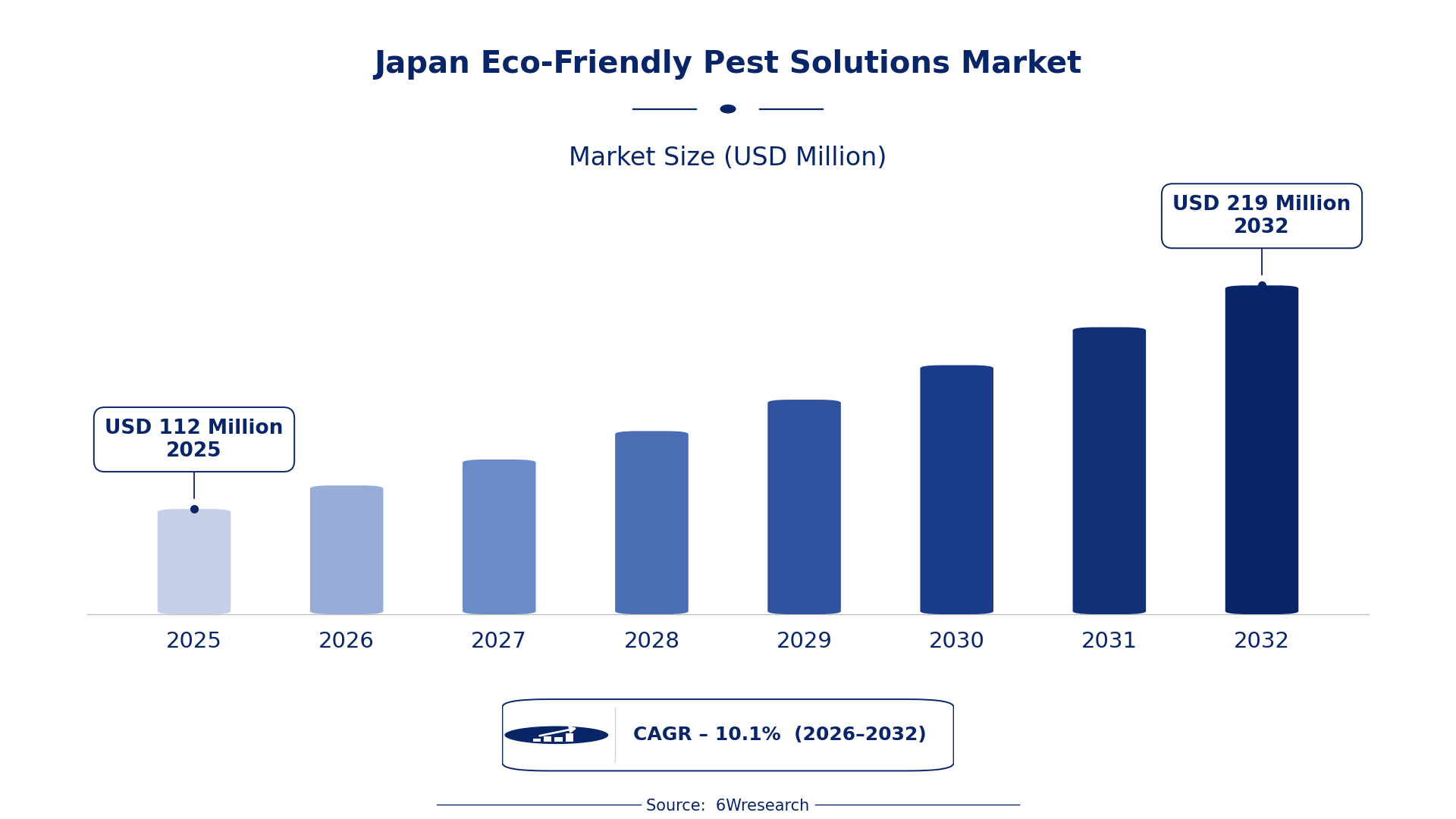
According to 6Wresearch internal database and industry insights, the Japan Eco-Friendly Pest Solutions Market was valued at USD 112 Million in 2025 and is projected to reach USD 219 Million by 2032, growing at a CAGR of approximately 10.1% during 2026–2032.
Japan Eco-Friendly Pest Solutions Market Highlights
| Report Metric | Details |
| Report Name | Japan Eco-Friendly Pest Solutions Market (2026-2032) |
| Market Size 2025 | USD 112 Million |
| Market Size 2032 | USD 219 Million |
| Absolute Growth 2025–2032 | USD 107 Million |
| CAGR 2026–2032 | 10.1% |
| Peak Annual Growth | 11.7% in 2026 |
| Forecast Period | 2026–2032 |
| Historical Data | 2022–2025 |
| Base Year | 2025 |
| Leading Pest Control Type, 2025 | Biopesticides (47% share) |
| Leading Ingredient Base, 2025 | Essential Oils (39% share) |
| Leading Target Area, 2025 | Urban Homes (35% share) |
| Leading End User, 2025 | Households (44% share) |
| Fastest-Growing Pest Control Type | Traps & Catchers (14.5% CAGR) |
| Fastest-Growing Ingredient Base | Neem (13.0% CAGR) |
| Fastest-Growing Target Area | Croplands (11.8% CAGR) |
| Fastest-Growing End User | Farmers (12.7% CAGR) |
| Growing Sector | Agricultural pest management |
| Key End Users | Households, Farmers, Facility Managers, Homeowners |
Japan Eco-Friendly Pest Solutions Market Year-wise Growth Rate and Key Drivers (2022–2032)
This graph illustrates the annual growth rates of the market from 2022 to 2032, highlighting a steady upward trajectory and projected market expansion over the forecast period.
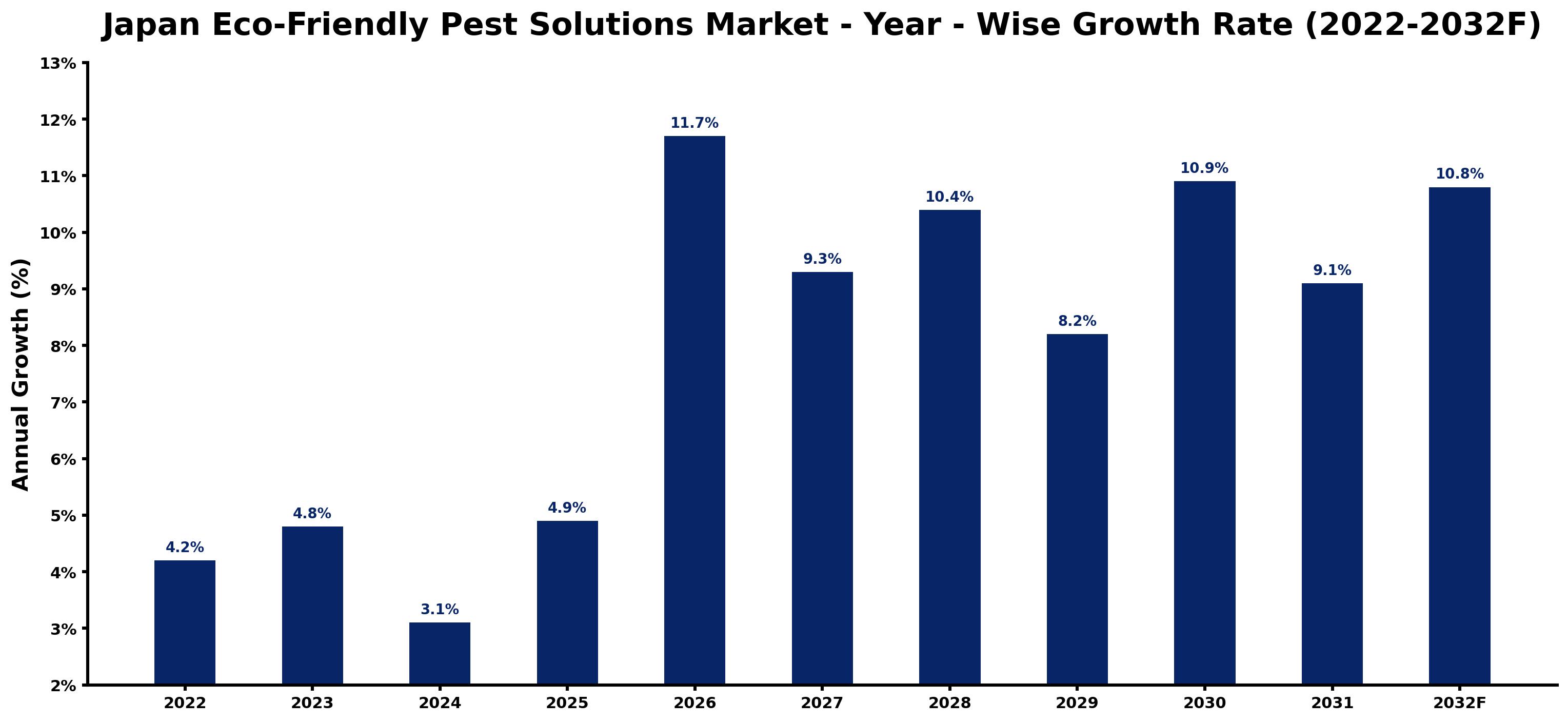
Annual growth estimates for each year appear below with the principal reason behind them, explaining the shifts that set the pace of the market.
| Year | Estimated Annual Growth (%) | Market Rationale |
| 2022 | 4.2 | The market showed steady growth due to increased awareness of eco-friendly solutions. |
| 2023 | 4.8 | Demand accelerated as urban households sought safer pest management options. |
| 2024 | 3.1 | Growth slowed as consumers faced economic uncertainties affecting spending. |
| 2025 | 4.9 | A resurgence in growth occurred as more households adopted sustainable pest control methods. |
| 2026 | 11.7 | The market peaked with investments in eco-friendly technologies and practices. |
| 2027 | 9.3 | Growth slowed as market saturation began to impact new customer acquisition. |
| 2028 | 10.4 | An uptick in growth is expected as organic farming gains traction among farmers. |
| 2029 | 8.2 | Growth is projected to slow again as competition intensifies among eco-friendly product providers. |
| 2030 | 10.9 | A renewed interest in sustainable practices will drive growth higher once more. |
| 2031 | 9.1 | Growth is anticipated to slow as market dynamics shift towards established brands and products. |
| 2032 | 10.8 | The market is expected to grow steadily as consumer preferences continue to evolve. |
Note: Market size estimations and growth projections presented in this report are based on 6Wresearch's proprietary forecasting methodology, utilizing the latest available industry data, government publications, and primary research inputs.
Japan Eco-Friendly Pest Solutions Market Synopsis
Eco-Friendly Pest Solutions utilise natural ingredients like essential oils and biopesticides to manage pests sustainably. These solutions cater to various end uses, including crop protection and urban pest management. The Japan Eco-Friendly Pest Solutions Market is expanding due to rising consumer awareness, urbanisation, and government initiatives promoting organic farming practices. In 2023, a government programme supporting organic farming further stimulated demand, while urban households increasingly invest in eco-friendly pest control, reflecting a shift towards sustainable living.
Market Dynamics Impact Analysis (2026–2032)
| Factor | Type | Impact | Primary Segment Affected |
| Rising consumer awareness of environmental issues | Driver | High | Biopesticides |
| Increased urbanisation leading to higher pest control needs | Driver | High | Urban Homes |
| Growing interest in organic farming practices | Opportunity | High | Farmers |
| Expansion of urban households adopting eco-friendly solutions | Opportunity | High | Households |
| Regulatory compliance with agricultural chemical laws | Restraint | Medium | Biopesticides |
| Limited availability of certain eco-friendly ingredients | Restraint | Medium | Essential Oils |
| Cost pressures from sourcing sustainable materials | Challenge | High | Traps & Catchers |
| Capacity constraints in production of eco-friendly solutions | Challenge | Medium | Biopesticides |
Evaluation of Drivers in Japan Eco-Friendly Pest Solutions Market (2026–2032)
These are the developments adding the most demand over the forecast period.
| Drivers | Primary Segment Affected | Why It Matters (Evidence) |
| Increased consumer preference for non-toxic pest solutions | Biopesticides | The average household in urban Japan spends around 10,000 JPY annually on pest control, driving demand for safer options. |
| Urbanisation leading to higher pest control needs | Urban Homes | The Tokyo metropolitan area has a high concentration of urban homes needing pest control solutions, increasing market demand. |
| Government initiatives promoting organic farming | Farmers | In 2023, the Ministry of Agriculture launched a program promoting organic farming practices, boosting the use of eco-friendly pest solutions. |
| Growing popularity of essential oils as pest repellents | Essential Oils | Essential oils, particularly lavender and peppermint, are increasingly favoured for their natural repellent properties in pest control. |
| Rising demand for sustainable agricultural practices | Croplands | Farmers in Japan are increasingly using neem-based products for pest management in rice cultivation, reflecting a shift towards sustainable practices. |
Buyers are adding capacity as urbanisation increases the need for effective pest control solutions. Urban households are increasingly spending on eco-friendly options, with the average annual expenditure on pest management reaching around 10,000 JPY. The agricultural sector, employing about 2 million people, is increasingly utilising neem-based products, reflecting a shift towards sustainable practices.
Evaluation of Restraints in Japan Eco-Friendly Pest Solutions Market
The key brakes on demand, and where they bite hardest, are shown below.
| Market Restraint | Primary Segment Affected | Why It Matters (Evidence) |
| Compliance with the Agricultural Chemicals Regulation Law | Biopesticides | Producers must comply with Japan's Agricultural Chemicals Regulation Law, which can delay product launches. |
| Limited sourcing of eco-friendly ingredients | Essential Oils | The availability of certain eco-friendly ingredients like essential oils can be inconsistent, impacting production timelines. |
| Higher costs associated with sustainable materials | Traps & Catchers | Cost pressures from sourcing sustainable materials can limit profit margins for manufacturers of eco-friendly traps. |
| Complexity in meeting organic certification requirements | Biopesticides | Producers face challenges in meeting stringent organic certification standards, which can hinder market entry. |
| Market saturation affecting new entrants | Urban Homes | As the market matures, saturation makes it difficult for new entrants to gain traction among established brands. |
Japan Eco-Friendly Pest Solutions Market Challenges
Urban homeowners encounter competition from traditional pest control methods that dominate the market, as many consumers are unaware of the benefits of eco-friendly solutions, costing them an average of 10,000 JPY annually. Buyers in the agricultural sector face challenges due to stringent regulations on biopesticides, which can delay product availability and hinder effective pest management strategies. Limited access to advanced technology restricts producers from optimising their pest control methods, resulting in inefficiencies that can affect crop yields. High sourcing costs for natural ingredients like pyrethrum inflate prices for producers, making it difficult for them to compete with cheaper synthetic alternatives.
Trends in the Japan Eco-Friendly Pest Solutions Market
The trends below show where the Japan Eco-Friendly Pest Solutions Market is heading.
- Shift towards Organic Pest Management: The Ministry of Agriculture's 2023 programme promoting organic farming practices has led to increased adoption of eco-friendly pest solutions, with a notable rise in biopesticide usage among farmers.
- Rise in Essential Oil Usage: The popularity of essential oils, particularly lavender and peppermint, has surged, with a reported increase in their application in pest control solutions, reflecting a growing consumer preference for natural ingredients.
- Urban Households Embracing Eco-Friendly Solutions: Urban households are increasingly adopting eco-friendly pest control methods, with spending on these solutions averaging around 10,000 JPY annually, indicating a shift towards sustainable living practices.
- Increased Adoption of Neem-Based Products: Farmers are increasingly using neem-based products for pest management, particularly in rice cultivation, as they seek sustainable alternatives to chemical pesticides.
Investment Opportunities in the Japan Eco-Friendly Pest Solutions Market
The opportunities below stand out in the Japan Eco-Friendly Pest Solutions Market for new entrants and existing suppliers.
- Gap in Eco-Friendly Product Offerings: With urban households spending around 10,000 JPY annually on pest control, there is a gap for new eco-friendly products targeting urban homes.
- Growing Demand in Agricultural Sector: The Chiba Prefecture, known for its agricultural activities, presents opportunities for suppliers of eco-friendly pest solutions, especially biopesticides, as farmers seek sustainable practices.
- Expansion of Urban Pest Control Services: Urban areas like Tokyo are seeing a rise in demand for pest control services, creating opportunities for providers of eco-friendly solutions to enter the market.
- Investing in Sustainable Pest Control Technologies: With government support for organic farming, there is an opportunity to invest in innovative pest control technologies that align with sustainability goals.
Government Initiatives in the Japan Eco-Friendly Pest Solutions Market
The Waste Management and Public Cleansing Act regulates the treatment and disposal of waste, impacting eco-friendly pest solution producers by ensuring they adhere to environmental standards. Compliance with this law is vital for manufacturers to maintain market access and consumer trust. The act mandates that producers implement sustainable practices in their operations, ensuring that waste is managed responsibly and in accordance with environmental regulations.
The Ministry of Agriculture funds initiatives promoting organic farming practices, including pest management. This support encourages producers to develop and market eco-friendly pest solutions, boosting their competitiveness in the agricultural sector. In 2023, the government announced a subsidy program for organic farming, which is expected to support eco-friendly pest solutions and boost their adoption among farmers.
Future Insight of the Japan Eco-Friendly Pest Solutions Market
Investment in organic farming initiatives will increase as government subsidies support eco-friendly pest solutions, creating demand for innovative pest management technologies. The adoption of the JIS Z 2801 standard will enhance product efficacy, providing reassurance to buyers about their effectiveness. Urban homeowners will benefit from a growing variety of non-toxic pest control options, as the market shifts towards sustainable practices. Enhanced awareness campaigns will educate consumers on the advantages of eco-friendly solutions, further driving market growth.
Market Segmentation Analysis
Japan Eco-Friendly Pest Solutions Market report covers a detailed analysis of the following market segments:
By Pest Control Type – Biopesticides Lead, Traps & Catchers Expected to Grow Fastest
According to Saurav Kr Singh, Senior Research Analyst at 6Wresearch, in 2025, Biopesticides led the pest control type split with a 47% share. Biopesticides dominate the market due to their effectiveness against pests while being environmentally friendly. This segment is particularly popular among farmers in regions like Chiba Prefecture, where agricultural activities are prevalent. Traps & Catchers are projected to grow fastest, at a CAGR of 14.5% during 2026–2032. Traps and catchers are experiencing rapid growth as they are commonly used for capturing pests in various settings, including urban homes and warehouses. The increasing urbanisation in cities such as Tokyo is driving demand for these solutions. Suppliers should focus on expanding their offerings in traps and catchers to capitalise on this growing trend.
By Ingredient Base – Essential Oils Lead, Neem Expected to Grow Fastest
The largest ingredient base category in 2025 was Essential Oils, at 39% of revenue. Essential oils lead the market due to their natural repellent properties, appealing to consumers who prioritise eco-friendly options. The widespread use of lavender and peppermint in pest management showcases their popularity among households seeking safe alternatives. The quickest growth will come from Neem, forecast to expand at a CAGR of 13.0% between 2026 and 2032. Neem is rapidly gaining traction as it proves effective in organic pest control, particularly among farmers who focus on sustainable practices. The growing adoption of organic farming methods is a key factor driving the increasing demand for neem-based products. Suppliers should consider expanding their product lines to include more neem-based solutions to align with market trends.
By Target Area – Urban Homes Lead, Croplands Expected to Grow Fastest
With 35% of target area revenue in 2025, Urban Homes was the largest category. Urban homes represent the largest market share owing to the high demand for pest control solutions in densely populated areas. The concentration of residences in the Tokyo metropolitan area highlights the critical need for effective pest management in urban settings. Over 2026–2032, Croplands are expected to post the fastest growth, at a CAGR of 11.8%. Croplands are the fastest-growing target area, essential for sustainable agricultural practices as farmers increasingly adopt eco-friendly methods. Government initiatives promoting organic farming are significantly driving the demand for pest solutions in agricultural sectors. Suppliers should focus on developing targeted solutions for croplands to capitalise on the growing interest in sustainable agriculture.
By End User – Households Lead, Farmers Expected to Grow Fastest
Households took 44% of end user revenue in 2025, more than any other category. Households are the primary consumers of eco-friendly pest solutions, driven by a rising awareness of environmental impacts and health concerns. The average urban household's annual expenditure on pest control solutions underscores their significant role in this market. Farmers are set to record the highest CAGR in this split, 12.7% over 2026–2032. Farmers represent the fastest-growing end user group, increasingly relying on eco-friendly pest solutions for effective crop protection. The agricultural sector's transition towards sustainable practices is a crucial factor driving this segment's growth. Suppliers must adapt their offerings to meet the evolving needs of farmers seeking eco-friendly pest management solutions.
Key Attractiveness of the Report
- 10 Years of Market Numbers
- Historical Data Starting from 2022 to 2025
- Base Year 2025
- Forecast Data until 2032
- Key Performance Indicators Impacting the Market
- Major Upcoming Developments and Projects
Key Highlights of the Report:
- Japan Eco-Friendly Pest Solutions Market Outlook
- Market Size of Japan Eco-Friendly Pest Solutions Market, 2025
- Forecast of Japan Eco-Friendly Pest Solutions Market, 2032
- Historical Data and Forecast of Japan Eco-Friendly Pest Solutions Revenues & Volume for the Period 2022-2032F
- Japan Eco-Friendly Pest Solutions Market Trend Evolution
- Japan Eco-Friendly Pest Solutions Market Drivers and Challenges
- Japan Eco-Friendly Pest Solutions Price Trends
- Japan Eco-Friendly Pest Solutions Porter's Five Forces
- Japan Eco-Friendly Pest Solutions Industry Life Cycle
- Historical Data and Forecast of Japan Eco-Friendly Pest Solutions Market Revenues & Volume By Pest Control Type for the Period 2022-2032F
- Historical Data and Forecast of Japan Eco-Friendly Pest Solutions Market Revenues & Volume By Herbal Repellents for the Period 2022-2032F
- Historical Data and Forecast of Japan Eco-Friendly Pest Solutions Market Revenues & Volume By Biopesticides for the Period 2022-2032F
- Historical Data and Forecast of Japan Eco-Friendly Pest Solutions Market Revenues & Volume By Ultrasonic Repellers for the Period 2022-2032F
- Historical Data and Forecast of Japan Eco-Friendly Pest Solutions Market Revenues & Volume By Traps & Catchers for the Period 2022-2032F
- Historical Data and Forecast of Japan Eco-Friendly Pest Solutions Market Revenues & Volume By Ingredient Base for the Period 2022-2032F
- Historical Data and Forecast of Japan Eco-Friendly Pest Solutions Market Revenues & Volume By Essential Oils for the Period 2022-2032F
- Historical Data and Forecast of Japan Eco-Friendly Pest Solutions Market Revenues & Volume By Neem, Pyrethrum for the Period 2022-2032F
- Historical Data and Forecast of Japan Eco-Friendly Pest Solutions Market Revenues & Volume By Electronic for the Period 2022-2032F
- Historical Data and Forecast of Japan Eco-Friendly Pest Solutions Market Revenues & Volume By Non-Toxic Adhesives for the Period 2022-2032F
- Historical Data and Forecast of Japan Eco-Friendly Pest Solutions Market Revenues & Volume By Target Area for the Period 2022-2032F
- Historical Data and Forecast of Japan Eco-Friendly Pest Solutions Market Revenues & Volume By Indoor for the Period 2022-2032F
- Historical Data and Forecast of Japan Eco-Friendly Pest Solutions Market Revenues & Volume By Croplands for the Period 2022-2032F
- Historical Data and Forecast of Japan Eco-Friendly Pest Solutions Market Revenues & Volume By Urban Homes for the Period 2022-2032F
- Historical Data and Forecast of Japan Eco-Friendly Pest Solutions Market Revenues & Volume By Warehouses for the Period 2022-2032F
- Historical Data and Forecast of Japan Eco-Friendly Pest Solutions Market Revenues & Volume By End User for the Period 2022-2032F
- Historical Data and Forecast of Japan Eco-Friendly Pest Solutions Market Revenues & Volume By Households for the Period 2022-2032F
- Historical Data and Forecast of Japan Eco-Friendly Pest Solutions Market Revenues & Volume By Farmers for the Period 2022-2032F
- Historical Data and Forecast of Japan Eco-Friendly Pest Solutions Market Revenues & Volume By Homeowners for the Period 2022-2032F
- Historical Data and Forecast of Japan Eco-Friendly Pest Solutions Market Revenues & Volume By Facility Managers for the Period 2022-2032F
- Japan Eco-Friendly Pest Solutions Import Export Trade Statistics
- Market Opportunity Assessment By Pest Control Type
- Market Opportunity Assessment By Ingredient Base
- Market Opportunity Assessment By Target Area
- Market Opportunity Assessment By End User
- Japan Eco-Friendly Pest Solutions Top Companies Market Share
- Japan Eco-Friendly Pest Solutions Competitive Benchmarking By Technical and Operational Parameters
- Japan Eco-Friendly Pest Solutions Company Profiles
- Japan Eco-Friendly Pest Solutions Key Strategic Recommendations
Market Covered
The following segment groups are covered in the report.
By Pest Control Type
- Herbal Repellents
- Biopesticides
- Ultrasonic Repellers
- Traps & Catchers
By Ingredient Base
- Essential Oils
- Neem
- Pyrethrum
- Electronic
- Non-Toxic Adhesives
By Target Area
- Indoor
- Croplands
- Urban Homes
- Warehouses
By End User
- Households
- Farmers
- Homeowners
- Facility Managers






































