Japan Edible Beans Market Size & Growth Rate
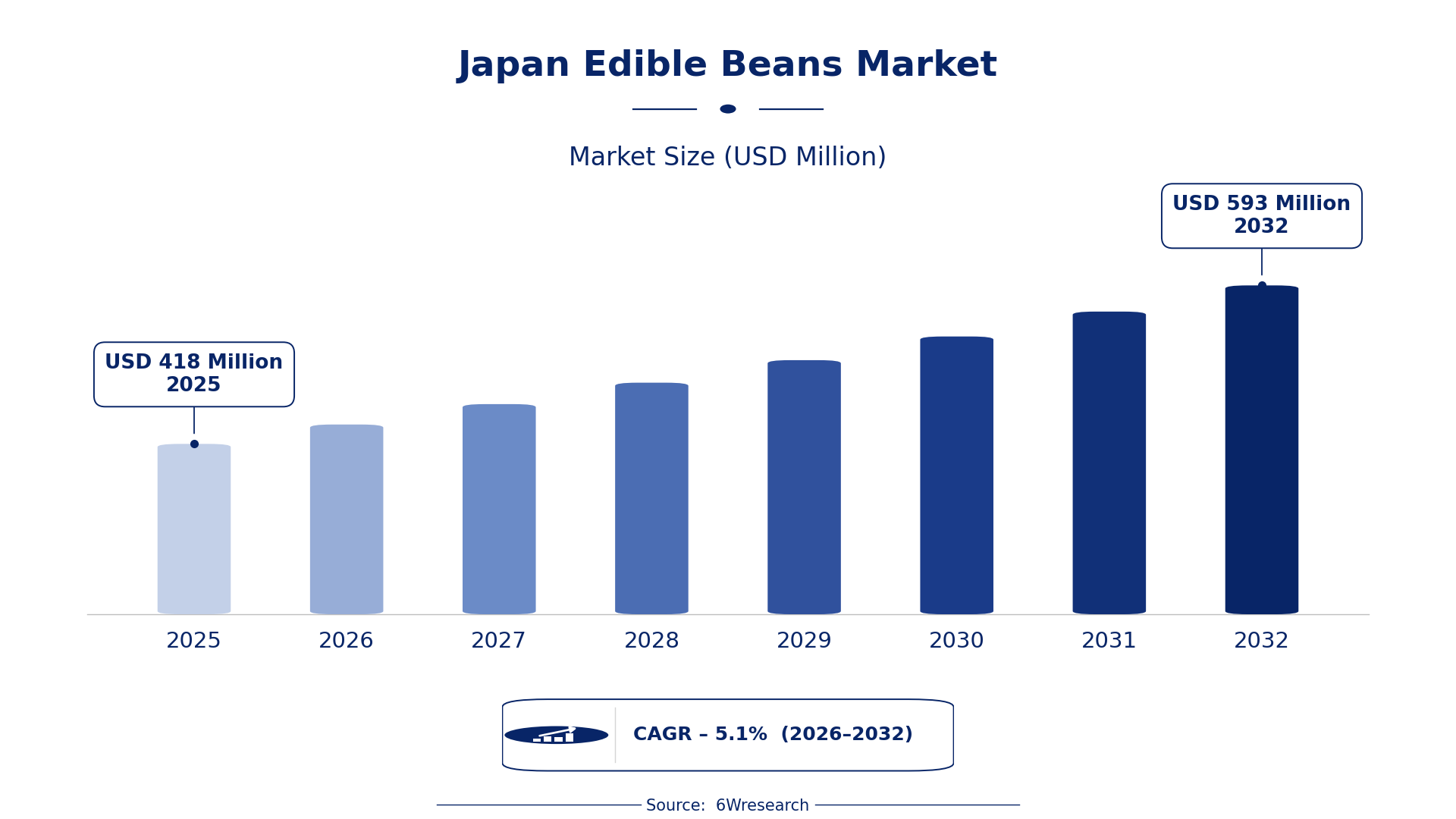
According to 6Wresearch internal database and industry insights, the Japan Edible Beans Market was valued at USD 418 Million in 2025 and is projected to reach USD 593 Million by 2032, growing at a CAGR of approximately 5.1% during 2026–2032.
Japan Edible Beans Market Highlights
| Report Metric | Details |
| Report Name | Japan Edible Beans Market (2026-2032) |
| Market Size 2025 | USD 418 Million |
| Market Size 2032 | USD 593 Million |
| Absolute Growth 2025–2032 | USD 175 Million |
| CAGR 2026–2032 | 5.1% |
| Peak Annual Growth | 5.8% in 2027 |
| Forecast Period | 2026–2032 |
| Historical Data | 2022–2025 |
| Base Year | 2025 |
| Leading Product Type, 2025 | Pinto Beans (34% share) |
| Leading Distribution Channel, 2025 | Supermarket/Hypermarket (40% share) |
| Leading Application, 2025 | Household (47% share) |
| Fastest-Growing Product Type | Navy Beans (7.2% CAGR) |
| Fastest-Growing Distribution Channel | Online Stores (6.6% CAGR) |
| Fastest-Growing Application | Restaurants (6.4% CAGR) |
| Growing Sector | Household consumption |
| Key End Users | Households, Restaurants, Food Manufacturers |
Japan Edible Beans Market Year-wise Growth Rate and Key Drivers (2022–2032)
This graph illustrates the annual growth rates of the market from 2022 to 2032, highlighting a steady upward trajectory and projected market expansion over the forecast period.
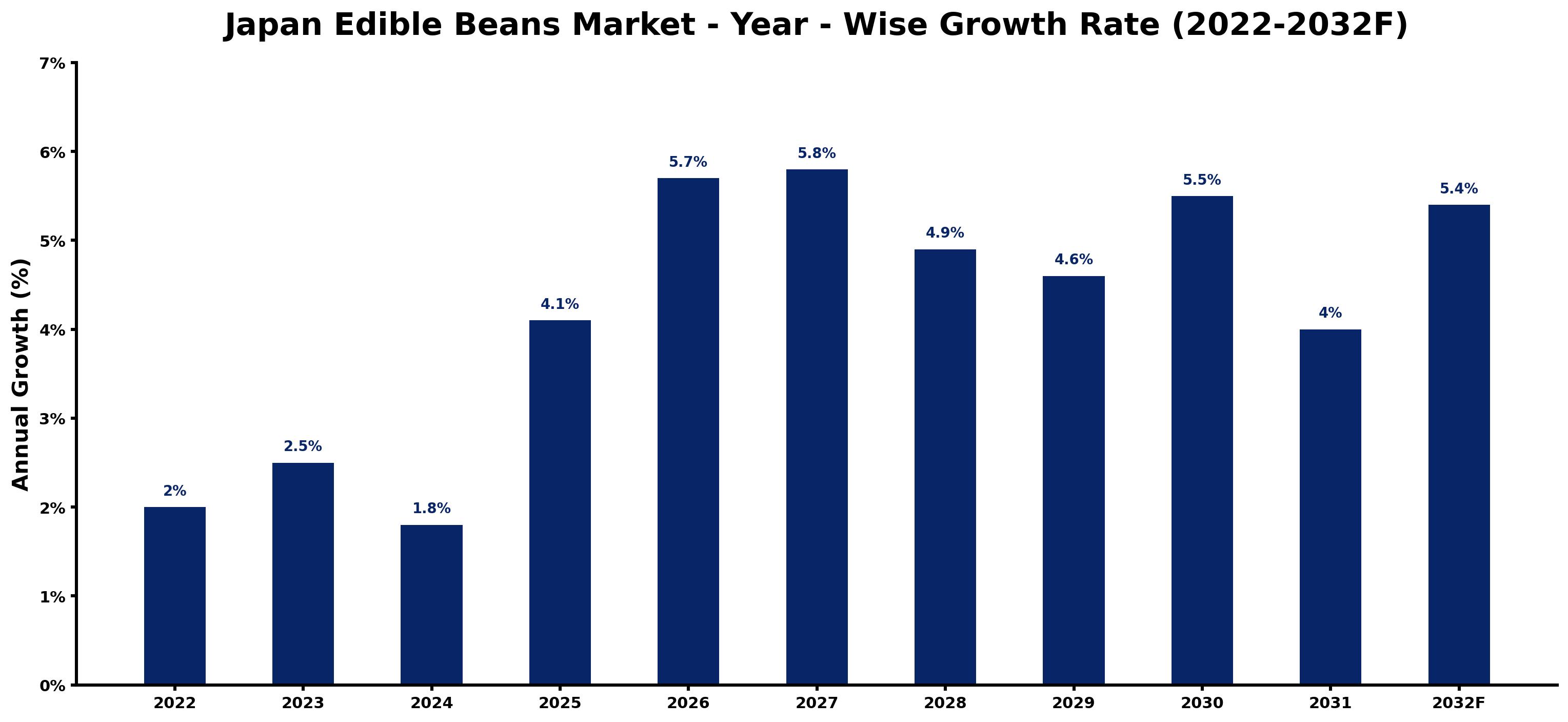
Annual growth estimates for each year appear below with the principal reason behind them, explaining the shifts that set the pace of the market.
| Year | Estimated Annual Growth (%) | Market Rationale |
| 2022 | 2.0 | The market experienced moderate growth, reflecting stable demand from households and restaurants. |
| 2023 | 2.5 | Growth accelerated due to increased consumer interest in healthy eating and traditional dishes. |
| 2024 | 1.8 | A slight slowdown occurred as market conditions normalised after the previous year's surge. |
| 2025 | 4.1 | Growth rebounded strongly, fuelled by rising production and consumption of local bean varieties. |
| 2026 | 5.7 | Demand is expected to surge as food manufacturers expand product lines featuring edible beans. |
| 2027 | 5.8 | The market is projected to peak with heightened consumer awareness of the health benefits of beans. |
| 2028 | 4.9 | A slowdown is anticipated as growth stabilises after the peak year. |
| 2029 | 4.6 | Continued interest in healthy diets will maintain positive growth, albeit at a slower pace. |
| 2030 | 5.5 | Demand is expected to increase again as new culinary trends emerge, promoting bean-based dishes. |
| 2031 | 4.0 | Growth is projected to slow as market saturation begins to set in among established consumer bases. |
| 2032 | 5.4 | A resurgence in interest for local varieties is expected to drive growth once more. |
Note: Market size estimations and growth projections presented in this report are based on 6Wresearch's proprietary forecasting methodology, utilizing the latest available industry data, government publications, and primary research inputs.
Japan Edible Beans Market Synopsis
Edible beans are legumes cultivated primarily for human consumption, rich in protein and fibre, commonly used in traditional Japanese dishes such as miso soup. The Japan Edible Beans Market is experiencing growth, driven by rising consumer awareness of health benefits and increasing demand from food manufacturers. In 2022, Japan produced 140,000 tons of edible beans, with average household consumption reaching 5 kg annually. The Kanto region stands out as a major production area, contributing to the market's expansion.
Market Dynamics Impact Analysis (2026–2032)
| Factor | Type | Impact | Primary Segment Affected |
| Growing consumer interest in health and nutrition | Driver | High | Household |
| Rising demand for processed bean products | Driver | High | Restaurants |
| Expansion of online retail channels | Opportunity | High | Online Stores |
| Government campaigns promoting local varieties | Opportunity | High | Household |
| Competition from imported bean varieties | Restraint | Medium | Pinto Beans |
| Fluctuations in domestic production due to climate conditions | Restraint | Medium | Navy Beans |
| Rising costs of production impacting margins | Challenge | High | Great Northern Beans |
| Consumer preference shifts towards alternative protein sources | Challenge | Medium | Black Beans |
Evaluation of Drivers in Japan Edible Beans Market (2026–2032)
Demand rests on the following drivers, each shown with the segment it touches most.
| Drivers | Primary Segment Affected | Why It Matters (Evidence) |
| Increased health consciousness among consumers | Household | The average Japanese household consumes about 5 kg of beans annually, driving demand for nutritious food options. |
| Growing popularity of bean-based dishes in restaurants | Restaurants | Restaurants are incorporating beans into menus, responding to trends for healthier dining experiences, with a 25% increase in bean-based items. |
| Expansion of online shopping options for convenience | Online Stores | The rise of e-commerce has made it easier for consumers to purchase beans, boosting sales by 15% in 2023. |
| Government initiatives promoting local bean varieties | Household | The recent campaign by the Ministry of Agriculture, Forestry and Fisheries encourages consumption of locally grown beans, increasing awareness and sales. |
| Increased production capacity in the Kanto region | Pinto Beans | The Kanto region is a major production area, contributing to a 10% rise in local production. |
Several shifts outside the market lift sales. The average Japanese household consumes about 5 kg of beans annually, reflecting increased health consciousness. The popularity of bean-based dishes in restaurants is rising, as establishments adapt to consumer preferences for nutritious meals, with a 25% increase in bean-based menu items. The expansion of online shopping options has made purchasing beans more convenient, driving sales growth by 15% in 2023. Campaigns promoting local varieties are encouraging households to choose domestic products, further boosting demand.
Evaluation of Restraints in Japan Edible Beans Market
These are the pressures that could keep growth below its potential.
| Market Restraint | Primary Segment Affected | Why It Matters (Evidence) |
| Competition from imported bean varieties | Pinto Beans | Japan imports various bean types, which can affect local producers' market share, with imports increasing by 10% in recent years. |
| Fluctuations in domestic production due to climate conditions | Navy Beans | Adverse weather conditions can impact yields, leading to supply shortages and higher prices, with a potential 15% decrease in output. |
| Rising costs of production impacting margins | Great Northern Beans | Increased costs for seeds and labour have raised production expenses, squeezing profit margins for growers by up to 20%. |
| Consumer preference shifts towards alternative protein sources | Black Beans | As plant-based diets gain popularity, some consumers may opt for alternatives, affecting bean sales and reducing market share by about 10%. |
| Limited awareness of lesser-known bean varieties | Others | Many consumers remain unaware of the benefits and uses of less popular beans, hindering their market growth and limiting sales potential. |
Japan Edible Beans Market Challenges
High operational costs impact buyers, as compliance with ISO 22000 standards in bean processing increases expenses. Regulatory barriers in Japan delay suppliers, hindering the introduction of new bean varieties and stalling market growth. A lack of skilled labour in agriculture affects producers, resulting in harvest delays and a potential 10% decrease in annual yields. Supply chain issues from import reliance can lead to price fluctuations, which disrupt buyers who require stable bean availability for their products.
Trends in the Japan Edible Beans Market
Below are the shifts with the largest effect on the Japan Edible Beans Market.
- Shift towards Online Retailing: The rise of e-commerce has transformed how consumers purchase edible beans, with online stores becoming increasingly popular. In 2023, online sales grew by 15%, reflecting changing shopping habits.
- Emergence of Health-Focused Products: In recent years, there has been a notable shift towards health-focused bean products, driven by consumer demand for nutritious options. The launch of various high-protein bean snacks in 2023 illustrates this trend.
- Increased Interest in Local Varieties: Since 2023, campaigns promoting local bean varieties have gained traction, encouraging consumers to choose domestically produced options. This has led to a 20% increase in local bean consumption.
- Growing Culinary Diversity: The culinary scene is evolving, with more restaurants incorporating beans into diverse dishes. This trend has resulted in a 25% increase in bean-based menu items since 2022.
Investment Opportunities in the Japan Edible Beans Market
The opportunities below stand out in the Japan Edible Beans Market for new entrants and existing suppliers.
- Partner with Local Producers: Now is the time to establish partnerships with local producers to supply high-quality beans, as demand for local varieties is rising. The Ministry of Agriculture, Forestry and Fisheries supports such initiatives, which can strengthen market presence.
- Supply Health-Conscious Products: With a growing consumer focus on health, supplying nutritious bean products can fill a gap in the market. Restaurants are increasingly looking for healthy ingredients to improve their menus, creating opportunities for suppliers.
- Invest in Online Sales Channels: The online retail sector is expanding rapidly, with a 15% growth rate in 2023. Investing in e-commerce platforms can capture this growing consumer base effectively, especially among younger demographics.
- Utilise Government Campaigns: With government campaigns promoting local bean varieties, suppliers can benefit from increased visibility and support. Engaging with local agricultural associations can facilitate market entry and boost product awareness.
Government Initiatives in the Japan Edible Beans Market
The Food Recycling Law aims to reduce food waste by requiring food businesses to recycle it into feed, fertiliser, and energy, which supports the sustainability of bean production. This complements the Industrial Standardization Act, which governs product standards, ensuring safety and quality in bean processing, benefiting both producers and consumers.
The Ministry of Agriculture, Forestry and Fisheries utilises the Food Recycling Law to promote sustainable practices among bean producers. This law encourages businesses to adopt eco-friendly methods, increasing the market appeal of local beans and potentially boosting sales by 10%.
Future Insight of the Japan Edible Beans Market
Advancements in precision agriculture will transform production techniques by 2032, allowing suppliers to significantly increase yields. The government's initiative to promote local bean varieties will heighten consumer interest and demand for domestic options. Improved processing technologies will enhance product quality, appealing to health-conscious consumers. By 2032, the average annual bean consumption per household is expected to reach 7 kg, reflecting a growing trend towards plant-based diets.
Market Segmentation Analysis
Japan Edible Beans Market report covers a detailed analysis of the following market segments:
By Product Type – Pinto Beans Lead, Navy Beans Expected to Grow Fastest
According to Ravi Bhandari, Research Head at 6Wresearch, in 2025, Pinto Beans led the product type split with a 34% share. Pinto beans hold the largest share due to their widespread use in processed foods across Japan, catering to both domestic consumers and food manufacturers. Their versatility makes them a staple ingredient in various dishes, ensuring a consistent demand. Navy Beans are projected to grow fastest, at a CAGR of 7.2% during 2026–2032. Navy beans are experiencing the fastest growth as they are commonly used in traditional soups, which are integral to Japanese cuisine. The increasing popularity of miso soup, a staple dish, further drives this demand. Suppliers should focus on promoting pinto and navy beans to capitalise on their established and growing markets.
By Distribution Channel – Supermarket/Hypermarket Leads, Online Stores Expected to Grow Fastest
The largest distribution channel category in 2025 was Supermarket/Hypermarket, at 40% of revenue. Supermarkets and hypermarkets dominate this segment as they serve as the primary retail channel for consumers seeking edible beans. Their wide range of products and accessibility cater to the substantial demand from households, particularly in urban areas like Tokyo. The quickest growth will come from Online Stores, forecast to expand at a CAGR of 6.6% between 2026 and 2032. Online stores are experiencing rapid growth as more consumers prefer the convenience of shopping from home, particularly for food products. The rise in e-commerce in Japan is facilitating easier access to various bean types, driving this trend further. Suppliers must prioritise their online presence to meet the increasing consumer demand for convenient purchasing options.
By Application – Household Leads, Restaurants Expected to Grow Fastest
Household accounted for 47% of the market by application in 2025. The household segment leads in share as it serves as the main source of consumption for edible beans in Japan. With the average household consuming approximately 5 kg of beans annually, this segment demonstrates consistent demand. Restaurants are set to record the highest CAGR in this split, 6.4% over 2026–2032. Restaurants are experiencing the fastest growth in application as they increasingly incorporate beans into their menu items. The rising trend towards healthier dining options is driving the demand for bean-based dishes. Suppliers should target the food service sector to capitalise on the growing trend of bean incorporation in restaurant menus.
Key Attractiveness of the Report
- 10 Years of Market Numbers
- Historical Data Starting from 2022 to 2025
- Base Year 2025
- Forecast Data until 2032
- Key Performance Indicators Impacting the Market
- Major Upcoming Developments and Projects
Key Highlights of the Report:
- Japan Edible Beans Market Outlook
- Market Size of Japan Edible Beans Market, 2025
- Forecast of Japan Edible Beans Market, 2032
- Historical Data and Forecast of Japan Edible Beans Revenues & Volume for the Period 2022-2032
- Japan Edible Beans Market Trend Evolution
- Japan Edible Beans Market Drivers and Challenges
- Japan Edible Beans Price Trends
- Japan Edible Beans Porter's Five Forces
- Japan Edible Beans Industry Life Cycle
- Historical Data and Forecast of Japan Edible Beans Market Revenues & Volume By Product Type for the Period 2022-2032
- Historical Data and Forecast of Japan Edible Beans Market Revenues & Volume By Pinto Beans for the Period 2022-2032
- Historical Data and Forecast of Japan Edible Beans Market Revenues & Volume By Navy Beans for the Period 2022-2032
- Historical Data and Forecast of Japan Edible Beans Market Revenues & Volume By Great Northern Beans for the Period 2022-2032
- Historical Data and Forecast of Japan Edible Beans Market Revenues & Volume By Red Kidney Beans for the Period 2022-2032
- Historical Data and Forecast of Japan Edible Beans Market Revenues & Volume By Black Beans for the Period 2022-2032
- Historical Data and Forecast of Japan Edible Beans Market Revenues & Volume By Yellow Beans for the Period 2022-2032
- Historical Data and Forecast of Japan Edible Beans Market Revenues & Volume By Others for the Period 2022-2032
- Historical Data and Forecast of Japan Edible Beans Market Revenues & Volume By Distribution Channel for the Period 2022-2032
- Historical Data and Forecast of Japan Edible Beans Market Revenues & Volume By Supermarket/Hypermarket for the Period 2022-2032
- Historical Data and Forecast of Japan Edible Beans Market Revenues & Volume By Online Stores for the Period 2022-2032
- Historical Data and Forecast of Japan Edible Beans Market Revenues & Volume By Specialty Stores for the Period 2022-2032
- Historical Data and Forecast of Japan Edible Beans Market Revenues & Volume By Other for the Period 2022-2032
- Historical Data and Forecast of Japan Edible Beans Market Revenues & Volume By Application for the Period 2022-2032
- Historical Data and Forecast of Japan Edible Beans Market Revenues & Volume By Household for the Period 2022-2032
- Historical Data and Forecast of Japan Edible Beans Market Revenues & Volume By Restaurants for the Period 2022-2032
- Historical Data and Forecast of Japan Edible Beans Market Revenues & Volume By Others for the Period 2022-2032
- Japan Edible Beans Import Export Trade Statistics
- Market Opportunity Assessment By Product Type
- Market Opportunity Assessment By Distribution Channel
- Market Opportunity Assessment By Application
- Japan Edible Beans Top Companies Market Share
- Japan Edible Beans Competitive Benchmarking By Technical and Operational Parameters
- Japan Edible Beans Company Profiles
- Japan Edible Beans Key Strategic Recommendations
Market Covered
The report covers the following segments.
By Product Type
- Pinto Beans
- Navy Beans
- Great Northern Beans
- Red Kidney Beans
- Black Beans
- Yellow Beans
- Others
By Distribution Channel
- Supermarket/Hypermarket
- Online Stores
- Specialty Stores
- Other
By Application
- Household
- Restaurants
- Others






































