Japan Energy Security Market Size & Growth Rate (2026-2032)
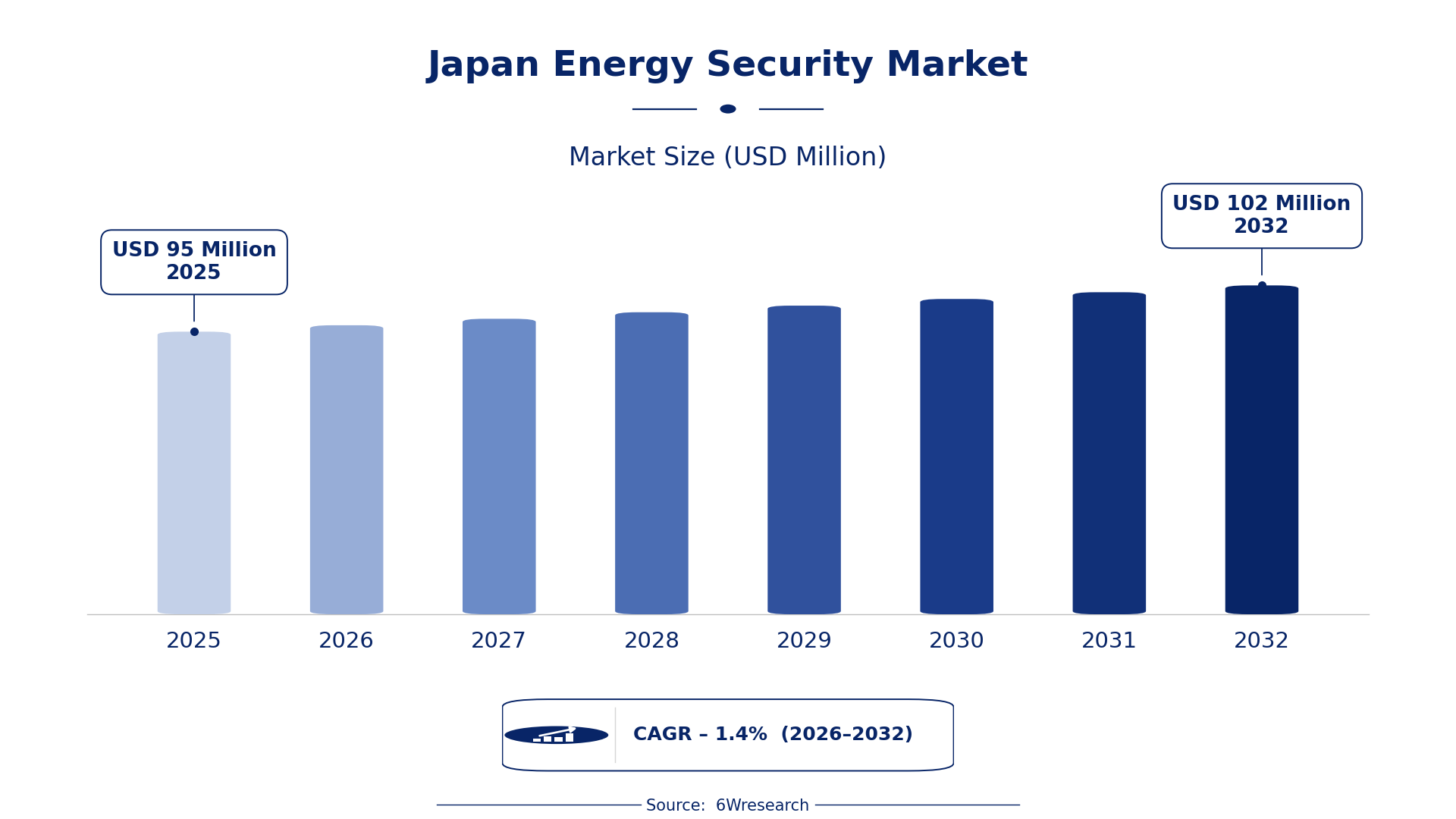
The Japan Energy Security Market was estimated at USD 95 Million in 2025 and is projected to reach USD 102 Million by 2032, growing at a CAGR of 1.4% from 2026 to 2032.
Japan Energy Security Market Synopsis
Japan’s energy security is critically influenced by its heavy dependence on energy imports. Following the Fukushima disaster, this reliance has heightened concerns about energy stability and sustainability, prompting government-led initiatives aimed at diversifying energy resources.
As the nation shifts toward a more sustainable energy model, investments in renewable energy sources, particularly solar and wind, are surging. This transition is not only about sustainability; it reflects a strategic move to enhance energy self-sufficiency in a world characterized by fluctuating energy prices and geopolitical tensions.
Japan Energy Security Market Year-wise Growth Rate and Key Drivers
This graph illustrates the annual growth rates of the Japan Energy Security Market from 2021 to 2032, highlighting a steady upward trajectory and projected expansion over the forecast period.
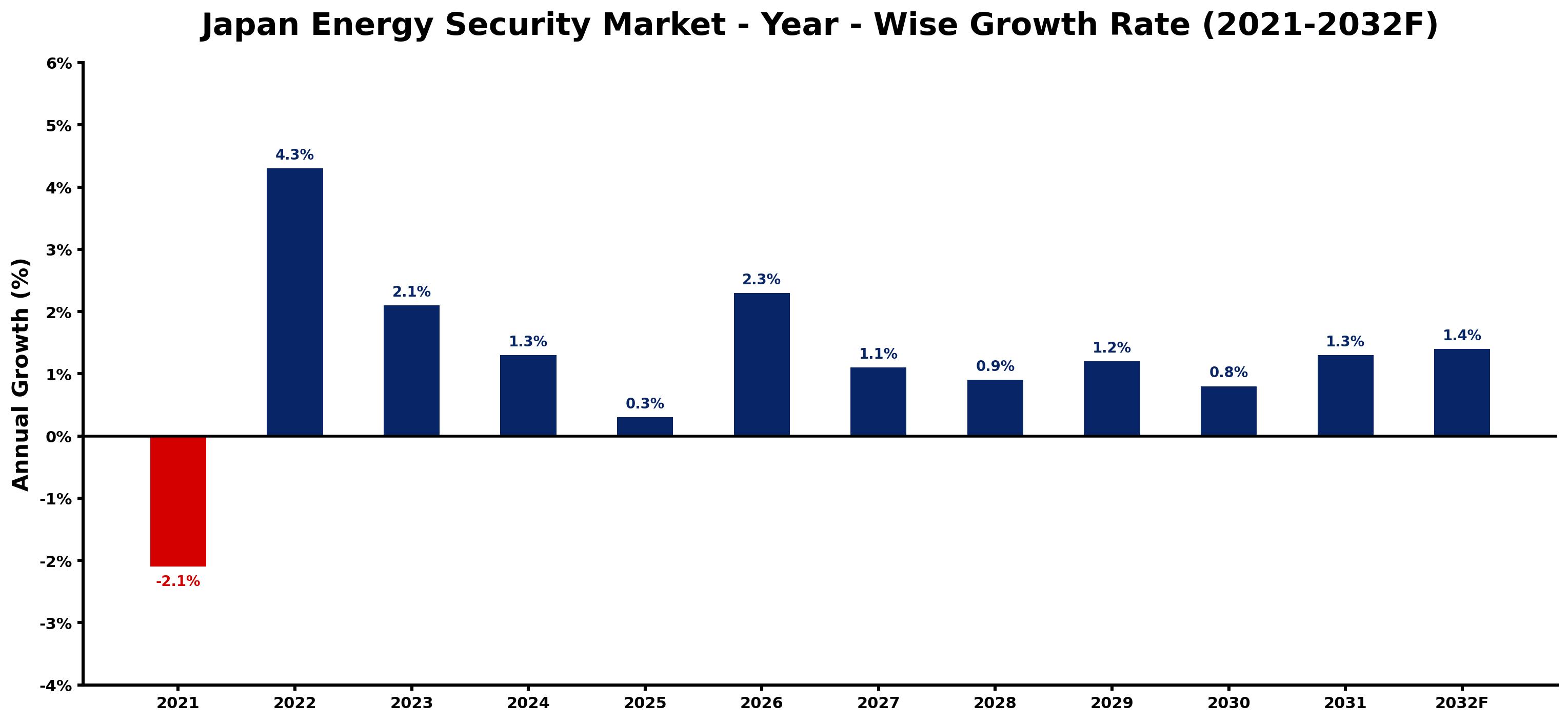
The table below presents the year‑wise growth rates along with the key drivers influencing the market
| Year | Growth Rate | Major Drivers |
| 2021 | -2.1% | Reduced demand from post-Fukushima energy transition policies. |
| 2022 | 4.3% | Japan's Green Growth Strategy promoting renewable energy investments. |
| 2023 | 2.1% | Increased government incentives for energy efficiency upgrades. |
| 2024 | 1.3% | Rising adoption of hydrogen energy technologies in industry. |
| 2025 | 0.3% | Electricity market reforms enhancing supplier competition dynamics. |
| 2026 | 2.3% | Regional energy resilience initiatives following natural disasters. |
| 2027 | 1.1% | Collaboration with local firms for smart grid innovations. |
| 2028 | 0.9% | Strengthened cybersecurity regulations for energy infrastructure. |
| 2029 | 1.2% | Growing corporate commitment to sustainable energy sourcing. |
| 2030 | 0.8% | Advancements in nuclear technology supporting energy security goals. |
| 2031 | 1.3% | Government policies favoring energy diversification and independence. |
| 2032 | 1.4% | Active participation in international energy supply chains. |
Note: Market size estimations and growth projections presented in this report are based on 6Wresearch's proprietary forecasting methodology, utilizing the latest available industry data, government publications, and primary research inputs.
Japan Energy Security Market Key Takeaways
Below are some of the specific key takeaways from the market, including:
- The market is shifting towards renewable energy sources to mitigate reliance on imports.
- Energy efficiency measures are becoming essential to enhance overall energy security.
- Government policies are shaping the industry's direction significantly.
- Investment opportunities are plentiful, particularly in solar and wind energy sectors.
- Collaborations with international partners are increasing to enhance technology sharing and resource diversification.
Evaluation of Restraints in Japan Energy Security Market
Despite the potential for growth, the Japan Energy Security Market faces significant limitations. A primary concern is the country's high dependency on imported energy, exposing it to volatile global market fluctuations. The lingering effects of the Fukushima disaster continue to cast a shadow over nuclear energy initiatives, further constraining options for energy diversification. Regulatory complexities and a slow transition towards renewables add additional layers of challenge, emphasizing the urgent need for policies that support innovation and infrastructure development.
Japan Energy Security Market Trends
A noticeable trend within the Japan Energy Security Market is the acceleration towards renewable energy adoption. This shift has gained momentum since the Fukushima incident, with increased governmental support for solar and wind projects. on top of that, technological advancements in energy storage and smart grid technologies are becoming pivotal in transforming the energy sector, ensuring reliability and sustainability.
There’s also a marked emphasis on energy efficiency, as businesses and households seek to optimize consumption. These trends suggest a robust commitment not only to improving energy security but also to addressing climate change through reduced greenhouse gas emissions.
Japan Energy Security Market Opportunities
The renewable energy sector in Japan is ripe with investment opportunities. Developers and investors can explore prospects in solar panel production and wind farm construction. Energy storage solutions are also gaining traction, as Japan aims to enhance grid stability and accommodate fluctuating energy outputs from renewables.
Additionally, the push for energy efficiency opens avenues for consulting services and technology innovations aimed at reducing consumption. Collaborating with government initiatives, such as public-private partnerships, can further amplify these opportunities, promising a secure investment landscape.
Government Initiatives in the Japan Energy Security Market
The Japanese government plays a crucial role in shaping energy policies aimed at fostering a more secure and sustainable energy future. With a clear focus on reducing reliance on fossil fuel imports, various initiatives have been launched to promote renewable energy adoption and enhance energy resilience. These efforts are vital in addressing both current energy needs and long-term sustainability goals.
- A recently completed initiative involved the introduction of a Feed-in Tariff (FIT) program designed to stimulate renewable energy projects, especially in solar power.
- Current ongoing efforts include the implementation of energy efficiency regulations encouraging businesses to adopt sustainable practices and technologies.
- Planned initiatives for the coming years feature a national strategy aimed at enhancing energy self-sufficiency through increased investment in renewable resources.
- The government is working on strengthening partnerships with international agencies to facilitate technology transfer and collaborative energy solutions.
- Investment in smart grid technologies is underway, which aims to modernize Japan's energy infrastructure and improve operational efficiencies.
Future Insights of the Japan Energy Security Market
The future of the Japan Energy Security Market looks promising as efforts to diversify energy sources continue to gain momentum. The push for renewables is expected to strengthen, along with substantial investments in energy efficiency technologies. Market participants should be aware of potential hurdles, including regulatory challenges and geopolitical uncertainties, but the general trajectory suggests an ongoing commitment to building a resilient energy system that emphasizes sustainability and self-sufficiency.
Japan Energy Security Market Latest Developments
Recent months have seen an increase in activities within the Japan Energy Security Market, highlighting a collective effort to shift towards renewable energy and improve energy security. As new technologies emerge and government support strengthens, various initiatives are being launched to advance these objectives.
- A major renewable energy initiative started in early 2025, focusing on expanding offshore wind capabilities, with several projects currently underway.
- An energy efficiency program that began in late 2024 is making progress, encouraging commercial sectors to adopt greener technologies.
- Future planning is being undertaken for a comprehensive solar energy strategy set to roll out by mid-2026, promoting residential solar installations.
- In Q4 2025, a leading technology vendor announced the launch of an advanced energy storage solution aimed at enhancing grid resilience.
- A collaboration agreement between Japan and several international partners is in development, expected to formalize by late 2026, focusing on shared renewable technology initiatives.
Japan Energy Security Market - Key Attractiveness of the Report
- 10 Years of Market Numbers
- Historical Data Starting from 2022 to 2025
- Base Year: 2025
- Forecast Data until 2032
- Key Performance Indicators Impacting the Market
- Major Upcoming Developments and Projects
Solar and wind energy are at the forefront, spurred by government incentives and a societal push towards reducing carbon footprints. These sources are integral to Japan’s strategy for energy diversification.
Key Highlights of the Report:
- Japan Energy Security Market Outlook
- Market Size of Japan Energy Security Market, 2025
- Forecast of Japan Energy Security Market, 2032
- Historical Data and Forecast of Japan Energy Security Revenues & Volume for the Period 2022-2032F
- Japan Energy Security Market Trend Evolution
- Japan Energy Security Market Drivers and Challenges
- Japan Energy Security Price Trends
- Japan Energy Security Porter's Five Forces
- Japan Energy Security Industry Life Cycle
- Historical Data and Forecast of Japan Energy Security Market Revenues & Volume By Power Plants for the Period 2022-2032F
- Historical Data and Forecast of Japan Energy Security Market Revenues & Volume By Nuclear for the Period 2022-2032F
- Historical Data and Forecast of Japan Energy Security Market Revenues & Volume By Thermal for the Period 2022-2032F
- Historical Data and Forecast of Japan Energy Security Market Revenues & Volume By Hydro for the Period 2022-2032F
- Historical Data and Forecast of Japan Energy Security Market Revenues & Volume By Oil for the Period 2022-2032F
- Historical Data and Forecast of Japan Energy Security Market Revenues & Volume By Gas for the Period 2022-2032F
- Historical Data and Forecast of Japan Energy Security Market Revenues & Volume By Renewable Energy for the Period 2022-2032F
- Historical Data and Forecast of Japan Energy Security Market Revenues & Volume By Technologies for the Period 2022-2032F
- Historical Data and Forecast of Japan Energy Security Market Revenues & Volume By Physical for the Period 2022-2032F
- Historical Data and Forecast of Japan Energy Security Market Revenues & Volume By Network Security for the Period 2022-2032F
- Japan Energy Security Import Export Trade Statistics
- Market Opportunity Assessment By Power Plants
- Market Opportunity Assessment By Technologies
- Japan Energy Security Top Companies Market Share
- Japan Energy Security Competitive Benchmarking By Technical and Operational Parameters
- Japan Energy Security Company Profiles
- Japan Energy Security Key Strategic Recommendations






































