Japan Farm Biosecurity Market Size & Growth Rate
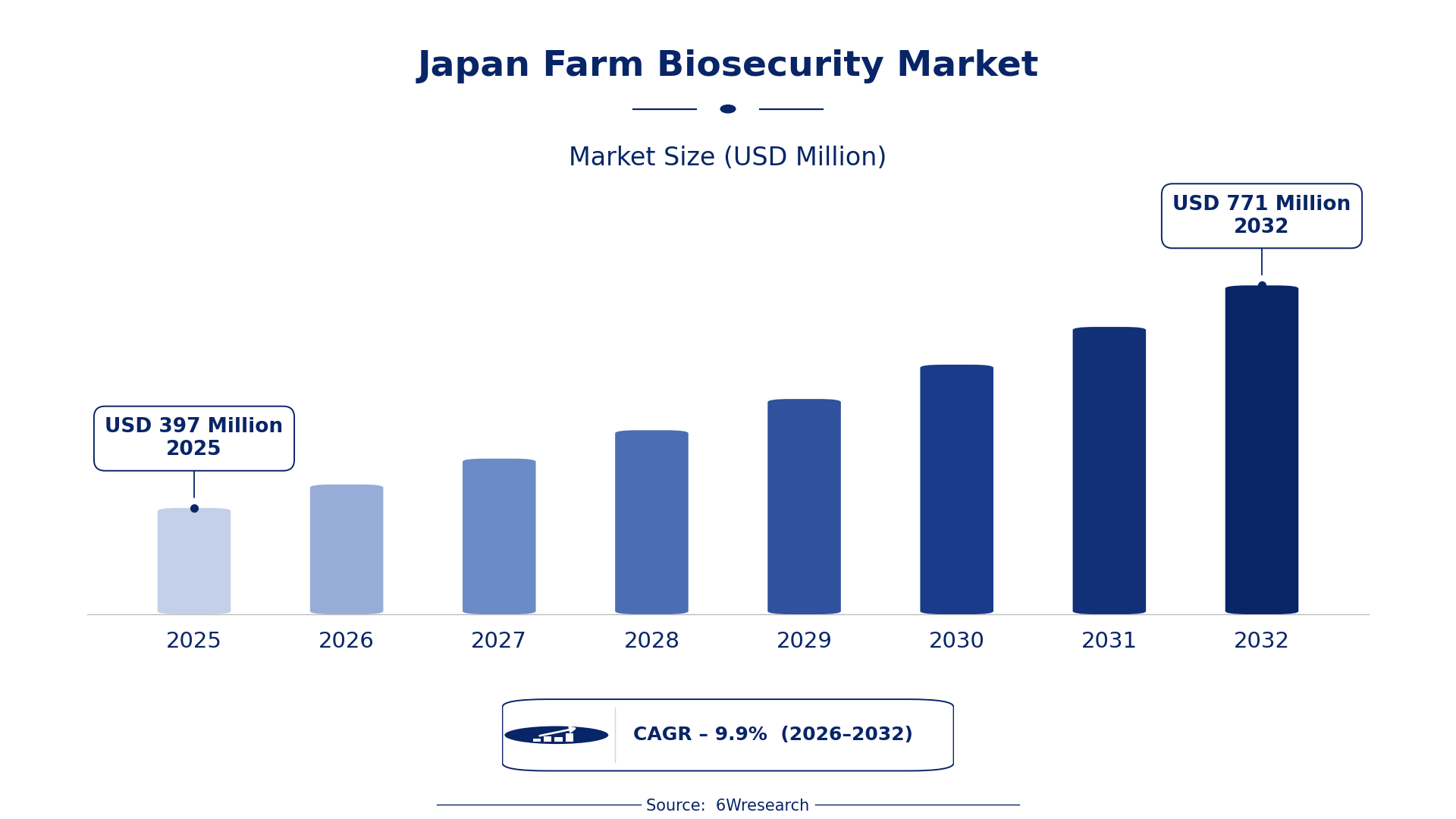
According to 6Wresearch internal database and industry insights, the Japan Farm Biosecurity Market was valued at USD 397 Million in 2025 and is projected to reach USD 771 Million by 2032, growing at a CAGR of approximately 9.9% during 2026–2032.
Japan Farm Biosecurity Market Highlights
| Report Metric | Details |
| Report Name | Japan Farm Biosecurity Market (2026-2032) |
| Market Size 2025 | USD 397 Million |
| Market Size 2032 | USD 771 Million |
| Absolute Growth 2025–2032 | USD 374 Million |
| CAGR 2026–2032 | 9.9% |
| Peak Annual Growth | 10.9% in 2030 |
| Forecast Period | 2026–2032 |
| Historical Data | 2022–2025 |
| Base Year | 2025 |
| Leading Product Type, 2025 | Disinfectants (46% share) |
| Leading Application Area, 2025 | Livestock Pens (41% share) |
| Leading Distribution Channel, 2025 | Veterinary Distributors (48% share) |
| Leading End User, 2025 | Poultry Farms (55% share) |
| Fastest-Growing Product Type | Protective Gear (13.7% CAGR) |
| Fastest-Growing Application Area | Entry Control (11.7% CAGR) |
| Fastest-Growing Distribution Channel | Online Retailers (12.7% CAGR) |
| Fastest-Growing End User | Dairy Farms (13.3% CAGR) |
| Growing Sector | Livestock Farming |
| Key End Users | Poultry Farms, Dairy Farms, Animal Husbandry Units |
Japan Farm Biosecurity Market Year-wise Growth Rate and Key Drivers (2022–2032)
This graph illustrates the annual growth rates of the market from 2022 to 2032, highlighting a steady upward trajectory and projected market expansion over the forecast period.
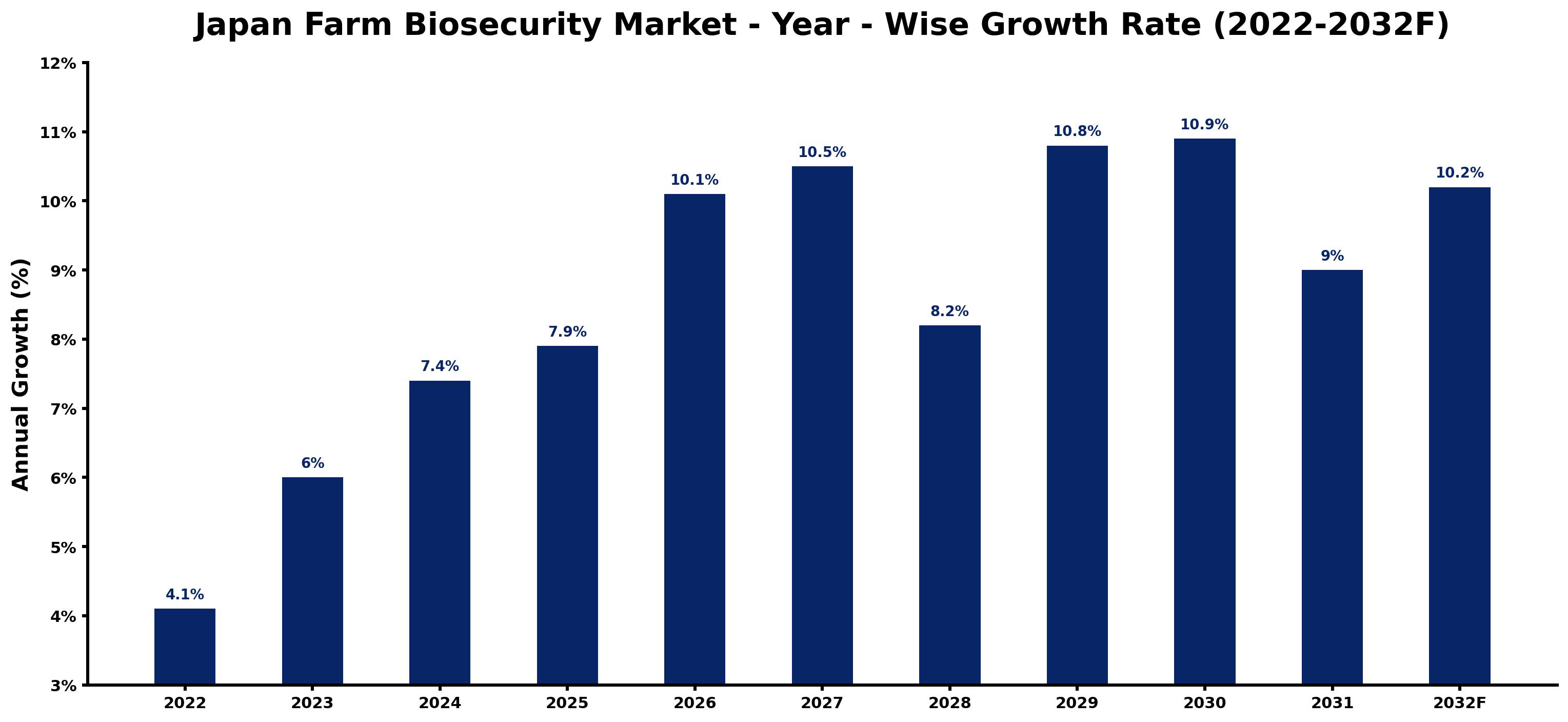
The table below sets out the estimated growth rate for each year and the main factor behind it.
| Year | Estimated Annual Growth (%) | Market Rationale |
| 2022 | 4.1 | The market experienced steady growth due to established biosecurity practices in livestock farming. |
| 2023 | 6.0 | Growth accelerated as awareness of disease prevention measures increased among farmers. |
| 2024 | 7.4 | Demand rose further with heightened focus on biosecurity regulations and standards. |
| 2025 | 7.9 | The market reached a peak as more farms adopted effective biosecurity measures. |
| 2026 | 10.1 | Growth is expected to continue as investments in biosecurity technologies gain momentum. |
| 2027 | 10.5 | The market will expand with increased livestock production and biosecurity compliance. |
| 2028 | 8.2 | Growth is projected to slow slightly as the market stabilises after rapid expansion. |
| 2029 | 10.8 | Demand will surge again as new biosecurity initiatives are introduced in rural areas. |
| 2030 | 10.9 | The market is expected to peak with the highest growth rate as biosecurity becomes a priority for all farms. |
| 2031 | 9.0 | Growth will moderate as the market adjusts to the peak levels of the previous year. |
| 2032 | 10.2 | Demand remains strong as ongoing investments in biosecurity technologies continue. |
Note: Market size estimations and growth projections presented in this report are based on 6Wresearch's proprietary forecasting methodology, utilizing the latest available industry data, government publications, and primary research inputs.
Japan Farm Biosecurity Market Synopsis
Farm biosecurity includes practices and technologies aimed at preventing the spread of infectious diseases in livestock, such as disinfectants, protective gear, and monitoring systems. The Japan Farm Biosecurity Market is growing due to an increase in domestic livestock production, stringent regulations from the Ministry of Agriculture, Forestry and Fisheries, and heightened awareness of food safety standards. The rollout of new biosecurity programs in rural areas is boosting demand, setting the market on a path to reach USD 771 million by 2032.
Market Dynamics Impact Analysis (2026–2032)
| Factor | Type | Impact | Primary Segment Affected |
| Increasing livestock production drives demand for biosecurity measures. | Driver | High | Disinfectants |
| Adoption of ISO 22000 standards enhances food safety management in livestock. | Driver | High | Protective Gear |
| Rising awareness of disease prevention creates opportunities for innovative solutions. | Opportunity | High | Sanitizing Systems |
| The expansion of online retail channels is opening new markets for biosecurity products. | Opportunity | Medium | Veterinary Distributors |
| Compliance with stringent regulations can increase operational costs for farms. | Restraint | High | Entry Control |
| Limited access to advanced biosecurity technologies may hinder smaller farms. | Restraint | Medium | Surveillance Systems |
| High costs of implementing comprehensive biosecurity measures can deter farmers. | Challenge | High | Livestock Pens |
| Competition from low-cost alternatives may impact market pricing strategies. | Challenge | Medium | Farm Equipment |
Evaluation of Drivers in Japan Farm Biosecurity Market (2026–2032)
Below are the drivers that matter most for revenue growth, with supporting evidence.
| Drivers | Primary Segment Affected | Why It Matters (Evidence) |
| Rising livestock population increases the need for biosecurity measures. | Disinfectants | Japan's livestock population includes approximately 4 million cattle and 150 million chickens, driving demand for effective disease control. |
| Growing focus on food safety management systems boosts protective gear sales. | Protective Gear | ISO 22000 standards are applied for food safety, encouraging farms to invest in personnel safety equipment. |
| Increased awareness of disease outbreaks prompts investments in sanitizing systems. | Sanitizing Systems | With over 1,300 poultry farms, the need for hygiene measures is critical for disease prevention. |
| Expansion of veterinary distribution channels improves product availability. | Veterinary Distributors | Veterinary distributors play a crucial role in supplying biosecurity products to farms, facilitating access. |
| Technological advancements in monitoring systems improve biosecurity effectiveness. | Surveillance Systems | Innovations in surveillance technology support farms in early disease detection and management. |
Volumes grow on the back of increasing livestock production, with approximately 4 million cattle and 150 million chickens in Japan. This rising population necessitates effective biosecurity measures, particularly disinfectants, which are essential for disease control. The application of ISO 22000 standards drives food safety management, leading to heightened demand for protective gear. The expansion of veterinary distributors ensures better access to biosecurity products across the country. Enhanced monitoring systems support early disease detection, prompting farms to invest in sanitizing systems to maintain hygiene standards.
Evaluation of Restraints in Japan Farm Biosecurity Market
These are the pressures that could keep growth below its potential.
| Market Restraint | Primary Segment Affected | Why It Matters (Evidence) |
| Compliance costs associated with stringent biosecurity regulations can be high. | Entry Control | Farmers face increased operational costs to meet the regulations set by the Veterinary Services Agency. |
| Limited access to advanced biosecurity technologies may hinder smaller farms' compliance. | Surveillance Systems | Many smaller farms struggle to afford the latest monitoring systems, impacting their biosecurity effectiveness. |
| High initial investments for biosecurity measures can deter farmers. | Livestock Pens | Farmers may hesitate to implement extensive biosecurity protocols due to upfront costs. |
| Competition from low-cost alternatives may impact pricing strategies for biosecurity products. | Farm Equipment | Budget constraints lead some farmers to choose cheaper options, affecting quality and safety. |
| Lack of awareness about the importance of biosecurity can limit market growth. | Sanitizing Systems | Some farmers may underestimate the need for hygiene measures, resulting in lower demand. |
Japan Farm Biosecurity Market Challenges
Producers incur annual costs of up to JPY 1.5 billion due to a lack of skilled workers in biosecurity practices, which delays vital disease prevention efforts. Buyers face challenges in sourcing effective biosecurity products, as a limited number of local suppliers lead to longer lead times and potential livestock losses estimated at JPY 500 million. Many farms do not have the necessary infrastructure for advanced monitoring systems, which hampers technology adoption and raises veterinary expenses. Intense competition among suppliers drives prices down, potentially compromising product quality and jeopardising livestock health for farmers.
Trends in the Japan Farm Biosecurity Market
Below are the shifts with the largest effect on the Japan Farm Biosecurity Market.
- Launch of Biosecurity Improvement Programs: In 2023, Japan initiated programs to enhance biosecurity in rural areas, aiming to strengthen disease control measures. This initiative is expected to boost adoption rates of biosecurity products among farmers, contributing to market growth.
- Shift Towards Online Retail for Biosecurity Products: The growth of online retail channels has transformed how farmers obtain biosecurity products. Online sales for these items rose by 20% last year, offering convenience and broadening market access.
- Increased Focus on ISO 22000 Compliance: The implementation of ISO 22000 standards for food safety management has gained momentum among livestock producers. This trend encourages farms to invest in biosecurity measures, particularly in disinfectants and protective gear.
- Growing Demand for Advanced Monitoring Systems: As awareness of disease outbreaks increases, there is a rising demand for advanced monitoring systems in livestock farming. Farms are progressively investing in surveillance technologies to strengthen biosecurity measures.
Investment Opportunities in the Japan Farm Biosecurity Market
The opportunities below stand out in the Japan Farm Biosecurity Market for new entrants and existing suppliers.
- Supply of Disinfectants: With the livestock population at around 4 million cattle and 150 million chickens, there is a strong opportunity to supply disinfectants. Partnering with veterinary distributors can facilitate market entry.
- Need for Protective Gear: The demand for protective gear is increasing as farms align with ISO 22000 standards. Forming joint ventures with local distributors can effectively address this need.
- Market for Sanitizing Systems: The market for sanitising systems is poised for growth, driven by heightened awareness of hygiene. Targeting poultry farms can provide a promising entry point into this segment.
- Investment in Surveillance Technologies: Investing in advanced surveillance technologies offers a key opportunity for growth. Collaborating with tech vendors can improve product offerings and market reach.
Government Initiatives in the Japan Farm Biosecurity Market
The Veterinary Services Agency oversees biosecurity regulations in Japan, enforcing compliance among livestock producers. The Ministry of Agriculture, Forestry and Fisheries promotes biosecurity through various initiatives, including the establishment of biosecure zones in regions with high livestock density. These measures ensure that farms adhere to strict biosecurity protocols, ultimately protecting food safety and livestock health. In 2023, the agency allocated JPY 5 billion to support these initiatives, benefiting over 1,300 poultry farms and dairy producers.
Farmers utilize the support from the Ministry of Agriculture, Forestry and Fisheries to implement biosecurity measures effectively. The agency funds initiatives aimed at improving biosecurity practices, enabling farmers to access resources and training. This support is essential for ensuring compliance with regulations and improving overall farm safety, with approximately 2,000 farms receiving training and resources in the last year.
Future Insight of the Japan Farm Biosecurity Market
By 2032, buyers will benefit from the widespread adoption of advanced monitoring systems, which will improve disease prevention and productivity. New biosecurity initiatives will ensure compliance with ISO 22000 standards, bolstering food safety and supplier confidence. Online retail for biosecurity products is projected to grow by 30%, facilitating easier access to essential supplies for producers. With approximately 4 million cattle and 150 million chickens in Japan, the resilience of the livestock sector will strengthen, benefiting both buyers and suppliers.
Market Segmentation Analysis
Japan Farm Biosecurity Market report covers a detailed analysis of the following market segments:
By Product Type – Disinfectants Lead, Protective Gear Expected to Grow Fastest
According to Saurav Kr Singh, Senior Research Analyst at 6Wresearch, with 46% of product type revenue in 2025, Disinfectants was the largest category. Disinfectants dominate the market due to their crucial role in disease control on farms, particularly in poultry and dairy sectors. Their widespread use is essential for maintaining hygiene standards, especially in facilities with high livestock density. The quickest growth will come from Protective Gear, forecast to expand at a CAGR of 13.7% between 2026 and 2032. Protective Gear is rapidly gaining traction as awareness of personnel safety increases, particularly following the recent programme aimed at enhancing biosecurity in rural areas. This growing emphasis on safety will likely drive further demand for protective equipment. Suppliers should focus on developing protective gear to align with the rising safety expectations in the agricultural sector.
By Application Area – Livestock Pens Lead, Entry Control Expected to Grow Fastest
Livestock Pens held 41% of the Japan Farm Biosecurity Market by application area in 2025. Livestock Pens are the primary focus for biosecurity measures, as they play a critical role in preventing disease spread in poultry and dairy farming. The high concentration of animals in these pens necessitates strict biosecurity protocols to ensure animal health. Entry Control is set to record the highest CAGR in this split, 11.7% over 2026–2032. Entry Control is experiencing the fastest growth due to its essential role in preventing disease entry, particularly in regions with significant livestock populations. The establishment of biosecure zones has intensified the focus on controlling access to these areas, highlighting their importance in biosecurity strategies. Investing in advanced entry control systems will be crucial for buyers looking to strengthen biosecurity on their farms.
By Distribution Channel – Veterinary Distributors Lead, Online Retailers Expected to Grow Fastest
The largest distribution channel category in 2025 was Veterinary Distributors, at 48% of revenue. Veterinary Distributors serve as the primary channel for distributing biosecurity products, ensuring that essential items reach farms effectively. Their established networks and expertise in the agricultural sector make them vital for maintaining a steady supply of biosecurity solutions. Online Retailers are projected to grow fastest, at a CAGR of 12.7% during 2026–2032. Online Retailers are experiencing rapid growth as convenience becomes a key factor for purchasing biosecurity products, with a notable 20% increase in online sales over the past year. This shift in buyer behaviour indicates a need for suppliers to adapt their strategies to include digital sales channels. Enhancing online presence will be essential for suppliers aiming to capture the growing segment of digital buyers.
By End User – Poultry Farms Lead, Dairy Farms Expected to Grow Fastest
Poultry Farms took 55% of end user revenue in 2025, more than any other category. Poultry Farms are the leading end users of biosecurity products, driven by the necessity to protect large flocks from infectious diseases. The substantial population of chickens in Japan underscores the critical need for effective biosecurity measures in this sector. Over 2026–2032, Dairy Farms are expected to post the fastest growth, at a CAGR of 13.3%. Dairy Farms are witnessing the fastest growth in biosecurity measures, as the average size of these farms requires robust health protocols to sustain productivity. The concentration of dairy production in key regions like Tokyo further fuels this demand, reflecting a shift in end-user priorities. Tailoring offerings to meet the specific needs of expanding dairy farms will be vital for suppliers in the biosecurity market.
Key Attractiveness of the Report
- 10 Years of Market Numbers
- Historical Data Starting from 2022 to 2025
- Base Year 2025
- Forecast Data until 2032
- Key Performance Indicators Impacting the Market
- Major Upcoming Developments and Projects
Key Highlights of the Report:
- Japan Farm Biosecurity Market Outlook
- Market Size of Japan Farm Biosecurity Market, 2025
- Forecast of Japan Farm Biosecurity Market, 2032
- Historical Data and Forecast of Japan Farm Biosecurity Revenues & Volume for the Period 2022-2032F
- Japan Farm Biosecurity Market Trend Evolution
- Japan Farm Biosecurity Market Drivers and Challenges
- Japan Farm Biosecurity Price Trends
- Japan Farm Biosecurity Porter's Five Forces
- Japan Farm Biosecurity Industry Life Cycle
- Historical Data and Forecast of Japan Farm Biosecurity Market Revenues & Volume By Product Type for the Period 2022-2032F
- Historical Data and Forecast of Japan Farm Biosecurity Market Revenues & Volume By Disinfectants for the Period 2022-2032F
- Historical Data and Forecast of Japan Farm Biosecurity Market Revenues & Volume By Protective Gear for the Period 2022-2032F
- Historical Data and Forecast of Japan Farm Biosecurity Market Revenues & Volume By Sanitizing Systems for the Period 2022-2032F
- Historical Data and Forecast of Japan Farm Biosecurity Market Revenues & Volume By Surveillance Systems for the Period 2022-2032F
- Historical Data and Forecast of Japan Farm Biosecurity Market Revenues & Volume By Application Area for the Period 2022-2032F
- Historical Data and Forecast of Japan Farm Biosecurity Market Revenues & Volume By Livestock Pens for the Period 2022-2032F
- Historical Data and Forecast of Japan Farm Biosecurity Market Revenues & Volume By Entry Control for the Period 2022-2032F
- Historical Data and Forecast of Japan Farm Biosecurity Market Revenues & Volume By Farm Equipment for the Period 2022-2032F
- Historical Data and Forecast of Japan Farm Biosecurity Market Revenues & Volume By Disease Monitoring for the Period 2022-2032F
- Historical Data and Forecast of Japan Farm Biosecurity Market Revenues & Volume By Distribution Channel for the Period 2022-2032F
- Historical Data and Forecast of Japan Farm Biosecurity Market Revenues & Volume By Veterinary Distributors for the Period 2022-2032F
- Historical Data and Forecast of Japan Farm Biosecurity Market Revenues & Volume By Online Retailers for the Period 2022-2032F
- Historical Data and Forecast of Japan Farm Biosecurity Market Revenues & Volume By Agri Supply Chains for the Period 2022-2032F
- Historical Data and Forecast of Japan Farm Biosecurity Market Revenues & Volume By Tech Vendors for the Period 2022-2032F
- Historical Data and Forecast of Japan Farm Biosecurity Market Revenues & Volume By End User for the Period 2022-2032F
- Historical Data and Forecast of Japan Farm Biosecurity Market Revenues & Volume By Poultry Farms for the Period 2022-2032F
- Historical Data and Forecast of Japan Farm Biosecurity Market Revenues & Volume By Dairy Farms for the Period 2022-2032F
- Historical Data and Forecast of Japan Farm Biosecurity Market Revenues & Volume By Animal Husbandry Units for the Period 2022-2032F
- Historical Data and Forecast of Japan Farm Biosecurity Market Revenues & Volume By Biosecure Zones for the Period 2022-2032F
- Japan Farm Biosecurity Import Export Trade Statistics
- Market Opportunity Assessment By Product Type
- Market Opportunity Assessment By Application Area
- Market Opportunity Assessment By Distribution Channel
- Market Opportunity Assessment By End User
- Japan Farm Biosecurity Top Companies Market Share
- Japan Farm Biosecurity Competitive Benchmarking By Technical and Operational Parameters
- Japan Farm Biosecurity Company Profiles
- Japan Farm Biosecurity Key Strategic Recommendations
Market Covered
The following segment groups are covered in the report.
By Product Type
- Disinfectants
- Protective Gear
- Sanitizing Systems
- Surveillance Systems
By Application Area
- Livestock Pens
- Entry Control
- Farm Equipment
- Disease Monitoring
By Distribution Channel
- Veterinary Distributors
- Online Retailers
- Agri Supply Chains
- Tech Vendors
By End User
- Poultry Farms
- Dairy Farms
- Animal Husbandry Units
- Biosecure Zones































