Japan Filgrastim Market Size & Growth Rate
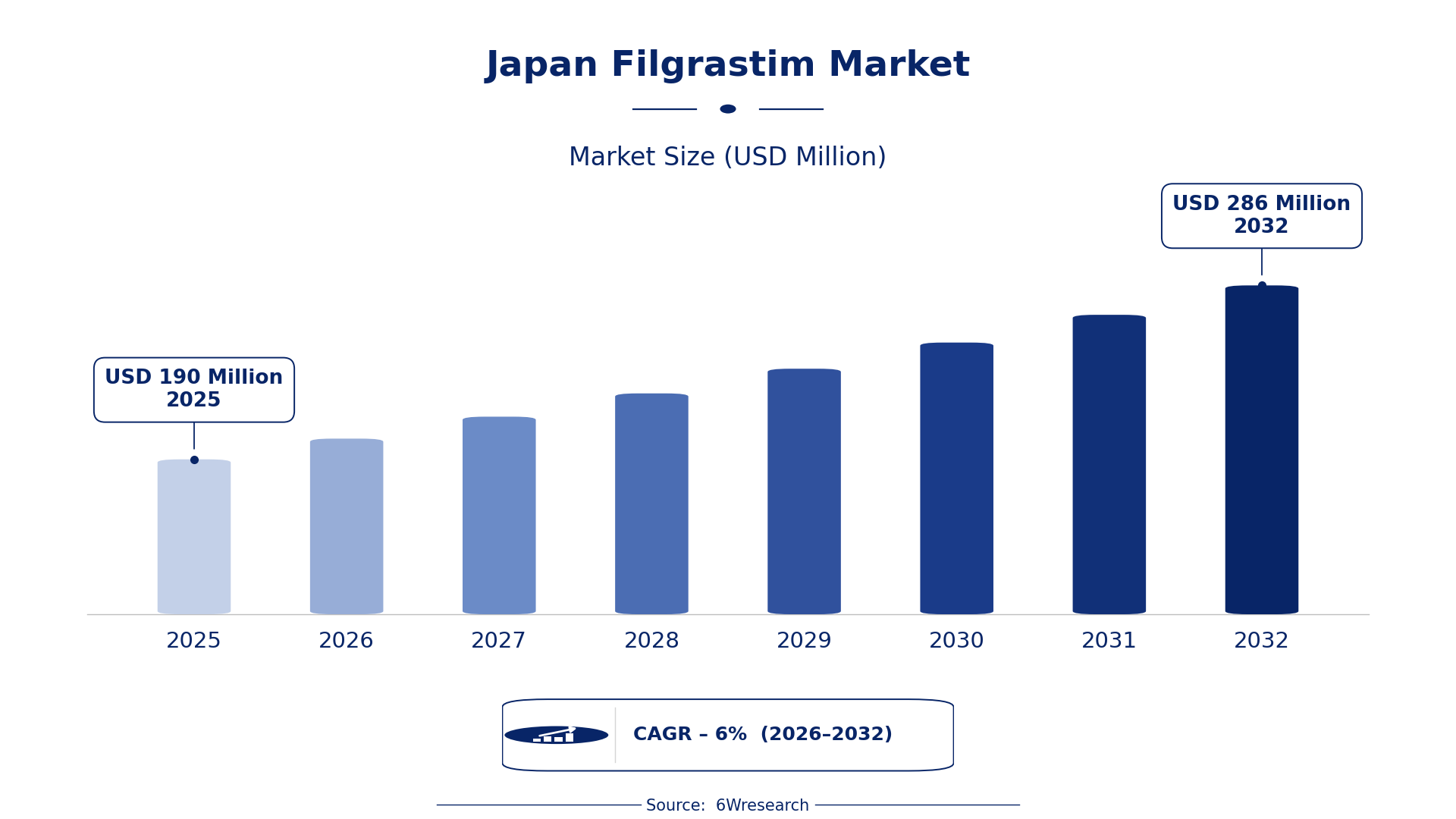
According to 6Wresearch internal database and industry insights, the Japan Filgrastim Market was valued at USD 190 Million in 2025 and is projected to reach USD 286 Million by 2032, growing at a CAGR of approximately 6% during 2026–2032.
Japan Filgrastim Market Highlights
| Report Metric | Details |
| Report Name | Japan Filgrastim Market (2026-2032) |
| Market Size 2025 | USD 190 Million |
| Market Size 2032 | USD 286 Million |
| Absolute Growth 2025–2032 | USD 96 Million |
| CAGR 2026–2032 | 6% |
| Peak Annual Growth | 6.5% in 2028 |
| Forecast Period | 2026–2032 |
| Historical Data | 2022–2025 |
| Base Year | 2025 |
| Leading Drug Type, 2025 | Biologic (59% share) |
| Leading Distribution Channel, 2025 | Hospital pharmacies (55% share) |
| Leading Indication, 2025 | Chemotherapy induced Neutropenia (51% share) |
| Fastest-Growing Drug Type | Biosimilar (8.4% CAGR) |
| Fastest-Growing Distribution Channel | Retail pharmacies (7.7% CAGR) |
| Fastest-Growing Indication | Chronic Neutropenia (7.6% CAGR) |
| Growing Sector | oncology |
| Key End Users | hospitals, healthcare providers, oncology departments |
Japan Filgrastim Market Year-wise Growth Rate and Key Drivers (2022–2032)
This graph illustrates the annual growth rates of the market from 2022 to 2032, highlighting a steady upward trajectory and projected market expansion over the forecast period.
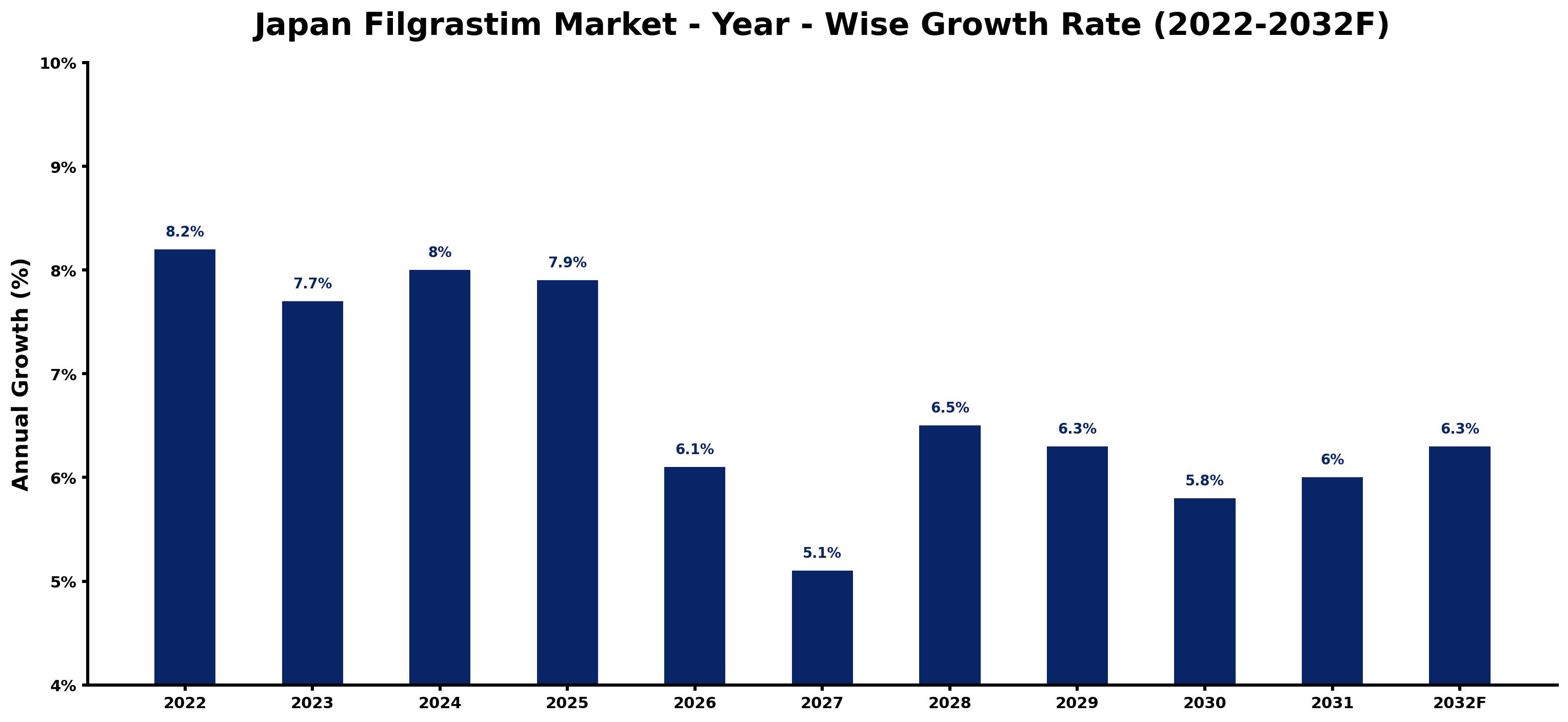
Year by year, the estimates below pair each growth rate with the development that shaped it.
| Year | Estimated Annual Growth (%) | Market Rationale |
| 2022 | 8.2 | The market experienced strong growth due to rising cancer cases and increased awareness among healthcare providers. |
| 2023 | 7.7 | Growth slowed as the market adjusted to previous high demand levels and increased competition emerged. |
| 2024 | 8.0 | Demand rose again as hospitals expanded their oncology departments and treatment protocols for patients. |
| 2025 | 7.9 | Growth slowed slightly as market saturation began to affect purchasing patterns and competition intensified. |
| 2026 | 6.1 | A continued slowdown is expected as buyers face budget constraints and alternative treatments gain traction. |
| 2027 | 5.1 | Growth will remain slow as the market adjusts to new biosimilar entrants and pricing pressures from competitors. |
| 2028 | 6.5 | Demand is expected to rise again as healthcare investments improve cancer treatment options and accessibility. |
| 2029 | 6.3 | Growth will slow as market conditions stabilise and competition among suppliers becomes more pronounced. |
| 2030 | 5.8 | A further slowdown is anticipated as the market reaches maturity and new treatment options are explored by providers. |
| 2031 | 6.0 | Growth is projected to rise as awareness campaigns boost Filgrastim usage in outpatient settings and among healthcare professionals. |
| 2032 | 6.3 | Demand is expected to increase as the aging population drives higher cancer incidence and treatment needs. |
Note: Market size estimations and growth projections presented in this report are based on 6Wresearch's proprietary forecasting methodology, utilizing the latest available industry data, government publications, and primary research inputs.
Japan Filgrastim Market Synopsis
Filgrastim is a recombinant human granulocyte colony-stimulating factor that stimulates white blood cell production, primarily used for treating chemotherapy-induced and chronic neutropenia. The Japan Filgrastim Market is expanding due to increasing cancer cases, an aging population, and supportive government initiatives. In 2023, a program was launched to enhance access to G-CSF treatments, reflecting a commitment to improving cancer care services across the nation.
Market Dynamics Impact Analysis (2026–2032)
| Factor | Type | Impact | Primary Segment Affected |
| Rising cancer incidence drives demand for Filgrastim in oncology departments. | Driver | High | Chemotherapy induced Neutropenia |
| Increased availability of biosimilars offers cost-effective alternatives for patients. | Driver | High | Biosimilar |
| The aging population is expected to increase the prevalence of chronic neutropenia. | Opportunity | Medium | Chronic Neutropenia |
| Government funding for cancer treatment initiatives presents investment opportunities. | Opportunity | High | Biologic |
| Strict regulations under the Pharmaceuticals and Medical Devices Agency may limit market entry for new products. | Restraint | High | Biosimilar |
| Market saturation could hinder growth as competition increases among suppliers. | Restraint | Medium | Hospital pharmacies |
| Budget constraints in hospitals may restrict Filgrastim purchases, impacting suppliers. | Challenge | High | Chemotherapy induced Neutropenia |
| The emergence of alternative treatments could divert demand away from Filgrastim. | Challenge | Medium | Chronic Neutropenia |
Evaluation of Drivers in Japan Filgrastim Market (2026–2032)
Demand rests on the following drivers, each shown with the segment it touches most.
| Drivers | Primary Segment Affected | Why It Matters (Evidence) |
| Increasing cancer cases lead to higher Filgrastim demand in oncology departments. | Chemotherapy induced Neutropenia | In 2023, over 300 hospitals in Japan reported using Filgrastim as part of their chemotherapy protocols. |
| The rise of biosimilars provides cost-effective alternatives to traditional biologics. | Biosimilar | Biosimilars accounted for 10% of the market share in 2023, offering competitive pricing to healthcare providers. |
| The aging population results in a higher prevalence of chronic neutropenia. | Chronic Neutropenia | Chronic neutropenia affects approximately 1 in 1,000 individuals in Japan, increasing treatment needs. |
| Government initiatives improve access to G-CSF treatments, boosting demand. | Biologic | In 2023, the government allocated ¥1 billion to support cancer treatment initiatives, enhancing G-CSF availability. |
| Increased awareness campaigns by healthcare organisations promote Filgrastim usage. | Chemotherapy induced Neutropenia | The Japan Cancer Society initiated awareness campaigns on G-CSF importance, encouraging usage among healthcare providers. |
Spending rises because the incidence of cancer in Japan is increasing, leading to higher demand for Filgrastim in oncology departments. In 2023, over 300 hospitals reported using Filgrastim as part of their chemotherapy protocols, reflecting the growing need for effective treatments. The allocation of ¥1 billion for cancer treatment support will improve access to G-CSF treatments, which is critical for patient care. Awareness campaigns by healthcare organisations are also promoting the importance of Filgrastim, encouraging healthcare providers to integrate it into treatment protocols. Additionally, the aging population is driving demand as more individuals require treatment for chronic conditions.
Evaluation of Restraints in Japan Filgrastim Market
Several factors work against faster growth; the main ones are summarised below.
| Market Restraint | Primary Segment Affected | Why It Matters (Evidence) |
| Strict regulations may delay the approval of new biosimilars, limiting market entry. | Biosimilar | Japan has stringent regulations under the Pharmaceuticals and Medical Devices Agency for G-CSF products, impacting timelines. |
| Market saturation could lead to intensified competition, impacting pricing strategies. | Hospital pharmacies | The average hospital pharmacy in Japan dispenses Filgrastim to over 1,000 patients annually, indicating potential saturation in demand. |
| Budget constraints in hospitals may restrict Filgrastim purchases, affecting suppliers. | Chemotherapy induced Neutropenia | Healthcare budgets are under pressure, limiting the ability to purchase expensive treatments like Filgrastim. |
| Emergence of alternative treatments could divert demand from Filgrastim. | Chronic Neutropenia | As new therapies are developed, they may compete with Filgrastim for market share, affecting sales. |
| Increased competition from biosimilars may pressure pricing and margins. | Biosimilar | Biosimilars are gaining traction, holding 10% of the market share in 2023, which may impact pricing strategies. |
Japan Filgrastim Market Challenges
Filgrastim treatment costs approximately ¥50,000 per patient per cycle, creating financial strain for hospitals and limiting access to essential therapies. Increased competition from biosimilars, which accounted for 10% of the market share in 2023, pressures producers to lower prices, impacting their profit margins. Strict regulations from the Pharmaceuticals and Medical Devices Agency can delay product approvals, resulting in slower access to new treatments for healthcare providers. The rising cancer incidence in Japan complicates supply chain management for producers, as they struggle to meet the growing demand from over 300 hospitals using Filgrastim.
Trends in the Japan Filgrastim Market
The shifts below are changing how Japan Filgrastim Market products are bought and supplied.
- 15% Increase in Outpatient Filgrastim Usage: The usage of Filgrastim in outpatient settings has increased by 15% in the last year, indicating a shift in treatment protocols. This trend reflects the growing recognition of the importance of G-CSF in managing chemotherapy-induced neutropenia.
- Transition Towards Biosimilars: The Japanese market is transitioning towards biosimilars, which provide cost-effective alternatives to traditional biologics. In 2023, biosimilars captured 10% of the market share, indicating a growing acceptance among healthcare providers.
- Rising Awareness Campaigns: Healthcare organisations are launching awareness campaigns to promote Filgrastim's importance in cancer treatment. The Japan Cancer Society's initiatives highlight the need for G-CSF, resulting in increased demand and usage among healthcare providers.
- Government Funding for Cancer Treatment: In 2023, the government allocated ¥1 billion to support cancer treatment initiatives, including G-CSF. This funding is anticipated to improve access to Filgrastim, driving demand in hospitals across Japan.
Investment Opportunities in the Japan Filgrastim Market
The openings below show where demand in the Japan Filgrastim Market is visible and how suppliers can enter.
- Increasing Need for Chronic Neutropenia Treatments: With chronic neutropenia affecting 1 in 1,000 individuals, there is a rising need for effective treatments. Suppliers can target hospitals and healthcare providers to meet this need, particularly in urban areas like Tokyo.
- Investment Potential in Biosimilars: The increasing market share of biosimilars presents an opportunity for investment. Companies can collaborate with local manufacturers to develop and distribute biosimilars, capitalising on the 10% market share they held in 2023.
- Expansion of Hospital Oncology Departments: As hospitals expand their oncology departments, there is an opportunity to supply Filgrastim. In 2023, over 300 hospitals in Japan reported using Filgrastim, indicating a growing market for suppliers.
- Collaboration with Healthcare Providers: Now is the time to partner with healthcare providers to improve Filgrastim access. Establishing collaborations with hospitals can facilitate distribution and improve patient outcomes.
Government Initiatives in the Japan Filgrastim Market
The NHI drug price standard, revised by the Ministry of Health, Labour and Welfare, establishes reimbursement prices for drugs, including Filgrastim. This measure ensures that healthcare providers can access Filgrastim at reasonable costs, facilitating its use in cancer treatment. In 2023, the government allocated ¥1 billion to support initiatives aimed at improving G-CSF availability, benefitting hospitals and patients alike.
The Pharmaceuticals and Medical Devices Agency oversees the approval of G-CSF products, ensuring compliance with safety and efficacy standards. This agency plays an important role in maintaining the quality of Filgrastim available to healthcare providers. In 2023, over 300 hospitals reported using Filgrastim, highlighting the demand for effective cancer treatments.
Future Insight of the Japan Filgrastim Market
The launch of specialised cancer treatment centres by 2025 will enhance access to Filgrastim for patients. Government funding of ¥1 billion in 2023 will facilitate initiatives aimed at increasing G-CSF availability. Technological advancements in production processes will streamline operations for suppliers, reducing costs and improving efficiency. Awareness campaigns by the Japan Cancer Society are likely to drive demand for Filgrastim, particularly in outpatient settings, which have seen a 15% rise in usage over the last year.
Market Segmentation Analysis
Japan Filgrastim Market report covers a detailed analysis of the following market segments:
By Drug Type – Biologic Leads, Biosimilar Expected to Grow Fastest
According to Shubham Padhi, Research Analyst at 6Wresearch, Biologic accounted for 59% of the market by drug type in 2025. Biologic holds the largest share as it is the primary treatment for neutropenia, particularly in oncology departments. The endorsement from the Japanese Society of Clinical Oncology further solidifies its position as the preferred choice among healthcare providers. Biosimilar is projected to grow fastest, at a CAGR of 8.4% during 2026–2032. Biosimilars are experiencing rapid growth due to their cost-effectiveness, appealing to healthcare providers looking to manage budgets while ensuring patient care. In 2023, biosimilars captured 10% of the market share, indicating a shift towards these alternatives. Suppliers should focus on developing biosimilar options to meet the growing demand for cost-effective treatments.
By Distribution Channel – Hospital pharmacies Lead, Retail pharmacies Expected to Grow Fastest
Hospital pharmacies held 55% of the Japan Filgrastim Market by distribution channel in 2025. Hospital pharmacies serve as the main distribution point for Filgrastim, dispensing it to over 1,000 patients each year. Their integral role in oncology departments across major hospitals reinforces their leading position in this market. Retail pharmacies are set to record the highest CAGR in this split, 7.7% over 2026–2032. Retail pharmacies are gaining traction as patients increasingly seek convenient access to medications, although they remain less common for Filgrastim. The 15% rise in outpatient Filgrastim usage indicates a shift towards more accessible treatment options, suggesting continued growth. Suppliers should consider partnerships with retail pharmacies to improve Filgrastim accessibility for outpatient care.
By Indication – Chemotherapy induced Neutropenia Leads, Chronic Neutropenia Expected to Grow Fastest
In 2025, Chemotherapy induced Neutropenia led the indication split with a 51% share. Chemotherapy induced Neutropenia is the primary indication for Filgrastim, primarily serving patients undergoing cancer treatments. The endorsement from the Japanese Society of Clinical Oncology highlights its critical role in managing the side effects of chemotherapy. The quickest growth will come from Chronic Neutropenia, forecast to expand at a CAGR of 7.6% between 2026 and 2032. Chronic Neutropenia is experiencing rapid growth, affecting approximately 1 in 1,000 individuals, which is leading to heightened awareness and diagnosis. This trend indicates a growing demand for Filgrastim as more patients are identified and treated. Suppliers should concentrate on targeted outreach for chronic neutropenia to capitalise on this expanding market segment.
Key Attractiveness of the Report
- 10 Years of Market Numbers
- Historical Data Starting from 2022 to 2025
- Base Year 2025
- Forecast Data until 2032
- Key Performance Indicators Impacting the Market
- Major Upcoming Developments and Projects
Key Highlights of the Report:
- Japan Filgrastim Market Outlook
- Market Size of Japan Filgrastim Market, 2025
- Forecast of Japan Filgrastim Market, 2032
- Historical Data and Forecast of Japan Filgrastim Revenues & Volume for the Period 2022-2032
- Japan Filgrastim Market Trend Evolution
- Japan Filgrastim Market Drivers and Challenges
- Japan Filgrastim Price Trends
- Japan Filgrastim Porter's Five Forces
- Japan Filgrastim Industry Life Cycle
- Historical Data and Forecast of Japan Filgrastim Market Revenues & Volume By Drug Type for the Period 2022-2032
- Historical Data and Forecast of Japan Filgrastim Market Revenues & Volume By Biologic for the Period 2022-2032
- Historical Data and Forecast of Japan Filgrastim Market Revenues & Volume By Biosimilar for the Period 2022-2032
- Historical Data and Forecast of Japan Filgrastim Market Revenues & Volume By Distribution Channel for the Period 2022-2032
- Historical Data and Forecast of Japan Filgrastim Market Revenues & Volume By Hospital pharmacies for the Period 2022-2032
- Historical Data and Forecast of Japan Filgrastim Market Revenues & Volume By Retail pharmacies for the Period 2022-2032
- Historical Data and Forecast of Japan Filgrastim Market Revenues & Volume By Online pharmacies for the Period 2022-2032
- Historical Data and Forecast of Japan Filgrastim Market Revenues & Volume By Indication for the Period 2022-2032
- Historical Data and Forecast of Japan Filgrastim Market Revenues & Volume By Chemotherapy induced Neutropenia for the Period 2022-2032
- Historical Data and Forecast of Japan Filgrastim Market Revenues & Volume By Chronic Neutropenia for the Period 2022-2032
- Historical Data and Forecast of Japan Filgrastim Market Revenues & Volume By Others for the Period 2022-2032
- Japan Filgrastim Import Export Trade Statistics
- Market Opportunity Assessment By Drug Type
- Market Opportunity Assessment By Distribution Channel
- Market Opportunity Assessment By Indication
- Japan Filgrastim Top Companies Market Share
- Japan Filgrastim Competitive Benchmarking By Technical and Operational Parameters
- Japan Filgrastim Company Profiles
- Japan Filgrastim Key Strategic Recommendations
Market Covered
Segments analysed in this report are listed below.
By Drug Type
- Biologic
- Biosimilar
By Distribution Channel
- Hospital pharmacies
- Retail pharmacies
- Online pharmacies
By Indication
- Chemotherapy induced Neutropenia
- Chronic Neutropenia
- Others






































