Japan Fish Disease Management Market Size & Growth Rate
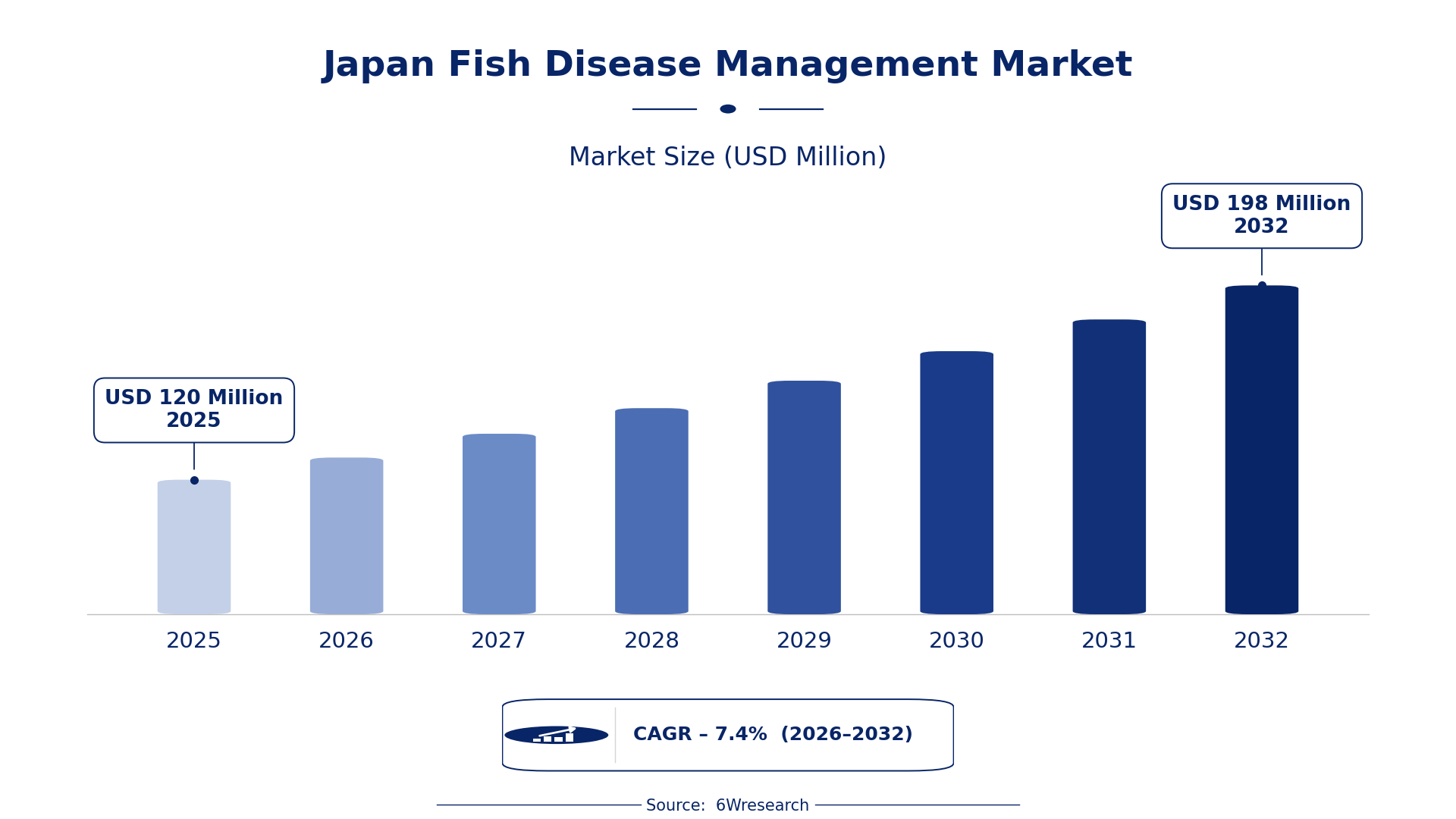
According to 6Wresearch internal database and industry insights, the Japan Fish Disease Management Market was valued at USD 120 Million in 2025 and is projected to reach USD 198 Million by 2032, growing at a CAGR of approximately 7.4% during 2026–2032.
Japan Fish Disease Management Market Highlights
| Report Metric | Details |
| Report Name | Japan Fish Disease Management Market (2026-2032) |
| Market Size 2025 | USD 120 Million |
| Market Size 2032 | USD 198 Million |
| Absolute Growth 2025–2032 | USD 78 Million |
| CAGR 2026–2032 | 7.4% |
| Peak Annual Growth | 8.3% in 2030 |
| Forecast Period | 2026–2032 |
| Historical Data | 2022–2025 |
| Base Year | 2025 |
| Leading Disease Type, 2025 | Bacterial Infections (39% share) |
| Leading Solution Type, 2025 | Antibiotics (38% share) |
| Leading Distribution Channel, 2025 | Aquaculture Suppliers (51% share) |
| Leading End User, 2025 | Fish Farms (40% share) |
| Fastest-Growing Disease Type | Parasitic Infections (10.2% CAGR) |
| Fastest-Growing Solution Type | Antiparasitic Drugs (10.3% CAGR) |
| Fastest-Growing Distribution Channel | Veterinary Distributors (9.5% CAGR) |
| Fastest-Growing End User | Aquaculture Facilities (9.3% CAGR) |
| Growing Sector | Aquaculture |
| Key End Users | Fish Farms, Aquaculture Facilities, Hatcheries, Aquatic Vets |
Japan Fish Disease Management Market Year-wise Growth Rate and Key Drivers (2022–2032)
This graph illustrates the annual growth rates of the market from 2022 to 2032, highlighting a steady upward trajectory and projected market expansion over the forecast period.
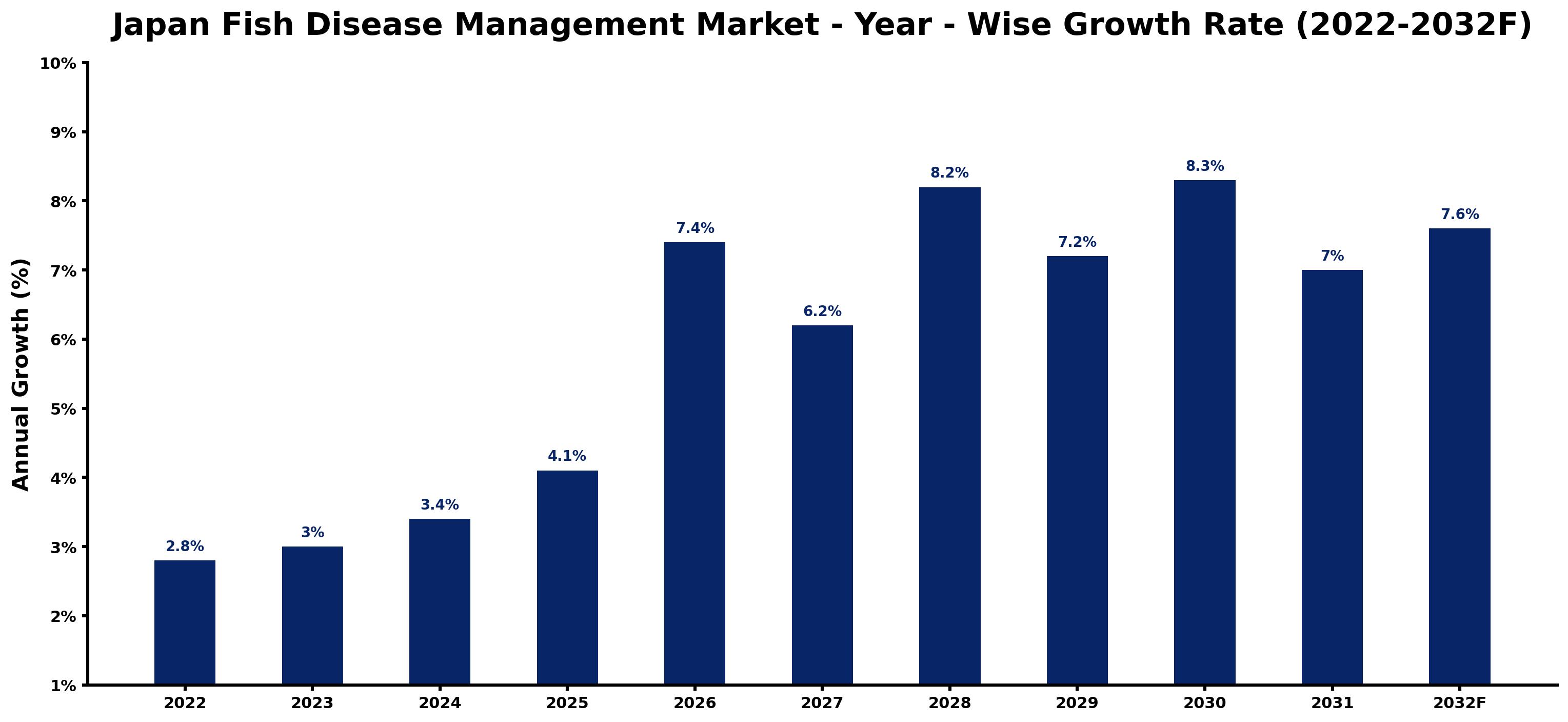
For each year, the table pairs the estimated growth rate with the leading influence on demand, showing how the drivers changed across the period.
| Year | Estimated Annual Growth (%) | Market Rationale |
| 2022 | 2.8 | The market showed steady growth due to increased awareness of fish health management. |
| 2023 | 3.0 | Demand rose as fish farms expanded operations and sought better health solutions. |
| 2024 | 3.4 | Growth continued with rising fish production and a focus on disease prevention. |
| 2025 | 4.1 | The introduction of new vaccines contributed to a higher growth rate this year. |
| 2026 | 7.4 | Increased investment in aquaculture facilities is expected to lead to a rise in demand. |
| 2027 | 6.2 | Growth is projected to slow as the market adjusts to previous rapid expansions in capacity. |
| 2028 | 8.2 | A surge in vaccination programs is expected to boost demand for disease management solutions. |
| 2029 | 7.2 | The market will experience a slowdown as supply chains face challenges in meeting demand. |
| 2030 | 8.3 | The introduction of advanced treatment options will drive a peak in market growth. |
| 2031 | 7.0 | Growth is projected to slow as market saturation begins to affect new investments. |
| 2032 | 7.6 | Continued focus on sustainability initiatives will support steady market growth. |
Note: Market size estimations and growth projections presented in this report are based on 6Wresearch's proprietary forecasting methodology, utilizing the latest available industry data, government publications, and primary research inputs.
Japan Fish Disease Management Market Synopsis
Fish disease management encompasses treatments aimed at addressing infections in aquaculture, including antibiotics, antiparasitic drugs, and vaccines. The Japan Fish Disease Management Market is growing due to local fish farming operations, which produced 500,000 tons of fish in 2022. An increase in vaccination programs and a commitment to fish health are driving this upward trend. The market's value is expected to reach approximately 198 million USD by 2032, propelled by rising demand for effective disease management solutions.
Market Dynamics Impact Analysis (2026–2032)
| Factor | Type | Impact | Primary Segment Affected |
| Rising fish production | Driver | High | Bacterial Infections |
| Increased vaccination programs | Driver | High | Vaccines |
| Growing online sales channels | Opportunity | Medium | Online Platforms |
| Expansion of aquaculture facilities | Opportunity | High | Aquaculture Facilities |
| Regulatory restrictions on antibiotic use | Restraint | High | Antibiotics |
| Limited awareness of disease management practices | Restraint | Medium | Fish Farms |
| High costs of advanced treatments | Challenge | High | Antiparasitic Drugs |
| Supply chain disruptions affecting product availability | Challenge | Medium | Vaccines |
Evaluation of Drivers in Japan Fish Disease Management Market (2026–2032)
The main growth drivers and the segments they affect most are set out below.
| Drivers | Primary Segment Affected | Why It Matters (Evidence) |
| Increased fish production | Bacterial Infections | Japan's aquaculture industry produced 500,000 tons of fish in 2022, driving demand for disease management solutions. |
| Expansion of vaccination programs | Vaccines | Vaccination programs focusing on viral diseases are increasing, leading to higher demand for related products. |
| Growth in aquaculture facilities | Aquaculture Facilities | The country has over 1,000 registered fish farms, expanding the need for effective disease management. |
| Rising consumer demand for healthy fish | Antiparasitic Drugs | As consumers seek healthier fish options, demand for antiparasitic treatments is increasing. |
| Online sales growth | Online Platforms | Online sales of fish health products increased by 20% last year, reflecting changing purchasing habits. |
The strongest pull on demand comes from increased fish production, with Japan's aquaculture industry producing 500,000 tons in 2022, which drives greater needs for disease management solutions. With over 1,000 registered fish farms, the demand for effective disease management is rising. Consumer preferences for healthy fish further boost the need for antiparasitic treatments. Online sales of fish health products have surged, indicating a shift in purchasing behaviour among aquaculture facilities.
Evaluation of Restraints in Japan Fish Disease Management Market
The key brakes on demand, and where they bite hardest, are shown below.
| Market Restraint | Primary Segment Affected | Why It Matters (Evidence) |
| Regulatory restrictions on antibiotic use | Antibiotics | Regulatory restrictions limit the availability of antibiotics for fish health management, impacting treatment options. |
| Limited awareness of disease management practices | Fish Farms | Many fish farms lack knowledge about effective disease management strategies, hindering their ability to implement solutions. |
| High costs of advanced treatments | Antiparasitic Drugs | The costs associated with advanced antiparasitic treatments can deter fish farms from investing in necessary solutions. |
| Supply chain disruptions | Vaccines | Supply chain issues have affected the availability of vaccines, delaying treatment options for fish populations. |
| Dependence on traditional methods | Vaccines | Some facilities continue to rely on traditional methods, limiting the adoption of modern disease management practices. |
Japan Fish Disease Management Market Challenges
Intense competition among fish farms in Japan leads to price reductions, which restricts producers' ability to invest in effective health management solutions. High costs associated with technology adoption delay the implementation of advanced disease management systems for over 60% of aquaculture facilities. Strict regulations on antibiotic use create supply chain disruptions, resulting in treatment delays that can decrease fish yields by 20%. A shortage of skilled aquatic veterinarians hampers effective disease management, threatening fish health across more than 1,000 registered operations.
Trends in the Japan Fish Disease Management Market
Several trends are reshaping the Japan Fish Disease Management Market; the most important are set out below.
- Shift towards Vaccination Programs: Since 2023, vaccination programs for fish have gained traction, focusing on viral diseases. This shift is reflected in a 20% rise in vaccine usage across aquaculture facilities.
- Growth of Online Sales Channels: In 2022, online sales of fish health products surged by 25%, reflecting changing purchasing preferences. This trend allows fish farms to access a wider range of products conveniently.
- Increased Focus on Sustainable Practices: The government launched a program in 2023 to improve aquaculture sustainability, encouraging facilities to adopt eco-friendly practices. This initiative aims to improve fish health while reducing environmental impact.
- Emergence of Antiparasitic Treatments: Antiparasitic drugs have become increasingly important since 2022, with a focus on addressing common parasitic infections in fish. This trend highlights the need for effective disease management solutions.
Investment Opportunities in the Japan Fish Disease Management Market
Several openings in the Japan Fish Disease Management Market merit attention from investors.
- Partnerships with Aquaculture Suppliers: Now is an opportune moment for partnerships with aquaculture suppliers to enhance product distribution. The growing demand for fish health management solutions supports this collaboration.
- Investment in Online Platforms: With online sales of fish health products increasing by 25%, investing in digital sales channels presents a compelling opportunity for suppliers. This shift facilitates broader market reach.
- Development of Advanced Vaccines: The rising emphasis on vaccination programs creates an opportunity to supply advanced vaccines. Aquaculture facilities are increasingly seeking effective solutions for disease prevention.
- Expansion into Aquaculture Facilities: Investing in aquaculture facilities is timely due to their growth. Establishing partnerships with local operators can ease market entry and product adoption.
Government Initiatives in the Japan Fish Disease Management Market
The NHI drug price standard, revised regularly, establishes reimbursement prices for drugs used in aquaculture, ensuring that buyers can access affordable treatments. The Clinical Trials Act sets rules for conducting research on new fish health products, promoting innovation in the sector. This framework supports the development of effective disease management solutions for fish farms.
In 2023, the government allocated 1 billion yen for aquaculture health initiatives, administered by the Ministry of Agriculture, Forestry and Fisheries. This funding supports research and development efforts aimed at improving fish disease management practices.
Future Insight of the Japan Fish Disease Management Market
By 2032, the aquaculture sector will experience substantial changes driven by government initiatives and technological advancements. The 1 billion yen allocated for health initiatives will support research on disease prevention, improving overall fish health. Facilities will increasingly implement vaccination programs to boost survival rates, particularly against common infections. Enhanced online sales channels will provide buyers with better access to health products, streamlining procurement and ensuring timely treatments.
Market Segmentation Analysis
Japan Fish Disease Management Market report covers a detailed analysis of the following market segments:
By Disease Type – Bacterial Infections Lead, Parasitic Infections Expected to Grow Fastest
According to Saurav Kr Singh, Senior Research Analyst at 6Wresearch, Bacterial Infections took 39% of disease type revenue in 2025, more than any other category. Bacterial infections dominate due to their prevalence in aquaculture, affecting a wide range of fish species. The reliance on antibiotics across Japan's extensive network of fish farms highlights the critical need for effective management of these infections. Parasitic Infections are set to record the highest CAGR in this split, 10.2% over 2026–2032. Parasitic infections are on the rise, frequently impacting fish populations, with more outbreaks reported annually. The government's recent initiative to enhance aquaculture sustainability is likely to drive increased demand for targeted treatments against these infections. Suppliers should prioritise the development of solutions for parasitic infections to meet the growing needs of the aquaculture sector.
By Solution Type – Antibiotics Lead, Antiparasitic Drugs Expected to Grow Fastest
With 38% of solution type revenue in 2025, Antibiotics was the largest category. Antibiotics lead the market as they are extensively used for treating bacterial infections, ensuring the health of aquaculture operations. Their importance is underscored by regulatory oversight, which governs their application in fish farming. The quickest growth will come from Antiparasitic Drugs, forecast to expand at a CAGR of 10.3% between 2026 and 2032. Antiparasitic drugs are experiencing rapid growth due to their essential role in controlling parasitic diseases, which are becoming more common in fish populations. Increased awareness among fish farmers regarding disease prevention will likely boost the adoption of these treatments. Buyers should expand their procurement strategies to include antiparasitic drugs in response to the rising threat of parasitic infections.
By Distribution Channel – Aquaculture Suppliers Lead, Veterinary Distributors Expected to Grow Fastest
The largest distribution channel category in 2025 was Aquaculture Suppliers, at 51% of revenue. Aquaculture suppliers are the primary source for fish disease management products, establishing vital connections between manufacturers and fish farms. Their established relationships with numerous fish farms ensure a consistent supply of essential treatments for disease management. Veterinary Distributors are projected to grow fastest, at a CAGR of 9.5% during 2026–2032. Veterinary distributors are growing rapidly as they are crucial for reaching aquaculture facilities, ensuring timely access to necessary health products. The increasing complexity of disease management in aquaculture will likely elevate their importance in the distribution chain. Suppliers must strengthen partnerships with veterinary distributors to enhance product accessibility for aquaculture facilities.
By End User – Fish Farms Lead, Aquaculture Facilities Expected to Grow Fastest
Fish Farms held 40% of the Japan Fish Disease Management Market by end user in 2025. Fish farms are the main end users of fish disease management products, relying on effective treatments to maintain healthy fish populations. The production of substantial quantities of fish underscores their significant role in the aquaculture industry. Over 2026–2032, Aquaculture Facilities are expected to post the fastest growth, at a CAGR of 9.3%. Aquaculture facilities are expanding quickly as they are critical for operations, particularly in managing fish health and preventing diseases. The growing emphasis on sustainability in aquaculture is expected to further increase the demand for health management solutions in these facilities. Suppliers should customise their offerings to align with the specific needs of aquaculture facilities, ensuring relevance to industry trends.
Key Attractiveness of the Report
- 10 Years of Market Numbers
- Historical Data Starting from 2022 to 2025
- Base Year 2025
- Forecast Data until 2032
- Key Performance Indicators Impacting the Market
- Major Upcoming Developments and Projects
Key Highlights of the Report:
- Japan Fish Disease Management Market Outlook
- Market Size of Japan Fish Disease Management Market, 2025
- Forecast of Japan Fish Disease Management Market, 2032
- Historical Data and Forecast of Japan Fish Disease Management Revenues & Volume for the Period 2022-2032F
- Japan Fish Disease Management Market Trend Evolution
- Japan Fish Disease Management Market Drivers and Challenges
- Japan Fish Disease Management Price Trends
- Japan Fish Disease Management Porter's Five Forces
- Japan Fish Disease Management Industry Life Cycle
- Historical Data and Forecast of Japan Fish Disease Management Market Revenues & Volume By Disease Type for the Period 2022-2032F
- Historical Data and Forecast of Japan Fish Disease Management Market Revenues & Volume By Bacterial Infections for the Period 2022-2032F
- Historical Data and Forecast of Japan Fish Disease Management Market Revenues & Volume By Parasitic Infections for the Period 2022-2032F
- Historical Data and Forecast of Japan Fish Disease Management Market Revenues & Volume By Viral Diseases for the Period 2022-2032F
- Historical Data and Forecast of Japan Fish Disease Management Market Revenues & Volume By Fungal Infections for the Period 2022-2032F
- Historical Data and Forecast of Japan Fish Disease Management Market Revenues & Volume By Solution Type for the Period 2022-2032F
- Historical Data and Forecast of Japan Fish Disease Management Market Revenues & Volume By Antibiotics for the Period 2022-2032F
- Historical Data and Forecast of Japan Fish Disease Management Market Revenues & Volume By Antiparasitic Drugs for the Period 2022-2032F
- Historical Data and Forecast of Japan Fish Disease Management Market Revenues & Volume By Vaccines for the Period 2022-2032F
- Historical Data and Forecast of Japan Fish Disease Management Market Revenues & Volume By Antifungals for the Period 2022-2032F
- Historical Data and Forecast of Japan Fish Disease Management Market Revenues & Volume By Distribution Channel for the Period 2022-2032F
- Historical Data and Forecast of Japan Fish Disease Management Market Revenues & Volume By Aquaculture Suppliers for the Period 2022-2032F
- Historical Data and Forecast of Japan Fish Disease Management Market Revenues & Volume By Veterinary Distributors for the Period 2022-2032F
- Historical Data and Forecast of Japan Fish Disease Management Market Revenues & Volume By Online Platforms for the Period 2022-2032F
- Historical Data and Forecast of Japan Fish Disease Management Market Revenues & Volume By Direct Sales for the Period 2022-2032F
- Historical Data and Forecast of Japan Fish Disease Management Market Revenues & Volume By End User for the Period 2022-2032F
- Historical Data and Forecast of Japan Fish Disease Management Market Revenues & Volume By Fish Farms for the Period 2022-2032F
- Historical Data and Forecast of Japan Fish Disease Management Market Revenues & Volume By Aquaculture Facilities for the Period 2022-2032F
- Historical Data and Forecast of Japan Fish Disease Management Market Revenues & Volume By Hatcheries for the Period 2022-2032F
- Historical Data and Forecast of Japan Fish Disease Management Market Revenues & Volume By Aquatic Vets for the Period 2022-2032F
- Japan Fish Disease Management Import Export Trade Statistics
- Market Opportunity Assessment By Disease Type
- Market Opportunity Assessment By Solution Type
- Market Opportunity Assessment By Distribution Channel
- Market Opportunity Assessment By End User
- Japan Fish Disease Management Top Companies Market Share
- Japan Fish Disease Management Competitive Benchmarking By Technical and Operational Parameters
- Japan Fish Disease Management Company Profiles
- Japan Fish Disease Management Key Strategic Recommendations
Market Covered
The study includes the following segmentation.
By Disease Type
- Bacterial Infections
- Parasitic Infections
- Viral Diseases
- Fungal Infections
By Solution Type
- Antibiotics
- Antiparasitic Drugs
- Vaccines
- Antifungals
By Distribution Channel
- Aquaculture Suppliers
- Veterinary Distributors
- Online Platforms
- Direct Sales
By End User
- Fish Farms
- Aquaculture Facilities
- Hatcheries
- Aquatic Vets































