Japan Furniture Rental Market Size & Growth Rate
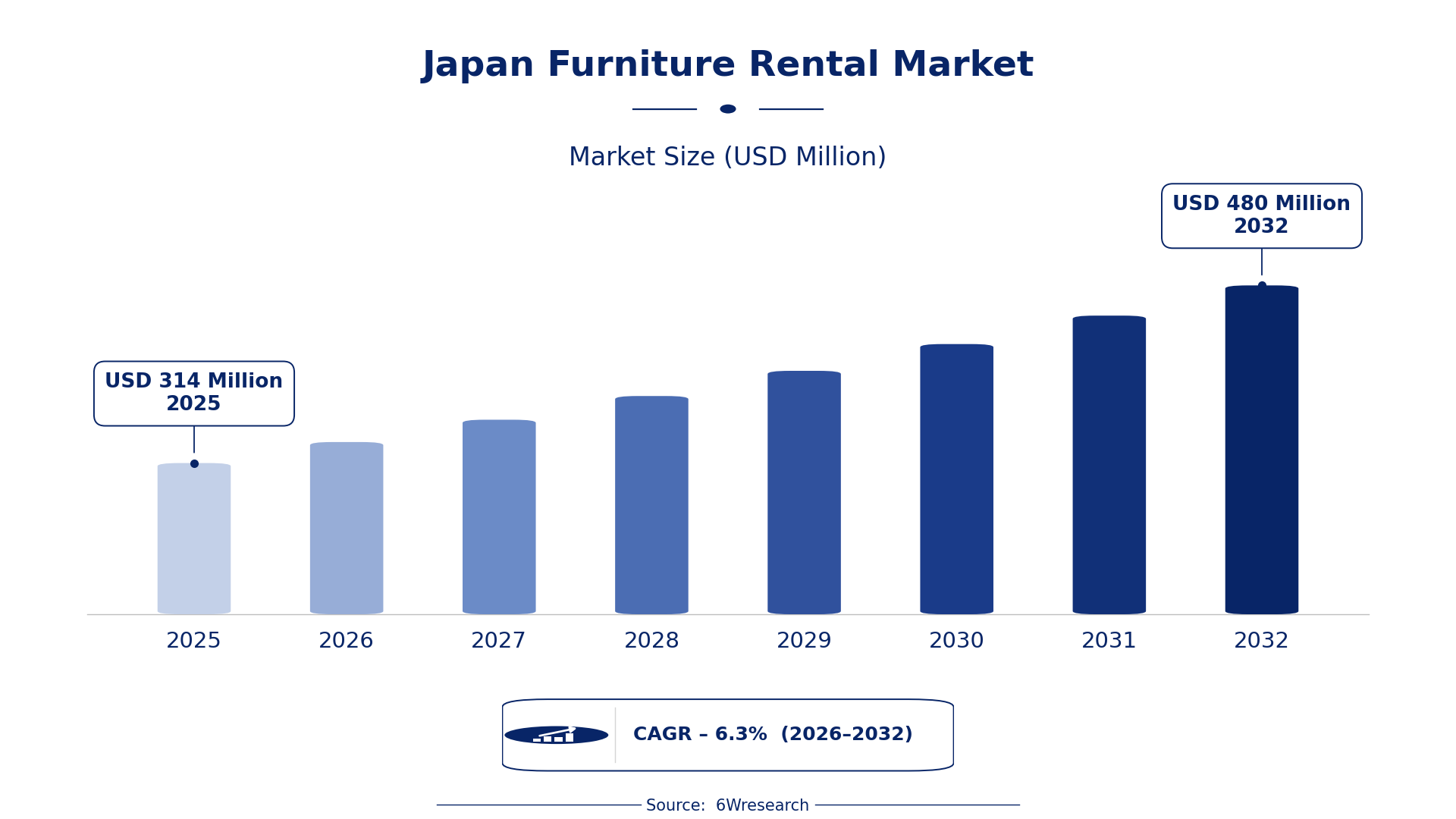
According to 6Wresearch internal database and industry insights, the Japan Furniture Rental Market was valued at USD 314 Million in 2025 and is projected to reach USD 480 Million by 2032, growing at a CAGR of approximately 6.3% during 2026–2032.
Japan Furniture Rental Market Highlights
| Report Metric | Details |
| Report Name | Japan Furniture Rental Market (2026-2032) |
| Market Size 2025 | USD 314 Million |
| Market Size 2032 | USD 480 Million |
| Absolute Growth 2025–2032 | USD 166 Million |
| CAGR 2026–2032 | 6.3% |
| Peak Annual Growth | 9.1% in 2030 |
| Forecast Period | 2026–2032 |
| Historical Data | 2022–2025 |
| Base Year | 2025 |
| Leading Product, 2025 | Bed (39% share) |
| Leading Material, 2025 | Wood (35% share) |
| Leading Application, 2025 | Residential (57% share) |
| Fastest-Growing Product | Sofa & Couch (9.5% CAGR) |
| Fastest-Growing Material | Metal (9.2% CAGR) |
| Fastest-Growing Application | Commercial (8.2% CAGR) |
| Growing Sector | Residential furniture rental |
| Key End Users | Urban dwellers, businesses, households, commercial enterprises |
Japan Furniture Rental Market Year-wise Growth Rate and Key Drivers (2022–2032)
This graph illustrates the annual growth rates of the market from 2022 to 2032, highlighting a steady upward trajectory and projected market expansion over the forecast period.
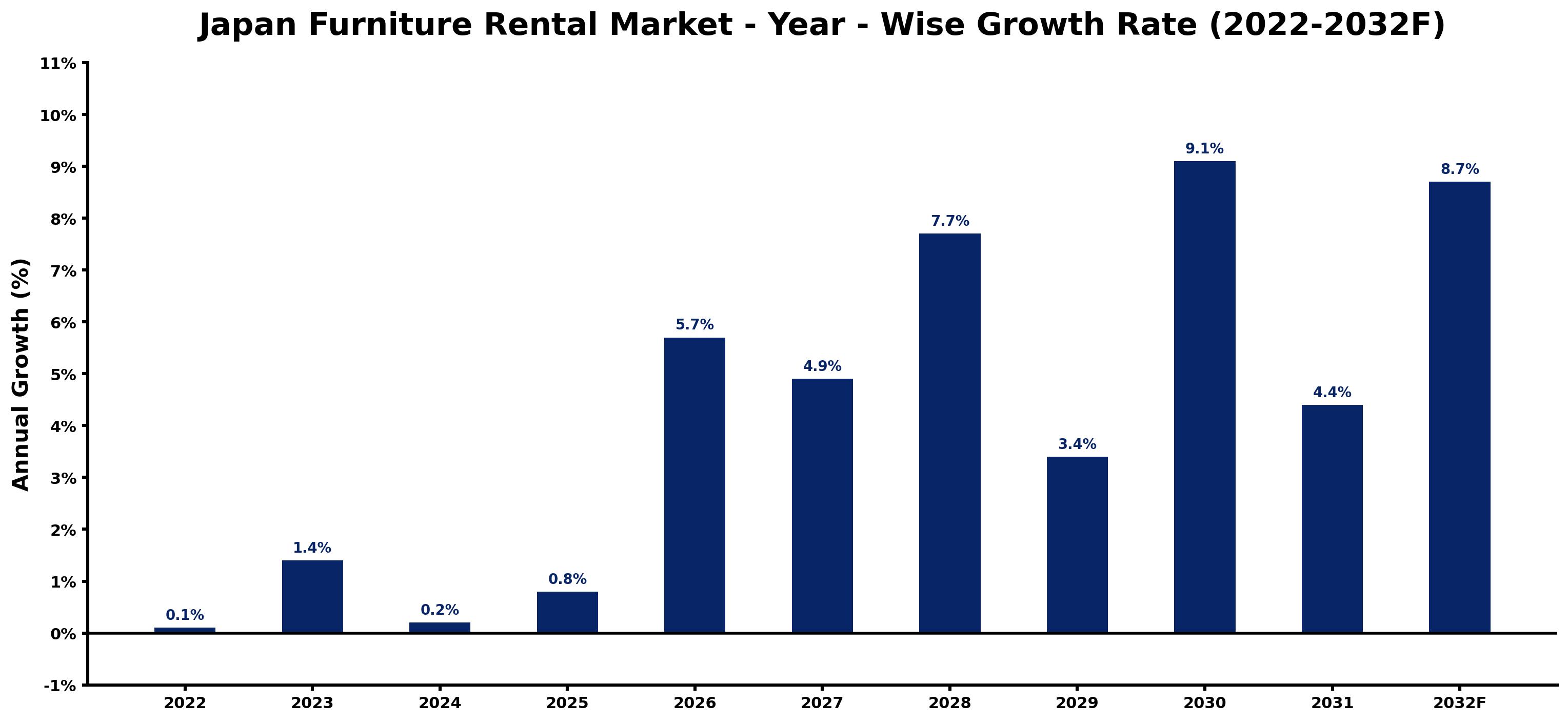
Year by year, the estimates below pair each growth rate with the development that shaped it.
| Year | Estimated Annual Growth (%) | Market Rationale |
| 2022 | 0.1 | The market experienced minimal growth due to initial recovery from previous economic impacts. |
| 2023 | 1.4 | Growth accelerated as urbanisation trends and rental preferences gained traction. |
| 2024 | 0.2 | Growth slowed as inflationary pressures affected consumer spending habits. |
| 2025 | 0.8 | The market rebounded with increased demand for flexible living solutions. |
| 2026 | 5.7 | Demand is expected to surge as urban households seek cost-effective furnishing options. |
| 2027 | 4.9 | Growth is projected to decelerate slightly as the market stabilises after rapid expansion. |
| 2028 | 7.7 | Renewed interest is anticipated as sustainability becomes a priority for renters. |
| 2029 | 3.4 | Growth will slow as the market adjusts to previous peaks in demand. |
| 2030 | 9.1 | The market is projected to peak with investments in eco-friendly furniture rentals. |
| 2031 | 4.4 | Growth will moderate as the market begins to normalise after rapid expansion. |
| 2032 | 8.7 | The market is expected to continue growing as urbanisation and minimalism trends persist. |
Note: Market size estimations and growth projections presented in this report are based on 6Wresearch's proprietary forecasting methodology, utilizing the latest available industry data, government publications, and primary research inputs.
Japan Furniture Rental Market Synopsis
Furniture rental in Japan involves leasing items such as beds, sofas, and tables for residential and commercial use, with a notable demand from urban dwellers. The Japan Furniture Rental Market is expanding, driven by urbanisation, with Tokyo accounting for 30% of the market. Increasing demand for flexible furnishing solutions, alongside a government initiative promoting sustainable practices, is stimulating investment in this sector. The average rental period is two years, indicating a stable market for providers. This growth is further supported by a shift towards minimalism and mobility in living spaces.
Market Dynamics Impact Analysis (2026–2032)
| Factor | Type | Impact | Primary Segment Affected |
| Urbanisation trends are driving demand for flexible living solutions. | Driver | High | Residential |
| The rise of minimalism encourages consumers to rent rather than buy furniture. | Driver | High | Residential |
| The growing demand for eco-friendly furniture rentals presents an investment opportunity. | Opportunity | High | Commercial |
| Increasing interest in temporary setups by businesses opens new markets. | Opportunity | Medium | Commercial |
| Inflationary pressures are affecting consumer spending on rental furniture. | Restraint | High | Residential |
| Limited awareness of furniture rental options constrains market growth. | Restraint | Medium | Residential |
| Supply chain disruptions can delay furniture availability for rental companies. | Challenge | High | Commercial |
| Competition from traditional furniture sales affects rental market share. | Challenge | Medium | Residential |
Evaluation of Drivers in Japan Furniture Rental Market (2026–2032)
The main growth drivers and the segments they affect most are set out below.
| Drivers | Primary Segment Affected | Why It Matters (Evidence) |
| Urbanisation is increasing the number of households seeking rental solutions. | Residential | In 2022, approximately 12 million households rented furniture, reflecting a growing trend. |
| Minimalism encourages consumers to opt for rental furniture instead of ownership. | Residential | The average monthly rental cost for a sofa is around 10,000 yen, appealing to cost-conscious renters. |
| Sustainability initiatives are boosting demand for eco-friendly furniture rentals. | Commercial | The Tokyo Metropolitan Government supports eco-friendly furniture initiatives, increasing market interest. |
| Temporary setups by businesses are driving demand for rental solutions. | Commercial | Osaka is a significant market for commercial furniture rentals, highlighting business needs. |
| Government support for sustainable practices boosts market appeal. | Residential | The 2023 government initiative promoted sustainable furniture practices, influencing consumer choices. |
Spending rises because urbanisation is increasing the number of households seeking rental solutions, with approximately 12 million households renting furniture in 2022. The average monthly rental cost for a sofa is around 10,000 yen, appealing to cost-conscious renters. Temporary setups by businesses are driving demand for rental solutions, particularly in urban areas.
Evaluation of Restraints in Japan Furniture Rental Market
These are the pressures that could keep growth below its potential.
| Market Restraint | Primary Segment Affected | Why It Matters (Evidence) |
| Inflationary pressures are affecting consumer spending on rental furniture. | Residential | As prices rise, consumers may limit their rental choices, impacting overall market growth. |
| Limited awareness of furniture rental options constrains market growth. | Residential | Many potential customers are unaware of the benefits of renting, hindering market expansion. |
| Supply chain disruptions can delay furniture availability for rental companies. | Commercial | These disruptions can lead to longer wait times for businesses needing temporary setups. |
| Competition from traditional furniture sales affects rental market share. | Residential | Consumers may prefer purchasing furniture outright, limiting rental market opportunities. |
| High initial costs for sustainable furniture can deter potential renters. | Commercial | Businesses may hesitate to invest in eco-friendly options due to higher upfront expenses. |
Japan Furniture Rental Market Challenges
In 2022, approximately 12 million households rented furniture, yet producers encounter a skills shortage, which delays order fulfilment for buyers and leads to longer wait times. Many producers rely on outdated technology, causing inefficiencies that increase operational costs for suppliers. Rising material prices pressure importers and distributors, limiting their ability to maintain competitive pricing and affecting profit margins. Competition escalates in urban areas like Tokyo, where 30% of the market exists, compelling buyers to navigate fluctuating rental prices and reduced choices.
Trends in the Japan Furniture Rental Market
The following changes are redrawing the Japan Furniture Rental Market.
- Shift towards Eco-Friendly Furniture Rentals: Tokyo is experiencing a shift towards eco-friendly furniture rentals, driven by government initiatives promoting sustainability. In 2023, a government initiative supported sustainable furniture practices, encouraging consumers to opt for greener choices.
- Transition from Ownership to Rental Models: Japan is transitioning from ownership to rental models, particularly among urban dwellers. The average rental period for furniture is two years, reflecting a growing preference for flexibility.
- Commercial Demand for Temporary Furnishings: Businesses are increasingly seeking temporary furnishings, particularly in urban areas like Osaka. This shift is evident as commercial rentals grow, with an 8.2% CAGR projected for the segment.
- Rise of Minimalism in Urban Living: Urban residents are embracing minimalism, influencing furniture rental trends. The rise of minimalist living spaces has led to a 15% increase in residential furniture rentals since 2020.
Investment Opportunities in the Japan Furniture Rental Market
The opportunities below stand out in the Japan Furniture Rental Market for new entrants and existing suppliers.
- Gap in Eco-Friendly Furniture Rentals: With the growing demand for sustainable options, there is a gap in eco-friendly furniture rentals. The Tokyo Metropolitan Government's initiatives create opportunities for businesses to invest in sustainable practices.
- Supply of Flexible Rental Solutions: Investing in flexible rental solutions can meet the needs of urban dwellers. The residential market is ripe for suppliers willing to offer diverse rental options.
- Entry through Local Partnerships: Local partnerships can facilitate entry into the Japanese furniture rental market. Collaborating with established rental companies can improve market access and brand recognition.
- Timing for Urbanisation Trends: The current urbanisation trends present a prime opportunity for investment in furniture rental services. As urban areas grow, demand for rental solutions is expected to rise.
Government Initiatives in the Japan Furniture Rental Market
The Economic Security Promotion Act (2022) supports supply-chain resilience for critical products, which is essential for furniture rental companies ensuring consistent availability of items. This measure encourages businesses to maintain a steady supply of furniture, benefiting both producers and renters.
The Ministry of the Environment (MoE) and the Ministry of Economy, Trade and Industry (METI) oversee the PRTR Law (1999), which requires businesses to report chemical substances. Compliance with this law ensures that furniture rental companies meet safety standards, protecting consumers and building market credibility.
Future Insight of the Japan Furniture Rental Market
The investment pipeline in eco-friendly furniture practices will create demand for sustainable options by 2032, benefiting suppliers who adapt to these trends. Government initiatives will drive innovation in the sector, encouraging producers to enhance their offerings. Urbanisation will lead to a growing need for flexible rental solutions among city dwellers, opening new opportunities for the market. As residential rentals rise by 15% in urban areas since 2020, the furniture rental market will likely expand, reflecting changing consumer preferences.
Market Segmentation Analysis
Japan Furniture Rental Market report covers a detailed analysis of the following market segments:
By Product – Bed Leads, Sofa & Couch Expected to Grow Fastest
According to Sumit Sagar, AM at 6Wresearch, Bed accounted for 39% of the market by product in 2025. Beds hold the largest share in the furniture rental market as they are essential for both residential and commercial needs. With approximately 12 million households renting furniture, the demand for beds remains consistently high across various settings. Sofa & Couch is set to record the highest CAGR in this split, 9.5% over 2026–2032. Sofas and couches are rapidly growing in popularity as they are central to living room setups, appealing to urban dwellers who prefer stylish and adaptable furnishings. The trend towards minimalism in living spaces is driving this demand further. Suppliers should focus on expanding their sofa and couch offerings to meet the increasing preferences of urban consumers.
By Material – Wood Leads, Metal Expected to Grow Fastest
The largest material category in 2025 was Wood, at 35% of revenue. Wood is the predominant material in the furniture rental market, valued for its durability and aesthetic appeal. Many rental companies prioritise wooden furniture to attract customers who appreciate quality and craftsmanship. Metal is projected to grow fastest, at a CAGR of 9.2% during 2026–2032. Metal is experiencing significant growth as a material choice due to its modern design appeal, particularly among younger consumers. The rising preference for contemporary aesthetics in urban settings is significantly contributing to this trend. Suppliers should consider diversifying their product lines to include more metal options to align with changing consumer preferences.
By Application – Residential Leads, Commercial Expected to Grow Fastest
With 57% of application revenue in 2025, Residential was the largest category. The residential segment dominates the furniture rental market, serving individuals and families seeking flexible living arrangements. As urbanisation continues, the demand for residential rentals is projected to rise steadily. The quickest growth will come from Commercial, forecast to expand at a CAGR of 8.2% between 2026 and 2032. Commercial applications are witnessing strong growth as businesses increasingly opt for temporary setups to adapt to changing needs. This trend is particularly pronounced in urban areas where flexibility is essential for operational success. Suppliers should explore partnerships with businesses to leverage the growing demand for commercial furniture rental solutions.
Key Attractiveness of the Report
- 10 Years of Market Numbers
- Historical Data Starting from 2022 to 2025
- Base Year 2025
- Forecast Data until 2032
- Key Performance Indicators Impacting the Market
- Major Upcoming Developments and Projects
Key Highlights of the Report:
- Japan Furniture Rental Market Outlook
- Market Size of Japan Furniture Rental Market, 2025
- Forecast of Japan Furniture Rental Market, 2032
- Historical Data and Forecast of Japan Furniture Rental Revenues & Volume for the Period 2022-2032
- Japan Furniture Rental Market Trend Evolution
- Japan Furniture Rental Market Drivers and Challenges
- Japan Furniture Rental Price Trends
- Japan Furniture Rental Porter's Five Forces
- Japan Furniture Rental Industry Life Cycle
- Historical Data and Forecast of Japan Furniture Rental Market Revenues & Volume By Product for the Period 2022-2032
- Historical Data and Forecast of Japan Furniture Rental Market Revenues & Volume By Bed for the Period 2022-2032
- Historical Data and Forecast of Japan Furniture Rental Market Revenues & Volume By Sofa & Couch for the Period 2022-2032
- Historical Data and Forecast of Japan Furniture Rental Market Revenues & Volume By Table & Desks for the Period 2022-2032
- Historical Data and Forecast of Japan Furniture Rental Market Revenues & Volume By Chairs & Stools for the Period 2022-2032
- Historical Data and Forecast of Japan Furniture Rental Market Revenues & Volume By Wardrobe & Dressers for the Period 2022-2032
- Historical Data and Forecast of Japan Furniture Rental Market Revenues & Volume By Others (Ottomans, Kitchen Islands, Nightstands, Storage Benches) for the Period 2022-2032
- Historical Data and Forecast of Japan Furniture Rental Market Revenues & Volume By Material for the Period 2022-2032
- Historical Data and Forecast of Japan Furniture Rental Market Revenues & Volume By Wood for the Period 2022-2032
- Historical Data and Forecast of Japan Furniture Rental Market Revenues & Volume By Metal for the Period 2022-2032
- Historical Data and Forecast of Japan Furniture Rental Market Revenues & Volume By Plastic for the Period 2022-2032
- Historical Data and Forecast of Japan Furniture Rental Market Revenues & Volume By Glass for the Period 2022-2032
- Historical Data and Forecast of Japan Furniture Rental Market Revenues & Volume By Others (Vinyl, Leather) for the Period 2022-2032
- Historical Data and Forecast of Japan Furniture Rental Market Revenues & Volume By Application for the Period 2022-2032
- Historical Data and Forecast of Japan Furniture Rental Market Revenues & Volume By Residential for the Period 2022-2032
- Historical Data and Forecast of Japan Furniture Rental Market Revenues & Volume By Commercial for the Period 2022-2032
- Japan Furniture Rental Import Export Trade Statistics
- Market Opportunity Assessment By Product
- Market Opportunity Assessment By Material
- Market Opportunity Assessment By Application
- Japan Furniture Rental Top Companies Market Share
- Japan Furniture Rental Competitive Benchmarking By Technical and Operational Parameters
- Japan Furniture Rental Company Profiles
- Japan Furniture Rental Key Strategic Recommendations
Market Covered
The report covers the following segments.
By Product
- Bed
- Sofa & Couch
- Table & Desks
- Chairs & Stools
- Wardrobe & Dressers
- Others (Ottomans, Kitchen Islands, Nightstands, Storage Benches)
By Material
- Wood
- Metal
- Plastic
- Glass
- Others (Vinyl, Leather)
By Application
- Residential
- Commercial































