Japan Genetically Modified Livestock Market Size & Growth Rate
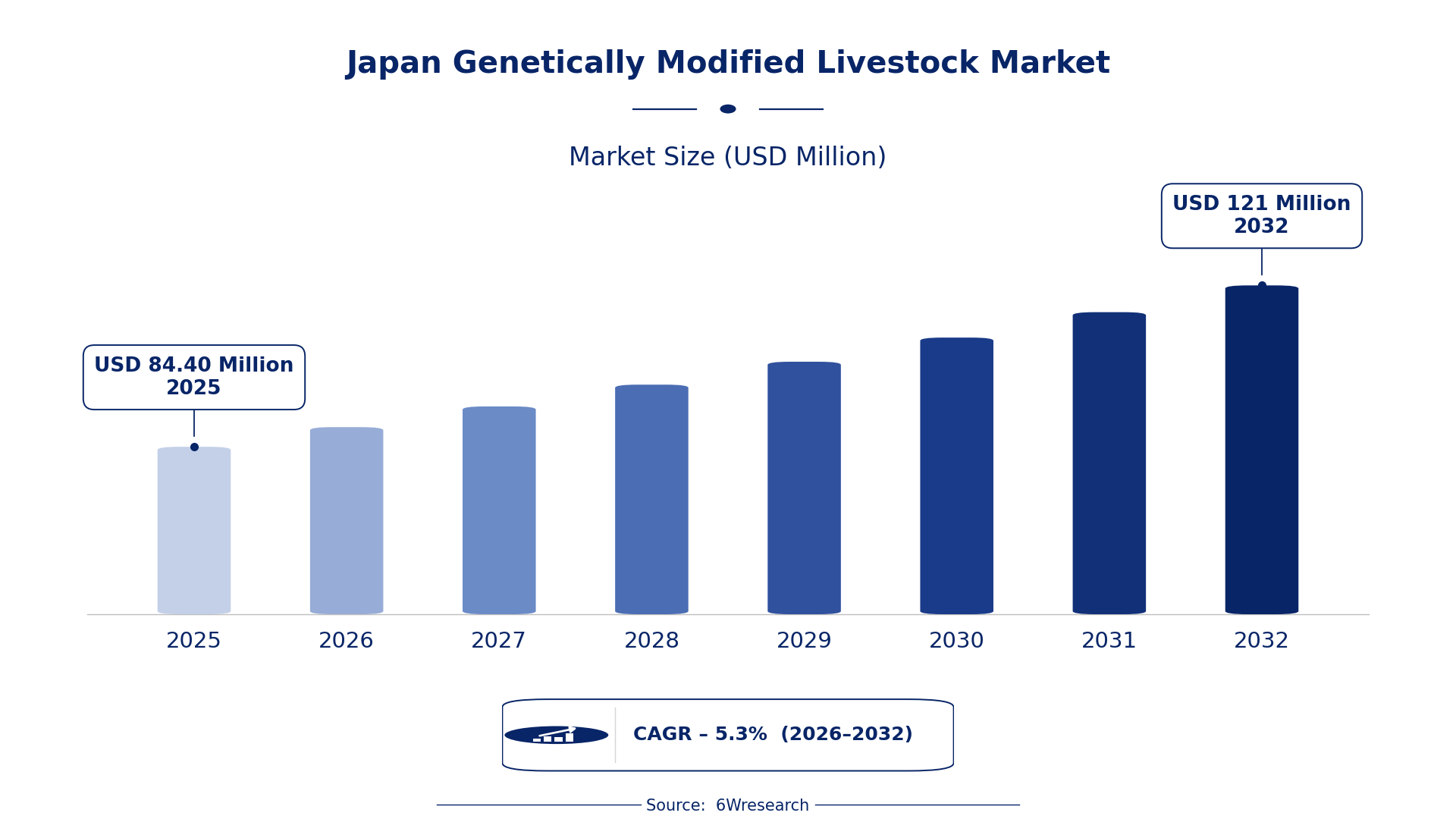
According to 6Wresearch internal database and industry insights, the Japan Genetically Modified Livestock Market was valued at USD 84.40 Million in 2025 and is projected to reach USD 121 Million by 2032, growing at a CAGR of approximately 5.3% during 2026–2032.
Japan Genetically Modified Livestock Market Highlights
| Report Metric | Details |
| Report Name | Japan Genetically Modified Livestock Market (2026-2032) |
| Market Size 2025 | USD 84.40 Million |
| Market Size 2032 | USD 121 Million |
| Absolute Growth 2025–2032 | USD 36.60 Million |
| CAGR 2026–2032 | 5.3% |
| Peak Annual Growth | 6.2% in 2031 |
| Forecast Period | 2026–2032 |
| Historical Data | 2022–2025 |
| Base Year | 2025 |
| Leading Animal Type, 2025 | Cattle (49% share) |
| Leading Modification Purpose, 2025 | Disease Resistance (37% share) |
| Leading Distribution Channel, 2025 | Seed & Livestock Distributors (48% share) |
| Leading End User, 2025 | Dairy & Meat Producers (35% share) |
| Fastest-Growing Animal Type | Aquaculture Fish (7.5% CAGR) |
| Fastest-Growing Distribution Channel | Genetic Technology Providers (7.2% CAGR) |
| Fastest-Growing End User | Fish Farming Operations (7.0% CAGR) |
| Growing Sector | Aquaculture |
| Key End Users | Dairy & Meat Producers, Aquaculture Suppliers, Breeder Farms, Genetic Technology Providers |
Japan Genetically Modified Livestock Market Year-wise Growth Rate and Key Drivers (2022–2032)
This graph illustrates the annual growth rates of the market from 2022 to 2032, highlighting a steady upward trajectory and projected market expansion over the forecast period.
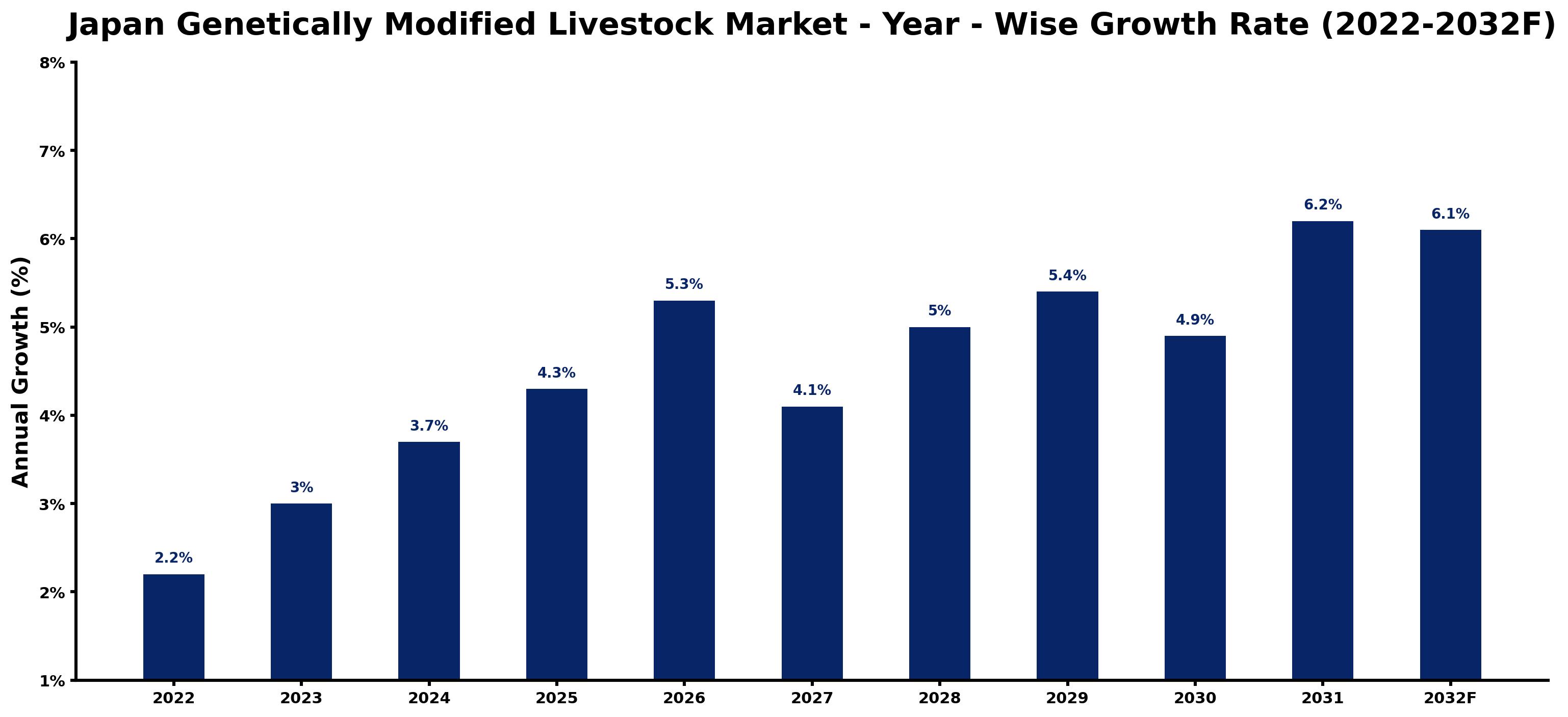
Year by year, the estimates below pair each growth rate with the development that shaped it.
| Year | Estimated Annual Growth (%) | Market Rationale |
| 2022 | 2.2 | The market experienced steady growth as domestic producers began adopting genetic technologies. |
| 2023 | 3.0 | Increased awareness of biotechnology benefits led to faster growth compared to the previous year. |
| 2024 | 3.7 | Growing demand for disease-resistant livestock contributed to continued growth in the market. |
| 2025 | 4.3 | The introduction of new genetic technologies spurred growth, reaching its historical peak. |
| 2026 | 5.3 | Rising investments in genetic research and development are expected to drive demand higher than in 2025. |
| 2027 | 4.1 | Growth is projected to slow slightly as the market adjusts to new technologies and consumer preferences. |
| 2028 | 5.0 | Renewed interest in aquaculture is expected to boost growth, reflecting changing dietary patterns. |
| 2029 | 5.4 | The market is projected to see a resurgence in growth as producers seek efficiency improvements. |
| 2030 | 4.9 | Growth is expected to slow again as market saturation begins to affect new investments. |
| 2031 | 6.2 | A surge in demand for disease-resistant livestock will lead to the highest growth rate in the forecast period. |
| 2032 | 6.1 | Growth is projected to decelerate slightly as the market stabilises after rapid expansion. |
Note: Market size estimations and growth projections presented in this report are based on 6Wresearch's proprietary forecasting methodology, utilizing the latest available industry data, government publications, and primary research inputs.
Japan Genetically Modified Livestock Market Synopsis
Genetically modified livestock refers to animals whose genetic material has been altered using biotechnology, focusing on enhancing disease resistance, improving growth rates, and reducing antibiotic use. The Japan Genetically Modified Livestock Market is expanding due to rising domestic demand from producers and aquaculture farms, supported by advancements in genetic technologies. With approximately 4 million cattle and a poultry sector producing over 1.5 million tons of meat, this market is set for growth, driven by the need for efficient production and food safety standards.
Market Dynamics Impact Analysis (2026–2032)
| Factor | Type | Impact | Primary Segment Affected |
| Rising demand for disease-resistant livestock | Driver | High | Disease Resistance |
| Increased investment in genetic technology research | Driver | High | Genetic Technology Providers |
| Growing aquaculture sector demand | Opportunity | Medium | Aquaculture Fish |
| Expansion of biotechnology adoption among farmers | Opportunity | Medium | Dairy & Meat Producers |
| Regulatory hurdles in genetic modification approval | Restraint | High | Genetic Technology Providers |
| Consumer resistance to genetically modified products | Restraint | Medium | Dairy & Meat Producers |
| High costs associated with genetic technology implementation | Challenge | High | Breeder Farms |
| Limited public awareness of genetic modification benefits | Challenge | Medium | Aquaculture Suppliers |
Evaluation of Drivers in Japan Genetically Modified Livestock Market (2026–2032)
Below are the drivers that matter most for revenue growth, with supporting evidence.
| Drivers | Primary Segment Affected | Why It Matters (Evidence) |
| Growing awareness of antibiotic reduction benefits | Antibiotic Reduction | Producers are motivated to adopt genetically modified livestock to meet consumer expectations for reduced antibiotic use. |
| Increased demand for disease-resistant animals | Disease Resistance | Producers are investing in genetically modified livestock to enhance productivity and meet health standards. |
| Support for biotechnology initiatives | Enhanced Growth Traits | Government backing encourages producers to adopt genetic technologies for improved livestock efficiency. |
| Rising aquaculture sector needs | Aquaculture Fish | Aquaculture suppliers are seeking genetically modified fish to ensure sustainability in fish farming. |
| Consumer preferences for healthier products | Disease Resistance | Dairy and meat producers are adopting genetic technologies to align with changing consumer demands. |
Much of the new demand traces back to the approximately 4 million cattle in Japan, prompting producers to seek disease-resistant livestock to improve productivity. The poultry sector, producing over 1.5 million tons of meat in 2022, is also driving demand for genetically modified animals. Support for biotechnology through the New Strategy for Agricultural Technology Development encourages investment in genetic technologies. The aquaculture sector, valued at around 600 billion yen annually, increasingly relies on genetically modified fish to meet sustainability requirements. This combination of factors is propelling growth in the market.
Evaluation of Restraints in Japan Genetically Modified Livestock Market
These are the pressures that could keep growth below its potential.
| Market Restraint | Primary Segment Affected | Why It Matters (Evidence) |
| Market saturation in certain livestock segments | Disease Resistance | As more producers adopt genetic technologies, the market may experience slower growth due to saturation. |
| High costs of genetic technology implementation | Enhanced Growth Traits | Producers face significant expenses in adopting genetic modifications, limiting wider adoption. |
| Consumer resistance to genetically modified products | Antibiotic Reduction | Some consumers remain hesitant about genetically modified livestock, affecting market acceptance. |
| Regulatory hurdles for new technologies | Aquaculture Fish | Strict regulations can delay the introduction of genetically modified fish into the market. |
| Limited awareness among smaller producers | Disease Resistance | Smaller producers often lack knowledge about genetic technologies, hindering market participation. |
Japan Genetically Modified Livestock Market Challenges
Producers in Japan face escalating costs due to strict regulations on genetically modified livestock, which can delay adoption and inflate operational expenses by up to 20%. Competition from imported meat, including over 1 million tons of pork in 2022, pressures local farmers to innovate quickly or risk losing market share. Many local farms encounter a technology gap in genetic modification techniques, which leads to slower growth rates and reduced productivity by approximately 15%. Consumer resistance to genetically modified products limits sales, forcing producers to rethink their strategies in a market that favours traditional livestock methods.
Trends in the Japan Genetically Modified Livestock Market
Buyers and suppliers in the Japan Genetically Modified Livestock Market are adjusting to the following trends.
- Shift towards Disease-Resistant Livestock: Dairy and meat producers are increasingly adopting disease-resistant livestock, reflecting consumer demand for healthier products. In 2022, the disease resistance segment accounted for 37% of the market, indicating a strong trend towards this modification purpose.
- Growing Aquaculture Sector Embracing Genetic Technologies: Since 2023, fish farming operations have begun integrating genetically modified fish to enhance sustainability. This shift is clear as the aquaculture sector is valued at around 600 billion yen annually, highlighting the importance of innovation in this industry.
- Increased Focus on Antibiotic Reduction: Producers are prioritising genetically modified livestock that reduces antibiotic use, driven by consumer health concerns. The trend aligns with the Japanese Food Safety Commission's guidelines, which promote safer food production practices.
- Expansion of Biotechnology Adoption Among Farmers: The New Strategy for Agricultural Technology Development, implemented in 2021, has spurred farmers to adopt genetic technologies. This initiative aims to modernise agricultural practices, resulting in increased productivity and sustainability.
Investment Opportunities in the Japan Genetically Modified Livestock Market
Below are the investment opportunities with the strongest case in the Japan Genetically Modified Livestock Market.
- Tokyo Region as a Biotechnology Hub: The Tokyo region, a major hub for livestock production, presents opportunities for investment in genetic technologies. With a livestock population of approximately 4 million, producers are seeking innovative solutions to improve efficiency.
- Gap in Disease-Resistant Livestock Supply: With rising consumer demand for healthier products, there is a gap in the supply of disease-resistant livestock. Dairy and meat producers are actively seeking partnerships to develop and implement genetic technologies.
- Investment in Aquaculture Genetic Solutions: Aquaculture suppliers are increasingly looking for genetically modified fish to meet sustainability goals. The sector's annual valuation of around 600 billion yen indicates a strong market for innovative solutions.
- Entry through Joint Ventures in Biotechnology: Establishing joint ventures with local genetic technology providers can facilitate market entry. This approach allows for shared expertise and resources, improving the development of genetically modified livestock.
Government Initiatives in the Japan Genetically Modified Livestock Market
The Food Sanitation Act amendment in 2018, fully applied in June 2021, mandates HACCP-based hygiene management for food businesses. This measure improves food safety standards and ensures that genetically modified livestock products meet stringent hygiene requirements, benefiting both producers and consumers.
The Ministry of Agriculture, Forestry and Fisheries oversees the regulations for livestock genetic modification. It funds research initiatives and approves projects aimed at advancing genetic technologies, ensuring that producers can access the latest innovations in livestock genetics.
Future Insight of the Japan Genetically Modified Livestock Market
By 2032, government initiatives will reshape Japan's livestock sector, encouraging the adoption of genetic modification techniques. Increased investment in agricultural technology will lead to advancements in disease resistance and growth rates. The implementation of the JIS Z 2800 standard will streamline regulations, promoting a more efficient market. As a result, producers will benefit from improved supply stability, while buyers will gain access to a wider range of genetically modified livestock options.
Market Segmentation Analysis
Japan Genetically Modified Livestock Market report covers a detailed analysis of the following market segments:
By Animal Type – Cattle Leads, Aquaculture Fish Expected to Grow Fastest
According to Prakhar Dixit, Senior Research Analyst at 6Wresearch, Cattle held 49% of the Japan Genetically Modified Livestock Market by animal type in 2025. Cattle hold the largest share due to their essential role as a primary source of meat and dairy in Japan, with a population of approximately 4 million. This established base ensures consistent demand from domestic producers, particularly in regions like Tokyo. Aquaculture Fish is projected to grow fastest, at a CAGR of 7.5% during 2026–2032. Aquaculture fish is witnessing rapid growth as the aquaculture sector, valued at around 600 billion yen annually, seeks sustainable solutions. The increasing adoption of genetically modified species will likely sustain this upward trajectory. Suppliers must prioritise innovations that cater specifically to the aquaculture sector to meet rising demands.
By Modification Purpose – Disease Resistance Leads and Records the Fastest Growth
Disease Resistance took 37% of modification purpose revenue in 2025, more than any other category. Disease resistance holds the largest share as it is essential for maintaining livestock health and productivity, ensuring a stable supply of meat and dairy products. This focus aligns with government support for biotechnology in agriculture. Its lead should widen, with a projected CAGR of 8.0% during 2026–2032, the highest in this split. The disease resistance segment is also the fastest-growing, as its importance in livestock health drives continuous improvements in genetic modification techniques. The overlap in leadership and growth indicates a sustained focus on this critical area. Buyers will benefit from advancements in disease resistance technologies, leading to healthier livestock and improved productivity.
By Distribution Channel – Seed & Livestock Distributors Lead, Genetic Technology Providers Expected to Grow Fastest
Seed & Livestock Distributors accounted for 48% of the market by distribution channel in 2025. Seed and livestock distributors lead the market by effectively supplying modified livestock to producers, ensuring that the necessary genetic technologies reach end-users. Their established networks are vital in facilitating the distribution process across various regions. Genetic Technology Providers are set to record the highest CAGR in this split, 7.2% over 2026–2032. Genetic technology providers are the fastest-growing segment as they supply essential tools and techniques for genetic modifications, responding to the rising demand for advanced solutions in livestock production. This growth reflects an increasing reliance on technology within the industry. Suppliers must strengthen collaborations with genetic technology providers to improve their distribution capabilities.
By End User – Dairy & Meat Producers Lead, Fish Farming Operations Expected to Grow Fastest
The largest end user category in 2025 was Dairy & Meat Producers, at 35% of revenue. Dairy and meat producers constitute the largest end-user segment, relying on genetically modified livestock to meet the needs of Japan's population of about 125 million. Their pivotal role underscores the importance of genetic advancements in livestock production. The quickest growth will come from Fish Farming Operations, forecast to expand at a CAGR of 7.0% between 2026 and 2032. Fish farming operations are the fastest-growing end-user group, propelled by the necessity for sustainable practices in aquaculture. This trend towards genetically modified fish indicates a significant shift in food production methodologies. Suppliers should tailor their products to address the unique demands of fish farming operations to capitalise on emerging opportunities.
Key Attractiveness of the Report
- 10 Years of Market Numbers
- Historical Data Starting from 2022 to 2025
- Base Year 2025
- Forecast Data until 2032
- Key Performance Indicators Impacting the Market
- Major Upcoming Developments and Projects
Key Highlights of the Report:
- Japan Genetically Modified Livestock Market Outlook
- Market Size of Japan Genetically Modified Livestock Market, 2025
- Forecast of Japan Genetically Modified Livestock Market, 2032
- Historical Data and Forecast of Japan Genetically Modified Livestock Revenues & Volume for the Period 2022-2032F
- Japan Genetically Modified Livestock Market Trend Evolution
- Japan Genetically Modified Livestock Market Drivers and Challenges
- Japan Genetically Modified Livestock Price Trends
- Japan Genetically Modified Livestock Porter's Five Forces
- Japan Genetically Modified Livestock Industry Life Cycle
- Historical Data and Forecast of Japan Genetically Modified Livestock Market Revenues & Volume By Animal Type for the Period 2022-2032F
- Historical Data and Forecast of Japan Genetically Modified Livestock Market Revenues & Volume By Cattle for the Period 2022-2032F
- Historical Data and Forecast of Japan Genetically Modified Livestock Market Revenues & Volume By Poultry for the Period 2022-2032F
- Historical Data and Forecast of Japan Genetically Modified Livestock Market Revenues & Volume By Pigs for the Period 2022-2032F
- Historical Data and Forecast of Japan Genetically Modified Livestock Market Revenues & Volume By Aquaculture Fish for the Period 2022-2032F
- Historical Data and Forecast of Japan Genetically Modified Livestock Market Revenues & Volume By Modification Purpose for the Period 2022-2032F
- Historical Data and Forecast of Japan Genetically Modified Livestock Market Revenues & Volume By Disease Resistance for the Period 2022-2032F
- Historical Data and Forecast of Japan Genetically Modified Livestock Market Revenues & Volume By Enhanced Growth Traits for the Period 2022-2032F
- Historical Data and Forecast of Japan Genetically Modified Livestock Market Revenues & Volume By Antibiotic Reduction for the Period 2022-2032F
- Historical Data and Forecast of Japan Genetically Modified Livestock Market Revenues & Volume By Climate Adaptation for the Period 2022-2032F
- Historical Data and Forecast of Japan Genetically Modified Livestock Market Revenues & Volume By Distribution Channel for the Period 2022-2032F
- Historical Data and Forecast of Japan Genetically Modified Livestock Market Revenues & Volume By Seed & Livestock Distributors for the Period 2022-2032F
- Historical Data and Forecast of Japan Genetically Modified Livestock Market Revenues & Volume By Breeder Farms for the Period 2022-2032F
- Historical Data and Forecast of Japan Genetically Modified Livestock Market Revenues & Volume By Genetic Technology Providers for the Period 2022-2032F
- Historical Data and Forecast of Japan Genetically Modified Livestock Market Revenues & Volume By Aquaculture Suppliers for the Period 2022-2032F
- Historical Data and Forecast of Japan Genetically Modified Livestock Market Revenues & Volume By End User for the Period 2022-2032F
- Historical Data and Forecast of Japan Genetically Modified Livestock Market Revenues & Volume By Dairy & Meat Producers for the Period 2022-2032F
- Historical Data and Forecast of Japan Genetically Modified Livestock Market Revenues & Volume By Poultry Integrators for the Period 2022-2032F
- Historical Data and Forecast of Japan Genetically Modified Livestock Market Revenues & Volume By Commercial Hog Producers for the Period 2022-2032F
- Historical Data and Forecast of Japan Genetically Modified Livestock Market Revenues & Volume By Fish Farming Operations for the Period 2022-2032F
- Japan Genetically Modified Livestock Import Export Trade Statistics
- Market Opportunity Assessment By Animal Type
- Market Opportunity Assessment By Modification Purpose
- Market Opportunity Assessment By Distribution Channel
- Market Opportunity Assessment By End User
- Japan Genetically Modified Livestock Top Companies Market Share
- Japan Genetically Modified Livestock Competitive Benchmarking By Technical and Operational Parameters
- Japan Genetically Modified Livestock Company Profiles
- Japan Genetically Modified Livestock Key Strategic Recommendations
Market Covered
The report covers the following segments.
By Animal Type
- Cattle
- Poultry
- Pigs
- Aquaculture Fish
By Modification Purpose
- Disease Resistance
- Enhanced Growth Traits
- Antibiotic Reduction
- Climate Adaptation
By Distribution Channel
- Seed & Livestock Distributors
- Breeder Farms
- Genetic Technology Providers
- Aquaculture Suppliers
By End User
- Dairy & Meat Producers
- Poultry Integrators
- Commercial Hog Producers
- Fish Farming Operations






































