Japan Health Foods Market Size & Growth Rate
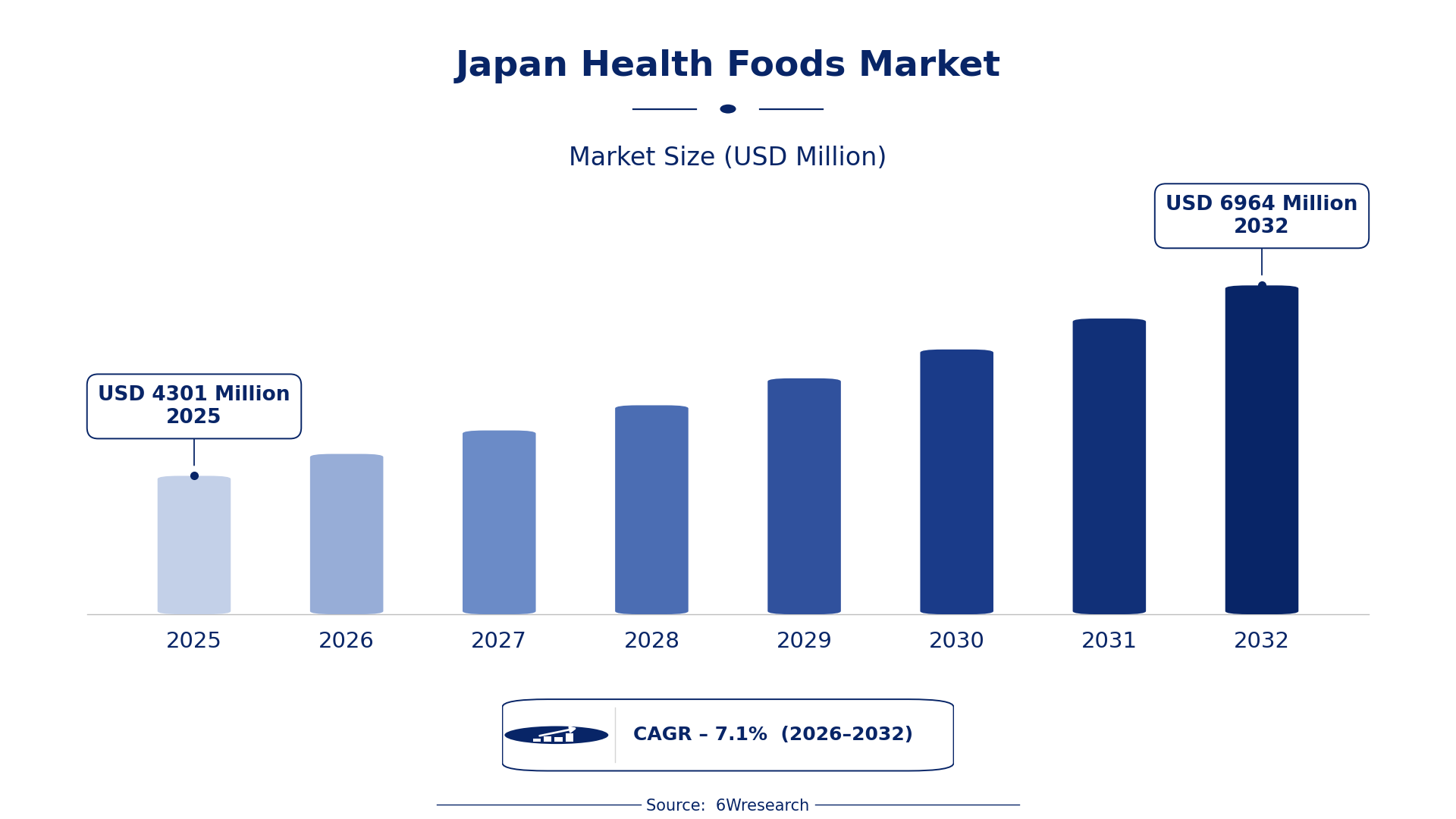
According to 6Wresearch internal database and industry insights, the Japan Health Foods Market was valued at USD 4,301 Million in 2025 and is projected to reach USD 6,964 Million by 2032, growing at a CAGR of approximately 7.1% during 2026–2032.
Japan Health Foods Market Highlights
| Report Metric | Details |
| Report Name | Japan Health Foods Market (2026-2032) |
| Market Size 2025 | USD 4,301 Million |
| Market Size 2032 | USD 6,964 Million |
| Absolute Growth 2025–2032 | USD 2,663 Million |
| CAGR 2026–2032 | 7.1% |
| Peak Annual Growth | 9.4% in 2026 |
| Forecast Period | 2026–2032 |
| Historical Data | 2022–2025 |
| Base Year | 2025 |
| Leading Product Type, 2025 | Gluten-Free Foods (47% share) |
| Leading Nutritional Benefit, 2025 | Digestive Wellness (39% share) |
| Leading Distribution Channel, 2025 | E-commerce Platforms (42% share) |
| Leading End User, 2025 | Fitness Lovers (52% share) |
| Fastest-Growing Product Type | Plant-Based Snacks (9.9% CAGR) |
| Fastest-Growing Nutritional Benefit | Antioxidants (8.8% CAGR) |
| Fastest-Growing End User | Vegan Consumers (8.7% CAGR) |
| Growing Sector | Health Foods |
| Key End Users | Health-conscious consumers, families with children, fitness enthusiasts, vegan consumers |
Japan Health Foods Market Year-wise Growth Rate and Key Drivers (2022–2032)
This graph illustrates the annual growth rates of the market from 2022 to 2032, highlighting a steady upward trajectory and projected market expansion over the forecast period.
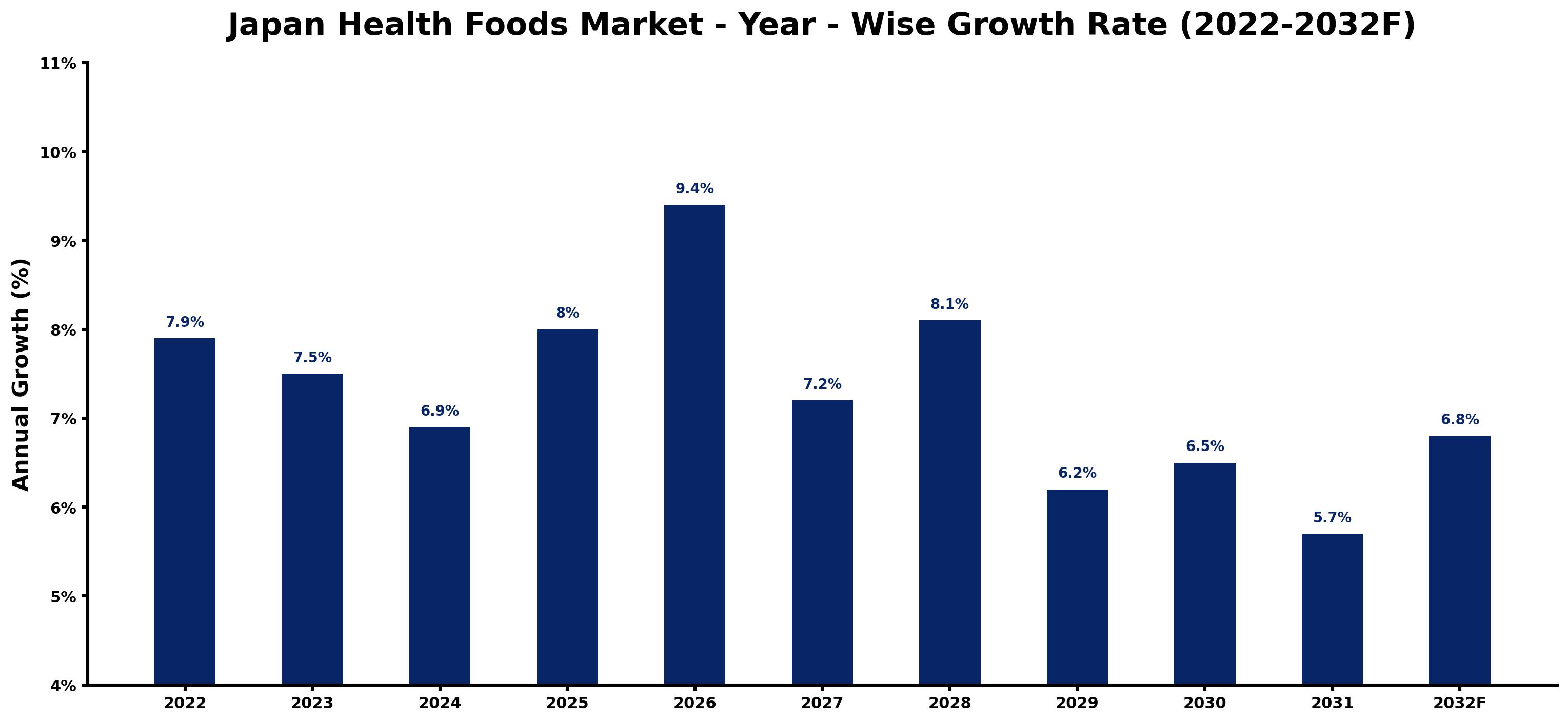
The following figures match every annual growth estimate with the main market development of that year, giving the reasoning behind each rise or slowdown.
| Year | Estimated Annual Growth (%) | Market Rationale |
| 2022 | 7.9 | The market showed strong growth due to increasing health awareness among consumers. |
| 2023 | 7.5 | Growth slowed as consumers adjusted to rising prices in the health food segment. |
| 2024 | 6.9 | Market expansion continued, driven by the popularity of gluten-free products. |
| 2025 | 8.0 | Demand surged as families increasingly opted for fortified cereals for breakfast. |
| 2026 | 9.4 | Growth peaked, influenced by a rise in e-commerce sales of health foods. |
| 2027 | 7.2 | A slowdown occurred as competition intensified among health food retailers. |
| 2028 | 8.1 | Growth rebounded with renewed interest in plant-based snacks among younger consumers. |
| 2029 | 6.2 | The market experienced slower growth as consumers became more selective. |
| 2030 | 6.5 | Demand increased as health-conscious individuals sought out antioxidant-rich foods. |
| 2031 | 5.7 | A slowdown was noted as the market faced saturation in certain segments. |
| 2032 | 6.8 | Growth accelerated again as the aging population drove demand for health foods. |
Note: Market size estimations and growth projections presented in this report are based on 6Wresearch's proprietary forecasting methodology, utilizing the latest available industry data, government publications, and primary research inputs.
Japan Health Foods Market Synopsis
Health foods encompass a variety of products aimed at improving wellness, including gluten-free foods, organic superfoods, and fortified cereals. The Japan Health Foods Market is expanding, driven by increasing health consciousness and a notable shift towards e-commerce, where online sales increased by 30% in 2022. The aging population and rising awareness of dietary needs are propelling demand for health foods, creating numerous opportunities for suppliers and retailers.
Market Dynamics Impact Analysis (2026–2032)
| Factor | Type | Impact | Primary Segment Affected |
| Increasing health consciousness among consumers drives demand for gluten-free foods. | Driver | High | Gluten-Free Foods |
| The rise of e-commerce platforms facilitates easier access to health foods. | Driver | High | E-commerce Platforms |
| Growing interest in plant-based diets opens new market opportunities. | Opportunity | High | Plant-Based Snacks |
| The aging population is increasingly seeking health foods tailored to their needs. | Opportunity | High | Fortified Cereals |
| Rising prices of raw materials may limit profit margins for producers. | Restraint | Medium | Organic Superfoods |
| Competition among retailers can lead to price wars, affecting profitability. | Restraint | Medium | Health Food Stores |
| Compliance with health regulations can increase operational costs for producers. | Challenge | High | Fortified Cereals |
| Capacity constraints in production may limit supply to meet rising demand. | Challenge | Medium | Plant-Based Snacks |
Evaluation of Drivers in Japan Health Foods Market (2026–2032)
Below are the drivers that matter most for revenue growth, with supporting evidence.
| Drivers | Primary Segment Affected | Why It Matters (Evidence) |
| Growing awareness of gluten sensitivity leads to increased purchases of gluten-free foods. | Gluten-Free Foods | Approximately 30% of Japanese consumers actively seek gluten-free options. |
| The rise of online shopping trends boosts sales of health foods through e-commerce platforms. | E-commerce Platforms | E-commerce sales of health foods grew by 30% in 2022 compared to the previous year. |
| Increased health consciousness drives demand for organic superfoods as healthier alternatives. | Organic Superfoods | Organic superfoods account for about 15% of the health foods market in Japan. |
| The focus on digestive wellness encourages consumers to seek products that promote gut health. | Digestive Wellness | In 2023, the Ministry of Health launched a campaign to raise awareness of digestive wellness. |
| Families with children increasingly choose fortified cereals for their nutritional benefits. | Fortified Cereals | Fortified cereals make up 10% of breakfast food sales among families. |
Behind the steady rise in orders sits a growing awareness of gluten sensitivity, with approximately 30% of consumers actively seeking gluten-free options. E-commerce platforms have transformed purchasing habits, as online sales surged by 30% in 2022. Health consciousness has led to organic superfoods capturing about 15% of the market, while campaigns promoting digestive wellness have further stimulated demand. Families with children are increasingly opting for fortified cereals, which constitute 10% of breakfast food sales, reflecting a shift towards healthier breakfast choices. The rising interest in plant-based diets has also contributed to market growth, particularly among younger consumers.
Evaluation of Restraints in Japan Health Foods Market
Below are the constraints most often cited by buyers and suppliers, with the segment each affects.
| Market Restraint | Primary Segment Affected | Why It Matters (Evidence) |
| Rising prices of raw materials may limit profit margins for producers. | Organic Superfoods | Japan's national medical care expenditure was about JPY 46.7 trillion in fiscal 2022. |
| Intense competition among retailers can lead to price wars, affecting profitability. | Health Food Stores | The number of health food stores in Japan has increased by 20% since 2020. |
| Compliance with health regulations can increase operational costs for producers. | Fortified Cereals | JIS standards govern the quality of health food products in Japan. |
| Capacity constraints in production may limit supply to meet rising demand. | Plant-Based Snacks | The average Japanese household spends about 5,000 yen monthly on health foods. |
| Market saturation in certain segments may slow growth opportunities. | E-commerce Platforms | Tokyo is a major hub for health food retail, with numerous health food stores. |
Japan Health Foods Market Challenges
Tokyo's health food retailers face intense competition, with a 20% increase in health food stores since 2020, which pressures profit margins for shop owners. Rising costs of natural ingredients have surged due to inflation, forcing buyers to pay up to 15% more for essential products. Supply chain disruptions, particularly for organic superfoods, have delayed deliveries by an average of three weeks, impacting availability for consumers. A lack of skilled workers in the health food sector hampers innovation, compelling producers to allocate extra resources for training, which can inflate operational costs by 10%.
Trends in the Japan Health Foods Market
Several trends are reshaping the Japan Health Foods Market; the most important are set out below.
- Shift towards E-commerce for Health Foods: Since 2022, there has been a shift towards e-commerce for health foods, with online sales growing by 30%. This change reflects consumer preferences for convenience and accessibility, benefiting suppliers who invest in digital platforms.
- Growing Popularity of Plant-Based Snacks: The demand for plant-based snacks has surged, particularly among younger consumers, with a reported 9.9% CAGR expected from 2026 to 2032. This trend indicates a shift in dietary preferences towards healthier snack options.
- Increased Focus on Digestive Wellness: The 2023 campaign launched by the Ministry of Health raised awareness of digestive wellness, driving consumer interest in products that promote gut health. This trend is likely to influence product development and marketing strategies.
- Rising Demand for Antioxidant-Rich Foods: The Japanese population is increasingly aware of antioxidants and their health benefits, leading to a growing market for antioxidant-rich products. This trend is expected to shape consumer choices in the health foods sector.
Investment Opportunities in the Japan Health Foods Market
Several openings in the Japan Health Foods Market merit attention from investors.
- Partnerships for Local Production: Local partnerships can facilitate market entry, particularly for plant-based snacks, which are experiencing a 9.9% CAGR. Collaborating with local distributors can help reach health-conscious consumers.
- Investment in E-commerce Platforms: The growing demand for health foods presents an opportunity to invest in e-commerce platforms, especially for younger consumers. With a 30% increase in online sales, establishing a strong online presence is essential.
- Focus on Gluten-Free Products: With 30% of consumers actively seeking gluten-free options, suppliers can capitalize on this trend by expanding product lines. Targeting gluten-sensitive consumers in urban areas can yield positive results.
- Development of Fortified Cereals: The popularity of fortified cereals among families presents an opportunity for product innovation. Investing in new formulations can attract health-conscious parents looking for nutritious breakfast options.
Government Initiatives in the Japan Health Foods Market
The Food Sanitation Act amendment of 2018 established a positive list system for synthetic resins used in food packaging, ensuring safety standards for health food producers. This law, fully applied by June 2021, mandates the use of approved materials, impacting product development and compliance costs. The government has also allocated 500 million yen for health food research and development, supporting innovation in the sector.
Health food producers benefit from the Next-Generation Medical Infrastructure Act of 2017, which allows anonymisation of medical data for research. This facilitates innovation in product development, enabling companies to tailor offerings to consumer health needs. The Pharmaceuticals and Medical Devices Agency oversees compliance, ensuring that products meet safety standards.
Future Insight of the Japan Health Foods Market
A policy-driven shift towards health food promotion will encourage suppliers to innovate their product offerings. E-commerce sales are expected to grow, with online transactions projected to rise by 30% in 2022, allowing buyers to access a broader range of products. Advances in organic certification will streamline compliance, benefiting producers and ensuring higher quality for consumers. Increased consumer awareness of dietary needs will stimulate demand, contributing to a market value of approximately 1.5 trillion yen.
Market Segmentation Analysis
Japan Health Foods Market report covers a detailed analysis of the following market segments:
By Product Type – Gluten-Free Foods Lead, Plant-Based Snacks Expected to Grow Fastest
According to Saurav Kr Singh, Senior Research Analyst at 6Wresearch, Gluten-Free Foods held 47% of the Japan Health Foods Market by product type in 2025. Gluten-free foods hold the largest share due to the increasing awareness of gluten sensitivity among consumers. This segment benefits from a substantial installed base of health-conscious individuals, particularly in urban areas like Tokyo. Plant-Based Snacks are projected to grow fastest, at a CAGR of 9.9% during 2026–2032. The rapid growth of plant-based snacks is fuelled by the rising popularity of plant-based diets, especially among younger demographics. This trend is evidenced by a notable increase in the demand for healthier snack alternatives. Suppliers should focus on expanding gluten-free product lines to meet the rising consumer demand.
By Nutritional Benefit – Digestive Wellness Leads, Antioxidants Expected to Grow Fastest
With 39% of nutritional benefit revenue in 2025, Digestive Wellness was the largest category. Digestive wellness products dominate the market as consumers place a strong emphasis on gut health in their dietary choices. This focus is reflected in the popularity of health foods that promote digestive health, supported by government campaigns. Over 2026–2032, Antioxidants are expected to post the fastest growth, at a CAGR of 8.8%. Antioxidants are experiencing the fastest growth as consumers increasingly seek products that combat oxidative stress and promote overall well-being. This shift is driven by heightened awareness of health benefits associated with antioxidants. Buyers are likely to prioritise products that highlight digestive wellness and antioxidant properties in their purchasing decisions.
By Distribution Channel – E-commerce Platforms Lead and Record the Fastest Growth
E-commerce Platforms took 42% of distribution channel revenue in 2025, more than any other category. E-commerce platforms hold the largest share in the distribution channel due to the growing preference for convenient online shopping among consumers. This trend is particularly evident in urban regions where digital retail options are widely accessible. E-commerce Platforms are also forecast to expand faster than any other category, at a CAGR of 9.2% over 2026–2032. E-commerce platforms are also the fastest-growing channel, propelled by the rapid increase in online shopping habits. The expanding range of health food products available online further accelerates this growth. Suppliers must enhance their online presence to capitalise on the expanding e-commerce market.
By End User – Fitness Lovers Lead, Vegan Consumers Expected to Grow Fastest
In 2025, Fitness Lovers led the end user split with a 52% share. Fitness lovers represent the largest end-user group, as those with active lifestyles consistently seek nutritious options to support their health and fitness goals. This segment benefits from a robust community of health-conscious individuals across Japan. The quickest growth will come from Vegan Consumers, forecast to expand at a CAGR of 8.7% between 2026 and 2032. Vegan consumers are the fastest-growing segment, driven by a notable increase in the adoption of vegan diets among the population. This shift reflects a significant transformation in dietary preferences towards plant-based foods. Suppliers should prioritise the development of products tailored to vegan consumers to seize opportunities in this rapidly growing segment.
Key Attractiveness of the Report
- 10 Years of Market Numbers
- Historical Data Starting from 2022 to 2025
- Base Year 2025
- Forecast Data until 2032
- Key Performance Indicators Impacting the Market
- Major Upcoming Developments and Projects
Key Highlights of the Report:
- Japan Health Foods Market Outlook
- Market Size of Japan Health Foods Market, 2025
- Forecast of Japan Health Foods Market, 2032
- Historical Data and Forecast of Japan Health Foods Revenues & Volume for the Period 2022-2032F
- Japan Health Foods Market Trend Evolution
- Japan Health Foods Market Drivers and Challenges
- Japan Health Foods Price Trends
- Japan Health Foods Porter's Five Forces
- Japan Health Foods Industry Life Cycle
- Historical Data and Forecast of Japan Health Foods Market Revenues & Volume By Product Type for the Period 2022-2032F
- Historical Data and Forecast of Japan Health Foods Market Revenues & Volume By Gluten-Free Foods for the Period 2022-2032F
- Historical Data and Forecast of Japan Health Foods Market Revenues & Volume By Organic Superfoods for the Period 2022-2032F
- Historical Data and Forecast of Japan Health Foods Market Revenues & Volume By Plant-Based Snacks for the Period 2022-2032F
- Historical Data and Forecast of Japan Health Foods Market Revenues & Volume By Fortified Cereals for the Period 2022-2032F
- Historical Data and Forecast of Japan Health Foods Market Revenues & Volume By Nutritional Benefit for the Period 2022-2032F
- Historical Data and Forecast of Japan Health Foods Market Revenues & Volume By Digestive Wellness for the Period 2022-2032F
- Historical Data and Forecast of Japan Health Foods Market Revenues & Volume By Antioxidants for the Period 2022-2032F
- Historical Data and Forecast of Japan Health Foods Market Revenues & Volume By Low Calorie for the Period 2022-2032F
- Historical Data and Forecast of Japan Health Foods Market Revenues & Volume By Added Vitamins for the Period 2022-2032F
- Historical Data and Forecast of Japan Health Foods Market Revenues & Volume By Distribution Channel for the Period 2022-2032F
- Historical Data and Forecast of Japan Health Foods Market Revenues & Volume By Health Food Stores for the Period 2022-2032F
- Historical Data and Forecast of Japan Health Foods Market Revenues & Volume By E-commerce Platforms for the Period 2022-2032F
- Historical Data and Forecast of Japan Health Foods Market Revenues & Volume By Grocery Chains for the Period 2022-2032F
- Historical Data and Forecast of Japan Health Foods Market Revenues & Volume By Retail Supermarkets for the Period 2022-2032F
- Historical Data and Forecast of Japan Health Foods Market Revenues & Volume By End User for the Period 2022-2032F
- Historical Data and Forecast of Japan Health Foods Market Revenues & Volume By Gluten-Sensitive Consumers for the Period 2022-2032F
- Historical Data and Forecast of Japan Health Foods Market Revenues & Volume By Fitness Lovers for the Period 2022-2032F
- Historical Data and Forecast of Japan Health Foods Market Revenues & Volume By Vegan Consumers for the Period 2022-2032F
- Historical Data and Forecast of Japan Health Foods Market Revenues & Volume By Families with Children for the Period 2022-2032F
- Japan Health Foods Import Export Trade Statistics
- Market Opportunity Assessment By Product Type
- Market Opportunity Assessment By Nutritional Benefit
- Market Opportunity Assessment By Distribution Channel
- Market Opportunity Assessment By End User
- Japan Health Foods Top Companies Market Share
- Japan Health Foods Competitive Benchmarking By Technical and Operational Parameters
- Japan Health Foods Company Profiles
- Japan Health Foods Key Strategic Recommendations
Market Covered
The following segment groups are covered in the report.
By Product Type
- Gluten-Free Foods
- Organic Superfoods
- Plant-Based Snacks
- Fortified Cereals
By Nutritional Benefit
- Digestive Wellness
- Antioxidants
- Low Calorie
- Added Vitamins
By Distribution Channel
- Health Food Stores
- E-commerce Platforms
- Grocery Chains
- Retail Supermarkets
By End User
- Gluten-Sensitive Consumers
- Fitness Lovers
- Vegan Consumers
- Families with Children































