Japan Healthcare Gamification Market Size & Growth Rate
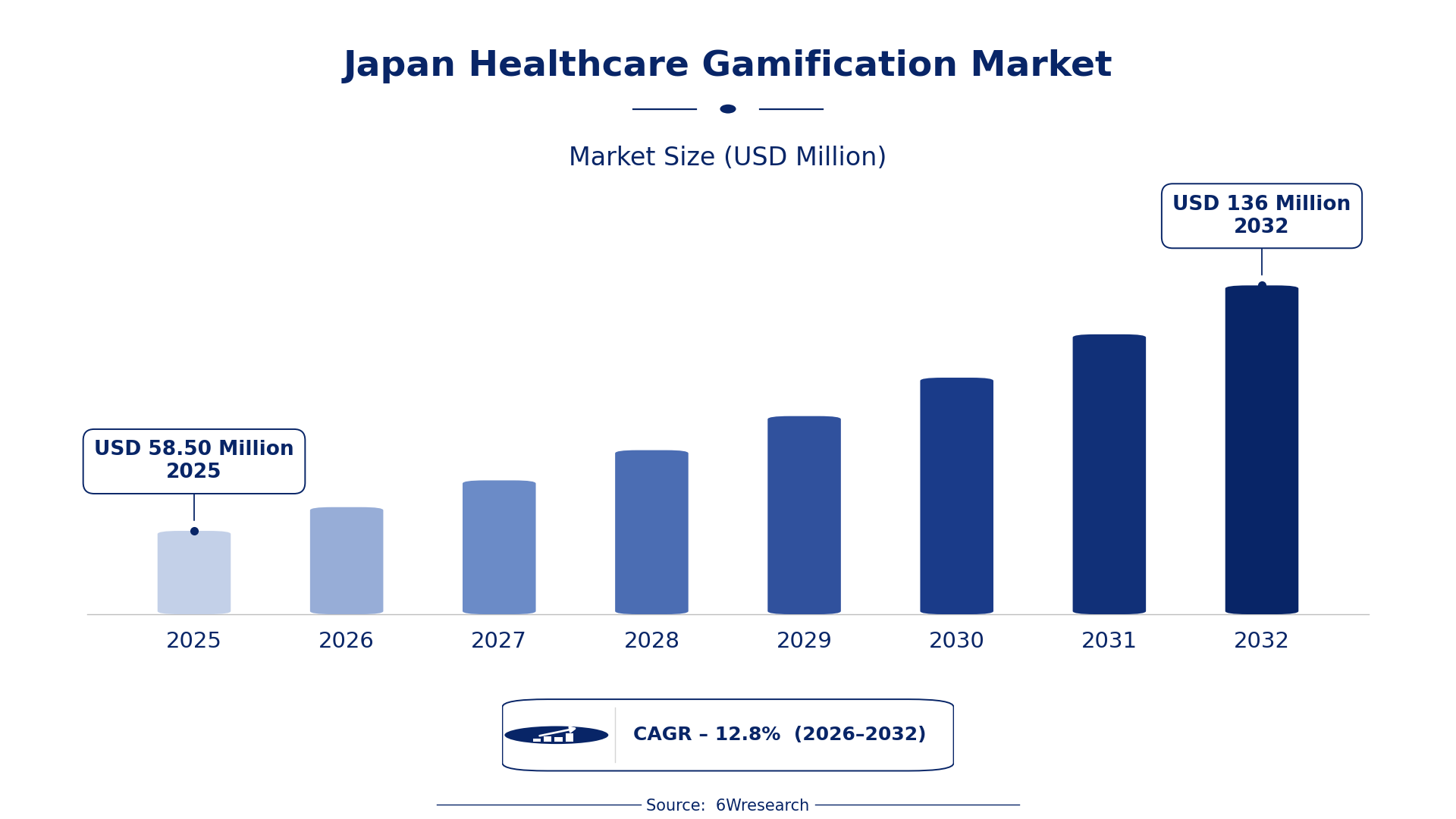
According to 6Wresearch internal database and industry insights, the Japan Healthcare Gamification Market was valued at USD 58.50 Million in 2025 and is projected to reach USD 136 Million by 2032, growing at a CAGR of approximately 12.8% during 2026–2032.
Japan Healthcare Gamification Market Highlights
| Report Metric | Details |
| Report Name | Japan Healthcare Gamification Market (2026-2032) |
| Market Size 2025 | USD 58.50 Million |
| Market Size 2032 | USD 136 Million |
| Absolute Growth 2025–2032 | USD 77.50 Million |
| CAGR 2026–2032 | 12.8% |
| Peak Annual Growth | 14.0% in 2032 |
| Forecast Period | 2026–2032 |
| Historical Data | 2022–2025 |
| Base Year | 2025 |
| Leading Type, 2025 | Serious Game (51% share) |
| Leading Application, 2025 | Therapeutics (52% share) |
| Leading End-Use, 2025 | Enterprise Based (69% share) |
| Fastest-Growing Type | Exercise Game (17.5% CAGR) |
| Fastest-Growing Application | Prevention (16.7% CAGR) |
| Growing Sector | Education |
| Key End Users | healthcare institutions, rehabilitation centers, educational institutions, fitness organizations |
Japan Healthcare Gamification Market Year-wise Growth Rate and Key Drivers (2022–2032)
This graph illustrates the annual growth rates of the market from 2022 to 2032, highlighting a steady upward trajectory and projected market expansion over the forecast period.
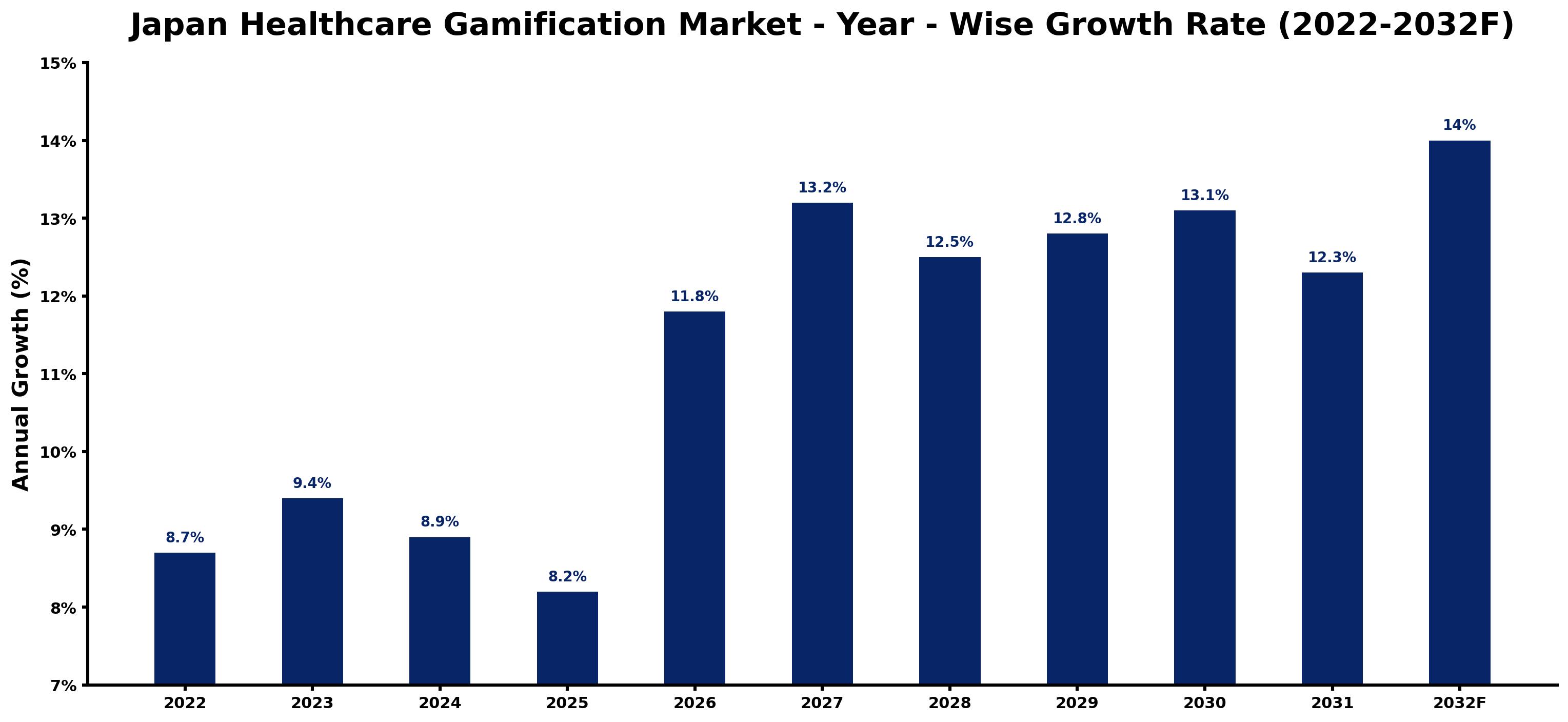
Each row of the following table gives one year's estimated growth and the event or demand shift that explains it.
| Year | Estimated Annual Growth (%) | Market Rationale |
| 2022 | 8.7 | The market showed steady growth, reflecting increasing interest in gamification technologies. |
| 2023 | 9.4 | Growth accelerated due to heightened adoption of serious games in medical education. |
| 2024 | 8.9 | A slight slowdown occurred as market saturation began in certain segments. |
| 2025 | 8.2 | Continued growth was observed, but at a reduced pace as competition intensified. |
| 2026 | 11.8 | A rebound is expected as investments in digital health technologies increase. |
| 2027 | 13.2 | Growth is projected to surge as healthcare institutions expand their gamification initiatives. |
| 2028 | 12.5 | A moderate slowdown is anticipated as the market reaches a more mature phase. |
| 2029 | 12.8 | Demand is expected to increase again as new applications in rehabilitation emerge. |
| 2030 | 13.1 | Growth is projected to remain strong, driven by ongoing digital transformation in healthcare. |
| 2031 | 12.3 | A slight slowdown is anticipated as the market stabilises after rapid expansion. |
| 2032 | 14.0 | The market is expected to peak due to advancements in gamification technologies. |
Note: Market size estimations and growth projections presented in this report are based on 6Wresearch's proprietary forecasting methodology, utilizing the latest available industry data, government publications, and primary research inputs.
Japan Healthcare Gamification Market Synopsis
Healthcare gamification utilises game design elements to improve health outcomes through software development. This approach promotes patient engagement, encourages healthy behaviours, and aids education in healthcare settings. The Japan Healthcare Gamification Market is expanding, driven by rising demand from healthcare institutions and domestic users. Key factors include a growing elderly population, which accounted for 29.3% in September 2024, and substantial investment in digital health initiatives, such as the health promotion program launched in 2023.
Market Dynamics Impact Analysis (2026–2032)
| Factor | Type | Impact | Primary Segment Affected |
| Growing elderly population increases demand for health engagement tools. | Driver | High | Consumer Based |
| Increased focus on digital transformation in healthcare drives innovation. | Driver | High | Enterprise Based |
| Rising interest in mental health solutions creates new opportunities. | Opportunity | High | Therapeutics |
| Expansion of health insurance coverage for gamified applications opens markets. | Opportunity | Medium | Education |
| High development costs limit access for smaller healthcare providers. | Restraint | High | Serious Game |
| Limited awareness of gamification benefits hinders market penetration. | Restraint | Medium | Exercise Game |
| Regulatory compliance can delay product launches and increase costs. | Challenge | High | Therapeutics |
| Competition from traditional health solutions limits market growth. | Challenge | Medium | Enterprise Based |
Evaluation of Drivers in Japan Healthcare Gamification Market (2026–2032)
Demand rests on the following drivers, each shown with the segment it touches most.
| Drivers | Primary Segment Affected | Why It Matters (Evidence) |
| Increasing adoption of serious games in medical education enhances training effectiveness. | Serious Game | In 2023, several universities integrated serious games into curricula, improving student engagement. |
| Growing digital health initiatives promote gamification in patient care. | Enterprise Based | The Ministry of Health, Labour and Welfare allocated JPY 46.7 trillion in 2022 for healthcare improvements. |
| Rising elderly population drives demand for engaging health applications. | Consumer Based | With 29.3% of the population aged 65 or older, demand for cognitive engagement tools is increasing. |
| Health promotion programs encourage the use of gamified fitness applications. | Prevention | In 2023, a health promotion program targeting gamification was launched, boosting app development. |
| Increased focus on mental health drives demand for therapeutic gamification. | Therapeutics | A new initiative in 2023 funded research on gamification in mental health therapies. |
Spending rises because the increasing elderly population drives demand for engaging health applications. In 2022, Japan's national medical care expenditure was about JPY 46.7 trillion, promoting digital health advancements. Universities are integrating serious games into curricula, improving training effectiveness for medical professionals.
Evaluation of Restraints in Japan Healthcare Gamification Market
The key brakes on demand, and where they bite hardest, are shown below.
| Market Restraint | Primary Segment Affected | Why It Matters (Evidence) |
| High development costs limit access for smaller healthcare providers. | Serious Game | Development costs can exceed JPY 100 million, restricting smaller entities from entering the market. |
| Limited awareness of gamification benefits hinders market penetration. | Exercise Game | Many healthcare providers lack knowledge of the advantages of gamified solutions. |
| Regulatory compliance can delay product launches and increase costs. | Therapeutics | Navigating regulations can add months to the approval process for new applications. |
| Competition from traditional health solutions limits market growth. | Enterprise Based | Established healthcare practices often overshadow emerging gamified solutions. |
| Integration challenges with existing healthcare systems can slow adoption. | Education | Healthcare institutions face difficulties incorporating new gamified applications into current workflows. |
Japan Healthcare Gamification Market Challenges
Healthcare institutions in Japan encounter high costs when adopting gamification technologies, with expenses potentially exceeding JPY 1 billion for comprehensive implementation. Limited technological infrastructure restricts the deployment of advanced gamified solutions, potentially delaying patient engagement initiatives by up to six months for hospitals. Developers face difficulties in sourcing quality content, resulting in inconsistent offerings that frustrate healthcare providers. Stringent regulations from the PMDA complicate the approval process for new applications, causing project delays that can extend timelines by over a year for producers.
Trends in the Japan Healthcare Gamification Market
Buyers and suppliers in the Japan Healthcare Gamification Market are adjusting to the following trends.
- Digital Health Initiatives Gaining Traction: The Tokyo metropolitan area is at the forefront of digital health initiatives, concentrating on gamification technologies. In 2023, the government introduced a health promotion program aimed at gamification in fitness apps, reflecting a strong investment in this sector.
- Serious Games Gaining Acceptance in Medical Education: Serious games are increasingly being incorporated into medical education, with numerous universities adopting them in their curricula. This trend indicates a growing recognition of their effectiveness in enhancing training outcomes, contributing to a 51% share in the Serious Game segment.
- Casual Games Popular Among the Elderly: Casual games are becoming more popular among the elderly population, encouraging cognitive engagement and social interaction. This trend is supported by a notable rise in usage among seniors, who constitute a significant portion of Japan's 125 million population.
- Investment in Mental Health Gamification Rising: A new initiative announced in 2023 aims to fund research on gamification in mental health therapies. This investment underscores the increasing focus on mental health solutions, mirroring a broader trend within the healthcare sector.
Investment Opportunities in the Japan Healthcare Gamification Market
Investors looking at the Japan Healthcare Gamification Market should consider the following areas.
- Expansion of Gamified Solutions in Rehabilitation Centers: The Tokyo metropolitan area offers opportunities for expanding gamified solutions in rehabilitation centers, enhancing patient recovery experiences. With around 8,100 hospitals in Japan, the demand for innovative rehabilitation tools is on the rise.
- Investment in Gamified Fitness Applications: With a growing elderly population, there exists a notable gap in gamified fitness applications. Healthcare organisations are searching for innovative solutions to engage seniors, creating opportunities for developers to collaborate with local facilities.
- Demand for Educational Gamification Increasing: Healthcare institutions are progressively adopting gamification for staff training and patient education. This trend is driven by the need for effective training tools, presenting opportunities for developers to create customised solutions.
- Health Insurance Coverage for Gamified Applications: Recent changes in health insurance policies are beginning to include coverage for certain gamified health applications. This shift opens new pathways for developers to enter the market and partner with healthcare providers.
Government Initiatives in the Japan Healthcare Gamification Market
The Long-Term Care Insurance Act, established in 1997, impacts healthcare gamification by funding services for older people. This legislation encourages the development of gamified solutions tailored to improve care quality for the elderly population, which is increasingly important as 29.3% of Japan's population is aged 65 or older.
In 2023, the Japanese government allocated JPY 10 billion to fund digital health initiatives, administered by the Ministry of Health, Labour and Welfare. This funding supports the integration of gamification technologies into healthcare, promoting innovation and improving patient outcomes.
Future Insight of the Japan Healthcare Gamification Market
Investment in healthcare innovation will exceed JPY 10 trillion by 2032, driven by government initiatives and private sector collaboration. This funding will generate substantial demand for gamified health applications, particularly in rehabilitation and mental health sectors. The adoption of ISO 9241 standards will enhance usability, making solutions more accessible for diverse user groups. As health insurance policies begin to cover gamified applications, suppliers will benefit from broader market reach and increased affordability.
Market Segmentation Analysis
Japan Healthcare Gamification Market report covers a detailed analysis of the following market segments:
By Type – Serious Game Leads, Exercise Game Expected to Grow Fastest
According to Bhawna Singh, Assistant Manager at 6Wresearch, the largest type category in 2025 was Serious Game, at 51% of revenue. Serious games hold the largest share in Japan's healthcare gamification market as they are extensively used for educational purposes in medical training. For instance, several universities have integrated serious games into their curricula, enhancing the learning experience for future healthcare professionals. Over 2026–2032, Exercise Game is expected to post the fastest growth, at a CAGR of 17.5%. The exercise game segment is experiencing rapid growth as healthcare institutions increasingly adopt gamified solutions for physical rehabilitation and fitness improvement. The launch of a health promotion programme in 2023 focusing on gamification in fitness apps is driving this expansion. Suppliers should focus on developing serious games that meet educational standards to effectively engage the largest segment of the market.
By Application – Therapeutics Lead, Prevention Expected to Grow Fastest
Therapeutics held 52% of the Japan Healthcare Gamification Market by application in 2025. The therapeutics application leads the market due to its widespread use in healthcare settings to support patient recovery processes. This segment is bolstered by Japan's considerable national medical care expenditure, which was around JPY 46.7 trillion in fiscal 2022. Prevention is set to record the highest CAGR in this split, 16.7% over 2026–2032. The prevention application is growing rapidly as it encourages healthy lifestyle choices and disease prevention among the population. The Ministry of Health, Labour and Welfare's promotion of digital health initiatives has notably increased interest in this area. Buyers are likely to seek innovative prevention solutions that align with government health initiatives to improve public health outcomes.
By End-Use – Enterprise Based Leads and Records the Fastest Growth
In 2025, Enterprise Based led the end-use split with a 69% share. The enterprise-based segment dominates as healthcare organisations increasingly implement gamification for staff training and patient interaction. With approximately 8,100 hospitals in Japan, there is a strong installed base for enterprise-based solutions. Enterprise Based is also forecast to expand faster than any other category, at a CAGR of 14.1% over 2026–2032. The enterprise-based segment is also the fastest-growing due to the ongoing digital transformation in the healthcare sector, which incorporates gamification as a key component. This trend is expected to continue as healthcare providers strive to enhance operational efficiency and patient engagement. Suppliers must customise their offerings to cater to the specific needs of healthcare organisations to maintain a competitive edge.
Key Attractiveness of the Report
- 10 Years of Market Numbers
- Historical Data Starting from 2022 to 2025
- Base Year 2025
- Forecast Data until 2032
- Key Performance Indicators Impacting the Market
- Major Upcoming Developments and Projects
Key Highlights of the Report:
- Japan Healthcare Gamification Market Outlook
- Market Size of Japan Healthcare Gamification Market, 2025
- Forecast of Japan Healthcare Gamification Market, 2032
- Historical Data and Forecast of Japan Healthcare Gamification Revenues & Volume for the Period 2022-2032
- Japan Healthcare Gamification Market Trend Evolution
- Japan Healthcare Gamification Market Drivers and Challenges
- Japan Healthcare Gamification Price Trends
- Japan Healthcare Gamification Porter's Five Forces
- Japan Healthcare Gamification Industry Life Cycle
- Historical Data and Forecast of Japan Healthcare Gamification Market Revenues & Volume By Type for the Period 2022-2032
- Historical Data and Forecast of Japan Healthcare Gamification Market Revenues & Volume By Exercise Game for the Period 2022-2032
- Historical Data and Forecast of Japan Healthcare Gamification Market Revenues & Volume By Serious Game for the Period 2022-2032
- Historical Data and Forecast of Japan Healthcare Gamification Market Revenues & Volume By Casual Game for the Period 2022-2032
- Historical Data and Forecast of Japan Healthcare Gamification Market Revenues & Volume By Application for the Period 2022-2032
- Historical Data and Forecast of Japan Healthcare Gamification Market Revenues & Volume By Education for the Period 2022-2032
- Historical Data and Forecast of Japan Healthcare Gamification Market Revenues & Volume By Therapeutics for the Period 2022-2032
- Historical Data and Forecast of Japan Healthcare Gamification Market Revenues & Volume By Prevention for the Period 2022-2032
- Historical Data and Forecast of Japan Healthcare Gamification Market Revenues & Volume By End-Use for the Period 2022-2032
- Historical Data and Forecast of Japan Healthcare Gamification Market Revenues & Volume By Enterprise Based for the Period 2022-2032
- Historical Data and Forecast of Japan Healthcare Gamification Market Revenues & Volume By Consumer Based for the Period 2022-2032
- Japan Healthcare Gamification Import Export Trade Statistics
- Market Opportunity Assessment By Type
- Market Opportunity Assessment By Application
- Market Opportunity Assessment By End-Use
- Japan Healthcare Gamification Top Companies Market Share
- Japan Healthcare Gamification Competitive Benchmarking By Technical and Operational Parameters
- Japan Healthcare Gamification Company Profiles
- Japan Healthcare Gamification Key Strategic Recommendations
Market Covered
The following segment groups are covered in the report.
By Type
- Exercise Game
- Serious Game
- Casual Game
By Application
- Education
- Therapeutics
- Prevention
By End-Use
- Enterprise Based
- Consumer Based































