Japan Healthy Vegetables Market Size & Growth Rate
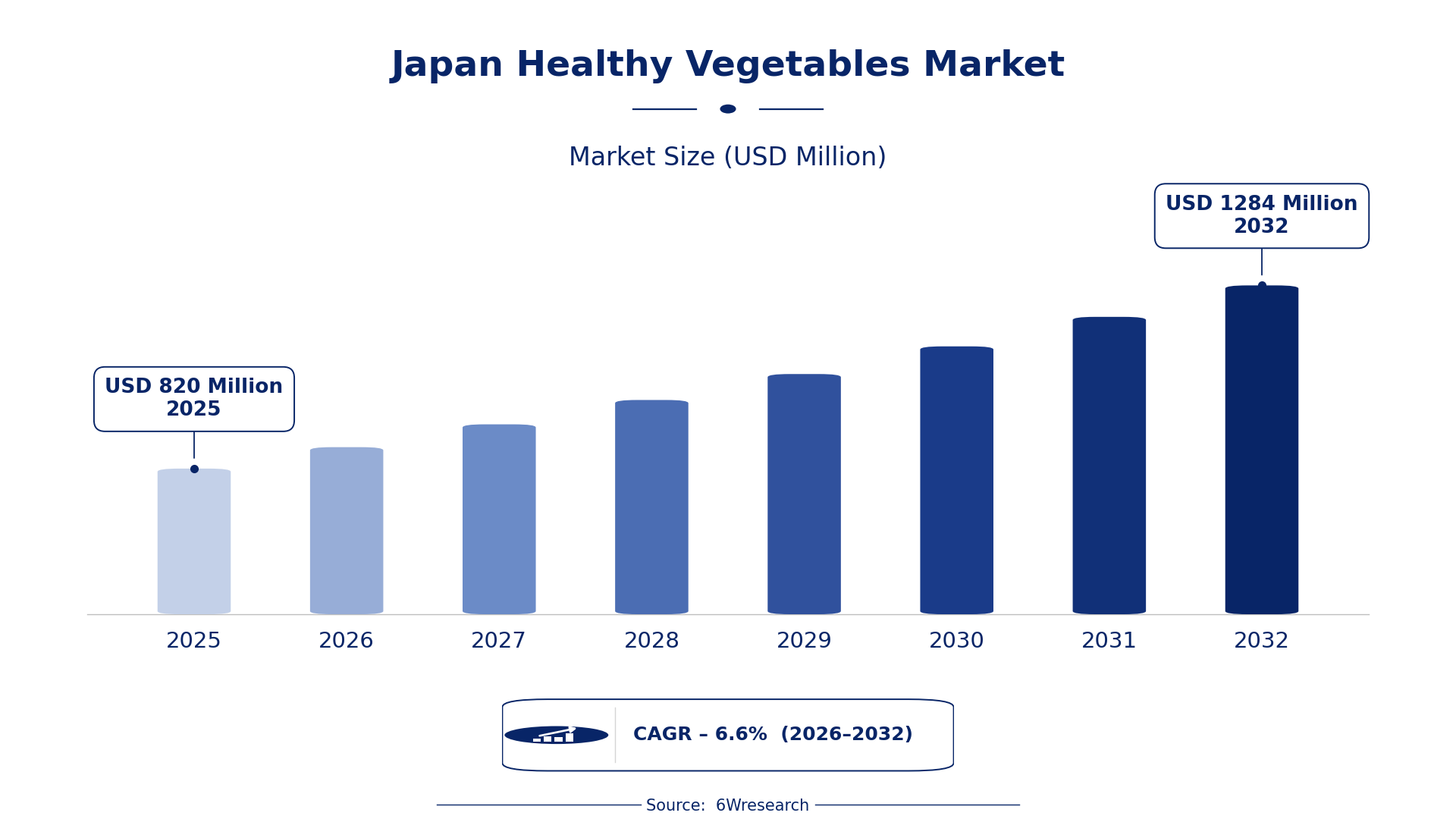
According to 6Wresearch internal database and industry insights, the Japan Healthy Vegetables Market was valued at USD 820 Million in 2025 and is projected to reach USD 1,284 Million by 2032, growing at a CAGR of approximately 6.6% during 2026–2032.
Japan Healthy Vegetables Market Highlights
| Report Metric | Details |
| Report Name | Japan Healthy Vegetables Market (2026-2032) |
| Market Size 2025 | USD 820 Million |
| Market Size 2032 | USD 1,284 Million |
| Absolute Growth 2025–2032 | USD 464 Million |
| CAGR 2026–2032 | 6.6% |
| Peak Annual Growth | 8.0% in 2026 |
| Forecast Period | 2026–2032 |
| Historical Data | 2022–2025 |
| Base Year | 2025 |
| Leading Product Type, 2025 | Leafy Greens (52% share) |
| Leading Farming Type, 2025 | Organic Farming (48% share) |
| Leading End User, 2025 | Households (47% share) |
| Leading Distribution Channel, 2025 | Farmer Markets (37% share) |
| Fastest-Growing Product Type | Cruciferous Veggies (9.2% CAGR) |
| Fastest-Growing Farming Type | Hydroponic (9.4% CAGR) |
| Fastest-Growing End User | Restaurants (8.3% CAGR) |
| Fastest-Growing Distribution Channel | Direct Sales (8.4% CAGR) |
| Growing Sector | Restaurants |
| Key End Users | Households, Restaurants, Grocery Stores, Meal Prep Services |
Japan Healthy Vegetables Market Year-wise Growth Rate and Key Drivers (2022–2032)
This graph illustrates the annual growth rates of the market from 2022 to 2032, highlighting a steady upward trajectory and projected market expansion over the forecast period.
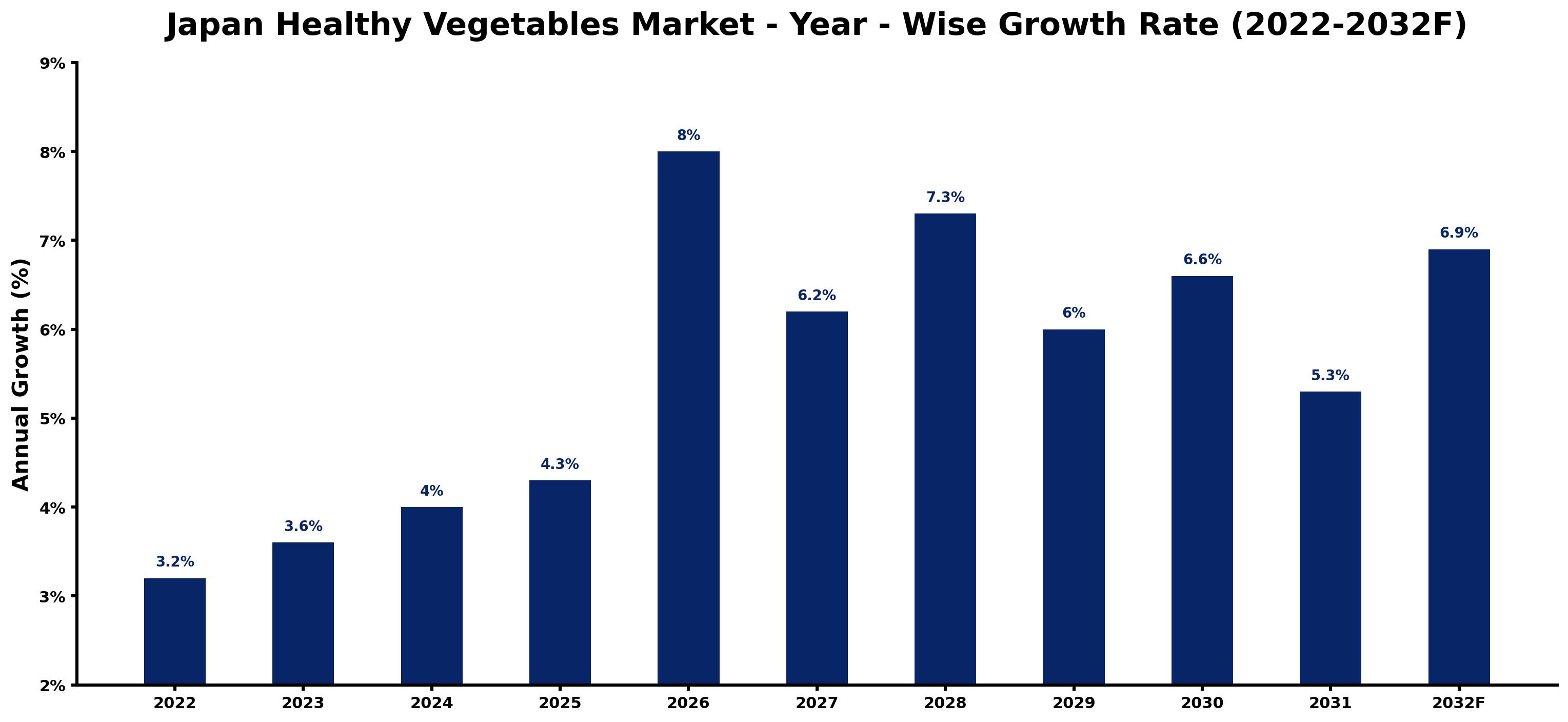
Below, each year's estimated growth is shown next to the factor that most influenced it.
| Year | Estimated Annual Growth (%) | Market Rationale |
| 2022 | 3.2 | The market was characterised by a growing interest in healthy eating among consumers. |
| 2023 | 3.6 | Demand for organic vegetables increased as more households adopted healthier diets. |
| 2024 | 4.0 | Awareness of health benefits drove further growth in the consumption of fresh produce. |
| 2025 | 4.3 | Consumer preferences shifted towards organic options, boosting sales across channels. |
| 2026 | 8.0 | The introduction of new sustainable farming initiatives is expected to spur market expansion. |
| 2027 | 6.2 | Growth is projected to slow slightly as the market adjusts to increased supply levels. |
| 2028 | 7.3 | Consumer interest in hydroponic vegetables is expected to rise, encouraging higher purchases. |
| 2029 | 6.0 | A slowdown in growth rate reflects market saturation in some urban areas. |
| 2030 | 6.6 | The rise in meal prep services will create new demand for fresh vegetables. |
| 2031 | 5.3 | The market is projected to experience a slowdown as competition intensifies among suppliers. |
| 2032 | 6.9 | Growing health consciousness among consumers will continue to drive purchases. |
Note: Market size estimations and growth projections presented in this report are based on 6Wresearch's proprietary forecasting methodology, utilizing the latest available industry data, government publications, and primary research inputs.
Japan Healthy Vegetables Market Synopsis
Healthy vegetables are cultivated through organic and sustainable methods, focusing on nutrient-rich varieties like leafy greens and root vegetables. In 2022, over 30% of households reported regularly purchasing organic vegetables, reflecting strong demand. This growth is driven by health-conscious consumers, the rising popularity of meal prep services, and government support for sustainable farming initiatives, including the Tokyo Metropolitan Government's promotion of local organic farming in 2023.
Market Dynamics Impact Analysis (2026–2032)
| Factor | Type | Impact | Primary Segment Affected |
| Health-conscious consumers are increasingly prioritising organic produce, driving demand for healthy vegetables. | Driver | High | Organic Farming |
| The rise of meal prep services is creating a consistent demand for fresh vegetables. | Driver | High | Mixed Veggie Packs |
| The increasing consumer preference for GMO-free vegetables presents a significant market opportunity. | Opportunity | High | GMO-Free |
| Urban areas are seeing a rise in hydroponic vegetable production, catering to local demand. | Opportunity | Medium | Hydroponic |
| The aging farmer population poses challenges for sustainable vegetable production. | Restraint | High | Organic Farming |
| High production costs can limit the profitability of organic vegetable farming. | Restraint | Medium | Sustainable |
| Compliance with JIS standards can be burdensome for small-scale producers. | Challenge | High | Organic Farming |
| Limited access to advanced farming technology can hinder growth in rural areas. | Challenge | Medium | Hydroponic |
Evaluation of Drivers in Japan Healthy Vegetables Market (2026–2032)
The factors lifting demand, and the evidence behind each, are summarised below.
| Drivers | Primary Segment Affected | Why It Matters (Evidence) |
| Increased health awareness among consumers boosts demand for organic vegetables. | Organic Farming | Over 30% of households reported purchasing organic vegetables regularly, leading to higher sales. |
| The growth of meal prep services drives consistent demand for fresh vegetables. | Mixed Veggie Packs | Meal prep services are projected to expand, utilising fresh produce from local farms. |
| Rising concerns about GMO foods fuel demand for GMO-free vegetables. | GMO-Free | Health-conscious consumers are increasingly seeking out GMO-free options for their diets. |
| Urbanisation supports the rise of hydroponic vegetable production. | Hydroponic | Hydroponic vegetables are gaining popularity in urban areas, particularly in Tokyo and Osaka. |
| Government support for sustainable farming practices drives market growth. | Sustainable | The Ministry of Agriculture, Forestry and Fisheries promotes sustainable farming initiatives. |
Behind the steady rise in orders sits an increasing health awareness among consumers, with over 30% of households regularly purchasing organic vegetables. The growth of meal prep services drives demand for fresh produce, as these services are projected to expand. Rising concerns about GMO foods fuel demand for GMO-free options, with health-conscious consumers actively seeking these alternatives. Urbanisation supports the rise of hydroponic vegetable production, particularly in urban areas like Tokyo and Osaka, where hydroponic systems are becoming more prevalent.
Evaluation of Restraints in Japan Healthy Vegetables Market
These are the pressures that could keep growth below its potential.
| Market Restraint | Primary Segment Affected | Why It Matters (Evidence) |
| High costs associated with organic certification deter smaller farms from entering the market. | Organic Farming | The average cost of organic certification is about JPY 1 million, limiting supplier options. |
| Stringent regulations create delays in product market entry. | GMO-Free | Regulations from the Japanese Food Safety Commission can prolong the approval process. |
| Outdated technology limits yield potential for hydroponic producers. | Hydroponic | Producers struggle with technology that reduces efficiency and increases production time. |
| Rising competition among suppliers intensifies market pressures. | Sustainable | As more suppliers enter, existing producers face challenges in maintaining market share. |
| Market saturation in urban areas slows growth rates. | Mixed Veggie Packs | An oversupply of certain products leads to reduced growth potential in key regions. |
Japan Healthy Vegetables Market Challenges
Tokyo's hydroponic vegetable producers face challenges with outdated technology, which limits their yield potential and increases production time by up to 20%, impacting their ability to meet rising consumer demand. The high cost of organic certification, averaging JPY 1 million, deters smaller farms from entering the market, resulting in fewer suppliers and limited choices for buyers. Stringent regulations from the Japanese Food Safety Commission create delays in bringing new products to market, causing frustration for hospitals seeking fresh produce. As consumers increasingly demand GMO-free vegetables, suppliers risk losing sales if they cannot adapt to these preferences.
Trends in the Japan Healthy Vegetables Market
Several trends are reshaping the Japan Healthy Vegetables Market; the most important are set out below.
- Growth in Hydroponic Vegetable Production: Urban areas like Tokyo are increasingly adopting hydroponic systems for vegetable production, with a 25% rise in urban farms since 2022. This trend allows for year-round cultivation, meeting consumer demand for fresh produce.
- Shift from Conventional to Organic Farming: The organic farming sector is experiencing a notable shift, with over 30% of households regularly purchasing organic vegetables. This change reflects a growing consumer preference for healthier options.
- Rise of Meal Prep Services: Meal prep services are gaining traction, with a projected increase in demand for fresh vegetables. These services utilise local produce to cater to health-conscious consumers.
- Increase in Farmer Markets: Local governments are promoting farmer markets, leading to a 15% increase in their numbers since 2022. This initiative enhances community access to fresh produce and supports local farmers.
Investment Opportunities in the Japan Healthy Vegetables Market
Below are the investment opportunities with the strongest case in the Japan Healthy Vegetables Market.
- Surge in Demand for Organic Vegetables: With over 30% of households regularly purchasing organic vegetables, there is an opportunity for suppliers to expand their offerings. Targeting urban areas like Tokyo can enhance reach.
- Investment in Hydroponic Systems: The rise in urban hydroponic farms presents an opportunity for investment, with a 25% increase in local production expected. Collaborating with urban farmers can facilitate market entry.
- Growth of Meal Prep Services: The meal prep service sector is projected to grow significantly in the coming years, creating demand for fresh vegetables. Suppliers can partner with these services to secure contracts.
- Support for Sustainable Farming Practices: Government funding for sustainable farming initiatives is increasing, with allocations rising by 15% in 2023. Suppliers can benefit from aligning with these practices to meet consumer preferences.
Government Initiatives in the Japan Healthy Vegetables Market
The policy framework for healthy vegetables is shaped by several laws, including the Next-Generation Medical Infrastructure Act (2017) and the PMD Act (2014). These laws establish standards for agricultural practices and promote sustainable farming, ensuring quality in vegetable production.
The Japanese Organic Farming Association supports local farmers through training and certification programs, helping them meet organic standards. Additionally, the Ministry of Agriculture, Forestry and Fisheries funds initiatives aimed at promoting organic farming, benefiting producers and consumers alike.
Future Insight of the Japan Healthy Vegetables Market
Investment in advanced hydroponic systems will streamline production processes, enabling suppliers to increase output by 30% by 2032. The government's funding for organic farming transitions will attract new entrants, increasing competition and variety for buyers. Improved JIS standards will ensure higher quality vegetables, building consumer trust and boosting sales in restaurants and meal prep services. Local initiatives promoting sustainable practices will further drive demand, contributing to a projected increase in organic vegetable consumption across households.
Market Segmentation Analysis
Japan Healthy Vegetables Market report covers a detailed analysis of the following market segments:
By Product Type – Leafy Greens Lead, Cruciferous Veggies Expected to Grow Fastest
According to Saurav Kr Singh, Senior Research Analyst at 6Wresearch, Leafy Greens accounted for 52% of the market by product type in 2025. Leafy greens dominate the market due to their widespread consumption in salads and cooking, appealing to health-conscious buyers. In 2022, over 30% of households reported purchasing organic vegetables regularly, showcasing the strong demand for this product type. The quickest growth will come from Cruciferous Veggies, forecast to expand at a CAGR of 9.2% between 2026 and 2032. Cruciferous vegetables are experiencing rapid growth as consumers increasingly recognise their health benefits and versatility in meals. This segment's appeal is reflected in the rising interest in incorporating these vegetables into daily diets, particularly in urban areas. Suppliers should focus on promoting the health benefits of cruciferous vegetables to capture the growing consumer interest.
By Farming Type – Organic Farming Leads, Hydroponic Expected to Grow Fastest
With 48% of farming type revenue in 2025, Organic Farming was the largest category. Organic farming leads the market as it aligns with the growing trend among health-conscious consumers seeking nutrient-rich produce. The support from the Ministry of Agriculture, Forestry and Fisheries further solidifies the position of organic farming in Japan. Hydroponic is set to record the highest CAGR in this split, 9.4% over 2026–2032. Hydroponic farming is gaining traction, particularly in urban areas, as it offers fresh produce in controlled environments. The government's allocation of funds to support organic farming transitions indicates a potential for hydroponic methods to expand rapidly. Suppliers may consider investing in hydroponic technologies to meet the increasing demand for fresh vegetables in urban settings.
By End User – Households Lead, Restaurants Expected to Grow Fastest
Households took 47% of end user revenue in 2025, more than any other category. Households are the primary consumers of healthy vegetables, often purchasing them for direct consumption at home. This segment's prominence is underscored by the fact that over 30% of households regularly buy organic vegetables, reflecting a strong commitment to healthy eating. Over 2026–2032, Restaurants are expected to post the fastest growth, at a CAGR of 8.3%. Restaurants are experiencing rapid growth due to an increasing demand for fresh ingredients in meal preparation. This trend is supported by the broader movement towards healthy dining options, which is expected to continue driving their expansion. Suppliers should focus on developing relationships with restaurants to meet the rising demand for fresh, healthy vegetables.
By Distribution Channel – Farmer Markets Lead, Direct Sales Expected to Grow Fastest
In 2025, Farmer Markets led the distribution channel split with a 37% share. Farmer markets are the leading distribution channel, popular for their local and organic produce, appealing to consumers seeking fresh options. Initiatives by local governments to promote these markets have further strengthened their position in the market. Direct Sales is projected to grow fastest, at a CAGR of 8.4% during 2026–2032. Direct sales are emerging as a growing channel, albeit currently less common, as consumers seek more direct connections with producers. The increasing popularity of this channel suggests a shift towards more personalised purchasing experiences. Suppliers should explore direct sales strategies to engage consumers looking for fresher and more locally sourced vegetables.
Key Attractiveness of the Report
- 10 Years of Market Numbers
- Historical Data Starting from 2022 to 2025
- Base Year 2025
- Forecast Data until 2032
- Key Performance Indicators Impacting the Market
- Major Upcoming Developments and Projects
Key Highlights of the Report:
- Japan Healthy Vegetables Market Outlook
- Market Size of Japan Healthy Vegetables Market, 2025
- Forecast of Japan Healthy Vegetables Market, 2032
- Historical Data and Forecast of Japan Healthy Vegetables Revenues & Volume for the Period 2022-2032F
- Japan Healthy Vegetables Market Trend Evolution
- Japan Healthy Vegetables Market Drivers and Challenges
- Japan Healthy Vegetables Price Trends
- Japan Healthy Vegetables Porter's Five Forces
- Japan Healthy Vegetables Industry Life Cycle
- Historical Data and Forecast of Japan Healthy Vegetables Market Revenues & Volume By Product Type for the Period 2022-2032F
- Historical Data and Forecast of Japan Healthy Vegetables Market Revenues & Volume By Leafy Greens for the Period 2022-2032F
- Historical Data and Forecast of Japan Healthy Vegetables Market Revenues & Volume By Cruciferous Veggies for the Period 2022-2032F
- Historical Data and Forecast of Japan Healthy Vegetables Market Revenues & Volume By Root Vegetables for the Period 2022-2032F
- Historical Data and Forecast of Japan Healthy Vegetables Market Revenues & Volume By Mixed Veggie Packs for the Period 2022-2032F
- Historical Data and Forecast of Japan Healthy Vegetables Market Revenues & Volume By Farming Type for the Period 2022-2032F
- Historical Data and Forecast of Japan Healthy Vegetables Market Revenues & Volume By Organic Farming for the Period 2022-2032F
- Historical Data and Forecast of Japan Healthy Vegetables Market Revenues & Volume By Hydroponic for the Period 2022-2032F
- Historical Data and Forecast of Japan Healthy Vegetables Market Revenues & Volume By Sustainable for the Period 2022-2032F
- Historical Data and Forecast of Japan Healthy Vegetables Market Revenues & Volume By GMO-Free for the Period 2022-2032F
- Historical Data and Forecast of Japan Healthy Vegetables Market Revenues & Volume By End User for the Period 2022-2032F
- Historical Data and Forecast of Japan Healthy Vegetables Market Revenues & Volume By Households for the Period 2022-2032F
- Historical Data and Forecast of Japan Healthy Vegetables Market Revenues & Volume By Restaurants for the Period 2022-2032F
- Historical Data and Forecast of Japan Healthy Vegetables Market Revenues & Volume By Grocery Stores for the Period 2022-2032F
- Historical Data and Forecast of Japan Healthy Vegetables Market Revenues & Volume By Meal Prep Services for the Period 2022-2032F
- Historical Data and Forecast of Japan Healthy Vegetables Market Revenues & Volume By Distribution Channel for the Period 2022-2032F
- Historical Data and Forecast of Japan Healthy Vegetables Market Revenues & Volume By Farmer Markets for the Period 2022-2032F
- Historical Data and Forecast of Japan Healthy Vegetables Market Revenues & Volume By Direct Sales for the Period 2022-2032F
- Historical Data and Forecast of Japan Healthy Vegetables Market Revenues & Volume By Online Platforms for the Period 2022-2032F
- Historical Data and Forecast of Japan Healthy Vegetables Market Revenues & Volume By Supermarkets for the Period 2022-2032F
- Japan Healthy Vegetables Import Export Trade Statistics
- Market Opportunity Assessment By Product Type
- Market Opportunity Assessment By Farming Type
- Market Opportunity Assessment By End User
- Market Opportunity Assessment By Distribution Channel
- Japan Healthy Vegetables Top Companies Market Share
- Japan Healthy Vegetables Competitive Benchmarking By Technical and Operational Parameters
- Japan Healthy Vegetables Company Profiles
- Japan Healthy Vegetables Key Strategic Recommendations
Market Covered
This report examines the market across the segments below.
By Product Type
- Leafy Greens
- Cruciferous Veggies
- Root Vegetables
- Mixed Veggie Packs
By Farming Type
- Organic Farming
- Hydroponic
- Sustainable
- GMO-Free
By End User
- Households
- Restaurants
- Grocery Stores
- Meal Prep Services
By Distribution Channel
- Farmer Markets
- Direct Sales
- Online Platforms
- Supermarkets































