Japan Hepatobiliary Cancer Market Size & Growth Rate
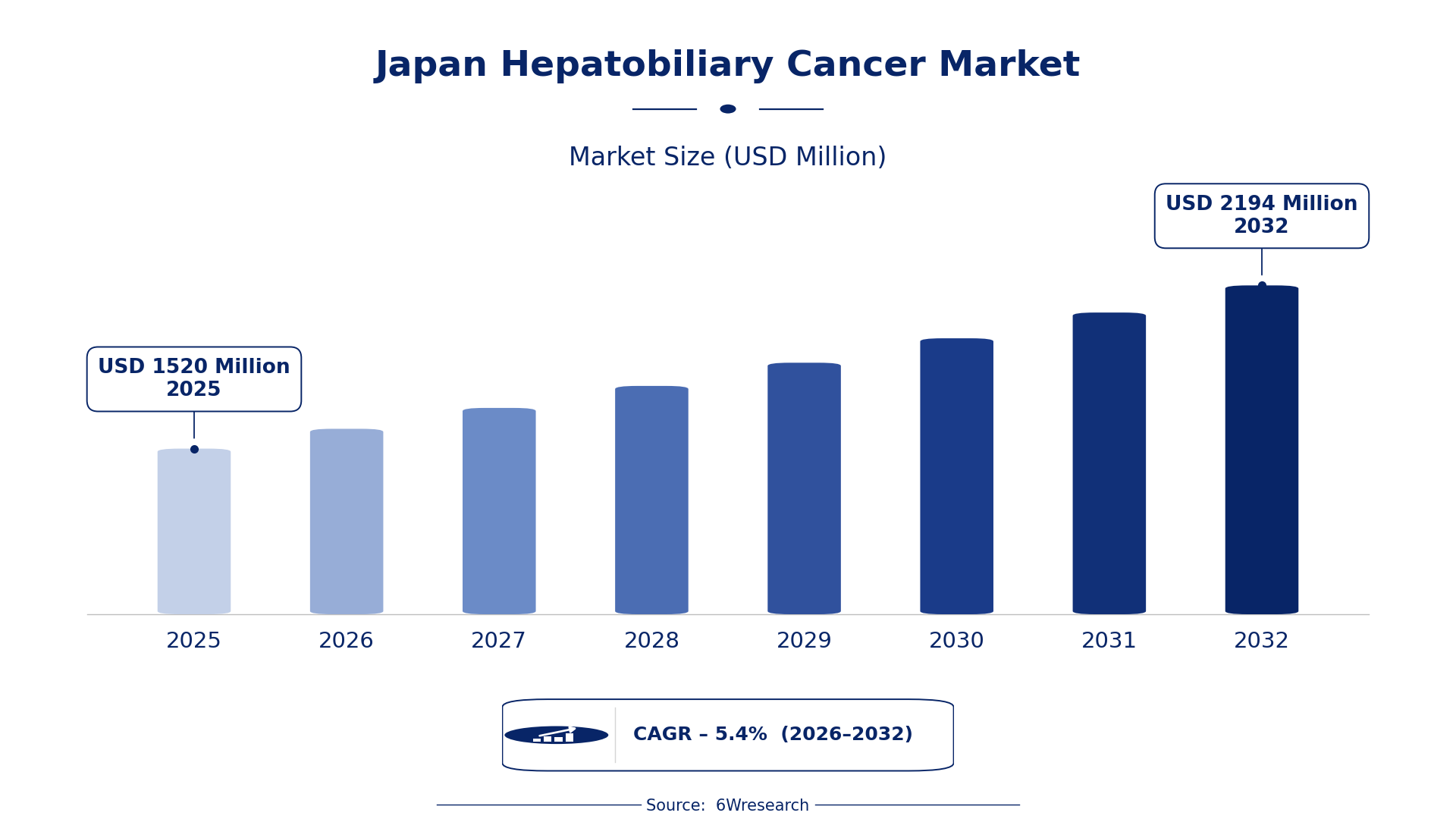
According to 6Wresearch internal database and industry insights, the Japan Hepatobiliary Cancer Market was valued at USD 1,520 Million in 2025 and is projected to reach USD 2,194 Million by 2032, growing at a CAGR of approximately 5.4% during 2026–2032.
Japan Hepatobiliary Cancer Market Highlights
| Report Metric | Details |
| Report Name | Japan Hepatobiliary Cancer Market (2026-2032) |
| Market Size 2025 | USD 1,520 Million |
| Market Size 2032 | USD 2,194 Million |
| Absolute Growth 2025–2032 | USD 674 Million |
| CAGR 2026–2032 | 5.4% |
| Peak Annual Growth | 6.0% in 2028 |
| Forecast Period | 2026–2032 |
| Historical Data | 2022–2025 |
| Base Year | 2025 |
| Leading Cancer Type, 2025 | Liver Cancer (48% share) |
| Leading Therapy Type, 2025 | Chemotherapy (41% share) |
| Leading Distribution Channel, 2025 | Hospital Pharmacies (46% share) |
| Leading End User, 2025 | Oncology Centers (42% share) |
| Fastest-Growing Cancer Type | Cholangiocarcinoma (7.5% CAGR) |
| Fastest-Growing Therapy Type | Immunotherapy (7.6% CAGR) |
| Fastest-Growing Distribution Channel | Specialty Suppliers (7.1% CAGR) |
| Fastest-Growing End User | Research Hospitals (6.9% CAGR) |
| Growing Sector | Oncology Centers |
| Key End Users | Oncology Centers, Cancer Treatment Units, Research Hospitals |
Japan Hepatobiliary Cancer Market Year-wise Growth Rate and Key Drivers (2022–2032)
This graph illustrates the annual growth rates of the market from 2022 to 2032, highlighting a steady upward trajectory and projected market expansion over the forecast period.
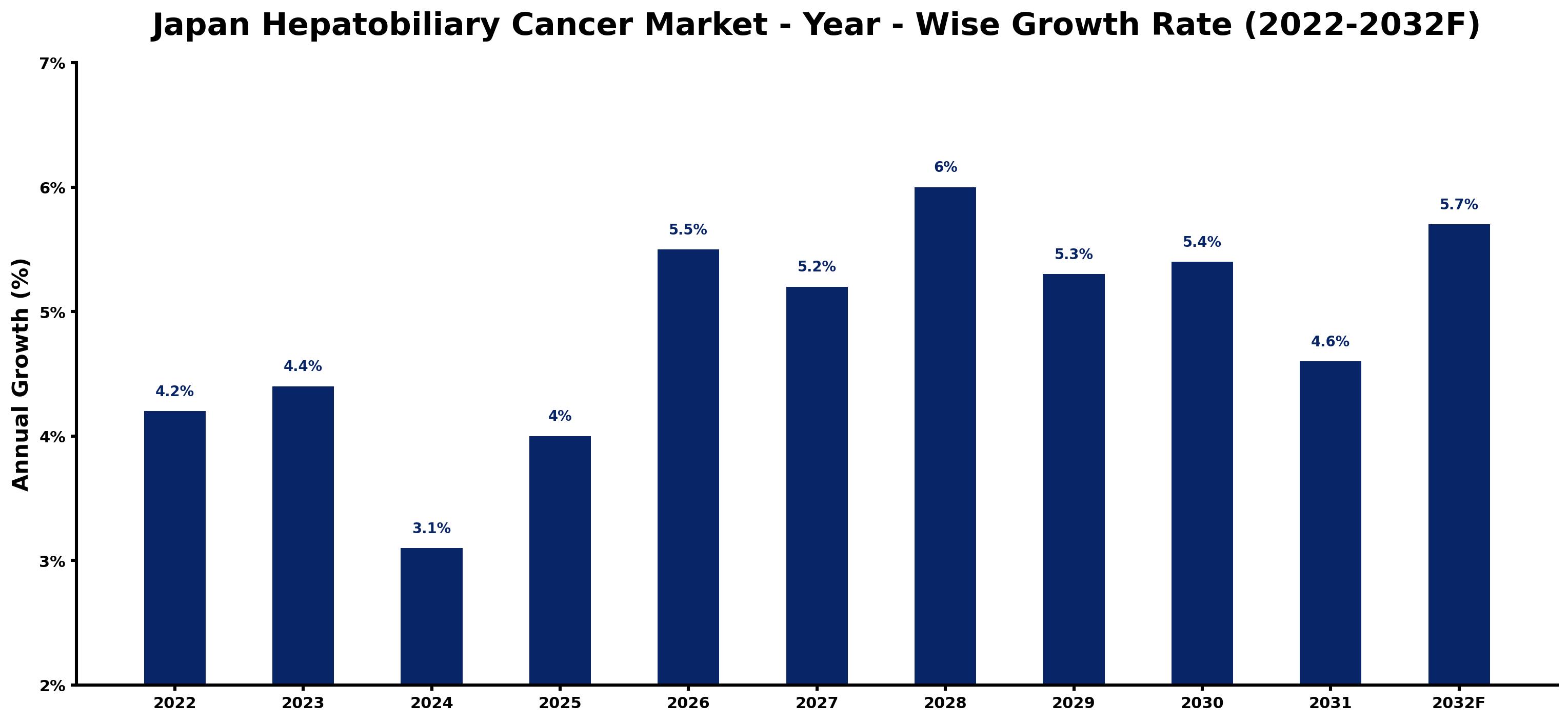
For each year, the table pairs the estimated growth rate with the leading influence on demand, showing how the drivers changed across the period.
| Year | Estimated Annual Growth (%) | Market Rationale |
| 2022 | 4.2 | The market exhibited steady growth due to increasing awareness of hepatobiliary cancers. |
| 2023 | 4.4 | Demand accelerated as new treatment guidelines were published by the Japanese Society of Hepatology. |
| 2024 | 3.1 | Growth slowed as the market adjusted to the previous year's surge in treatment options. |
| 2025 | 4.0 | The market rebounded with renewed interest in therapies and increased patient diagnoses. |
| 2026 | 5.5 | Investment in cancer research and treatment facilities will drive demand higher this year. |
| 2027 | 5.2 | A slight slowdown is projected as the market stabilises after rapid growth in prior years. |
| 2028 | 6.0 | The peak growth year will see heightened demand for targeted therapies and advanced surgical options. |
| 2029 | 5.3 | Growth is expected to moderate as the market begins to normalise after reaching its peak. |
| 2030 | 5.4 | Demand will rise again as new immunotherapy options gain traction among healthcare providers. |
| 2031 | 4.6 | The market is projected to experience a slowdown as the focus shifts towards improving existing treatment protocols. |
| 2032 | 5.7 | Renewed investment in cancer prevention programmes is expected to boost market growth. |
Note: Market size estimations and growth projections presented in this report are based on 6Wresearch's proprietary forecasting methodology, utilizing the latest available industry data, government publications, and primary research inputs.
Japan Hepatobiliary Cancer Market Synopsis
Hepatobiliary cancer encompasses cancers affecting the liver, bile ducts, and gallbladder, primarily linked to hepatitis and alcohol consumption. In 2022, liver cancer accounted for about 30% of all cancer cases in Japan, underscoring the need for effective treatment options. The Japan Hepatobiliary Cancer Market is growing due to rising patient numbers, advancements in treatment methods, and government backing for cancer research, highlighted by a substantial allocation of ¥1 billion for cancer initiatives in 2023.
Market Dynamics Impact Analysis (2026–2032)
| Factor | Type | Impact | Primary Segment Affected |
| Increasing incidence of liver cancer in an ageing population | Driver | High | Liver Cancer |
| Emerging targeted therapies for hepatocellular carcinoma | Driver | High | Hepatocellular Carcinoma |
| Growing demand for advanced cancer treatments | Opportunity | High | Oncology Centers |
| Expansion of accredited oncology centers nationwide | Opportunity | Medium | Oncology Centers |
| Limited access to innovative therapies in rural areas | Restraint | High | Bile Duct Cancer |
| High costs associated with advanced cancer treatments | Restraint | Medium | Gallbladder Cancer |
| Inadequate supply of specialized oncology professionals | Challenge | High | Oncology Centers |
| Regulatory hurdles for new treatment approvals | Challenge | Medium | Targeted Therapy |
Evaluation of Drivers in Japan Hepatobiliary Cancer Market (2026–2032)
Key forces behind demand, with the segment each one moves most, are listed below.
| Drivers | Primary Segment Affected | Why It Matters (Evidence) |
| Rising incidence of liver cancer cases | Liver Cancer | In 2022, liver cancer accounted for approximately 30% of all cancer cases in Japan, prompting increased treatment demand. |
| Investment in research for targeted therapies | Hepatocellular Carcinoma | The Japanese government allocated ¥1 billion for cancer research in 2023, leading to more treatment options. |
| Growing number of accredited oncology centers | Oncology Centers | Japan has over 200 accredited oncology centers nationwide, improving patient access to specialized care. |
| Increased awareness of cancer prevention | Bile Duct Cancer | The launch of a new cancer prevention program focusing on liver health in 2023 promotes early detection. |
| Advancements in immunotherapy | Immunotherapy | Emerging treatment options for advanced cancers are gaining traction, increasing demand for therapies. |
Buyers are adding capacity as the incidence of liver cancer rises, with approximately 30% of all cancer cases in Japan attributed to this type. The allocation of ¥1 billion for cancer research in 2023 has spurred investment in targeted therapies, particularly for hepatocellular carcinoma. With over 200 accredited oncology centers across the country, patient access to specialized care is improving. The growing adoption of immunotherapy is reshaping treatment approaches, encouraging healthcare providers to expand their offerings.
Evaluation of Restraints in Japan Hepatobiliary Cancer Market
Several factors work against faster growth; the main ones are summarised below.
| Market Restraint | Primary Segment Affected | Why It Matters (Evidence) |
| Limited access to therapies in rural areas | Bile Duct Cancer | Patients in rural regions face challenges accessing advanced treatment options, impacting overall treatment outcomes. |
| High costs associated with advanced cancer treatments | Gallbladder Cancer | The financial burden of advanced therapies can deter patients from seeking necessary care. |
| Inadequate supply of specialized oncology professionals | Oncology Centers | A shortage of trained specialists limits the capacity to treat rising patient numbers effectively. |
| Regulatory hurdles for new treatment approvals | Targeted Therapy | Stringent approval processes can delay the introduction of new therapies to the market. |
| Limited awareness of early symptoms among the population | Hepatocellular Carcinoma | Many patients are diagnosed at advanced stages due to a lack of knowledge regarding early signs. |
Japan Hepatobiliary Cancer Market Challenges
Limited access to timely treatment poses challenges for buyers, as more than 70% of liver cancer patients receive a diagnosis at an advanced stage, leading to lower survival rates. Stringent regulations create hurdles for suppliers, resulting in delays in the approval of new therapies that can extend timelines by as much as six months. Inconsistent adoption of updated treatment guidelines obstructs technology integration, causing varied patient outcomes across over 200 accredited oncology centres. A shortage of skilled healthcare professionals hampers the effective delivery of targeted therapies, further straining healthcare facilities and compromising patient care.
Trends in the Japan Hepatobiliary Cancer Market
The trends below show where the Japan Hepatobiliary Cancer Market is heading.
- Shift towards Immunotherapy: Since 2023, there has been a clear shift towards immunotherapy in cancer treatment. Oncology centres are increasingly embracing these therapies, with a projected growth rate of 7.6% for immunotherapy from 2026 to 2032.
- Increased Focus on Cancer Prevention: The introduction of the new cancer prevention programme in 2023 has raised awareness among healthcare providers. This initiative aims to reduce liver cancer cases, targeting a 10% decrease in incidence rates by 2030.
- Expansion of Oncology Centers: The number of accredited oncology centres has consistently grown, supporting improved patient access to specialised cancer care and enhancing treatment outcomes.
- Advancements in Targeted Therapies: The release of updated treatment guidelines in 2023 has ignited interest in targeted therapies for hepatobiliary cancers. These therapies are anticipated to become more common, focusing on improving patient survival rates.
Investment Opportunities in the Japan Hepatobiliary Cancer Market
Below are the investment opportunities with the strongest case in the Japan Hepatobiliary Cancer Market.
- Partnerships with Oncology Centers: Establishing partnerships with oncology centers can facilitate access to a growing patient base. With over 200 accredited centers, there is an opportunity to supply advanced treatment options.
- Investment in Targeted Therapies: With a projected annual incidence of 2,500 cholangiocarcinoma cases, there is a pressing need for targeted therapies. Investing in these therapies can meet the demand from healthcare providers.
- Expansion into Rural Areas: As rural areas face limited access to advanced treatments, there is a gap to fill. Targeting these regions can improve patient care and increase market share.
- Development of New Treatment Protocols: The increasing focus on cancer prevention creates opportunities for developing new treatment protocols. Collaborating with research hospitals can lead to breakthroughs in effective therapies.
Government Initiatives in the Japan Hepatobiliary Cancer Market
The Medical Care Act of 1948 establishes critical standards for hospitals and clinics, ensuring quality care for patients with hepatobiliary cancers. This act requires facilities to uphold specific staffing levels and operational protocols, directly influencing treatment availability and patient outcomes.
The Digital Agency, founded in September 2021, spearheads the government's digital transformation initiatives. This agency aids healthcare providers in adopting digital health solutions, enhancing patient management and treatment tracking within oncology settings.
Future Insight of the Japan Hepatobiliary Cancer Market
A new cancer prevention programme will focus on early detection and intervention, transforming treatment protocols by 2032. Improved treatment guidelines will enhance patient outcomes, particularly for those diagnosed earlier in their illness. The integration of telemedicine will broaden access to specialists, ensuring timely care for patients in remote areas. Increased government funding for liver health initiatives will drive research and innovation, allowing suppliers to expand their treatment portfolios and elevate overall care.
Market Segmentation Analysis
Japan Hepatobiliary Cancer Market report covers a detailed analysis of the following market segments:
By Cancer Type – Liver Cancer Leads, Cholangiocarcinoma Expected to Grow Fastest
According to Saurav Kr Singh, Senior Research Analyst at 6Wresearch, in 2025, Liver Cancer led the cancer type split with a 48% share. Liver cancer represents a major health concern in Japan, accounting for approximately 30% of all cancer cases. This prevalence results in a robust demand for effective treatment options, particularly in oncology centers that specialise in managing such conditions. The quickest growth will come from Cholangiocarcinoma, forecast to expand at a CAGR of 7.5% between 2026 and 2032. Cholangiocarcinoma is witnessing rapid growth, with an estimated annual incidence of 2,500 cases highlighting its increasing significance. This surge necessitates targeted therapies, reinforcing its position in the market. Suppliers should focus on developing targeted therapies for cholangiocarcinoma to meet the growing treatment needs.
By Therapy Type – Chemotherapy Leads, Immunotherapy Expected to Grow Fastest
Chemotherapy accounted for 41% of the market by therapy type in 2025. Chemotherapy remains the standard treatment modality for various cancers, making it the most utilised therapy type in Japan's hepatobiliary cancer market. Its established protocols and widespread acceptance in oncology centres contribute to its leading position. Immunotherapy is projected to grow fastest, at a CAGR of 7.6% during 2026–2032. Immunotherapy is emerging as a preferred treatment for advanced cancers, driven by ongoing research and clinical trials. As more therapies gain approval, the market for immunotherapy is expected to expand rapidly. Buyers will benefit from increased access to immunotherapy options as they become more prevalent in treatment protocols.
By Distribution Channel – Hospital Pharmacies Lead, Specialty Suppliers Expected to Grow Fastest
Hospital Pharmacies took 46% of distribution channel revenue in 2025, more than any other category. Hospital pharmacies are the primary distribution channel for cancer treatments, ensuring timely access to necessary medications within healthcare facilities. Their established systems facilitate the efficient delivery of critical therapies to patients. Specialty Suppliers are set to record the highest CAGR in this split, 7.1% over 2026–2032. Specialty suppliers are rapidly growing as they address the specific needs of oncology products, particularly with the rise of targeted therapies. Their specialised focus allows them to effectively meet the demands of healthcare providers. Suppliers should explore collaborations with specialty suppliers to improve their distribution networks.
By End User – Oncology Centers Lead, Research Hospitals Expected to Grow Fastest
With 42% of end user revenue in 2025, Oncology Centers was the largest category. Oncology centers serve as specialised facilities for cancer care, making them the predominant end user in the hepatobiliary cancer market. Their dedicated resources and expertise ensure a steady demand for various treatment options. Over 2026–2032, Research Hospitals are expected to post the fastest growth, at a CAGR of 6.9%. Research hospitals are rapidly expanding their roles in clinical trials for new therapies, reflecting a shift towards advanced treatment methodologies. This trend is indicative of an evolving landscape in cancer treatment. Suppliers need to collaborate with research hospitals to align their products with emerging treatment strategies.
Key Attractiveness of the Report
- 10 Years of Market Numbers
- Historical Data Starting from 2022 to 2025
- Base Year 2025
- Forecast Data until 2032
- Key Performance Indicators Impacting the Market
- Major Upcoming Developments and Projects
Key Highlights of the Report:
- Japan Hepatobiliary Cancer Market Outlook
- Market Size of Japan Hepatobiliary Cancer Market, 2025
- Forecast of Japan Hepatobiliary Cancer Market, 2032
- Historical Data and Forecast of Japan Hepatobiliary Cancer Revenues & Volume for the Period 2022-2032F
- Japan Hepatobiliary Cancer Market Trend Evolution
- Japan Hepatobiliary Cancer Market Drivers and Challenges
- Japan Hepatobiliary Cancer Price Trends
- Japan Hepatobiliary Cancer Porter's Five Forces
- Japan Hepatobiliary Cancer Industry Life Cycle
- Historical Data and Forecast of Japan Hepatobiliary Cancer Market Revenues & Volume By Cancer Type for the Period 2022-2032F
- Historical Data and Forecast of Japan Hepatobiliary Cancer Market Revenues & Volume By Liver Cancer for the Period 2022-2032F
- Historical Data and Forecast of Japan Hepatobiliary Cancer Market Revenues & Volume By Bile Duct Cancer for the Period 2022-2032F
- Historical Data and Forecast of Japan Hepatobiliary Cancer Market Revenues & Volume By Gallbladder Cancer for the Period 2022-2032F
- Historical Data and Forecast of Japan Hepatobiliary Cancer Market Revenues & Volume By Hepatocellular Carcinoma for the Period 2022-2032F
- Historical Data and Forecast of Japan Hepatobiliary Cancer Market Revenues & Volume By Cholangiocarcinoma for the Period 2022-2032F
- Historical Data and Forecast of Japan Hepatobiliary Cancer Market Revenues & Volume By Therapy Type for the Period 2022-2032F
- Historical Data and Forecast of Japan Hepatobiliary Cancer Market Revenues & Volume By Chemotherapy for the Period 2022-2032F
- Historical Data and Forecast of Japan Hepatobiliary Cancer Market Revenues & Volume By Targeted Therapy for the Period 2022-2032F
- Historical Data and Forecast of Japan Hepatobiliary Cancer Market Revenues & Volume By Surgery for the Period 2022-2032F
- Historical Data and Forecast of Japan Hepatobiliary Cancer Market Revenues & Volume By Radiation for the Period 2022-2032F
- Historical Data and Forecast of Japan Hepatobiliary Cancer Market Revenues & Volume By Immunotherapy for the Period 2022-2032F
- Historical Data and Forecast of Japan Hepatobiliary Cancer Market Revenues & Volume By Distribution Channel for the Period 2022-2032F
- Historical Data and Forecast of Japan Hepatobiliary Cancer Market Revenues & Volume By Hospital Pharmacies for the Period 2022-2032F
- Historical Data and Forecast of Japan Hepatobiliary Cancer Market Revenues & Volume By Specialty Suppliers for the Period 2022-2032F
- Historical Data and Forecast of Japan Hepatobiliary Cancer Market Revenues & Volume By Direct Sales for the Period 2022-2032F
- Historical Data and Forecast of Japan Hepatobiliary Cancer Market Revenues & Volume By Online Pharmacies for the Period 2022-2032F
- Historical Data and Forecast of Japan Hepatobiliary Cancer Market Revenues & Volume By Clinics for the Period 2022-2032F
- Historical Data and Forecast of Japan Hepatobiliary Cancer Market Revenues & Volume By End User for the Period 2022-2032F
- Historical Data and Forecast of Japan Hepatobiliary Cancer Market Revenues & Volume By Oncology Centers for the Period 2022-2032F
- Historical Data and Forecast of Japan Hepatobiliary Cancer Market Revenues & Volume By Cancer Treatment Units for the Period 2022-2032F
- Historical Data and Forecast of Japan Hepatobiliary Cancer Market Revenues & Volume By Gastroenterology Clinics for the Period 2022-2032F
- Historical Data and Forecast of Japan Hepatobiliary Cancer Market Revenues & Volume By Research Hospitals for the Period 2022-2032F
- Historical Data and Forecast of Japan Hepatobiliary Cancer Market Revenues & Volume By Specialized Surgeons for the Period 2022-2032F
- Japan Hepatobiliary Cancer Import Export Trade Statistics
- Market Opportunity Assessment By Cancer Type
- Market Opportunity Assessment By Therapy Type
- Market Opportunity Assessment By Distribution Channel
- Market Opportunity Assessment By End User
- Japan Hepatobiliary Cancer Top Companies Market Share
- Japan Hepatobiliary Cancer Competitive Benchmarking By Technical and Operational Parameters
- Japan Hepatobiliary Cancer Company Profiles
- Japan Hepatobiliary Cancer Key Strategic Recommendations
Market Covered
The following segment groups are covered in the report.
By Cancer Type
- Liver Cancer
- Bile Duct Cancer
- Gallbladder Cancer
- Hepatocellular Carcinoma
- Cholangiocarcinoma
By Therapy Type
- Chemotherapy
- Targeted Therapy
- Surgery
- Radiation
- Immunotherapy
By Distribution Channel
- Hospital Pharmacies
- Specialty Suppliers
- Direct Sales
- Online Pharmacies
- Clinics
By End User
- Oncology Centers
- Cancer Treatment Units
- Gastroenterology Clinics
- Research Hospitals
- Specialized Surgeons































