Japan Hepatobiliary Disease Market Size & Growth Rate
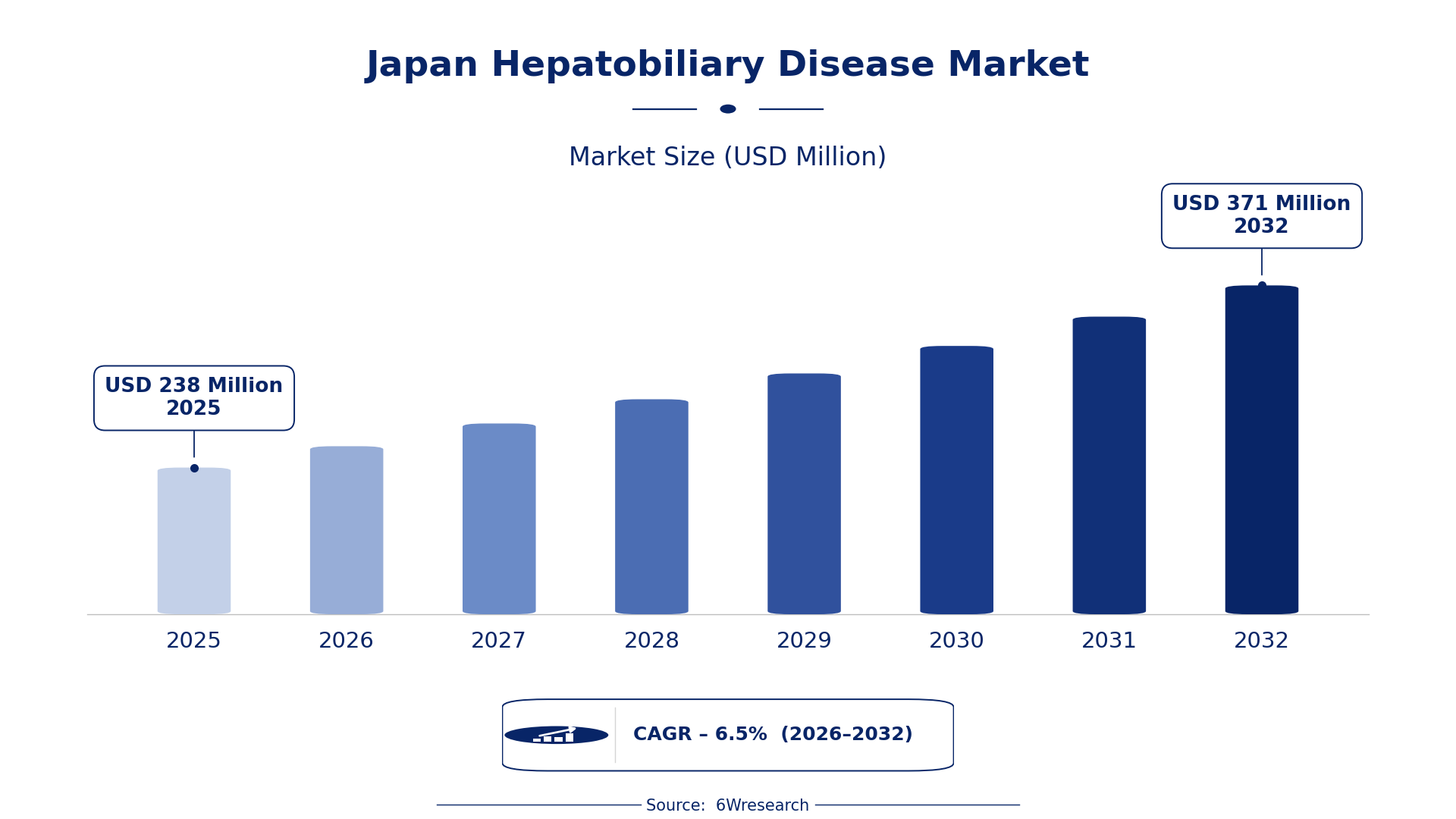
According to 6Wresearch internal database and industry insights, the Japan Hepatobiliary Disease Market was valued at USD 238 Million in 2025 and is projected to reach USD 371 Million by 2032, growing at a CAGR of approximately 6.5% during 2026–2032.
Japan Hepatobiliary Disease Market Highlights
| Report Metric | Details |
| Report Name | Japan Hepatobiliary Disease Market (2026-2032) |
| Market Size 2025 | USD 238 Million |
| Market Size 2032 | USD 371 Million |
| Absolute Growth 2025–2032 | USD 133 Million |
| CAGR 2026–2032 | 6.5% |
| Peak Annual Growth | 7.8% in 2030 |
| Forecast Period | 2026–2032 |
| Historical Data | 2022–2025 |
| Base Year | 2025 |
| Leading Disease Type, 2025 | Hepatitis (37% share) |
| Leading Diagnostic Tool, 2025 | Blood Test (47% share) |
| Leading Treatment Channel, 2025 | Clinics (46% share) |
| Leading End User, 2025 | General Hospitals (46% share) |
| Fastest-Growing Disease Type | Biliary Atresia (8.8% CAGR) |
| Fastest-Growing Diagnostic Tool | Liver Function Test (8.6% CAGR) |
| Fastest-Growing Treatment Channel | Pediatric Hospitals (8.2% CAGR) |
| Fastest-Growing End User | Hepatology Departments (8.1% CAGR) |
| Growing Sector | Hepatobiliary care |
| Key End Users | Hospitals, Clinics, Diagnostic Centers, Pediatric Hospitals |
Japan Hepatobiliary Disease Market Year-wise Growth Rate and Key Drivers (2022–2032)
This graph illustrates the annual growth rates of the market from 2022 to 2032, highlighting a steady upward trajectory and projected market expansion over the forecast period.
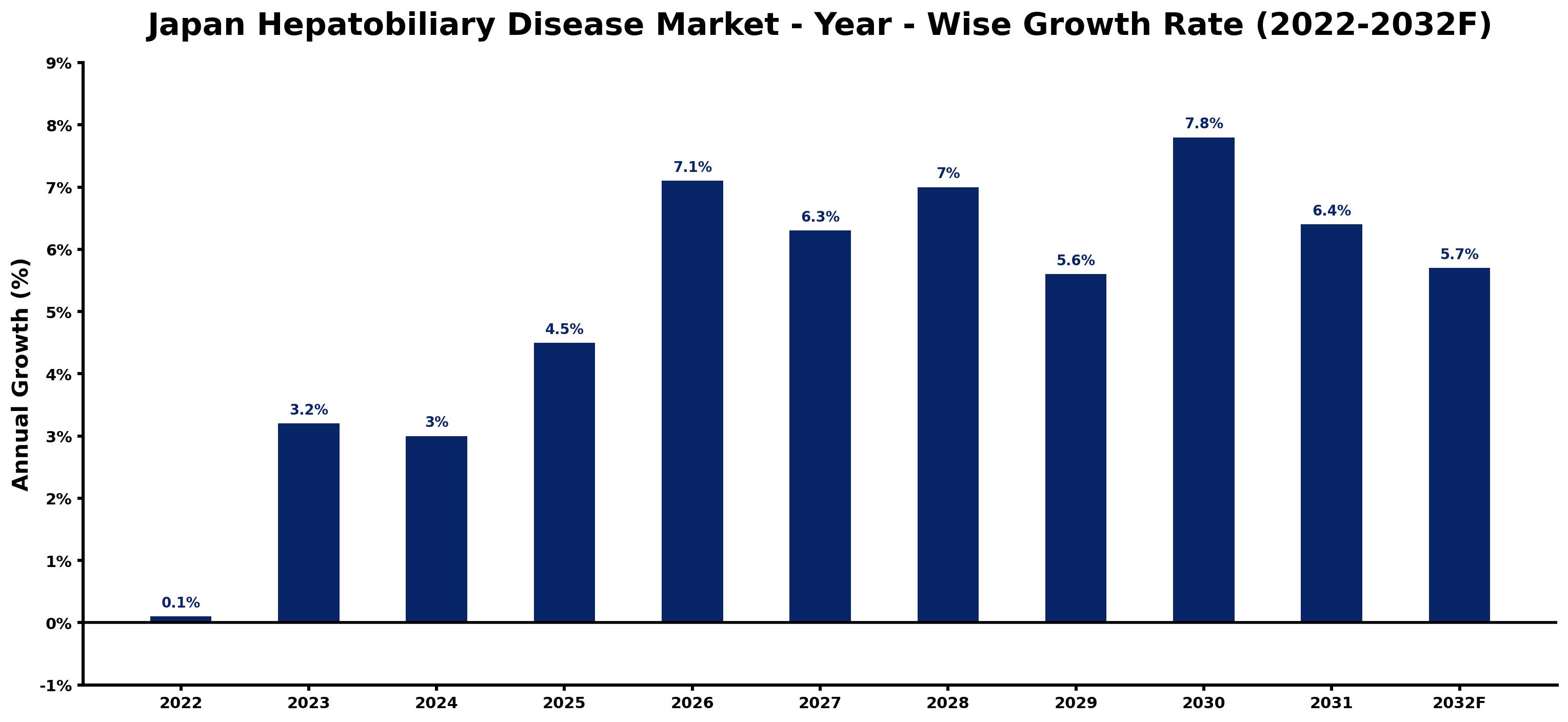
The table below sets out the estimated growth rate for each year and the main factor behind it.
| Year | Estimated Annual Growth (%) | Market Rationale |
| 2022 | 0.1 | The market showed minimal growth due to ongoing treatment adjustments. |
| 2023 | 3.2 | Demand increased as healthcare providers implemented new treatment protocols. |
| 2024 | 3.0 | Growth slowed as hospitals faced resource allocation challenges. |
| 2025 | 4.5 | Expansion occurred with the introduction of new diagnostic technologies. |
| 2026 | 7.1 | Demand surged as investment in liver disease research is expected to gain momentum. |
| 2027 | 6.3 | Growth slowed as market saturation began in urban areas. |
| 2028 | 7.0 | Demand is projected to increase as awareness campaigns on liver health are launched. |
| 2029 | 5.6 | Growth is expected to slow due to rising competition among treatment facilities. |
| 2030 | 7.8 | The market peaked as advanced treatment options become widely available. |
| 2031 | 6.4 | Growth is projected to slow as the market stabilises after rapid expansion. |
| 2032 | 5.7 | Demand remains steady as healthcare providers adapt to new standards. |
Note: Market size estimations and growth projections presented in this report are based on 6Wresearch's proprietary forecasting methodology, utilizing the latest available industry data, government publications, and primary research inputs.
Japan Hepatobiliary Disease Market Synopsis
Hepatobiliary disease includes conditions affecting the liver, gallbladder, and bile ducts, diagnosed through imaging techniques and blood tests. The Japan Hepatobiliary Disease Market is growing due to a high prevalence of liver diseases, with approximately 1.5 million patients diagnosed in 2022. Key drivers include the increasing number of healthcare providers and ongoing investments in liver disease research, such as the ¥5 billion allocated in 2023 for initiatives aimed at improving treatment options and patient outcomes.
Market Dynamics Impact Analysis (2026–2032)
| Factor | Type | Impact | Primary Segment Affected |
| High prevalence of liver diseases drives demand for diagnostic and treatment services. | Driver | High | Hepatitis |
| Investment in advanced imaging technologies creates new diagnostic opportunities. | Driver | High | Blood Test |
| Rising awareness of liver health among the population creates demand for screening services. | Opportunity | Medium | General Hospitals |
| Increased funding for liver disease research opens avenues for innovative treatments. | Opportunity | High | Hepatology Departments |
| Resource allocation challenges in hospitals can limit treatment capacity. | Restraint | High | Clinics |
| Market saturation in urban areas may restrict growth potential for new facilities. | Restraint | Medium | Surgical Centers |
| Competition among treatment facilities may lead to price wars affecting profitability. | Challenge | High | Pediatric Hospitals |
| Delays in adopting new technologies can hinder treatment advancements. | Challenge | Medium | Diagnostic Centers |
Evaluation of Drivers in Japan Hepatobiliary Disease Market (2026–2032)
Demand rests on the following drivers, each shown with the segment it touches most.
| Drivers | Primary Segment Affected | Why It Matters (Evidence) |
| High prevalence of liver diseases leads to increased testing and treatment. | Hepatitis | Approximately 1 million individuals in Japan are at risk for hepatitis B, driving demand for healthcare services. |
| Investment in advanced imaging technologies improves diagnostic capabilities. | Blood Test | With over 1,000 MRI machines installed nationwide, hospitals are better equipped to diagnose liver conditions. |
| Growing public awareness of liver health promotes preventive measures. | General Hospitals | Online health platforms saw a 30% increase in liver disease information searches in 2023. |
| Funding for liver disease research supports innovative treatment development. | Hepatology Departments | Japan invested ¥5 billion in 2023 for liver disease research initiatives, boosting treatment options. |
| Increased patient referrals to specialists improve treatment access. | Clinics | Primary healthcare units refer 60% of liver disease cases to specialists, ensuring comprehensive care. |
Several shifts outside the market lift sales. The prevalence of liver diseases is high, with around 1.5 million patients diagnosed in 2022, leading to increased demand for diagnostic services. Investment in advanced imaging technologies, including over 300 hepatology departments across Japan, improves diagnostic capabilities, prompting hospitals to expand their services. Public awareness campaigns have resulted in a 30% rise in online searches for liver health information, driving preventive measures. The ¥5 billion investment in liver disease research in 2023 supports the development of new treatments, further boosting demand from healthcare providers.
Evaluation of Restraints in Japan Hepatobiliary Disease Market
The table below lists the restraints and the evidence behind each.
| Market Restraint | Primary Segment Affected | Why It Matters (Evidence) |
| Resource allocation challenges can limit the capacity of clinics to treat patients effectively. | Clinics | With hospitals facing budget constraints, treatment capacity may be compromised, affecting patient care. |
| Market saturation in urban areas restricts growth potential for new facilities. | Surgical Centers | High competition in metropolitan regions limits opportunities for new surgical centers to establish themselves. |
| Competition among treatment facilities can lead to price wars affecting profitability. | Pediatric Hospitals | As more facilities enter the market, price reductions can impact revenue for existing hospitals. |
| Delays in adopting new technologies can hinder treatment advancements. | Diagnostic Centers | Slow integration of advanced diagnostic tools can limit the effectiveness of treatment protocols. |
| Limited funding for healthcare infrastructure can restrict service expansion. | General Hospitals | Budget constraints in public health can delay necessary upgrades to facilities and equipment. |
Japan Hepatobiliary Disease Market Challenges
Japan faces a shortage of skilled hepatologists, resulting in longer wait times for liver transplants, with some patients experiencing delays of up to six months. Limited access to advanced imaging technologies in rural areas causes diagnostic delays for individuals outside urban centres, impacting timely treatment for many. Supply chain disruptions for medical devices affect over 300 hepatology departments, leading to treatment interruptions and increased costs for healthcare providers. Rising treatment expenses burden hospitals, as approximately 1.5 million individuals require ongoing management, straining resources and budgets.
Trends in the Japan Hepatobiliary Disease Market
Several trends are reshaping the Japan Hepatobiliary Disease Market; the most important are set out below.
- Shift from Traditional to Advanced Imaging Techniques: The Tokyo region is increasingly adopting advanced imaging techniques for hepatobiliary disease diagnosis. With over 1,000 MRI machines installed nationwide, hospitals are improving their diagnostic capabilities, resulting in better patient outcomes.
- Emergence of Comprehensive Liver Health Programs: In 2023, the Ministry of Health, Labour and Welfare launched a liver disease prevention program aimed at increasing public awareness. This initiative is expected to improve early detection and treatment rates among the population.
- Increased Focus on Pediatric Hepatobiliary Care: Pediatric hospitals are prioritising hepatobiliary care, driven by the rising incidence of biliary atresia. This segment is projected to grow at a CAGR of 8.2% as more resources are allocated to specialised care.
- Expansion of Online Health Information Platforms: Online health platforms have reported a 30% increase in liver disease information searches in 2023. This trend reflects a growing public interest in liver health, influencing patient engagement and preventive care.
Investment Opportunities in the Japan Hepatobiliary Disease Market
Investors looking at the Japan Hepatobiliary Disease Market should consider the following areas.
- Investment in Advanced Diagnostic Tools: With Japan's healthcare system evolving, there is a pressing need for advanced diagnostic tools. The growing demand from general hospitals for better imaging solutions presents opportunities for suppliers to introduce new technologies.
- Expansion of Liver Disease Research Initiatives: The recent ¥5 billion investment in liver disease research initiatives creates opportunities for collaboration with research institutions. This funding can lead to breakthroughs in treatment options, attracting interest from healthcare providers.
- Development of Comprehensive Liver Health Programs: As awareness of liver health increases, clinics are looking to implement comprehensive health programs. This trend offers opportunities for healthcare providers to partner with specialists to improve patient care.
- Growth in Pediatric Hepatobiliary Services: The rising incidence of biliary atresia necessitates improved services in pediatric hospitals. Suppliers can enter this market by collaborating with healthcare providers to develop tailored treatment solutions.
Government Initiatives in the Japan Hepatobiliary Disease Market
The NHI drug price standard, revised regularly, establishes reimbursement prices for necessary medications in hepatobiliary disease treatment. This ensures that treatments remain accessible to patients, as healthcare providers can rely on consistent pricing for essential drugs.
In 2023, the Ministry of Health, Labour and Welfare allocated ¥5 billion for liver disease research initiatives. This funding supports various projects aimed at improving treatment options, with the ministry overseeing the implementation of these programs to ensure effective use of resources.
Future Insight of the Japan Hepatobiliary Disease Market
A robust investment pipeline will drive advancements in liver disease treatment by 2032, creating new opportunities for suppliers and improving patient care. The liver disease prevention program will boost demand for early diagnosis and preventive strategies. Emerging imaging technologies will improve diagnostic accuracy and expedite treatment processes. The establishment of more hepatology departments will increase access to specialised care, ensuring timely interventions for patients.
Market Segmentation Analysis
Japan Hepatobiliary Disease Market report covers a detailed analysis of the following market segments:
By Disease Type – Hepatitis Leads, Biliary Atresia Expected to Grow Fastest
According to Saurav Kr Singh, Senior Research Analyst at 6Wresearch, Hepatitis held 37% of the Japan Hepatobiliary Disease Market by disease type in 2025. Hepatitis represents a substantial portion of the market due to the high prevalence of liver diseases, with around 1 million individuals at risk for hepatitis B in Japan. This condition requires continuous medical management, making it a primary focus for healthcare providers across the country. The quickest growth will come from Biliary Atresia, forecast to expand at a CAGR of 8.8% between 2026 and 2032. Biliary atresia is experiencing rapid growth as it is a critical condition often treated in specialised pediatric hospitals, reflecting an increasing awareness and improved diagnostic capabilities. The emphasis on early intervention is driving this segment's expansion, ensuring timely care for affected infants. Suppliers should prioritise hepatitis management solutions while also addressing the urgent needs in pediatric care for biliary atresia.
By Diagnostic Tool – Blood Test Leads, Liver Function Test Expected to Grow Fastest
Blood Test took 47% of diagnostic tool revenue in 2025, more than any other category. Blood tests are crucial for diagnosing liver diseases, as they are conducted in over 90% of patients suspected of liver issues. Their widespread application across various healthcare facilities underscores their importance in the diagnostic landscape for hepatobiliary conditions. Over 2026–2032, Liver Function Test is expected to post the fastest growth, at a CAGR of 8.6%. Liver function tests are increasingly adopted due to their standard role in evaluating liver health, which reflects a growing focus on thorough liver assessments. This trend supports enhanced patient monitoring and management in the healthcare system. Suppliers need to prioritise the availability of advanced blood testing and liver function testing to address the increasing diagnostic requirements.
By Treatment Channel – Clinics Lead, Pediatric Hospitals Expected to Grow Fastest
In 2025, Clinics led the treatment channel split with a 46% share. Clinics lead this segment as they serve as primary sites for diagnosis and treatment of hepatobiliary diseases, catering to a large patient population. Their accessibility and convenience make them vital in the healthcare continuum for liver disease management. Pediatric Hospitals are projected to grow fastest, at a CAGR of 8.2% during 2026–2032. Pediatric hospitals are seeing rapid growth in treating biliary atresia, reflecting a heightened focus on specialised care for children. This growth addresses the urgent needs of young patients requiring immediate intervention, ensuring timely and effective treatment. Providers should strengthen partnerships with clinics while expanding capabilities in pediatric healthcare to meet evolving treatment needs.
By End User – General Hospitals Lead, Hepatology Departments Expected to Grow Fastest
General Hospitals accounted for 46% of the market by end user in 2025. General hospitals hold the largest share because they provide comprehensive care for hepatobiliary diseases, catering to a diverse range of patient needs. Their extensive resources and multidisciplinary teams are essential for effective disease management and treatment. Hepatology Departments are set to record the highest CAGR in this split, 8.1% over 2026–2032. Hepatology departments are rapidly expanding as they concentrate on liver disease management, indicating a shift towards specialised care. This growth is vital for enhancing patient outcomes in liver health, ensuring focused attention on liver conditions. Suppliers should tailor their strategies to meet the demands of general hospitals and hepatology departments in delivering effective treatments.
Key Attractiveness of the Report
- 10 Years of Market Numbers
- Historical Data Starting from 2022 to 2025
- Base Year 2025
- Forecast Data until 2032
- Key Performance Indicators Impacting the Market
- Major Upcoming Developments and Projects
Key Highlights of the Report:
- Japan Hepatobiliary Disease Market Outlook
- Market Size of Japan Hepatobiliary Disease Market, 2025
- Forecast of Japan Hepatobiliary Disease Market, 2032
- Historical Data and Forecast of Japan Hepatobiliary Disease Revenues & Volume for the Period 2022-2032F
- Japan Hepatobiliary Disease Market Trend Evolution
- Japan Hepatobiliary Disease Market Drivers and Challenges
- Japan Hepatobiliary Disease Price Trends
- Japan Hepatobiliary Disease Porter's Five Forces
- Japan Hepatobiliary Disease Industry Life Cycle
- Historical Data and Forecast of Japan Hepatobiliary Disease Market Revenues & Volume By Disease Type for the Period 2022-2032F
- Historical Data and Forecast of Japan Hepatobiliary Disease Market Revenues & Volume By Gallstones for the Period 2022-2032F
- Historical Data and Forecast of Japan Hepatobiliary Disease Market Revenues & Volume By Hepatitis for the Period 2022-2032F
- Historical Data and Forecast of Japan Hepatobiliary Disease Market Revenues & Volume By Liver Abscess for the Period 2022-2032F
- Historical Data and Forecast of Japan Hepatobiliary Disease Market Revenues & Volume By Biliary Atresia for the Period 2022-2032F
- Historical Data and Forecast of Japan Hepatobiliary Disease Market Revenues & Volume By Jaundice for the Period 2022-2032F
- Historical Data and Forecast of Japan Hepatobiliary Disease Market Revenues & Volume By Diagnostic Tool for the Period 2022-2032F
- Historical Data and Forecast of Japan Hepatobiliary Disease Market Revenues & Volume By CT Scan for the Period 2022-2032F
- Historical Data and Forecast of Japan Hepatobiliary Disease Market Revenues & Volume By Liver Function Test for the Period 2022-2032F
- Historical Data and Forecast of Japan Hepatobiliary Disease Market Revenues & Volume By MRI for the Period 2022-2032F
- Historical Data and Forecast of Japan Hepatobiliary Disease Market Revenues & Volume By Ultrasound for the Period 2022-2032F
- Historical Data and Forecast of Japan Hepatobiliary Disease Market Revenues & Volume By Blood Test for the Period 2022-2032F
- Historical Data and Forecast of Japan Hepatobiliary Disease Market Revenues & Volume By Treatment Channel for the Period 2022-2032F
- Historical Data and Forecast of Japan Hepatobiliary Disease Market Revenues & Volume By Clinics for the Period 2022-2032F
- Historical Data and Forecast of Japan Hepatobiliary Disease Market Revenues & Volume By Hospital Pharmacies for the Period 2022-2032F
- Historical Data and Forecast of Japan Hepatobiliary Disease Market Revenues & Volume By Online Platforms for the Period 2022-2032F
- Historical Data and Forecast of Japan Hepatobiliary Disease Market Revenues & Volume By Pediatric Hospitals for the Period 2022-2032F
- Historical Data and Forecast of Japan Hepatobiliary Disease Market Revenues & Volume By Direct Sales for the Period 2022-2032F
- Historical Data and Forecast of Japan Hepatobiliary Disease Market Revenues & Volume By End User for the Period 2022-2032F
- Historical Data and Forecast of Japan Hepatobiliary Disease Market Revenues & Volume By Surgical Centers for the Period 2022-2032F
- Historical Data and Forecast of Japan Hepatobiliary Disease Market Revenues & Volume By General Hospitals for the Period 2022-2032F
- Historical Data and Forecast of Japan Hepatobiliary Disease Market Revenues & Volume By Diagnostic Centers for the Period 2022-2032F
- Historical Data and Forecast of Japan Hepatobiliary Disease Market Revenues & Volume By Hepatology Departments for the Period 2022-2032F
- Historical Data and Forecast of Japan Hepatobiliary Disease Market Revenues & Volume By Primary Healthcare Units for the Period 2022-2032F
- Japan Hepatobiliary Disease Import Export Trade Statistics
- Market Opportunity Assessment By Disease Type
- Market Opportunity Assessment By Diagnostic Tool
- Market Opportunity Assessment By Treatment Channel
- Market Opportunity Assessment By End User
- Japan Hepatobiliary Disease Top Companies Market Share
- Japan Hepatobiliary Disease Competitive Benchmarking By Technical and Operational Parameters
- Japan Hepatobiliary Disease Company Profiles
- Japan Hepatobiliary Disease Key Strategic Recommendations
Market Covered
The report covers the following segments.
By Disease Type
- Gallstones
- Hepatitis
- Liver Abscess
- Biliary Atresia
- Jaundice
By Diagnostic Tool
- CT Scan
- Liver Function Test
- MRI
- Ultrasound
- Blood Test
By Treatment Channel
- Clinics
- Hospital Pharmacies
- Online Platforms
- Pediatric Hospitals
- Direct Sales
By End User
- Surgical Centers
- General Hospitals
- Diagnostic Centers
- Hepatology Departments
- Primary Healthcare Units































