Japan Herbal Drink Market Size & Growth Rate
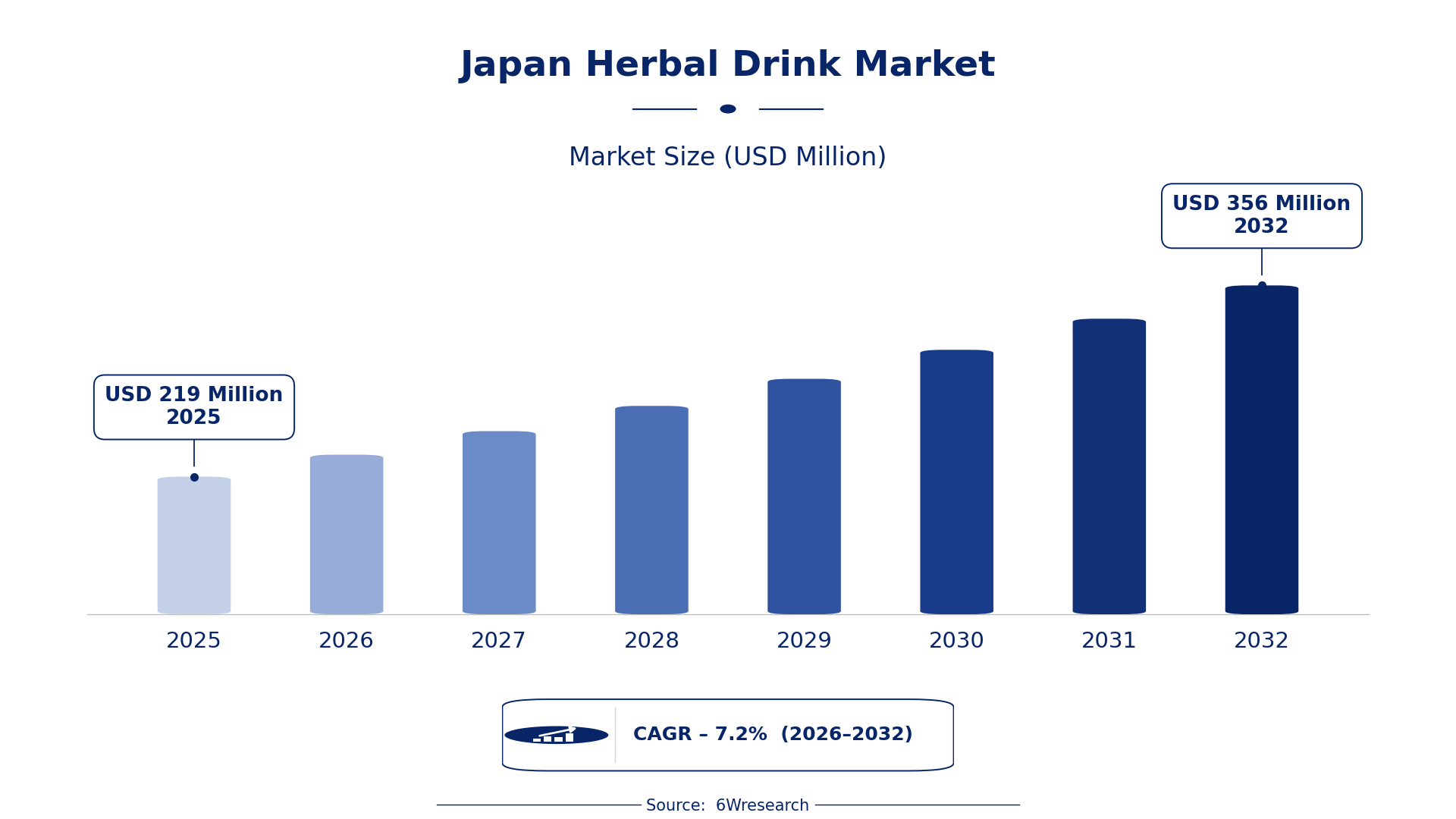
According to 6Wresearch internal database and industry insights, the Japan Herbal Drink Market was valued at USD 219 Million in 2025 and is projected to reach USD 356 Million by 2032, growing at a CAGR of approximately 7.2% during 2026–2032.
Japan Herbal Drink Market Highlights
| Report Metric | Details |
| Report Name | Japan Herbal Drink Market (2026-2032) |
| Market Size 2025 | USD 219 Million |
| Market Size 2032 | USD 356 Million |
| Absolute Growth 2025–2032 | USD 137 Million |
| CAGR 2026–2032 | 7.2% |
| Peak Annual Growth | 8.5% in 2028 |
| Forecast Period | 2026–2032 |
| Historical Data | 2022–2025 |
| Base Year | 2025 |
| Leading Drink Type, 2025 | Detox Herbal Tea (46% share) |
| Leading Ingredient Type, 2025 | Tulsi & Ginger (35% share) |
| Leading Distribution Channel, 2025 | Retail Stores (35% share) |
| Leading End User, 2025 | Health-Conscious Consumers (38% share) |
| Fastest-Growing Drink Type | Herbal Energy Drink (10.1% CAGR) |
| Fastest-Growing Ingredient Type | Ashwagandha (10.6% CAGR) |
| Fastest-Growing Distribution Channel | Online Grocery (9.6% CAGR) |
| Fastest-Growing End User | Fitness Enthusiasts (9.3% CAGR) |
| Growing Sector | Fitness Enthusiasts |
| Key End Users | Health-Conscious Consumers, Fitness Enthusiasts, Wellness Seekers, Families |
Japan Herbal Drink Market Year-wise Growth Rate and Key Drivers (2022–2032)
This graph illustrates the annual growth rates of the market from 2022 to 2032, highlighting a steady upward trajectory and projected market expansion over the forecast period.
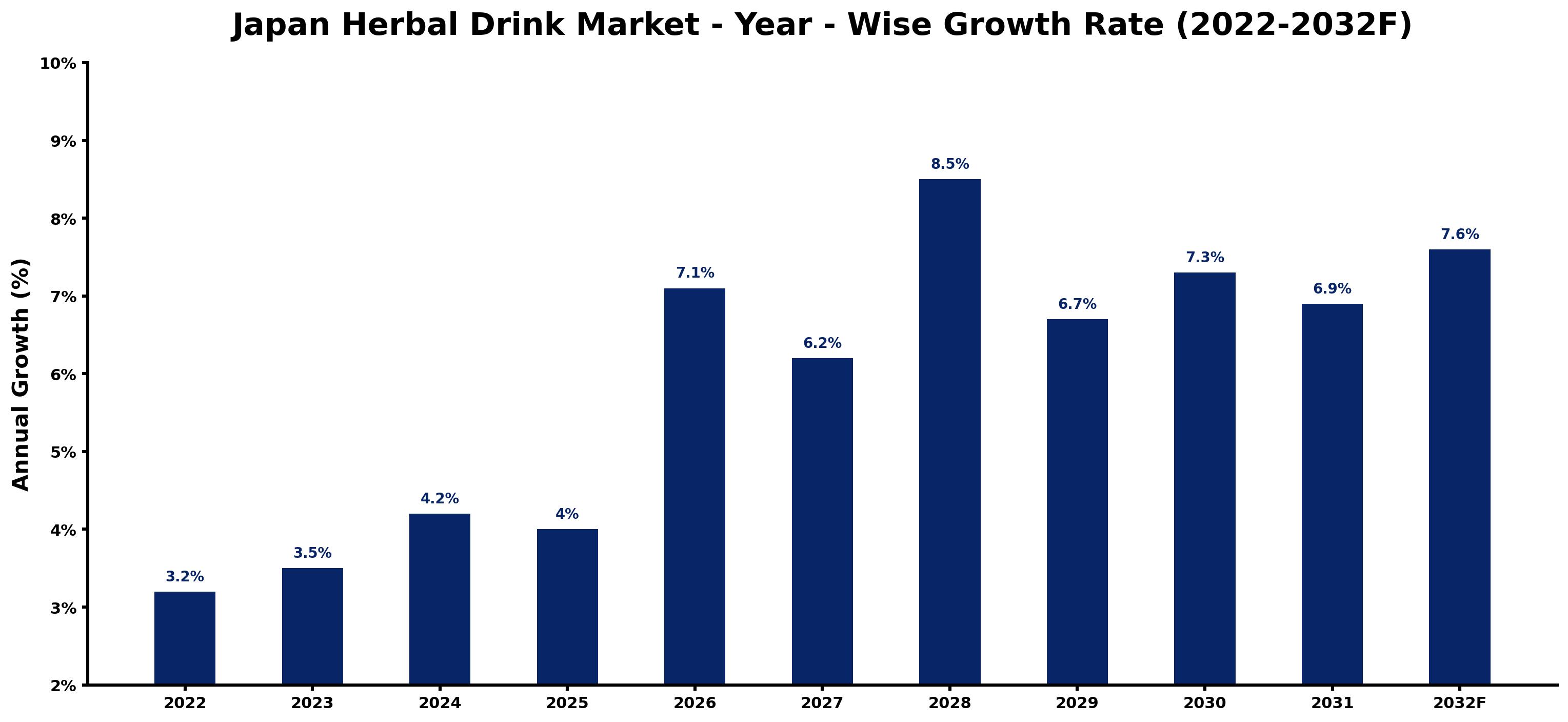
For each year, the table pairs the estimated growth rate with the leading influence on demand, showing how the drivers changed across the period.
| Year | Estimated Annual Growth (%) | Market Rationale |
| 2022 | 3.2 | The market showed steady demand from health-conscious consumers seeking natural wellness solutions. |
| 2023 | 3.5 | Growth accelerated as more consumers adopted herbal drinks for their health benefits. |
| 2024 | 4.2 | The market experienced growth due to rising awareness of herbal remedies among consumers. |
| 2025 | 4.0 | Growth slowed slightly as competition intensified among various herbal drink brands. |
| 2026 | 7.1 | Demand is expected to surge as investments in production capacity increase significantly. |
| 2027 | 6.2 | Growth is projected to decelerate as market saturation begins to set in for popular products. |
| 2028 | 8.5 | The market is expected to peak with heightened consumer interest in immunity-boosting drinks. |
| 2029 | 6.7 | Growth is projected to slow as consumer preferences diversify beyond traditional options. |
| 2030 | 7.3 | Demand is expected to rise again as new herbal drink innovations capture consumer interest. |
| 2031 | 6.9 | The market is projected to experience a slight slowdown as economic factors influence consumer spending. |
| 2032 | 7.6 | Growth is expected to rise as health trends continue to promote herbal consumption. |
Note: Market size estimations and growth projections presented in this report are based on 6Wresearch's proprietary forecasting methodology, utilizing the latest available industry data, government publications, and primary research inputs.
Japan Herbal Drink Market Synopsis
Herbal drinks in Japan are made from natural ingredients like herbs and plants, brewed for their health benefits. The market includes over 100 types, with detox herbal tea and herbal energy drinks particularly popular. Growth in the Japan Herbal Drink Market is driven by a rising population of health-conscious consumers, reaching 50 million in 2023, alongside increasing awareness of wellness trends. Retail sales were valued at approximately 200 billion yen in 2022, indicating strong consumer interest and investment in this sector.
Market Dynamics Impact Analysis (2026–2032)
| Factor | Type | Impact | Primary Segment Affected |
| Increasing consumer interest in natural wellness solutions | Driver | High | Detox Herbal Tea |
| Growth in the fitness sector driving demand for energy drinks | Driver | High | Herbal Energy Drink |
| Rising awareness of health benefits of herbal ingredients | Opportunity | High | Immunity Drink |
| Expansion of online grocery channels for convenience | Opportunity | Medium | Online Grocery |
| High competition among brands leading to price wars | Restraint | High | Herbal Energy Drink |
| Limited availability of certain herbal ingredients affecting production | Restraint | Medium | Detox Herbal Tea |
| High production costs impacting pricing strategies | Challenge | High | Immunity Drink |
| Consumer skepticism towards herbal product efficacy | Challenge | Medium | Stress Relief Tea |
Evaluation of Drivers in Japan Herbal Drink Market (2026–2032)
Demand rests on the following drivers, each shown with the segment it touches most.
| Drivers | Primary Segment Affected | Why It Matters (Evidence) |
| Growing consumer base focused on health and wellness | Detox Herbal Tea | The number of health-conscious consumers reached 50 million in 2023, increasing demand for detox options. |
| Rising fitness trends among younger demographics | Herbal Energy Drink | The largest consumer group for herbal energy drinks is aged 20-40, driving higher sales in this segment. |
| Increased awareness of herbal benefits through wellness events | Immunity Drink | Health and wellness events in Japan highlighted the benefits of herbal drinks, boosting consumer interest. |
| Expansion of retail and online distribution channels | Online Grocery | Online grocery sales of herbal drinks increased by 15% in 2023, improving accessibility for consumers. |
| Growing interest in traditional herbal remedies | Stress Relief Tea | The Tokyo Metropolitan Government's wellness initiative promotes herbal drinks for stress relief, enhancing visibility. |
Buyers are adding capacity as the number of health-conscious consumers in Japan reached 50 million in 2023, driving demand for herbal beverages. Awareness of herbal benefits through health and wellness events has contributed to market growth. Retail sales of herbal drinks were valued at approximately 200 billion yen in 2022, reflecting strong consumer interest. The rise of online grocery sales, which grew by 15% in 2023, has made these products more accessible. Younger demographics are increasingly turning to herbal drinks, particularly those aged 20-40, who focus on fitness and wellness trends.
Evaluation of Restraints in Japan Herbal Drink Market
Below are the constraints most often cited by buyers and suppliers, with the segment each affects.
| Market Restraint | Primary Segment Affected | Why It Matters (Evidence) |
| High competition leading to aggressive pricing strategies | Herbal Energy Drink | Intense competition has resulted in price wars, affecting profit margins for producers. |
| Limited access to specific herbal ingredients impacting product variety | Detox Herbal Tea | Supply chain issues have restricted the availability of key herbal components, limiting product offerings. |
| High production costs affecting retail pricing | Immunity Drink | Producers face rising costs, which can lead to higher prices for consumers, affecting sales. |
| Consumer skepticism regarding the efficacy of herbal products | Stress Relief Tea | Skepticism can deter potential buyers from trying new herbal options, impacting market growth. |
| Market saturation in popular herbal drink categories | Herbal Energy Drink | An oversupply of similar products has made it difficult for new entrants to gain traction. |
Japan Herbal Drink Market Challenges
High competition among herbal drink producers constrains profitability, as over 100 types of herbal drinks saturate the market. This saturation arises from many brands targeting the same health-conscious consumers, compelling smaller producers to lower prices and margins. Buyers face unpredictable pricing fluctuations, complicating budgeting for 50 million health-conscious consumers. Rising raw material costs, especially for popular herbs, can disrupt production schedules for producers, possibly increasing retail prices by 15%. Stricter compliance with ISO 22000 standards complicates operations for manufacturers, hindering their ability to adapt swiftly to market changes.
Trends in the Japan Herbal Drink Market
The trends below show where the Japan Herbal Drink Market is heading.
- Shift towards Online Grocery Sales: Online grocery sales of herbal drinks increased by 15% in 2023, reflecting consumer preference for convenience. This trend is reshaping how buyers access herbal products, making it essential for suppliers to strengthen their online presence.
- Surge in Demand for Immunity Drinks: The demand for immunity drinks surged by 25% last year, reflecting heightened consumer awareness of health. This trend is seen in health-focused events promoting the benefits of herbal ingredients.
- Growing Focus on Stress Relief Products: In 2023, 30% of consumers reported using herbal drinks for stress relief, highlighting a growing trend towards relaxation solutions. This shift is encouraging producers to innovate in the stress relief category.
- Rise of Health-Conscious Consumers: The population of health-conscious consumers in Japan reached 50 million in 2023, driving demand for wellness products. This demographic shift is prompting brands to develop more health-oriented herbal drink options.
Investment Opportunities in the Japan Herbal Drink Market
Several openings in the Japan Herbal Drink Market merit attention from investors.
- Growing Demand for Immunity Drinks: With a 25% surge in demand for immunity drinks in the last year, suppliers should focus on this segment. Health-conscious consumers in urban areas are increasingly seeking these products, particularly in Tokyo, which accounts for 35% of consumption.
- Expansion of Online Grocery Sales: Online grocery sales of herbal drinks increased by 15% in 2023, indicating a shift in consumer purchasing habits. Suppliers can invest in e-commerce platforms to reach the growing number of consumers preferring convenience.
- Rising Interest in Stress Relief Products: In 2023, 30% of consumers reported using herbal drinks for stress relief. This trend presents an opportunity for producers to develop and market stress-relief teas, particularly targeting working professionals in metropolitan areas.
- Health and Wellness Events: Health and wellness events in Japan are focusing on herbal drink benefits, providing a platform for producers to showcase their products. Engaging in these events can improve brand visibility and attract health-conscious consumers.
Government Initiatives in the Japan Herbal Drink Market
The GX Promotion Act (2023) is the latest measure supporting herbal drink producers by establishing a framework for sustainable practices. This builds on earlier legislation that obliges large energy users to improve efficiency, positively impacting the production of herbal drinks.
The Japan Science and Technology Agency supports research into herbal products, promoting innovation and quality. This agency plays a key role in approving projects that enhance the safety and efficacy of herbal drinks, benefiting both producers and consumers.
Future Insight of the Japan Herbal Drink Market
Investment in herbal product research is expected to rise, driving innovation for suppliers. By 2032, the Tokyo Metropolitan Government's wellness initiative will likely expand, promoting herbal drinks at health events. Demand for herbal drinks is projected to grow as the population aged 20-40 continues to seek wellness solutions. Suppliers will need to align their offerings with emerging trends in health and wellness to meet evolving consumer preferences.
Market Segmentation Analysis
Japan Herbal Drink Market report covers a detailed analysis of the following market segments:
By Drink Type – Detox Herbal Tea Leads, Herbal Energy Drink Expected to Grow Fastest
According to Saurav Kr Singh, Senior Research Analyst at 6Wresearch, Detox Herbal Tea took 46% of drink type revenue in 2025, more than any other category. Detox herbal tea holds the largest share due to its popularity among consumers seeking detoxification benefits, particularly in urban areas like Tokyo where health trends thrive. This beverage has become a staple for many individuals prioritising wellness in their daily routines. Over 2026–2032, Herbal Energy Drink is expected to post the fastest growth, at a CAGR of 10.1%. Herbal energy drinks are experiencing rapid growth as more fitness enthusiasts are opting for natural energy sources to support their active lifestyles. This shift is highlighted by a notable increase in sales among this demographic, reflecting a broader trend towards health-oriented products. Suppliers should focus on enhancing their offerings of detox and energy-focused herbal drinks to capture the growing consumer interest.
By Ingredient Type – Tulsi & Ginger Leads, Ashwagandha Expected to Grow Fastest
In 2025, Tulsi & Ginger led the ingredient type split with a 35% share. Tulsi and ginger are the leading ingredients in herbal drinks, valued for their health benefits and traditional usage in wellness practices. Their popularity is reinforced by the increasing consumer awareness of natural remedies. Ashwagandha is set to record the highest CAGR in this split, 10.6% over 2026–2032. Ashwagandha is the fastest-growing ingredient due to its recognition for stress-relief properties, appealing to consumers looking for natural solutions to manage stress. The rise in health-consciousness is driving this trend. Buyers are likely to seek products with proven health benefits, prompting suppliers to highlight ingredient efficacy.
By Distribution Channel – Retail Stores Lead, Online Grocery Expected to Grow Fastest
Retail Stores held 35% of the Japan Herbal Drink Market by distribution channel in 2025. Retail stores dominate the distribution of herbal drinks, accounting for a significant portion of sales due to their extensive reach and accessibility. This channel effectively caters to a large consumer base, ensuring that various herbal products are readily available to shoppers. The quickest growth will come from Online Grocery, forecast to expand at a CAGR of 9.6% between 2026 and 2032. Online grocery sales are rapidly increasing as consumers seek the convenience of purchasing health-related products from home. The 15% growth in this channel indicates a shift in shopping habits towards digital platforms, particularly for wellness items. Suppliers need to enhance their online presence and distribution strategies to capitalise on the increasing trend of convenience shopping.
By End User – Health-Conscious Consumers Lead, Fitness Enthusiasts Expected to Grow Fastest
With 38% of end user revenue in 2025, Health-Conscious Consumers was the largest category. Health-conscious consumers represent the largest segment, driven by a growing awareness of wellness and preventive health measures. With approximately 50 million individuals actively seeking herbal drinks for their health benefits, this demographic plays a crucial role in market dynamics. Fitness Enthusiasts are projected to grow fastest, at a CAGR of 9.3% during 2026–2032. Fitness enthusiasts are the fastest-growing user group, increasingly incorporating herbal energy drinks into their routines to enhance recovery and performance. This trend is in line with the rising popularity of fitness activities, highlighting a shift towards health-focused consumption. Suppliers must tailor their marketing strategies to effectively engage fitness enthusiasts, ensuring product offerings align with their specific needs.
Key Attractiveness of the Report
- 10 Years of Market Numbers
- Historical Data Starting from 2022 to 2025
- Base Year 2025
- Forecast Data until 2032
- Key Performance Indicators Impacting the Market
- Major Upcoming Developments and Projects
Key Highlights of the Report:
- Japan Herbal Drink Market Outlook
- Market Size of Japan Herbal Drink Market, 2025
- Forecast of Japan Herbal Drink Market, 2032
- Historical Data and Forecast of Japan Herbal Drink Revenues & Volume for the Period 2022-2032F
- Japan Herbal Drink Market Trend Evolution
- Japan Herbal Drink Market Drivers and Challenges
- Japan Herbal Drink Price Trends
- Japan Herbal Drink Porter's Five Forces
- Japan Herbal Drink Industry Life Cycle
- Historical Data and Forecast of Japan Herbal Drink Market Revenues & Volume By Drink Type for the Period 2022-2032F
- Historical Data and Forecast of Japan Herbal Drink Market Revenues & Volume By Detox Herbal Tea for the Period 2022-2032F
- Historical Data and Forecast of Japan Herbal Drink Market Revenues & Volume By Herbal Energy Drink for the Period 2022-2032F
- Historical Data and Forecast of Japan Herbal Drink Market Revenues & Volume By Digestion Tonic for the Period 2022-2032F
- Historical Data and Forecast of Japan Herbal Drink Market Revenues & Volume By Immunity Drink for the Period 2022-2032F
- Historical Data and Forecast of Japan Herbal Drink Market Revenues & Volume By Stress Relief Tea for the Period 2022-2032F
- Historical Data and Forecast of Japan Herbal Drink Market Revenues & Volume By Ingredient Type for the Period 2022-2032F
- Historical Data and Forecast of Japan Herbal Drink Market Revenues & Volume By Tulsi & Ginger for the Period 2022-2032F
- Historical Data and Forecast of Japan Herbal Drink Market Revenues & Volume By Ashwagandha for the Period 2022-2032F
- Historical Data and Forecast of Japan Herbal Drink Market Revenues & Volume By Fennel & Cumin for the Period 2022-2032F
- Historical Data and Forecast of Japan Herbal Drink Market Revenues & Volume By Giloy & Amla for the Period 2022-2032F
- Historical Data and Forecast of Japan Herbal Drink Market Revenues & Volume By Chamomile for the Period 2022-2032F
- Historical Data and Forecast of Japan Herbal Drink Market Revenues & Volume By Distribution Channel for the Period 2022-2032F
- Historical Data and Forecast of Japan Herbal Drink Market Revenues & Volume By Retail Stores for the Period 2022-2032F
- Historical Data and Forecast of Japan Herbal Drink Market Revenues & Volume By Online Grocery for the Period 2022-2032F
- Historical Data and Forecast of Japan Herbal Drink Market Revenues & Volume By Ayurvedic Stores for the Period 2022-2032F
- Historical Data and Forecast of Japan Herbal Drink Market Revenues & Volume By Supermarkets for the Period 2022-2032F
- Historical Data and Forecast of Japan Herbal Drink Market Revenues & Volume By E-commerce for the Period 2022-2032F
- Historical Data and Forecast of Japan Herbal Drink Market Revenues & Volume By End User for the Period 2022-2032F
- Historical Data and Forecast of Japan Herbal Drink Market Revenues & Volume By Health-Conscious Consumers for the Period 2022-2032F
- Historical Data and Forecast of Japan Herbal Drink Market Revenues & Volume By Fitness Enthusiasts for the Period 2022-2032F
- Historical Data and Forecast of Japan Herbal Drink Market Revenues & Volume By Wellness Seekers for the Period 2022-2032F
- Historical Data and Forecast of Japan Herbal Drink Market Revenues & Volume By Families for the Period 2022-2032F
- Historical Data and Forecast of Japan Herbal Drink Market Revenues & Volume By Working Professionals for the Period 2022-2032F
- Japan Herbal Drink Import Export Trade Statistics
- Market Opportunity Assessment By Drink Type
- Market Opportunity Assessment By Ingredient Type
- Market Opportunity Assessment By Distribution Channel
- Market Opportunity Assessment By End User
- Japan Herbal Drink Top Companies Market Share
- Japan Herbal Drink Competitive Benchmarking By Technical and Operational Parameters
- Japan Herbal Drink Company Profiles
- Japan Herbal Drink Key Strategic Recommendations
Market Covered
The study includes the following segmentation.
By Drink Type
- Detox Herbal Tea
- Herbal Energy Drink
- Digestion Tonic
- Immunity Drink
- Stress Relief Tea
By Ingredient Type
- Tulsi & Ginger
- Ashwagandha
- Fennel & Cumin
- Giloy & Amla
- Chamomile
By Distribution Channel
- Retail Stores
- Online Grocery
- Ayurvedic Stores
- Supermarkets
- E-commerce
By End User
- Health-Conscious Consumers
- Fitness Enthusiasts
- Wellness Seekers
- Families
- Working Professionals































