Japan Home Healthcare Devices Market Size & Growth Rate
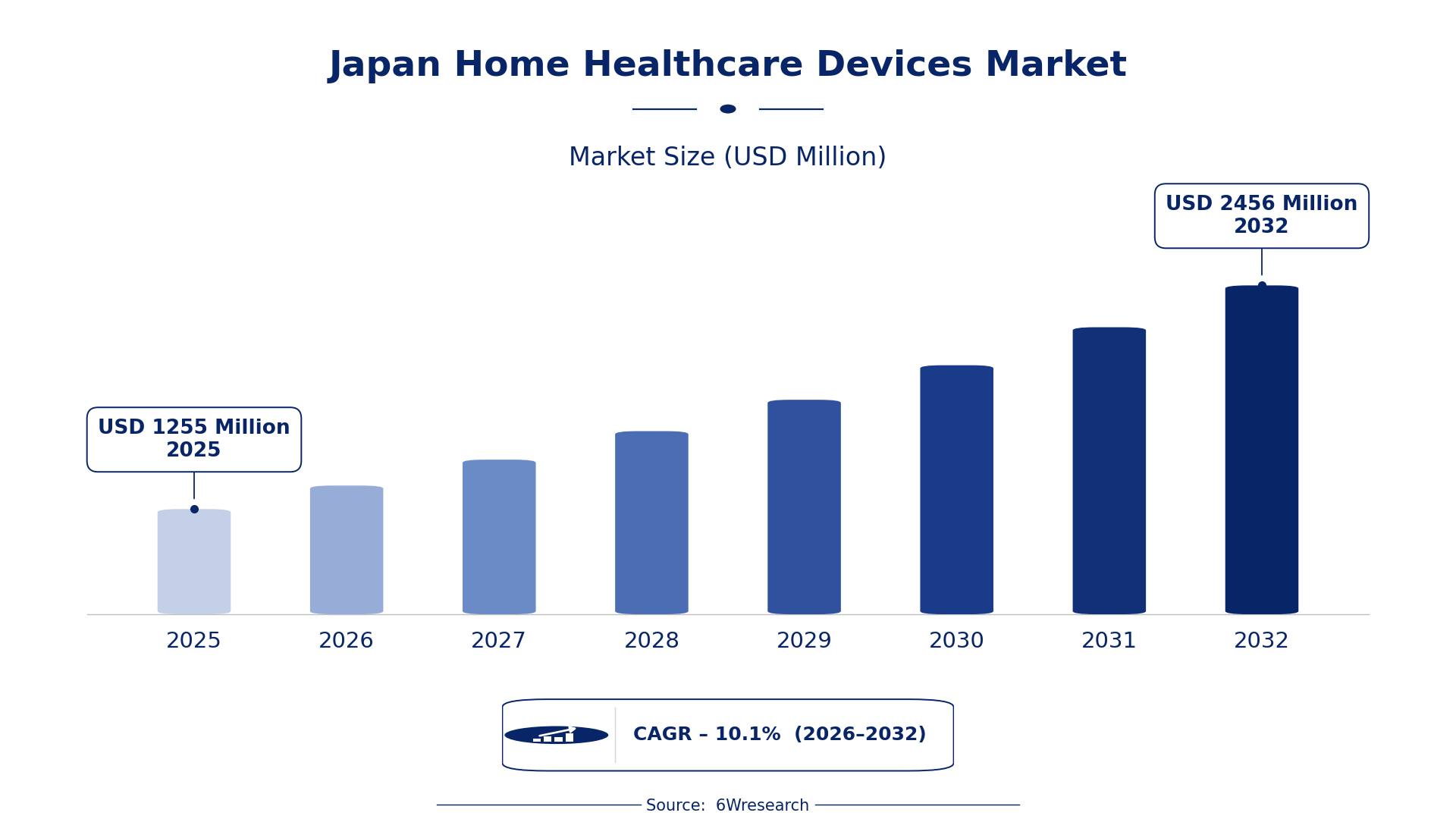
According to 6Wresearch internal database and industry insights, the Japan Home Healthcare Devices Market was valued at USD 1,255 Million in 2025 and is projected to reach USD 2,456 Million by 2032, growing at a CAGR of approximately 10.1% during 2026–2032.
Japan Home Healthcare Devices Market Highlights
| Report Metric | Details |
| Report Name | Japan Home Healthcare Devices Market (2026-2032) |
| Market Size 2025 | USD 1,255 Million |
| Market Size 2032 | USD 2,456 Million |
| Absolute Growth 2025–2032 | USD 1,201 Million |
| CAGR 2026–2032 | 10.1% |
| Peak Annual Growth | 11.6% in 2027 |
| Forecast Period | 2026–2032 |
| Historical Data | 2022–2025 |
| Base Year | 2025 |
| Leading Device Type, 2025 | Oxygen Concentrators (48% share) |
| Leading Use Type, 2025 | Respiratory (41% share) |
| Leading Distribution Channel, 2025 | Hospital Distributors (42% share) |
| Leading End User, 2025 | COPD Patients (46% share) |
| Fastest-Growing Device Type | Mobility Aids (14.1% CAGR) |
| Fastest-Growing Use Type | Movement Assistance (14.2% CAGR) |
| Fastest-Growing Distribution Channel | Home Medical Stores (13.2% CAGR) |
| Fastest-Growing End User | Disabled/Elderly Users (13.3% CAGR) |
| Growing Sector | Home healthcare devices |
| Key End Users | COPD patients, elderly users, post-surgery patients, home therapy users |
Japan Home Healthcare Devices Market Year-wise Growth Rate and Key Drivers (2022–2032)
This graph illustrates the annual growth rates of the market from 2022 to 2032, highlighting a steady upward trajectory and projected market expansion over the forecast period.
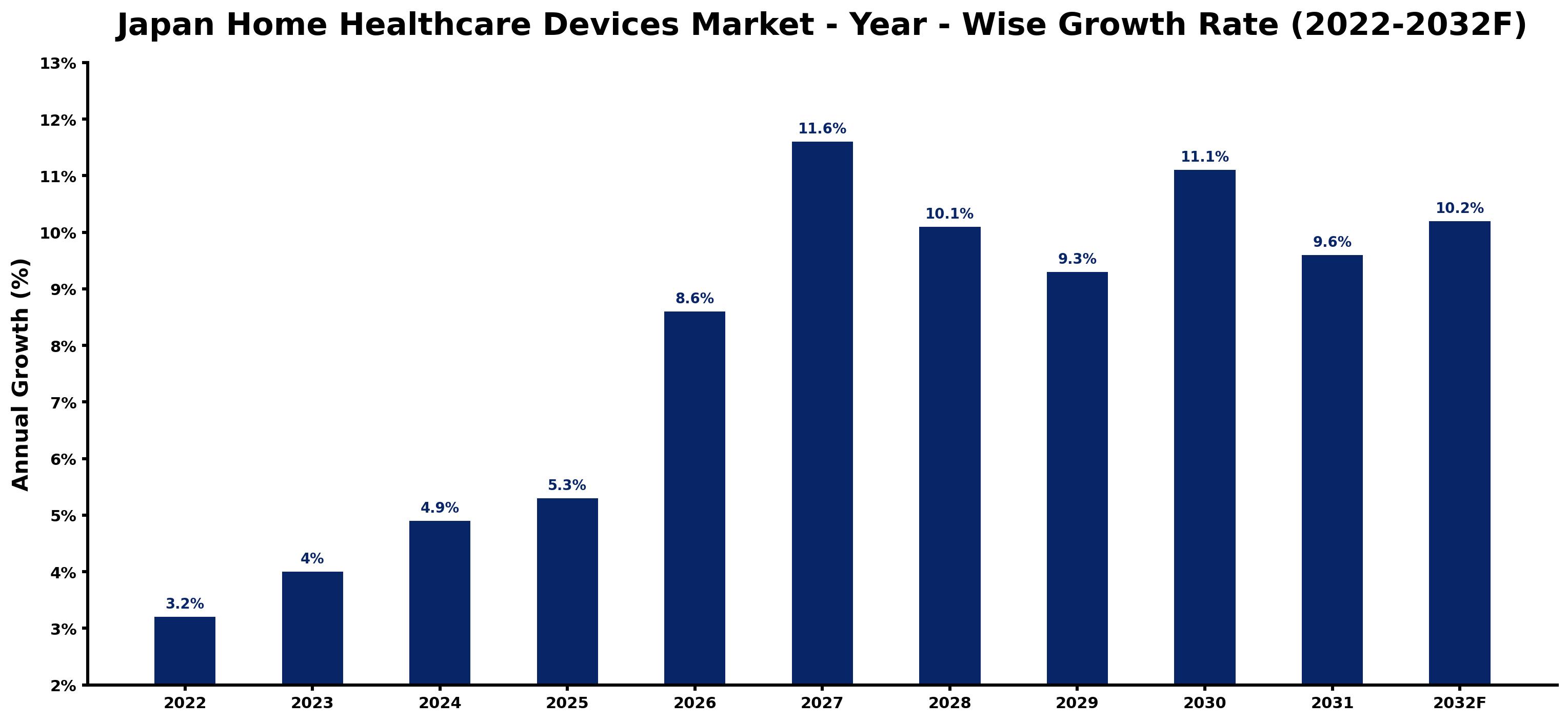
The table below sets out the estimated growth rate for each year and the main factor behind it.
| Year | Estimated Annual Growth (%) | Market Rationale |
| 2022 | 3.2 | The market saw steady growth, driven by an increasing elderly population. |
| 2023 | 4.0 | Demand accelerated due to heightened awareness of home healthcare solutions. |
| 2024 | 4.9 | Growth continued as more patients opted for home-based treatments. |
| 2025 | 5.3 | The market peaked historically, supported by rising healthcare expenditure. |
| 2026 | 8.6 | Growth surged as new technologies improved device efficacy and accessibility. |
| 2027 | 11.6 | The market reached its peak annual growth, driven by strong demand for mobility aids. |
| 2028 | 10.1 | Growth slowed slightly as market maturity began to set in. |
| 2029 | 9.3 | Demand continued to grow, albeit at a slower rate than the previous year. |
| 2030 | 11.1 | Growth picked up again, driven by increased home healthcare initiatives. |
| 2031 | 9.6 | The market experienced a slowdown in growth as saturation effects emerged. |
| 2032 | 10.2 | Demand is expected to rise again, supported by ongoing policy initiatives. |
Note: Market size estimations and growth projections presented in this report are based on 6Wresearch's proprietary forecasting methodology, utilizing the latest available industry data, government publications, and primary research inputs.
Japan Home Healthcare Devices Market Synopsis
Home healthcare devices are essential medical tools designed for patient use in home settings, aiding in health condition management. In 2023, 28% of Japan's population was aged 65 or older, driving demand for these devices. Key factors behind this growth include the increasing prevalence of chronic illnesses, advancements in technology, and rising healthcare expenditures, with the national medical care expenditure reaching approximately JPY 46.7 trillion in fiscal 2022. The Tokyo region accounts for 30% of home healthcare device demand, indicating concentrated market activity.
Market Dynamics Impact Analysis (2026–2032)
| Factor | Type | Impact | Primary Segment Affected |
| Aging population drives demand for home healthcare devices. | Driver | High | Oxygen Concentrators |
| Technological advancements enhance device functionality and accessibility. | Driver | High | Oxygen Concentrators |
| Increasing prevalence of chronic diseases creates a need for ongoing care. | Opportunity | High | Oxygen Concentrators |
| Expansion of home medical stores increases product availability. | Opportunity | Medium | Home Medical Stores |
| Regulatory compliance can slow down product approvals and market entry. | Restraint | High | Oxygen Concentrators |
| High initial costs of advanced devices limit accessibility for some users. | Restraint | Medium | Oxygen Concentrators |
| Supply chain disruptions affect timely delivery of medical devices. | Challenge | High | Oxygen Concentrators |
| Intense competition among manufacturers can lead to price wars. | Challenge | Medium | Oxygen Concentrators |
Evaluation of Drivers in Japan Home Healthcare Devices Market (2026–2032)
The main growth drivers and the segments they affect most are set out below.
| Drivers | Primary Segment Affected | Why It Matters (Evidence) |
| Increased healthcare expenditure supports device purchases. | Oxygen Concentrators | Japan's national medical care expenditure was about JPY 46.7 trillion in fiscal 2022, encouraging more spending on home healthcare devices. |
| Rising number of COPD patients boosts demand for respiratory devices. | Respiratory | With approximately 4 million COPD patients in Japan, the need for oxygen concentrators and nebulizers has surged. |
| Technological advancements improve device efficiency and safety. | Mobility Aids | Innovations in mobility aids, such as advanced walkers and wheelchairs, increase user confidence and drive sales. |
| Growing elderly population necessitates home healthcare solutions. | Movement Assistance | As of 2023, 28% of Japan's population was aged 65 or older, driving demand for home healthcare devices. |
| Expansion of online sales channels increases accessibility. | Home Medical Stores | Online platforms have seen a 20% increase in sales of home healthcare devices in 2023, broadening consumer access. |
A wider customer base explains much of the growth, as the aging population in Japan drives demand for home healthcare devices. In 2023, 28% of the population was aged 65 or older, leading to increased purchases of respiratory and mobility aids. The national medical care expenditure reached JPY 46.7 trillion in fiscal 2022, allowing more consumers to invest in these essential devices. The increasing prevalence of chronic illnesses has resulted in more patients opting for home-based treatments, while technological advancements have improved device efficacy, encouraging healthcare providers to recommend home solutions more frequently.
Evaluation of Restraints in Japan Home Healthcare Devices Market
These restraints slow adoption and weigh on supplier margins.
| Market Restraint | Primary Segment Affected | Why It Matters (Evidence) |
| Regulatory compliance can delay product launches. | Oxygen Concentrators | Manufacturers face stringent regulations, which can extend the time needed for product approvals and market entry. |
| High costs of advanced devices limit consumer access. | Mobility Aids | The initial investment required for advanced mobility aids can deter potential buyers, especially among low-income households. |
| Supply chain disruptions affect product availability. | Oxygen Concentrators | Global supply chain issues have caused delays in the delivery of essential home healthcare devices, impacting availability. |
| Limited insurance coverage for home healthcare devices restricts access. | Nebulizers | Many insurance plans do not fully cover home healthcare devices, making them less affordable for consumers. |
| Market saturation may lead to price competition. | Mobility Aids | As more manufacturers enter the market, price wars can reduce profit margins, affecting sustainability. |
Japan Home Healthcare Devices Market Challenges
Producers encounter high costs for technology integration, as compliance with advanced medical device standards demands considerable investment. This challenge arises from rapid advancements in healthcare technology, which can extend product development timelines by up to 12 months for manufacturers. Skills shortages restrict suppliers' production capabilities, potentially reducing output capacity by 20%, which affects device availability for buyers. Regulatory complexities pose challenges for hospitals, as navigating changing compliance standards can delay product availability, consuming valuable time and resources in patient care operations.
Trends in the Japan Home Healthcare Devices Market
The trends below show where the Japan Home Healthcare Devices Market is heading.
- Shift Towards Online Sales: The Tokyo region is seeing a shift towards online sales of home healthcare devices, with a 20% increase in 2023. This trend provides consumers with greater access to products, improving convenience and choice.
- Increased Focus on Mobility Aids: Disabled and elderly users are increasingly prioritising mobility aids, with a usage prevalence around 40%. This shift underscores the growing demand for devices that promote independence and enhance quality of life.
- Expansion of Home Medical Stores: The number of home medical stores is on the rise, with an annual product range growth of 15%. This expansion mirrors the increasing demand for home healthcare solutions among consumers.
- Introduction of ISO 13485 Standards: The introduction of the ISO 13485 standard for medical devices in Japan commenced in 2023, ensuring higher quality and safety benchmarks. This change is expected to boost consumer confidence in home healthcare devices.
Investment Opportunities in the Japan Home Healthcare Devices Market
The following opportunities in the Japan Home Healthcare Devices Market pair current demand with a clear way in.
- Growth of Home Medical Stores: Home medical stores in the Tokyo region are expanding their product offerings by 15% annually, creating opportunities for suppliers to introduce new devices and technologies.
- Demand for Advanced Respiratory Devices: With around 4 million COPD patients in Japan, there is a chance to supply advanced respiratory devices, especially in urban areas where healthcare access is critical.
- Investment in Mobility Aids: The rising prevalence of mobility aid usage among the elderly, at approximately 40%, presents an opportunity for manufacturers to create products tailored to this demographic's needs.
- Partnerships for Device Distribution: Collaborating with local home medical stores can ease market entry for new home healthcare devices, leveraging their established customer base and distribution networks.
Government Initiatives in the Japan Home Healthcare Devices Market
The Long-Term Care Insurance Act, enacted in 1997 and effective since 2000, provides funding for nursing care and support services for older adults. This legislation has shaped the home healthcare devices market by ensuring that more elderly individuals can access necessary medical equipment at home. Additionally, the Clinical Trials Act, effective since 2018, has set rules for clinical research, promoting innovation in device development.
In 2023, the Tokyo Metropolitan Government allocated 500 million JPY to support home healthcare programs. The Pharmaceuticals and Medical Devices Agency (PMDA) regulates and approves medical devices, ensuring that products meet safety and efficacy standards. This funding and regulatory oversight improve the availability and quality of home healthcare devices for consumers.
Future Insight of the Japan Home Healthcare Devices Market
A policy-driven shift will transform home healthcare by 2032, prompting suppliers to enhance device technology. New initiatives will encourage hospitals to adopt advanced monitoring systems, improving patient outcomes. The Tokyo Metropolitan Government's budget allocation of 500 million JPY for home healthcare programs will stimulate demand for various devices, ensuring better access for users. This change is likely to lead to a 15% annual increase in product offerings, addressing the growing need for effective home care solutions.
Market Segmentation Analysis
Japan Home Healthcare Devices Market report covers a detailed analysis of the following market segments:
By Device Type – Oxygen Concentrators Lead, Mobility Aids Expected to Grow Fastest
According to Saurav Kr Singh, Senior Research Analyst at 6Wresearch, with 48% of device type revenue in 2025, Oxygen Concentrators was the largest category. Oxygen concentrators are essential for patients with respiratory issues, making them a critical component of home healthcare. Their widespread adoption is evidenced by the approximately 4 million COPD patients in Japan who rely on these devices. The quickest growth will come from Mobility Aids, forecast to expand at a CAGR of 14.1% between 2026 and 2032. The growth of mobility aids is propelled by the increasing prevalence of mobility aid usage among the elderly, estimated at around 40%. As the aging population expands, the demand for these aids will continue to rise. Suppliers should focus on expanding their mobility aid offerings to meet the growing needs of the elderly demographic.
By Use Type – Respiratory Leads, Movement Assistance Expected to Grow Fastest
The largest use type category in 2025 was Respiratory, at 41% of revenue. Respiratory devices play a crucial role in managing breathing conditions, particularly among Japan's aging population. The substantial number of COPD patients, estimated at around 4 million, underscores the strong demand for these essential devices. Movement Assistance is projected to grow fastest, at a CAGR of 14.2% during 2026–2032. Movement assistance devices are witnessing rapid growth due to their importance in enhancing mobility for patients, especially the elderly. With around 40% of older individuals relying on mobility aids, this segment is poised for significant expansion. Suppliers should concentrate on advancing mobility aid technology to cater to the rising demand from an aging demographic.
By Distribution Channel – Hospital Distributors Lead, Home Medical Stores Expected to Grow Fastest
Hospital Distributors accounted for 42% of the market by distribution channel in 2025. Hospital distributors serve as the main channel for medical supply, ensuring that healthcare facilities are well-stocked with essential home healthcare devices. This channel's dominance is reflected in the 60% of devices sold through these distributors in 2023. Home Medical Stores are set to record the highest CAGR in this split, 13.2% over 2026–2032. Home medical stores are becoming key retail outlets for home devices, with an annual product range increase of 15%. This growth indicates a shift towards more accessible retail options for consumers. Suppliers must strengthen partnerships with home medical stores to capitalise on this growing distribution channel.
By End User – COPD Patients Lead, Disabled/Elderly Users Expected to Grow Fastest
In 2025, COPD Patients led the end user split with a 46% share. COPD patients represent a major user group for respiratory devices, highlighting their vital role in managing chronic respiratory issues. The large population of these patients indicates a continuous need for effective home healthcare solutions tailored to their requirements. Over 2026–2032, Disabled/Elderly Users are expected to post the fastest growth, at a CAGR of 13.3%. Disabled and elderly users form a rapidly expanding demographic for mobility aids, driven by the increasing necessity for assistance in daily activities. As this segment grows, the demand for customised mobility solutions will correspondingly increase. Manufacturers should focus on developing products specifically designed for the needs of disabled and elderly users to capitalise on opportunities in this growing market.
Key Attractiveness of the Report
- 10 Years of Market Numbers
- Historical Data Starting from 2022 to 2025
- Base Year 2025
- Forecast Data until 2032
- Key Performance Indicators Impacting the Market
- Major Upcoming Developments and Projects
Key Highlights of the Report:
- Japan Home Healthcare Devices Market Outlook
- Market Size of Japan Home Healthcare Devices Market, 2025
- Forecast of Japan Home Healthcare Devices Market, 2032
- Historical Data and Forecast of Japan Home Healthcare Devices Revenues & Volume for the Period 2022-2032F
- Japan Home Healthcare Devices Market Trend Evolution
- Japan Home Healthcare Devices Market Drivers and Challenges
- Japan Home Healthcare Devices Price Trends
- Japan Home Healthcare Devices Porter's Five Forces
- Japan Home Healthcare Devices Industry Life Cycle
- Historical Data and Forecast of Japan Home Healthcare Devices Market Revenues & Volume By Device Type for the Period 2022-2032F
- Historical Data and Forecast of Japan Home Healthcare Devices Market Revenues & Volume By Oxygen Concentrators for the Period 2022-2032F
- Historical Data and Forecast of Japan Home Healthcare Devices Market Revenues & Volume By Mobility Aids for the Period 2022-2032F
- Historical Data and Forecast of Japan Home Healthcare Devices Market Revenues & Volume By Suction Machines for the Period 2022-2032F
- Historical Data and Forecast of Japan Home Healthcare Devices Market Revenues & Volume By Nebulizers for the Period 2022-2032F
- Historical Data and Forecast of Japan Home Healthcare Devices Market Revenues & Volume By Use Type for the Period 2022-2032F
- Historical Data and Forecast of Japan Home Healthcare Devices Market Revenues & Volume By Respiratory for the Period 2022-2032F
- Historical Data and Forecast of Japan Home Healthcare Devices Market Revenues & Volume By Movement Assistance for the Period 2022-2032F
- Historical Data and Forecast of Japan Home Healthcare Devices Market Revenues & Volume By Airway Clearance for the Period 2022-2032F
- Historical Data and Forecast of Japan Home Healthcare Devices Market Revenues & Volume By Breathing Therapy for the Period 2022-2032F
- Historical Data and Forecast of Japan Home Healthcare Devices Market Revenues & Volume By Distribution Channel for the Period 2022-2032F
- Historical Data and Forecast of Japan Home Healthcare Devices Market Revenues & Volume By Hospital Distributors for the Period 2022-2032F
- Historical Data and Forecast of Japan Home Healthcare Devices Market Revenues & Volume By Home Medical Stores for the Period 2022-2032F
- Historical Data and Forecast of Japan Home Healthcare Devices Market Revenues & Volume By Online Platforms for the Period 2022-2032F
- Historical Data and Forecast of Japan Home Healthcare Devices Market Revenues & Volume By Pharmacies for the Period 2022-2032F
- Historical Data and Forecast of Japan Home Healthcare Devices Market Revenues & Volume By End User for the Period 2022-2032F
- Historical Data and Forecast of Japan Home Healthcare Devices Market Revenues & Volume By COPD Patients for the Period 2022-2032F
- Historical Data and Forecast of Japan Home Healthcare Devices Market Revenues & Volume By Disabled/Elderly Users for the Period 2022-2032F
- Historical Data and Forecast of Japan Home Healthcare Devices Market Revenues & Volume By Post-Surgery Patients for the Period 2022-2032F
- Historical Data and Forecast of Japan Home Healthcare Devices Market Revenues & Volume By Home Therapy Users for the Period 2022-2032F
- Japan Home Healthcare Devices Import Export Trade Statistics
- Market Opportunity Assessment By Device Type
- Market Opportunity Assessment By Use Type
- Market Opportunity Assessment By Distribution Channel
- Market Opportunity Assessment By End User
- Japan Home Healthcare Devices Top Companies Market Share
- Japan Home Healthcare Devices Competitive Benchmarking By Technical and Operational Parameters
- Japan Home Healthcare Devices Company Profiles
- Japan Home Healthcare Devices Key Strategic Recommendations
Market Covered
Coverage by segment is as follows.
By Device Type
- Oxygen Concentrators
- Mobility Aids
- Suction Machines
- Nebulizers
By Use Type
- Respiratory
- Movement Assistance
- Airway Clearance
- Breathing Therapy
By Distribution Channel
- Hospital Distributors
- Home Medical Stores
- Online Platforms
- Pharmacies
By End User
- COPD Patients
- Disabled/Elderly Users
- Post-Surgery Patients
- Home Therapy Users































