Japan Home Improvement Products Market Size & Growth Rate
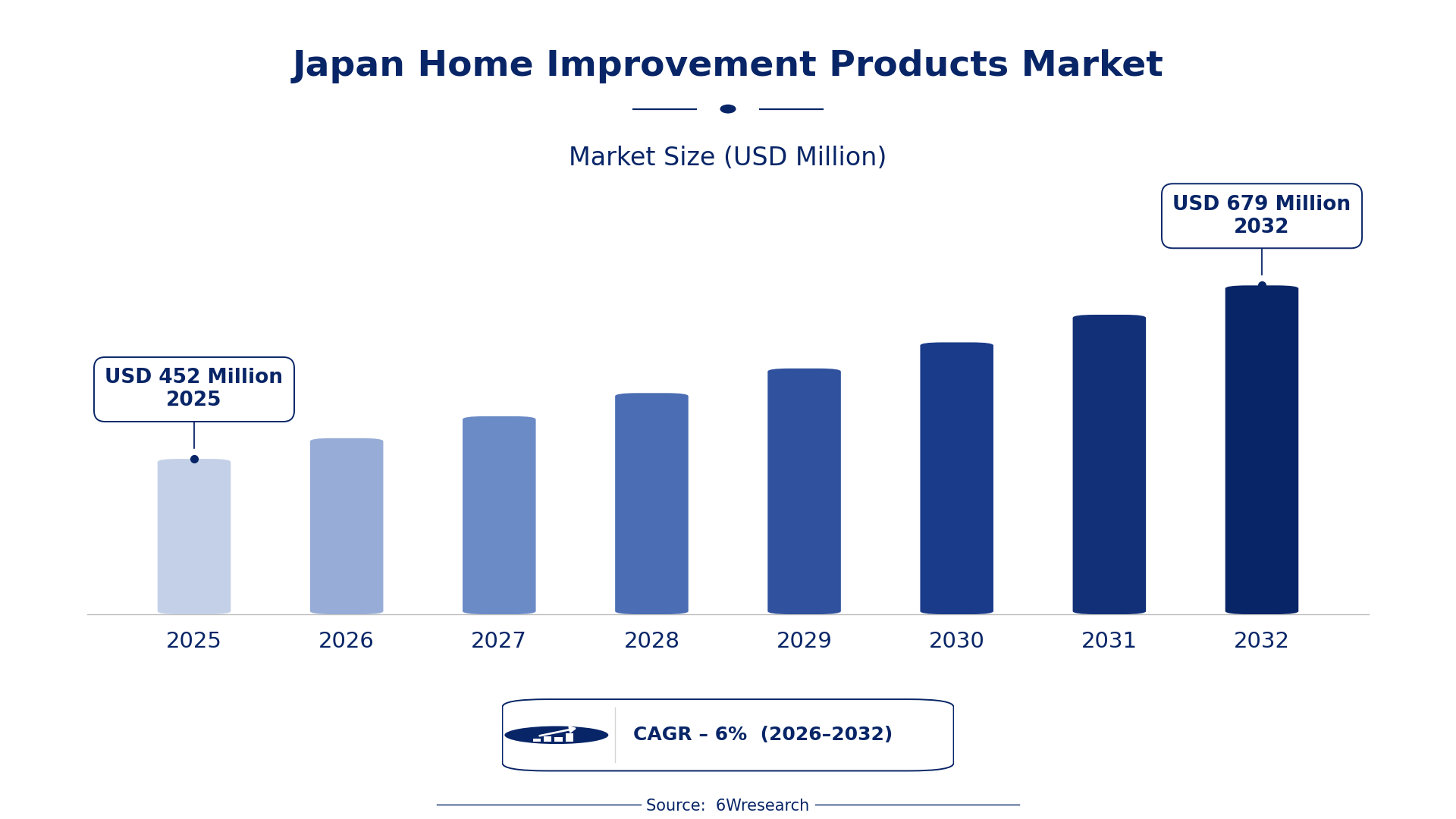
According to 6Wresearch internal database and industry insights, the Japan Home Improvement Products Market was valued at USD 452 Million in 2025 and is projected to reach USD 679 Million by 2032, growing at a CAGR of approximately 6% during 2026–2032.
Japan Home Improvement Products Market Highlights
| Report Metric | Details |
| Report Name | Japan Home Improvement Products Market (2026-2032) |
| Market Size 2025 | USD 452 Million |
| Market Size 2032 | USD 679 Million |
| Absolute Growth 2025–2032 | USD 227 Million |
| CAGR 2026–2032 | 6% |
| Peak Annual Growth | 6.3% in 2026 |
| Forecast Period | 2026–2032 |
| Historical Data | 2022–2025 |
| Base Year | 2025 |
| Leading Product Type, 2025 | Paints & Coatings (46% share) |
| Leading Material Category, 2025 | Wood/Steel/Plastic (44% share) |
| Leading Distribution Channel, 2025 | Retail Chains (46% share) |
| Leading End User, 2025 | DIY Homeowners (45% share) |
| Fastest-Growing Product Type | Wall Panels & Partitions (8.7% CAGR) |
| Fastest-Growing Material Category | Ceramic/Vinyl (8.9% CAGR) |
| Fastest-Growing Distribution Channel | E-commerce Platforms (7.7% CAGR) |
| Fastest-Growing End User | Home Renovators (7.5% CAGR) |
| Growing Sector | Home Renovation |
| Key End Users | DIY Homeowners, Home Renovators, Urban Apartment Dwellers |
Japan Home Improvement Products Market Year-wise Growth Rate and Key Drivers (2022–2032)
This graph illustrates the annual growth rates of the market from 2022 to 2032, highlighting a steady upward trajectory and projected market expansion over the forecast period.
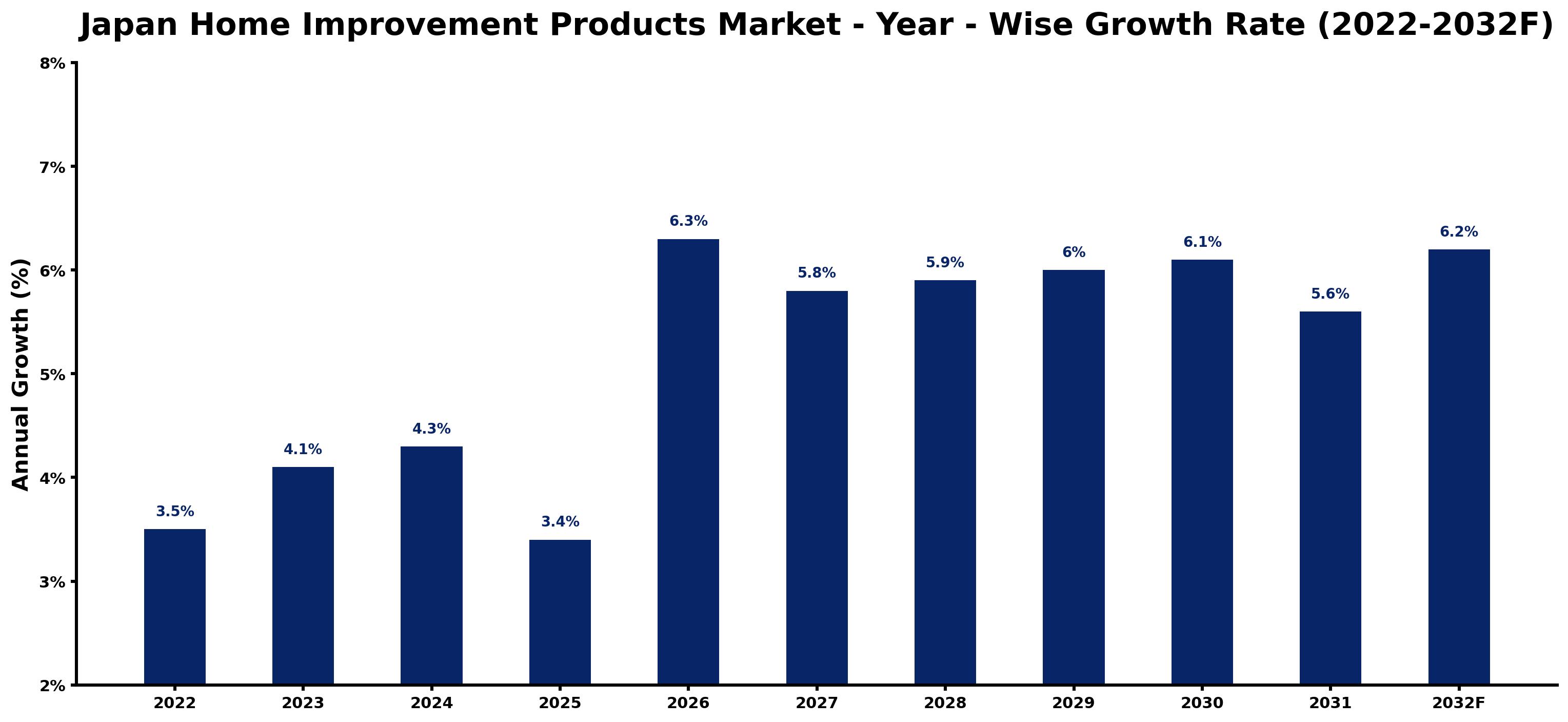
Annual growth estimates for each year appear below with the principal reason behind them, explaining the shifts that set the pace of the market.
| Year | Estimated Annual Growth (%) | Market Rationale |
| 2022 | 3.5 | The market experienced steady growth, driven by ongoing home renovation activities. |
| 2023 | 4.1 | Demand increased as homeowners sought to improve living spaces amid urbanisation. |
| 2024 | 4.3 | Growth was supported by rising consumer interest in home decoration and maintenance. |
| 2025 | 3.4 | The market saw a slowdown as consumers adjusted spending habits after previous years' fluctuations. |
| 2026 | 6.3 | Demand is expected to surge due to the introduction of new sustainable renovation programmes. |
| 2027 | 5.8 | Growth will slow as market saturation begins to affect purchasing decisions. |
| 2028 | 5.9 | Consumer interest in home improvement is projected to rise again, driven by urban housing demands. |
| 2029 | 6.0 | The market will continue to grow as DIY trends gain traction among homeowners. |
| 2030 | 6.1 | Increased spending on home aesthetics will contribute to ongoing market expansion. |
| 2031 | 5.6 | Growth is expected to slow as economic factors influence consumer spending patterns. |
| 2032 | 6.2 | Demand is expected to rise with advancements in eco-friendly home products. |
Note: Market size estimations and growth projections presented in this report are based on 6Wresearch's proprietary forecasting methodology, utilizing the latest available industry data, government publications, and primary research inputs.
Japan Home Improvement Products Market Synopsis
Home improvement products in Japan encompass a variety of items such as paints, fixtures, flooring, and wall panels, essential for renovation and decoration. The Japan Home Improvement Products Market is valued at approximately 3 trillion JPY, with DIY homeowners accounting for 40% of total demand. Growth is driven by an increasing population of older adults, urbanisation, and a rise in e-commerce sales, which grew by 25% in 2023. The Tokyo Metropolitan Government's support for urban housing improvement initiatives further stimulates demand.
Market Dynamics Impact Analysis (2026–2032)
| Factor | Type | Impact | Primary Segment Affected |
| Growing urbanisation leads to increased demand for home improvement products. | Driver | High | DIY Homeowners |
| Rising e-commerce sales facilitate easier access to home improvement products. | Driver | High | Retail Chains |
| The shift towards sustainable renovation creates opportunities for eco-friendly products. | Opportunity | High | Paints & Coatings |
| Increased interest in DIY projects among younger homeowners opens new markets. | Opportunity | High | Flooring & Tiles |
| Market saturation limits growth potential for established product lines. | Restraint | Medium | Fixtures & Fittings |
| Economic uncertainties may impact consumer spending on home improvements. | Restraint | Medium | Wall Panels & Partitions |
| Supply chain disruptions affect availability of key materials. | Challenge | High | Flooring & Tiles |
| Competition from international brands pressures local producers to innovate. | Challenge | High | Paints & Coatings |
Evaluation of Drivers in Japan Home Improvement Products Market (2026–2032)
The following drivers explain most of the expected growth.
| Drivers | Primary Segment Affected | Why It Matters (Evidence) |
| Increasing population of older adults drives demand for home renovations. | DIY Homeowners | 29.3% of Japan's population was aged 65 or older in September 2024, prompting renovations for accessibility. |
| Urbanisation leads to higher demand for home improvement products. | Retail Chains | Tokyo and Osaka are the largest urban centres, influencing purchasing behaviour. |
| E-commerce growth facilitates consumer access to home improvement products. | E-commerce Platforms | E-commerce sales of home improvement products grew by 25% in 2023, expanding market reach. |
| Rising disposable income encourages spending on home aesthetics. | Fixtures & Fittings | The average household spends about 150,000 JPY annually on home improvement, boosting interest across various segments. |
| Sustainable renovation trends increase interest in eco-friendly products. | Paints & Coatings | The government launched a program to promote sustainable home renovations in 2023. |
Much of the new demand traces back to urbanisation in major centres like Tokyo, which drives higher demand for home improvement products. E-commerce sales grew by 25% in 2023, facilitating consumer access to these items. Rising disposable income encourages households to spend an average of 150,000 JPY annually on home improvement, boosting interest across various segments. The increasing population of older adults also prompts renovations for accessibility, further driving demand.
Evaluation of Restraints in Japan Home Improvement Products Market
The key brakes on demand, and where they bite hardest, are shown below.
| Market Restraint | Primary Segment Affected | Why It Matters (Evidence) |
| Market saturation limits growth potential for established product lines. | Fixtures & Fittings | As more homeowners invest in renovations, the market becomes saturated, reducing demand. |
| Economic uncertainties may impact consumer spending on home improvements. | Wall Panels & Partitions | Fluctuations in the economy can lead to cautious spending habits among consumers. |
| Supply chain disruptions affect availability of key materials. | Flooring & Tiles | Delays in material supply can hinder project timelines and increase costs. |
| Competition from international brands pressures local producers to adapt. | Paints & Coatings | Local brands must adjust to remain competitive against established global players. |
| Changing consumer preferences may shift demand away from traditional products. | Fixtures & Fittings | As trends evolve, consumers may seek newer, more appealing solutions. |
Japan Home Improvement Products Market Challenges
Buyers of home improvement products face supply disruptions as Japan's population continues to decline, leading to longer lead times for sourcing materials. Rising costs result from increased raw material prices, which can elevate the average household's annual spending on home improvement, currently at 150,000 JPY. Regulatory challenges emerge as the Ministry of Land, Infrastructure, Transport and Tourism enforces stringent housing regulations, complicating compliance for producers and extending project timelines. Skills shortages in the workforce restrict producers' ability to meet the growing demand for sustainable renovations, particularly following the government's recent initiative promoting such practices.
Trends in the Japan Home Improvement Products Market
The trends below show where the Japan Home Improvement Products Market is heading.
- Shift from Traditional Retail to E-commerce: Japan is experiencing a shift towards e-commerce for home improvement products, with sales growing by 25% in 2023. This trend allows consumers to access a wider range of products conveniently, influencing purchasing patterns.
- Increased Focus on Sustainable Renovations: Since 2023, there has been a notable increase in sustainable home renovations, driven by government initiatives. This shift encourages consumers to invest in eco-friendly products, aligning with environmental standards.
- Rise of DIY Culture Among Younger Homeowners: The trend of DIY home improvement has gained momentum, particularly among younger homeowners. This demographic is increasingly engaging in renovation projects, impacting product demand significantly.
- Growing Demand for Smart Home Products: Smart home technology is becoming more prevalent in home improvement, with consumers seeking integrated solutions. This trend reflects the evolving needs of homeowners looking for convenience and efficiency.
Investment Opportunities in the Japan Home Improvement Products Market
Where to invest in the Japan Home Improvement Products Market: the main openings are set out below.
- Gap in Eco-friendly Product Offerings: With a growing interest in sustainable renovations, there is a gap in eco-friendly product offerings. Retail chains can capitalise on this by expanding their ranges to include more sustainable options.
- Urban Housing Improvement Initiatives: The Tokyo Metropolitan Government supports urban housing improvement initiatives, creating opportunities for suppliers. Investing in products that meet urban housing needs can yield substantial returns.
- Increasing DIY Participation Among Homeowners: The rise of DIY culture presents opportunities for suppliers to target this growing segment. Retail chains should focus on marketing DIY products to engage this demographic effectively.
- Expansion of E-commerce Platforms: E-commerce platforms are rapidly growing, providing an opportunity for suppliers to reach a wider audience. Collaborating with local partners to enhance online presence can drive sales.
Government Initiatives in the Japan Home Improvement Products Market
The Waste Management and Public Cleansing Act (1970) regulates waste treatment and disposal, impacting producers of home improvement products. Compliance with these regulations requires manufacturers to invest in sustainable practices and waste management systems, ensuring environmentally friendly operations. The Plastic Resource Circulation Act (2021) promotes reduction, reuse, and recycling of plastics, compelling producers to adopt more sustainable practices, which can enhance their market appeal.
The Ministry of Land, Infrastructure, Transport and Tourism oversees housing regulations, approving projects that align with urban improvement goals. This agency funds initiatives aimed at improving housing quality and sustainability, benefiting both producers and buyers in the home improvement sector. The Food Sanitation Act amendment (2018) introduced a positive list system for synthetic resins, ensuring safety and compliance in product manufacturing.
Future Insight of the Japan Home Improvement Products Market
Advancements in smart home technology will transform buyer preferences by 2032, as consumers seek more integrated home improvement solutions. E-commerce sales of home improvement products grew by 25% in 2023, enhancing convenience for buyers and driving further digital engagement. Adoption of ISO 14001 standards will elevate product quality and sustainability, benefiting suppliers aiming to meet rising environmental expectations. Urban housing improvement initiatives from local governments will further stimulate demand for modern home enhancement solutions.
Market Segmentation Analysis
Japan Home Improvement Products Market report covers a detailed analysis of the following market segments:
By Product Type – Paints & Coatings Lead, Wall Panels & Partitions Expected to Grow Fastest
According to Anjali Gupta, Research Analyst at 6Wresearch, Paints & Coatings held 46% of the Japan Home Improvement Products Market by product type in 2025. Paints and coatings are essential for home decoration and protection, making them a primary choice for homeowners. Their widespread use in urban centres like Tokyo and Osaka reinforces their dominant market position. Wall Panels & Partitions are set to record the highest CAGR in this split, 8.7% over 2026–2032. The increasing popularity of wall panels and partitions stems from the demand for space optimisation and aesthetic appeal in compact living environments. This trend is particularly evident in urban settings where smaller apartments are prevalent. Suppliers should focus on expanding their offerings in wall panels to cater to the growing need for efficient space solutions.
By Material Category – Wood/Steel/Plastic Leads, Ceramic/Vinyl Expected to Grow Fastest
In 2025, Wood/Steel/Plastic led the material category split with a 44% share. Wood, steel, and plastic are fundamental materials used in various home improvement products, making them indispensable in the market. Their versatility and availability contribute to their leading share among consumers in Japan. Over 2026–2032, Ceramic/Vinyl is expected to post the fastest growth, at a CAGR of 8.9%. Ceramic and vinyl materials are gaining popularity due to their suitability for flooring solutions that balance durability and design. This shift is driven by homeowners seeking stylish yet practical options for their living spaces. Manufacturers should consider diversifying their product lines to include more ceramic and vinyl options to meet the rising demand.
By Distribution Channel – Retail Chains Lead, E-commerce Platforms Expected to Grow Fastest
Retail Chains took 46% of distribution channel revenue in 2025, more than any other category. Retail chains serve as major distributors of home improvement products, providing a wide range of options to consumers. Their strong presence in key urban areas such as Tokyo and Osaka enables them to secure a significant market share. The quickest growth will come from E-commerce Platforms, forecast to expand at a CAGR of 7.7% between 2026 and 2032. E-commerce platforms are experiencing rapid growth, evidenced by a notable increase in online purchases of home improvement products. This shift in consumer preferences indicates a rising inclination towards convenient shopping methods, particularly among younger buyers. Retailers must enhance their online presence to remain competitive in the evolving distribution landscape.
By End User – DIY Homeowners Lead, Home Renovators Expected to Grow Fastest
The largest end user category in 2025 was DIY Homeowners, at 45% of revenue. DIY homeowners constitute a large segment that drives demand for home improvement products, accounting for 40% of the market. Their engagement in home projects creates a consistent need for various materials and tools. Home Renovators are projected to grow fastest, at a CAGR of 7.5% during 2026–2032. Home renovators are quickly becoming a prominent user group, actively seeking improvement products to upgrade their living environments. This trend is expected to persist as more individuals embark on renovation initiatives. Suppliers should adjust their marketing approaches to effectively target home renovators, who are increasingly in search of high-quality products for their projects.
Key Attractiveness of the Report
- 10 Years of Market Numbers
- Historical Data Starting from 2022 to 2025
- Base Year 2025
- Forecast Data until 2032
- Key Performance Indicators Impacting the Market
- Major Upcoming Developments and Projects
Key Highlights of the Report:
- Japan Home Improvement Products Market Outlook
- Market Size of Japan Home Improvement Products Market, 2025
- Forecast of Japan Home Improvement Products Market, 2032
- Historical Data and Forecast of Japan Home Improvement Products Revenues & Volume for the Period 2022-2032F
- Japan Home Improvement Products Market Trend Evolution
- Japan Home Improvement Products Market Drivers and Challenges
- Japan Home Improvement Products Price Trends
- Japan Home Improvement Products Porter's Five Forces
- Japan Home Improvement Products Industry Life Cycle
- Historical Data and Forecast of Japan Home Improvement Products Market Revenues & Volume By Product Type for the Period 2022-2032F
- Historical Data and Forecast of Japan Home Improvement Products Market Revenues & Volume By Paints & Coatings for the Period 2022-2032F
- Historical Data and Forecast of Japan Home Improvement Products Market Revenues & Volume By Fixtures & Fittings for the Period 2022-2032F
- Historical Data and Forecast of Japan Home Improvement Products Market Revenues & Volume By Flooring & Tiles for the Period 2022-2032F
- Historical Data and Forecast of Japan Home Improvement Products Market Revenues & Volume By Wall Panels & Partitions for the Period 2022-2032F
- Historical Data and Forecast of Japan Home Improvement Products Market Revenues & Volume By Material Category for the Period 2022-2032F
- Historical Data and Forecast of Japan Home Improvement Products Market Revenues & Volume By Oil-Based/Water-Based for the Period 2022-2032F
- Historical Data and Forecast of Japan Home Improvement Products Market Revenues & Volume By Wood/Steel/Plastic for the Period 2022-2032F
- Historical Data and Forecast of Japan Home Improvement Products Market Revenues & Volume By Ceramic/Vinyl for the Period 2022-2032F
- Historical Data and Forecast of Japan Home Improvement Products Market Revenues & Volume By MDF/Glass for the Period 2022-2032F
- Historical Data and Forecast of Japan Home Improvement Products Market Revenues & Volume By Distribution Channel for the Period 2022-2032F
- Historical Data and Forecast of Japan Home Improvement Products Market Revenues & Volume By Hardware Stores for the Period 2022-2032F
- Historical Data and Forecast of Japan Home Improvement Products Market Revenues & Volume By E-commerce Platforms for the Period 2022-2032F
- Historical Data and Forecast of Japan Home Improvement Products Market Revenues & Volume By Specialty Stores for the Period 2022-2032F
- Historical Data and Forecast of Japan Home Improvement Products Market Revenues & Volume By Retail Chains for the Period 2022-2032F
- Historical Data and Forecast of Japan Home Improvement Products Market Revenues & Volume By End User for the Period 2022-2032F
- Historical Data and Forecast of Japan Home Improvement Products Market Revenues & Volume By DIY Homeowners for the Period 2022-2032F
- Historical Data and Forecast of Japan Home Improvement Products Market Revenues & Volume By Interior Decorators for the Period 2022-2032F
- Historical Data and Forecast of Japan Home Improvement Products Market Revenues & Volume By Home Renovators for the Period 2022-2032F
- Historical Data and Forecast of Japan Home Improvement Products Market Revenues & Volume By Urban Apartments for the Period 2022-2032F
- Japan Home Improvement Products Import Export Trade Statistics
- Market Opportunity Assessment By Product Type
- Market Opportunity Assessment By Material Category
- Market Opportunity Assessment By Distribution Channel
- Market Opportunity Assessment By End User
- Japan Home Improvement Products Top Companies Market Share
- Japan Home Improvement Products Competitive Benchmarking By Technical and Operational Parameters
- Japan Home Improvement Products Company Profiles
- Japan Home Improvement Products Key Strategic Recommendations
Market Covered
Segments analysed in this report are listed below.
By Product Type
- Paints & Coatings
- Fixtures & Fittings
- Flooring & Tiles
- Wall Panels & Partitions
By Material Category
- Oil-Based/Water-Based
- Wood/Steel/Plastic
- Ceramic/Vinyl
- MDF/Glass
By Distribution Channel
- Hardware Stores
- E-commerce Platforms
- Specialty Stores
- Retail Chains
By End User
- DIY Homeowners
- Interior Decorators
- Home Renovators
- Urban Apartments































