Japan Home Renovation Market Size & Growth Rate
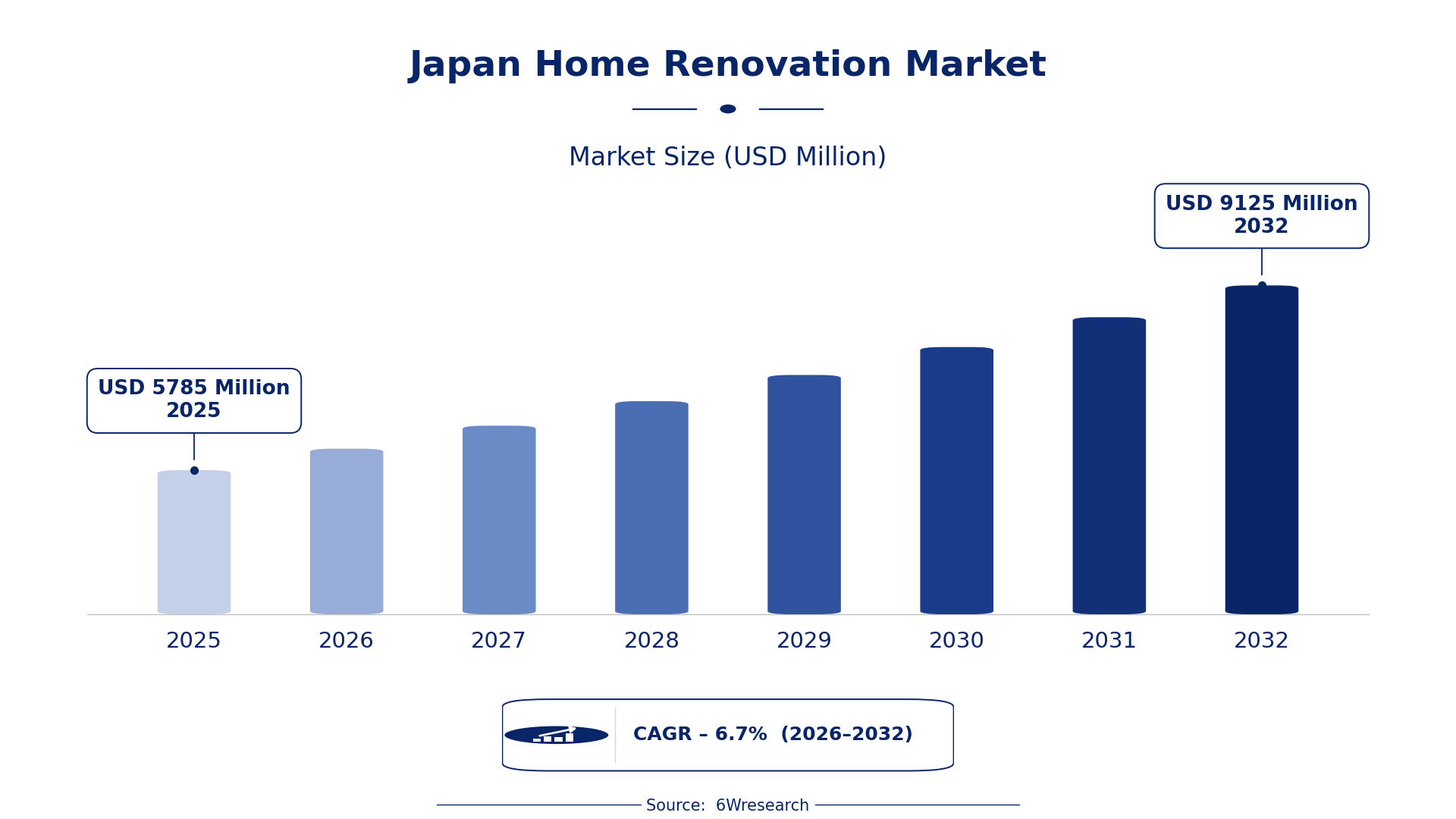
According to 6Wresearch internal database and industry insights, the Japan Home Renovation Market was valued at USD 5,785 Million in 2025 and is projected to reach USD 9,125 Million by 2032, growing at a CAGR of approximately 6.7% during 2026–2032.
Japan Home Renovation Market Highlights
| Report Metric | Details |
| Report Name | Japan Home Renovation Market (2026-2032) |
| Market Size 2025 | USD 5,785 Million |
| Market Size 2032 | USD 9,125 Million |
| Absolute Growth 2025–2032 | USD 3,340 Million |
| CAGR 2026–2032 | 6.7% |
| Peak Annual Growth | 7.7% in 2030 |
| Forecast Period | 2026–2032 |
| Historical Data | 2022–2025 |
| Base Year | 2025 |
| Leading Service Type, 2025 | Interior Renovation (46% share) |
| Leading Area of Application, 2025 | Living/Bedroom (55% share) |
| Leading Distribution Channel, 2025 | Contractor Networks (35% share) |
| Leading End User, 2025 | Homeowners (45% share) |
| Fastest-Growing Service Type | Bathroom Upgrades (9.0% CAGR) |
| Fastest-Growing Distribution Channel | Local Vendors (8.7% CAGR) |
| Fastest-Growing End User | DIY Renovators (8.6% CAGR) |
| Growing Sector | Residential Renovation |
| Key End Users | Homeowners, Urban Dwellers, DIY Renovators |
Japan Home Renovation Market Year-wise Growth Rate and Key Drivers (2022–2032)
This graph illustrates the annual growth rates of the market from 2022 to 2032, highlighting a steady upward trajectory and projected market expansion over the forecast period.
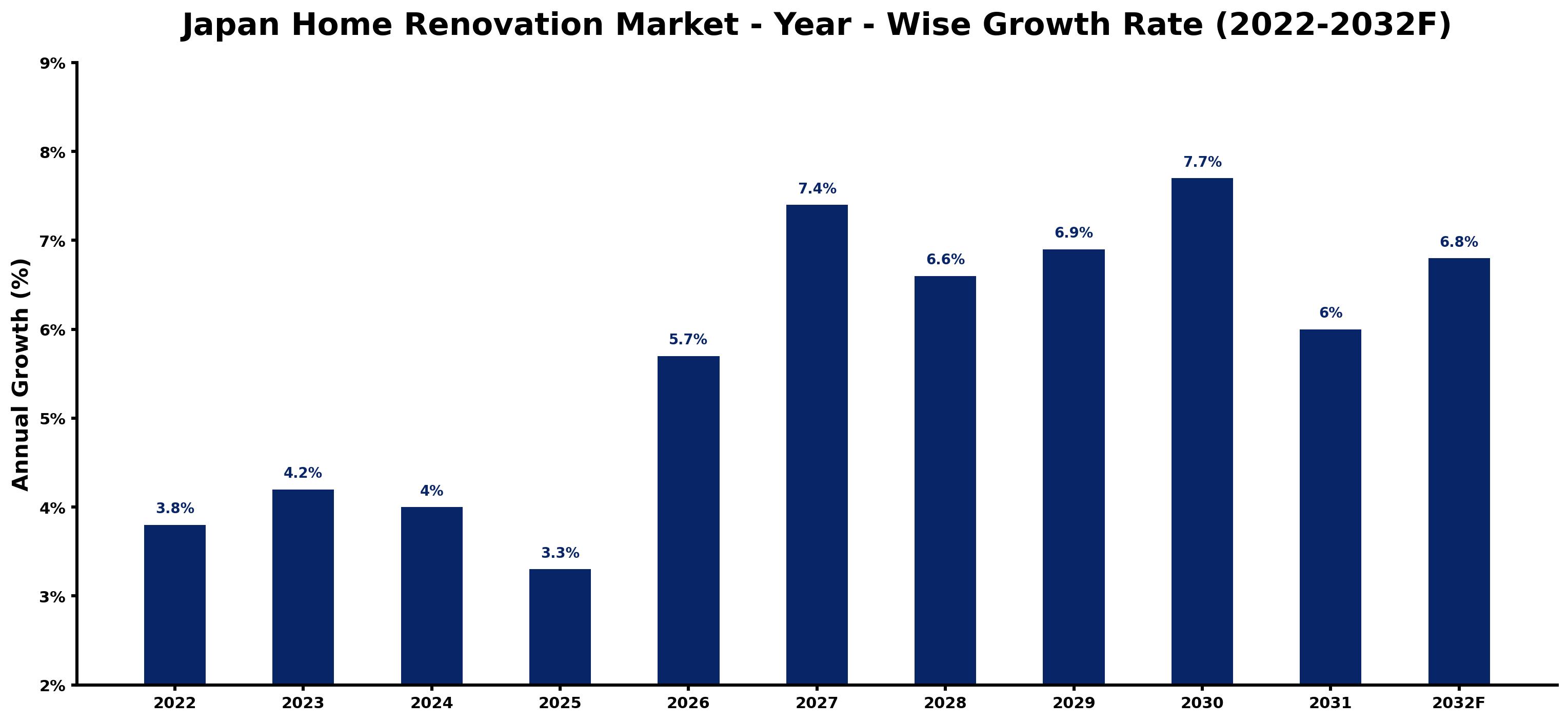
Year by year, the estimates below pair each growth rate with the development that shaped it.
| Year | Estimated Annual Growth (%) | Market Rationale |
| 2022 | 3.8 | The market showed steady growth due to ongoing urban renovation projects and increasing homeowner interest. |
| 2023 | 4.2 | Demand rose as more homeowners engaged in renovation projects, driven by aesthetic and functional upgrades. |
| 2024 | 4.0 | Growth slowed slightly as homeowners became more selective about renovation expenditures amid economic uncertainties. |
| 2025 | 3.3 | A further slowdown occurred as inflationary pressures affected homeowner budgets for renovations. |
| 2026 | 5.7 | Growth is expected to accelerate as energy-efficient renovation incentives attract more homeowners to upgrade. |
| 2027 | 7.4 | Increased urbanization is projected to drive demand for home renovations, particularly in metropolitan areas. |
| 2028 | 6.6 | Growth is anticipated to moderate as the market adjusts to previous high demand levels. |
| 2029 | 6.9 | A rise in DIY renovation trends is expected to boost market activity and homeowner engagement. |
| 2030 | 7.7 | Peak growth is projected as technological advancements in home renovation attract significant investments. |
| 2031 | 6.0 | A slowdown is expected as the market stabilizes after peak growth, with homeowners prioritising essential upgrades. |
| 2032 | 6.8 | Growth is expected to remain strong as sustainable renovation practices gain traction among homeowners. |
Note: Market size estimations and growth projections presented in this report are based on 6Wresearch's proprietary forecasting methodology, utilizing the latest available industry data, government publications, and primary research inputs.
Japan Home Renovation Market Synopsis
Home renovation in Japan involves upgrading residential spaces to improve aesthetics and functionality, including services like interior renovations and kitchen remodeling. The Japan Home Renovation Market is expanding due to heightened demand from urban dwellers and homeowners, along with government initiatives promoting energy-efficient renovations. With over 10 million homeowners actively engaging in renovation projects, the market is expected to grow, driven by urbanization and a focus on sustainable practices.
Market Dynamics Impact Analysis (2026–2032)
| Factor | Type | Impact | Primary Segment Affected |
| Urbanization drives demand for home renovations as more people seek to improve their living spaces. | Driver | High | Interior Renovation |
| Government incentives for energy-efficient renovations encourage homeowners to invest in upgrades. | Driver | High | Kitchen Remodeling |
| Growing interest in DIY projects opens opportunities for local vendors to supply materials and workshops. | Opportunity | Medium | DIY Renovators |
| Increased focus on sustainable practices creates demand for eco-friendly renovation materials. | Opportunity | Medium | Bathroom Upgrades |
| Rising material costs can limit renovation budgets for homeowners, affecting project scope. | Restraint | High | Flooring Replacement |
| Strict regulations on building materials can complicate project timelines for contractors. | Restraint | Medium | Interior Renovation |
| Limited availability of skilled labor can hinder renovation project completion for contractors. | Challenge | High | Kitchen Remodeling |
| Compliance with evolving energy efficiency standards can increase project costs for homeowners. | Challenge | Medium | Bathroom Upgrades |
Evaluation of Drivers in Japan Home Renovation Market (2026–2032)
The following drivers explain most of the expected growth.
| Drivers | Primary Segment Affected | Why It Matters (Evidence) |
| Increased urbanization leads to higher demand for home renovations as urban dwellers seek improved living conditions. | Interior Renovation | In 2023, Tokyo and Osaka were the leading regions for home renovation activities. |
| Government subsidies for energy-efficient renovations encourage homeowners to invest in upgrades. | Kitchen Remodeling | In 2023, the government allocated ¥5 billion for home renovation subsidies. |
| The rise of DIY renovation workshops has increased homeowner engagement in renovation projects. | DIY Renovators | DIY renovation workshops have increased by 30% in urban centers since 2021. |
| Aging housing stock necessitates renovations to maintain property value and comfort. | Bathroom Upgrades | The average age of homes in Japan is over 30 years, driving renovation demand. |
| Growing focus on sustainable building practices influences renovation material choices. | Flooring Replacement | Home renovation brands are increasingly focusing on eco-friendly materials and practices. |
Most of the extra volume comes from increased urbanization, which has led to a higher demand for home renovations. The rise of DIY renovation workshops, which increased by 30% since 2021, has engaged more homeowners in renovation projects. The average age of homes in Japan is over 30 years, necessitating renovations to maintain property value and comfort. Local vendors are responding to these trends by expanding their offerings to meet the evolving needs of homeowners.
Evaluation of Restraints in Japan Home Renovation Market
The key brakes on demand, and where they bite hardest, are shown below.
| Market Restraint | Primary Segment Affected | Why It Matters (Evidence) |
| Rising material costs can limit renovation budgets, affecting project scope for homeowners. | Flooring Replacement | The average cost of a kitchen remodel ranges from ¥1 million to ¥3 million. |
| Strict regulations on building materials complicate project timelines for contractors, delaying renovations. | Interior Renovation | The JIS sets guidelines for construction materials used in renovations. |
| Limited availability of skilled labor hinders completion of renovation projects, impacting timelines. | Kitchen Remodeling | The average lifespan of home renovation projects in Japan is estimated at 15-20 years. |
| High demand for eco-friendly materials can create supply shortages, affecting project costs. | Bathroom Upgrades | The average bathroom upgrade costs around ¥800,000 in urban areas. |
| Economic uncertainties may lead homeowners to postpone renovation projects, affecting overall market growth. | DIY Renovators | Japan's population has declined every year since 2011, impacting consumer spending. |
Japan Home Renovation Market Challenges
Home renovation buyers encounter delays due to outdated technology in project management, which can extend timelines by 20%. This inefficiency arises because many contractors still rely on traditional methods, leading to increased frustration and potential cost overruns for homeowners. Rising material costs also burden buyers, with some renovation projects seeing expenses surge by 15% as suppliers grapple with price fluctuations. Skills shortages in the workforce complicate matters, as the average age of renovation professionals exceeds 50, resulting in delays and higher labour costs for homeowners. Competition from DIY enthusiasts has intensified, diverting resources from professional contractors, which can reduce project availability by 10%.
Trends in the Japan Home Renovation Market
Buyers and suppliers in the Japan Home Renovation Market are adjusting to the following trends.
- Shift Towards Sustainable Renovations: Since 2023, there has been a notable shift towards sustainable building practices in home renovations. The government has introduced initiatives promoting eco-friendly materials, with a ¥5 billion allocation for subsidies. This trend encourages homeowners to invest in greener renovation options.
- Rise of DIY Renovation Culture: The DIY renovation culture has gained momentum since 2021, particularly among urban dwellers. Workshops have increased by 30%, empowering homeowners to undertake their own projects, which promotes community engagement in home improvement.
- Increased Use of Smart Home Technology: As of 2023, the integration of smart home technology in renovations is on the rise. Homeowners are increasingly opting for smart systems to improve convenience and energy efficiency, reflecting a broader trend in modern living.
- Growing Demand for Bathroom Upgrades: Since 2026, bathroom upgrades have seen significant demand, driven by the need for improved hygiene and comfort. The average bathroom upgrade costs around ¥800,000 in urban areas, highlighting the investment homeowners are willing to make.
Investment Opportunities in the Japan Home Renovation Market
The openings below show where demand in the Japan Home Renovation Market is visible and how suppliers can enter.
- Tokyo as a Hub for Renovation Services: Tokyo is experiencing a surge in home renovation activities, with a projected market size of ¥9 trillion by 2032. Local vendors can capitalise on this trend by forming partnerships with contractors to supply materials.
- Investment in Energy-Efficient Renovations: With the government allocating ¥5 billion for home renovation subsidies, there is an opportunity for suppliers of energy-efficient materials. Collaborating with contractors can help tap into this growing market segment.
- Expansion of DIY Renovation Workshops: The rise of DIY culture, with a 30% increase in workshops, presents an opportunity for local vendors to supply tools and materials. Engaging with community centres can facilitate entry into this market.
- Focus on Eco-Friendly Materials: The growing emphasis on sustainable practices in renovations creates opportunities for suppliers of eco-friendly materials. Homeowners are increasingly seeking these options, particularly in urban areas.
Government Initiatives in the Japan Home Renovation Market
The Building Energy Efficiency Act, amended in 2022, mandates that all new buildings meet energy standards by April 2025. This law impacts home renovation projects, as producers must ensure compliance with these energy efficiency requirements to qualify for government subsidies.
The Ministry of Land, Infrastructure, Transport and Tourism oversees home renovation regulations and funds various initiatives. In 2023, the agency approved subsidies amounting to ¥5 billion to support energy-efficient renovations, directly benefiting homeowners and contractors.
Future Insight of the Japan Home Renovation Market
New energy-efficient home renovation initiatives will emerge by 2032, driven by government subsidies and updated standards that promote sustainable practices. The average kitchen remodel will increasingly incorporate smart home technology, enhancing functionality and appeal. Urban centres will see a rise in workshops that educate individuals on sustainable renovation techniques, fostering a DIY culture. Advanced construction materials will streamline processes and lower costs, ultimately benefiting both homeowners and suppliers in the evolving market.
Market Segmentation Analysis
Japan Home Renovation Market report covers a detailed analysis of the following market segments:
By Service Type – Interior Renovation Leads, Bathroom Upgrades Expected to Grow Fastest
According to Saurav Kr Singh, Senior Research Analyst at 6Wresearch, Interior Renovation took 46% of service type revenue in 2025, more than any other category. Interior renovation holds the largest share as it is the primary service for enhancing home aesthetics and functionality, appealing to a diverse range of homeowners. Urban areas, especially those with older residences, often prioritise interior renovations to effectively modernise living spaces. Over 2026–2032, Bathroom Upgrades are expected to post the fastest growth, at a CAGR of 9.0%. Bathroom upgrades are rapidly growing, essential for improving hygiene and comfort in homes, particularly in urban settings where space is limited. The rising demand for modernised bathrooms is influenced by changing consumer preferences towards more luxurious and functional spaces. Suppliers should focus on providing tailored solutions for bathroom upgrades to capitalise on this growing trend.
By Area of Application – Living/Bedroom Leads and Records the Fastest Growth
With 55% of area of application revenue in 2025, Living/Bedroom was the largest category. Living and bedroom renovations dominate the market as these spaces are the main focus for improvements, significantly enhancing living conditions for homeowners. The high demand in metropolitan areas like Tokyo reflects the need for more comfortable and aesthetically pleasing environments. Living/Bedroom is also forecast to expand faster than any other category, at a CAGR of 8.5% over 2026–2032. The living and bedroom segment is also the fastest-growing due to ongoing urbanisation and a heightened focus on home comfort, prompting more homeowners to invest in these areas. With the average age of homes exceeding 30 years, the need for updates in these spaces will continue to grow. This trend suggests that suppliers should prioritise products and services specifically designed for living and bedroom renovations.
By Distribution Channel – Contractor Networks Lead, Local Vendors Expected to Grow Fastest
Contractor Networks held 35% of the Japan Home Renovation Market by distribution channel in 2025. Contractor networks lead the distribution channel as they serve as the primary access point for homeowners seeking renovation services, ensuring quality and reliability. This established network is crucial for managing the complexities of renovation projects across various regions. The quickest growth will come from Local Vendors, forecast to expand at a CAGR of 8.7% between 2026 and 2032. Local vendors are the fastest-growing channel, providing essential materials and services that cater to the immediate needs of homeowners. The rise in DIY projects has further propelled the demand for local vendors who can supply necessary resources quickly and efficiently. Suppliers should strengthen partnerships with local vendors to enhance market presence and meet the rising demand for accessible renovation materials.
By End User – Homeowners Lead, DIY Renovators Expected to Grow Fastest
Homeowners accounted for 45% of the market by end user in 2025. Homeowners represent the largest end-user group as they are the primary consumers of renovation services, motivated by the desire to improve their living spaces. With over 10 million homeowners actively engaging in renovation projects, this segment is vital for market growth. DIY Renovators are set to record the highest CAGR in this split, 8.6% over 2026–2032. DIY renovators are the fastest-growing segment, reflecting a cultural shift towards self-managed home improvement projects. The 30% increase in DIY renovation workshops since 2021 highlights a rising interest in personal involvement in home enhancements. Suppliers should consider developing products that specifically cater to the needs of DIY renovators to capture this expanding market.
Key Attractiveness of the Report
- 10 Years of Market Numbers
- Historical Data Starting from 2022 to 2025
- Base Year 2025
- Forecast Data until 2032
- Key Performance Indicators Impacting the Market
- Major Upcoming Developments and Projects
Key Highlights of the Report:
- Japan Home Renovation Market Outlook
- Market Size of Japan Home Renovation Market, 2025
- Forecast of Japan Home Renovation Market, 2032
- Historical Data and Forecast of Japan Home Renovation Revenues & Volume for the Period 2022-2032F
- Japan Home Renovation Market Trend Evolution
- Japan Home Renovation Market Drivers and Challenges
- Japan Home Renovation Price Trends
- Japan Home Renovation Porter's Five Forces
- Japan Home Renovation Industry Life Cycle
- Historical Data and Forecast of Japan Home Renovation Market Revenues & Volume By Service Type for the Period 2022-2032F
- Historical Data and Forecast of Japan Home Renovation Market Revenues & Volume By Interior Renovation for the Period 2022-2032F
- Historical Data and Forecast of Japan Home Renovation Market Revenues & Volume By Kitchen Remodeling for the Period 2022-2032F
- Historical Data and Forecast of Japan Home Renovation Market Revenues & Volume By Bathroom Upgrades for the Period 2022-2032F
- Historical Data and Forecast of Japan Home Renovation Market Revenues & Volume By Flooring Replacement for the Period 2022-2032F
- Historical Data and Forecast of Japan Home Renovation Market Revenues & Volume By Area of Application for the Period 2022-2032F
- Historical Data and Forecast of Japan Home Renovation Market Revenues & Volume By Living/Bedroom for the Period 2022-2032F
- Historical Data and Forecast of Japan Home Renovation Market Revenues & Volume By Plumbing/Cabinets for the Period 2022-2032F
- Historical Data and Forecast of Japan Home Renovation Market Revenues & Volume By Sanitary Ware for the Period 2022-2032F
- Historical Data and Forecast of Japan Home Renovation Market Revenues & Volume By Tiles/Wood for the Period 2022-2032F
- Historical Data and Forecast of Japan Home Renovation Market Revenues & Volume By Distribution Channel for the Period 2022-2032F
- Historical Data and Forecast of Japan Home Renovation Market Revenues & Volume By Contractor Networks for the Period 2022-2032F
- Historical Data and Forecast of Japan Home Renovation Market Revenues & Volume By Specialty Agencies for the Period 2022-2032F
- Historical Data and Forecast of Japan Home Renovation Market Revenues & Volume By Home Renovation Brands for the Period 2022-2032F
- Historical Data and Forecast of Japan Home Renovation Market Revenues & Volume By Local Vendors for the Period 2022-2032F
- Historical Data and Forecast of Japan Home Renovation Market Revenues & Volume By End User for the Period 2022-2032F
- Historical Data and Forecast of Japan Home Renovation Market Revenues & Volume By Urban Dwellers for the Period 2022-2032F
- Historical Data and Forecast of Japan Home Renovation Market Revenues & Volume By Middle-Income Homes for the Period 2022-2032F
- Historical Data and Forecast of Japan Home Renovation Market Revenues & Volume By Homeowners for the Period 2022-2032F
- Historical Data and Forecast of Japan Home Renovation Market Revenues & Volume By DIY Renovators for the Period 2022-2032F
- Japan Home Renovation Import Export Trade Statistics
- Market Opportunity Assessment By Service Type
- Market Opportunity Assessment By Area of Application
- Market Opportunity Assessment By Distribution Channel
- Market Opportunity Assessment By End User
- Japan Home Renovation Top Companies Market Share
- Japan Home Renovation Competitive Benchmarking By Technical and Operational Parameters
- Japan Home Renovation Company Profiles
- Japan Home Renovation Key Strategic Recommendations
Market Covered
Segments analysed in this report are listed below.
By Service Type
- Interior Renovation
- Kitchen Remodeling
- Bathroom Upgrades
- Flooring Replacement
By Area of Application
- Living/Bedroom
- Plumbing/Cabinets
- Sanitary Ware
- Tiles/Wood
By Distribution Channel
- Contractor Networks
- Specialty Agencies
- Home Renovation Brands
- Local Vendors
By End User
- Urban Dwellers
- Middle-Income Homes
- Homeowners
- DIY Renovators































