Japan Household Bleach Market Size & Growth Rate
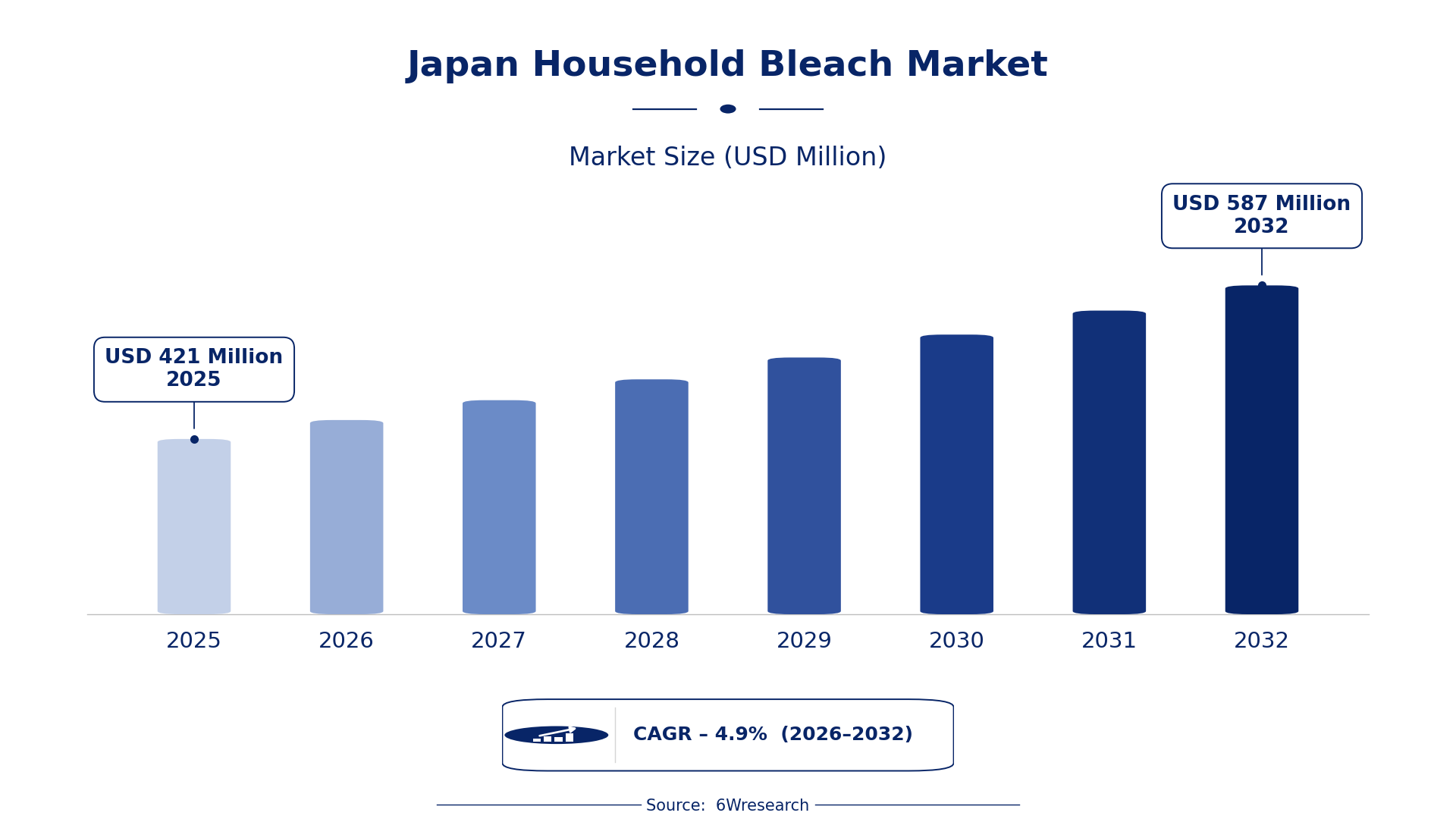
According to 6Wresearch internal database and industry insights, the Japan Household Bleach Market was valued at USD 421 Million in 2025 and is projected to reach USD 587 Million by 2032, growing at a CAGR of approximately 4.9% during 2026–2032.
Japan Household Bleach Market Highlights
| Report Metric | Details |
| Report Name | Japan Household Bleach Market (2026-2032) |
| Market Size 2025 | USD 421 Million |
| Market Size 2032 | USD 587 Million |
| Absolute Growth 2025–2032 | USD 166 Million |
| CAGR 2026–2032 | 4.9% |
| Peak Annual Growth | 6.4% in 2027 |
| Forecast Period | 2026–2032 |
| Historical Data | 2022–2025 |
| Base Year | 2025 |
| Leading Product Form, 2025 | Liquid Bleach (49% share) |
| Leading Active Ingredient, 2025 | Sodium Hypochlorite (38% share) |
| Leading Distribution Channel, 2025 | Retail Chains (36% share) |
| Leading End User, 2025 | Domestic Consumers (52% share) |
| Fastest-Growing Product Form | Powder Bleach (6.6% CAGR) |
| Fastest-Growing Active Ingredient | Calcium Hypochlorite (6.1% CAGR) |
| Fastest-Growing Distribution Channel | Online Platforms (6.5% CAGR) |
| Fastest-Growing End User | Laundromats (6.2% CAGR) |
| Growing Sector | Cleaning and Sanitation |
| Key End Users | Domestic Consumers, Healthcare Facilities, Laundromats, Institutional Buyers |
Japan Household Bleach Market Year-wise Growth Rate and Key Drivers (2022–2032)
This graph illustrates the annual growth rates of the market from 2022 to 2032, highlighting a steady upward trajectory and projected market expansion over the forecast period.
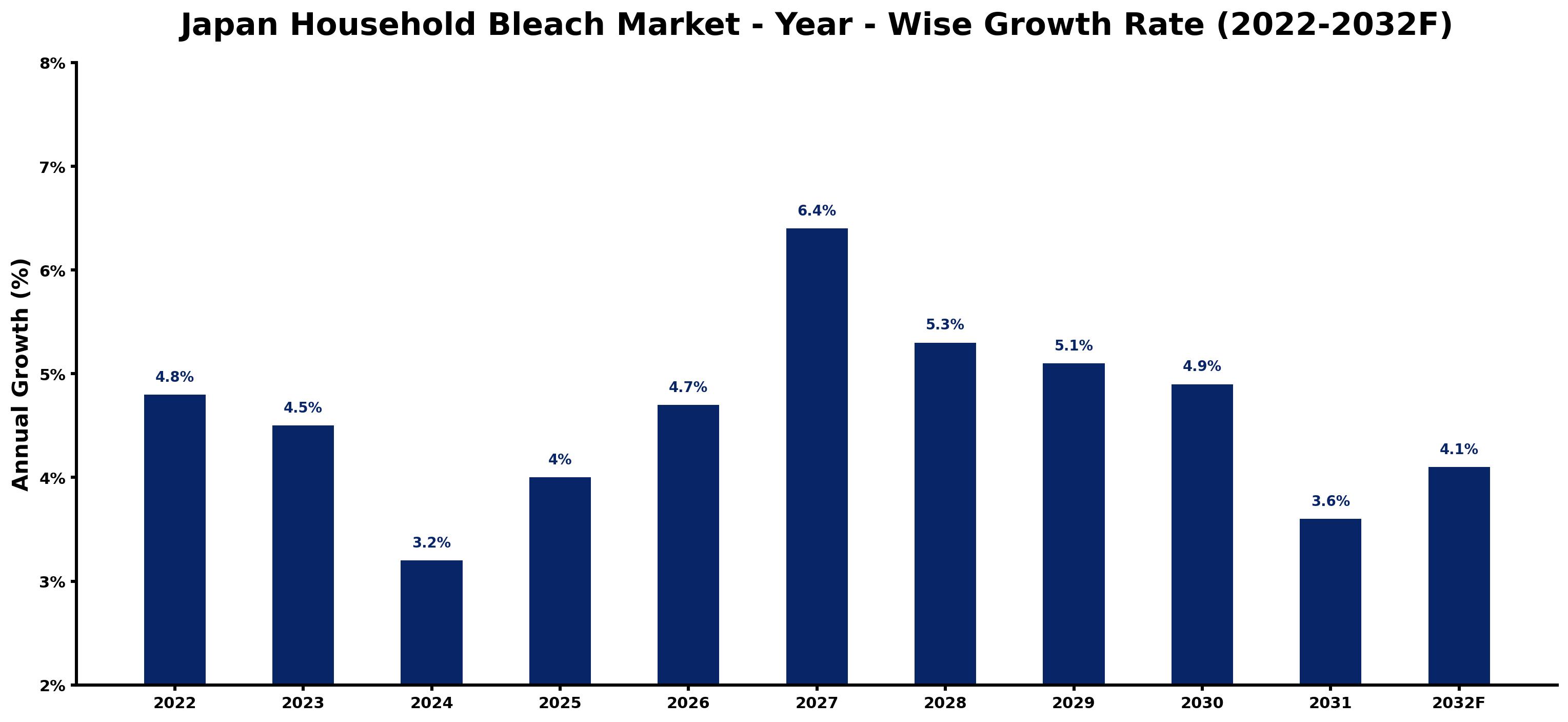
Below, each year's estimated growth is shown next to the factor that most influenced it.
| Year | Estimated Annual Growth (%) | Market Rationale |
| 2022 | 4.8 | The market experienced steady growth due to consistent household demand for cleaning products. |
| 2023 | 4.5 | Growth slowed as consumers adjusted spending amid economic uncertainties. |
| 2024 | 3.2 | A further slowdown occurred as households prioritised essential purchases over cleaning supplies. |
| 2025 | 4.0 | Demand increased as consumers returned to regular cleaning routines after disruptions. |
| 2026 | 4.7 | Growth is expected to accelerate with rising awareness of hygiene and sanitation practices. |
| 2027 | 6.4 | The market is projected to peak as institutional buyers increase purchases for sanitation needs. |
| 2028 | 5.3 | Growth is anticipated to slow as market saturation begins to impact overall demand. |
| 2029 | 5.1 | A slight slowdown in growth is expected as competition intensifies among brands. |
| 2030 | 4.9 | The market will continue to grow, driven by steady household consumption patterns. |
| 2031 | 3.6 | Growth is projected to slow as consumers become more price-sensitive in their purchases. |
| 2032 | 4.1 | Demand is expected to rise again as public health campaigns promote safe cleaning. |
Note: Market size estimations and growth projections presented in this report are based on 6Wresearch's proprietary forecasting methodology, utilizing the latest available industry data, government publications, and primary research inputs.
Japan Household Bleach Market Synopsis
Household bleach, primarily composed of sodium hypochlorite, is widely used for disinfection and stain removal in Japan. The Japan Household Bleach Market is crucial for domestic cleaning, laundry, and healthcare settings, driven by both domestic consumers and institutional buyers. The market is expanding due to heightened hygiene awareness, particularly in urban areas like Tokyo and Osaka, where bleach consumption is substantial. Retail chains account for over 60% of sales, while online platforms are gaining traction, reflecting changing consumer purchasing habits.
Market Dynamics Impact Analysis (2026–2032)
| Factor | Type | Impact | Primary Segment Affected |
| Growing awareness of hygiene practices post-pandemic | Driver | High | Liquid Bleach |
| Increased usage in healthcare facilities for infection control | Driver | High | Sodium Hypochlorite |
| Expansion of online sales channels for household products | Opportunity | Medium | Online Platforms |
| Rising demand from laundromats for effective cleaning solutions | Opportunity | Medium | Laundromats |
| Regulatory compliance costs for chemical safety standards | Restraint | High | Liquid Bleach |
| Market saturation leading to intense competition among brands | Restraint | Medium | Liquid Bleach |
| Supply chain disruptions affecting product availability | Challenge | High | Liquid Bleach |
| Fluctuating raw material prices impacting production costs | Challenge | Medium | Sodium Hypochlorite |
Evaluation of Drivers in Japan Household Bleach Market (2026–2032)
The table below links each growth driver to the segment it affects and the evidence for it.
| Drivers | Primary Segment Affected | Why It Matters (Evidence) |
| Increased focus on sanitation in households and institutions | Liquid Bleach | The average Japanese household uses approximately 1-2 liters of bleach annually for cleaning, driving consistent demand. |
| Healthcare facilities require bleach for disinfection | Sodium Hypochlorite | Healthcare facilities in Japan utilise bleach, adhering to strict JIS standards for infection control. |
| Growing population density in urban areas | Domestic Consumers | Tokyo and Osaka's high population density contributes to elevated bleach consumption, increasing demand. |
| Rising awareness of hygiene practices among consumers | Domestic Consumers | In 2023, public health campaigns promoted safe bleach usage, encouraging responsible consumption. |
| Online sales of household bleach are rising | Online Platforms | Online sales increased by 15% last year, reflecting changing consumer preferences. |
The strongest pull on demand comes from increased awareness of sanitation practices, especially in urban areas. The average Japanese household uses approximately 1-2 litres of bleach annually, indicating a steady need for cleaning products. In 2023, public health campaigns promoted safe bleach usage, encouraging responsible consumption among domestic consumers. The high population density in Tokyo and Osaka contributes to elevated bleach consumption, driving demand across various segments. Additionally, online sales have surged by 15% recently, indicating a shift in purchasing habits towards digital platforms.
Evaluation of Restraints in Japan Household Bleach Market
Several factors work against faster growth; the main ones are summarised below.
| Market Restraint | Primary Segment Affected | Why It Matters (Evidence) |
| Compliance costs associated with chemical safety regulations | Liquid Bleach | Strict regulations necessitate investments in compliance measures for producers, impacting profitability. |
| Intense competition leading to price wars among brands | Liquid Bleach | Market saturation has resulted in aggressive pricing strategies, affecting profit margins. |
| Supply chain disruptions affecting raw material availability | Sodium Hypochlorite | Global supply chain issues have led to delays in sourcing essential materials for production. |
| Consumer price sensitivity impacting purchasing decisions | Domestic Consumers | Economic uncertainties have made consumers more cautious about spending on cleaning products. |
| Limited growth potential in mature markets | Liquid Bleach | High market penetration in urban areas restricts opportunities for significant growth. |
Japan Household Bleach Market Challenges
In Tokyo, recent inspections reveal that many producers struggle with stringent chemical safety regulations, causing delays in product availability. These delays can cost buyers an average of 1,500 yen annually as they search for compliant options. Compliance expenses for producers can reach 10% of their annual revenue, forcing them to increase prices. Limited technology adoption hampers efficiency; many producers still use outdated processes, leading to stock shortages for buyers, particularly in densely populated regions like Osaka.
Trends in the Japan Household Bleach Market
These developments are changing demand patterns in the Japan Household Bleach Market.
- Shift from In-Store to Online Purchases: The trend towards online shopping for household bleach began in 2022, with online sales increasing by 15% last year. This shift allows consumers to access a wider range of products conveniently, impacting traditional retail channels.
- Rise in Eco-Friendly Cleaning Products: In 2023, consumers increasingly preferred eco-friendly bleach alternatives, reflecting a growing trend towards sustainable cleaning solutions. This shift is seen as more brands introduce environmentally friendly options in response to consumer demand.
- Increased Focus on Health and Hygiene: Since 2022, there has been a marked increase in health and hygiene awareness among consumers, particularly in urban centres. This trend has driven higher bleach consumption as households prioritise cleanliness and disinfection.
- Expansion of Bleach Use in Healthcare: The use of bleach in healthcare facilities has expanded significantly since 2022, driven by infection control protocols. This trend underscores the importance of effective disinfectants in maintaining health standards.
Investment Opportunities in the Japan Household Bleach Market
The following opportunities in the Japan Household Bleach Market pair current demand with a clear way in.
- Urban Laundromats: Laundromats in Tokyo present an opportunity for bleach suppliers, with a growing demand for effective cleaning solutions. The average laundromat uses bleach extensively, making it a prime target for partnerships.
- Online Retail Platforms: The surge in online shopping offers a timely opportunity for suppliers to expand their presence in digital marketplaces. With online sales of bleach rising by 15%, investing in e-commerce strategies can yield substantial returns.
- Healthcare Facilities: Healthcare facilities represent a significant market for bleach suppliers, given their stringent disinfection needs. Collaborating with hospitals and clinics can lead to increased sales and long-term contracts.
- Public Health Campaigns: Government-led public health campaigns focusing on sanitation create opportunities for bleach manufacturers to promote their products. Engaging with these initiatives can enhance brand visibility and consumer trust.
Government Initiatives in the Japan Household Bleach Market
The Chemical Substances Control Law governs the safety of household bleach producers in Japan, requiring compliance with strict chemical safety standards. This law ensures that manufacturers test and certify their products, maintaining high safety levels for consumers. In 2023, the Ministry of Health launched a campaign to educate households on safe bleach usage, promoting responsible consumption practices and increasing public awareness.
The Japan Chemical Industry Association oversees the implementation of safety standards under the Chemical Substances Control Law. This agency ensures that producers adhere to regulations while providing resources for compliance. In 2023, the association published guidelines for bleach usage, helping buyers understand safe practices and encouraging responsible product use.
Future Insight of the Japan Household Bleach Market
By 2032, the Japanese government's focus on public health will drive suppliers to enhance manufacturing processes, ensuring compliance with JIS K 1001 standards. This shift will result in improved product safety and quality for buyers. Increased funding for sanitation initiatives will further elevate the demand for bleach in both domestic and healthcare settings. As online sales of household bleach continue to rise, suppliers will need to innovate distribution methods to meet consumer needs effectively.
Market Segmentation Analysis
Japan Household Bleach Market report covers a detailed analysis of the following market segments:
By Product Form – Liquid Bleach Leads, Powder Bleach Expected to Grow Fastest
According to Saurav Kr Singh, Senior Research Analyst at 6Wresearch, in 2025, Liquid Bleach led the product form split with a 49% share. Liquid bleach leads the market in Japan due to its widespread use for cleaning and disinfecting surfaces in homes and businesses. The average household's annual consumption of 1-2 litres highlights its integral role in daily cleaning practices. Powder Bleach is set to record the highest CAGR in this split, 6.6% over 2026–2032. Powder bleach is witnessing rapid growth as it caters to specific cleaning tasks, attracting consumers seeking versatile options. This segment's expansion is fuelled by an increasing awareness of diverse cleaning methods among users. Suppliers should consider expanding their product lines to include more powder bleach options to capture the growing interest in specialised cleaning products.
By Active Ingredient – Sodium Hypochlorite Leads, Calcium Hypochlorite Expected to Grow Fastest
Sodium Hypochlorite accounted for 38% of the market by active ingredient in 2025. Sodium hypochlorite is the dominant active ingredient in household bleach products, making it the preferred choice for effective disinfection and stain removal. Its established presence in the market is reinforced by compliance with JIS standards for quality and safety. Calcium Hypochlorite is projected to grow fastest, at a CAGR of 6.1% during 2026–2032. Calcium hypochlorite is gaining traction due to its specific applications in cleaning, which are becoming more recognised among consumers. As awareness of its benefits increases, this segment is expected to grow at a faster rate. Manufacturers may consider promoting calcium hypochlorite to capitalise on its emerging popularity in niche cleaning applications.
By Distribution Channel – Retail Chains Lead, Online Platforms Expected to Grow Fastest
The largest distribution channel category in 2025 was Retail Chains, at 36% of revenue. Retail chains dominate the bleach market in Japan, accounting for over 60% of sales, establishing them as the main distribution channel. Their extensive reach and established presence ensure that consumers have convenient access to household bleach products. The quickest growth will come from Online Platforms, forecast to expand at a CAGR of 6.5% between 2026 and 2032. Online platforms are experiencing a surge in sales, with a 15% increase in the past year, indicating a shift towards digital purchasing methods. This trend suggests that convenience in shopping will continue to drive growth in this channel. Suppliers should focus on strengthening their online presence to capitalise on the increasing consumer preference for digital shopping.
By End User – Domestic Consumers Lead, Laundromats Expected to Grow Fastest
Domestic Consumers held 52% of the Japan Household Bleach Market by end user in 2025. Domestic consumers are the largest user group for household bleach in Japan, employing it for a variety of cleaning tasks within their homes. The average annual expenditure of approximately 1,500 yen on cleaning products highlights the significance of bleach in household maintenance routines. Over 2026–2032, Laundromats are expected to post the fastest growth, at a CAGR of 6.2%. Laundromats are increasingly utilising bleach for laundry cleaning, driven by the necessity for effective disinfection and stain removal in high-traffic environments. This heightened reliance on bleach in laundromats suggests a strong and growing demand for the product in commercial applications. Suppliers should focus on developing tailored offerings for laundromats to address their specific cleaning requirements and boost product usage.
Key Attractiveness of the Report
- 10 Years of Market Numbers
- Historical Data Starting from 2022 to 2025
- Base Year 2025
- Forecast Data until 2032
- Key Performance Indicators Impacting the Market
- Major Upcoming Developments and Projects
Key Highlights of the Report:
- Japan Household Bleach Market Outlook
- Market Size of Japan Household Bleach Market, 2025
- Forecast of Japan Household Bleach Market, 2032
- Historical Data and Forecast of Japan Household Bleach Revenues & Volume for the Period 2022-2032F
- Japan Household Bleach Market Trend Evolution
- Japan Household Bleach Market Drivers and Challenges
- Japan Household Bleach Price Trends
- Japan Household Bleach Porter's Five Forces
- Japan Household Bleach Industry Life Cycle
- Historical Data and Forecast of Japan Household Bleach Market Revenues & Volume By Product Form for the Period 2022-2032F
- Historical Data and Forecast of Japan Household Bleach Market Revenues & Volume By Liquid Bleach for the Period 2022-2032F
- Historical Data and Forecast of Japan Household Bleach Market Revenues & Volume By Powder Bleach for the Period 2022-2032F
- Historical Data and Forecast of Japan Household Bleach Market Revenues & Volume By Gel Bleach for the Period 2022-2032F
- Historical Data and Forecast of Japan Household Bleach Market Revenues & Volume By Fragrance-Free for the Period 2022-2032F
- Historical Data and Forecast of Japan Household Bleach Market Revenues & Volume By Active Ingredient for the Period 2022-2032F
- Historical Data and Forecast of Japan Household Bleach Market Revenues & Volume By Sodium Hypochlorite for the Period 2022-2032F
- Historical Data and Forecast of Japan Household Bleach Market Revenues & Volume By Calcium Hypochlorite for the Period 2022-2032F
- Historical Data and Forecast of Japan Household Bleach Market Revenues & Volume By Stabilized Formula for the Period 2022-2032F
- Historical Data and Forecast of Japan Household Bleach Market Revenues & Volume By Chlorine Base for the Period 2022-2032F
- Historical Data and Forecast of Japan Household Bleach Market Revenues & Volume By Distribution Channel for the Period 2022-2032F
- Historical Data and Forecast of Japan Household Bleach Market Revenues & Volume By Retail Chains for the Period 2022-2032F
- Historical Data and Forecast of Japan Household Bleach Market Revenues & Volume By Online Platforms for the Period 2022-2032F
- Historical Data and Forecast of Japan Household Bleach Market Revenues & Volume By Grocery Distributors for the Period 2022-2032F
- Historical Data and Forecast of Japan Household Bleach Market Revenues & Volume By FMCG Suppliers for the Period 2022-2032F
- Historical Data and Forecast of Japan Household Bleach Market Revenues & Volume By End User for the Period 2022-2032F
- Historical Data and Forecast of Japan Household Bleach Market Revenues & Volume By Domestic Consumers for the Period 2022-2032F
- Historical Data and Forecast of Japan Household Bleach Market Revenues & Volume By Laundromats for the Period 2022-2032F
- Historical Data and Forecast of Japan Household Bleach Market Revenues & Volume By Institutional Buyers for the Period 2022-2032F
- Historical Data and Forecast of Japan Household Bleach Market Revenues & Volume By Healthcare Facilities for the Period 2022-2032F
- Japan Household Bleach Import Export Trade Statistics
- Market Opportunity Assessment By Product Form
- Market Opportunity Assessment By Active Ingredient
- Market Opportunity Assessment By Distribution Channel
- Market Opportunity Assessment By End User
- Japan Household Bleach Top Companies Market Share
- Japan Household Bleach Competitive Benchmarking By Technical and Operational Parameters
- Japan Household Bleach Company Profiles
- Japan Household Bleach Key Strategic Recommendations
Market Covered
Coverage by segment is as follows.
By Product Form
- Liquid Bleach
- Powder Bleach
- Gel Bleach
- Fragrance-Free
By Active Ingredient
- Sodium Hypochlorite
- Calcium Hypochlorite
- Stabilized Formula
- Chlorine Base
By Distribution Channel
- Retail Chains
- Online Platforms
- Grocery Distributors
- FMCG Suppliers
By End User
- Domestic Consumers
- Laundromats
- Institutional Buyers
- Healthcare Facilities































